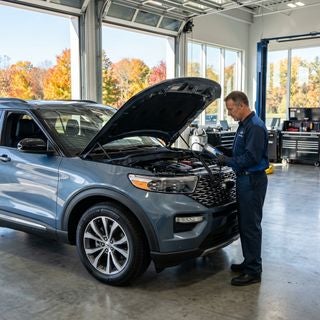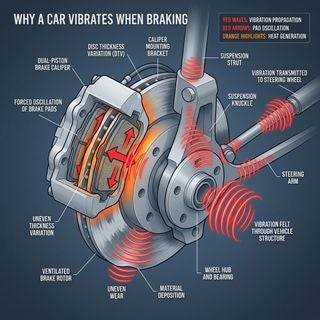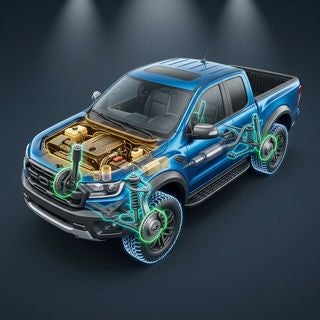
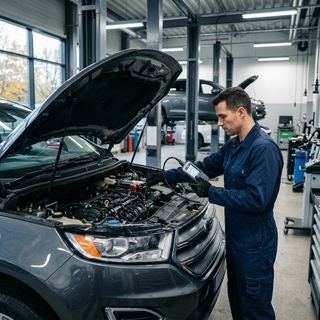
Having your vehicle serviced by a Ford-trained technician can help support factory warranty coverage and maximizes long-term resale value. Authorized dealer maintenance automatically enters complete service records into Ford's centralized database, verifying proper care for future buyers while ensuring all repairs meet strict OEM specifications using factory-certified diagnostic equipment and genuine Motorcraft parts.
Modern automobiles feature interconnected electrical architectures, high-pressure direct-injection engines, and advanced driver-assistance networks. When a vehicle undergoes routine maintenance or intricate mechanical repairs, general service facilities often rely on multi-brand aftermarket scanners that read basic diagnostic trouble codes but lack deeper programming capabilities. A factory-trained technician undergoes continuous instruction directly from the manufacturer, equipping them to interpret complex sensor telemetry, perform module software updates, and identify technical service bulletins tailored specifically to your exact vehicle identification number.
Maintaining an unbroken chain of official dealer service history protects your investment when unexpected mechanical issues arise. If a component fails near the boundary of a warranty window, comprehensive dealership records demonstrate that the vehicle received precise factory-specified fluids, filters, and inspection sequences. This official documentation simplifies warranty claims and provides concrete proof of proper maintenance that independent shop receipts may not provide the same level of documentation.
Every vehicle requires dedicated attention to vital systems like electrical health and stopping power. For drivers seeking comprehensive vehicle care, our team provides full digital battery testing and system evaluations, including routine battery testing and maintenance to keep starting systems dependable in extreme weather. You can reach our service department by calling (330) 462-7578 to speak with a dedicated advisor, or stop by our service center location for personalized maintenance support.
Table of Contents
- What Are the Levels of Ford Technician Certification?"
- What Diagnostic Tools and FDRS Software Do Ford Technicians Use?
- What Safety Gear and Training Are Required for Ford EV Certification?
- Does Servicing at an Independent Shop Void Your Ford Factory Warranty?
- How Does an OEM Service History Protect Resale Value and CPO Eligibility?
- Quick Answers About Ford Factory Diagnostics, Warranties, and Maintenance
What Are the Levels of Ford Technician Certification?"
Ford technician certification follows a structured career progression requiring hundreds of hours of web-based instruction, classroom training, and hands-on dealership experience. Technicians advance through specialized skill tiers, progressing from foundational entry levels up to the elite status of Senior Master Technician.
The learning pathway begins with foundational courses before technicians specialize in specific vehicle disciplines. The certification framework includes targeted tracks such as steering and suspension, electrical systems, engine performance, transmission systems, diesel engine repair, and high-voltage electric vehicle architectures. To earn a Specialty Technician designation, an individual must complete rigorous coursework and pass practical skill assessments in that designated discipline.
Building upon specialty tracks, technicians can work toward earning the title of Master Technician. Reaching this tier requires achieving certification across multiple core specialties along with years of hands-on dealership experience. The highest achievement in the network is the Senior Master Technician status, which demands master-level certification across engine, transmission, drivability, electrical, chassis, and drivetrain categories, alongside continuous annual recertification to remain current on emerging automotive technologies.
Many factory technicians begin their careers through formal apprenticeship initiatives. Ford structured a 2026 NADA apprenticeship initiative that provides emerging technicians with 18 to 24 months of intensive training. This comprehensive program combines more than 2,000 hours of practical hands-on experience under the mentorship of senior shop staff with approximately 400 hours of technical instruction, ensuring every certified technician possesses deep mechanical understanding before working independently on customer vehicles.
For busy owners who need flexible scheduling options without compromising on certified expertise, our dealership offers specialized remote care options, including convenient Ford Mobile Service options that bring factory-trained mechanics directly to your driveway or workplace for routine maintenance.
What Diagnostic Tools and FDRS Software Do Ford Technicians Use?
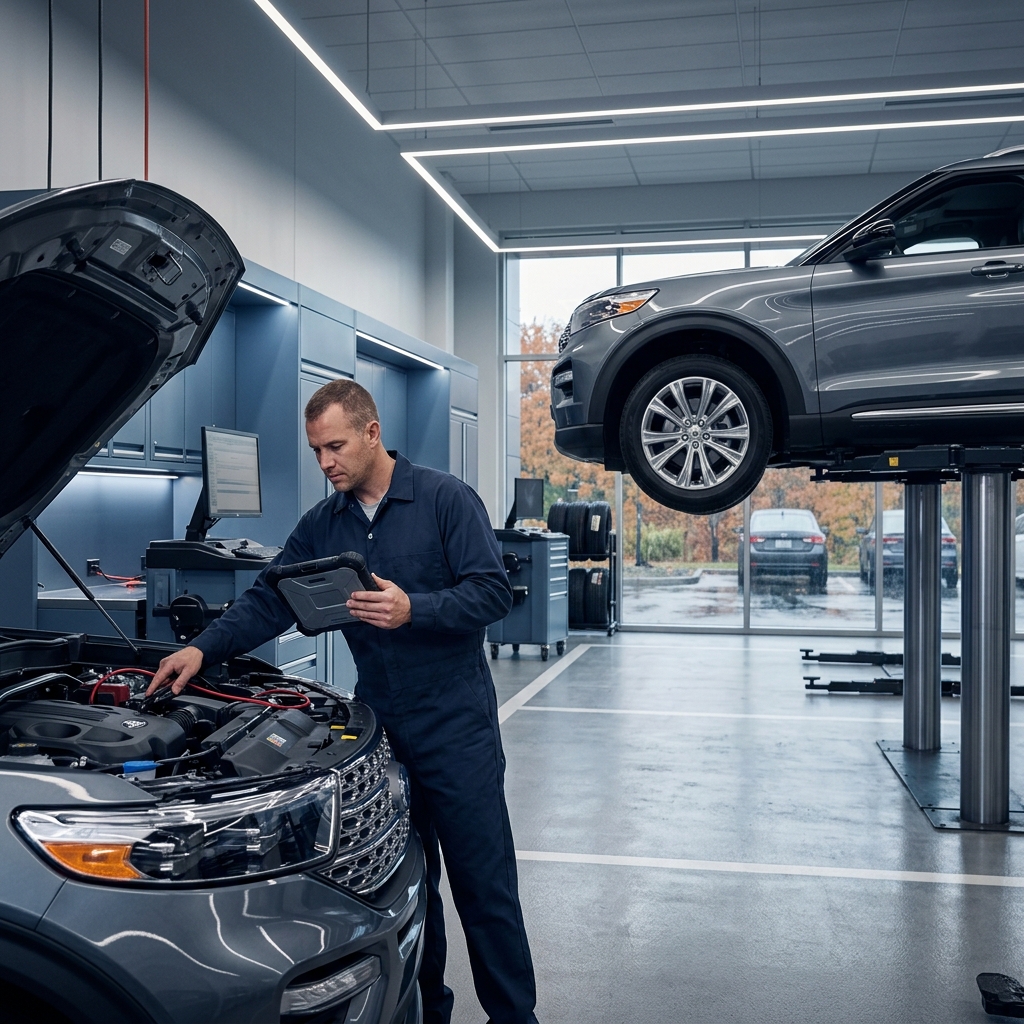
Factory-trained technicians utilize proprietary software suites and hardware interfaces designed specifically by the automaker, primarily the Integrated Diagnostic System (IDS) and the Ford Diagnosis and Repair System (FDRS). General repair facilities typically use universal aftermarket tools that read standard OBD-II powertrain codes, but these third-party tools cannot access proprietary module networks or communicate directly with factory servers.
Modern trucks like the 2026 Ford F-150 equipped with the 3.5L EcoBoost® V6 and SelectShift® automatic transmission rely on dozens of interconnected microprocessors managing everything from fuel trim tables to dynamic trailer sway controls. The FDRS software suite connects directly to secure factory servers, allowing technicians to flash new control module software, reconfigure corrupt module calibration files, and install official technical updates. When a general repair facility attempts to reflash or reset a module using non-OEM software, incomplete data transfers can corrupt control modules, erase factory calibrations, or cause sensor communication failures across the CAN bus network.
Proprietary diagnostic systems play an indispensable role in maintaining driver-assistance features, safety sensors, and heavy-duty towing equipment. For instance, NHTSA recall 26C10 addresses an integrated trailer module communication issue affecting select 2026 Ford F-150, 2026 Ford Super Duty, and 2026 Ford Ranger models. Resolving this issue requires precise module reprogramming performed through factory diagnostic software. Furthermore, when servicing front radar units or windshield cameras, FDRS conducts static target alignment procedures and dynamic electronic road-test calibrations according to exact factory specifications. Drivers navigating busy commercial stop-and-go traffic along Market Street in Boardman rely heavily on functioning camera and radar systems, making accurate factory calibration essential after any front-end repair or glass replacement.
To make advanced maintenance as convenient as possible for vehicle owners, our team provides seamless logistics solutions such as Ford Pick Up & Delivery service, taking care of transportation so your vehicle receives factory software flashes and recalibrations without disrupting your daily routine.
What Safety Gear and Training Are Required for Ford EV Certification?
Servicing electric vehicles requires specialized high-voltage certification due to the unique electrical safety requirements of battery electric platforms. Technicians undergoing electric vehicle certification complete rigorous training on high-voltage containment, thermal management systems, and safety isolation procedures before touching an electrified powertrain.
High-voltage safety protocols require technicians to wear specialized personal protective equipment (PPE) inspected and rated for severe electrical isolation. Mandatory gear includes Class 0 1,000-volt insulated safety gloves paired with leather outer protectors to guard against mechanical punctures, arc-flash face shields, safety glasses, and flame-resistant clothing. Technicians also use insulated hand tools tested up to 1,000 volts and specialized high-voltage depowering tools to disable battery power before performing any internal battery or inverter repairs.
Work bays dedicated to electric vehicle service feature specialized safety perimeter barriers, high-voltage warning banners, and non-conductive rescue hooks. Prior to opening any high-voltage component or battery casing, certified technicians perform strict voltage-de-energizing sequences. They utilize digital multimeters rated for high-energy environments to verify zero energy potential across high-voltage bus bars, protecting both the technician and the vehicle's sensitive power electronics.
Beyond physical protective gear, electric vehicle training covers specialized coolant loops, battery thermal preconditioning circuits, and battery management software diagnostics. For commuters traveling daily along State Route 170 through Calcutta, harsh winter road salt and rolling elevation place extra stress on steering linkages and braking systems, making certified high-voltage inspection and underbody protective checks essential for electric vehicles operating in cold-weather regions.
Does Servicing at an Independent Shop Void Your Ford Factory Warranty?
Servicing your vehicle at an independent repair shop does not automatically void your factory warranty. Under federal law, specifically the Magnuson-Moss Warranty Act, vehicle owners have the legal right to have routine maintenance performed by any qualified service provider, or even complete the work themselves, without invalidating original warranty coverage.
However, utilizing independent facilities introduces specific documentation and parts-quality risks that owners must navigate carefully. To maintain valid warranty coverage when independent shops perform routine work, you must retain clear, dated invoices detailing the exact mileage, vehicle identification number, and specific fluids or filters used. If an engine or transmission failure occurs and the manufacturer determines that the damage resulted directly from incorrect fluid specifications, sub-standard aftermarket filters, or improper installation procedures by a general mechanic, the resulting repair costs will not be covered under warranty.
Safety recalls and warranty-covered repairs must always be completed at an authorized factory dealership. Manufacturers do not reimburse independent shops for performing official recall remedies or warrantable component replacements. For example, official recall repairs—such as software updates performed under NHTSA recall 26C10—are provided free of charge to owners exclusively through authorized dealership service centers. Authorized facilities utilize factory-supplied software updates and genuine Motorcraft parts, ensuring every repair aligns completely with original manufacturing guidelines.
| Maintenance Consideration | Authorized Ford Dealership Service | Independent Repair Shop |
|---|---|---|
| Official Service Record Logging | Automatic digital entry into factory database | Paper receipts required from owner |
| Safety Recalls & TSB Repairs | Performed free of charge with OEM updates | Cannot perform official recall repairs |
| Software & Module Updates | Direct access to proprietary FDRS software | Limited or subscription-based access |
| Parts Specifications | Genuine Motorcraft and OEM parts | Variable; often uses aftermarket parts |
| Warranty Coverage Protection | Direct factory-backed warranty processing | Requires manual proof of compliance |
How Does an OEM Service History Protect Resale Value and CPO Eligibility?
A documented history of authorized dealership service significantly enhances vehicle resale value and protects long-term equity. When every oil change, fluid flush, brake replacement, and multi-point inspection is recorded in the official factory database, potential buyers and valuation analysts can instantly verify that the vehicle received consistent, high-quality care throughout its operational life.
Comprehensive service records remove guesswork for pre-owned vehicle buyers and trade-in appraisers. Vehicles with missing service logs or incomplete maintenance histories suffer lower valuation offers because buyers must factor in the potential risk of deferred maintenance or non-OEM component usage. Our service advisors frequently explain to truck owners that maintaining a digital maintenance log in the Ford network is what makes CPO qualification seamless when it comes time to trade up.
An unbroken dealer maintenance record plays a crucial role in qualifying a vehicle for the Ford Blue Advantage™ certified pre-owned program. Vehicles entering this program must pass extensive multi-point quality inspections covering mechanical operation, safety systems, and cosmetic condition. Having a verifiable history of factory-specified maintenance using genuine Motorcraft parts simplifies the certification process, enabling eligible pre-owned vehicles to qualify for higher resale price points, extended factory-backed powertrain warranties, and comprehensive roadside assistance programs.
Protecting your vehicle's health and future equity begins with timely, professional care from certified experts. You can easily schedule a service appointment online to set up your next routine maintenance visit, or order genuine Motorcraft components directly through our dedicated parts department to ensure every component installed on your vehicle meets exact factory specifications.
Quick Answers About Ford Factory Diagnostics, Warranties, and Maintenance
Q: Can an independent repair shop access Ford FDRS diagnostic software?
Independent repair facilities can purchase temporary access subscriptions to Ford FDRS software, but they rarely possess the dedicated factory vehicle interface hardware or direct secure server links standard at authorized dealerships. Without proprietary communication interfaces and continuous server connections, general shops cannot reflash advanced vehicle control modules or calibrate complex driver-assistance systems with factory precision.
Q: What happens if a general repair shop uses non-OEM software to update a vehicle module?
Updating a vehicle control module with non-OEM or unauthorized software tools can corrupt module memory, clear factory calibration settings, or disrupt communications across the vehicle's internal electronic network. Software corruption can cause vehicle warning lights, loss of engine performance, or non-functional safety sensors, often requiring a complete module replacement or factory re-initialization at an authorized service center.
Q: How do factory diagnostic tools calibrate Advanced Driver Assistance Systems (ADAS)?
Factory FDRS diagnostic software connects directly to vehicle radar units and camera modules to execute electronic alignment sequences, static target positioning, and dynamic road calibrations. These precise procedures ensure that features like blind spot monitoring, lane-keeping assistance, and automatic emergency braking function within exact factory spatial tolerances following windshield replacements or front-end repairs.
Q: What documentation do I need to keep if I service my vehicle at an independent shop?
If you choose an independent shop for routine care, you must keep detailed, itemized receipts showing the service date, vehicle identification number, exact mileage, and part numbers for all fluids, filters, and components used. These records serve as mandatory proof of maintenance should a engine or powertrain warranty claim arise in the future.
Q: Where can I get official safety recall repairs completed for my Ford vehicle?
Official safety recall repairs and manufacturer technical service updates must be performed at an authorized dealership to be fully covered under factory support. Owners can visit our East Liverpool facility at 1503 Pennsylvania Ave for free recall repairs and complete maintenance care, or contact our service desk at (330) 462-7578 to confirm open recall status for your vehicle.
© 2026 Tri State Ford. All rights reserved.