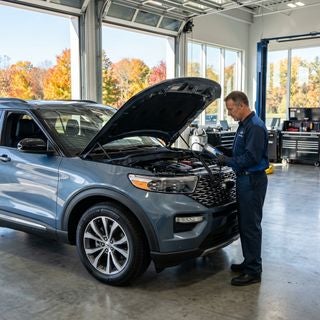
Servicing a 2027 Ford at a dealership is worth the higher initial price for complex electrical repairs, safety recalls, and warranty-backed maintenance, even though independent shops often charge less for routine fluid changes. Dealership service provides factory-trained technicians, proprietary diagnostic equipment, and direct factory-server connectivity for software flashes, helping ensure long-term vehicle reliability and preserving warranty coverage without unexpected out-of-pocket expenses.
Drivers evaluating overall ownership costs often compare upfront repair estimates with the long-term protection offered by specialized factory care. While independent repair facilities may offer lower posted hourly rates, dealership technicians work on specific models daily and follow official technical service bulletins. A June 2026 report citing Ford research indicated that average maintenance costs can vary between dealerships and independent shops. This demonstrates that dealer care is not systematically more expensive when evaluating the full scope of routine vehicle maintenance.
Mode rn vehicles, such as the 2027 Ford Explorer equipped with a 2.3L EcoBoost engine and a SelectShift® transmission, feature interconnected electronic control modules that govern safety systems, fuel delivery, and engine management. Diagnosing complex issues on these platforms requires accurate sensor calibration and direct factory programming. When routine maintenance or specialized repairs are performed at our service center location, every procedure strictly aligns with engineered factory guidelines.
Choosing factory service also provides complete records in Ford's centralized vehicle database, which helps protect resale value and simplifies warranty administration. When you reach out to (330) 462-7578, our advisors can review your vehicle's full maintenance history and check for open safety recalls or outstanding module updates in one step.
Table of Contents
- How Do Ford Dealership Labor Rates Compare to Independent Repair Shops?
- What Diagnostic Systems and Software Updates Do Dealership Technicians Use?
- Does Servicing Your Vehicle at an Independent Shop Void the Ford Warranty?
- Do Independent Repair Shops Use Genuine Ford Motorcraft Parts?
- Which Maintenance Services Are Best Handled at a Dealership Versus an Independent Shop?
- Essential Questions About Ford Service and Maintenance Options
- Maintaining Long-Term Reliability for Your Ford Vehicle
How Do Ford Dealership Labor Rates Compare to Independent Repair Shops?
Ford dealership labor rates can vary depending on regional economic factors and service specialization, and independent repair facilities may have different hourly rates. While independent mechanics feature lower base labor rates, higher dealership rates account for ongoing factory technician certifications, specialized repair tooling, and dedicated customer amenities.
A 2026 Jacksonville-area service comparison estimated local Ford dealer labor and major scheduled service costs that varied based on vehicle model, required parts, labor hours, and local market conditions. However, actual totals vary based on vehicle model, required parts, labor hours, and local market conditions. Lower hourly rates do not automatically equal lower total repair costs if a non-specialized mechanic requires additional diagnostic time to resolve complex powertrain or electrical issues.
Dealership service department pricing reflects significant investments in facility overhead and specialized training programs:
- Master-certified technicians complete regular factory training on current powertrain architectures and high-voltage electrical platforms.
- Specialized hydraulic lifts, wheel alignment racks, and recalibration rigs ensure exact physical setup.
- Direct connectivity to factory technical databases provides exact repair time estimates based on standardized labor guides.
- Built-in multi-point inspection procedures catch minor component wear before it leads to roadside mechanical failure.
For drivers managing daily commutes across the elevated rolling terrain and back roads around Calcutta, keeping suspension components and brake systems maintained with exact factory specs prevents accelerated component wear. Visiting our local Ford dealership service department ensures every task is completed efficiently by technicians who specialize in your specific model.

What Diagnostic Systems and Software Updates Do Dealership Technicians Use?
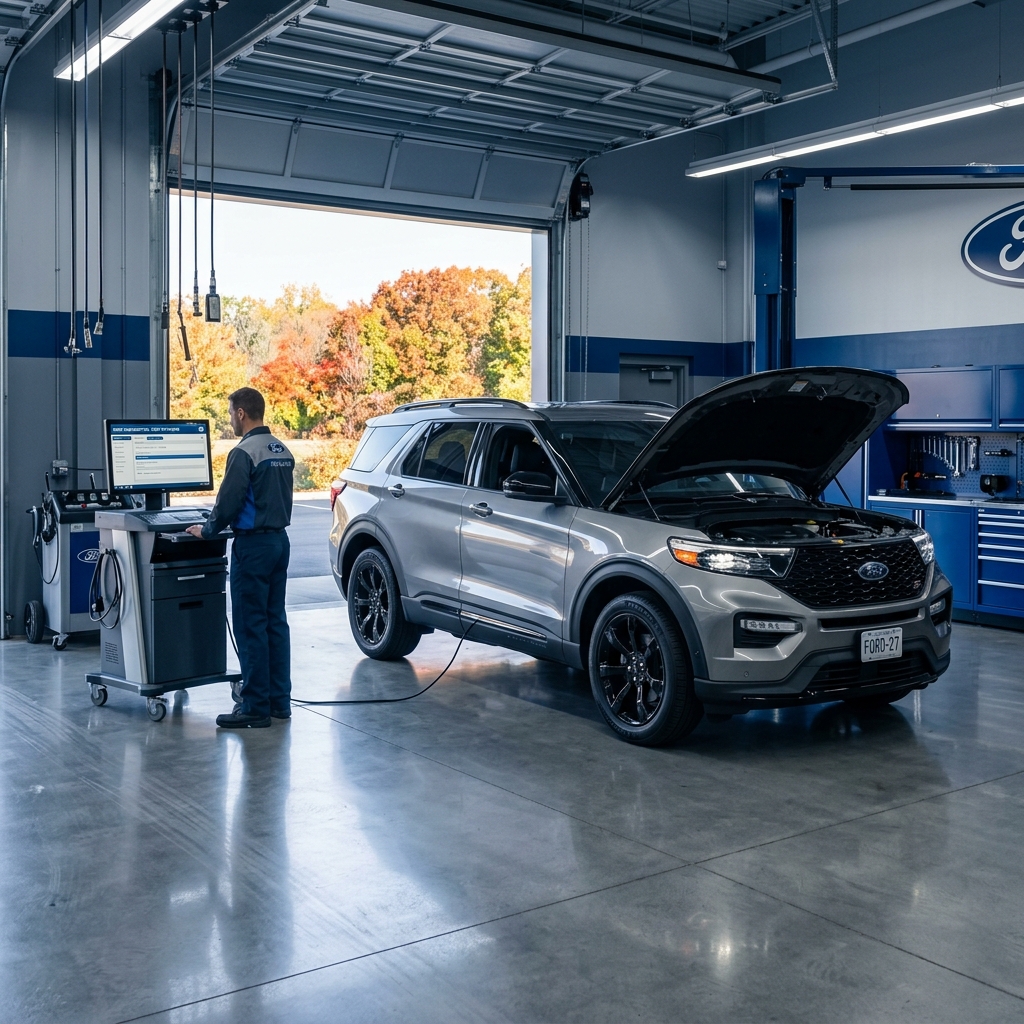
Ford dealership technicians utilize proprietary Ford Diagnostic and Repair System (FDRS) software and Integrated Diagnostic System (IDS) hardware platforms connected directly to factory servers for vehicle system updates and module programming. Independent repair facilities lack automated factory links, relying instead on generic third-party scan tools or purchased aftermarket subscriptions that may not support real-time module flashing.
Modern vehicles contain dozens of interconnected computers managing driver-assist features, transmission shift logic, infotainment operations, and engine timing. When a sensor detects an anomaly, diagnosing the root cause requires software capable of reading proprietary diagnostic trouble codes and analyzing live data streams. Dealership service bays connect directly to Ford engineering databases to install firmware updates, clear false fault codes, and complete technical service bulletin procedures.
Key differences between factory service technology and independent shop equipment include:
- Direct factory server connection provides immediate updates to powertrain control modules and safety controllers.
- Proprietary FDRS diagnostics execute guided tests engineered specifically for each vehicle model year.
- Automated alignment tool integration recalibrates radar units and cameras for lane-keeping and blind spot monitoring systems.
- Immediate access to technical service bulletins allows technicians to address known factory software issues without guessing.
Third-party shops can purchase temporary access to certain software packages, but they do not automatically receive real-time factory alerts or automated service bulletin pushes. Relying on outdated scan software can result in incomplete diagnostic testing or misdiagnosed electrical faults.
Does Servicing Your Vehicle at an Independent Shop Void the Ford Warranty?
Having a 2027 Ford serviced at an independent repair shop does not void the manufacturer warranty, provided all scheduled maintenance is performed according to factory specifications and supported by detailed service records. The federal Magnuson-Moss Warranty Act protects vehicle owners from having their warranty coverage denied simply because routine maintenance was performed outside a franchised dealership.
The 2027 Ford F-150 includes a 3-year/36,000-mile limited warranty alongside a 5-year/60,000-mile powertrain warranty. To maintain full coverage under these programs, owners must ensure that oil changes, filter replacements, and fluid flushes occur within the specified mileage and time intervals outlined in the official owner's manual. If an independent shop uses non-compliant fluids or improperly installs a filter that subsequently causes engine damage, warranty coverage for that specific failure may be affected.
To keep your factory warranty intact when using third-party repair facilities, maintain a thorough record-keeping system:
- Save itemized receipts showing exact part numbers, fluid specifications, and service dates.
- Ensure the vehicle identification number and current odometer mileage are clearly printed on every repair order.
- Follow the official Ford scheduled maintenance guide rather than generic shop recommendations.
- Keep detailed logs of all self-performed maintenance, including receipts for purchased parts and fluids.
While independent service keeps your basic warranty active, factory recall campaigns and covered warranty repairs are typically completed at an authorized Ford dealership. Drivers preparing for a custom factory vehicle order or reviewing current manufacturer service specials can consult our service department to verify how routine care plans align with factory warranty guidelines.
Do Independent Repair Shops Use Genuine Ford Motorcraft Parts?
Independent repair shops usually default to aftermarket components to keep estimates lower, but they can order and install genuine Motorcraft parts when specifically requested by the customer. Ford dealerships install engineered Motorcraft and original equipment parts exclusively, ensuring exact fitment, factory tolerances, and full warranty backing on every replacement part.
Original equipment parts are designed and tested by Ford engineers to meet strict performance and durability standards. Aftermarket manufacturers often create standardized parts designed to fit multiple vehicle makes and models, which can lead to slight variations in material quality, noise levels, and wear rates. Installing genuine parts maintains original factory specifications for fuel efficiency, braking performance, and vehicle safety.
| Feature / Benefit | Genuine Motorcraft / OEM Parts | Generic Aftermarket Parts |
|---|---|---|
| Engineering Fit | Exact vehicle-specific dimensions | Multi-vehicle standardized dimensions |
| Factory Warranty Coverage | Covered by 2-year/unlimited-mileage warranty | Varies by manufacturer and retailer |
| Quality Control | Rigorous manufacturer testing | Broad range of material standards |
| Availability | Stocked at authorized dealership parts counters | Sourced from third-party auto parts distributors |
When you order genuine Motorcraft parts online through our parts center, every component carries a 2-year/unlimited-mileage limited warranty that covers both parts and labor when installed at an authorized dealership. This warranty protection offers peace of mind that low-cost aftermarket alternatives cannot match.
Which Maintenance Services Are Best Handled at a Dealership Versus an Independent Shop?
Safety recall repairs, complex module programming, warranty-covered repairs, and high-voltage hybrid service are best handled at a dealership, whereas basic tasks like tire rotations or wiper blade changes can be performed by an independent shop. Dealerships possess the specialized equipment and direct manufacturer support necessary to resolve intricate mechanical and electronic issues quickly.
Routine service tasks compare across service providers in several distinct ways:
- Safety Recalls and Warranty Work: Must be performed at an authorized dealership to receive full coverage at no charge to the owner.
- Powertrain Diagnostics and Module Flashing: Best completed at a dealership using FDRS equipment connected to factory servers.
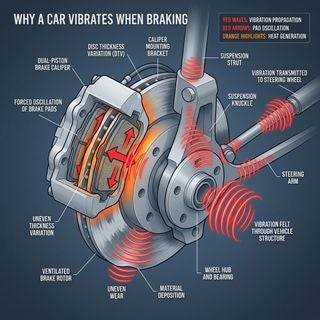
- Brake Replacement and Suspension Service: Can be handled by independent shops, though dealership installation ensures genuine Motorcraft friction materials and exact sensor calibration.
- Oil Changes and Tire Maintenance: Suitable for independent facilities, provided factory-grade oil viscosity and certified filters are utilized.
For daily commuters traveling along the busy commercial stretches of Boardman, keeping a rigid service schedule prevents unpredicted downtime. Ford also offers complimentary Ford Mobile Service for eligible routine maintenance items, allowing certified technicians to handle select services right in your driveway or workplace parking lot.
When your vehicle requires technical attention, visiting our East Liverpool facility ensures complete access to specialized tools and factory-trained personnel. You can call our service team to ask about specific vehicle systems or easily schedule a service appointment online at your convenience.
Essential Questions About Ford Service and Maintenance Options
Q: How does Ford Mobile Service operate for routine vehicle maintenance?
Ford Mobile Service dispatches a factory-trained technician equipped with specialized tools directly to your home or workplace to complete qualifying maintenance. Eligible services include oil and filter changes, brake inspections, tire rotations, cabin air filter replacements, and software updates. This program offers the same genuine Motorcraft parts and factory expertise found in our dealership service bays, allowing you to maintain your vehicle without taking time out of your busy workday.
Q: Why do hourly labor rates vary between different automotive service centers?
Labor rates vary based on regional living costs, facility overhead, specialized equipment investments, and technician certification requirements. Dealership service departments invest heavily in proprietary diagnostic hardware, continuous factory training, and comfortable customer lounges. These investments ensure complex electronic systems and powertrain components are serviced correctly according to official factory repair guidelines, reducing overall diagnostic time and preventing repeat visits.
Q: Can independent mechanics complete official Ford safety recall repairs for free?
Independent mechanics typically do not complete official Ford safety recall repairs free of charge. Recall repairs are generally performed by authorized brand dealerships to ensure that updated parts and factory-approved repair procedures are used. If your vehicle has an open safety recall, an authorized dealership will complete the required inspection, software flash, or component replacement at no cost to you.
Q: What documentation must owners maintain to safeguard their factory warranty?
Vehicle owners should retain itemized repair orders and parts receipts showing the date of service, current odometer reading, vehicle identification number, and specific fluids or part numbers used. These records prove that routine maintenance was performed at the correct mileage intervals specified in the owner's manual. Keeping organized paper or digital records protects your warranty coverage if a component failure requires verification of prior maintenance history.
Q: Are vehicle software updates automatically performed during regular dealership maintenance?
Dealership technicians check for open module updates and technical service bulletins whenever your vehicle is connected to the Ford Diagnostic and Repair System (FDRS) during scheduled service visits. If an update is recommended for your powertrain control module, transmission controller, or safety systems, technicians can install the latest factory firmware directly. This proactive software maintenance helps optimize fuel efficiency, shift quality, and overall vehicle performance over time.
Maintaining Long-Term Reliability for Your Ford Vehicle
Keeping your vehicle running safely requires choosing the right service partner for routine care and complex repairs alike. While independent repair shops offer a viable option for quick, basic services, the specialized tools, factory-trained technicians, and genuine Motorcraft parts available at the dealership deliver unmatched precision and long-term protection. Investing in proper factory maintenance helps protect your vehicle's resale value, preserves your factory warranty, and gives you complete confidence on every journey.
When your Ford requires routine maintenance, diagnostic inspection, or recall service, our team is ready to deliver fast, transparent care. Explore our available maintenance packages and book your next appointment through our convenient online service scheduling tool today.
© 2026 Tri State Ford. All rights reserved.