
What Causes a Car Heater to Blow Cold Air?
A car heater blows cold air when hot engine coolant fails to reach the heater core or when internal ventilation flaps block heated air from entering the cabin. The most common causes are low engine coolant, air pockets trapped inside the cooling lines, a thermostat stuck open, a clogged heater core, or a broken blend door actuator. When these mechanical or thermal components fail, the ventilation fan continues circulating ambient or unheated air across the dashboard vents regardless of the temperature dial setting.
Your vehicle relies on waste heat produced by the engine to warm the interior. Engine coolant absorbs combustion heat as it circulates through the engine block. A water pump circulates this hot liquid through hoses into the heater core, which functions as a miniature radiator mounted behind the dashboard. A blower motor forces cabin air across the core's warm fins, transferring heat into the passenger compartment before routing the cooled liquid back into the engine.
When any stage of this thermal transfer is interrupted, the vents blow cold. If your engine reaches normal operating temperature on the dashboard gauge but the air stays chilly, the issue usually points toward a restricted heater core or an HVAC blend door problem. If the engine gauge remains near the cold mark after 15 minutes of driving, the engine itself is failing to build heat due to an open thermostat. In contrast, an engine gauge climbing into the red zone alongside cold cabin air warns of low coolant volume or complete pump failure, risking serious engine damage.
For reliable troubleshooting, our team can help pinpoint whether your loss of cabin heat is thermal or electrical. If you need immediate assistance on the road, drivers can call Ford Roadside Assistance: 1-800-241-3673, contact our service department directly with a quick call, or enter our address into your navigation for convenient directions to our service center.
Table of Contents
- How Do You Know if a Blend Door Actuator Is Bad?
- What Are the Symptoms of a Car Thermostat Stuck Open Versus Stuck Closed?
- What Are the Classic Symptoms of a Failing or Clogged Heater Core?
- Could Low Coolant and Trapped Air Pockets Cause Your Cabin Heater to Blow Cold Air?
- Is It Cheaper to Repair Car Heating Issues DIY or Hire a Professional Mechanic?
- How Much Does It Cost to Fix a Car Heater That Blows Cold Air?
- Frequently Asked Questions About Car Heating and Cooling Systems
- Schedule Heating Diagnostics and Certified Cooling System Service at Tri State Ford
How Do You Know if a Blend Door Actuator Is Bad?
A repetitive clicking, tapping, or knocking sound originating from behind the dashboard when adjusting your climate controls is the most definitive sign of a failed blend door actuator. This distinct mechanical noise happens when the small plastic gears inside the electric motor strip or crack, causing the motor shaft to slip repeatedly against the internal teeth while attempting to pivot the air door.
The blend door actuator is a compact motorized servo that physically rotates a plastic flap inside your vehicle's heating, ventilation, and air conditioning (HVAC) housing. This door regulates the ratio of cold air diverted through or bypassed around the heater core to match the temperature requested on your climate panel. When the actuator motor burns out, loses calibration, or strips its gear assembly, the door gets physically jammed in place.
Observable symptoms of blend door actuator failure include:
- A steady tapping or rhythmic clicking noise that starts immediately when you turn on the ignition or adjust the cabin temperature setting.
- Vent air temperature that remains completely unchanged despite moving the controls from maximum cold to maximum hot.
- Dual-zone climate control systems that blow freezing air from the driver vents while blowing warm air from the passenger side, or vice versa.
- Airflow directed out of incorrect registers, such as air blowing through floor registers when set to defrost, indicating a related mode door motor failure.
On models like the Ford Explorer equipped with rear climate control, multiple actuators manage front and rear cabin zones independently. When a front actuator binds, the vehicle can generate scorching heat in the rear rows while the front dash vents blow ambient winter air. Testing an actuator requires reading HVAC body trouble codes with a professional diagnostic scan tool or inspecting the actuator linkage under the dash to observe whether the drive arm sweeps smoothly across its travel stops.
What Are the Symptoms of a Car Thermostat Stuck Open Versus Stuck Closed?
A thermostat stuck open causes the engine temperature gauge to stay abnormally low and leaves the cabin heater blowing lukewarm or cold air, whereas a thermostat stuck closed causes severe engine overheating within minutes of driving. The thermostat serves as a temperature-sensitive mechanical gate between the engine block and the radiator, maintaining the engine within an optimal operating window of roughly 195 to 215 degrees.
When the internal spring or wax pellet of a thermostat fails in an open position, engine coolant flows continuously through the front radiator. Because the liquid never remains inside the engine block long enough to absorb full operating heat, the engine runs cold. Drivers will notice:
- The dashboard temperature needle resting near the "C" mark or struggling to rise during extended highway driving.
- Weak, lukewarm, or cold airflow from the heater vents, particularly on freezing winter mornings.
- A drop in fuel economy, as the vehicle computer remains trapped in "open loop" warm-up mode, injecting excess fuel.
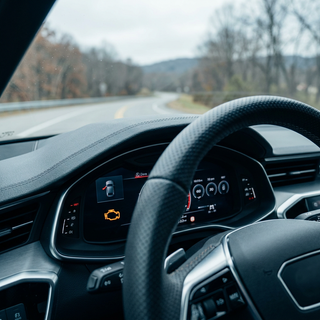
- An illuminated Check Engine light displaying diagnostic trouble code P0128 (Coolant Thermostat Below Regulating Temperature).
A thermostat stuck closed presents the opposite and far more hazardous condition. With the valve sealed shut, coolant cannot circulate out to the radiator for cooling, trapping combustion heat inside the block. The temperature gauge will rapidly climb into the red zone, the cooling hoses will build extreme hydraulic pressure, and the radiator expansion tank may boil over. If cabin heat goes cold during an active engine overheat event, it typically means an airlock or steam pocket has formed around the water pump, completely halting liquid circulation. Continued operation with a thermostat stuck closed risks warped cylinder heads, blown gaskets, and catastrophic engine seizure.
What Are the Classic Symptoms of a Failing or Clogged Heater Core?
The classic symptoms of a clogged or failing heater core include cold air from the vents, a distinct sweet odor inside the cabin, persistent greasy fog coating the inside of the windshield, and damp carpet in the front passenger footwell. Because the heater core relies on narrow internal passages to transfer thermal energy, it is highly susceptible to both internal blockages and corrosive leaks.
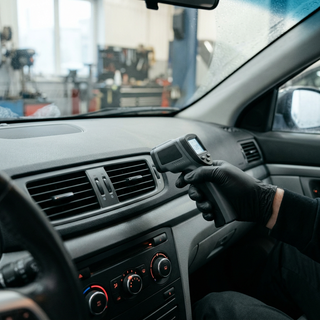
Over years of service, degraded antifreeze loses its protective corrosion inhibitors, allowing rust, scale, and mineral deposits to settle inside the narrow tubes of the heater core. This sediment buildup restricts hot coolant flow, preventing heat transfer to the cabin air even when the engine runs at normal temperature. If the core restricts completely, both inlet and outlet heater hoses will exhibit a noticeable temperature difference when checked with an infrared thermometer.
Physical failure of the heater core typically manifests through coolant leakage directly into the vehicle's interior HVAC box:
- Sweet Maple-Syrup Odor: Ethylene glycol coolant creates a sickly sweet smell that enters the cabin whenever the blower fan activates.
- Oily Windshield Fogging: A pinhole rupture in the heater core sprays atomized hot coolant vapor into the defrost ducts, coating the windshield glass in a film that smears rather than evaporates.
- Wet Passenger Flooring: Escaping coolant pools at the bottom of the dashboard air box and leaks past the drain seal, soaking the carpet and padding beneath the glove compartment.
- Unexplained Coolant Loss: If your coolant expansion tank drops repeatedly without visible puddles on the ground beneath the engine bay, liquid may be collecting inside the dashboard housing or evaporating into the ventilation plenum.
Could Low Coolant and Trapped Air Pockets Cause Your Cabin Heater to Blow Cold Air?
Low coolant volume is one of the leading causes of a heater blowing cold air because the heater core sits at one of the highest physical points in the vehicle's cooling circuit. When fluid levels drop below the threshold required to keep the system fully charged, liquid cannot reach the elevated core tubes. Instead, air pockets collect in the heater lines, forming an airlock that blocks the normal flow of hot coolant.
Trapped air bubbles prevent thermal transfer because air cannot carry or exchange heat like pressurized liquid coolant. Air locks frequently develop after radiator repairs, hose replacements, or cooling flushes if the system was not bled using a vacuum filler or spill-free burping apparatus. When air is trapped inside the lines, drivers often notice that the heater blows cold while sitting at a stoplight, but briefly surges with warm air when the engine is revved or driven up an incline. This symptom occurs because elevated water pump speed temporarily forces coolant past the air bubble into the core.
Checking and addressing cooling system levels requires strict safety precautions:
- Ensure the engine is completely cold. Never unscrew a radiator cap or expansion tank cap on a warm engine, as pressurized boiling liquid can cause severe burns.
- Inspect the translucent recovery reservoir to verify whether liquid rests between the "Min" and "Max" indicators.
- Check the underside of the vehicle, radiator seams, water pump weep hole, and heater hose clamps for dried white, green, or orange crust indicating an active external leak.
- If the coolant level is visibly depleted, topping off the reservoir is only a temporary step. The underlying leak must be located and sealed to prevent persistent air intrusion and engine overheating.
Is It Cheaper to Repair Car Heating Issues DIY or Hire a Professional Mechanic?
Tackling simple cooling issues like topping off fluid or replacing a blown blower fuse in your driveway saves money, but diagnosing deeper heating faults often requires professional tooling to avoid costly diagnostic errors. While a DIY fix costs between $20 and $80 in basic fluids or small parts, misdiagnosing an HVAC issue can lead to replacing functional components without restoring cabin warmth.
Basic procedures that handy owners can often manage include inspecting visible radiator hoses, topping off coolant using the exact vehicle-specified formulation, and replacing an accessible cabin air filter behind the glove compartment. A clogged cabin filter severely restricts airflow, leading many to believe their heater core has failed when the system is merely starved of air.
More intricate repairs heavily favor certified service facilities due to specialized tools and labor demands:
- Bleeding Air Pockets: Modern engines feature intricate bypass circuits that require specialized vacuum-fill equipment to eliminate airlocks completely. Improper burping can leave hot spots that crack cylinder heads.
- Heater Core Replacement: Replacing a leaking heater core requires 6 to 10 hours of intensive labor, demanding complete disassembly of the steering column, center console, and entire instrument panel. Professional handling avoids damaged wiring harnesses or broken dashboard clips that create permanent interior rattles.
- Actuator Calibration: Modern motorized blend doors frequently require digital recalibration via electronic scan tools to align their movement limits with the body control module.
You can order original replacement parts directly through our service desk to ensure factory fitment, or easily schedule a service appointment with our certified technicians to receive transparent diagnostics and prompt repairs.
How Much Does It Cost to Fix a Car Heater That Blows Cold Air?
The cost to fix a car heater depends on which component has failed, ranging from an inexpensive system flush to an intensive heater core replacement. Because the heating system bridges both engine thermal cooling and interior electronic climate controls, accurate diagnosis determines the exact scope of work.
A professional cooling system drain, flush, and refill typically costs between $120 and $200. This service removes degraded coolant, cleans sediment from cooling lines, introduces fresh rust-inhibiting antifreeze, and bleeds all residual air pockets. Replacing a stuck thermostat generally runs between $150 and $350, depending on housing location and accessibility.
When the fault lies inside the dashboard, labor makes up the majority of the invoice:
- Blend Door Actuator Replacement: Parts generally cost between $40 and $120, with labor ranging from $100 to $300 depending on whether the motor is accessible from the footwell or buried behind the dash framework.
- Heater Core Flush: If a core is partially restricted with scale, a chemical backflush can clear the passages for roughly $150 to $250 without physical removal.
- Heater Core Replacement: When a heater core ruptures or clogs irreversibly, replacement costs typically range from $800 to $1,500. The component itself is moderately priced, but the labor requires near-complete removal of the interior dashboard assembly.
Frequently Asked Questions About Car Heating and Cooling Systems
Q: Can a dirty cabin air filter stop my car heater from blowing warm air?
A clogged cabin air filter will not change the temperature of the air, but it can severely choke airflow through the ventilation ducts. When dust, leaves, and road debris coat the filter pleats, the blower motor cannot push air efficiently across the heater core. This restriction makes the heater seem weak or barely warm, as very little conditioned air reaches the passenger compartment. Replacing the cabin filter every 15,000 to 20,000 miles restores proper volume and defrosting performance.
Q: Why does my car heater blow warm air while driving but turn cold at a stoplight?
Heater air that goes cold when idling indicates low engine coolant or a worn water pump impeller. When engine revolutions drop to idle speeds around 700 to 800 RPM, the water pump spins slowly, generating minimal hydraulic pressure. If coolant volume is low or air is trapped in the lines, the pump cannot overcome gravity to push hot fluid into the elevated heater core at idle. Accelerating the vehicle spins the pump faster, temporarily restoring coolant circulation and heating performance.
Q: Is it safe to drive my car if the heater is blowing cold air?
Driving with a malfunctioning heater is only safe if your engine temperature gauge remains stable in its normal operating range. If cold air is accompanied by a rising temperature gauge, steam under the hood, or low coolant levels, continued driving risks blown head gaskets or warped engine components. Furthermore, during freezing winter weather, a broken heater leaves your front defroster inoperable, creating an extreme safety hazard if your windshield fogs or freezes while navigating traffic.
Q: Can I unclog a heater core without removing the vehicle dashboard?
Technicians can often clear a clogged heater core without removing the dashboard by performing an isolated chemical backflush. This process involves disconnecting the heater core inlet and outlet hoses in the engine bay and circulating a specialized radiator cleaner and pressurized water in reverse through the core passages. If the restriction consists of soft mineral scale or fresh sediment, backflushing can restore circulation. However, if the core has suffered severe corrosion or has an active physical leak, replacement is unavoidable.
Q: How does a dual-zone climate system cause heat on only one side of the car?
Dual-zone climate systems use two separate blend door actuators to independently control airflow temperatures for the driver and front passenger sides. If one actuator motor fails or binds mechanically, its corresponding flap remains stuck on cold while the opposite side functions normally. When one vent blows hot and the other blows cold, the root cause is almost always an actuator, broken door pivot, or HVAC control module fault rather than an engine cooling system problem.
Schedule Heating Diagnostics and Certified Cooling System Service at Tri State Ford
A working heater is essential for daily safety and comfort during harsh winter conditions. Navigating the steep riverfront hills of East Liverpool or managing long daily commutes across the tri-state area requires dependable cabin warmth and clear, frost-free visibility. When your heater blows cold, our factory-trained service technicians can quickly inspect your cooling system, test your blend doors, and ensure your vehicle runs smoothly.
From cooling system flushes and water pump replacements to thorough routine electrical and battery inspections, our team uses genuine OEM parts to maintain your vehicle to factory specifications. Stop by our service department at 1503 Pennsylvania Ave, East Liverpool, OH 43920, plan your trip using our easy map directions, or call our service department at (330) 462-7578 to schedule your heating inspection today.