

Blog / Maintenance & Service, Recall Information, Safety & Reliability, Vehicle Ownership Care, Parts &

Understanding the 2025 Ford F-150 Axle Hub Recall: What Tri-State Owners Need to Know

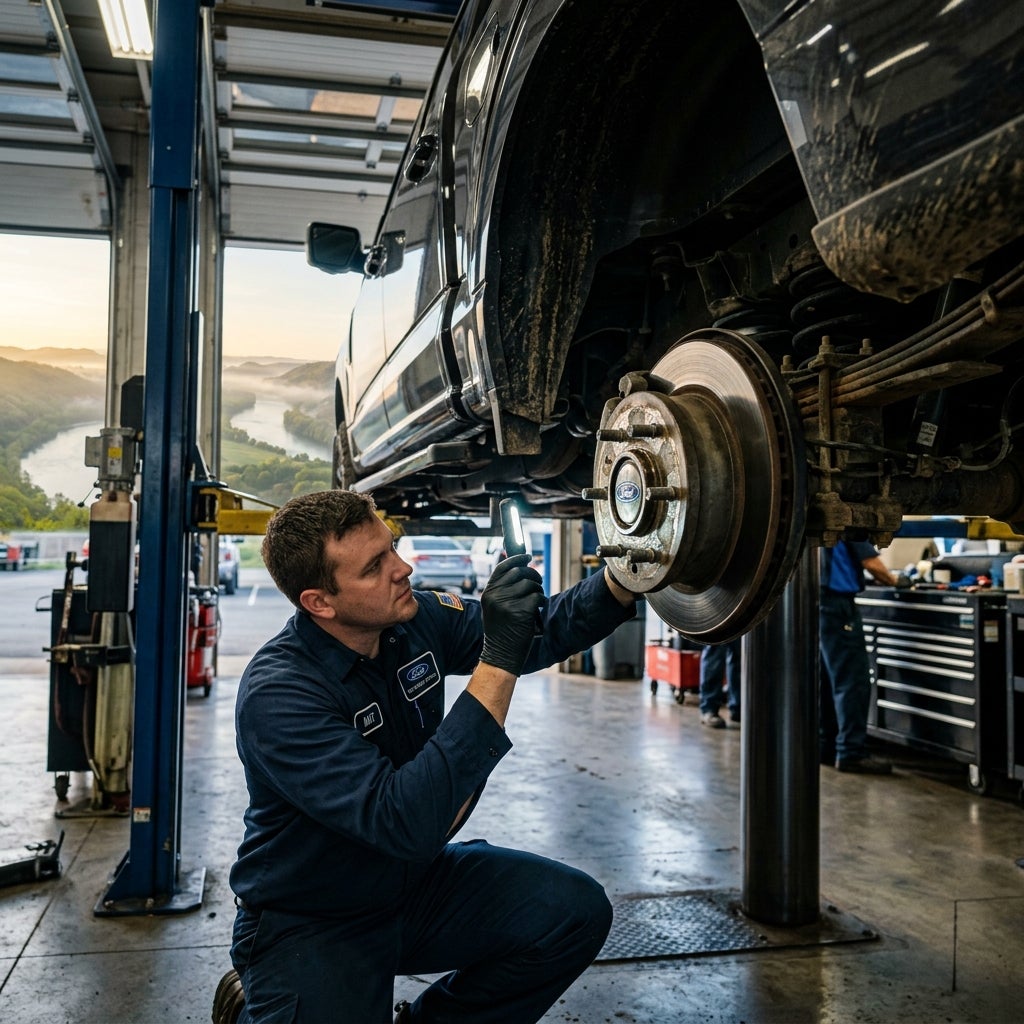
Article image

Understanding the 2025 Ford F-150 Axle Hub Recall: What Tri-State Owners Need to Know

As a Service Manager at Tri State Ford with over a decade of experience, I want to provide clear, practical insights to help our community in East Liverpool and surrounding areas understand the recent axle hub recall affecting 2025 Ford F-150 trucks. The recall involves a critical safety component—the axle hub bolts—which, if compromised, can lead to serious drivability issues or safety risks.

The axle hub is a vital part of your F-150’s drivetrain, responsible for securing the wheel assembly to the axle shaft and ensuring smooth rotation. In the 2025 model, certain manufacturing or material defects have led to the possibility that these axle hub bolts might fail prematurely. This creates a risk where the affected wheel could lose secure attachment, potentially causing loss of power or, worse, the truck rolling away when parked. For families and hardworking professionals who rely on their F-150 daily—whether commuting from Calcutta or hauling equipment to sites near Boardman—understanding this recall is crucial for your safety and peace of mind.

Ford has proactively issued this recall to replace the affected axle hubs at no cost to owners. At Tri State Ford, we treat these recalls seriously. Our certified technicians use genuine Ford parts to ensure your truck meets the highest safety and reliability standards after repair. We emphasize prompt service because the longer a potentially faulty axle hub remains unaddressed, the greater the risk to you and your passengers.

If you own a 2025 F-150, it’s important to verify whether your vehicle is included in the recall. The process is straightforward, and our service department is ready to assist you in checking your Vehicle Identification Number (VIN) and scheduling any necessary repairs. We know the importance of transparency and clear communication in handling recalls, so you can trust our team to guide you through every step.

For easy access, you can get directions to Tri State Ford or call us at (330) 462-7578 to speak with a service advisor. We prioritize your safety and vehicle care, aiming to keep you on the road without hassle.

In summary, the 2025 F-150 axle hub recall is a vital safety alert for Tri-State owners. Acting quickly helps protect your investment and, more importantly, your family’s safety. Our team at Tri State Ford is here to provide expert service and support through this recall process with transparency and care.

Table of Contents

How to Identify Early Signs of Axle Hub Bolt Failure in Your F-150

Recognizing the early warning signs of a failing axle hub bolt on your 2025 Ford F-150 is crucial for safety and preventing more extensive damage. From my years managing service operations at Tri State Ford, I’ve seen firsthand that catching these issues early can save both time and money and avoid unsafe driving conditions.

One of the most common signs is a noticeable humming or grinding noise coming from the front or rear wheels, especially when turning. This noise often signals that the axle hub bolt is loosening or experiencing wear. You might also feel vibrations through the steering wheel or vehicle body, which become more pronounced at higher speeds.

Another indicator is uneven or rapid tire wear. When the axle hub bolt fails to hold the wheel assembly securely, it causes alignment issues, resulting in abnormal tire wear patterns. Additionally, if you notice difficulty steering or a pulling sensation to one side, that could point to axle-related problems.

Visual inspections during routine maintenance may reveal rust or corrosion around the axle hub area, or even loose components if you’re comfortable checking. If any of these symptoms appear, it’s important to schedule a thorough inspection promptly.

Keeping an eye out for these early signs helps maintain the dependable performance Ford trucks are known for. For trusted, expert care and timely repairs related to your F-150's axle system, our service team at Tri State Ford is ready to assist. You can always count on us to help keep your truck in top shape. Be sure to explore our Truck Inventory to find the perfect Ford truck that suits your needs.

Step-by-Step Guide to Checking If Your 2025 F-150 Is Part of the Axle Hub Recall

If you own a 2025 Ford F-150, it’s important to verify whether your vehicle is included in the axle hub recall. The process is straightforward and ensures your safety on the road.

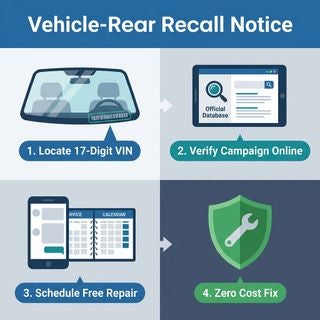
First, locate your Vehicle Identification Number (VIN). This 17-character code is found on the driver’s side dashboard near the windshield, or inside the driver’s door frame. Your registration or insurance documents also contain the VIN.

Next, visit the official Ford recall lookup website or the National Highway Traffic Safety Administration (NHTSA) recall page. Enter your VIN accurately in the provided search field. This will tell you if your specific F-150 is affected by the recall.

Alternatively, you can call Ford’s customer service with your VIN for assistance. If your vehicle is part of the recall, it’s crucial to schedule service promptly. At Tri State Ford, our trained technicians will perform the necessary inspection and repairs using genuine Ford parts, ensuring your truck maintains its reliability and safety.

Remember to keep your VIN handy and check periodically, especially if you’ve recently purchased the vehicle or had it serviced elsewhere. Staying proactive helps prevent unexpected issues and keeps your family safe during daily drives across communities like Calcutta, OH, and East Liverpool.

What to Expect During the Axle Hub Recall Repair Process at Tri State Ford

When your 2025 Ford F-150 is part of the axle hub recall, the repair process at Tri State Ford is designed to be straightforward and efficient, minimizing disruption while ensuring your vehicle’s safety and reliability. Our certified technicians begin by performing a thorough inspection to confirm the recall status and assess the specific condition of your truck’s axle hubs.

The primary repair involves replacing the affected axle hub bolts with updated, reinforced components designed to meet Ford’s rigorous safety standards. This replacement helps prevent potential hub failure that could lead to loss of vehicle control. We use only genuine Ford parts to maintain your F-150’s integrity and uphold manufacturer warranty protections.

Typically, the repair is completed within a few hours, but the exact time can vary based on your truck’s configuration and service bay availability. Our team works diligently to complete the job promptly without compromising quality. Throughout the process, we keep you informed about the repair status and answer any questions you might have.

Additionally, we perform a comprehensive safety check of related components, such as bearings and suspension parts, to ensure no further issues remain. After the repair, we test drive your vehicle to confirm everything operates smoothly and safely.

Scheduling your recall repair at Tri State Ford means receiving expert care backed by up-to-date technical knowledge and quality service. Our technicians are accustomed to handling these repairs and understand the importance of restoring your truck’s dependability for your peace of mind on roads through places like Calcutta, OH, and East Liverpool.

Safety Considerations: Can You Drive Your F-150 With a Pending Axle Hub Recall?

When it comes to driving your 2025 Ford F-150 with a pending axle hub recall, safety must be the top priority. The axle hub is crucial for maintaining wheel attachment and proper vehicle control, so any concerns related to its integrity should not be taken lightly. If you notice any unusual noises, vibrations, or handling issues, it’s best to avoid driving until the recall repair is completed.

However, if your F-150 shows no signs of axle hub failure, limited driving under cautious conditions is generally considered acceptable. Still, I always advise Tri-State owners to minimize use and get their vehicle inspected by certified technicians as soon as possible.

Driving a truck with a known recall defect carries risks that can escalate quickly, especially when hauling loads or navigating rough terrain common around Calcutta, OH. Prioritize scheduling your recall repair promptly to ensure your truck remains safe and reliable for your daily tasks.

Real-World Reliability Challenges with 2025 F-150 Axles and How Service Can Help

The 2025 Ford F-150’s axle hubs have proven robust in general, but the recent recall highlights real-world challenges that can affect their reliability. Axle hub bolts may loosen or fail due to manufacturing defects or wear, risking loss of power or unintended vehicle movement. This is especially concerning for drivers navigating rugged routes or hauling heavy loads around places like East Liverpool or Calcutta, OH.

Regular inspection and maintenance play a crucial role in identifying these issues early. At Tri State Ford, our certified technicians use advanced diagnostic tools to detect axle hub wear and address any emerging problems before they escalate. Timely service helps maintain the truck’s performance and safety, reducing downtime and costly repairs.

If you notice unusual noises, vibrations, or handling changes, don’t wait—contact our service department at Call us at (330) 462-7578 or get directions to Tri State Ford for a thorough inspection. Our team is here to keep your F-150 running safely and reliably.
© 2026 Tri State Ford. All rights reserved.

Posted in:

Related Posts

Escape

Why Do Car Batteries Fail in Cold Weather?

.hrizn-rte-content .e-rte-image{border:0;max-width:100%;height:auto} .hrizn-rte-content .e-rte-image.e-imginline{display:inline-block;float:none;margin-left:5px;margin-right:5px;max-width:calc(100% - 10px);vertical-align:bottom} .hrizn-rte-content .e-rte-image.e-imgbreak,.hrizn-rte-content .e-rte-image.e-imgcenter{display:block;float:none;margin:5px auto;max-width:100%} .hrizn-rte-content .e-rte-image.e-imgleft{float:left;margin:0 12px 8px 0;max-width:100%} .hrizn-rte-content .e-rte-image.e-imgright{float:right;margin:0 0 8px 12px;max-width:100%} .hrizn-rte-content figure.e-rte-image{margin:8px auto;max-width:100%} .hrizn-rte-content figure.e-imgleft{float:left;margin:0 12px 8px 0} .hrizn-rte-content figure.e-imgright{float:right;margin:0 0 8px 12px} .hrizn-rte-content figure.e-imgcenter{display:block;margin:8px auto;text-align:center} Car batteries fail in sub-freezing temperatures because low thermal energy slows the internal chemical reactions that generate electrical current while simultaneously increasing internal resistance. At 32°F, a standard 12-volt lead-acid battery loses approximately 35% of its starting power, dropping to less than 50% capacity at 0°F. Combined with engine oil thickening in severe cold, the battery must supply up to double the electrical power to turn over a cold crankshaft precisely when its available energy output reaches its annual low point. Inside a traditional automotive battery, lead plates soak in an electrolyte solution of sulfuric acid and water. When you turn the ignition key or press the start button, a chemical reaction transfers electrons between the plates to create electrical current. Cold ambient air slows this ionic exchange, creating a severe bottleneck in power delivery. Older or weak batteries that function adequately during warm summer months frequently fail during the first sudden frost because their chemical efficiency degrades past the threshold required to turn the engine starter motor. Winter driving conditions also introduce significant parasitic electrical loads before the engine even starts. Heated seats, rear window defrosters, blower fans, and steering wheel heaters all demand immediate current from the 12-volt electrical system. For drivers navigating the steep riverfront bluffs around East Liverpool, cold morning starts force the starting system to work against dense, cold motor oil and heavy auxiliary power draws. If a battery is already compromised by age or sulfation, it cannot produce the necessary voltage under load. Proactive battery maintenance prevents sudden winter failure before sub-zero temperatures arrive. Drivers noticing slow cranking or flickering interior lights can reach out to our service advisors by giving us a quick call or stopping by our East Liverpool service facility for a comprehensive voltage and load test. Table of Contents How Does Freezing Weather Affect Battery Capacity and Cold Cranking Amps? Why Do AGM Batteries Withstand Freezing Temperatures Better Than Flooded Batteries? How Does a Battery Maintainer or Trickle Charger Prevent Winter Battery Failure? How Much Electric Vehicle Driving Range Can Cold Weather Impact? Common Questions About Winter Battery Care and Cold-Weather Performance Get Reliable Winter Battery Testing and Replacement How Does Freezing Weather Affect Battery Capacity and Cold Cranking Amps? Freezing weather drastically reduces a battery’s available output power while increasing the mechanical resistance of the engine. The critical metric for measuring winter starting capability is Cold Cranking Amps, which measures the current a fully charged 12-volt battery can deliver for 30 seconds at 0°F while maintaining at least 7.2 volts. Under the official SAE J537 testing protocol, battery performance ratings separate winter capability from warm-weather output. While standard Cranking Amps measures output at a mild 32°F, Cold Cranking Amps subjects the battery to a rigorous 0°F test environment. Understanding this distinction explains why an older battery might start a vehicle effortlessly during autumn but struggle to turn over the engine during a midwinter freeze. Battery Metric Testing Temperature Output Capability at 0°F Primary Purpose Cranking Amps 32°F (0°C) Approximately 65% of rated capacity Measures mild-weather engine starting capability Cold Cranking Amps 0°F (-18°C) 50% or less of rated capacity on weak units Measures severe sub-zero winter starting strength Reserve Capacity 80°F (27°C) Reduced runtime under continuous load Measures emergency electrical supply duration As ambient temperatures drop, motor oil viscosity increases significantly. Thicker oil resists movement across pistons and crankshaft bearings, forcing the starter motor to draw anywhere from 100% to 200% more amperage to rotate the engine at starting speed. If a battery has lost 40% of its rated Cold Cranking Amps due to cold chemical slowdown, it cannot fulfill the elevated starter demand. Engineering guidelines recommend choosing a replacement battery with a rating at least 20% higher than factory minimums if your vehicle frequently parked outdoors in freezing climates. Scheduling routine diagnostic checks ensures your starting system meets OEM specifications before peak winter hits. You can learn more about proper voltage testing and replacement intervals through our specialized battery maintenance guidelines. Why Do AGM Batteries Withstand Freezing Temperatures Better Than Flooded Batteries? Absorbent Glass Mat batteries resist severe freezing conditions far better than traditional flooded batteries because their liquid electrolyte is completely absorbed into micro-fiberglass mat separators. This sealed design prevents electrolyte stratification, lowers internal electrical resistance, and eliminates the risk of internal case cracking caused by expanding fluid. In a standard flooded lead-acid battery, continuous charge cycles can cause water and sulfuric acid to separate, a process known as acid stratification. The heavier acid settles at the bottom of the casing while dilute water remains near the top. If a flooded battery becomes discharged, this top layer of dilute electrolyte can freeze solid at 32°F, expanding and permanently damaging the internal lead plates or cracking the outer plastic case. An AGM battery eliminates liquid separation entirely. Because the electrolyte solution stays tightly bound against thin lead plates inside absorbent glass material, the internal chemical reaction remains consistent across the entire cell surface. Key physical and operational advantages include: Micro-fiberglass mats hold electrolyte in direct contact with lead plates, reducing internal resistance. Sealed cell construction prevents fluid evaporation and liquid acid stratification. Higher vibration resistance protects internal components on rough winter road surfaces. Faster charge acceptance allows the alternator to replenish spent energy more rapidly on short drives. Vehicles equipped with heavy electrical loads, such as a 2026 Ford Explorer or a 2026 Ford F-150 with winter comfort features, rely heavily on rapid charge acceptance. An AGM battery accepts high-current charging from the alternator much faster than a standard flooded unit, ensuring the battery restores its state of charge even during low-speed winter driving. How Does a Battery Maintainer or Trickle Charger Prevent Winter Battery Failure? A smart battery maintainer prevents winter failure by supplying a continuous, low-amperage float charge that offsets natural self-discharge and prevents lead sulfation. By maintaining cell voltage above 12.4 volts during idle periods, a maintainer ensures the chemical electrolyte remains fully active and capable of delivering maximum output. Lead-acid batteries experience natural self-discharge when left parked, losing roughly 10% of their charge per month in mild weather and discharging faster when parasitic electronic draws remain active. Keyless entry receivers, alarm sensors, and engine control modules draw continuous milliamps from the 12-volt battery even when the vehicle is locked and turned off. If battery voltage drops below 12.4 volts, sulfur from the electrolyte begins forming permanent lead sulfate crystals on the internal plates. This process, known as sulfation, permanently reduces total storage capacity. Using a modern smart maintainer provides significant winter protection benefits: Microprocessor controls automatically adjust charge rates based on ambient temperature. Float mode maintains maximum voltage without overcharging or boiling off internal fluids. Prevents electrolyte freezing by keeping the battery at a full state of charge. Desulfation modes help dissolve soft sulfate deposits to restore electrical efficiency. Drivers navigating short suburban commutes along State Route 170 in Calcutta often start their engines, run seat heaters and defrosters for ten minutes, and turn off the vehicle before the alternator can fully restore the energy used during startup. Connecting a smart battery maintainer overnight counteracts these short-trip discharge cycles, extending overall battery lifespan through long stretches of sub-freezing weather. How Much Electric Vehicle Driving Range Can Cold Weather Impact? Cold weather temporarily reduces electric vehicle driving range by approximately 15% to 30% during severe winter conditions. This range reduction stems from decreased lithium-ion cell chemical efficiency combined with the significant energy required to heat the passenger cabin and keep the high-voltage traction battery within its optimal operating temperature window. Lithium ions move more slowly through liquid electrolyte when temperatures drop, increasing internal resistance within the high-voltage battery pack. This temporary chemical slowdown limits maximum available acceleration power and reduces energy recovery from regenerative braking. Furthermore, while internal combustion engines use waste heat to warm the interior, an electric vehicle like a 2026 Ford Escape Plug-In Hybrid or all-electric model must pull energy directly from the traction battery to power high-voltage resistance heaters or heat pumps. Modern battery management systems protect high-voltage packs from permanent degradation through active thermal controls. Charging a freezing lithium-ion cell at high currents can cause lithium plating—a condition where metallic lithium deposits on the anode rather than inserting cleanly into the graphite structure. To prevent permanent damage, onboard control modules automatically limit charging speeds and draw grid power to heat the battery pack before accepting high-rate DC fast charging. To minimize range loss and optimize battery protection during winter, owners can follow proven operational strategies: Precondition the cabin and battery pack while the vehicle remains connected to an external charger. Park inside an enclosed garage whenever possible to buffer against sub-zero wind chills. Utilize heated seats and steering wheel controls, which draw less energy than cabin air heaters. Maintain steady driving speeds to allow thermal management systems to stabilize pack temperatures. Drivers seeking seasonal service inspections or looking to explore new electrification technologies can browse our current manufacturer vehicle specials or explore options to custom order a new vehicle configured with cold-weather packages. Common Questions About Winter Battery Care and Cold-Weather Performance Q: How long should you drive a vehicle to fully recharge the battery after a cold jump start? You should drive continuously at highway speeds for at least 30 to 45 minutes with non-essential electrical accessories turned off after receiving a jump start. This extended runtime allows the alternator to deliver a consistent charging current back into the 12-volt battery. Short trips under 15 minutes or idling in a driveway will not generate sufficient alternator output to fully restore a deeply discharged battery, leaving you vulnerable to another dead battery on your next start. Q: At what ambient temperature does a car battery freeze? A fully charged lead-acid battery will not freeze until ambient temperatures drop below -76°F because its electrolyte solution contains a high concentration of sulfuric acid. However, a fully discharged battery with a voltage reading near 12.0 volts consists mostly of water, causing it to freeze at 32°F. Once internal fluid freezes, expanding ice can bend internal lead plates, rupture internal separators, and crack the outer plastic casing, inflicting permanent structural damage. Q: Why does an engine crank slowly when starting on cold winter mornings? Sluggish engine cranking occurs because extreme cold simultaneously reduces battery current output and thickens motor oil. Sub-freezing temperatures slow the chemical reactions inside your 12-volt lead-acid battery, cutting available Cold Cranking Amps by up to 50%. At the same time, cold motor oil becomes viscous, creating severe mechanical drag across internal engine components that forces the starter motor to draw significantly more electrical power to rotate the crankshaft. Q: Does parking inside a garage really protect battery health during severe cold snaps? Parking inside an enclosed garage provides substantial protection by insulating the vehicle from harsh wind chills and keeping ambient temperatures several degrees warmer than outdoor air. This temperature buffer slows the rate of battery heat loss overnight, preserving available Cold Cranking Amps for morning starts. Garaged parking also reduces the initial energy demand required by cabin heaters and defrosters, allowing the alternator to concentrate its power output on recharging the battery immediately after startup. Q: What is the main difference between Cold Cranking Amps and Cranking Amps? Cold Cranking Amps measures the maximum current a fully charged battery can deliver for 30 seconds at 0°F while maintaining at least 7.2 volts, serving as the industry standard for winter performance. Cranking Amps measures output at 32°F, resulting in a higher numerical rating that reflects mild-weather capability. Always reference the Cold Cranking Amps specification when selecting a replacement battery for reliable operation in freezing climates. If you suspect your starting system is struggling, you can easily schedule a service appointment online for a comprehensive electrical system evaluation. Get Reliable Winter Battery Testing and Replacement Cold weather exposes subtle weaknesses in aging vehicle batteries, turning minor voltage drops into unexpected morning breakdowns. Simple preventative care—such as verifying terminal cleanliness, checking charge system voltage, and testing cold-cranking capability—ensures your vehicle starts dependably throughout the coldest winter months. Our factory-trained technicians at Tri State Ford possess specialized diagnostic equipment to test your battery’s state of health, reserve capacity, and cold-weather performance. If testing reveals a weakened cell, we install genuine Motorcraft batteries built to original equipment specifications, backed by comprehensive nationwide warranty coverage. Do not wait for sub-zero temperatures to leave you stranded. To prepare your vehicle for winter driving, give our service team a quick call, stop by our service center on Pennsylvania Avenue, or conveniently order replacement parts online today. © 2026 Tri State Ford. All rights reserved. Title Tags Cold Weather Car Battery Tips in East Liverpool OH | Tri State Ford Meta Description Keywords Open Graph Twitter Card Canonical Article Metadata Geographic Targeting { "@context": "https://schema.org", "@graph": [ { "@type": "NewsArticle", "@id": "#article", "headline": "Why Do Car Batteries Fail in Cold Weather?", "datePublished": "2026-08-27T19:16:03.247Z", "dateModified": "2026-08-27T19:19:04.938Z", "author": { "@id": "#author" }, "publisher": { "@id": "#dealer" }, "wordCount": 2153, "description": "Learn why cold weather causes car batteries to fail, how sub-freezing temperatures slow chemical reactions, and why winter engine starts demand extra power." }, { "@type": "AutoDealer", "@id": "#dealer", "name": "Tri State Ford", "url": "https://www.tristateford.net", "telephone": "+13304627578", "sameAs": [ "https://maps.google.com/?cid=1136336406351438323" ], "address": { "@type": "PostalAddress", "streetAddress": "1503 Pennsylvania Ave", "addressLocality": "East Liverpool", "addressRegion": "OH", "postalCode": "43920", "addressCountry": "US" }, "areaServed": { "@type": "GeoCircle", "geoMidpoint": { "@type": "GeoCoordinates", "latitude": "40.6367833", "longitude": "-80.5443033" }, "geoRadius": "48280" }, "geo": { "@type": "GeoCoordinates", "latitude": "40.6367833", "longitude": "-80.5443033" }, "openingHours": [ "Mo 09:00-20:00", "Tu 09:00-18:00", "We 09:00-18:00", "Th 09:00-20:00", "Fr 09:00-18:00", "Sa 09:00-15:00" ] }, { "@type": "FAQPage", "@id": "#faq", "mainEntity": [ { "@type": "Question", "name": "How long should you drive a vehicle to fully recharge the battery after a cold jump start?", "acceptedAnswer": { "@type": "Answer", "text": "You should drive continuously at highway speeds for at least 30 to 45 minutes with non-essential electrical accessories turned off after receiving a jump start. This extended runtime allows the alternator to deliver a consistent charging current back into the 12-volt battery . Short trips under 15 minutes or idling in a driveway will not generate sufficient alternator output to fully restore a deeply discharged battery, leaving you vulnerable to another dead battery on your next start." } }, { "@type": "Question", "name": "At what ambient temperature does a car battery freeze?", "acceptedAnswer": { "@type": "Answer", "text": "A fully charged lead-acid battery will not freeze until ambient temperatures drop below -76°F because its electrolyte solution contains a high concentration of sulfuric acid. However, a fully discharged battery with a voltage reading near 12.0 volts consists mostly of water, causing it to freeze at 32°F. Once internal fluid freezes, expanding ice can bend internal lead plates, rupture internal separators, and crack the outer plastic casing, inflicting permanent structural damage." } }, { "@type": "Question", "name": "Why does an engine crank slowly when starting on cold winter mornings?", "acceptedAnswer": { "@type": "Answer", "text": "Sluggish engine cranking occurs because extreme cold simultaneously reduces battery current output and thickens motor oil. Sub-freezing temperatures slow the chemical reactions inside your 12-volt lead-acid battery , cutting available Cold Cranking Amps by up to 50%. At the same time, cold motor oil becomes viscous, creating severe mechanical drag across internal engine components that forces the starter motor to draw significantly more electrical power to rotate the crankshaft." } }, { "@type": "Question", "name": "Does parking inside a garage really protect battery health during severe cold snaps?", "acceptedAnswer": { "@type": "Answer", "text": "Parking inside an enclosed garage provides substantial protection by insulating the vehicle from harsh wind chills and keeping ambient temperatures several degrees warmer than outdoor air. This temperature buffer slows the rate of battery heat loss overnight, preserving available Cold Cranking Amps for morning starts. Garaged parking also reduces the initial energy demand required by cabin heaters and defrosters, allowing the alternator to concentrate its power output on recharging the battery immediately after startup." } }, { "@type": "Question", "name": "What is the main difference between Cold Cranking Amps and Cranking Amps?", "acceptedAnswer": { "@type": "Answer", "text": "Cold Cranking Amps measures the maximum current a fully charged battery can deliver for 30 seconds at 0°F while maintaining at least 7.2 volts, serving as the industry standard for winter performance. Cranking Amps measures output at 32°F, resulting in a higher numerical rating that reflects mild-weather capability. Always reference the Cold Cranking Amps specification when selecting a replacement battery for reliable operation in freezing climates. If you suspect your starting system is struggling, you can easily schedule a service appointment online for a comprehensive electrical system evaluation." } } ] } ] }