Blog / Financing & Insurance, Buying Guides, Used Vehicle Guides, Trade-In Tips, New Vehicle Sales

My Take on Down Payments and Trades: Protecting Your Investment from Day One

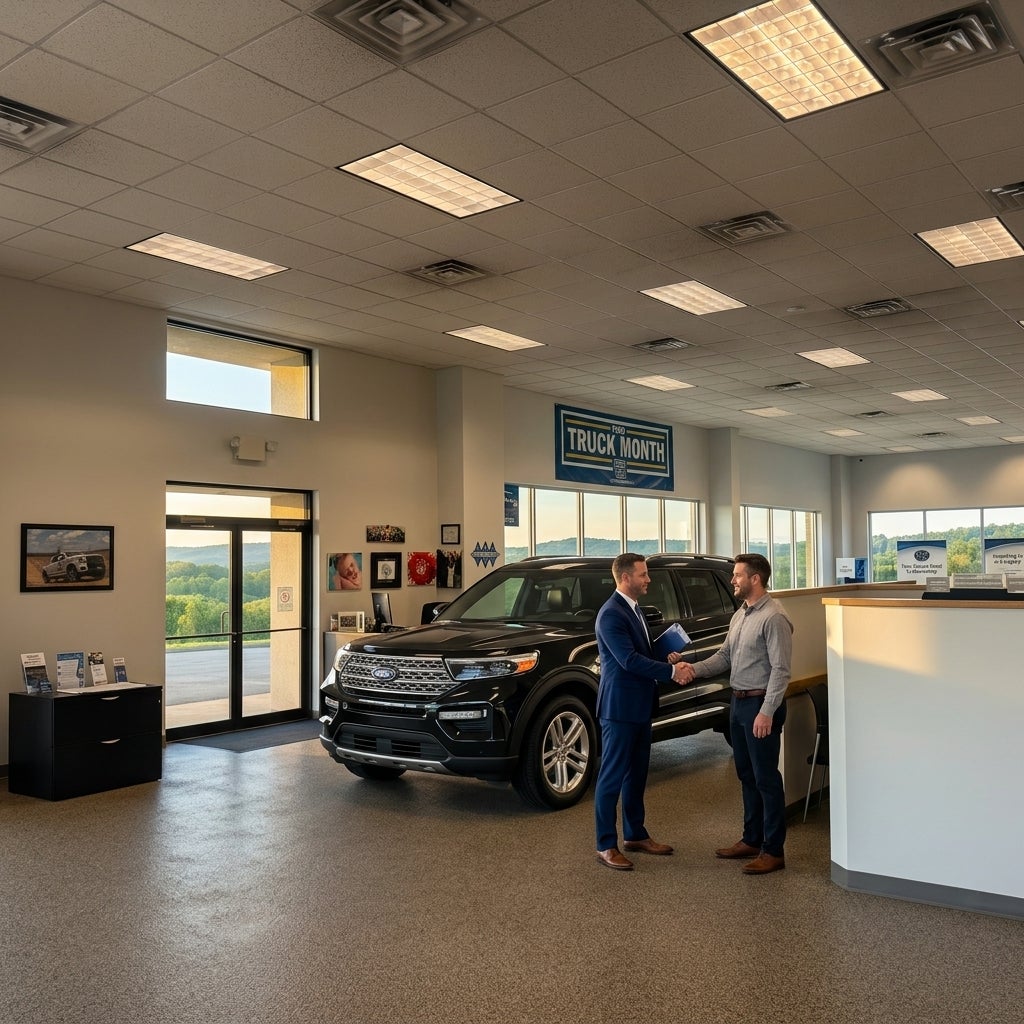
Cinematic wide-angle shot of a pristine, modern Ford SUV as the central focal point inside a a professional Sales Manager and a customer shaking hands confidently in the foreground, symbolic of a secure financial investment, through the lush rolling green hills of the Ohio tri-state landscape are v

My Take on Down Payments and Trades: Protecting Your Investment from Day One

I am Nick Pirl, Sales Manager at Tri State Ford, and after 9 years in the automotive industry, I have seen exactly how a solid starting position changes the entire ownership experience. When families come to see us from nearby Calcutta, the conversation usually starts with the vehicle features, but it quickly moves to the math behind the deal. The most important thing to understand about putting money down or bringing a trade-in is that it acts as a financial shock absorber. Because vehicles typically depreciate fastest in the first few years, a meaningful down payment helps keep your loan balance closer to the actual market value of the car.

In my experience, this initial investment is what prevents you from being upside down—a situation where you owe more than the car is worth. If you are driving a lot of miles across the rolling hills of the tri-state area, that depreciation can happen faster than a standard loan balance drops. By starting with a trade-in or cash, you are essentially buying equity upfront. This gives you much more flexibility if you decide you want to upgrade to a newer model a few years down the road.

Lenders also look at your "skin in the game" when they review a credit application. A substantial amount of money down is often viewed as a sign of lower risk, which can be the deciding factor in getting a lower interest rate or an approval on a premium trim level. If you are curious about where you stand, I always recommend that you value your trade-in before you even leave the house. You can also give us a quick call at (330) 462-7578 to discuss how your specific vehicle might factor into your next purchase. If you want to see how we handle these appraisals in person, you can find our showroom address and stop by for a professional evaluation.

## Determining the Right Amount to Put Down on Your Next Vehicle

A question I hear almost every day is: "Exactly how much should I be putting down?" While every budget is different, a 20% down payment on a new Ford is the commonly recommended guideline for a reason. For a used vehicle, we generally suggest aiming for at least 10%. These numbers aren't just arbitrary; they are designed to offset that initial depreciation curve. If you put 20% down on a new Ford F-150 or Explorer, you are effectively paying for the first year or two of value loss upfront, ensuring that you stay in a positive equity position.

Beyond just protecting your investment, the math on your monthly payment is straightforward. Generally, for every $1,000 you put down, you can expect your monthly obligation to drop by roughly $15 to $20, depending on your loan term and APR. This can be the difference between stretching your budget and being completely comfortable with your financing. I often see buyers use their tax returns or a trade-in to bridge the gap between a base model and a higher trim level they actually want.

We want to make sure you find the right fit, so I encourage you to browse our new-vehicle inventory to see the latest MSRP figures and features. If you have a very specific set of needs for work or family, you might even consider a new vehicle custom order to get exactly the towing package or interior tech you require. To help that down payment go even further, keep an eye on our new vehicle specials and used vehicle specials, or check for any manufacturer vehicle specials that might offer rebates or low-interest financing. If you are looking for a heavy-duty solution, you can also explore our current new work truck inventory to see what’s available for your business.

Table of Contents

The Realities of Zero Down Payment Offers

Is a zero-down offer ever a good idea? It is a tempting proposition, especially if you need a vehicle immediately and don't have a large cash reserve. However, as a sales manager, I have to be honest about the trade-offs. When you finance 100% of the purchase price plus taxes and fees, you are starting the loan with negative equity. This means you owe more than the car's resale value the moment you drive off the lot. For a daily commute through East Liverpool, where mileage adds up, this gap can grow quickly.

Zero-down financing usually requires excellent credit to qualify, and it almost always results in a higher monthly payment and more total interest paid over the life of the loan. If you choose this route, I strongly recommend looking into GAP insurance. This coverage protects you if the vehicle is totaled, paying the difference between the insurance settlement and your loan balance. Without a down payment, that "gap" can be thousands of dollars.

Instead of a true zero-cash deal, many of our customers find that even a small trade-in can change the loan's dynamic. You can get a KBB instant cash offer online to see if your current car has enough equity to serve as your down payment. This is a great way to lower your amount financed without touching your savings. If you are looking for high-value options that are easier to finance, we often suggest shopping Carfax 1-owner vehicles because they typically hold their value well. For business owners, we also have used work truck inventory that provides a rugged and reliable alternative to buying brand new with no money down.
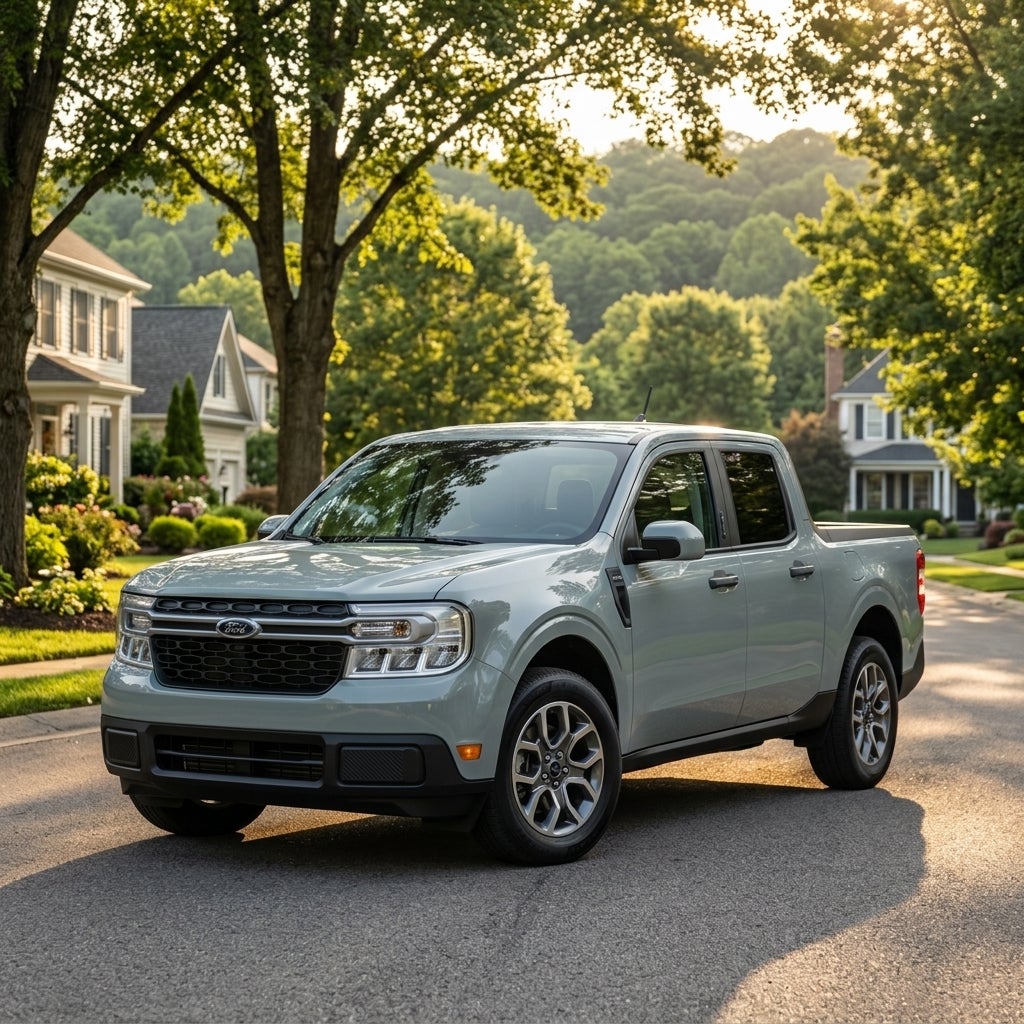
​Professional automotive photography of a modern Ford Maverick hybrid pickup truck, three-quarter front view, parked on a clean asphalt road in a suburban neighborhood characterized by the rolling hills and lush deciduous greenery of eastern Ohio, warm golden hour sunlight filtering through mature tr

Maximizing Your Trade-In Value Versus Selling It Yourself

One of the biggest decisions you'll face is whether to trade in your car or try to sell it privately. While selling it yourself might net a slightly higher price on paper, the convenience and tax advantages of a dealership trade-in often outweigh the difference. When you trade with us, you don't have to worry about meeting strangers for test drives, dealing with title transfers, or waiting for a buyer's financing to go through. We handle all the paperwork on the spot, making the transition to your new Ford seamless.

In many states, you also receive a sales tax credit when you trade. For example, if you are buying a $40,000 truck and your trade-in is worth $15,000, you only pay sales tax on the $25,000 difference. That tax savings alone can bridge much of the gap between a private sale price and a trade-in offer. To get the most value, make sure your vehicle is clean and you have all maintenance records available. Small things like having both sets of fobs and remotes can actually make a difference in the final appraisal.

If you are looking to upgrade to something with serious capability, our truck inventory is a great place to start your research. We see a lot of folks from Chester trading in older models for the towing capacity and smart tech found in the newer F-Series. For those managing a fleet, we offer new work truck inventory tailored for durability on the job site. We even offer Ford pick up and delivery for certain services to make your life easier once you’ve joined the family.

How Your Trade-In Equity Directly Lowers Your Amount Financed

Let me explain how the trade-in mechanics actually work during the financing process. If you own your current vehicle outright, the entire appraised value acts as a cash down payment. If you still owe money on your car, we first pay off the existing loan, and any remaining equity is applied to your new purchase. This equity directly reduces the principal balance of your new loan, which is the most effective way to lower your interest charges over time.

What happens if you have negative equity—meaning you owe more than the trade-in value? In many cases, we can roll that balance into your new auto loan. While this is a common practice, it does increase your amount financed and your monthly payment. I always advise customers in this situation to try and put some cash down to neutralize that negative equity so they aren't starting their new Ford journey in a deeper hole.

Our finance department is expert at navigating these scenarios and finding the loan terms that work for your specific equity position. Whether you are looking at a Super Duty from our truck inventory or a family SUV, we can structure a deal that makes sense. We also have manufacturer monthly service specials to help you keep your new investment in top shape, protecting its future trade-in value from the very beginning.

The Best Order to Negotiate Your Next Vehicle Purchase

Working with buyers for nearly a decade has taught me that the order of operations matters during a negotiation. I always recommend that we first agree on the out-the-door price of the new vehicle. This keeps the conversation clear and focused on the value of the car you are buying. Once that is established, we move to the trade-in appraisal. Separating these two steps ensures you know exactly what you are getting for your old car without it being "hidden" in the new car price.

Finally, we discuss financing and down payments. By the time we get to this stage, we have two solid numbers to work with, which makes calculating your monthly payment and interest rate much more transparent. This straightforward approach builds trust and ensures there are no surprises when you get to the finance office. It is also a good time to consider any accessories or add-ons you might want to include in the financing, such as a bed liner or a new set of all-terrain tires.

If you are ready to start the process, you can get directions to our dealership and come talk to our team in person. We can even help you find the right tires for your current vehicle if you decide you aren't quite ready to trade just yet. For any other questions about financing or trade-in values, feel free to give us a call at (330) 462-7578. We are here to make the buying process as honest and practical as possible for everyone in our community.

Keep your vehicle performing at its best with our service team:

© 2026 Tri State Ford. All rights reserved.

Posted in:

Recommended Posts

d

How Do You Know When Your Car Needs Brake Service?

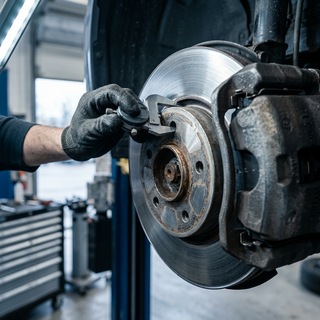
How Do You Know When Your Car Needs Brake Service? A car needs brake service when you notice continuous high-pitched squealing, harsh metal grinding, steering wheel or pedal pulsation, a soft pedal that sinks toward the floor, or the vehicle pulling to one side. Stopping distances will also increase noticeably as friction material wears thin. Experiencing any of these physical or audible changes indicates that your brake pads, rotors, or hydraulic components require an immediate professional inspection to maintain safe stopping power. Automotive braking systems rely on hydraulic pressure to force friction pads against spinning steel rotors at each wheel hub. Over thousands of miles, that friction material naturally shears away, converting the kinetic energy of your moving vehicle into thermal energy. In our regional climate zone, prolonged sub-freezing winter conditions and heavy road-salt exposure accelerate wear on caliper slide pins, hydraulic lines, and disc surfaces. Salt crust and moisture can cause hardware to seize prematurely, creating uneven pad contact and reduced clamping efficiency. Commuters traveling along State Route 170 in Calcutta frequently encounter rolling elevation changes combined with stop-and-go traffic that steadily erodes brake friction linings. When pad thickness drops below safe thresholds, heat dissipates poorly, increasing stopping distances and subjecting internal caliper seals to elevated operating temperatures. Routine multi-point inspections catch this gradual thinning before the steel backing plate gouges the rotor face. To maintain complete peace of mind on the road, our certified service department inspects pads, rotors, calipers, and brake fluid condition during every scheduled visit. While our technicians evaluate your friction assemblies, we can also perform routine battery and electrical checks to ensure every primary vehicle system remains dependable. If you hear unexpected noises or feel changes in pedal resistance, call our service team directly at (330) 462-7578 or stop by our service center on Pennsylvania Avenue for a comprehensive brake safety evaluation. Table of Contents What Are the Five Main Warning Signs Your Brakes Need Attention? What Causes Squealing and Metal-on-Metal Grinding Sounds When Braking? Why Does a Vehicle Pull to One Side, Vibrate, or Show a Spongy Pedal? What Is the Difference Between Ceramic and Semi-Metallic Brake Pads? How Much Does It Typically Cost to Replace Brake Pads and Rotors? Can Worn Brake Pads Cause Brake Failure? Common Questions About Brake Wear and Maintenance Schedule Professional Brake Inspection and Service at Tri State Ford What Are the Five Main Warning Signs Your Brakes Need Attention? The five primary indicators that automotive brakes require professional service are audible squealing or grinding, a pulsating brake pedal, a soft or sinking pedal feel, lateral vehicle pulling during stops, and extended stopping distances. Recognizing these distinct mechanical symptoms allows you to address localized friction wear before it damages expensive hydraulic hardware or compromises highway safety. Monitoring how your vehicle responds under braking reveals developing mechanical issues long before warning lights illuminate on the instrument panel: Audible Squealing or Grinding: High-frequency squealing occurs when small steel wear tabs contact the rotor, signaling thin pads. A coarse grinding noise means the friction material is entirely gone, leaving the steel backing plate to grind directly into the rotor face. Pedal or Steering Wheel Vibration: A distinct rhythmic shudder in the pedal or steering column while slowing from highway speeds points to rotor thickness variation. Uneven heat buildup warps the flat disc face, preventing the calipers from clamping smoothly. Soft, Spongy, or Low Pedal Travel: When the brake pedal travels unusually close to the floorboard before biting, moisture contamination or trapped air bubbles have compromised hydraulic pressure within the brake lines. Vehicle Pulling to One Side: If the steering wheel yanks left or right when decelerating, an uneven clamping force is acting on the front axle, frequently caused by a frozen caliper slide pin or a restricted brake hose. Noticeably Longer Stopping Distances: Pressing the pedal with standard force without achieving normal deceleration indicates glazed friction linings, overheating pads, or diminished hydraulic assist. Family SUVs such as the 2026 Ford Explorer with SelectShift transmission or the 2026 Ford Escape with All-wheel drive rely on balanced four-wheel disc setups to maintain stable tracking on slick pavement. When front and rear pads wear unevenly, anti-lock braking and electronic stability controls cannot distribute traction forces as effectively. If you perform your own maintenance, you can order genuine Motorcraft brake parts directly through our dealership to ensure your replacement hardware meets original factory specifications. What Causes Squealing and Metal-on-Metal Grinding Sounds When Braking? Persistent squealing is engineered into modern brake pads through thin metallic wear indicators that scrape against the rotor once friction material wears down to approximately 2 to 3 millimeters, while grinding indicates that the friction lining is completely gone, allowing the steel backing plate to chew directly into the rotor disc. Not all brake noise indicates mechanical distress. Light surface rust that forms overnight after heavy rain or humid conditions can generate a temporary squeak during the first two or three stops of the morning. Once the pads sweep the disc clean, that noise should vanish entirely. In contrast, mechanical wear indicators produce a steady, piercing squeal whenever the wheels are turning or when light pedal pressure is applied. These spring-steel tabs serve as an early warning system, giving drivers ample notice to replace the friction pads before bare metal touches bare metal. When high-pitched squealing is ignored, the remaining millimeter of friction compound rapidly burns away under normal friction heat. The moment the steel backing plate clamps against the cast-iron rotor, an aggressive grinding sound reverberates through the vehicle frame. This direct metal-on-metal friction creates deep score marks, thermal blueing, and severe gouges across the rotor face within a few miles. Driving in this condition ruins components that might have otherwise been resurfaced, increases stopping distances, and generates excessive heat that can boil brake fluid inside the caliper bores. To help you maintain your vehicle around a busy work week, our Ford Mobile Service van can handle select routine inspections and maintenance tasks right in your driveway, catching early pad wear before costly rotor damage occurs. Why Does a Vehicle Pull to One Side, Vibrate, or Show a Spongy Pedal? A vehicle pulls to one side during braking because of uneven hydraulic clamping pressure typically triggered by a sticking caliper slide pin, a frozen piston, or a collapsed flexible brake hose, while vibrations stem from rotor thickness variations and a spongy pedal points to trapped air or moisture inside the hydraulic lines. Unequal braking force on a single axle forces the vehicle toward the side delivering greater friction. If a caliper slide pin seizes due to road grime and salt intrusion, the inner pad remains trapped against the rotor while the outer pad fails to apply pressure. A restricted rubber brake line can act like a one-way check valve, holding residual fluid pressure on one wheel and causing continuous dragging. Secondary culprits include incorrect front tire pressures, severe suspension bushing wear, or misaligned front steering geometry. Descending the steep riverfront bluffs in East Liverpool places sustained thermal demand on your braking assembly, making uneven caliper clamping and side-to-side pulling immediately noticeable. Pedal vibration occurs when the brake rotor deviates from a perfectly flat plane. When the caliper squeezes a rotor that has uneven thickness or surface runout, the hydraulic fluid pulses backward through the system, creating a mechanical vibration felt through the pedal pad or steering wheel. This is rarely caused by metal physically warping like a wave; instead, uneven pad material deposits bake onto the rotor face after heavy braking stops, creating microscopic high spots. A spongy pedal signals a loss of hydraulic integrity. Brake fluid is hygroscopic, meaning it absorbs ambient moisture over time. Under repeated hard stops, that absorbed water boils at lower temperatures than fresh fluid, generating steam pockets. Because gases compress under pressure while liquids do not, pressing the pedal merely collapses the vapor bubbles rather than actuating the wheel calipers, resulting in a soft pedal that sinks toward the floor. What Is the Difference Between Ceramic and Semi-Metallic Brake Pads? Ceramic brake pads use dense ceramic compound interwoven with fine copper or brass fibers to deliver quiet operation, minimal light-colored dust, and extended service life for daily driving, whereas semi-metallic pads blend 30% to 70% ferrous metals to provide superior heat dissipation, aggressive initial bite, and higher resistance to brake fade during heavy towing. Choosing the right pad material depends on vehicle weight, typical cargo loads, and driving habits. Ceramic pads are engineered primarily for comfort, low noise, and clean wheels on commuter sedans and midsize SUVs. Their ceramic matrix operates quietly across normal operating temperatures and produces a fine, non-abrasive dust that will not stain aluminum alloy rims. However, ceramic compounds operate best within moderate temperature bands; under extreme towing or mountainous descents, they can suffer thermal glazing, temporarily diminishing stopping power. Semi-metallic pads excel under severe thermal loads. The embedded steel wool, iron, and copper particles conduct heat away from the rotor friction surface quickly, channeling thermal energy into the backing plate and caliper housing. This rapid heat dissipation makes semi-metallic friction material the standard choice for work trucks and heavy-duty towing applications. For instance, a 2026 Ford F-150 equipped with the 3.5L engine and Four-wheel drive, configured to tow up to 10,400 lbs, demands the durable thermal endurance of heavy-duty semi-metallic friction linings to control gross vehicle weights safely on steep grades. Conversely, a 2026 Ford Escape powered by a 1.5L engine running suburban errands benefits from the smooth modulation, quiet operation, and longevity of ceramic friction pads. How Much Does It Typically Cost to Replace Brake Pads and Rotors? Replacing brake pads typically costs between $150 and $300 per axle for standard passenger vehicles, while replacing both brake pads and rotors on an axle generally ranges from $350 to $750 depending on vehicle size, component materials, and local labor rates. Brake service expenses vary depending on whether the job requires routine friction renewal or complete component replacement. When pads are serviced early while rotor surfaces remain smooth, true, and above discard thickness, technicians can install a fresh pad set and service the caliper guide pins for an economical repair. If the rotors are deeply grooved from metal-to-metal wear, corroded by winter road salt, or worn past minimum manufacturer thickness specifications, replacing both the pads and rotors simultaneously is necessary to restore factory stopping performance. Several variables influence overall brake repair investments: Vehicle Classification and Axle Setup: Compact crossovers require smaller rotors and single-piston calipers, keeping parts and labor expenses modest. Full-size trucks and commercial vans utilize heavy dual-piston calipers and thick vented rotors that demand larger component investments. Component Materials: Premium ceramic friction pads and coated rust-resistant rotors carry a higher upfront cost than basic organic pads, but their extended lifespan and reduced rotor wear lower long-term cost per mile. Rotor Resurfacing vs. Replacement: Modern vehicle manufacturers engineer rotors to tight weight and thickness tolerances. Resurfacing on a brake lathe is only possible if the rotor retains sufficient thickness to stay above discard limits after machining. In many cases, installing fresh rotors is the more reliable and cost-effective approach. Hydraulic and Caliper Servicing: If a caliper piston has seized or the slide boots have torn, rebuilding or replacing the caliper adds hardware and fluid bleeding labor to the final invoice. Investing in timely pad replacement protects expensive rotors and calipers from avoidable collateral damage. Can Worn Brake Pads Cause Brake Failure? Completely worn brake pads can cause total braking failure when friction linings erode past the steel backing plate, permitting the caliper piston to overextend, tear its internal hydraulic seal, and release pressurized brake fluid. When friction material is worn down to zero, the driver must push the pedal significantly farther to bridge the expanded gap between the caliper and the rotor face. Under severe pad loss, the caliper piston travels beyond its engineered bore limit. Once the piston slips past its rubber pressure seal, hydraulic brake fluid sprays across the hot wheel assembly, causing immediate and complete hydraulic pressure loss in that brake circuit. Modern vehicles employ dual-circuit master cylinders configured in diagonal or front-to-rear splits, ensuring that a fluid leak at one wheel does not disable all four brakes simultaneously. However, losing one hydraulic circuit instantly increases pedal travel and requires dramatically higher leg effort to stop the vehicle. The stopping distance of the vehicle can double or triple, creating a hazardous emergency on crowded roadways. Furthermore, intense metal-on-metal friction can generate sufficient heat to weld the backing plate directly to the rotor disc, causing the wheel to lock up abruptly and throw the vehicle into an uncontrollable skid. Advanced safety technologies like Ford Emergency brake assist measure the speed and force with which you press the pedal during an impending collision, instantly applying maximum hydraulic force to optimize stopping distance. However, electronic driver aids cannot overcome mechanical degradation; if hydraulic pressure fails or friction surfaces are stripped bare, stopping ability is compromised. If your vehicle suffers severe hydraulic pressure loss or brake component failure while driving, carefully maneuver toward the road shoulder, engage your mechanical parking brake gradually, and bring the vehicle to a complete stop. Do not attempt to continue driving. Instead, contact Ford Roadside Assistance: 1-800-241-3673 for authorized emergency towing directly to a certified repair facility. Ford Roadside Assistance connects you with trained professionals who understand manufacturer towing protocols, protecting your drivetrain, warranty coverage, and vehicle electronics. Common Questions About Brake Wear and Maintenance Q: How often should brake fluid be inspected and flushed? Brake fluid should be tested for moisture content during every routine oil change and flushed every two to three years regardless of mileage. Because glycol-based brake fluid absorbs moisture from the atmosphere through microscopic rubber hose pores, the fluid's boiling point steadily drops over time. Testing strips determine the copper and moisture content of the fluid; once water content exceeds 3%, flushing the lines with clean fluid prevents internal corrosion in anti-lock brake modulators, master cylinders, and caliper pistons. Q: Is it safe to replace brake pads on only one side of the vehicle? Brake pads must always be replaced in complete axle sets, meaning both front wheels or both rear wheels together, never on a single side. Installing new, thick friction pads on one wheel while leaving worn pads on the opposite wheel creates an immediate friction imbalance across the axle. Under heavy deceleration, the vehicle will pull aggressively toward the wheel with higher friction grip, destabilizing chassis balance and causing erratic anti-lock braking engagement during emergency stops. Q: Can severe winter road salt affect my vehicle's braking hardware? Heavy winter road-salt applications accelerate corrosion across all exposed underbody brake hardware, particularly targeting caliper slide pins, pad mounting brackets, and rotor cooling vanes. When road salt and road brine enter caliper slider boots, the grease dries out and binds the pin, preventing the caliper from releasing fully after your foot leaves the pedal. This causes continuous pad dragging, rapid friction wear, localized overheating, and degraded fuel economy throughout the winter months. Q: Why do new brake pads sometimes smell like they are burning after installation? A distinct chemical or burning odor after installing new brake pads is normal during the initial curing or bedding process. During the first 100 to 200 miles of driving, repeated gentle stops transfer a microscopic, uniform layer of friction material from the new pads onto the rotor face. As manufacturing resins and binding compounds cure under operating temperatures, they release a light odor that dissipates completely once the pads and rotors have fully mated. Q: What is the minimum safe thickness for brake pad friction material? Brake pads should be scheduled for replacement when the friction material wears down to 3 millimeters, and 2 millimeters represents the absolute legal safety discard limit. Brand-new brake pads typically measure between 10 and 12 millimeters of friction compound. Once the lining thins to 3 millimeters, heat transfers rapidly into the caliper assembly, increasing the risk of thermal fade and leaving minimal material before the metal wear tabs contact the rotor. Schedule Professional Brake Inspection and Service at Tri State Ford Maintaining healthy brakes ensures your vehicle stops predictably and safely in every driving scenario. Our factory-trained technicians use specialized diagnostic tools and genuine Motorcraft components to diagnose squealing noises, resolve pedal vibrations, and flush hydraulic systems back to original factory tolerances. We inspect friction thickness, evaluate rotor runout, lubricate caliper slide pins, and verify hydraulic line integrity so your family stays secure on daily commutes and weekend road trips. When your vehicle shows any warning signs of brake wear, you can easily schedule a service appointment online to pick a day and time that aligns with your schedule. You can also contact our service advisors directly at (330) 462-7578 to discuss your vehicle's symptoms, or visit our service department at 1503 Pennsylvania Ave for dependable, transparent vehicle maintenance. © 2026 Tri State Ford. All rights reserved. Vehicle specification data © JATO Dynamics Limited. Brake Service in East Liverpool, OH | Tri State Ford

f

Which Used Vehicle Under $10,000 Is Best to Buy Near East Liverpool?

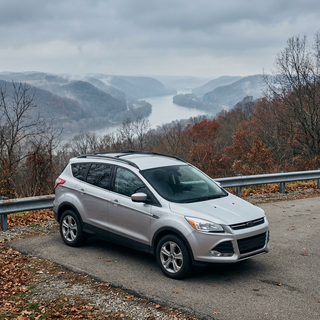
Which Used Vehicle Under $10,000 Is Best to Buy Near East Liverpool? For value-focused shoppers, a third-generation Ford Escape stands out as the best overall purchase near East Liverpool because it combines roughly 8 inches of ground clearance, available all-wheel drive, and cargo capacity expanding up to 68 cubic feet without the mechanical complexity of high-mileage continuously variable transmissions. While a compact all-wheel-drive car like the Subaru Impreza delivers great road-holding, the Escape provides the elevated stance, cabin versatility, and durable traditional automatic transmission required for steep river valley hills and harsh winter road conditions. value-focused shoppers evaluating vehicles budget-friendly face distinct tradeoffs across popular crossovers and sport utility vehicles: Ford Escape (2013 to 2016): Balances nimble handling, roughly 8 inches of ground clearance, and an available 1.6L turbocharged four-cylinder or 2.0L EcoBoost engine paired with a durable 6-speed automatic transmission, achieving up to 23 mpg city / 32 mpg highway. Subaru Impreza (2012 to 2016): Provides standard Symmetrical All-Wheel Drive and strong efficiency near 27 mpg city / 36 mpg highway, but sits lower with roughly 5 to 6 inches of clearance and requires careful verification of continuously variable transmission fluid history. Nissan Rogue (2014 to 2017): Delivers a spacious cabin and 25 mpg city / 32 mpg highway from a 2.5L four-cylinder engine, though its belt-driven continuously variable transmission demands rigorous pre-purchase health checks at higher mileage. Jeep Cherokee (2014 to 2017): Offers rugged styling and an available 3.2L Pentastar V6 with authentic multi-mode four-wheel drive, offset by a heavier curb weight and lower city fuel economy near 19 mpg city. Ford Explorer (2011 to 2014): Supplies authentic three-row seating, up to 5,000 lbs towing capacity, and a robust 3.5L V6 engine, making it the premier choice for larger crews requiring heavy towing capability. At Tri State Ford, our team focuses on transparent vehicle evaluations to help you select the exact vehicle configuration that matches your budget and driving routine. If you are coming from a neighboring community, finding our showroom on Pennsylvania Avenue is straightforward, and our team grounds every purchase decision in clear mechanical facts. You can also give our staff a call at (330) 462-7578 to discuss incoming trade-ins and budget-friendly inventory options. Table of Contents How Does Ground Clearance Compare Between the Subaru Impreza and Ford Escape? How Reliable Are Older Ford Explorer, Nissan Rogue, and Subaru Impreza Models Past 100,000 Miles? What Pre-Purchase Checks, Sales Taxes, and Fees Should Budget Buyers Expect? Where Can You Find Pre-Owned SUVs budget-friendly and Financing? What Should You Know Before Buying a Used Vehicle budget-friendly? Test-Drive Reliable Budget-Friendly Vehicles at Tri State Ford How Does Ground Clearance Compare Between the Subaru Impreza and Ford Escape? A standard Subaru Impreza provides between 5 and 6 inches of ground clearance, whereas a third-generation Ford Escape sits significantly higher at roughly 8 inches. That difference of more than 2 inches represents the operational boundary between gliding over frozen snow ridges and plowing into them with your front bumper and underbody shields. Drivers navigating the rolling hills and elevated roads around Calcutta encounter steep driveways and winter ruts where ground clearance makes a noticeable difference. While the Impreza utilizes standard all-wheel drive to maintain tire traction, its low sedan or hatchback ride height leaves critical chassis components vulnerable to packed slush, frozen snowdrifts, and jagged gravel shoulders. A third-generation Ford Escape rides on a tall MacPherson strut front suspension and multi-link rear suspension, elevating the engine oil pan, exhaust system, and rocker panels well above roadway obstacles. Interior utility reinforces the clearance advantage of the Ford Escape. Behind the second row, the Escape provides about 34 cubic feet of dedicated cargo space, expanding to nearly 68 cubic feet when folding the split rear bench. A comparable Subaru Impreza hatchback offers roughly 22 cubic feet behind the second row and about 52 cubic feet with seats folded, limiting your capacity for hauling outdoor gear, tools, or bulk grocery supplies. Before deciding on a budget vehicle, shoppers often leverage our online trade appraisal tool to establish current equity in their existing car. Upgrading from a low-slung compact car to a higher-riding compact crossover gives drivers greater command of the road and superior obstacle clearance when winter weather strikes. How Reliable Are Older Ford Explorer, Nissan Rogue, and Subaru Impreza Models Past 100,000 Miles? A well-maintained Ford Explorer, Subaru Impreza, or Nissan Rogue can readily surpass 150,000 to 200,000 miles, but each model exhibits distinct mechanical wear points that buyers must evaluate past the 100,000-mile mark. Powertrain design and transmission architecture dictate long-term maintenance costs and durability on high-mileage vehicles priced budget-friendly. Early fifth-generation Ford Explorer models (2011 to 2014) commonly enter the sub-$10,000 market showing between 120,000 and 175,000 miles. Equipped with Ford’s naturally aspirated 3.5L Duratec V6 and a 6-speed automatic, this drivetrain avoids turbocharger wear while delivering dependable power. The primary mechanical checkpoint on the 3.5L engine involves the internal water pump; buyers should verify that coolant inspections and timing chain checks were performed regularly. With proper upkeep, these three-row utility vehicles easily maintain structural and mechanical integrity past 200,000 miles. Used Subaru Impreza models from the 2012 to 2016 model years feature the 2.0L FB20 boxer engine. While earlier generations struggled with head gasket deterioration, the FB-series utilizes improved multi-layer steel gaskets and a timing chain rather than a timing belt. Key longevity concerns past 100,000 miles center on oil consumption, front control arm bushings, and the Lineartronic continuously variable transmission. Scheduling routine fluid exchanges ensures the transmission valve body operates without shuddering under load. Second-generation Nissan Rogue models (2014 to 2017) feature a dependable 2.5L QR25DE four-cylinder engine producing 170 hp, but their Xtronic continuously variable transmission represents a documented failure risk at high mileage. Without strict 30,000-mile fluid service intervals, internal belt slip and cooling degradation can lead to acceleration lag and transmission overheating. Conversely, a Ford Escape equipped with a conventional planetary-gear automatic provides higher tolerance for towing and temperature variations over extended lifespans. What Pre-Purchase Checks, Sales Taxes, and Fees Should Budget Buyers Expect? Purchasing an under-$10,000 vehicle in eastern Ohio requires a thorough structural inspection for winter road-salt corrosion alongside precise accounting for state and county conveyance fees. In Columbiana County, a vehicle purchase incurs a combined state and local sales tax rate of 7.25%, which equals $725 on a $10,000 transaction, accompanied by a $15 title fee and standard passenger registration fees ranging between $31 and $45. Because highway maintenance crews use heavy road salt throughout prolonged freezing periods, inspecting the structural underside of any pre-owned vehicle is essential. When shoppers evaluate budget vehicles on our lot, our sales team regularly checks key underbody areas, including rocker panels, subframes, and brake lines for road-salt exposure before any test drive begins. Surface oxidation on heavy cast-iron components is standard, but structural flaking on suspension mounting points or unibody seams indicates excessive environmental fatigue. Key mechanical items to check prior to finalizing a purchase include: Frame rails and subframes: Inspect front and rear cradle assemblies for perforation or deep rust scaling. Brake and fuel lines: Verify that steel lines along the inner floor pan remain free of heavy corrosion pitting. Fluid conditions: Check automatic transmission fluid for discoloration or burnt aroma, and ensure engine coolant exhibits clean clarity without oil residue. Tire wear patterns: Uneven tread feathering frequently signals worn ball joints, tired tie-rod ends, or degraded strut mounts. Vehicle history documentation: Confirm clean title branding, odometer consistency, and past maintenance regularity. Factoring in purchase taxes and title fees prevents unexpected budgeting hurdles at signing. When buyers consider whether an older vehicle or a newer model fits their financial parameters, exploring our current new Ford inventory provides a clear baseline for modern safety equipment, factory warranty coverage, and current financing information. You can also get a jump start on your monthly planning by submitting an online credit application through our finance center. Where Can You Find Pre-Owned SUVs budget-friendly and Financing? Sub-$10,000 sport utility vehicles and sedans are located across local regional trade networks, reputable franchised dealerships, and select independent lots along regional state routes. Franchised dealerships provide clear advantages for budget shoppers by conducting professional safety check-ins, resolving open safety recalls, and offering structured lending partnerships that independent roadside lots cannot match. Securing financing on vehicles priced below $10,000 often presents challenges at conventional banks due to mileage limits and vehicle age caps. At Tri State Ford, our finance department works with regional lenders, credit unions, and national automotive financial institutions to arrange sensible payment terms tailored to your credit profile. Establishing manageable monthly terms with predictable fixed interest rates helps rebuild credit while keeping dependable transportation within reach. Shoppers seeking enhanced ownership reassurance beyond older budget models frequently review our Carfax single-owner pre-owned selection to locate vehicles featuring documented service records and lower overall mileage. Furthermore, exploring our certified pre-owned inventory opens access to factory-inspected vehicles backed by comprehensive limited warranty coverage and 24/7 roadside assistance. What Should You Know Before Buying a Used Vehicle budget-friendly? Q: What is the main mechanical advantage of a Ford Escape over a Nissan Rogue budget-friendly? The primary mechanical advantage is the transmission design. The Ford Escape utilizes a traditional 6-speed planetary automatic transmission with hydraulic torque converter, whereas the Nissan Rogue uses a belt-driven continuously variable transmission. In vehicles with over 100,000 miles, conventional geared automatics generally demonstrate higher durability under heavy acceleration, heat, and light towing demands. Q: Can a used Ford Explorer priced budget-friendly safely tow a family camper? A 2011 to 2014 Ford Explorer equipped with the factory Class III tow package and 3.5L V6 engine delivers a maximum towing rating of 5,000 lbs. That provides ample strength for lightweight travel trailers, pop-up campers, or utility trailers, provided you verify the hitch rating and transmission cooler condition prior to departure. Q: How do winter road conditions impact high-mileage Subaru all-wheel-drive systems? Subaru’s all-wheel-drive hardware is exceptionally durable in snow, but tire circumference differences can cause premature center differential strain. When purchasing an older Impreza, ensure all four tires match in brand, model, and tread depth within 2/32 of an inch to prevent excessive thermal stress on the all-wheel-drive transfer clutch pack. Q: Does buying a budget vehicle make more financial sense than financing a newer crossover? Purchasing an under-$10,000 vehicle lowers upfront investment and eliminates new-car depreciation. However, newer vehicles provide modern active safety features, significantly lower fuel consumption, and full factory warranty coverage. Shoppers frequently evaluate our current inventory and offers to compare the true monthly cost of an older car against a newer model with zero repair expenses. Q: What should you bring to the dealership when financing an older pre-owned vehicle? To ensure prompt loan approval on an older used vehicle, bring your current driver's license, recent pay stubs verifying employment, proof of residence such as a utility bill, and your current vehicle insurance card. Having these documents organized allows our finance team to submit your file to preferred lenders without administrative delays. For buyers exploring future vehicle purchases, our custom factory order tool also allows you to configure newer models directly from the assembly line. Test-Drive Reliable Budget-Friendly Vehicles at Tri State Ford Selecting the right vehicle budget-friendly comes down to verified mechanical condition, realistic ground clearance, and long-term drivetrain durability. Whether you require the snow-clearing height of a Ford Escape, the passenger volume of a Ford Explorer, or the nimble traction of an all-wheel-drive sedan, finding the proper balance ensures confident travel across all seasons. Our knowledgeable sales professionals at Tri State Ford take the guesswork out of pre-owned vehicle shopping by providing honest condition assessments and flexible financing avenues. To plan an in-person visit and see our latest pre-owned arrivals, enter our dealership address at 1503 Pennsylvania Ave in your navigation app. You can also reach our staff directly at (330) 462-7578 or schedule a test drive online today to get behind the wheel of a dependable vehicle that fits your household budget. Keep Your Vehicle Running Strong Keep your vehicle performing at its best with our service team: Order Parts Schedule Service Appt © 2026 Tri State Ford. All rights reserved. Vehicle specification data © JATO Dynamics Limited. Used SUVs Under $10K East Liverpool OH | Tri State Ford
d

How Do You Prepare Your Car for a Winter Road Trip?

How Do You Prepare Your Car for a Winter Road Trip? Preparing your car for a long winter road trip requires testing your battery under load, verifying that tire tread depth is at least 4/32 of an inch, adjusting cold tire pressure to match the door jamb placard, and checking that engine coolant provides freeze protection down to sub-zero temperatures. You must also replace worn wiper blades with winter-grade units, fill the reservoir with de-icing washer fluid rated to -20 degrees Fahrenheit or lower, confirm that all exterior lights and defrosters operate properly, and pack a winter emergency traction kit. Taking care of these mechanical systems before departure prevents cold-weather stalling, loss of steering control, and reduced visibility during severe winter storms. Long highway stretches and regional elevation changes put extra strain on mechanical components. Cold air contracts the air inside tires, thickens drivetrain lubricants, and weakens the chemical output of starting batteries. When temperatures drop below freezing, small maintenance oversights that go unnoticed during mild autumn commutes quickly become roadside emergencies. Salt-belt travel adds corrosive road grime that cakes onto windshields and undercarriage hardware, making visibility and braking components work harder than usual. Navigating the steep riverfront bluffs of East Liverpool during an icy cold snap demonstrates how quickly road grip changes when sleet coats pavement. Vehicles equipped with active safety systems, such as Ford Co-Pilot360 with Pre-Collision Assist, rely on clean sensors and reliable tire contact patches to assist drivers on slick roadways. Ensuring that cameras and radar sensors remain clear of road slush is just as vital as checking mechanical hardware. Our factory-trained technicians at Tri State Ford inspect every vital system to keep your vehicle running smoothly through the harshest conditions. If you want a complete multi-point inspection before traveling, you can find our service center by getting turn-by-turn directions to our facility, or you can give our dedicated advisors a quick call at (330) 462-7578 to ask about our pre-trip diagnostic checks. Table of Contents How Do You Test Antifreeze Concentration and Freeze Point for Sub-Zero Travel? What Are the Tread Depth, Cold Inflation, and 3PMSF Standards for Winter Tires? Which Cold-Weather Fluids, Wipers, and Battery Tests Prevent Winter Breakdowns? What Emergency Supplies and Packing Checks Keep Family Travel Safe? Winter Travel Preparation FAQs: Inspection Timing and Severe Weather Gear Schedule Your Pre-Trip Winter Inspection at Tri State Ford How Do You Test Antifreeze Concentration and Freeze Point for Sub-Zero Travel? You test antifreeze concentration and freeze point at home by drawing a sample of cool engine coolant into an optical refractometer or a calibrated hydrometer from the translucent expansion tank. A standard 50/50 ratio of ethylene glycol to distilled water protects an engine against freezing down to -34 degrees Fahrenheit, whereas a heavy-duty 60/40 mixture extends freeze protection down to -62 degrees Fahrenheit for severe sub-zero travel. Never remove the radiator cap or expansion tank pressure relief cap on an engine that is hot or running. Pressurized boiling coolant causes severe steam burns. Wait until the engine block has cooled completely to room temperature before loosening the cap. Using a clean hydrometer, squeeze the rubber bulb, insert the pick-up tube into the coolant overflow tank, and draw enough fluid to suspend the internal float or indicator needles. The float level indicates the freezing point on an easy-to-read scale. Alternatively, an optical refractometer requires placing just two drops of coolant onto the testing prism, closing the cover plate, and looking through the eyepiece toward a light source to read the sharp shadow line indicating the freeze point and glycol percentage. A basic visual check is not enough because worn antifreeze can retain its bright yellow, orange, or green color while losing its thermal resilience and corrosion inhibitors. Weak coolant allows ice crystals to form inside the narrow radiator cores and heater matrix. When slush forms inside the cooling circuit, the engine overheats rapidly because frozen fluid blocks the water pump from circulating liquid through the block. If prolonged exposure drops temperatures below the liquid's freeze threshold, expanding ice can split aluminum radiator tanks, blow out expansion plugs, or crack engine block castings. Maintaining an exact mixture protects water pump seals and aluminum cylinder heads from internal pitting. If testing reveals that your coolant freeze threshold is above -20 degrees Fahrenheit, the cooling system needs an immediate drain and refill with fresh antifreeze meeting Ford engineering specifications. If you are preparing for seasonal maintenance and need factory-approved fluids, you can order genuine Motorcraft antifreeze and cooling components directly from our parts counter. If you are evaluating a replacement sport utility vehicle with advanced all-weather capabilities for family journeys, you can also schedule a test drive in an all-wheel-drive model to experience its stability firsthand. What Are the Tread Depth, Cold Inflation, and 3PMSF Standards for Winter Tires? Winter driving requires a minimum tire tread depth of 4/32 of an inch to maintain basic bite on packed snow, though 5/32 to 6/32 of an inch is recommended to channel away slush and reduce highway hydroplaning. Tires must always be set to the exact cold inflation pressure printed on the driver door jamb placard, compensating for the standard drop of 1 to 2 PSI for every 10-degree Fahrenheit drop in ambient outside temperature. Checking remaining tread depth at home is simple using standard pocket change: Place a quarter head-first into the center tread grooves; if the top of George Washington's head is covered, your tires possess at least 4/32 of an inch of tread. Place a penny head-first into the tread grooves; if the top of Abraham Lincoln's head is visible, your tires are below the legal minimum of 2/32 of an inch and must be replaced immediately. Inspect outer and inner shoulders for uneven wear, cupping, cuts, or sidewall impact bulges that could trigger high-speed blowouts in freezing conditions. Tires stamped with the Three-Peak Mountain Snowflake ( 3PMSF) symbol have passed standardized testing measuring acceleration on medium-packed snow. While standard tires bearing only the Mud and Snow ( M+S) badge simply have specific tread pattern void ratios, tires with the 3PMSF rating incorporate cold-weather rubber polymers that remain flexible below 45 degrees Fahrenheit. This flexibility ensures the sipes continue opening and closing over ice. However, all-weather 3PMSF tires do not match dedicated winter tires when stopping or cornering on sheet ice. Our service team frequently hears travelers ask whether factory tires provide adequate grip on icy highways or if a trip across northern passes demands dedicated winter rubber. We examine tread depth across all four wheels and check the date codes to ensure rubber compounds have not hardened with age. If your tires show severe wear, you can use our online tire finder tool to select brand-specific winter or all-weather options, or you can book a service appointment to have our technicians perform high-speed balancing and a four-wheel alignment before you leave. Which Cold-Weather Fluids, Wipers, and Battery Tests Prevent Winter Breakdowns? Preventing winter breakdowns requires filling the washer reservoir with de-icing fluid rated to at least -20 degrees Fahrenheit, replacing cracked wiper blades with beam-style winter blades, and performing an electronic battery conductance test. Sub-freezing temperatures weaken an automotive battery by up to 50 percent while demanding nearly double the electrical current to crank an engine against cold, viscous motor oil. Summer bug-wash formulas contain minimal alcohol and freeze solid at 32 degrees Fahrenheit, which can crack the plastic washer fluid reservoir, burst under-hood fluid lines, and burn out the small electric washer pump motor. Winter-rated fluids blend methanol and specialized detergents that dissolve road salt crust without refreezing on cold glass. Upgrading to beam-style winter wiper blades eliminates exposed metal joints that pack with wet snow, allowing the silicone or rubber blade to maintain even pressure across the windshield. Automotive batteries lose chemical efficiency as temperatures plunge. A battery that starts an engine without hesitation in warm weather can fail completely after parking overnight in sub-zero air. A proper diagnostic test measures cold cranking amps under an applied electrical load, confirming whether the internal lead plates can deliver starting voltage without a steep internal voltage drop. Technicians also clean the lead terminals, inspect the heavy ground cables, and ensure the alternator delivers a steady 13.8 to 14.5 volts to replenish the battery during short daytime driving cycles. Vehicles such as the Ford Explorer and Ford Escape feature automated defroster sequences and heated mirrors that place significant electrical loads on the charging system during winter commutes. Reviewing our comprehensive battery maintenance and diagnostic guidance helps you spot warning signs like slow engine turnover, dimming interior lights, or corrosion around battery hold-down clamps before you head onto remote highways. What Emergency Supplies and Packing Checks Keep Family Travel Safe? A winter roadside emergency kit must contain heavy-duty jumper cables, a compact folding snow shovel, an ice scraper with a brass or composite edge, a bright LED flashlight with spare lithium batteries, and traction material like non-clumping clay kitty litter. In addition, pack heavy wool blankets, a compact first-aid kit, high-calorie non-perishable snacks, a portable USB power bank for phones, and drinking water stored in an insulated cooler so it resists freezing. Drivers traveling through suburban Calcutta along State Route 170 know that open fields can create sudden wind gusts and blowing snowdrifts that cut visibility and strand vehicles unexpectedly. Preparing an emergency kit ensures that you and your passengers stay warm and safe if forced to wait for roadside assistance during a heavy snowfall. When packing your vehicle, keep heavy gear placed low and centered over the rear axle to maintain predictable handling and steady brake balance. Avoid stacking heavy luggage higher than the rear seatbacks, where loose items could turn into dangerous projectiles during sudden highway braking maneuvers. A 2026 Ford Explorer provides about 16 cubic feet of dedicated luggage room behind the third row and up to 5,000 lbs of towing capacity when equipped with Intelligent 4WD, while a 2026 Ford Escape delivers about 38 cubic feet of rear cargo space, offering a spacious cargo area for all your family gear without crowding passenger seating. Packing your vehicle thoughtfully keeps emergency tools, warm jackets, and road flares easily accessible without unloading luggage on an icy shoulder. Winter Travel Preparation FAQs: Inspection Timing and Severe Weather Gear Q: How far in advance of a winter road trip should an inspection be scheduled? You should schedule a pre-trip inspection one to two weeks before departure. This time window provides ample room for certified technicians to diagnose potential mechanical issues, source any specialized replacement parts, and perform essential maintenance like brake pad replacement, cooling system flushes, or wheel alignments without disrupting your planned departure date. Q: What is the risk of lowering tire pressure to gain traction in winter conditions? Lowering tire pressure on modern radial tires reduces overall winter traction on public roads by causing the center of the tread to cup inward. This inward cupping lifts critical biting edges away from the pavement and prevents sipes from clearing slush, while simultaneously increasing the risk of rim damage and tire overheating at highway speeds. Q: Can summer windshield washer fluid damage wiper systems in freezing weather? Summer washer fluid contains water-based detergents that freeze solid inside the washer tank, lines, and spray nozzles when temperatures drop below freezing. This expansion can crack the reservoir, pop fluid line junctions apart behind the cowl, and burn out the electric washer pump motor if the driver repeatedly attempts to spray frozen jets. Q: What should you do if your vehicle breaks down in severe winter weather? If your vehicle stalls or leaves the roadway in freezing weather, stay inside the cabin to retain body warmth and avoid exposure to passing traffic. Keep the exhaust pipe clear of snowdrifts to avoid carbon monoxide buildup if running the engine intermittently for heat, activate your hazard flashers, and call Ford Roadside Assistance: 1-800-241-3673 for authorized emergency recovery. Q: Why does engine oil viscosity matter when traveling to sub-zero climates? Engine oil thickens in severe cold, which slows fluid circulation through the valve train and increases mechanical resistance against the starter motor during cold starts. Using the manufacturer-recommended winter viscosity grade, such as full synthetic 5W-20 or 5W-30, ensures immediate oil pressurization and protects critical internal engine components from metal-to-metal wear during frigid starts. Schedule Your Pre-Trip Winter Inspection at Tri State Ford A thorough mechanical inspection ensures your vehicle stays dependable, comfortable, and safe through freezing weather and long road trips. From verifying battery health and antifreeze freeze points to checking tire tread depth and brake rotor wear, taking care of these vital components ahead of time provides peace of mind on every snowy mile. Our certified Ford technicians understand the unique demands of cold-weather driving and use only genuine Motorcraft parts engineered for your vehicle. We help you prepare your car for any winter adventure, providing dependable performance for your family journeys. Get ready for your next getaway by checking driving directions to our service center at 1503 Pennsylvania Ave, or connect with our team directly by placing a call to our service advisors at (330) 462-7578 to book your pre-trip service appointment today. © 2026 Tri State Ford. All rights reserved. Vehicle specification data © JATO Dynamics Limited. Winter Car Prep in East Liverpool, OH | Tri State Ford