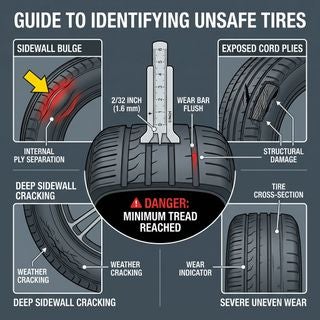

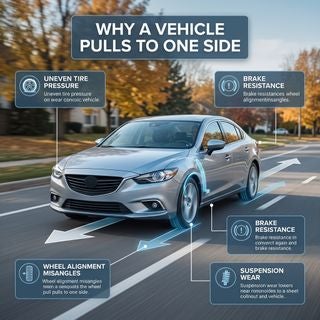
Uneven tire pressure, improper wheel alignment, uneven tire wear, sticking brake components, or worn suspension parts cause a vehicle to pull to one side while driving. A sudden drop in air pressure on one side increases rolling resistance, while misaligned steering angles actively push the wheels off course. Addressing steering drift quickly protects tire life, restores proper vehicle handling, and prevents uneven wear on critical steering components.
When a vehicle's chassis, tires, and steering linkages function correctly, the car tracks straight on a flat, level road with minimal driver intervention. Steering pull occurs when external friction, geometry shifts, or uneven braking forces compel the vehicle to steer away from a straight path. Drivers often feel this as a constant tension in the steering wheel, requiring continuous counter-steering force to keep the vehicle in its lane.
Ignoring a persistent drift introduces safety risks and increases long-term repair costs. A vehicle that constantly pulls puts extra strain on ball joints, tie rod ends, and control arm bushings. Ford owner guidelines emphasize that unusual steering behavior, severe drift, or changes in steering feel following an impact require immediate professional evaluation to maintain vehicle safety and directional stability.
Drivers seeking professional chassis diagnostics can easily get in touch by placing a call to (330) 462-7578 or getting turn-by-turn routing to our East Liverpool facility. Identifying the underlying cause early preserves tread depth and ensures predictable control during daily travel.
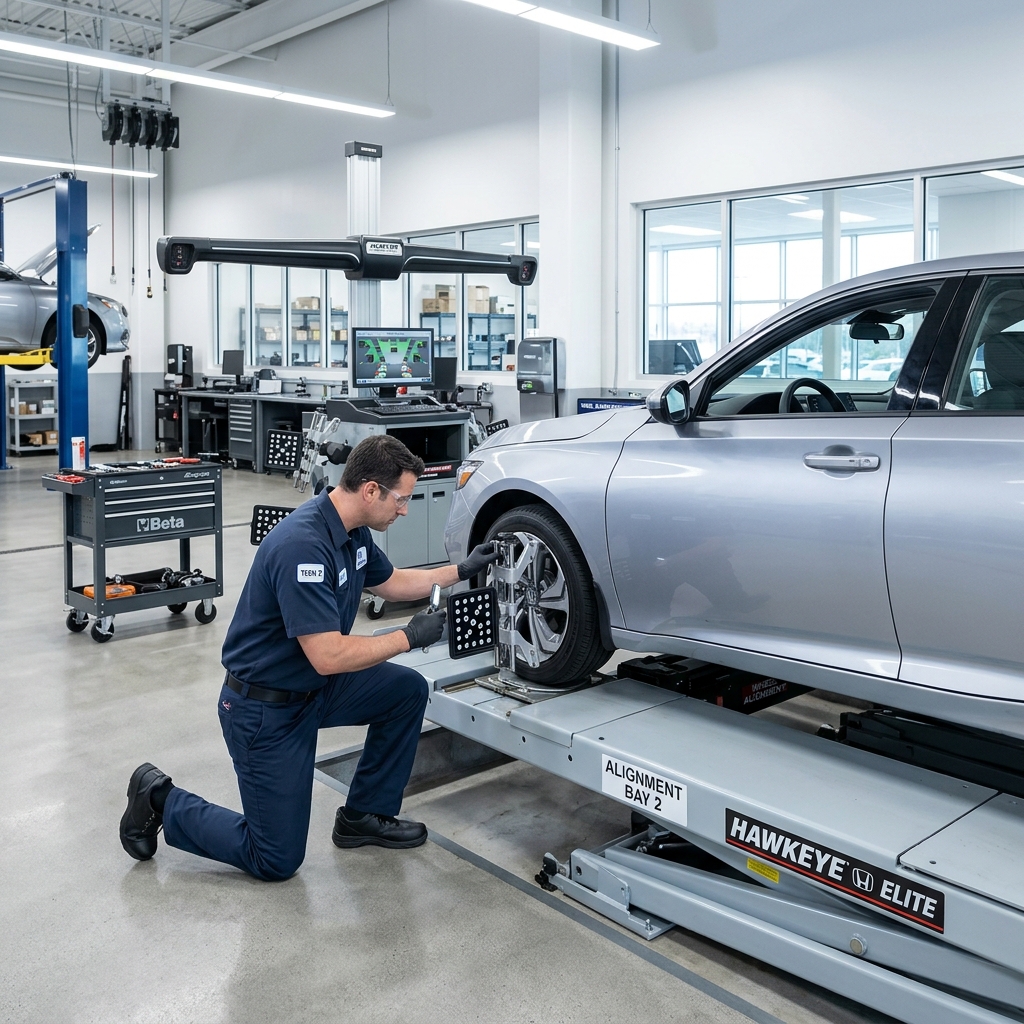
Table of Contents
- What Causes a Vehicle to Pull Side-to-Side While Driving?
- What Are the Most Common Mechanical Causes of Steering Pull?
- Why Does Your Vehicle Pull Only When Applying the Brakes?
- How Can You Tell If You Need a Wheel Alignment Versus a Tire Balance?
- How Long Does Alignment Service Take and What Are Average Maintenance Costs?
- Quick Answers to Common Steering Drift Questions
- How to Diagnose Steering Drift and Schedule Professional Ford Service
What Causes a Vehicle to Pull Side-to-Side While Driving?
Fluctuating tire pressure, radial tire conicity, and civil road crown design are the primary reasons a vehicle drifts side-to-side during steady cruising. Low pressure in a single front tire reduces its overall effective rolling radius while expanding its contact patch, creating drag that pulls the vehicle toward the underinflated side.
Checking cold inflation levels remains the simplest starting point when troubleshooting steering drift. A pressure imbalance as small as 4 PSI between the left and right front tires generates noticeable lateral pull. When local drivers ask us about a slight drift on State Route 170, one of the first things our service team checks is cold tire pressure, as a single underinflated tire often mimics a full alignment issue.
Radial tire conicity represents a less obvious cause of steering drift. During tire manufacturing, slight variations in internal belt placement can cause the tire tread to shape itself like a subtle cone. As a conical tire rotates, it exerts continuous lateral force toward its narrower side regardless of alignment settings. Swapping the front tires side-to-side helps isolate tire conicity; if the vehicle begins pulling in the opposite direction after the swap, an internal tire belt issue is confirmed.
Civil road design also influences vehicle tracking through intentional slope, known as road crown. Public roads feature a 1% to 2% pitch from the roadway center toward the outer shoulder to prevent standing water accumulation. This gradient naturally encourages a mild drift toward the right lane edge. However, a normal road crown drift requires minimal steering effort to maintain control, whereas a true mechanical pull persists even on flat, level pavement.
Maintaining proper tire health and replacing worn rubber with factory-approved tires ensures consistent tracking. Vehicle owners can conveniently maintain their wheel assemblies by ordering genuine OEM parts directly through our service center.
What Are the Most Common Mechanical Causes of Steering Pull?
Mechanical steering pull stems directly from incorrect wheel alignment geometry or degraded front-end hardware such as worn control arm bushings, tie rod ends, and wheel bearings. When primary alignment angles shift out of factory specification, the tires no longer point straight ahead, forcing constant manual steering correction.
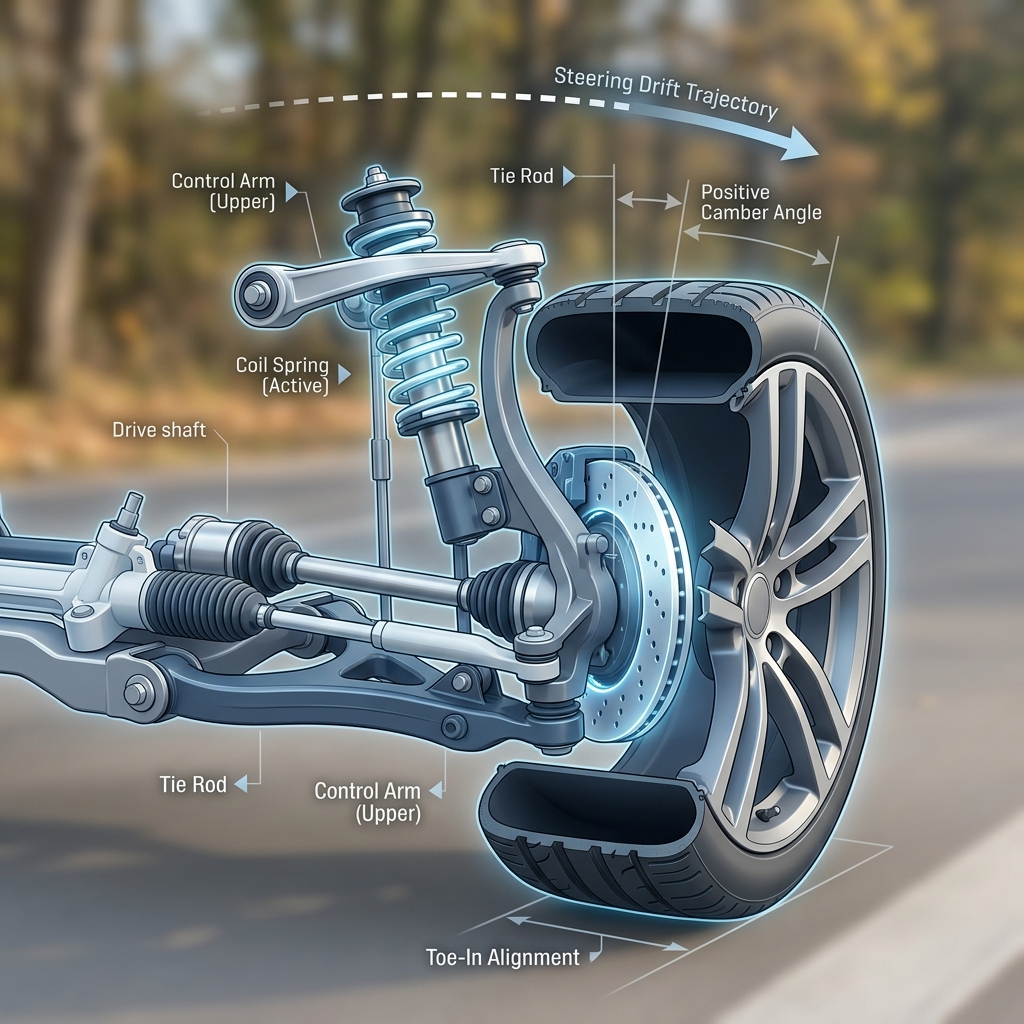
Wheel alignment relies on three foundational angles:
- camber: The inward or outward tilt of the tire when viewed from the front. A vehicle pulls toward the side with more positive camber (tilted outward at the top). A cross-camber difference exceeding 0.5 degrees creates a distinct lateral pull.
- caster: The forward or backward tilt of the steering axis when viewed from the side. A vehicle pulls toward the side with less positive caster (more vertical axis).
- toe: The inward or outward direction the tires point relative to the vehicle centerline. Incorrect toe primarily causes severe tread feathering and an off-center steering wheel rather than a continuous lateral drift.
Suspension component wear dynamically alters alignment angles while driving. Lower control arm compliance bushings hold front wheels in precise alignment during cornering and acceleration. When rubber bushings crack, tear, or soften, the control arm shifts under load, causing dynamic alignment changes that manifest as unpredictable pulling.
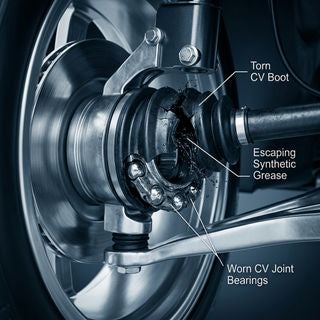
Steering linkages and wheel bearings play an equally vital role in directional stability. Loose tie rod ends allow unwanted wheel play, while a failing front wheel bearing generates significant mechanical friction and heat on one corner, creating rolling drag that pulls the chassis toward the affected assembly. Navigating steep riverfront bluffs and uneven valley inclines near East Liverpool places significant load on suspension assemblies, making regular chassis inspections essential for heavy-duty vehicles like the Ford F-150 equipped with its 3.5L engine or the Ford Explorer with its SelectShift® transmission.
Why Does Your Vehicle Pull Only When Applying the Brakes?
A vehicle that pulls exclusively when pressing the brake pedal indicates uneven hydraulic pressure or mechanical friction between the left and right front brakes. This directional tug happens when one brake caliper clamps with greater force or when a failing component prevents equal pressure release.
Hydraulic system failures frequently trigger severe braking pull. A sticking brake caliper piston or seized caliper slide pins prevent equal clamping force across the front axle. If the front passenger-side caliper seizes and fails to engage properly, the driver-side brake does all the stopping work, causing the vehicle to dart abruptly to the left upon braking.
Flexible rubber brake hoses can also create sneaky hydraulic issues. Over time, an aging brake hose can collapse internally, acting like a one-way check valve that allows hydraulic fluid pressure to reach the caliper when pressing the pedal but traps fluid pressure when releasing it. This trapped pressure keeps the brake pads in continuous contact with the rotor, generating excessive brake drag, extreme heat, and a persistent pull toward that corner.
Uneven friction material condition also contributes to braking pull:
- Oil, grease, or brake fluid contamination on brake pads reduces friction on one side.
- Glazed brake rotors reduce pad bite on the affected wheel corner.
- Severely uneven pad wear between left and right axles causes asymmetrical braking force.
Braking pull represents an urgent safety concern because sudden directional shifts during hard stopping maneuvers make lane keeping difficult. Prompt inspection of calipers, slide pins, rubber lines, and pad surfaces restores balanced stopping performance.
How Can You Tell If You Need a Wheel Alignment Versus a Tire Balance?
You need a wheel alignment if your vehicle continuously drifts or pulls to one side, whereas an out-of-balance tire produces a distinct steering wheel vibration at highway speeds without causing directional pull. Alignment corrects chassis geometry, while tire balancing resolves uneven weight distribution across the rotating wheel assembly.
Understanding key symptom differences simplifies accurate troubleshooting:
-
Wheel Alignment Issues:
-
Vehicle continuously drifts or pulls toward the left or right shoulder.
-
Steering wheel sits crooked or off-center while driving straight down a level road.
-
Accelerated wear appears on the inner or outer edges of the tire tread.
-
Vehicle feels loose, wandering across lane lines at highway speeds.
-
Tire Imbalance Issues:
-
Steering wheel shimmies or vibrates noticeably between 55 mph and 70 mph.
-
Seat or floorboard vibration develops at specific vehicle speeds.
-
Scalloped or cupped wear patterns form across the tread surface.
-
Vehicle continues tracking straight despite high-speed steering wheel vibration.
Combining regular tire balancing with routine wheel alignment checks preserves driving comfort and extends overall tire tread life. Addressing chassis alignment errors early prevents costly premature tire replacement.
How Long Does Alignment Service Take and What Are Average Maintenance Costs?
A standard computerized wheel alignment takes between 45 and 60 minutes to perform under normal conditions, provided no steering components are seized or damaged. Comprehensive chassis alignment costs vary based on whether the vehicle requires a two-wheel thrust alignment or a complete four-wheel alignment.
During an alignment service, factory-trained technicians execute a rigorous process:
- Mounting high-precision digital targets to all four wheels.
- Measuring baseline camber, caster, and toe angles using computerized alignment racks.
- Inspecting ball joints, tie rods, control arms, and sway bar links for mechanical play.
- Adjusting tie rod ends, strut mounts, or control arm eccentric bolts to restore factory tolerances.
- Performing a road test to verify centered steering wheel alignment and straight tracking.
If components such as rusted tie rod sleeves or worn ball joints require replacement before alignment adjustments can be made, service time expands accordingly. Staying current on routine chassis checks ensures optimal steering performance for versatile crossovers like the Ford Escape powered by its 1.5L EcoBoost® engine.
Vehicle owners can maintain vehicle tracking and system longevity by scheduling a service appointment online or combining chassis maintenance with routine battery service during seasonal visits.
Quick Answers to Common Steering Drift Questions
Q: Can a bad wheel bearing cause my vehicle to pull to one side?
A worn wheel bearing creates excessive mechanical friction and rolling drag on that specific wheel corner, pulling the vehicle toward the side with the damaged bearing assembly. As internal bearing races wear down, wheel looseness develops, altering camber and toe angles while driving. Severe bearing wear also generates a loud grinding or humming noise that grows louder with vehicle speed. Prompt replacement restores smooth rotation and directional control.
Q: Why does my vehicle pull to the right even after a complete wheel alignment?
When alignment angles fall within factory specification but a pull persists, the cause is typically radial tire conicity or normal road crown. Swapping the front tires side-to-side will confirm if internal tire belt construction is causing the lateral drift. If the pull reverses direction after the tire swap, a tire defect is present. If the pull remains unchanged, checking for dragging brake calipers or worn control arm bushings under load is necessary.
Q: Will driving with bad wheel alignment ruin my tires quickly?
Operating a vehicle with misaligned wheels rapidly accelerates uneven tread wear, causing tread feathering and premature tire replacement. Incorrect toe angles drag tires sideways across pavement, scrubbing away rubber tread within a few thousand miles. Misaligned camber wears down inner or outer tread shoulders rapidly. Correcting chassis geometry ensures even contact across the entire tire footprint, preserving tread life and fuel economy.
Q: Does low power steering fluid cause a directional steering pull?
Low power steering fluid typically produces heavy steering feel, whining pump noise, or intermittent power assist, rather than a persistent single-sided pull. Modern electronic power-assisted steering systems automatically adjust assist levels without hydraulic fluid. Directional drift remains rooted in tire pressure differences, alignment errors, dragging brake components, or worn suspension joints.
Q: How frequently should I have my vehicle's wheel alignment checked?
Alignment should be inspected every 12,000 to 15,000 miles, after installing new tires, or immediately following an impact with a deep pothole or curb. Regular checks catch minor geometry shifts before they ruin tire tread. Inspecting alignment during routine tire rotations ensures balanced tread wear across all four wheels throughout ownership.
How to Diagnose Steering Drift and Schedule Professional Ford Service
Diagnosing steering pull requires a systematic check starting with cold tire pressure verification, visual inspection of suspension linkages, and professional chassis measurement on a computerized alignment rack. Timely maintenance prevents minor alignment shifts from turning into costly tire replacements or suspension repairs.
Our factory-trained technicians utilize specialized alignment equipment engineered specifically for Ford vehicles. Whether your vehicle requires precise sensor calibration, suspension bushing replacement, or brake drag diagnostic testing, our certified service department delivers expert care using genuine OEM components built for long-term durability.
Local vehicle owners can easily plan their service visit by visiting our East Liverpool service center or connecting with our service team directly at (330) 462-7578. For added convenience, drivers can also take advantage of our Ford Mobile Service for select routine maintenance procedures performed right at home or work.
© 2026 Tri State Ford. All rights reserved.