Blog / Maintenance & Service, Battery Care & Diagnostics, Electric Vehicle (EV) Maintenance, Seasonal

Maintaining Your Vehicle's Electrical Vitality

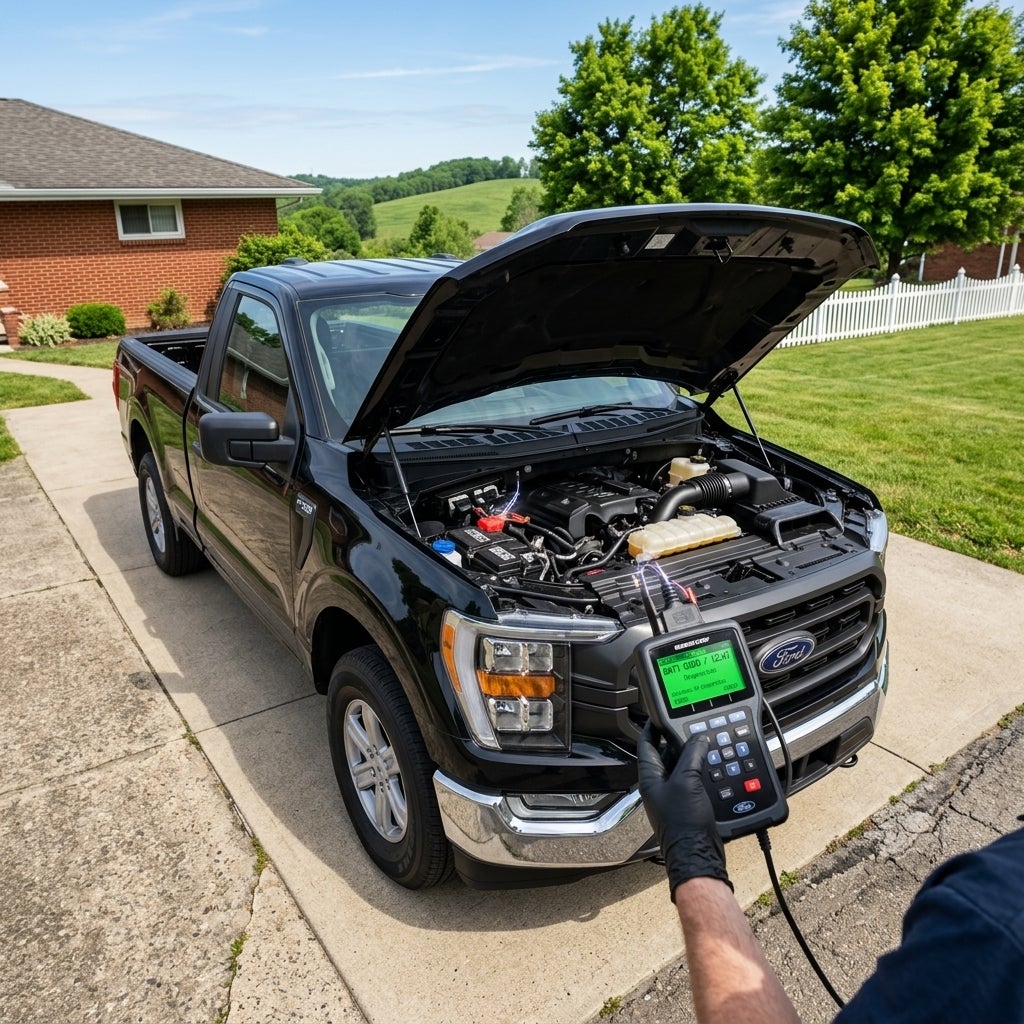
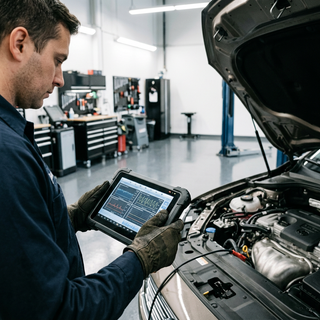
Cinematic close-up, a late-model Ford F-150 parked in a clean, concrete driveway of a modest mid-century brick home in East Liverpool, Ohio, June morning light, bright and clear early summer sun, high-angle shot looking down at the open hood, a mechanic's gloved hand connecting a professional handhe

Maintaining Your Vehicle's Electrical Vitality

Maintaining a vehicle in a riverfront city like East Liverpool requires a proactive approach to the electrical system, especially given the varying terrain from river valley flats to rising inland bluffs. The battery is the heart of your vehicle's reliability, powering everything from the starter motor to the advanced safety sensors that keep your family secure. We recommend having your battery's state of charge tested at least twice a year. This cadence aligns perfectly with standard maintenance intervals, such as an oil change or tire rotation, ensuring you are never caught off guard by a failing cell.

Modern vehicles are equipped with complex electronics that place a constant 'parasitic' drain on the battery even when the engine is off. For residents who primarily use their vehicles for short trips around the local historic district, the alternator may not have sufficient time to fully replenish the energy used during startup. If you notice your headlights dimming at idle or electronics acting sporadically, it is time to visit our East Liverpool location for a professional diagnostic.

If your current vehicle is struggling to keep up with your daily demands, you might consider a new vehicle custom order to get the latest in heavy-duty electrical systems and battery technology. We also maintain a rotating selection of new vehicle specials and used vehicle specials that feature Ford's rugged reliability. For a quick update on current maintenance offers or to ask about your battery's health, you can reach our team at (330) 462-7578. We also encourage you to check our manufacturer vehicle specials for potential savings on components that keep your Ford running like new.

Table of Contents

Best Practices for Testing Your Car's Twelve Volt Battery

A fully charged lead-acid battery should measure approximately 12.6 volts when the engine is off. Once the engine is running, this number should jump to between 13.7 volts and 14.7 volts as the alternator takes over the electrical load and begins recharging the battery. Families in the rolling hills of Calcutta often ask how frequently they should be testing their battery's health during routine visits. We suggest a voltage check at every service appointment, particularly as the battery approaches the three-year mark, which is when most units begin to show signs of chemical degradation.

Testing is about more than just the numbers on a multimeter; it is about ensuring the physical integrity of the unit. Our technicians look for corrosion around the terminals, which can act as an insulator and prevent the battery from receiving a full charge. If you prefer to handle minor maintenance yourself, you can order parts like genuine Motorcraft batteries and cleaning supplies directly through our website. For those who want a comprehensive look at their vehicle’s systems, we recommend looking into our specialized battery service to ensure your starting system is ready for any weather.

If you are noticing a slow crank when starting your vehicle in the morning, it is a clear signal that the battery's cold cranking amps are no longer meeting the engine's requirements. This is often the best time to schedule a test drive in a newer model to see how modern power management systems have improved. Taking a proactive stance on battery testing prevents the frustration of a vehicle that won't start when you're trying to get the kids to school or head out for a weekend at Beaver Creek.

Managing EV Charging Cycles for Optimal Battery Longevity

Modern lithium-ion batteries in electric vehicles do not follow the same rules as the traditional starter batteries found in gas engines. To maximize the lifespan of an EV battery, industry standards suggest maintaining a daily state of charge between 20% and 80%. Charging to 100% on a daily basis or allowing the battery to drop to 0% creates high voltage stress and heat, which can accelerate the natural degradation of the battery cells. Research indicates that EV batteries typically lose about 2.3% of their capacity per year, but following the 20-80% rule can help keep that number as low as possible.

We often suggest reserving a full 100% charge specifically for long-distance trips where the extra range is necessary. For daily commutes across the bridge into Chester, keeping the charge in the middle range is the most effective way to preserve the battery’s chemical health over the long term. If you use your vehicle for commercial purposes, such as hauling gear in our F-Series work inventory, planning your charging stops to stay within this window ensures your fleet remains dependable for years to come.

Owners of high-utilization vehicles, like those found in our used work truck inventory, should also be mindful of heat management. Frequently using DC fast chargers can generate significant heat, which is another factor in battery wear. Our finance department can help you understand how the long-term value of an EV is tied directly to its battery health, making these charging habits a vital part of protecting your investment.

Protecting Battery Health in Extreme Ohio Valley Winters

When the mercury drops in Ohio, your battery's chemical efficiency drops along with it. Cold weather significantly slows down the chemical reactions inside a lead-acid battery, effectively reducing its ability to provide the high current needed to turn over a cold engine. In a typical winter, a battery can lose about 30% to 60% of its cranking power once temperatures fall below freezing. This is why we emphasize checking the charge on your 12-volt battery before the first frost hits the tri-state area.

If you have the option, parking in a garage can provide a much-needed buffer against the overnight cold, helping the battery maintain a higher internal temperature. For those who drive a vehicle from our truck inventory, ensure that your battery is securely mounted; vibration combined with cold-brittle components can lead to internal damage. Additionally, winter driving often involves using high-draw features like heated seats, defrosters, and wipers simultaneously, which puts an even greater strain on an already struggling battery.

Beyond the battery, winter readiness involves several systems working together. We recommend using our online tool to order tires that provide the necessary traction for slushy riverfront roads, ensuring you aren't putting unnecessary strain on the vehicle during difficult starts. If you are managing a fleet for a local business, our new work truck inventory includes models with heavy-duty alternators designed specifically for high-demand winter conditions.
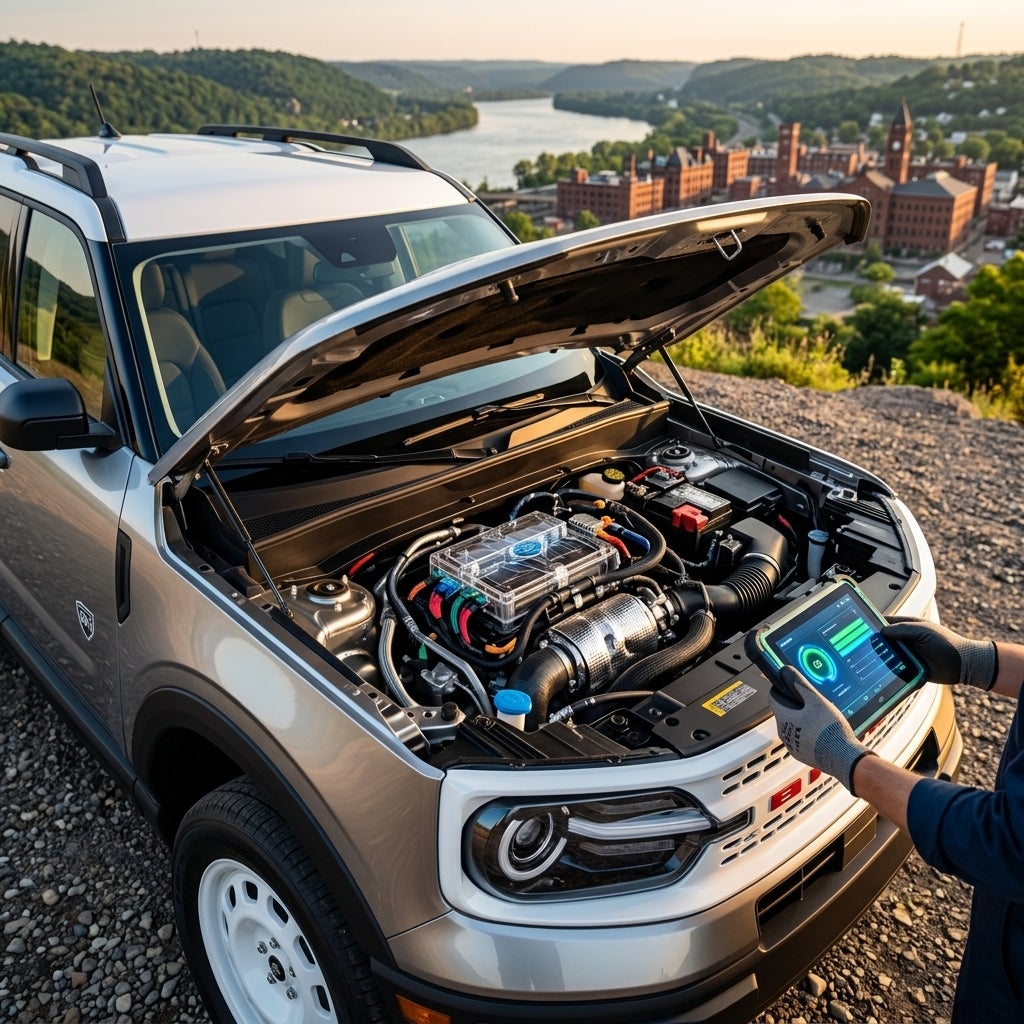
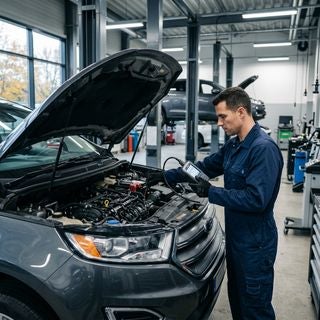
​Cinematic automotive photography, modern silver SUV parked on a high bluff overlooking the Ohio River in East Liverpool, geographic backdrop of rolling green hills and distant historic brick architecture, vehicle hood open to reveal a clean and detailed engine bay, central focus on a high-tech car b

The True Costs of At-Home and Public EV Charging

One of the most significant benefits of transitioning to an electric vehicle is the predictability of fueling costs. On average, home EV charging in the United States costs approximately $0.18 per kWh. For a vehicle with a 72 kWh battery, a full charge at home would cost roughly $12.96. When you compare this to the national average of 13,489 miles driven annually, home charging typically costs around $693 per year. This is significantly lower than the cost of gasoline for a comparable distance, often saving drivers over $1,700 annually in fuel alone.

Public charging introduces more variables into the equation. Level 2 public stations often charge around $0.25 per kWh, while DC fast charging stations can average $0.53 per kWh. While fast charging is incredibly convenient for long trips, relying on it exclusively could bring your annual charging costs up to roughly $2,144. To help manage these costs, we suggest checking our manufacturer monthly service specials for any updates on charging software or system optimizations.

For those who rely on their vehicles for heavy-duty tasks, such as the models found in our truck inventory, at-home charging provides the most stable long-term savings. We invite you to view our hours and directions to visit our team and discuss how to set up a Level 2 home charging station, which can fully replenish most EV batteries in about 6 to 10 hours overnight.

Quick Answers Regarding Battery Maintenance

Q: How long can my car sit in the driveway before the battery dies?

Most healthy 12-volt batteries can hold a sufficient charge for about two to four weeks without the vehicle being driven. However, modern vehicles with "always-on" features like remote start receivers and security systems may drain a battery faster. If you plan to leave your vehicle for longer, we suggest using a dedicated battery tender or having us book a service appointment online to inspect your electrical system before you head out.

Q: Will checking my EV’s charge level frequently on my phone app harm the battery?

Simply checking the state of charge through your vehicle's app does not cause any harm to the battery itself. The battery's longevity is determined by the time it spends at extreme states of charge and its exposure to high temperatures. If you are considering upgrading to a newer model with better app integration, you can start by getting a KBB instant cash offer for your current vehicle to see where you stand.

Q: Is there a difference between checking a 12-volt battery and an EV battery?

Yes, they require different tools and approaches. A 12-volt battery is typically tested for its ability to provide a high burst of current (cranking amps), whereas an EV battery's health is measured by its total energy capacity and internal resistance. For businesses utilizing Transit work vans, our technicians can perform specialized diagnostics on both systems to ensure your fleet stays on the road.

Q: Should I clean my battery terminals if I see white powdery buildup?

That white powder is lead sulfate or copper sulfate, which indicates corrosion that can interfere with your battery's ability to charge and discharge. Cleaning the terminals with a mixture of baking soda and water can help, but it is often a sign that the battery is off-gassing excessively and may be nearing the end of its life. We recommend a professional inspection to determine if a replacement is necessary.

Schedule Professional Battery Diagnostics at Tri State Ford

Your vehicle’s reliability depends on a healthy electrical system, and our team is here to ensure you stay on the road safely. Whether you are driving a family SUV or a heavy-duty work truck, our factory-certified technicians have the specialized tools to accurately diagnose your battery's state of health. We pride ourselves on transparent communication and honest service, helping you understand exactly what your vehicle needs without the jargon.

To make your maintenance as convenient as possible, we offer Ford pickup and delivery for qualifying service appointments, or we can bring the expertise to you with Ford Mobile Service. If you are looking for a Ford dealership near me that understands the specific needs of Ohio Valley drivers, look no further than our team. You can find our East Liverpool showroom at 1503 Pennsylvania Ave, or simply give us a quick call to discuss your battery concerns today.
© 2026 Tri State Ford. All rights reserved.

Posted in:

Related Posts

d

Is a Free Auto Parts Store Code Scan Accurate Enough to Fix a Car?

A free auto parts store code scan is not accurate enough to fix a car because it only retrieves a generic diagnostic code, not a definitive repair instruction. While a basic code reader identifies which system or sensor flagged an out-of-spec reading, it cannot perform bi-directional component testing, evaluate electrical wiring, or detect underlying mechanical failures, making targeted professional diagnostic testing necessary to avoid replacing functional parts. Basic hand-held code readers used at retail parts stores plug into a vehicle's onboard port to read standard OBD-II powertrain codes. These budget tools read static alphanumeric strings—such as P0171 for a lean fuel mixture or P0301 for a cylinder misfire—and display generic descriptions. However, a code reader cannot command vehicle actuators, run active system self-tests, or access proprietary modules such as body control units, anti-lock braking systems, or advanced safety networks. By contrast, professional diagnostic scan tools used by dealership technicians provide multi-system access, bi-directional control, and real-time live data graphing. Professional tools allow technicians to manually trigger fuel injectors, cycle purge valves, adjust idle speeds, and read specialized manufacturer data streams. For daily suburban commuters negotiating the rolling terrain around Calcutta, relying solely on an unverified parts store code printout often leads to buying unnecessary replacement sensors while leaving the true cause of the malfunction untreated. When a check engine light appears, visiting our dealership facility at 1503 Pennsylvania Ave gives you access to advanced factory diagnostic equipment. Rather than blindly swapping parts, our team can verify system operation, test sensor voltages, and ensure you only order genuine OEM replacement parts when a physical component failure is truly confirmed. If you have questions about an active dashboard light, give our service team a quick call to discuss proper testing options. Table of Contents Why Doesn't an OBD-II Trouble Code Point Directly to the Broken Part? What Is Freeze Frame Data in Vehicle Diagnostics? How Do Mechanical Failures and Bad Wiring Harnesses Trigger False Engine Codes? How Does an EVAP System Smoke Test Differ From Reading Trouble Codes? Why Does the Same Trouble Code Reappear After Installing a New Part? Why Do Service Departments Charge Diagnostic Fees for Trouble Code Inspections? Common Diagnostic Questions from Local Drivers Professional Diagnostic Support at Tri State Ford Why Doesn't an OBD-II Trouble Code Point Directly to the Broken Part? An OBD-II diagnostic trouble code does not point directly to a broken part because it only indicates that a specific electrical circuit or monitored operational parameter has operated outside programmed thresholds under federal 40 CFR 86.010-18 regulations. The code identifies the symptom detected by the engine control module, leaving technicians to investigate whether the root cause is a failed component, a wiring fault, a vacuum leak, or a mechanical defect. Vehicle control units continually monitor sensor inputs using predefined voltage windows. When a reading falls above or below the expected range for a designated duration, the module logs a specific diagnostic trouble code (DTC). For example, code P0301 indicates a misfire detected on cylinder 1. While many drivers assume this code requires replacing the cylinder 1 spark plug, the misfire can stem from numerous distinct causes: A worn or fouled spark plug failing to ignite the air-fuel mixture A cracked or shorted ignition coil boot preventing voltage transfer A clogged or electrically faulted fuel injector starving the combustion chamber Low mechanical cylinder compression caused by a leaking valve or worn piston rings A vacuum leak near the intake runner altering the local air-fuel ratio Control modules also differentiate between pending codes and confirmed codes. A pending code is recorded when a fault occurs during a single driving cycle, allowing the module to track potential issues without immediately illuminating the dashboard light. If the same fault persists across consecutive driving cycles, the module establishes a confirmed code and turns on the malfunction indicator lamp. Because a single fault code represents an entire operational system rather than an individual piece of hardware, systematic elimination testing remains essential for accurate repair. What Is Freeze Frame Data in Vehicle Diagnostics? Freeze frame data is a stored snapshot of real-time engine operating parameters captured automatically by the control module at the exact instant a diagnostic trouble code is triggered. It preserves crucial environmental and mechanical variables—including engine RPM, vehicle speed, engine load percentage, calculated fuel trims, and coolant temperature—giving technicians the exact context needed to replicate and diagnose the fault. Analyzing freeze frame data allows technicians to determine whether an engine issue occurs under cold start conditions, during high-speed highway cruising, or while idling at a stoplight. For instance, if a lean air-fuel code P0171 is recorded alongside fuel trims exceeding positive 20 percent at idle, but those trims normalize at higher engine speeds, the freeze frame context strongly suggests a vacuum leak rather than a failing fuel pump. Engine Speed (RPM): Identifies whether the fault occurred at idle or high engine load. Coolant Temperature: Reveals if the issue is tied to engine warm-up or thermal expansion. Short-Term and Long-Term Fuel Trims: Shows how the control module adjusted fuel delivery to compensate for abnormal air ratios. Vehicle Speed and Calculated Load: Pinpoints whether acceleration, towing, or flat-road cruising triggered the warning lamp. Our service advisors often see drivers clear warning lights with a basic hand-held scanner before visiting the shop, which erases this stored freeze frame record. Clearing the code wipes out the operational snapshot, forcing technicians to start from scratch or wait for the fault to recur before comprehensive testing can begin. How Do Mechanical Failures and Bad Wiring Harnesses Trigger False Engine Codes? Mechanical engine failures and physical wiring harness defects trigger false or misleading engine codes because electronic control units monitor component health strictly through electrical voltage signals. When damaged wiring, corroded ground terminals, or physical mechanical wear disrupt those electrical signals or airflow dynamics, the control module interprets the anomaly as a failing sensor even when the sensor itself is fully functional. An electrical signal travels through a circuit consisting of power leads, harness connectors, internal sensor elements, and ground returns. If a wiring harness rubs against an engine bracket and chafes, the exposed copper can short to ground or create high electrical resistance. That resistance alters the return voltage received by the engine control module, causing it to set a sensor fault code. Replacing the sensor accomplishes nothing because the underlying wiring short remains untouched. Mechanical failures distort sensor readings in a similar manner. Stretched timing chains, sticking internal engine valves, or heavy carbon accumulation across intake ports alter cylinder pressure and airflow velocity. When an engine experiences a mechanical vacuum drop or mechanical timing slip, sensors correctly report the abnormal conditions to the control module. The control module then flags codes for mass airflow sensors, manifold absolute pressure sensors, or oxygen sensors—not because those electronic sensors are broken, but because they are reporting true physical distortion caused by a mechanical breakdown. Drivers commuting through heavy stop-and-go traffic near Boardman often encounter wiring harness wear due to long-term engine bay heat cycling and vibration, illustrating why circuit verification must precede part replacement. How Does an EVAP System Smoke Test Differ From Reading Trouble Codes? An EVAP trouble code only alerts you to an unmetered air leak or pressure loss within the evaporative emissions control system, whereas a smoke test physically pinpoints the precise location of the leak by introducing pressurized, visible vapor into the sealed fuel vapor lines. The evaporative emissions system captures volatile fuel vapors from the gas tank and routes them through a charcoal canister to be burned cleanly during engine operation. To monitor system integrity, the vehicle's computer performs automated pressure decay tests. If the system fails to hold vacuum, the computer logs codes such as P0442 for a small leak or P0455 for a large leak. Diagnostic Method Capabilities Limitations Primary Purpose EVAP Code Reading Identifies system pressure failure; stores code Cannot locate physical hole, crack, or loose fitting Confirms an evaporative leak exists Diagnostic Smoke Machine Delivers dense, low-pressure vapor through lines; illuminates tiny cracks Requires specialized shop equipment and connections Visually isolates exact leak location Relying solely on an EVAP trouble code frequently leads drivers to replace the gas cap or purge valve unnecessarily. In many cases, the true source of the leak is a hairline crack in a plastic vapor line, a degraded filler neck gasket, or a rusted charcoal canister fitting. A diagnostic smoke machine pumps dense vapor mixed with specialized dye into the sealed system at low pressure. As smoke escapes from the precise point of failure, technicians can instantly spot the leak location without guessing or replacing functional components. Why Does the Same Trouble Code Reappear After Installing a New Part? A diagnostic trouble code reappears after installing a new part when the underlying root cause—such as damaged electrical wiring, clogged vacuum passages, poor ground connections, or uncalibrated software—was never resolved during the initial part swap. Replacing a component based strictly on a fault code treats the symptom recorded by the computer rather than the conditions that caused the symptom. Common reasons a trouble code returns after a part installation include: Unresolved Circuit Defects: The new sensor cannot transmit accurate data if the wiring harness has internal corrosion, a backed-out pin connector, or high ground resistance. Secondary System Contamination: Installing a new mass airflow sensor will not fix a code if oil residue from a crankcase breather immediately coats the fresh sensing element. Missing System Recalibrations: Modern vehicles often require adaptive relearn procedures or bi-directional calibration commands using a professional scan tool after replacing throttle bodies, sensors, or actuators. Misdiagnosed Root Cause: Replacing an oxygen sensor when the true issue is a cracked exhaust manifold leaking ambient air upstream forces the computer to log the same fault code during subsequent monitor sweeps. Systematic diagnosis prevents this repetitive cycle by verifying signal integrity, mechanical soundness, and control module responses before any new component is installed. Why Do Service Departments Charge Diagnostic Fees for Trouble Code Inspections? Service departments charge diagnostic fees because retrieving a code is merely the initial step in a multi-stage physical and electrical testing process performed by trained automotive technicians. The fee covers dedicated technical labor, factory scan equipment, multi-meter circuit testing, and specialized diagnostic instruments required to accurately isolate a vehicle's true root cause. A quick code scan takes less than a minute, but interpreting that code and proving which component failed requires extensive technical expertise. Diagnostic testing involves retrieving stored freeze frame parameters, performing guided factory pinpoint routines, inspecting wiring schematics, testing circuit voltages, and conducting mechanical pressure or smoke tests. Paying for targeted diagnostic labor protects vehicle owners from wasting hundreds of dollars on unneeded replacement parts through trial-and-error guessing. When you bring your vehicle to our East Liverpool facility, our certified technicians connect factory-grade scan tools to evaluate complete live data streams and perform active bi-directional component tests. If your check engine light is active, schedule a service appointment online or contact our team directly at (330) 462-7578 to ensure your vehicle receives accurate, professional diagnostic care. Common Diagnostic Questions from Local Drivers Q: What is the difference between a steady check engine light and a flashing check engine light? A steady check engine light indicates an illuminated fault that requires professional inspection but allows brief, cautious driving. A flashing check engine light signals a severe active engine misfire that allows unburned fuel to pour into the exhaust system, creating extreme heat that can rapidly destroy the catalytic converter. If your warning light begins flashing, you should immediately reduce engine load, pull over safely, and arrange vehicle transport to avoid catastrophic exhaust or engine damage. Q: Can a loose gas cap cause a check engine light to turn on? A loose or damaged gas cap prevents the evaporative emissions control system from sealing properly, causing the engine control module to detect a pressure leak and trigger a fault code. Tightening the gas cap securely resolves the physical leak, though it typically takes several complete driving cycles for the control module to run its automated self-test routine and turn off the dashboard light. Q: Will clearing a trouble code fix the vehicle's underlying problem? Clearing a trouble code only resets the dashboard light and erases stored freeze frame data from the control module's memory. It does not repair electrical short circuits, fix mechanical wear, or seal vacuum leaks. If the underlying fault remains uncorrected, the engine control module will detect the anomaly during its next monitoring cycle and re-illuminate the light. Q: Why does my car drive normally even though the check engine light is illuminated? Modern engine control units use pre-programmed default values to maintain operation when certain sensor inputs fail, allowing the vehicle to operate in a fail-safe mode. Although the vehicle may feel normal during casual driving, running on default software maps reduces fuel efficiency, increases tailpipe emissions, and can gradually accelerate wear on secondary emissions hardware over time. Q: How long does a thorough diagnostic inspection take at a service center? A comprehensive diagnostic inspection typically takes between one and two hours depending on the complexity of the fault. Technicians must pull stored module data, execute guided factory pinpoint test procedures, verify circuit voltages with digital meters, and physically test mechanical components to confirm the exact failure point before recommending repairs. Professional Diagnostic Support at Tri State Ford Understanding why a trouble code doesn't tell the whole story saves vehicle owners time and money by preventing unnecessary parts replacement. Diagnostic codes serve as helpful signposts, pointing technicians toward a monitored system, but confirming the exact failure requires professional testing tools, circuit verification, and trained mechanical expertise. At Tri State Ford, our factory-trained service technicians utilize advanced diagnostic equipment to isolate electrical and mechanical issues quickly and accurately. Whether your vehicle requires pinpoint circuit testing, live data stream analysis, or specialized system smoke testing, our team provides transparent, expert care to keep your vehicle running dependably. Contact our service department today to address your check engine light with trusted, thorough diagnostic support. © 2026 Tri State Ford. All rights reserved. Auto Diagnostic Accuracy in East Liverpool OH | Tri State Ford

d

Why Should You Use a Certified Technician to Service Your 2026 Ford?

Having your vehicle serviced by a Ford-trained technician can help support factory warranty coverage and maximizes long-term resale value. Authorized dealer maintenance automatically enters complete service records into Ford's centralized database, verifying proper care for future buyers while ensuring all repairs meet strict OEM specifications using factory-certified diagnostic equipment and genuine Motorcraft parts. Modern automobiles feature interconnected electrical architectures, high-pressure direct-injection engines, and advanced driver-assistance networks. When a vehicle undergoes routine maintenance or intricate mechanical repairs, general service facilities often rely on multi-brand aftermarket scanners that read basic diagnostic trouble codes but lack deeper programming capabilities. A factory-trained technician undergoes continuous instruction directly from the manufacturer, equipping them to interpret complex sensor telemetry, perform module software updates, and identify technical service bulletins tailored specifically to your exact vehicle identification number. Maintaining an unbroken chain of official dealer service history protects your investment when unexpected mechanical issues arise. If a component fails near the boundary of a warranty window, comprehensive dealership records demonstrate that the vehicle received precise factory-specified fluids, filters, and inspection sequences. This official documentation simplifies warranty claims and provides concrete proof of proper maintenance that independent shop receipts may not provide the same level of documentation. Every vehicle requires dedicated attention to vital systems like electrical health and stopping power. For drivers seeking comprehensive vehicle care, our team provides full digital battery testing and system evaluations, including routine battery testing and maintenance to keep starting systems dependable in extreme weather. You can reach our service department by calling (330) 462-7578 to speak with a dedicated advisor, or stop by our service center location for personalized maintenance support. Table of Contents What Are the Levels of Ford Technician Certification?" What Diagnostic Tools and FDRS Software Do Ford Technicians Use? What Safety Gear and Training Are Required for Ford EV Certification? Does Servicing at an Independent Shop Void Your Ford Factory Warranty? How Does an OEM Service History Protect Resale Value and CPO Eligibility? Quick Answers About Ford Factory Diagnostics, Warranties, and Maintenance What Are the Levels of Ford Technician Certification?" Ford technician certification follows a structured career progression requiring hundreds of hours of web-based instruction, classroom training, and hands-on dealership experience. Technicians advance through specialized skill tiers, progressing from foundational entry levels up to the elite status of Senior Master Technician. The learning pathway begins with foundational courses before technicians specialize in specific vehicle disciplines. The certification framework includes targeted tracks such as steering and suspension, electrical systems, engine performance, transmission systems, diesel engine repair, and high-voltage electric vehicle architectures. To earn a Specialty Technician designation, an individual must complete rigorous coursework and pass practical skill assessments in that designated discipline. Building upon specialty tracks, technicians can work toward earning the title of Master Technician. Reaching this tier requires achieving certification across multiple core specialties along with years of hands-on dealership experience. The highest achievement in the network is the Senior Master Technician status, which demands master-level certification across engine, transmission, drivability, electrical, chassis, and drivetrain categories, alongside continuous annual recertification to remain current on emerging automotive technologies. Many factory technicians begin their careers through formal apprenticeship initiatives. Ford structured a 2026 NADA apprenticeship initiative that provides emerging technicians with 18 to 24 months of intensive training. This comprehensive program combines more than 2,000 hours of practical hands-on experience under the mentorship of senior shop staff with approximately 400 hours of technical instruction, ensuring every certified technician possesses deep mechanical understanding before working independently on customer vehicles. For busy owners who need flexible scheduling options without compromising on certified expertise, our dealership offers specialized remote care options, including convenient Ford Mobile Service options that bring factory-trained mechanics directly to your driveway or workplace for routine maintenance. What Diagnostic Tools and FDRS Software Do Ford Technicians Use? Factory-trained technicians utilize proprietary software suites and hardware interfaces designed specifically by the automaker, primarily the Integrated Diagnostic System (IDS) and the Ford Diagnosis and Repair System (FDRS). General repair facilities typically use universal aftermarket tools that read standard OBD-II powertrain codes, but these third-party tools cannot access proprietary module networks or communicate directly with factory servers. Modern trucks like the 2026 Ford F-150 equipped with the 3.5L EcoBoost® V6 and SelectShift® automatic transmission rely on dozens of interconnected microprocessors managing everything from fuel trim tables to dynamic trailer sway controls. The FDRS software suite connects directly to secure factory servers, allowing technicians to flash new control module software, reconfigure corrupt module calibration files, and install official technical updates. When a general repair facility attempts to reflash or reset a module using non-OEM software, incomplete data transfers can corrupt control modules, erase factory calibrations, or cause sensor communication failures across the CAN bus network. Proprietary diagnostic systems play an indispensable role in maintaining driver-assistance features, safety sensors, and heavy-duty towing equipment. For instance, NHTSA recall 26C10 addresses an integrated trailer module communication issue affecting select 2026 Ford F-150, 2026 Ford Super Duty, and 2026 Ford Ranger models. Resolving this issue requires precise module reprogramming performed through factory diagnostic software. Furthermore, when servicing front radar units or windshield cameras, FDRS conducts static target alignment procedures and dynamic electronic road-test calibrations according to exact factory specifications. Drivers navigating busy commercial stop-and-go traffic along Market Street in Boardman rely heavily on functioning camera and radar systems, making accurate factory calibration essential after any front-end repair or glass replacement. To make advanced maintenance as convenient as possible for vehicle owners, our team provides seamless logistics solutions such as Ford Pick Up & Delivery service, taking care of transportation so your vehicle receives factory software flashes and recalibrations without disrupting your daily routine. What Safety Gear and Training Are Required for Ford EV Certification? Servicing electric vehicles requires specialized high-voltage certification due to the unique electrical safety requirements of battery electric platforms. Technicians undergoing electric vehicle certification complete rigorous training on high-voltage containment, thermal management systems, and safety isolation procedures before touching an electrified powertrain. High-voltage safety protocols require technicians to wear specialized personal protective equipment (PPE) inspected and rated for severe electrical isolation. Mandatory gear includes Class 0 1,000-volt insulated safety gloves paired with leather outer protectors to guard against mechanical punctures, arc-flash face shields, safety glasses, and flame-resistant clothing. Technicians also use insulated hand tools tested up to 1,000 volts and specialized high-voltage depowering tools to disable battery power before performing any internal battery or inverter repairs. Work bays dedicated to electric vehicle service feature specialized safety perimeter barriers, high-voltage warning banners, and non-conductive rescue hooks. Prior to opening any high-voltage component or battery casing, certified technicians perform strict voltage-de-energizing sequences. They utilize digital multimeters rated for high-energy environments to verify zero energy potential across high-voltage bus bars, protecting both the technician and the vehicle's sensitive power electronics. Beyond physical protective gear, electric vehicle training covers specialized coolant loops, battery thermal preconditioning circuits, and battery management software diagnostics. For commuters traveling daily along State Route 170 through Calcutta, harsh winter road salt and rolling elevation place extra stress on steering linkages and braking systems, making certified high-voltage inspection and underbody protective checks essential for electric vehicles operating in cold-weather regions. Does Servicing at an Independent Shop Void Your Ford Factory Warranty? Servicing your vehicle at an independent repair shop does not automatically void your factory warranty. Under federal law, specifically the Magnuson-Moss Warranty Act, vehicle owners have the legal right to have routine maintenance performed by any qualified service provider, or even complete the work themselves, without invalidating original warranty coverage. However, utilizing independent facilities introduces specific documentation and parts-quality risks that owners must navigate carefully. To maintain valid warranty coverage when independent shops perform routine work, you must retain clear, dated invoices detailing the exact mileage, vehicle identification number, and specific fluids or filters used. If an engine or transmission failure occurs and the manufacturer determines that the damage resulted directly from incorrect fluid specifications, sub-standard aftermarket filters, or improper installation procedures by a general mechanic, the resulting repair costs will not be covered under warranty. Safety recalls and warranty-covered repairs must always be completed at an authorized factory dealership. Manufacturers do not reimburse independent shops for performing official recall remedies or warrantable component replacements. For example, official recall repairs—such as software updates performed under NHTSA recall 26C10—are provided free of charge to owners exclusively through authorized dealership service centers. Authorized facilities utilize factory-supplied software updates and genuine Motorcraft parts, ensuring every repair aligns completely with original manufacturing guidelines. Maintenance Consideration Authorized Ford Dealership Service Independent Repair Shop Official Service Record Logging Automatic digital entry into factory database Paper receipts required from owner Safety Recalls & TSB Repairs Performed free of charge with OEM updates Cannot perform official recall repairs Software & Module Updates Direct access to proprietary FDRS software Limited or subscription-based access Parts Specifications Genuine Motorcraft and OEM parts Variable; often uses aftermarket parts Warranty Coverage Protection Direct factory-backed warranty processing Requires manual proof of compliance How Does an OEM Service History Protect Resale Value and CPO Eligibility? A documented history of authorized dealership service significantly enhances vehicle resale value and protects long-term equity. When every oil change, fluid flush, brake replacement, and multi-point inspection is recorded in the official factory database, potential buyers and valuation analysts can instantly verify that the vehicle received consistent, high-quality care throughout its operational life. Comprehensive service records remove guesswork for pre-owned vehicle buyers and trade-in appraisers. Vehicles with missing service logs or incomplete maintenance histories suffer lower valuation offers because buyers must factor in the potential risk of deferred maintenance or non-OEM component usage. Our service advisors frequently explain to truck owners that maintaining a digital maintenance log in the Ford network is what makes CPO qualification seamless when it comes time to trade up. An unbroken dealer maintenance record plays a crucial role in qualifying a vehicle for the Ford Blue Advantage™ certified pre-owned program. Vehicles entering this program must pass extensive multi-point quality inspections covering mechanical operation, safety systems, and cosmetic condition. Having a verifiable history of factory-specified maintenance using genuine Motorcraft parts simplifies the certification process, enabling eligible pre-owned vehicles to qualify for higher resale price points, extended factory-backed powertrain warranties, and comprehensive roadside assistance programs. Protecting your vehicle's health and future equity begins with timely, professional care from certified experts. You can easily schedule a service appointment online to set up your next routine maintenance visit, or order genuine Motorcraft components directly through our dedicated parts department to ensure every component installed on your vehicle meets exact factory specifications. Quick Answers About Ford Factory Diagnostics, Warranties, and Maintenance Q: Can an independent repair shop access Ford FDRS diagnostic software? Independent repair facilities can purchase temporary access subscriptions to Ford FDRS software, but they rarely possess the dedicated factory vehicle interface hardware or direct secure server links standard at authorized dealerships. Without proprietary communication interfaces and continuous server connections, general shops cannot reflash advanced vehicle control modules or calibrate complex driver-assistance systems with factory precision. Q: What happens if a general repair shop uses non-OEM software to update a vehicle module? Updating a vehicle control module with non-OEM or unauthorized software tools can corrupt module memory, clear factory calibration settings, or disrupt communications across the vehicle's internal electronic network. Software corruption can cause vehicle warning lights, loss of engine performance, or non-functional safety sensors, often requiring a complete module replacement or factory re-initialization at an authorized service center. Q: How do factory diagnostic tools calibrate Advanced Driver Assistance Systems (ADAS)? Factory FDRS diagnostic software connects directly to vehicle radar units and camera modules to execute electronic alignment sequences, static target positioning, and dynamic road calibrations. These precise procedures ensure that features like blind spot monitoring, lane-keeping assistance, and automatic emergency braking function within exact factory spatial tolerances following windshield replacements or front-end repairs. Q: What documentation do I need to keep if I service my vehicle at an independent shop? If you choose an independent shop for routine care, you must keep detailed, itemized receipts showing the service date, vehicle identification number, exact mileage, and part numbers for all fluids, filters, and components used. These records serve as mandatory proof of maintenance should a engine or powertrain warranty claim arise in the future. Q: Where can I get official safety recall repairs completed for my Ford vehicle? Official safety recall repairs and manufacturer technical service updates must be performed at an authorized dealership to be fully covered under factory support. Owners can visit our East Liverpool facility at 1503 Pennsylvania Ave for free recall repairs and complete maintenance care, or contact our service desk at (330) 462-7578 to confirm open recall status for your vehicle. © 2026 Tri State Ford. All rights reserved. Vehicle specification data © JATO Dynamics Limited. Certified 2026 Ford Service in East Liverpool OH | Tri State Ford

l

Is Servicing a 2027 Ford at a Dealership Worth the Higher Price?

Servicing a 2027 Ford at a dealership is worth the higher initial price for complex electrical repairs, safety recalls, and warranty-backed maintenance, even though independent shops often charge less for routine fluid changes. Dealership service provides factory-trained technicians, proprietary diagnostic equipment, and direct factory-server connectivity for software flashes, helping ensure long-term vehicle reliability and preserving warranty coverage without unexpected out-of-pocket expenses. Drivers evaluating overall ownership costs often compare upfront repair estimates with the long-term protection offered by specialized factory care. While independent repair facilities may offer lower posted hourly rates, dealership technicians work on specific models daily and follow official technical service bulletins. A June 2026 report citing Ford research indicated that average maintenance costs can vary between dealerships and independent shops. This demonstrates that dealer care is not systematically more expensive when evaluating the full scope of routine vehicle maintenance. Mode rn vehicles, such as the 2027 Ford Explorer equipped with a 2.3L EcoBoost engine and a SelectShift® transmission, feature interconnected electronic control modules that govern safety systems, fuel delivery, and engine management. Diagnosing complex issues on these platforms requires accurate sensor calibration and direct factory programming. When routine maintenance or specialized repairs are performed at our service center location, every procedure strictly aligns with engineered factory guidelines. Choosing factory service also provides complete records in Ford's centralized vehicle database, which helps protect resale value and simplifies warranty administration. When you reach out to (330) 462-7578, our advisors can review your vehicle's full maintenance history and check for open safety recalls or outstanding module updates in one step. Table of Contents How Do Ford Dealership Labor Rates Compare to Independent Repair Shops? What Diagnostic Systems and Software Updates Do Dealership Technicians Use? Does Servicing Your Vehicle at an Independent Shop Void the Ford Warranty? Do Independent Repair Shops Use Genuine Ford Motorcraft Parts? Which Maintenance Services Are Best Handled at a Dealership Versus an Independent Shop? Essential Questions About Ford Service and Maintenance Options Maintaining Long-Term Reliability for Your Ford Vehicle How Do Ford Dealership Labor Rates Compare to Independent Repair Shops? Ford dealership labor rates can vary depending on regional economic factors and service specialization, and independent repair facilities may have different hourly rates. While independent mechanics feature lower base labor rates, higher dealership rates account for ongoing factory technician certifications, specialized repair tooling, and dedicated customer amenities. A 2026 Jacksonville-area service comparison estimated local Ford dealer labor and major scheduled service costs that varied based on vehicle model, required parts, labor hours, and local market conditions. However, actual totals vary based on vehicle model, required parts, labor hours, and local market conditions. Lower hourly rates do not automatically equal lower total repair costs if a non-specialized mechanic requires additional diagnostic time to resolve complex powertrain or electrical issues. Dealership service department pricing reflects significant investments in facility overhead and specialized training programs: Master-certified technicians complete regular factory training on current powertrain architectures and high-voltage electrical platforms. Specialized hydraulic lifts, wheel alignment racks, and recalibration rigs ensure exact physical setup. Direct connectivity to factory technical databases provides exact repair time estimates based on standardized labor guides. Built-in multi-point inspection procedures catch minor component wear before it leads to roadside mechanical failure. For drivers managing daily commutes across the elevated rolling terrain and back roads around Calcutta, keeping suspension components and brake systems maintained with exact factory specs prevents accelerated component wear. Visiting our local Ford dealership service department ensures every task is completed efficiently by technicians who specialize in your specific model. What Diagnostic Systems and Software Updates Do Dealership Technicians Use? Ford dealership technicians utilize proprietary Ford Diagnostic and Repair System (FDRS) software and Integrated Diagnostic System (IDS) hardware platforms connected directly to factory servers for vehicle system updates and module programming. Independent repair facilities lack automated factory links, relying instead on generic third-party scan tools or purchased aftermarket subscriptions that may not support real-time module flashing. Modern vehicles contain dozens of interconnected computers managing driver-assist features, transmission shift logic, infotainment operations, and engine timing. When a sensor detects an anomaly, diagnosing the root cause requires software capable of reading proprietary diagnostic trouble codes and analyzing live data streams. Dealership service bays connect directly to Ford engineering databases to install firmware updates, clear false fault codes, and complete technical service bulletin procedures. Key differences between factory service technology and independent shop equipment include: Direct factory server connection provides immediate updates to powertrain control modules and safety controllers. Proprietary FDRS diagnostics execute guided tests engineered specifically for each vehicle model year. Automated alignment tool integration recalibrates radar units and cameras for lane-keeping and blind spot monitoring systems. Immediate access to technical service bulletins allows technicians to address known factory software issues without guessing. Third-party shops can purchase temporary access to certain software packages, but they do not automatically receive real-time factory alerts or automated service bulletin pushes. Relying on outdated scan software can result in incomplete diagnostic testing or misdiagnosed electrical faults. Does Servicing Your Vehicle at an Independent Shop Void the Ford Warranty? Having a 2027 Ford serviced at an independent repair shop does not void the manufacturer warranty, provided all scheduled maintenance is performed according to factory specifications and supported by detailed service records. The federal Magnuson-Moss Warranty Act protects vehicle owners from having their warranty coverage denied simply because routine maintenance was performed outside a franchised dealership. The 2027 Ford F-150 includes a 3-year/36,000-mile limited warranty alongside a 5-year/60,000-mile powertrain warranty. To maintain full coverage under these programs, owners must ensure that oil changes, filter replacements, and fluid flushes occur within the specified mileage and time intervals outlined in the official owner's manual. If an independent shop uses non-compliant fluids or improperly installs a filter that subsequently causes engine damage, warranty coverage for that specific failure may be affected. To keep your factory warranty intact when using third-party repair facilities, maintain a thorough record-keeping system: Save itemized receipts showing exact part numbers, fluid specifications, and service dates. Ensure the vehicle identification number and current odometer mileage are clearly printed on every repair order. Follow the official Ford scheduled maintenance guide rather than generic shop recommendations. Keep detailed logs of all self-performed maintenance, including receipts for purchased parts and fluids. While independent service keeps your basic warranty active, factory recall campaigns and covered warranty repairs are typically completed at an authorized Ford dealership. Drivers preparing for a custom factory vehicle order or reviewing current manufacturer service specials can consult our service department to verify how routine care plans align with factory warranty guidelines. Do Independent Repair Shops Use Genuine Ford Motorcraft Parts? Independent repair shops usually default to aftermarket components to keep estimates lower, but they can order and install genuine Motorcraft parts when specifically requested by the customer. Ford dealerships install engineered Motorcraft and original equipment parts exclusively, ensuring exact fitment, factory tolerances, and full warranty backing on every replacement part. Original equipment parts are designed and tested by Ford engineers to meet strict performance and durability standards. Aftermarket manufacturers often create standardized parts designed to fit multiple vehicle makes and models, which can lead to slight variations in material quality, noise levels, and wear rates. Installing genuine parts maintains original factory specifications for fuel efficiency, braking performance, and vehicle safety. Feature / Benefit Genuine Motorcraft / OEM Parts Generic Aftermarket Parts Engineering Fit Exact vehicle-specific dimensions Multi-vehicle standardized dimensions Factory Warranty Coverage Covered by 2-year/unlimited-mileage warranty Varies by manufacturer and retailer Quality Control Rigorous manufacturer testing Broad range of material standards Availability Stocked at authorized dealership parts counters Sourced from third-party auto parts distributors When you order genuine Motorcraft parts online through our parts center, every component carries a 2-year/unlimited-mileage limited warranty that covers both parts and labor when installed at an authorized dealership. This warranty protection offers peace of mind that low-cost aftermarket alternatives cannot match. Which Maintenance Services Are Best Handled at a Dealership Versus an Independent Shop? Safety recall repairs, complex module programming, warranty-covered repairs, and high-voltage hybrid service are best handled at a dealership, whereas basic tasks like tire rotations or wiper blade changes can be performed by an independent shop. Dealerships possess the specialized equipment and direct manufacturer support necessary to resolve intricate mechanical and electronic issues quickly. Routine service tasks compare across service providers in several distinct ways: Safety Recalls and Warranty Work: Must be performed at an authorized dealership to receive full coverage at no charge to the owner. Powertrain Diagnostics and Module Flashing: Best completed at a dealership using FDRS equipment connected to factory servers. Brake Replacement and Suspension Service: Can be handled by independent shops, though dealership installation ensures genuine Motorcraft friction materials and exact sensor calibration. Oil Changes and Tire Maintenance: Suitable for independent facilities, provided factory-grade oil viscosity and certified filters are utilized. For daily commuters traveling along the busy commercial stretches of Boardman, keeping a rigid service schedule prevents unpredicted downtime. Ford also offers complimentary Ford Mobile Service for eligible routine maintenance items, allowing certified technicians to handle select services right in your driveway or workplace parking lot. When your vehicle requires technical attention, visiting our East Liverpool facility ensures complete access to specialized tools and factory-trained personnel. You can call our service team to ask about specific vehicle systems or easily schedule a service appointment online at your convenience. Essential Questions About Ford Service and Maintenance Options Q: How does Ford Mobile Service operate for routine vehicle maintenance? Ford Mobile Service dispatches a factory-trained technician equipped with specialized tools directly to your home or workplace to complete qualifying maintenance. Eligible services include oil and filter changes, brake inspections, tire rotations, cabin air filter replacements, and software updates. This program offers the same genuine Motorcraft parts and factory expertise found in our dealership service bays, allowing you to maintain your vehicle without taking time out of your busy workday. Q: Why do hourly labor rates vary between different automotive service centers? Labor rates vary based on regional living costs, facility overhead, specialized equipment investments, and technician certification requirements. Dealership service departments invest heavily in proprietary diagnostic hardware, continuous factory training, and comfortable customer lounges. These investments ensure complex electronic systems and powertrain components are serviced correctly according to official factory repair guidelines, reducing overall diagnostic time and preventing repeat visits. Q: Can independent mechanics complete official Ford safety recall repairs for free? Independent mechanics typically do not complete official Ford safety recall repairs free of charge. Recall repairs are generally performed by authorized brand dealerships to ensure that updated parts and factory-approved repair procedures are used. If your vehicle has an open safety recall, an authorized dealership will complete the required inspection, software flash, or component replacement at no cost to you. Q: What documentation must owners maintain to safeguard their factory warranty? Vehicle owners should retain itemized repair orders and parts receipts showing the date of service, current odometer reading, vehicle identification number, and specific fluids or part numbers used. These records prove that routine maintenance was performed at the correct mileage intervals specified in the owner's manual. Keeping organized paper or digital records protects your warranty coverage if a component failure requires verification of prior maintenance history. Q: Are vehicle software updates automatically performed during regular dealership maintenance? Dealership technicians check for open module updates and technical service bulletins whenever your vehicle is connected to the Ford Diagnostic and Repair System (FDRS) during scheduled service visits. If an update is recommended for your powertrain control module, transmission controller, or safety systems, technicians can install the latest factory firmware directly. This proactive software maintenance helps optimize fuel efficiency, shift quality, and overall vehicle performance over time. Maintaining Long-Term Reliability for Your Ford Vehicle Keeping your vehicle running safely requires choosing the right service partner for routine care and complex repairs alike. While independent repair shops offer a viable option for quick, basic services, the specialized tools, factory-trained technicians, and genuine Motorcraft parts available at the dealership deliver unmatched precision and long-term protection. Investing in proper factory maintenance helps protect your vehicle's resale value, preserves your factory warranty, and gives you complete confidence on every journey. When your Ford requires routine maintenance, diagnostic inspection, or recall service, our team is ready to deliver fast, transparent care. Explore our available maintenance packages and book your next appointment through our convenient online service scheduling tool today. © 2026 Tri State Ford. All rights reserved. Vehicle specification data © JATO Dynamics Limited. 2027 Ford Servicing in East Liverpool OH | Tri State Ford