
Blog / Vehicle Trade-In Tips, Financing & Insurance, Buying Guides, Dealership Sales Strategies, Inventory

Expert Insights: Navigating the Vehicle Trade-In Process with Tri State Ford

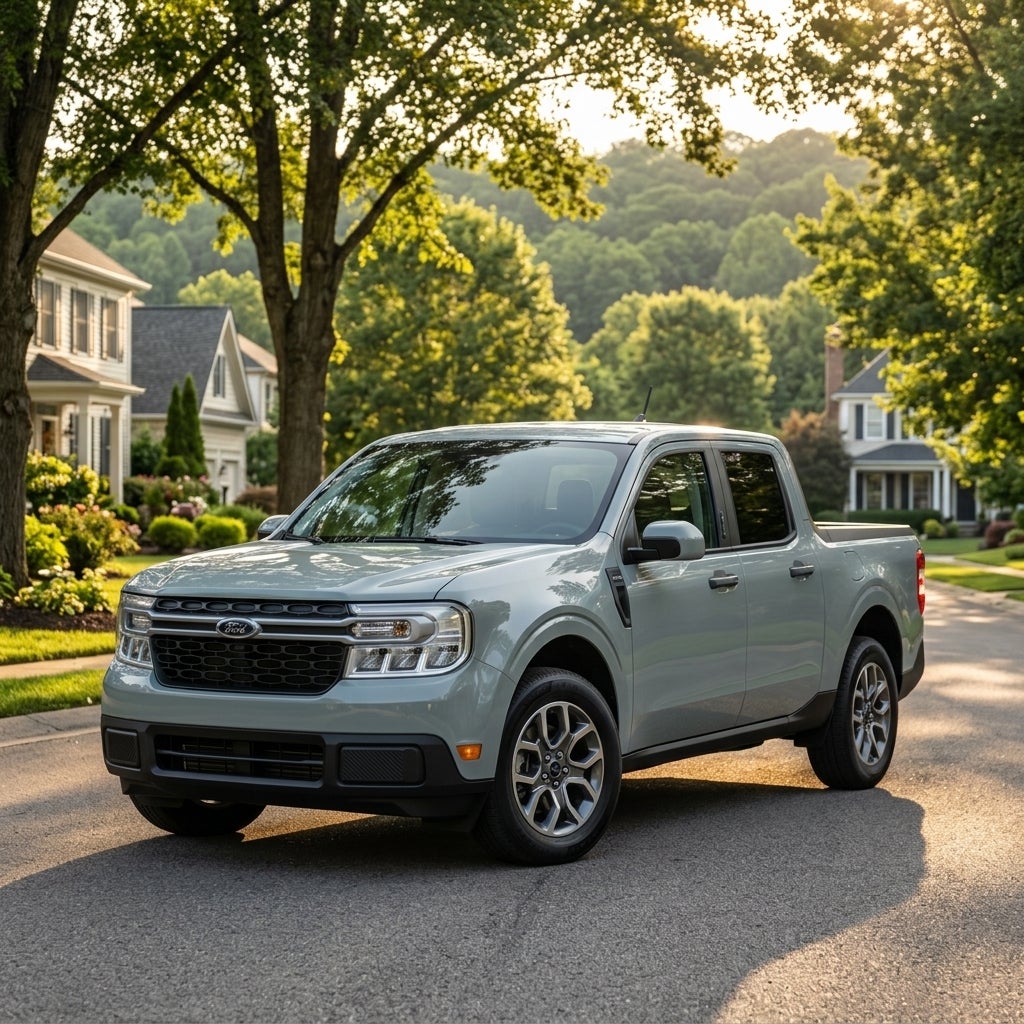
Professional automotive photography of a modern Ford Maverick hybrid pickup truck, three-quarter front view, parked on a clean asphalt road in a suburban neighborhood characterized by the rolling hills and lush deciduous greenery of eastern Ohio, warm golden hour sunlight filtering through mature tr

Expert Insights: Navigating the Vehicle Trade-In Process with Tri State Ford

Today, we're interviewing Nick Pirl, our Sales Manager at Tri State Ford. With 9 years of experience helping drivers across the region transition into new vehicles, Nick is uniquely qualified to explain how to maximize the value of your current car while simplifying your next purchase. In this discussion, readers will learn the technical details of appraisals, the financial benefits of dealership trades in Ohio, and how to handle existing auto loans during a transaction.

Q: Nick, walk me through the typical steps a driver takes when they want to trade in their current vehicle at Tri State Ford.

A: When a driver pulls onto our lot near the riverfront bluffs in East Liverpool, the process is designed to be as transparent and efficient as possible. It usually begins with a preliminary conversation about what you are looking for in your next vehicle, whether that is a rugged **F-150** for work or a spacious **Explorer** for the family. While you are browsing our current new-vehicle inventory or looking at new vehicle specials, one of our appraisers will perform a physical inspection of your current car. We look at everything from the mechanical health of the **engine** to the wear on the tires and the condition of the interior.

Once the inspection is complete, we use real-time market data to provide a firm offer. If you are looking for something specific that isn't currently on the lot, we can even apply that trade value toward a new vehicle custom order. For our business customers, we often see trades coming in for more specialized equipment, so we make sure to have a robust new commercial inventory available. This includes everything from Transit work vans to heavy-duty F-Series work trucks. If you want to get a head start before visiting, you can use our online tool to check your KBB trade-in value from home.

After we agree on a price, that amount is applied directly as a credit toward your purchase. This is also the perfect time to check for any manufacturer vehicle specials or even used vehicle specials that might apply to your situation. If you have questions during the process, you can always give us a quick call or stop by our showroom on Pennsylvania Ave. We also keep our new work truck inventory updated daily for those who need a replacement for their fleet immediately.

Q: How do you actually arrive at a specific number for a vehicle's trade-in value?

A: Determining a fair value involves a mix of local market demand and the specific history of the vehicle. For instance, in a suburban community like Calcutta, where families often navigate rolling hills and varied weather, **All-Wheel Drive** and **4x4** systems are in high demand, which can bolster the trade-in value of SUVs and trucks. We start by pulling a vehicle history report to check for accidents or title issues. Vehicles that qualify as CARFAX 1-owner vehicles often command a premium because they typically have more consistent maintenance histories.

We also look closely at the odometer. While a **10-year** old car with 150,000 miles still has value, a lower-mileage vehicle is generally easier for us to recondition and offer to the next owner. During the appraisal, we check the "curb appeal" and the mechanical soundness. If you are considering trading in a pickup, we'll look at the bed condition and towing equipment before you browse our new truck inventory. I always suggest that customers schedule a test drive for their next vehicle while we are finishing the appraisal so they can see how the new technology compares to their current ride.

"The most important thing for a driver to remember is that a trade-in isn't just about the check you get today; it's about the total savings on the vehicle you're driving home tomorrow."

Cinematic wide-angle photograph, lot overlooking the rolling green hills and riverfront bluffs of East Liverpool Ohio, the focal point is a shimmering new metallic silver Ford F-150 and a white Ford Explorer parked prominently, a well-maintained older Ford F-150 positioned nearby to represent a trad

Q: What happens if a customer still owes money on their current car loan?

A: This is a very common scenario, and it shouldn't stop you from upgrading. If you have an active loan, we simply contact your lender to get a **10-day payoff** quote. If your car is worth more than what you owe, that **equity** acts as your down payment. For example, if your car is appraised at 20,000 and you owe 15,000, you have 5,000 to apply toward your new Ford. Our finance department handles all the paperwork to pay off your old lien, so you don't have to worry about coordinating with your bank.

In cases where you owe more than the car is worth—what we call **negative equity**—we can often roll that balance into your new financing contract. This allows you to move into a more reliable vehicle without needing to pay off the old loan out of pocket. To see what options are available for your specific budget, I recommend submitting a credit application online. We even offer Ford pickup and delivery for certain services to make the entire ownership experience as convenient as possible once you've made the switch.

Q: Nick, are there specific financial benefits to trading in at a dealership rather than selling it yourself in Ohio?

A: One of the biggest advantages is the sales tax savings, which people often overlook. In Ohio, when you trade in a vehicle toward a purchase, you only pay sales tax on the difference between the new car price and your trade-in value. If you buy a new truck priced at $40,000 MSRP and your trade is worth $20,000, you only pay tax on the remaining 20,000. If you sold that car privately and then came to buy the truck, you would owe tax on the full 40,000. That tax credit can save you hundreds, if not thousands, of dollars depending on the vehicle's value.

Beyond the tax benefits, there is the peace of mind that comes with working with an established Ford dealership. You aren't meeting strangers from the internet or worrying about whether a personal check will clear. At our dealership, we handle the title transfer and all the legal filings immediately. Plus, when you buy from us, you get access to long-term perks like manufacturer monthly service specials that help keep your new investment in top shape for years to come.

Q: Is private selling really more profitable than a dealer trade-in?

A: On paper, a private buyer might offer a higher raw number because they are paying closer to retail value, but you have to look at the "net" profit. When you sell privately, you're responsible for detailing the car, listing it, taking time off work to show it, and dealing with the paperwork. You also lose that Ohio sales tax credit I mentioned. When you factor in the time spent and the tax savings, the gap between a private sale and a dealership offer often disappears. For those who want a quick, guaranteed price, our KBB instant cash offer is a great way to see a competitive number without the private-party headache.

We also try to make the transition into your new vehicle as seamless as possible. For example, if you're worried about the condition of your trade, we can help you find the right replacements through our tire finder tool to ensure the car is safe for the next owner. We even provide Ford mobile service for our customers, bringing expert care directly to your driveway. When you add up the convenience, the tax credit, and the immediate payoff of your old loan, the dealership route is usually the most practical choice for busy families.

Q: Should buyers negotiate the trade-in value and the new car price as two separate deals?

A: I always encourage transparency in the deal. It is helpful to understand the value of your trade-in as a standalone figure so you can see exactly how it impacts your bottom line. Whether you are looking at a heavy-duty model in our truck inventory or a compact SUV, knowing the trade value helps you calculate your monthly payments accurately. We want you to feel confident that you're getting a fair price for your old car and a great deal on the new one.

If you're ready to see what your current vehicle is worth, we invite you to visit us in person. Our team is here to walk you through every line of the contract so there are no surprises. You can also give us a quick call to discuss your vehicle's details before you make the trip. Our goal is to make sure every driver leaves our lot feeling like they made a smart, stable financial decision for their family's future.

Trading in a vehicle doesn't have to be a complicated hurdle. By understanding the appraisal process, leveraging the Ohio sales tax credit, and working with experts like Nick Pirl at Tri State Ford, you can turn your current car into a powerful asset for your next purchase. Whether you are managing an existing loan or looking to maximize your equity, our team is dedicated to providing a straightforward, honest experience. Visit us today to explore our inventory and see how simple it is to upgrade your ride.

Keep your vehicle performing at its best with our service team:


© 2026 Tri State Ford. All rights reserved.

Posted in:

Related Posts

d

How Do You Handle a Car Trade-In With an Active Loan?

You do not need to pay off an active auto loan before trading in your vehicle at a dealership. The dealer contacts your financial institution directly to request a 10-day payoff quote, settles the remaining lien balance, and manages the title transfer paperwork. If your vehicle’s current market value exceeds the loan balance, the resulting positive equity serves as a cash down payment toward your next vehicle purchase. Managing a trade-in with an existing loan balance is a routine daily transaction for finance departments. When you bring a financed vehicle to our showroom on Pennsylvania Avenue, our team initiates a direct verification with your lender. This step determines the precise payoff figure, including accrued daily interest. Once the trade value is locked in, the purchase agreement clearly outlines how the remaining debt is processed. If you owe less than the total trade appraisal, the positive equity is deducted from the purchase price of your new truck or SUV. For example, if a vehicle appraises for $18,000 and your loan payoff is $14,000, you have $4,000 in positive equity to lower the total amount financed on your replacement vehicle. The dealership issues payment directly to your lender to release the title, completing the transaction without requiring you to clear the balance out of pocket beforehand. Drivers preparing to trade in a financed vehicle should gather their current lender account number, the loan customer service phone number, and current registration. If you want to verify your payoff details before visiting or need guidance on what documentation to bring along, you can give our team a quick call to walk through the process. Table of Contents Should You Pay Off Your Car Loan Before Trading It In? How Negative Equity and Loan Rollovers Work During a Trade-In Does Ohio Offer Sales Tax Savings on Vehicle Trade-Ins? Managing Pending Payments, Vehicle Reconditioning, and Lien Title Transfers Common Questions About Trading In a Financed Vehicle Maximize Your Trade-In Value and Finance Your Next Ford Should You Pay Off Your Car Loan Before Trading It In? Paying off your auto loan prior to trading in your vehicle is entirely optional and often financially unnecessary. Clearing the loan beforehand simplifies title handling by placing a clean title in your hands, but using substantial liquid savings to pay off a low-interest auto loan can unnecessarily deplete cash reserves needed for a down payment or emergency funds. Evaluating whether to clear the balance comes down to your available cash, current interest rates, and equity position. Paying down a loan balance until the payoff falls below the vehicle's market value prevents carrying debt into your next vehicle contract. However, if your funds are better utilized as a cash down payment to secure a better interest rate on a new Ford Expedition equipped with Ford Co-Pilot360 or a Ford F-150 with a 3.5L EcoBoost V6, letting the dealership process the payoff during the sale preserves your cash flexibility. Suburban commuters traveling State Route 170 from nearby Calcutta often evaluate whether to trade in an active loan or clear the title early when shopping for a vehicle with enhanced cargo space and towing capacity for family trips. The key benefit of trading in with an active loan is convenience. The dealership takes over the administrative burden of transferring funds to the lienholder, verifying title releases, and ensuring state titling compliance. Before deciding to pay off your balance early, compare your loan interest rate against current financing incentives. You can complete our online credit application to see how your current equity position aligns with available loan terms, or explore our pre-owned Carfax 1-owner inventory if you want to apply existing equity toward a reliable late-model vehicle. How Negative Equity and Loan Rollovers Work During a Trade-In Negative equity occurs when your current loan payoff balance is higher than the actual market trade-in value of your vehicle. When you trade in an upside-down vehicle, the unpaid balance does not disappear; it must either be paid out of pocket at signing or rolled into the financing contract of your replacement vehicle, subject to lender approval limits. Rolling negative equity into a new vehicle loan increases the overall principal balance beyond the vehicle's selling price. Lenders evaluate these transactions using loan-to-value limits, which typically cap total borrowing between 110% and 125% of the new vehicle's book or invoice value. If a vehicle appraises for $12,000 but the loan payoff is $16,000, the $4,000 shortfall is added to the new loan. On a new vehicle purchase, adding several thousand dollars of rolled-over debt can result in higher monthly payments and increased interest costs over time. To mitigate the impact of negative equity during a trade-in, consider selecting a replacement vehicle that offers strong value retention or manufacturer rebates that help offset the balance shortfall. Commercial buyers looking at our Ford F-Series work truck inventory or retail shoppers browsing our certified pre-owned Ford lineup often utilize down payments or factory incentives to absorb remaining balance shortfalls, keeping the new loan within standard financing guidelines. Key strategies for managing negative equity include: Providing a cash down payment to cover part or all of the negative equity gap. Selecting a model with substantial factory rebates to absorb the equity shortfall. Choosing a shorter loan term to pay down principal faster and avoid remaining underwater long-term. Delaying the trade-in for several months while making extra principal-only payments on your current loan. Does Ohio Offer Sales Tax Savings on Vehicle Trade-Ins? Ohio tax law allows a sales tax credit equal to the full agreed trade-in allowance of your vehicle when purchased through a licensed dealership. This tax credit applies directly to the agreed price of the replacement vehicle, reducing the total amount subject to state and local sales tax regardless of whether your existing loan has positive or negative equity. The sales tax credit is calculated strictly on the trade-in allowance value negotiated for your vehicle, independent of the outstanding loan payoff balance. For instance, if you agree on a $20,000 trade-in value for your current vehicle when purchasing a $45,000 Ford Explorer, Ohio sales tax is calculated only on the remaining $25,000 difference. If your local sales tax rate is 6.75%, this trade-in allowance saves you $1,350 in state sales tax compared to buying the new vehicle without a trade-in. Even if you carry negative equity on your trade-in vehicle, you still receive the full sales tax reduction on the trade allowance. The remaining loan debt is handled as a separate financial obligation in the transaction statement. This tax structure provides a distinct financial advantage over private-party sales, where buyers cannot offer state sales tax credit offsets on your purchase. Shoppers commuting along Market Street from Boardman frequently take advantage of trade-in tax offsets when upgrading to a multi-row SUV designed for family safety and suburban driving. To check how your trade value translates into direct savings, look through our selection of new Ford models and submit your details through our Instant Cash Offer valuation tool for an estimated trade allowance. Managing Pending Payments, Vehicle Reconditioning, and Lien Title Transfers Continuing your regularly scheduled auto loan payment is essential if your trade-in transaction takes place near your payment due date. Because lien payoffs take approximately 3 to 5 business days for financial institutions to process and record, missing a payment while a trade is pending can trigger late fees or a negative mark on your credit report. If your scheduled payment processes right before or during the dealership's payoff distribution, an overpayment will occur. Lenders automatically audit account balances once the payoff check clears. Any excess funds resulting from your recent payment are refunded directly to you by the lender, typically via check or direct deposit within 10 to 15 business days. Addressing minor cosmetic details prior to your trade appraisal can help maximize your vehicle's appraisal value without wasting money on unneeded repairs. Professional detailing, clearing personal belongings, fixing small windshield chips, and ensuring all owner's manuals and keys are present provide a solid return on effort. Expensive mechanical overhauls rarely yield a dollar-for-dollar increase in trade value, as dealership reconditioning facilities handle major repairs more cost-effectively. Transferring a title with a lien is handled entirely by the dealership team during a trade-in. When selling to a private party, you must manually request a 10-day payoff quote, pay the bank in full, wait up to several weeks for the lienholder to release the paper title, and then arrange a title transfer with the buyer at a local registrar office. Trading in at a dealership eliminates these delays, as the dealer settles the lien directly with the lender and processes electronic title releases through state agency portals. Common Questions About Trading In a Financed Vehicle Q: Does paying off a car loan lower your credit score temporarily? Paying off an auto loan can cause a minor, temporary dip in your credit score because closing an active installment account reduces your overall credit mix and lowers the average age of your active accounts. This score adjustment is normal and typically stabilizes within a few months as your updated credit profile records ongoing, on-time payments on your replacement auto loan or remaining accounts. Q: What is the maximum negative equity a lender will allow you to roll over? Most automotive lenders cap maximum loan-to-value ratios between 110% and 125% of the replacement vehicle's total invoice or retail value. This percentage sets the ceiling for how much negative equity, warranty products, and registration fees can be added to the new loan balance based on borrower creditworthiness and vehicle value. Q: How does positive equity lower your monthly payment on a new vehicle? Positive equity acts as an immediate down payment that reduces the net purchase price of your replacement vehicle. By lowering the total principal balance you need to borrow, positive equity directly reduces your monthly interest charges and lowers your required monthly installment payment over the term of the loan. Q: Can you trade in a vehicle if you currently have a high interest rate on your loan? You can trade in a vehicle regardless of the interest rate on your existing loan contract. When the dealership appraises the vehicle and processes the transaction, the full outstanding payoff balance is remitted to your current lender, completely closing that account and ending its associated interest rate. Q: How do you transfer a car title to a private buyer when a lien exists? Transferring a titled vehicle with a lien to a private buyer requires obtaining a formal 10-day payoff quote, receiving full funds from the buyer, remitting payment to your lender, and waiting several weeks for the bank to send the paper title release. Once received, both parties must sign the released title at a title office or notary. Trading in at a dealership avoids this waiting period because the dealer handles lien clearance directly with the bank. If you have specific questions about structuring your current vehicle loan into a new purchase, our finance center services team can walk you through exact payoff numbers and credit options. Maximize Your Trade-In Value and Finance Your Next Ford Navigating a trade-in with an active auto loan is simple when you have clear payoff numbers, an accurate trade appraisal, and an experienced finance team managing the paperwork. Whether you have positive equity to apply as a down payment or need options for managing a remaining loan balance, taking the right steps ensures a smooth transition into your next vehicle. At Tri State Ford, we handle all communication with your current lender, process state trade-in tax savings, and help you find a durable, family-friendly vehicle durable and dependable for daily driving and weekend adventures. Bringing your account details, registration, and both sets of keys to your visit ensures your trade evaluation is completed promptly. To take the next step toward your replacement vehicle, you can start by using our online trade evaluation tool to estimate your current vehicle value. When you are ready for a test drive or a complete line-by-line trade quote, visit our dealership in East Liverpool or speak directly with our sales team by calling (330) 462-7578 today. Keep Your Vehicle Running Strong Keep your vehicle performing at its best with our service team: Order Parts Schedule Service © 2026 Tri State Ford. All rights reserved. Car Trade-In with Loan in East Liverpool OH | Tri State Ford

f

Is It Worth Fixing Your Car Before Trading It In?

Fixing a car before trading it in is generally only worth the investment for minor cosmetic touch-ups, simple maintenance, or low-cost functional repairs. Major mechanical overhauls, expensive bodywork, and transmission replacements rarely yield a dollar-for-dollar return because retail repair costs almost always exceed the resulting increase in dealer appraisal value. When evaluating a vehicle, trade-in appraisals calculate wholesale market value minus estimated reconditioning expenses. Reconditioning costs represent the specific reconditioning touch-ups, tire replacements, or mechanical fixes required to prepare a vehicle for resale. Major engine or transmission overhauls performed at retail customer rates consume significant cash out-of-pocket that an appraiser cannot add back to your offer. According to findings from Kelley Blue Book, comparing a repair's full retail cost with the likely increase in your trade allowance reveals that high-cost fixes almost never pay for themselves. Inexpensive functional improvements offer a much better financial return. Replacing a burnt-out headlight bulb, installing fresh wiper blades, or topping off vital fluids costs very little but eliminates obvious red flags during an inspection. Drivers navigating the steep riverfront bluffs in East Liverpool during winter commutes benefit from having essential safety components in order, but extensive body repairs are best left as an as-is trade deduction. Bringing your vehicle in as-is allows our appraisal team to evaluate its current condition directly. You can stop by our physical showroom address or give our team a quick phone call to discuss your vehicle's trade-in potential before spending money on unnecessary repairs. Table of Contents Should You Fix Major Mechanical Issues or Check Engine Lights Before Trading In? Should Worn Tires or Minor Maintenance Items Be Replaced Prior to Appraisal? Does Professional Auto Detailing and Fixing Minor Cosmetic Damage Pay Off? How Do Dealer Reconditioning Deductions Compare to Independent Repair Shop Costs? Should You Trade In As-Is or Sell Privately If Your Vehicle Needs Repairs? Common Questions About Fixing a Car Before Trading It In Maximizing Your Trade-In Value at Tri State Ford Should You Fix Major Mechanical Issues or Check Engine Lights Before Trading In? Major mechanical issues should not be repaired prior to trading in a vehicle because retail parts and labor rates far exceed the value added to a trade-in appraisal. Minor check engine light triggers, however, such as a loose gas cap or a simple sensor replacement, should be resolved to prevent appraisers from assuming worst-case engine damage. Paying thousands of dollars out-of-pocket for severe engine work, transmission rebuilds, or suspension overhauls rarely pays back its full cost in a higher trade allowance. Research from Edmunds confirms that dealers complete mechanical repairs in-house at internal wholesale labor and parts rates, which means a dealership's reconditioning deduction is almost always smaller than the bill you would pay at a retail repair shop. If a car requires a major repair, trading it in as-is protects your personal cash flow while allowing the dealer to handle the necessary work efficiently. Active diagnostic trouble codes and illuminated warning lights require a strategic approach. An active check engine light forces appraisers to factor in potential engine or emissions repairs during their assessment. If the light is triggered by a minor, easily addressable component like a loose gas cap or an accessible oxygen sensor, clearing the code with a low-cost fix protects your vehicle's valuation tier. Our advisors see that buyers evaluating our Carfax 1-owner pre-owned vehicles place high priority on verified maintenance records and clean diagnostic scans, making minor sensor fixes one of the few mechanical steps worth taking before an appraisal. Should Worn Tires or Minor Maintenance Items Be Replaced Prior to Appraisal? Severely worn or bald tires should be replaced before trading in if you can source an inexpensive matching set, as bald tires represent an immediate safety hazard that forces a lower condition classification. Minor maintenance items like functional windshield wipers or fresh fluid top-offs also help preserve your vehicle's overall presentation grade. Tires represent one of the first physical items an appraiser checks during a walk-around inspection. Bald tires fail safety standards and mandate an immediate reconditioning deduction from your trade-in offer. When tread depth falls below safety thresholds, replacing worn tires with budget-friendly, matching tires prevents your vehicle from dropping into a fair or poor condition category. Commuters traveling along State Route 170 in Calcutta rely on adequate tire tread to handle changing weather conditions, and appraisers immediately check tire wear to determine whether a vehicle can be resold safely. Routine maintenance items follow a similar logic. Addressing small details shows that a car has been cared for throughout its lifecycle. Wiper Blades: Replacing streak-prone wiper blades prevents negative visual impressions during test drives. Fluid Levels: Topping off engine oil, windshield washer fluid, and coolant signals proper engine care. Bulbs and Fuses: Swapping out blown taillight or turn-signal bulbs eliminates simple visual defects. Basic Documentation: Gathering documented oil changes and service receipts reassures appraisers regarding engine health. Preserving clean vehicle history and documented care helps pre-owned vehicles qualify for certified programs. Upgrading into models from our Ford certified pre-owned inventory provides peace of mind through rigorous 172-point inspections, comprehensive limited warranty coverage, and 24/7 roadside assistance support. Does Professional Auto Detailing and Fixing Minor Cosmetic Damage Pay Off? Professional auto detailing costing between $150 and $200 almost always pays for itself by eliminating cabin odors, carpet stains, and road grime, helping the vehicle reach a higher condition tier. Extensive bodywork or full-panel paint repairs, by contrast, rarely return their out-of-pocket expenses. First impressions significantly influence the physical appraisal process. A vehicle covered in mud with clutter inside makes it difficult for an appraiser to see well-maintained upholstery or clean body panels. Spending a modest amount on professional detailing or taking time to deep-clean the interior yourself removes pet hair, food crumbs, and surface grime. This modest effort ensures your car is graded on its actual mechanical and cosmetic condition rather than penalized for surface mess. Minor cosmetic repairs require careful cost evaluation: Paintless Dent Repair: Removing minor door dings via low-cost dent removal often returns solid value by restoring clean body lines. Cracked Lenses: Replacing a broken taillight or fog light lens is inexpensive and eliminates obvious visual flaws. Deep Scratches and Dents: Attempting full body-shop repainting or panel replacement for deep scratches rarely yields a dollar-for-dollar return due to high body-shop labor costs. Clean vehicles make trade-in transactions seamless, helping you transition smooth equity into your next purchase. You can begin organizing your upcoming vehicle upgrade by submitting a secure online credit application to explore customized financing options tailored to your family's monthly budget. How Do Dealer Reconditioning Deductions Compare to Independent Repair Shop Costs? Accepting a dealership's reconditioning deduction is almost always financially better than paying an independent repair shop out-of-pocket before trading in. Dealerships perform reconditioning using wholesale internal labor and parts costs, whereas independent facilities charge retail rates. When an appraiser calculates trade-in value, they start with the vehicle's target market value and subtract estimated internal reconditioning costs. Because dealerships operate internal service departments, their cost to fix a leaking gasket, turn brake rotors, or replace a suspension component is calculated at wholesale cost. An independent repair facility must charge you full retail labor rates and marked-up parts prices to turn a profit. Paying retail rates out-of-pocket for a major fix before trading in means spending money that will not be fully recovered in your trade offer. Repair Category Retail Repair Shop Cost Internal Dealer Reconditioning Deduction Financial Impact on Trade-In Major Transmission Repair $3,500 – $5,000 Wholesale Internal Rate Paying retail out-of-pocket loses $1,000+ compared to trade deduction Complete Brake Overhaul $600 – $900 Internal Parts & Labor Retail repair rarely recovers full cost on appraisal allowance Four-Tire Replacement $600 – $1,000 Wholesale Tire Rate Budget tires restore safety tier; high-end retail tires lose money Minor Sensor / Gas Cap Fix $50 – $150 Minimal Diagnostic Time Worth fixing out-of-pocket to prevent check engine light penalty Accepting an as-is trade deduction preserves your savings and eliminates the hassle of waiting days for shop repairs to finish. You can apply your vehicle's trade value directly toward purchasing a new truck or SUV from our latest new vehicle inventory, securing advanced driver-assist features like Pre-Collision Assist with Automatic Emergency Braking and BLIS with Cross-Traffic Alert. Should You Trade In As-Is or Sell Privately If Your Vehicle Needs Repairs? Trading in a vehicle as-is is significantly more practical than attempting a private sale when major repairs are needed. Private buyers are generally unwilling to purchase vehicles with mechanical defects or active bank liens, while dealerships handle lien payoffs, title transfers, and reconditioning in a single transaction. Selling a car that requires repairs to a private buyer involves significant hurdles. Private shoppers typically search for turnkey transportation and react negatively to warning lights, leaking fluids, or worn brakes. To close a private sale on a damaged vehicle, sellers must discount the price heavily, often lower than a dealer's wholesale appraisal. Private sales also require navigating test drives with strangers, handling title transfers, and coordinating with lenders if an active auto loan exists. Trading in at a dealership eliminates these headaches while unlocking state sales tax advantages: Immediate Lien Satisfaction: The dealership contacts your lender directly to secure a 10-day payoff quote and remits funds to clear your title. Single-Appointment Process: You can complete the appraisal, trade transfer, and replacement vehicle purchase in one visit. Sales Tax Credit Savings: In Ohio, the value of your trade-in is subtracted from the taxable purchase price of your replacement vehicle, saving you state sales tax out-of-pocket. To evaluate your options, stop by our East Liverpool dealership location or give our staff (330) 462-7578 to speak with an appraisal specialist. You can also start the valuation process from home using our online trade valuation tool to receive an initial market range. Common Questions About Fixing a Car Before Trading It In Q: Should I fix a cracked windshield before trading in my car? Replacing a cracked windshield is worth doing if your comprehensive auto insurance covers glass replacement with a zero or low deductible. If you must pay out-of-pocket at full retail glass rates, evaluate whether the crack obstructs the driver's view or integrated safety cameras. Minor stone chips can be left as-is, but severe cracks that compromise safety or driver-assist sensors force an appraisal reconditioning deduction. Q: Does a car's service history increase trade-in value? Presenting complete service documentation reassures appraisers that essential powertrain components, brakes, and cooling systems have been properly maintained according to factory standards. Documented service records keep your vehicle in the highest possible condition tier, preventing speculative reconditioning deductions for missed major maintenance intervals. Q: What mechanical components are checked during a dealership appraisal? Appraisers conduct a functional inspection of the engine, transmission, braking system, steering, suspension, and climate control, while scanning for active diagnostic trouble codes. They also inspect tire tread depth, battery age, frame condition, and exterior lighting to calculate estimated reconditioning costs accurately. Q: Will aftermarket modifications increase my trade-in offer? Non-factory modifications like aftermarket exhaust systems, custom suspension lifts, or altered tuning modules usually reduce trade-in value rather than increasing it. Appraisers know that heavy aftermarket alterations restrict general buyer appeal and often require costly restoration back to factory specifications. Q: How does negative equity affect my trade-in process if repairs are needed? If your vehicle requires repairs and you owe more on your auto loan than its current appraised worth, you have negative equity. You can complete the trade-in as-is by paying the difference out-of-pocket, applying a cash down payment, or rolling the remaining loan balance into your replacement vehicle financing subject to lender approval. Maximizing Your Trade-In Value at Tri State Ford Navigating a vehicle trade-in does not require spending thousands of dollars on pre-sale repairs. Focus your effort on simple, high-return presentation steps: clean out personal belongings, detail the cabin, top off essential fluids, and gather your complete service records. For major mechanical repairs or cosmetic bodywork, trading in your vehicle as-is protects your out-of-pocket cash while allowing our team to handle reconditioning at wholesale rates. Our appraisal process provides transparent evaluations based on live market transaction data and current vehicle demand. Whether you drive a sedan, a crossover with spacious seating, or a truck built tough for heavy towing, our team is ready to help you apply maximum trade equity toward your next purchase. Visit our showroom to receive an in-person physical appraisal, explore flexible financing options, and test drive our latest lineup of reliable Ford vehicles today. Keep Your Vehicle Running Strong Keep your vehicle performing at its best with our service team: Order Parts Schedule Service Appt © 2026 Tri State Ford. All rights reserved. Car Trade-In Tips in East Liverpool OH | Tri State Ford

,

How Does Trading In a Car With an Existing Loan Work?

Trading in a vehicle that still has an active auto loan is a straightforward process where the dealership pays off your remaining loan balance and applies any remaining equity toward your new purchase. The dealership contacts your lender directly to obtain an official payoff statement, calculates the difference between your car's fair market trade-in value and what you owe, and handles the electronic transfer of funds to close out your original lien. If your vehicle is worth more than the loan balance, the positive equity acts as a cash down payment. If you owe more than the current value, the negative equity must be paid up front or rolled into the financing of your next vehicle. When you arrive at the showroom, our team performs a complete physical inspection and vehicle valuation to determine current market worth. Once a trade-in value is established, we contact your lienholder to verify the exact payoff figure. For drivers navigating the steep riverfront bluffs along East Liverpool, having a vehicle with reliable all-wheel drive or advanced driver-assist features like Pre-Collision Assist with Automatic Emergency Braking is essential for peace of mind during winter commutes. Upgrading to a newer truck or SUV before your current loan is fully paid off allows you to transition into enhanced safety and towing capabilities without waiting years for loan completion. The entire transaction is consolidated into a single agreement. The dealership assumes responsibility for remitting the exact payoff amount to your bank or finance company, releasing you from your old account once the lender processes the final payment. To start the process or ask questions about your current loan status, visit our showroom on Pennsylvania Avenue or give our staff a quick call today. Table of Contents How Do You Calculate Your Vehicle Equity and Handle Negative Equity? What Are the Financial Risks of Rolling Over Negative Equity into a New Loan? Why Do Dealerships Require a 10-Day Payoff Quote and Specific Title Paperwork? How Does Trading In at a Dealership Compare to Selling a Financed Car Privately? Common Questions About Trading In a Financed Vehicle Ready to Upgrade? How a Local Dealership Simplifies Your Financed Trade-In How Do You Calculate Your Vehicle Equity and Handle Negative Equity? Calculating your vehicle equity requires subtracting your official loan payoff amount from your vehicle's current market trade-in value. A positive result means you have positive equity, which reduces the total purchase price of your next vehicle. A negative result means you have negative equity—frequently referred to as being underwater or upside down—meaning your loan balance exceeds what the car is currently worth on the trade market. To determine where you stand financially, follow these three steps: Obtain a formal payoff quote from your current auto lender, which includes total principal and daily accrued interest. Request an objective trade-in evaluation based on your vehicle's condition, mileage, and trim options. Subtract the payoff amount from the appraised trade value to identify your net equity position. For example, if your current vehicle is valued at $18,000 and your official lender payoff is $14,000, you hold $4,000 in positive equity. That $4,000 functions directly as a cash credit, lowering the total amount financed on a new SUV with plenty of cargo space and space for the whole family. Conversely, if your car appraises at $12,000 but your payoff statement reads $15,000, you face $3,000 in negative equity. When dealing with negative equity, buyers have several practical options: Pay the difference out of pocket at closing using cash to keep your replacement loan clean. Apply a cash down payment to offset the negative balance partially or entirely. Roll the remaining balance into your new vehicle's financing agreement if lender loan-to-value limits allow. Delay your trade-in while making additional principal-only payments to bridge the financial gap. Suburban commuters traveling Route 170 through Calcutta often choose to trade in earlier when upgrading to models equipped with intelligent 4WD and BLIS with Cross-Traffic Alert to handle changing road conditions safely. Exploring our new vehicle inventory gives you a clear look at current models featuring SYNC 4 technology, while browsing our pre-owned 1-owner vehicles offers affordable pathways to secure built tough durability and Ford's proven quality. What Are the Financial Risks of Rolling Over Negative Equity into a New Loan? Rolling negative equity into a new car loan increases the total principal amount you finance, elevates your monthly payment, and escalates overall interest charges across the loan term. When you transfer unpaid debt from a previous vehicle into a new contract, you begin the new loan owing significantly more than the replacement vehicle's actual market value. Industry data from Edmunds highlights that roughly 31% of vehicle trade-ins involved negative equity, with the average debt shortfall reaching approximately $7,183. Compounding debt in this manner creates several specific financial challenges: Deeper Negative Equity: Carrying existing debt into a new loan puts you underwater from day one, making it harder to build positive equity as the new vehicle depreciates. Higher Monthly Costs: Because you are financing the replacement vehicle's purchase price plus the unpaid balance of the old loan, your monthly payment rises substantially. Increased Interest Overhead: You end up paying interest charges on the old vehicle's debt for the duration of your new loan term. Insurance Risk: If the replacement vehicle is written off in an accident or stolen, standard auto insurance only covers the fair market value of the car. Without specialized gap coverage, you remain personally responsible for paying off the remaining loan balance, including the rolled-over negative equity. To limit these risks, applying a cash down payment at closing directly reduces financed debt. Buyers can also select shorter loan terms to pay down principal faster, ensuring equity builds at a pace that keeps up with normal vehicle depreciation. Choosing a well-equipped truck with a high towing capacity and reliable EcoBoost engine performance helps retain strong market value over time. Completing an online credit application helps clarify your financing structure, while reviewing our Ford certified pre-owned inventory provides options backed by a 12-month/12,000-mile comprehensive limited warranty and a 7-year/100,000-mile powertrain limited warranty. Why Do Dealerships Require a 10-Day Payoff Quote and Specific Title Paperwork? Dealerships require a 10-day payoff quote because auto loan interest accrues on a daily per-diem basis, making your standard monthly statement figure inaccurate for loan satisfaction. A 10-day payoff statement calculates the exact principal balance plus ten additional days of projected interest, ensuring that funds mailed or electronically transferred to your lender cover the debt in full without leaving a residual balance. When trading in a vehicle with an active lien, bringing the proper documentation speeds up transaction processing and prevents funding delays. While you do not need the physical paper title—since your bank or credit union holds the legal title until the lien is satisfied—you must present specific ownership verification documents at the dealership: 10-Day Payoff Quote: A official document generated by your lender listing the total payoff figure, daily interest rate, payoff expiration date, and remittance address. Account Information: Your current auto loan account number and customer service contact details for the financial institution holding the lien. Valid Driver's License: Government-issued identification for all individuals listed on the current loan and vehicle registration. Current Vehicle Registration: Active registration documents matching the names on the financing contract. Proof of Income and Residency: Pay stubs and recent utility bills if you plan to finance your replacement vehicle on the same day. All Vehicle Keys and Accessories: Factory key fobs, owner's manuals, and original equipment like cargo covers or floor mats to ensure full trade-in value. Our finance team handles direct communication with your bank, verifying payoff details and submitting final settlement funds once agreements are signed. Business owners managing commercial fleets or hauling equipment can streamline vehicle upgrades by browsing our F-Series work truck inventory to find commercial-grade trucks engineered with maximum payload capacity and integrated trailer brake controllers. How Does Trading In at a Dealership Compare to Selling a Financed Car Privately? Trading in a financed vehicle at a dealership eliminates administrative hassle by allowing the dealer to satisfy the lien and transfer ownership directly, whereas selling privately requires arranging complex bank transfers before the lender releases the title to a private buyer. Private sales often yield a slightly higher gross selling price, but navigating a private sale with an active bank lien involves significant logistical hurdles. Process Step Dealership Trade-In Private Party Sale Lender Payoff Handled directly by dealer finance staff [1] Seller must coordinate buyer funds to satisfy bank lien [8] Title Transfer Electronic lien release managed seamlessly by dealership [1] Delays occur while waiting for bank to mail paper title [8] Transaction Speed Completed same-day in a single appointment [1] Can take weeks to arrange buyer financing and title release [8] Sales Tax Impact Trade-in value reduces taxable amount on new vehicle in many states [1, 2] Full sales tax paid on replacement vehicle purchase price [1] Safety & Convenience Secure, professional environment with immediate trade processing [1] Requires meetings with strangers and personal payment risks [8] In a private transaction, prospective buyers are often hesitant to hand over cash or personal checks while a bank holds the physical title. The buyer must either send payment directly to your lender or meet you at a local bank branch to finalize loan satisfaction, after which the bank mails the clear title weeks later. Conversely, trading in your car at a professional dealership offers immediate convenience and potential tax savings. In many jurisdictions, the value of your trade-in is subtracted from the sale price of the new vehicle before sales tax is calculated, saving you hundreds of dollars that private sales do not offset. Visiting our local Ford dealer location allows you to complete the trade appraisal, lien payoff, and new vehicle selection during one seamless visit. Common Questions About Trading In a Financed Vehicle Q: Does trading in a financed car impact your credit score? Trading in a financed car can cause a brief, minor shift in your credit score, but settling the loan balance is beneficial over time. When the dealership remits payment to your lender, your original loan account is closed and reported as paid in full. If you finance a replacement vehicle, a hard credit inquiry occurs during application processing, and a new account opens. Making prompt monthly payments on the replacement loan establishes positive credit history and rebuilds your score quickly. Q: Do you need to contact your lender before bringing your vehicle to the dealership? While our dealership finance department can contact your lender on your behalf, reaching out to your lender prior to your visit is helpful. Requesting a 10-day payoff quote directly gives you clear sight of your exact loan balance before appraisals begin. Knowing your payoff amount in advance allows you to calculate your equity position accurately, evaluate your budget, and streamline your trade-in transaction once you arrive at the showroom. Q: Can you trade in a vehicle if you owe more than its market value? Yes, you can trade in a vehicle even if you owe more than its fair market value. The difference between your payoff figure and trade valuation represents negative equity. You can satisfy this balance by paying cash at closing, applying a down payment, or rolling the remaining debt into your new vehicle loan if lender guidelines permit. Paying cash or supplying a down payment is recommended to avoid inflating the principal balance on your replacement vehicle. Q: What happens to your existing car loan once the trade-in agreement is signed? Once trade-in documents are signed, the dealership submits payment directly to your lienholder to cover the agreed 10-day payoff amount. It typically takes between five and fourteen business days for financial institutions to process incoming funds and mark accounts as paid in full. You should monitor your online loan portal or contact your lender to confirm receipt of funds. If a scheduled automatic payment falls within that processing window, confirm with your bank whether to pause it temporarily. Q: How does a down payment affect a trade-in with negative equity? A cash down payment helps absorb negative equity during a trade-in transaction. Instead of adding the debt shortfall directly to your replacement loan, your cash down payment absorbs the negative balance first. For instance, if you have $2,000 in negative equity and provide a $3,000 cash down payment, $2,000 eliminates the old debt and $1,000 directly reduces the purchase price of your replacement vehicle. Exploring current manufacturer specials can also offer factory incentives that further offset trade-in shortfalls. Ready to Upgrade? How a Local Dealership Simplifies Your Financed Trade-In In our local dealership, over 70% of customers trade in financed vehicles smoothly with expert support throughout the process. We manage all lender communications, secure accurate 10-day payoff figures, and handle title transfers so you can transition into your next vehicle without stress. Whether you need an efficient commuter car with smartphone integration like Apple CarPlay and Android Auto, or a spacious family vehicle equipped with Co-Pilot360, we provide clear guidance at every step. Our staff evaluates your trade-in using up-to-date market data to ensure you receive a fair, competitive value. Before stopping in, you can start the appraisal process online to get a clear picture of your current vehicle equity. Stop by our East Liverpool showroom, give our team a call, or use our convenient trade-in valuation tool to begin your vehicle upgrade today. Keep Your Vehicle Running Strong Keep your vehicle performing at its best with our service team: Order Parts Schedule Service Appt © 2026 Tri State Ford. All rights reserved. Car Trade-In with Loan Payoff in East Liverpool OH | Tri State Ford