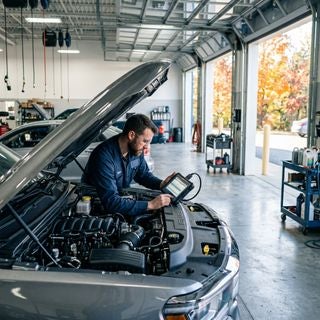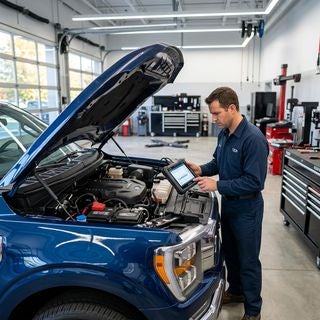
Servicing your Ford at a dealership is better for modern vehicles requiring specialized software updates, factory-trained technical diagnostics, and original equipment parts that maintain your manufacturer warranty. While independent repair shops offer routine maintenance at lower hourly labor rates, dealerships possess proprietary programming tools like Ford Diagnostic and Repair System (FDRS), factory technical service bulletins, and direct warranty processing required for complex electronic, powertrain, and recall repairs.
Maintaining a modern truck or crossover involves far more than basic mechanical adjustments. Modern vehicles contain dozens of interconnected electronic control modules that govern everything from engine timing and transmission shift points to advanced safety sensors. When you bring a 2026 Ford F-150 equipped with a 3.5L engine and SelectShift® automatic transmission in for routine service, specialized diagnostic equipment checks the vehicle against central factory databases. These automatic system checks locate model-specific calibrations and module updates that standard code readers used by general repair garages simply cannot detect.
Factory-certified technicians undergo rigorous, ongoing training directly from the manufacturer. This technical background ensures that every repair follows exact factory procedures and torque specifications. Whether your vehicle requires routine fluid changes or intricate powertrain troubleshooting, certified technicians understand the precise engineering requirements of your specific model year.
For maximum convenience, routine service options fit seamlessly into your daily schedule. You can bring your vehicle to our service center location for full-service facility care, give our service team a quick call to discuss maintenance questions, or utilize our Ford Mobile Service van for light maintenance performed directly at your home or workplace.
Table of Contents
- What Are the Pros and Cons of a Ford Dealership vs. an Independent Shop?
- How Do Ford IDS and FDRS Diagnostic Systems Protect Your Vehicle?
- What Is Included in the Ford Works Synthetic Blend Oil Change Package?
- Do Motorcraft Parts Include a Warranty and What Records Protect Coverage?
- What Is the Difference Between Main Dealership Service and Quick Lane Centers?
- Common Questions About Ford Maintenance and Scheduling
What Are the Pros and Cons of a Ford Dealership vs. an Independent Shop?
The main advantage of a Ford dealership is access to factory-trained technicians, original equipment Motorcraft components, and direct warranty processing, balanced against higher hourly labor rates. Independent repair shops typically offer lower labor costs and personal familiarity, but they often lack specialized Ford diagnostic software, factory recall capabilities, and dedicated technical tools required for complex vehicle modules.
Evaluating where to take your vehicle requires weighing immediate upfront costs against long-term maintenance value and vehicle reliability. Below is a detailed breakdown comparing dealership service centers with independent automotive repair shops:
- Factory Training and Specialization: Dealership technicians specialize exclusively in Ford vehicle architectures, completing regular manufacturer certification courses. Independent mechanics work on various vehicle makes and models daily, which broadens their general knowledge but limits deep specialization in specific brand technical service bulletins.
- Diagnostic Software and Equipment: Dealerships utilize dedicated factory software tools like FDRS and Integrated Diagnostic System (IDS), which connect directly to central factory servers for module flashing and recalibration. Independent shops generally rely on multi-brand aftermarket scan tools that read generic trouble codes but cannot perform proprietary software updates or recalibrate complex modules.
- Parts Quality and Warranty: Dealerships install genuine Motorcraft and original equipment parts designed to exact factory tolerances, backed by nationwide warranty coverage that includes labor. Independent shops frequently utilize aftermarket white-label parts that vary in quality and may carry limited third-party warranties that exclude labor reimbursement.
- Recall and Warranty Management: Dealerships automatically verify open safety recalls and perform warranty repairs at zero cost to the owner. Independent repair facilities cannot perform official warranty repairs or resolve open safety recalls under factory authorization.
For drivers managing daily commutes along State Route 170 near Beaver Creek in Calcutta, the elevated terrain and variable weather put extra stress on steering, suspension, and thermal cooling systems. Having certified technicians inspect critical drivetrain assemblies ensures your vehicle remains reliable under demanding local driving conditions. Visiting an authorized Ford service center provides long-term peace of mind by ensuring every component meets rigid factory standards.
How Do Ford IDS and FDRS Diagnostic Systems Protect Your Vehicle?
Integrated Diagnostic System (IDS) and Ford Diagnostic and Repair System (FDRS) protect your vehicle by allowing technicians to communicate directly with all internal computer modules to perform factory software updates, recalibrations, and pinpoint electrical troubleshooting. Independent shops using generic scan tools can read basic trouble codes, but they cannot download central factory software updates or reflash central vehicle modules.
Modern automotive architectures rely on high-speed controller area network (CAN-bus) systems where separate computer modules share operational data in real time. IDS serves as the legacy software platform for older vehicle electrical architectures, while FDRS is the modern cloud-based platform designed for newer vehicles with advanced electrical systems and over-the-air update capabilities. These diagnostic suites allow technicians to perform complete vehicle health scans, view live sensor parameter identification data, and execute guided pinpoint tests to isolate electrical concerns quickly.
During routine maintenance visits, dealership technicians connect your vehicle to the central Ford network. This connection automatically identifies outstanding technical service bulletins and recalibration updates released by factory engineers. For example, updating the transmission control module or body control module software can resolve minor shift hesitations, optimize fuel delivery, or improve battery charging logic without replacing any physical hardware. Families coming in for scheduled upkeep often ask our service advisors whether factory software updates can be completed during a routine oil change before checking on mechanical wear items.
Independent repair facilities can purchase temporary subscriptions to factory software, but high hardware costs and recurring licensing fees keep many general garages from maintaining active connections. Without access to FDRS, an independent shop might replace a functional electronic sensor when a simple factory software reflash would have resolved the fault code. Utilizing authentic diagnostic software prevents unnecessary component replacement and keeps your vehicle's electronic infrastructure running efficiently.
What Is Included in the Ford Works Synthetic Blend Oil Change Package?
The Works Synthetic Blend Oil Change package includes a synthetic blend oil and filter replacement, tire rotation and pressure inspection, a comprehensive multi-point vehicle inspection, fluid top-offs, and a detailed battery test. This bundled service provides essential preventive maintenance to protect engine components, prolong tire wear, and identify potential mechanical concerns before they cause unexpected road troubles.
Regular oil changes are vital for high-efficiency engines like the 1.5L EcoBoost® found in the 2026 Ford Escape, which relies on clean oil to lubricate high-speed turbocharger bearings and variable camshaft timing actuators. The synthetic blend motor oil used during The Works service offers superior thermal resistance compared to standard conventional oil, helping prevent harmful sludging and internal carbon deposits.
The multi-point inspection included in this package acts as an early warning system for critical safety systems. Certified technicians visually inspect and measure key components across your vehicle:
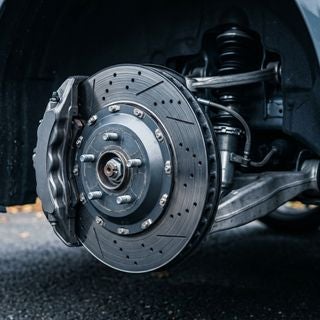
- Brake System: Measurement of brake pad friction material thickness, rotor surface condition, brake lines, and fluid condition.
- Tire Health: Digital tread depth readings across outer, center, and inner ribs, inspection for uneven wear patterns, and cold tire pressure adjustment.
- Underbody and Suspension: Inspection of shocks, struts, steering linkages, constant-velocity boots, and exhaust system mountings.
- Fluid Levels and Condition: Checking and topping off windshield washer fluid, engine coolant, transmission fluid, power steering fluid, and brake fluid.
- Electrical System: Conductive conductance testing of the 12-volt battery to measure cold-cranking amp capacity and charging system output.
Catching minor wear items early prevents costly mechanical failures and keeps your vehicle safe for daily family driving. Owners can easily schedule a service appointment online to reserve a dedicated service bay time for The Works package.
Do Motorcraft Parts Include a Warranty and What Records Protect Coverage?
Most Motorcraft and genuine Ford replacement parts installed at an authorized dealership come backed by a 24-month/unlimited-mileage warranty that covers both the part replacement and dealership labor costs. To keep your original vehicle warranty and parts coverage intact, owners should retain itemized repair invoices showing the service date, vehicle mileage, specific maintenance performed, part numbers, and approved fluid specifications.
The 24-month/unlimited-mileage warranty provides strong financial protection for vehicle owners. If a covered component fails within two years of installation, any Ford dealership nationwide will replace the part and perform the labor at no charge to you. In contrast, purchasing aftermarket parts from an auto supply store or independent garage often comes with limited part-only warranties, meaning you must pay out-of-pocket for labor costs if the replacement component fails prematurely.
To maintain your full factory powertrain and bumper-to-bumper warranty protections under federal regulations, proper documentation is essential. If a warranty question arises regarding a mechanical failure, you must prove that all scheduled maintenance was performed according to factory mileage intervals using fluids and filters that meet precise engineering standards.
Essential service records to keep organized in your owner file include:
- Itemized Service Invoices: Documents showing the exact date, vehicle identification number, and mileage reading at the time of service.
- Part Numbers and Descriptions: Detailed lists verifying that installed oil filters, air filters, and mechanical components match factory specifications.
- Fluid Specifications: Verification that engine oil, transmission fluid, and coolants meet specific Ford material standards (such as WSS-M2C961-A1 for motor oil).
- Self-Maintenance Receipts: If you perform basic air filter or wiper blade replacements yourself, keep dated retail receipts showing the purchase of qualifying Motorcraft parts.
Having complete service records uploaded directly to the central Ford system through dealership visits simplifies warranty claims and helps preserve higher resale value when you decide to trade in your vehicle. Vehicle owners looking for specific maintenance components can order genuine Motorcraft parts online directly through our parts department.

What Is the Difference Between Main Dealership Service and Quick Lane Centers?
The primary difference is that Quick Lane centers handle rapid routine maintenance, tire replacements, brake care, and battery checks for all makes without needing an appointment, while the main Ford dealership service department manages complex diagnostic troubleshooting, internal engine or transmission repairs, and official recall work. Quick Lane provides fast service for daily upkeep, whereas the main service bay handles heavy mechanical repairs.
Understanding which service path fits your immediate vehicle needs helps save time while ensuring your vehicle receives appropriate technical care. Quick Lane facilities are designed for speed and convenience, featuring dedicated service bays equipped for fast turnarounds on maintenance items like oil changes, tire rotations, wheel alignments, and brake pad installations.
| Service Category | Quick Lane Centers | Main Dealership Service Department |
|---|---|---|
| Appointment Requirement | No appointment necessary (walk-ins welcome) | Appointments recommended for scheduled bay time |
| Primary Focus | Routine maintenance, tires, brakes, batteries | Complex diagnostics, engine/transmission overhaul, electrical |
| Vehicle Makes Served | All vehicle makes and models | Specialized Ford vehicle service and heavy repairs |
| Recall & Warranty Work | Limited warranty repairs | Full factory recall resolution and complete warranty repairs |
| Diagnostic Depth | Quick multi-point checks and battery testing | Advanced FDRS module reflashing and pinpoint wiring tests |
For commuters navigating daily stop-and-go driving along Market Street near Boardman Plaza in Boardman, frequent vehicle starts and electrical demands place added stress on charging systems. Utilizing fast-service options for regular battery conductance testing helps prevent sudden winter starting failures. You can review our practical routine battery testing and replacement advice to understand how seasonal temperature swings impact battery lifespan.
Common Questions About Ford Maintenance and Scheduling
Q: How far in advance should routine Ford service be scheduled?
Routine service visits should typically be booked one to two weeks in advance to secure a convenient time slot, especially for detailed multi-point maintenance or involved repair work. Booking early ensures that specialized technicians and necessary original equipment parts are reserved for your specific vehicle. For urgent routine upkeep like oil changes or bulb replacements, walk-in quick service options allow drivers to drop in without a prior online reservation.
Q: Will servicing a Ford at an independent shop void the factory warranty?
Servicing your vehicle at an independent shop does not automatically void your factory warranty under federal law, provided the service meets factory specifications. However, you must keep complete, itemized receipts proving that correct fluid types and quality parts were used at proper mileage intervals. Any mechanical damage directly caused by improper parts, incorrect fluid specifications, or sub-standard repair work will not be covered under your factory warranty.
Q: What happens if a factory software update is missed during regular maintenance?
Skipping module software updates can leave your vehicle running on outdated calibration files, which might cause subtle transmission shift hesitation, display glitches, or inefficient battery charging routines. Ford regularly issues technical service bulletins and recalibration files that dealership technicians apply during routine service connections using FDRS software. Keeping module software current ensures your powertrain and electronic accessories operate according to the latest factory engineering refinements.
Q: Why is synthetic blend oil recommended for EcoBoost engines?
EcoBoost engines utilize turbochargers that operate at extremely high rotational speeds and thermal levels, requiring motor oil that resists thermal breakdown. Synthetic blend motor oil delivers enhanced thermal stability and viscosity retention compared to standard conventional motor oil, protecting internal bearings and preventing carbon buildup on engine valves over extended driving intervals. Using approved synthetic blend oil protects vital turbocharger components and preserves internal engine cleanliness.
Q: How does cold weather affect routine maintenance needs in northeastern Ohio?
Sub-freezing winter temperatures weaken battery cranking output while road salt causes accelerated surface oxidation on chassis and brake components. Regular winter multi-point inspections at our service center check battery cold-cranking health, verify anti-freeze protection levels, and inspect undercarriage components to maintain reliability throughout severe seasonal conditions. Inspecting rubber boots and fluid lines before winter prevents sudden cold-weather breakdowns.
Schedule Your Trusted Ford Maintenance Service
Keeping your vehicle running at peak performance requires certified technical expertise, specialized factory software, and genuine Motorcraft parts designed specifically for your model. Whether your vehicle requires a routine Works Synthetic Blend Oil Change, complex electrical diagnostic work, or seasonal brake maintenance, our certified technical team is ready to deliver fast, transparent care. Visit us at 1503 Pennsylvania Ave, East Liverpool, OH 43920 or give our dedicated service department (330) 462-7578 a call to schedule your next maintenance visit today.
© 2026 Tri State Ford. All rights reserved.