

Blog / Used Vehicle Guides, Financing & Insurance, Buying Guides, Trade-In Advice, Certified Pre-Owned

Which Used Three-Row SUV Is the Best Choice for Families Under $30,000?

4

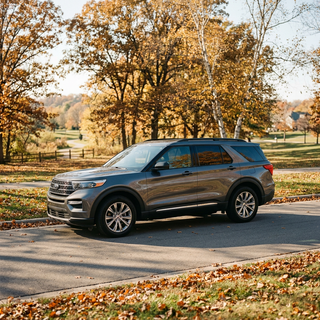
The best used three-row SUV for families under $30,000 balances daily cabin space, standard active driver assistance, and low ownership costs, with the 2023 Ford Explorer standing out as a top recommendation thanks to its standard 300 hp engine, strong reliability scores, and average used market prices floating near $22,000. Other dependable choices in this price range include the Toyota Highlander for long-term equity retention and the Chevrolet Traverse for maximum third-row legroom.

Finding the right pre-owned family vehicle requires looking beyond decorative cabin trim to examine real-world seat accessibility, cargo flexibility behind the back row, and drivetrain dependability. Modern pre-owned three-row crossover models allow growing households to secure late-model safety features and robust towing power without pushing past a sensible $30,000 budget.

At Tri-State Ford, our team helps drivers compare seating configurations, cargo dimensions, and drivetrain capability across popular pre-owned choices. Families comparing three-row models on our test-drive loop usually check third-row seat folding and child-seat access before even looking at horsepower specs. You can stop by our East Liverpool dealership location or give our staff a quick call to discuss current pre-owned inventory, compare vehicle history reports, and arrange a personalized test drive.

Table of Contents

What Are the Best Used 3-Row SUVs Under $30,000 and Which Models Fall Below $25,000?

Leading pre-owned three-row crossover models priced under $30,000 include the Ford Explorer, Toyota Highlander, Chevrolet Traverse, Subaru Ascent, and Volkswagen Atlas. For buyers aiming to stay under a $25,000 threshold, recent model years such as the 2023 Ford Explorer (averaging around $22,000 on the used market) and the 2021 Toyota Highlander (averaging near $25,000) represent outstanding market value.

Stepping into a pre-owned vehicle under $25,000 allows families to secure reliable engineering and essential technology without sacrificing modern convenience. The 2023 Ford Explorer delivers exceptional mechanical substance in this range, featuring a standard 2.3L EcoBoost® turbocharged four-cylinder engine producing 300 hp and 310 lb-ft of torque mated to a 10-speed SelectShift® automatic transmission. It offers up to 85 cubic feet of total cargo volume, standard Ford Co-Pilot360 active driver aids, and a maximum towing capability of 5,000 lbs when equipped with a class-three trailer hitch.

Other vehicles offering average used prices near or below $25,000 include the 2023 Chevrolet Traverse, which relies on a 310 hp V6 engine to provide 23 cubic feet of cargo room behind the rear seats, and the 2017 Toyota Sequoia, a full-size V8 option praised for durable mechanical longevity.

Moving closer to the $30,000 mark unlocks refined options like the 2022 Acura MDX, 2024 Subaru Ascent, 2024 Volkswagen Atlas, and 2023 Buick Enclave. For example, the Atlas features 33 inches of third-row legroom and a sliding second-row seat mechanism that operates easily even with a child safety seat attached.

For local suburban errands and daily trips around State Route 170 in Calcutta, having an efficient, four-wheel-drive crossover helps navigate winter weather and daily school runs with confidence. If you prefer to evaluate factory-fresh alternatives alongside pre-owned choices, you can explore new Ford SUV options or browse factory-certified pre-owned inventory to see which ownership benefits align with your budget.

A woman and child packing backpacks into the open trunk of a blue SUV in a suburban neighborhood during autumn. (Representative image for illustration purposes only. Actual vehicle may vary based on trim and configuration.)

How Do the Kia Telluride, Hyundai Palisade, and Honda Pilot Compare on Space, Engines, and Reliability?

The Kia Telluride and Hyundai Palisade share an identical 3.8L V6 engine generating 291 hp, while the Honda Pilot utilizes a 3.5L V6 engine delivering 280 hp. On interior space, the Telluride provides 31 inches of third-row legroom, whereas 2016 through 2019 Honda Pilot models equipped with 9-speed automatic transmissions generated noted owner feedback regarding hesitant shifting compared to smoother 6-speed automatic trims.

Understanding the mechanical distinctions among these popular choices helps narrow down the right option:

  • Engine Architecture and Power Output: Both the Kia Telluride and Hyundai Palisade ride on the same mechanical platform and utilize a naturally aspirated 3.8L V6 engine generating 291 hp and 262 lb-ft of torque, routed through an 8-speed automatic transmission. The Honda Pilot relies on a proven 3.5L V6 producing 280 hp and 262 lb-ft of torque. By comparison, the Ford Explorer comes standard with a 2.3L EcoBoost® engine producing 300 hp and 310 lb-ft of torque, delivering higher low-end torque for quick acceleration and confident highway passing. Higher Explorer trims like the ST step up to a 3.0L twin-turbo V6 pushing 400 hp and 415 lb-ft of torque.
  • Third-Row Seating and Cargo Utility: The Kia Telluride offers 31 inches of third-row legroom and 22 cubic feet of storage space behind the rear seatback. The Hyundai Palisade mirrors this passenger legroom while offering 18 cubic feet of rear cargo space. The Honda Pilot provides 32 inches of legroom in the third row with 16 cubic feet of rear storage.
  • Transmission Reliability and Drivetrain History: When evaluating used 2016 to 2019 Honda Pilots, buyers should inspect the transmission model closely. Upper trims like the Touring and Elite used a 9-speed automatic transmission that prompted complaints regarding rough downshifts and hesitation at low speeds, whereas LX, EX, and EX-L trims equipped with the 6-speed automatic provided smoother shifts. By 2020, software recalibrations addressed many of these behavior concerns. Both the Telluride and Palisade display strong overall component durability, though prospective buyers should inspect oil levels on pre-owned Palisade models to check for oil dilution in cold climate regions.

Engine & Performance

Powertrain specs by trim

Feature Active 4WD Active 4WD 100A Active RWD Active RWD 100A
Engine 2.3L 2.3L 2.3L 2.3L
Horsepower 300 hp 300 hp 300 hp 300 hp
Torque 310 lb-ft 310 lb-ft 310 lb-ft 310 lb-ft
Transmission SelectShift® SelectShift® SelectShift® SelectShift®
Drivetrain All-wheel drive All-wheel drive Rear-wheel drive Rear-wheel drive

Engine & Performance (continued)

Feature Platinum Platinum 4WD ST ST 4WD
Engine 2.3L 2.3L 3L 3L
Horsepower 300 hp 300 hp 400 hp 400 hp
Torque 310 lb-ft 310 lb-ft 415 lb-ft 415 lb-ft
Transmission SelectShift® SelectShift® SelectShift® SelectShift®
Drivetrain Rear-wheel drive All-wheel drive Rear-wheel drive All-wheel drive

Engine & Performance (continued)

Feature ST-LINE 4WD ST-LINE RWD Tremor 4WD Utility Police Interceptor 4x4
Engine 2.3L 2.3L 2.3L 3.3L
Horsepower 300 hp 300 hp 300 hp 318 hp
Torque 310 lb-ft 310 lb-ft 310 lb-ft 260 lb-ft
Transmission SelectShift® SelectShift® SelectShift® SelectShift
Drivetrain All-wheel drive Rear-wheel drive All-wheel drive All-wheel drive

Which Used 3-Row SUVs Offer the Best Fuel Economy, Safety Features, and Value Retention?

Pre-owned hybrid crossovers such as the Toyota Highlander Hybrid offer the highest fuel economy at up to 30 mpg combined, while gas-powered models like the 2020 Toyota Highlander come equipped with standard Toyota Safety Sense 2.0 active safety technology. In terms of value retention, the Toyota Highlander and Honda Pilot experience lower average five-year depreciation rates than most domestic midsize competitors.

Balancing fuel costs, driver assistance features, and long-term resale value is essential when picking a family vehicle:

  • Active Driver-Assist Safety Systems: A used 2020 Toyota Highlander includes standard Toyota Safety Sense 2.0, which brings forward collision warning, automatic emergency braking, lane departure alert with steering assist, lane tracing assist, and adaptive cruise control. Similarly, the Ford Explorer equips Ford Co-Pilot360 as standard equipment across recent model years, adding blind-spot monitoring, cross-traffic alert, pre-collision assist with automatic braking, and lane-keeping assistance.
  • Real-World Fuel Efficiency: Families seeking minimal fuel costs often target hybrid options. A pre-owned Highlander Hybrid achieves 29 to 30 mpg combined. Non-hybrid gas models stay competitive: a rear-wheel-drive 2026 Ford Explorer with the 2.3L four-cylinder engine earns an EPA-estimated 20 mpg city / 27 mpg highway, providing a practical balance of performance and fuel efficiency.
  • Depreciation Rates and Long-Term Equity: While Japanese entries like the Highlander and Pilot hold strong resale values over time, that market retention often drives up their pre-owned purchase price. A used Ford Explorer or Chevrolet Traverse typically offers a lower initial purchase price for a newer model year with fewer miles, delivering higher feature content for the same $30,000 budget.

To evaluate ownership history before making a decision, you can check CARFAX 1-owner pre-owned vehicles on our lot. If you plan on selling or trading your current vehicle toward your purchase, our team can help you value your current trade-in online or assist you to get a Kelley Blue Book instant cash offer to apply directly toward your down payment.

Pricing

Pricing by trim

Feature Active 4WD Active 4WD 100A Active RWD Active RWD 100A
Base MSRP $42,585 $40,465 $40,585 $38,465
Destination charge $1,795 $1,795 $1,795 $1,795

Pricing (continued)

Feature Platinum Platinum 4WD ST ST 4WD
Base MSRP $50,965 $52,965 $54,905 $56,905
Destination charge $1,795 $1,795 $1,795 $1,795

Pricing (continued)

Feature ST-LINE 4WD ST-LINE RWD Tremor 4WD Utility Police Interceptor 4x4
Base MSRP $47,155 $45,155 $48,965 $48,550
Destination charge $1,795 $1,795 $1,795 $1,695

Fuel Economy

Fuel economy and range by trim

Feature Active 4WD Active 4WD 100A Active RWD Active RWD 100A
MPG 20 city / 27 hwy / 23 combined 20 city / 27 hwy / 23 combined 20 city / 29 hwy / 24 combined 20 city / 29 hwy / 24 combined

Fuel Economy (continued)

Feature Platinum Platinum 4WD ST ST 4WD
MPG 20 city / 29 hwy / 24 combined 20 city / 27 hwy / 23 combined 18 city / 25 hwy / 21 combined 18 city / 25 hwy / 20 combined

Fuel Economy (continued)

Feature ST-LINE 4WD ST-LINE RWD Tremor 4WD Utility Police Interceptor 4x4
MPG 20 city / 27 hwy / 23 combined 20 city / 29 hwy / 24 combined 19 city / 23 hwy / 21 combined —

Should You Choose a Midsize or Full-Size Three-Row SUV for Maximum Space and Utility?

Choosing between a midsize three-row crossover and a full-size SUV under $30,000 comes down to prioritizing newer model years and lower mileage versus needing maximum body-on-frame towing capacity and full-size adult seating. A midsize SUV gives buyers a 2021 to 2023 model year vehicle with modern safety systems, while a full-size option under $30,000 usually means choosing a 2016 to 2018 model year with higher mileage.

Midsize three-row crossovers—including the Ford Explorer, Chevrolet Traverse, Volkswagen Atlas, and Kia Telluride—utilize unibody construction. This design delivers car-like handling, lower step-in heights, and superior fuel economy. For daily family commutes and retail stops around Market Street in Boardman, a midsize crossover maneuvers easily into parking spaces while providing plenty of room for groceries and sports gear. Midsize models routinely offer towing ratings between 3,500 lbs and 5,000 lbs, which handles small utility trailers, pop-up campers, or personal watercraft with ease.

Full-size SUVs—such as the Ford Expedition, Chevrolet Tahoe, and Toyota Sequoia—use heavy-duty body-on-frame truck platforms. These full-size vehicles offer maximum cargo room behind the third row and genuine adult legroom across all seating positions. Their primary advantage lies in pulling heavy loads, with towing capacities ranging from 6,000 lbs to 9,000 lbs. However, securing a full-size SUV under $30,000 requires accepting an older model year, higher odometer mileage, and higher fuel costs.

Dimensions & Capacity

Capacity and dimensions by trim

Feature Active 4WD Active 4WD 100A Active RWD Active RWD 100A
Seating 6 6 6 6
Cargo 16.3 cu ft 16.3 cu ft 16.3 cu ft 16.3 cu ft
Curb weight 4,303 lbs 4,303 lbs 4,303 lbs 4,303 lbs
Towing 5,000 lbs 5,000 lbs 5,000 lbs 5,000 lbs
Payload 1,467 lbs 1,467 lbs 1,467 lbs 1,467 lbs

Dimensions & Capacity (continued)

Feature Platinum Platinum 4WD ST ST 4WD
Seating 6 6 6 6
Cargo 16.3 cu ft 16.3 cu ft 16.3 cu ft 16.3 cu ft
Curb weight 4,303 lbs 4,303 lbs 4,631 lbs 4,631 lbs
Towing 5,000 lbs 5,000 lbs 5,000 lbs 5,000 lbs
Payload 1,467 lbs 1,467 lbs 1,139 lbs 1,139 lbs

Dimensions & Capacity (continued)

Feature ST-LINE 4WD ST-LINE RWD Tremor 4WD Utility Police Interceptor 4x4
Seating 7 7 6 7
Cargo 16.3 cu ft 16.3 cu ft 16.3 cu ft 52.0 cu ft
Curb weight 4,303 lbs 4,303 lbs 4,424 lbs 4,732 lbs
Towing 5,000 lbs 5,000 lbs 5,000 lbs 3,500 lbs
Payload 1,467 lbs 1,467 lbs 1,346 lbs 2,108 lbs

Frequently Asked Questions About Buying a Used Three-Row SUV Under $30,000

Q: What active safety features come standard on a used 2020 Toyota Highlander?

The 2020 Toyota Highlander includes standard Toyota Safety Sense 2.0. This safety suite incorporates forward collision warning with pedestrian detection, automatic emergency braking, lane departure warning with steering assist, lane tracing assist, road sign assist, and full-speed adaptive cruise control. These features help monitor surrounding traffic and maintain safe following distances automatically during highway driving.

Q: How much third-row legroom does the Kia Telluride offer for passengers?

The Kia Telluride provides 31 inches of legroom in the third row. Combined with generous headroom and sliding second-row captain's chairs, this space comfortably accommodates children, teenagers, and average-sized adults on daily drives or extended weekend trips.

Q: Do the Kia Telluride and Hyundai Palisade share the same powertrain?

Yes, both the Kia Telluride and Hyundai Palisade share a 3.8L V6 engine that generates 291 hp and 262 lb-ft of torque paired with an 8-speed automatic transmission. Both vehicles offer front-wheel drive as standard equipment, with all-wheel drive available across their respective trim lineups.

Q: Are transmission issues common on 2016 to 2019 Honda Pilot models?

Pre-owned 2016 through 2019 Honda Pilot Touring and Elite trims equipped with the 9-speed automatic transmission received owner complaints regarding hesitation and harsh low-speed shifting. By contrast, LX, EX, and EX-L trims equipped with the standard 6-speed automatic transmission demonstrated smoother operation. Honda addressed most software-related 9-speed shift complaints by the 2020 model year.

Q: How can buyers get pre-approved for financing on a used three-row SUV?

Shoppers can easily submit an online credit application through our secure financing portal prior to visiting our showroom. Getting pre-approved helps establish your budget, clarifies available loan terms, and speeds up the vehicle purchasing process once you choose the right three-row crossover for your family.

Find Your Family's Next Three-Row SUV

Finding a dependable three-row SUV under $30,000 is straightforward when you work with an experienced team that prioritizes transparency, vehicle quality, and competitive financing. Whether you need the 300 hp turbocharged punch and 5,000 lbs towing capacity of a Ford Explorer, the spacious cargo utility of a Chevrolet Traverse, or the proven resale value of a Toyota Highlander, Tri State Ford is here to guide your search.

Our inventory is carefully inspected to ensure every vehicle meets high standards for mechanical durability and family safety. We invite you to visit our showroom in East Liverpool to explore our current pre-owned lineup in person. You can also contact our team directly at (330) 462-7578 to schedule a test drive, review trade-in options, and drive home in the ideal three-row SUV for your lifestyle.

Keep your vehicle performing at its best with our service team:

© 2026 Tri State Ford. All rights reserved.

Vehicle specification data © JATO Dynamics Limited.

Used Three-Row SUVs Under $30k in East Liverpool OH | Tri State Ford
Posted in:

Related Posts

f

Which Used Vehicle Under $10,000 Is Best to Buy Near East Liverpool?

Which Used Vehicle Under $10,000 Is Best to Buy Near East Liverpool? For value-focused shoppers, a third-generation Ford Escape stands out as the best overall purchase near East Liverpool because it combines roughly 8 inches of ground clearance, available all-wheel drive, and cargo capacity expanding up to 68 cubic feet without the mechanical complexity of high-mileage continuously variable transmissions. While a compact all-wheel-drive car like the Subaru Impreza delivers great road-holding, the Escape provides the elevated stance, cabin versatility, and durable traditional automatic transmission required for steep river valley hills and harsh winter road conditions. value-focused shoppers evaluating vehicles budget-friendly face distinct tradeoffs across popular crossovers and sport utility vehicles: Ford Escape (2013 to 2016): Balances nimble handling, roughly 8 inches of ground clearance, and an available 1.6L turbocharged four-cylinder or 2.0L EcoBoost engine paired with a durable 6-speed automatic transmission, achieving up to 23 mpg city / 32 mpg highway. Subaru Impreza (2012 to 2016): Provides standard Symmetrical All-Wheel Drive and strong efficiency near 27 mpg city / 36 mpg highway, but sits lower with roughly 5 to 6 inches of clearance and requires careful verification of continuously variable transmission fluid history. Nissan Rogue (2014 to 2017): Delivers a spacious cabin and 25 mpg city / 32 mpg highway from a 2.5L four-cylinder engine, though its belt-driven continuously variable transmission demands rigorous pre-purchase health checks at higher mileage. Jeep Cherokee (2014 to 2017): Offers rugged styling and an available 3.2L Pentastar V6 with authentic multi-mode four-wheel drive, offset by a heavier curb weight and lower city fuel economy near 19 mpg city. Ford Explorer (2011 to 2014): Supplies authentic three-row seating, up to 5,000 lbs towing capacity, and a robust 3.5L V6 engine, making it the premier choice for larger crews requiring heavy towing capability. At Tri State Ford, our team focuses on transparent vehicle evaluations to help you select the exact vehicle configuration that matches your budget and driving routine. If you are coming from a neighboring community, finding our showroom on Pennsylvania Avenue is straightforward, and our team grounds every purchase decision in clear mechanical facts. You can also give our staff a call at (330) 462-7578 to discuss incoming trade-ins and budget-friendly inventory options. Table of Contents How Does Ground Clearance Compare Between the Subaru Impreza and Ford Escape? How Reliable Are Older Ford Explorer, Nissan Rogue, and Subaru Impreza Models Past 100,000 Miles? What Pre-Purchase Checks, Sales Taxes, and Fees Should Budget Buyers Expect? Where Can You Find Pre-Owned SUVs budget-friendly and Financing? What Should You Know Before Buying a Used Vehicle budget-friendly? Test-Drive Reliable Budget-Friendly Vehicles at Tri State Ford How Does Ground Clearance Compare Between the Subaru Impreza and Ford Escape? A standard Subaru Impreza provides between 5 and 6 inches of ground clearance, whereas a third-generation Ford Escape sits significantly higher at roughly 8 inches. That difference of more than 2 inches represents the operational boundary between gliding over frozen snow ridges and plowing into them with your front bumper and underbody shields. Drivers navigating the rolling hills and elevated roads around Calcutta encounter steep driveways and winter ruts where ground clearance makes a noticeable difference. While the Impreza utilizes standard all-wheel drive to maintain tire traction, its low sedan or hatchback ride height leaves critical chassis components vulnerable to packed slush, frozen snowdrifts, and jagged gravel shoulders. A third-generation Ford Escape rides on a tall MacPherson strut front suspension and multi-link rear suspension, elevating the engine oil pan, exhaust system, and rocker panels well above roadway obstacles. Interior utility reinforces the clearance advantage of the Ford Escape. Behind the second row, the Escape provides about 34 cubic feet of dedicated cargo space, expanding to nearly 68 cubic feet when folding the split rear bench. A comparable Subaru Impreza hatchback offers roughly 22 cubic feet behind the second row and about 52 cubic feet with seats folded, limiting your capacity for hauling outdoor gear, tools, or bulk grocery supplies. Before deciding on a budget vehicle, shoppers often leverage our online trade appraisal tool to establish current equity in their existing car. Upgrading from a low-slung compact car to a higher-riding compact crossover gives drivers greater command of the road and superior obstacle clearance when winter weather strikes. How Reliable Are Older Ford Explorer, Nissan Rogue, and Subaru Impreza Models Past 100,000 Miles? A well-maintained Ford Explorer, Subaru Impreza, or Nissan Rogue can readily surpass 150,000 to 200,000 miles, but each model exhibits distinct mechanical wear points that buyers must evaluate past the 100,000-mile mark. Powertrain design and transmission architecture dictate long-term maintenance costs and durability on high-mileage vehicles priced budget-friendly. Early fifth-generation Ford Explorer models (2011 to 2014) commonly enter the sub-$10,000 market showing between 120,000 and 175,000 miles. Equipped with Ford’s naturally aspirated 3.5L Duratec V6 and a 6-speed automatic, this drivetrain avoids turbocharger wear while delivering dependable power. The primary mechanical checkpoint on the 3.5L engine involves the internal water pump; buyers should verify that coolant inspections and timing chain checks were performed regularly. With proper upkeep, these three-row utility vehicles easily maintain structural and mechanical integrity past 200,000 miles. Used Subaru Impreza models from the 2012 to 2016 model years feature the 2.0L FB20 boxer engine. While earlier generations struggled with head gasket deterioration, the FB-series utilizes improved multi-layer steel gaskets and a timing chain rather than a timing belt. Key longevity concerns past 100,000 miles center on oil consumption, front control arm bushings, and the Lineartronic continuously variable transmission. Scheduling routine fluid exchanges ensures the transmission valve body operates without shuddering under load. Second-generation Nissan Rogue models (2014 to 2017) feature a dependable 2.5L QR25DE four-cylinder engine producing 170 hp, but their Xtronic continuously variable transmission represents a documented failure risk at high mileage. Without strict 30,000-mile fluid service intervals, internal belt slip and cooling degradation can lead to acceleration lag and transmission overheating. Conversely, a Ford Escape equipped with a conventional planetary-gear automatic provides higher tolerance for towing and temperature variations over extended lifespans. What Pre-Purchase Checks, Sales Taxes, and Fees Should Budget Buyers Expect? Purchasing an under-$10,000 vehicle in eastern Ohio requires a thorough structural inspection for winter road-salt corrosion alongside precise accounting for state and county conveyance fees. In Columbiana County, a vehicle purchase incurs a combined state and local sales tax rate of 7.25%, which equals $725 on a $10,000 transaction, accompanied by a $15 title fee and standard passenger registration fees ranging between $31 and $45. Because highway maintenance crews use heavy road salt throughout prolonged freezing periods, inspecting the structural underside of any pre-owned vehicle is essential. When shoppers evaluate budget vehicles on our lot, our sales team regularly checks key underbody areas, including rocker panels, subframes, and brake lines for road-salt exposure before any test drive begins. Surface oxidation on heavy cast-iron components is standard, but structural flaking on suspension mounting points or unibody seams indicates excessive environmental fatigue. Key mechanical items to check prior to finalizing a purchase include: Frame rails and subframes: Inspect front and rear cradle assemblies for perforation or deep rust scaling. Brake and fuel lines: Verify that steel lines along the inner floor pan remain free of heavy corrosion pitting. Fluid conditions: Check automatic transmission fluid for discoloration or burnt aroma, and ensure engine coolant exhibits clean clarity without oil residue. Tire wear patterns: Uneven tread feathering frequently signals worn ball joints, tired tie-rod ends, or degraded strut mounts. Vehicle history documentation: Confirm clean title branding, odometer consistency, and past maintenance regularity. Factoring in purchase taxes and title fees prevents unexpected budgeting hurdles at signing. When buyers consider whether an older vehicle or a newer model fits their financial parameters, exploring our current new Ford inventory provides a clear baseline for modern safety equipment, factory warranty coverage, and current financing information. You can also get a jump start on your monthly planning by submitting an online credit application through our finance center. Where Can You Find Pre-Owned SUVs budget-friendly and Financing? Sub-$10,000 sport utility vehicles and sedans are located across local regional trade networks, reputable franchised dealerships, and select independent lots along regional state routes. Franchised dealerships provide clear advantages for budget shoppers by conducting professional safety check-ins, resolving open safety recalls, and offering structured lending partnerships that independent roadside lots cannot match. Securing financing on vehicles priced below $10,000 often presents challenges at conventional banks due to mileage limits and vehicle age caps. At Tri State Ford, our finance department works with regional lenders, credit unions, and national automotive financial institutions to arrange sensible payment terms tailored to your credit profile. Establishing manageable monthly terms with predictable fixed interest rates helps rebuild credit while keeping dependable transportation within reach. Shoppers seeking enhanced ownership reassurance beyond older budget models frequently review our Carfax single-owner pre-owned selection to locate vehicles featuring documented service records and lower overall mileage. Furthermore, exploring our certified pre-owned inventory opens access to factory-inspected vehicles backed by comprehensive limited warranty coverage and 24/7 roadside assistance. What Should You Know Before Buying a Used Vehicle budget-friendly? Q: What is the main mechanical advantage of a Ford Escape over a Nissan Rogue budget-friendly? The primary mechanical advantage is the transmission design. The Ford Escape utilizes a traditional 6-speed planetary automatic transmission with hydraulic torque converter, whereas the Nissan Rogue uses a belt-driven continuously variable transmission. In vehicles with over 100,000 miles, conventional geared automatics generally demonstrate higher durability under heavy acceleration, heat, and light towing demands. Q: Can a used Ford Explorer priced budget-friendly safely tow a family camper? A 2011 to 2014 Ford Explorer equipped with the factory Class III tow package and 3.5L V6 engine delivers a maximum towing rating of 5,000 lbs. That provides ample strength for lightweight travel trailers, pop-up campers, or utility trailers, provided you verify the hitch rating and transmission cooler condition prior to departure. Q: How do winter road conditions impact high-mileage Subaru all-wheel-drive systems? Subaru’s all-wheel-drive hardware is exceptionally durable in snow, but tire circumference differences can cause premature center differential strain. When purchasing an older Impreza, ensure all four tires match in brand, model, and tread depth within 2/32 of an inch to prevent excessive thermal stress on the all-wheel-drive transfer clutch pack. Q: Does buying a budget vehicle make more financial sense than financing a newer crossover? Purchasing an under-$10,000 vehicle lowers upfront investment and eliminates new-car depreciation. However, newer vehicles provide modern active safety features, significantly lower fuel consumption, and full factory warranty coverage. Shoppers frequently evaluate our current inventory and offers to compare the true monthly cost of an older car against a newer model with zero repair expenses. Q: What should you bring to the dealership when financing an older pre-owned vehicle? To ensure prompt loan approval on an older used vehicle, bring your current driver's license, recent pay stubs verifying employment, proof of residence such as a utility bill, and your current vehicle insurance card. Having these documents organized allows our finance team to submit your file to preferred lenders without administrative delays. For buyers exploring future vehicle purchases, our custom factory order tool also allows you to configure newer models directly from the assembly line. Test-Drive Reliable Budget-Friendly Vehicles at Tri State Ford Selecting the right vehicle budget-friendly comes down to verified mechanical condition, realistic ground clearance, and long-term drivetrain durability. Whether you require the snow-clearing height of a Ford Escape, the passenger volume of a Ford Explorer, or the nimble traction of an all-wheel-drive sedan, finding the proper balance ensures confident travel across all seasons. Our knowledgeable sales professionals at Tri State Ford take the guesswork out of pre-owned vehicle shopping by providing honest condition assessments and flexible financing avenues. To plan an in-person visit and see our latest pre-owned arrivals, enter our dealership address at 1503 Pennsylvania Ave in your navigation app. You can also reach our staff directly at (330) 462-7578 or schedule a test drive online today to get behind the wheel of a dependable vehicle that fits your household budget. Keep Your Vehicle Running Strong Keep your vehicle performing at its best with our service team: Order Parts Schedule Service Appt © 2026 Tri State Ford. All rights reserved. Vehicle specification data © JATO Dynamics Limited. Used SUVs Under $10K East Liverpool OH | Tri State Ford

d

How Do You Know If a Used Car Is Priced Fairly?

How Do You Know If a Used Car Is Priced Fairly? A used vehicle is priced fairly when its retail asking price aligns with verified regional transaction data, local inventory supply, and third-party valuation benchmarks after adjusting for mileage, trim package, physical condition, and ownership history. In today's market, determining fairness requires comparing an asking price against live transaction ranges rather than relying on an advertised sticker price alone. Understanding vehicle valuation starts with analyzing real-time market dynamics. According to retail market data from Cox Automotive, the average listing price for pre-owned vehicles nationally was $27,133 heading into late 2026. However, fair pricing is always localized. A vehicle priced accurately reflects both broader wholesale indicators, such as the Manheim Used Vehicle Value Index at 206.8, and specific local demand factors. When evaluating whether an asking price represents genuine value, smart buyers look closely at specific vehicle attributes: Vehicle History: A documented maintenance record and clean title without past frame or flood damage maintain higher equity. Trim and Equipment: Optional packages, such as advanced driver-assist features or enhanced towing capacity, legitimately raise retail worth compared to base configurations. Odometer Mileage: Vehicles driven fewer miles than the typical 12,000 to 15,000 miles per year command higher market prices due to reduced component wear. Reconditioning Quality: Fair retail figures account for comprehensive mechanical inspection, fresh tires, and professional detailing completed prior to sale. At Tri State Ford, our team believes in complete transparency throughout every step of the shopping journey. Shoppers interested in exploring fair-market pre-owned trucks, cars, and SUVs can plan their visit using our showroom address or speak with a sales advisor directly by placing a quick call to discuss current lot arrivals. Table of Contents How Do Valuation Guides and Market Depreciation Shape Weekend Retail Values? Is 100,000 Miles Still High Mileage, and How Does Odometer Reading Affect Pricing? Does Adaptive Cruise Control Come Standard on Mainstream Used Compact SUVs? How Long Do Hybrid Battery Packs Last Before Requiring Replacement? Is a Certified Pre-Owned Vehicle Worth the Price Premium Over Standard Used? What Should You Check About Used-Car Longevity Before Buying? What Used Vehicles Can You Find at Tri State Ford This Weekend? How Do Valuation Guides and Market Depreciation Shape Weekend Retail Values? Independent valuation guides establish retail values by aggregating thousands of recent wholesale auction transactions, active dealer inventory listings, and regional consumer demand patterns updated on a weekly basis. Rather than using fixed depreciation schedules, modern valuation platforms evaluate real-time inventory velocity to calculate fair market ranges for buyers and sellers. Depreciation follows a predictable curve that heavily influences weekend retail pricing. A brand-new vehicle typically absorbs its steepest depreciation within the first three years, losing roughly 15% to 20% of its initial value in the first year and an average of 10% to 15% annually thereafter. By year four and year five, this value loss slows considerably. For pre-owned shoppers, buying a three- to five-year-old model captures substantial savings because the previous owner absorbed the steepest depreciation drop. Current supply metrics create distinct pricing tiers across different vehicle categories. Industry inventory reports reveal that vehicles priced below $15,000 experienced a tight 34-day supply, compared to a 49.2-day supply for the broader used-vehicle market. This tighter inventory keeps values firm on well-maintained budget models. Across all price points, Ford consistently ranks among the nation's five top-selling used brands, alongside Chevrolet, Toyota, Honda, and Nissan, which collectively represent over 49% of all retail pre-owned sales. Local driving environments also influence which vehicles hold equity best. In Calcutta, where suburban neighborhoods meet the rolling elevation along State Route 170, vehicles equipped with intelligent all-wheel drive and generous cargo space retain stronger retail value because local families prioritize year-round capability. Before visiting a dealership floor, shoppers can establish a clear budget by taking a moment to estimate current trade-in value online, ensuring an accurate baseline for overall purchasing power. Is 100,000 Miles Still High Mileage, and How Does Odometer Reading Affect Pricing? A six-figure odometer reading is no longer the reliability warning sign it once was, as modern engineering allows well-maintained vehicles to operate reliably past 150,000 to 200,000 miles. Advances in powertrain manufacturing tolerances, synthetic lubricants, and electronic engine management have extended the mechanical lifespan of modern engines and transmissions well beyond older generational assumptions. Odometer mileage directly dictates retail pricing through standardized mileage brackets. Valuation guides assess values against an expected baseline of 12,000 to 15,000 miles per year of vehicle age. When a vehicle shows mileage above or below that expected range, pricing algorithms apply measurable value adjustments: Low Mileage Premiums: A vehicle logging under 10,000 miles annually often commands a $1,000 to $2,500 premium because critical suspension, braking, and interior touchpoints experience less cumulative wear. The 100,000-Mile Pricing Break: Crossing 100,000 miles creates an immediate wholesale and retail price reduction, making these vehicles attractive purchase opportunities for cost-conscious shoppers seeking dependable transportation at a lower entry price. Usage Context: High highway mileage accumulated over long commutes often causes significantly less mechanical strain on transmissions and engines than lower-mileage vehicles subjected to constant short-trip city driving. Our sales team frequently walks buyers through vehicle history reports to examine how previous owners cared for high-mileage options. A well-documented maintenance history on an SUV with 105,000 miles frequently represents a more dependable purchase than an 80,000-mile vehicle lacking verified service records. Does Adaptive Cruise Control Come Standard on Mainstream Used Compact SUVs? Adaptive cruise control does not come standard across all mainstream used compact SUVs, as standard equipment availability depends entirely on the vehicle's model year and original manufacturer design strategy. While some automakers integrated radar-based cruising into baseline safety suites, others reserved it for premium trim levels or optional technology packages. A clear shift occurred between the 2019 and 2022 model years. Japanese competitors like Toyota with Toyota Safety Sense and Honda with Honda Sensing began including adaptive cruise control as standard equipment across most compact trims by 2021. In contrast, domestic and European manufacturers often categorized full-speed cruising as an upgrade. For example, on popular compact SUVs like the Ford Escape, standard configurations featured fundamental driver-assist features like lane-keeping assist and automatic emergency braking under Ford Co-Pilot360, while adaptive cruise control with stop-and-go was bundled into the optional Ford Co-Pilot360 Assist+ package or made standard only on higher trims like the Titanium. Drivers navigating the riverfront bluffs and elevation changes around East Liverpool notice immediate functional benefits from these active systems. When climbing highway grades and merging with river valley traffic, adaptive cruise control automatically manages throttle and braking intervals to maintain safe spacing without constant driver pedal fatigue. Shoppers prioritizing this convenience feature should inspect steering wheel control buttons and window stickers during their pre-purchase walk-around to verify that radar-based cruise control is physically installed. How Long Do Hybrid Battery Packs Last Before Requiring Replacement? Modern hybrid high-voltage battery packs routinely last between 10 and 15 years or roughly 150,000 to 200,000 miles before cell degradation affects performance or triggers a dashboard fault code. Automotive manufacturers engineer hybrid batteries with active thermal management and conservative charge-discharge buffers to prevent deep cycling, allowing the battery pack to outlast the typical primary ownership cycle. Factory warranty protections provide strong peace of mind for pre-owned hybrid shoppers. Federal regulations require hybrid powertrain components, including traction batteries, to carry a minimum manufacturer warranty of 8 years / 100,000 miles, with some zero-emission vehicle regulation states extending coverage to 10 years / 150,000 miles. Buyers cross-shopping electrified models should note that federal clean vehicle tax credits under Internal Revenue Code Section 25E ended on September 30, 2025, meaning pre-owned hybrid values now reflect pure retail market fundamentals without federal tax subsidization. When shopping for an electrified SUV or sedan, buyers can easily evaluate battery health through these pre-purchase checks: Smooth Hybrid Transitions: Observe how seamlessly the internal combustion engine engages and disengages as the electric drive motor assists at parking lot speeds. Regenerative Braking Feel: Verify that the brake pedal feel remains progressive as kinetic energy transfers back to the battery pack during deceleration. Multi-Information Display Readings: Review the digital energy flow gauge on the vehicle infotainment screen to confirm the battery charges and discharges through regular driving cycles. Shoppers can gain further insight into hybrid electrical systems and scheduled vehicle inspections by reviewing our pre-owned battery performance advice before finalizing their vehicle selection. Is a Certified Pre-Owned Vehicle Worth the Price Premium Over Standard Used? A certified pre-owned (CPO) vehicle is worth its price premium for shoppers seeking factory-backed warranty coverage, rigorous multi-point inspection standards, and comprehensive ownership perks without paying new-car depreciation. Certified pre-owned models typically command an average price premium of $1,000 to $2,500 over an uncertified counterpart, a difference easily offset by the included warranty coverage and reconditioning standards. Under the Ford Blue Advantage program, certified vehicles are divided into tiers to match different buyer budgets and vehicle ages: Gold Certified: Eligible Ford models up to 6 years old with fewer than 80,000 miles undergo a thorough 172-point inspection. They feature a 12-month / 12,000-mile comprehensive limited warranty, a 7-year / 100,000-mile powertrain limited warranty, and 22,000 Ford Rewards points to use toward initial maintenance visits. Blue Certified: Any make and model up to 10 years old with under 150,000 miles passes a 139-point inspection, backed by a 90-day / 4,000-mile comprehensive limited warranty and 11,000 Ford Rewards points. Every Ford certified pre-owned purchase includes 24/7 manufacturer-backed emergency assistance, providing roadside towing, lockout assistance, and fuel delivery directly through Ford Roadside Assistance: 1-800-241-3673. Whether your family prefers exploring the current new-vehicle inventory for latest-generation releases, browsing low-mileage single-owner used vehicles, or selecting from our verified certified pre-owned inventory, purchasing certified ensures long-term ownership security. What Should You Check About Used-Car Longevity Before Buying? Q: How do you verify if a used vehicle has been in an accident? A: You can verify accident history by running a comprehensive vehicle history report using the vehicle identification number (VIN) and completing a physical walk-around. Look for uneven body panel gaps, paint overspray on rubber door seals, or mismatched headlight lenses, which indicate previous collision repairs. Reviewing service records alongside history reports ensures structural repairs were completed properly by certified technicians. Q: What paperwork should you bring to the dealership when purchasing a used car? A: When purchasing a vehicle, you should bring a valid driver's license, current proof of automobile insurance, your two most recent pay stubs for income verification, and proof of physical residence such as a utility bill. If you plan on trading in your current vehicle, remember to bring the vehicle title or lienholder payoff information, active registration, and all original sets of keys. Q: How does financing differ between a new vehicle and an older used car? A: Financing an older pre-owned vehicle typically involves slightly higher interest rates than new-car loans because lenders factor in vehicle depreciation and collateral age. Loan terms on older models generally range from 36 to 60 months, whereas newer inventory may support 72-month terms. Putting down a larger cash down payment helps offset rate differences and secures favorable monthly payments. You can start this process from home by completing our secure credit application prior to your lot visit. Q: Does a used car powertrain warranty cover electrical and infotainment components? A: A powertrain warranty does not cover electrical systems, touchscreen displays, or comfort electronics. Powertrain coverage is strictly limited to lubricated mechanical components inside the engine, transmission, drive axles, and transfer case. Buyers wanting comprehensive protection for modern high-tech safety sensors and digital screens should choose a certified vehicle or add an extended service contract. Q: Can you trade in a vehicle if you still owe money on your auto loan? A: You can trade in a vehicle with an existing loan balance. The dealership contacts your lienholder to obtain the exact payoff quote. If your car is worth more than the loan balance, the positive equity applies directly toward your down payment. If negative equity exists, our finance specialists can often roll that difference into the financing for your next vehicle purchase. What Used Vehicles Can You Find at Tri State Ford This Weekend? Tri State Ford offers an expansive selection of reliable pre-owned trucks, SUVs, and fuel-efficient commuters ready for immediate weekend delivery. Whether you need a truck with maximum towing capacity for outdoor recreation, an SUV packed with modern driver-assist features for family road trips, or prefer to order a factory-fresh model through our custom vehicle order build system, our dedicated team is here to help. Every vehicle on our lot undergoes rigorous mechanical inspection so you can shop with genuine confidence. Stop by our showroom located at 1503 Pennsylvania Ave, East Liverpool, OH 43920 to take a test drive this weekend, or reach out directly at (330) 462-7578 to discuss our available inventory and secure your keys today. Keep Your Vehicle Running Strong Keep your vehicle performing at its best with our service team: Order Parts Schedule Service Appt © 2026 Tri State Ford. All rights reserved. Used Car Pricing in East Liverpool, OH | Tri State Ford

d

Which Used SUV Is Best for Holiday Road Trips?

Which Used SUV Is Best for Holiday Road Trips? The best used SUV for holiday road trips depends on your passenger count, but full-size models like the Ford Expedition and long-wheelbase Expedition MAX rank highest overall because they provide up to about 37 cubic feet of luggage space behind the third row while maintaining true four-wheel-drive capability in winter conditions. For midsize efficiency, pre-owned models such as the Ford Explorer and Honda Pilot deliver the ideal balance of three-row passenger room, sure-footed foul-weather traction, and highway fuel economy reaching 27 mpg highway. When winter weather arrives, holiday travel demands a vehicle that keeps everyone warm, secure, and entertained across hundreds of highway miles. A dependable road-trip SUV needs enough cargo space for duffel bags, wrapped gifts, and winter gear without forcing rear passengers to ride with luggage piled around their feet. It also requires advanced safety technology to manage sleet, freezing rain, and sudden traffic slow-downs. Our sales team regularly sees families testing how easily luggage fits through the rear hatch before they even sit in the driver's seat. That practical cargo space makes a massive difference whether you are navigating the steep riverfront bluffs of East Liverpool or cruising across interstate lines for Thanksgiving dinner. Modern crossover and full-size platforms provide flexible split-folding rear seats, dedicated underfloor storage bins, and wide hatch openings designed to swallow bulky hard-sided suitcases. Before loading up for the holidays, finding the right pre-owned SUV starts with exploring our lot in person. You can drop a pin to our showroom on Pennsylvania Avenue or give our sales staff a direct call at (330) 462-7578 to discuss current pre-owned arrivals ready for holiday travel. Table of Contents Which Used 3-Row SUVs Have the Most Cargo Space for Holiday Luggage? How Does Third-Row Legroom Compare Between the Pilot, Highlander, and Rivals? What Are the Most Reliable Used Road-Trip SUVs within a budget? Which Used SUVs Offer the Best Winter All-Wheel Drive and Highway Fuel Economy? Used Road-Trip SUVs: Pre-Trip Checks, Roof Boxes, and Other FAQs Finding and Financing Your Next Road-Trip SUV at Tri State Ford Which Used 3-Row SUVs Have the Most Cargo Space for Holiday Luggage? Extended full-size SUVs lead the automotive industry in dedicated rear storage, with the Ford Expedition MAX, Chevrolet Suburban, and GMC Yukon XL providing between 36 cubic feet and 41 cubic feet of cargo room behind the third row with all seats in use. In the standard full-size segment, a pre-owned Ford Expedition offers about 23 cubic feet of rear storage, while the midsize Chevrolet Traverse offers competitive cargo space by supplying about 23 cubic feet behind row three. Luggage capacity behind the rear bench determines whether your family can travel self-contained or whether you need an awkward rooftop carrier. The Chevrolet Traverse can fit four to six standard carry-on suitcases or two large roller bags stacked upright behind its 60/40 split-folding third row. Stepping up to a full-size platform like the Expedition MAX expands that capacity substantially, easily swallowing eight rolling suitcases alongside folded strollers and grocery boxes, while still seating up to eight passengers in complete comfort. For families who require three rows of seating only occasionally, standard midsize crossovers offer exceptional utility when the back seats are dropped flat. A pre-owned Ford Explorer provides about 16 cubic feet behind the third row, which expands to over 47 cubic feet with the rear bench stowed and maxes out at about 86 cubic feet behind the front row. That setup creates space for the whole family on daily commutes while providing the cargo space needed to pack winter sports gear, luggage, and holiday packages for four passengers. Selecting the right layout comes down to your luggage-to-passenger ratio: Full-size extended SUVs: Over 36 cubic feet behind row three, designed for six to eight travelers carrying a full week of luggage. Midsize class leaders: Between 16 cubic feet and 23 cubic feet behind row three, ideal for four to five travelers with occasional third-row utility. Folded-bench configurations: Between 40 cubic feet and 55 cubic feet of gear volume with the third row laid flat, leaving seating for four or five. To see how these interior dimensions look in person, explore our verified Carfax 1-owner pre-owned vehicles or browse our latest new vehicle inventory to compare cabin layouts. How Does Third-Row Legroom Compare Between the Pilot, Highlander, and Rivals? The Honda Pilot delivers significantly more third-row legroom than the standard Toyota Highlander, offering between 31.9 inches and 32.5 inches of rear legroom compared to the Highlander's cramped 27.7 inches to 28.0 inches. This four-inch difference determines whether your third row can comfortably support teenagers and adults on a four-hour holiday journey or remain suitable only for small children in booster seats. Legroom measurements only tell part of the story when evaluating long-distance family transport. Cushion height off the floor and second-row adjustability dramatically alter how comfortable passengers feel over extended drives. In the Toyota Highlander, the third-row cushion sits relatively low, forcing adult passengers into a knees-up posture that causes fatigue over long highway stretches. By contrast, the Honda Pilot features a slightly elevated rear bench and a broader footwell that reduces leg cramping. Competing models in this category approach passenger packaging with distinct engineering advantages. The Ford Explorer features available second-row captain's chairs that slide forward smoothly, allowing quick access through a center aisle without forcing passengers to climb over folded cushions. With adult-friendly second-row space and accessible rear seating, it handles weekend trips with ease, whether taking the kids to holiday tournaments or driving grandparents out for family dinners. For families departing from Calcutta along the rolling hills of State Route 170, interior passenger volume directly impacts highway comfort. You can experience these cabin layouts firsthand by touring our certified pre-owned inventory to evaluate legroom across multiple model years. What Are the Most Reliable Used Road-Trip SUVs within a budget? Proven sub-$20,000 road-trip candidates include the 2014 to 2017 Toyota RAV4 and Highlander, 2015 to 2018 Honda CR-V and Pilot, and 2016 to 2019 Mazda CX-5, alongside dependable pre-owned Ford Escape and Explorer models. These vehicles are recognized across the automotive industry for durable powertrains, straightforward maintenance schedules, and strong structural safety scores that give budget-minded shoppers confidence on interstate journeys. Purchasing a vehicle within a budget for holiday travel requires balancing mileage against overall mechanical condition and feature content. Compact options like a 2016 Mazda CX-5 or Ford Escape provide agile handling, modern smartphone integration, and fuel efficiency that keeps travel costs manageable. If your travel plans demand a third row and higher towing capacity for small utility trailers, a midsize 2015 Honda Pilot or Ford Explorer powered by a naturally aspirated V6 or a robust EcoBoost engine delivers the muscle required to haul heavy loads through winter grades. When shopping in this affordable price category, smart buyers prioritize documented vehicle history and robust component condition. A vehicle that has undergone a comprehensive multi-point inspection ensures the cooling system, charging system, and driveline components are prepped for cold-weather demands. Choosing a model with Ford's proven quality provides dependable engineering durable and dependable enough to handle changing road conditions season after season. Trading in your current daily driver can significantly reduce your purchase cost on a road-ready pre-owned crossover. You can quickly value your trade-in through our online appraisal tool to see how much equity you have to put toward an upgraded holiday road-trip vehicle. Which Used SUVs Offer the Best Winter All-Wheel Drive and Highway Fuel Economy? Midsize hybrid SUVs deliver the highest highway fuel economy for winter travel, led by the Toyota Highlander Hybrid at 35 mpg to 36 mpg highway and the Kia Sorento Hybrid at 33 mpg to 35 mpg highway, while traditional non-hybrid leaders like the Subaru Outback 2.5i achieve up to 32 mpg highway. For severe winter traction, Subaru’s standard Symmetrical All-Wheel Drive and Ford’s Intelligent 4WD provide outstanding control over ice, slush, and packed snow. Winter highway travel introduces unique mechanical challenges that impact both traction and fuel consumption. Cold ambient air, winter-blend gasoline, and rolling resistance from snow or slush naturally decrease fuel economy across all vehicle classes. That makes choosing an efficient, capable powertrain essential: Ford Explorer: Powered by the 2.3-liter EcoBoost engine, it delivers an EPA-estimated 27 mpg highway while utilizing an active transfer case that automatically routes torque to the wheels with the strongest grip. Subaru Outback and Ascent: Standard continuous all-wheel drive and elevated ground clearance provide exceptional deep-snow capability, making them staples for drivers encountering unplowed back roads. Full-Size 4WD Platforms: The Ford Expedition pairs an advanced 3.5L EcoBoost V6 with SelectShift transmission to achieve 24 mpg highway in rear-wheel drive or 18 mpg combined in four-wheel drive, combining heavy-duty snow traction with a 6,000-pound towing capacity. Modern driver-assist features also alleviate highway stress during inclement winter weather. Systems like Ford's Pre-Collision Assist with Automatic Emergency Braking and available BlueCruise hands-free highway driving monitor lane markings and traffic spacing to help you stay centered and alert. If you want to capitalize on current market equity before upgrading to an all-wheel-drive vehicle, claim your instant cash offer appraisal and take the next step to schedule a test drive in an all-weather SUV today. Used Road-Trip SUVs: Pre-Trip Checks, Roof Boxes, and Other FAQs Q: What mechanical checks should be verified on a used SUV before a long road trip? Before departing on a multi-state journey, verify that the battery demonstrates strong cold-cranking amps, as sub-freezing weather significantly degrades weak electrical cells. Check the serpentine belt for micro-cracks or fraying, measure front and rear brake pad friction material to ensure at least 4 millimeters of pad life remains, and inspect tire tread depth using a depth gauge to ensure at least 4/32 inches for winter traction. Finally, confirm that all engine coolant, brake fluid, and engine oil levels meet manufacturer specifications. Q: How many suitcases fit behind the third row of a used Chevrolet Traverse? A pre-owned Chevrolet Traverse accommodates four to six standard carry-on suitcases or two 28-inch rolling suitcases standing vertically behind its third row. The vehicle provides roughly 23 cubic feet of dedicated luggage room behind the rear bench, supported by a deep hidden floor well that stores soft duffel bags, roadside kits, or winter emergency gear without infringing upon primary passenger space. Q: Can roof cargo boxes be installed on used 3-row SUVs without factory crossbars? Yes, aftermarket crossbars from manufacturers such as Yakima and Thule can be clamped directly onto raised side rails, flush roof rails, or bare roof door jambs. Once quality crossbars are securely anchored, a hardshell roof cargo carrier adds between 16 and 22 cubic feet of weatherproof, lockable storage capacity. This exterior setup frees up valuable passenger space inside the cabin for bulky winter outerwear, skis, and wrapped holiday packages. Q: Does folding down the third row in midsize SUVs provide enough room for winter sports gear? Folding down the 50/50 or 60/40 split third-row seating in midsize SUVs expands total cargo volume to between 40 and 55 cubic feet. This flat cargo floor easily holds multiple sets of skis, snowboards, heavy winter boots, and luggage bags for up to four passengers. Many midsize crossovers also incorporate rear-seat pass-through doors or split folding sections that allow long gear to fit while retaining seating for five passengers. Q: What roadside support is available if a breakdown happens during holiday travel? Vehicles covered under Ford programs have access to dedicated manufacturer-backed support through Ford Roadside Assistance: 1-800-241-3673. This manufacturer service includes flat tire changes using genuine equipment, battery jump-starts, lockout assistance, emergency fuel delivery, and towing directly to an authorized dealership service facility, ensuring certified technicians and genuine components handle your vehicle repairs. Finding and Financing Your Next Road-Trip SUV at Tri State Ford Tri State Ford provides a broad selection of quality pre-owned and certified SUVs engineered to keep your family comfortable, connected, and secure throughout the winter driving season. Whether you require an eight-passenger Expedition with best-in-class capability or an efficient all-wheel-drive Explorer with smart driver-assist technology, our inventory delivers rugged yet refined performance ready for rural roads and weekend getaways. Our dedicated finance center works with local credit unions and major automotive lenders to structure competitive loan options that align with your monthly goals. You can streamline your entire vehicle purchase by completing our secure online credit application from home before you arrive. Space for the whole family and safety you can trust are waiting on our lot. We invite you to visit our dealership showroom at 1503 Pennsylvania Ave, East Liverpool, OH 43920 or contact our friendly sales advisors at (330) 462-7578 to find the ideal road-trip SUV for your family today. Keep Your Vehicle Running Strong Keep your vehicle performing at its best with our service team: Order Parts Schedule Service Appt © 2026 Tri State Ford. All rights reserved. Vehicle specification data © JATO Dynamics Limited. Used Road-Trip SUVs in East Liverpool, OH | Tri State Ford