Blog / Used Vehicle Guides, Financing & Insurance, Buying Guides, Trade-In Advice, Certified Pre-Owned

What Should You Inspect on a Used Truck Before Buying?

3

When inspecting a used pickup truck, focus on six critical areas: structural frame integrity, engine fluid condition, transmission and transfer case engagement in 4WD Low, turbocharger and blow-by health, steering and suspension wear, and complete VIN service history. Checking for frame rust, milky engine oil, dark burnt transmission fluid, and suspension sagging reveals how hard the truck was worked and identifies hidden mechanical issues before you complete a purchase.

A thorough pre-purchase evaluation starts with a systematic walk-around of the exterior and bed. Look closely at panel alignment along the hood, doors, and fenders. Irregular gaps or mismatched paint shades often indicate prior collision repair or structural shift. In the truck bed, inspect the floor and sidewalls for heavy denting, gouges, or severe corrosion beneath spray-in bedliners, which signal heavy commercial hauling or severe weight exposure. Examine the trailer hitch receiver, safety chain loops, and 7-pin wiring harness for severe surface scraping or electrical corrosion caused by pulling heavy trailers.

Underbody checks reveal vital evidence about how the vehicle was maintained. Inspect brake lines for flaking rust, check shock absorbers for fresh fluid weeping, and inspect tire tread for uneven cupping along the inside edges. Steering linkage play, worn ball joints, or sagging rear leaf springs point to past overload and neglected alignment. Vehicle history reports provide essential background, but physical inspection remains the most reliable method to verify a truck's true condition.

For buy ers evaluating pre-owned options or comparing late-model pickups, our dealership offers a complete lineup of work-ready trucks. You can explore our new Ford vehicle selection to benchmark factory features, or contact our sales team at (330) 462-7578 to ask about incoming trades. If you are traveling to view our inventory, set your navigation to our East Liverpool showroom address for easy access along the Ohio River bluffs.

Table of Contents

What Should You Check Under the Hood and How Do You Spot Engine Fluid Issues?

Under the hood of a used truck, inspect the oil filler cap, dipstick, coolant expansion tank, serpentine belts, battery terminals, and valve cover gaskets. Milky residue on the oil cap indicates coolant cross-contamination from a failed head gasket, while dark, burnt transmission fluid with an acrid odor signals severe thermal breakdown caused by excessive towing loads.

Engine oil condition tells an immediate story about owner care. Pull the dipstick to check oil level and clarity; clean oil appears amber or dark brown without gritty particulate matter. Remove the oil cap while the engine is running at idle to check for excessive blow-by. A light vapor is normal, but heavy smoke or strong air pulses pushing out of the filler neck indicate worn piston rings or cylinder wall scoring. Examine the coolant reservoir for bright, clear fluid matching manufacturer color requirements. Rusty orange water or floating oily film points to cooling system corrosion or heat exchanger failure.

Inspect the belt drive system and engine bay perimeter for active fluid leaks. Frayed serpentine belts or squeaking pulleys indicate upcoming maintenance needs, while wet oil pooling around valve cover edges or timing covers signals deteriorating gaskets. Modern truck engines deliver impressive output across various displacement configurations, requiring clean fluids to protect internal components. For instance, the 2.7L EcoBoost engine produces 325 hp and 400 lb-ft of torque, while the 3.5L EcoBoost engine generates 400 hp and 500 lb-ft of torque across popular trims like the STX, XLT, Lariat, King Ranch, and Platinum. High-performance variants like the Raptor push output to 450 hp and 510 lb-ft of torque, while traditionalists often seek out the 5.0L V8 delivering 400 hp and 410 lb-ft of torque. Every engine pairs with a smooth-shifting SelectShift® automatic transmission that demands clean fluid for reliable operation.

Buyers searching for thoroughly inspected models with complete vehicle histories can browse our Ford certified pre-owned inventory, where every truck undergoes a rigorous multi-point mechanical inspection.

Engine & Performance

Powertrain specs by trim

Feature King Ranch 4x4 SuperCrew 5-1/2’ Box King Ranch 4x4 SuperCrew 6-1/2’ Box King Ranch SuperCrew 5-1/2’ Box Lariat 4x4 SuperCrew 5-1/2’ Box
Engine 3.5L 3.5L 3.5L 3.5L
Horsepower 400 hp 400 hp 400 hp 400 hp
Torque 500 lb-ft 500 lb-ft 500 lb-ft 500 lb-ft
Transmission SelectShift® SelectShift® SelectShift® SelectShift®
Drivetrain All-wheel drive All-wheel drive Rear-wheel drive All-wheel drive

Engine & Performance (continued)

Feature Lariat 4x4 SuperCrew 6-1/2’ Box Lariat SuperCrew 5-1/2’ Box Platinum 4x4 SuperCrew 5-1/2’ Box Platinum 4x4 SuperCrew 6-1/2’ Box
Engine 3.5L 3.5L 3.5L 3.5L
Horsepower 400 hp 400 hp 400 hp 400 hp
Torque 500 lb-ft 500 lb-ft 500 lb-ft 500 lb-ft
Transmission SelectShift® SelectShift® SelectShift® SelectShift®
Drivetrain All-wheel drive Rear-wheel drive All-wheel drive All-wheel drive

Engine & Performance (continued)

Feature Platinum SuperCrew 5-1/2’ Box Police Responder 4x4 SuperCrew 5-1/2’ Box Raptor 4x4 SuperCrew 5-1/2’ Box STX 4x4 SuperCab 6-1/2’ Box
Engine 3.5L 3.5L 3.5L 2.7L
Horsepower 400 hp 400 hp 450 hp 325 hp
Torque 500 lb-ft 500 lb-ft 510 lb-ft 400 lb-ft
Transmission SelectShift® SelectShift® SelectShift® SelectShift®
Drivetrain Rear-wheel drive All-wheel drive All-wheel drive All-wheel drive

Engine & Performance (continued)

Feature STX 4x4 SuperCrew 5-1/2’ Box STX SuperCab 6-1/2’ Box STX SuperCrew 5-1/2’ Box Tremor 4x4 SuperCrew 5-1/2’ Box
Engine 2.7L 2.7L 2.7L 3.5L
Horsepower 325 hp 325 hp 325 hp 400 hp
Torque 400 lb-ft 400 lb-ft 400 lb-ft 500 lb-ft
Transmission SelectShift® SelectShift® SelectShift® SelectShift®
Drivetrain All-wheel drive Rear-wheel drive Rear-wheel drive All-wheel drive

Engine & Performance (continued)

Feature XL 4x4 Regular Cab 6-1/2’ Box XL 4x4 Regular Cab 8’ Box XL 4x4 SuperCab 6-1/2’ Box XL 4x4 SuperCrew 5-1/2’ Box
Engine 5L 2.7L 2.7L 2.7L
Horsepower 400 hp 325 hp 325 hp 325 hp
Torque 410 lb-ft 400 lb-ft 400 lb-ft 400 lb-ft
Transmission SelectShift® SelectShift® SelectShift® SelectShift®
Drivetrain All-wheel drive All-wheel drive All-wheel drive All-wheel drive

Engine & Performance (continued)

Feature XL 4x4 SuperCrew 6-1/2’ Box XL Regular Cab 6-1/2’ Box XL Regular Cab 8’ Box XL SuperCab 6-1/2’ Box
Engine 3.5L 5L 2.7L 2.7L
Horsepower 400 hp 400 hp 325 hp 325 hp
Torque 500 lb-ft 410 lb-ft 400 lb-ft 400 lb-ft
Transmission SelectShift® SelectShift® SelectShift® SelectShift®
Drivetrain All-wheel drive Rear-wheel drive Rear-wheel drive Rear-wheel drive

Engine & Performance (continued)

Feature XL SuperCrew 5-1/2’ Box XLT 4x4 SuperCab 6-1/2’ Box XLT 4x4 SuperCrew 5-1/2’ Box XLT 4x4 SuperCrew 6-1/2’ Box
Engine 2.7L 2.7L 2.7L 3.5L
Horsepower 325 hp 325 hp 325 hp 400 hp
Torque 400 lb-ft 400 lb-ft 400 lb-ft 500 lb-ft
Transmission SelectShift® SelectShift® SelectShift® SelectShift®
Drivetrain Rear-wheel drive All-wheel drive All-wheel drive All-wheel drive

Engine & Performance (continued)

Feature XLT SuperCab 6-1/2’ Box XLT SuperCrew 5-1/2’ Box
Engine 2.7L 2.7L
Horsepower 325 hp 325 hp
Torque 400 lb-ft 400 lb-ft
Transmission SelectShift® SelectShift®
Drivetrain Rear-wheel drive Rear-wheel drive

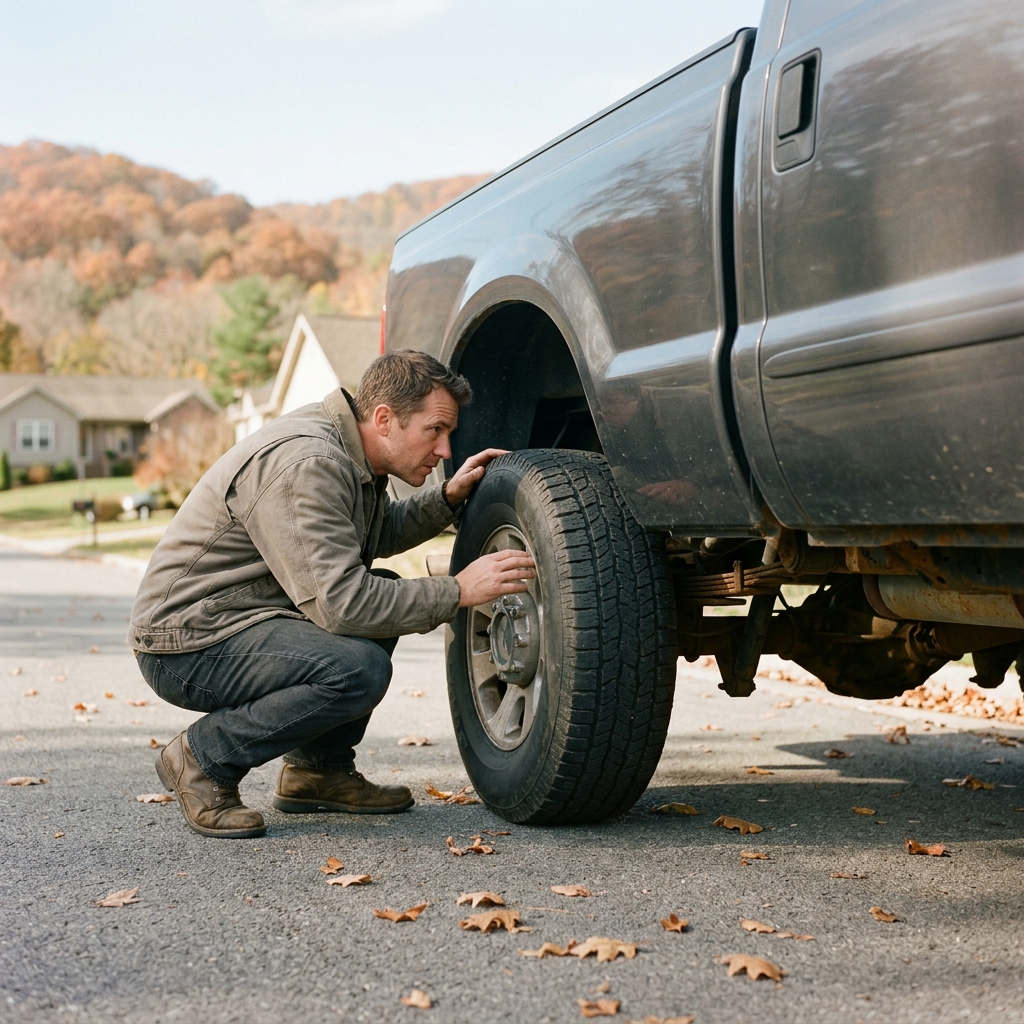
A man in a jacket crouches on a residential street to inspect the rear tire and wheel of a grey pickup truck. (Representative image for illustration purposes only. Actual vehicle may vary based on trim and configuration.)

How Do You Spot Structural Frame Rust Versus Surface Corrosion?

Surface rust appears as light, flaky orange discoloration on outer metal surfaces that can be scraped off without thinning the base material. Structural frame rust penetrates deep into steel frame rails, crossmembers, cab mounts, and leaf spring brackets, causing metal flaking, thinning, cracking, or visible holes that severely compromise chassis safety and towing capacity.

Evaluating undercarriage rust requires high-powered lighting and a methodical approach. Start at the front bumper mount and work backward along the boxed frame rails. Pay close attention to boxed frame sections, factory weld seams, and areas near rear wheel wells where road debris collects. Tap suspected areas with a screwdriver; solid steel yields a firm metallic chime, while structurally compromised metal crumbles or produces a dull thud. Inspect the rear crossmember supporting the spare tire carrier and trailer hitch mount, as these locations bear high stress during heavy towing.

Vehicles driven through harsh winters with heavy road salt usage face elevated corrosion risks. While superficial oxidation on exhaust pipes or cast-iron differential housings is common, deep scaling on boxed frame rails requires immediate caution. Severe rust weakens body mounts and axle mounting points, making the vehicle unsafe for heavy loads.

If you are considering upgrading from your current vehicle, you can value your trade-in online to estimate your purchasing power toward a clean, rust-free pickup.

How Do You Properly Test 4WD Low Range and Drivetrain Wear on a Test Drive?

To test 4WD Low range safely, bring the truck to a complete stop or a slow roll under 3 mph, shift the transmission into neutral, and engage 4WD Low before shifting back into drive or first gear. Listen for smooth transfer case actuator movement without harsh clunking, and drive briefly on a loose dirt or gravel surface to verify gear reduction without binding the drivetrain.

Testing four-wheel drive systems requires selecting the proper surface. Never engage 4WD Low or lock traditional four-wheel drive on dry, high-traction asphalt, as doing so causes driveline binding and wheel hop that damages transfer case gears and axle shafts. On gravel or unpaved ground, confirm that 4WD High engages smoothly at low speeds, then test 4WD Low to verify steep gear reduction and throttle response. Perform a slow, wide turn on loose ground to feel for smooth front differential operation without popping sounds or steering wheel shudder.

In addition to transfer case function, monitor overall drivetrain smoothness during the road test. Drive at highway speeds to check for driveshaft vibrations caused by worn U-joints or imbalanced slip yokes. Accelerate firmly from a full stop to check for transmission slip or delayed gear engagement. When braking, feel for pedal pulsation or steering wheel wobble, which indicates warped brake rotors or stuck caliper slides resulting from heavy load strain.

When you are ready to evaluate a pre-owned truck in person, you can schedule a test drive with our sales team. If you want to streamline your purchase process beforehand, take a minute to submit a credit application through our secure online portal.

Fuel Economy

Fuel economy and range by trim

Feature King Ranch 4x4 SuperCrew 5-1/2’ Box King Ranch 4x4 SuperCrew 6-1/2’ Box King Ranch SuperCrew 5-1/2’ Box Lariat 4x4 SuperCrew 5-1/2’ Box
MPG 17 city / 23 hwy / 19 combined 17 city / 23 hwy / 19 combined 17 city / 25 hwy / 20 combined 17 city / 23 hwy / 19 combined

Fuel Economy (continued)

Feature Lariat 4x4 SuperCrew 6-1/2’ Box Lariat SuperCrew 5-1/2’ Box Platinum 4x4 SuperCrew 5-1/2’ Box Platinum 4x4 SuperCrew 6-1/2’ Box
MPG 17 city / 23 hwy / 19 combined 17 city / 25 hwy / 20 combined 17 city / 23 hwy / 19 combined 17 city / 23 hwy / 19 combined

Fuel Economy (continued)

Feature Platinum SuperCrew 5-1/2’ Box Police Responder 4x4 SuperCrw 5-1/2’ Box Raptor 4x4 SuperCrew 5-1/2’ Box STX 4x4 SuperCab 6-1/2’ Box
MPG 17 city / 25 hwy / 20 combined — 14 city / 18 hwy / 16 combined 18 city / 23 hwy / 20 combined

Fuel Economy (continued)

Feature STX 4x4 SuperCrew 5-1/2’ Box STX SuperCab 6-1/2’ Box STX SuperCrew 5-1/2’ Box Tremor 4x4 SuperCrew 5-1/2’ Box
MPG 18 city / 23 hwy / 20 combined 19 city / 25 hwy / 21 combined 19 city / 25 hwy / 21 combined 16 city / 21 hwy / 18 combined

Fuel Economy (continued)

Feature XL 4x4 Regular Cab 6-1/2’ Box XL 4x4 Regular Cab 8’ Box XL 4x4 SuperCab 6-1/2’ Box XL 4x4 SuperCrew 5-1/2’ Box
MPG 16 city / 24 hwy / 19 combined 18 city / 23 hwy / 20 combined 18 city / 23 hwy / 20 combined 18 city / 23 hwy / 20 combined

Fuel Economy (continued)

Feature XL 4x4 SuperCrew 6-1/2’ Box XL Regular Cab 6-1/2’ Box XL Regular Cab 8’ Box XL SuperCab 6-1/2’ Box
MPG 17 city / 23 hwy / 19 combined 16 city / 24 hwy / 19 combined 19 city / 25 hwy / 21 combined 19 city / 25 hwy / 21 combined

Fuel Economy (continued)

Feature XL SuperCrew 5-1/2’ Box XLT 4x4 SuperCab 6-1/2’ Box XLT 4x4 SuperCrew 5-1/2’ Box XLT 4x4 SuperCrew 6-1/2’ Box
MPG 19 city / 25 hwy / 21 combined 18 city / 23 hwy / 20 combined 18 city / 23 hwy / 20 combined 17 city / 23 hwy / 19 combined

Fuel Economy (continued)

Feature XLT SuperCab 6-1/2’ Box XLT SuperCrew 5-1/2’ Box
MPG 19 city / 25 hwy / 21 combined 19 city / 25 hwy / 21 combined

How Do You Check Turbocharger Wear and High Mileage Thresholds on Gas vs Diesel Trucks?

Check for turbocharger wear by inspecting intake plumbing for oil pooling, listening for high-pitched whining during acceleration, and monitoring boost delivery under load. Gasoline truck engines are generally considered high mileage past 150,000 miles, whereas heavy-duty diesel engines routinely operate past 250,000 to 300,000 miles when properly maintained.

Turbocharged engines deliver excellent torque and efficiency, but require specific checks during inspection. Disconnect the air intake hose at the turbo inlet when possible to inspect the compressor wheel for bent blades or shaft play. A thin film of oil inside intake pipes is normal due to crankcase ventilation, but heavy puddle accumulation indicates failing turbo shaft seals. During the test drive, roll down the windows and accelerate under moderate load. A smooth spooling whistle is normal, but a loud dentist-drill sound or delayed boost lag signals bearing wear.

Mileage thresholds differ significantly between gas and diesel powertrains due to engine design and operating RPMs:

  • Gasoline engines (such as the 2.3L EcoBoost in the Ranger rated for 7,500 lbs towing capacity, or the 3.5L V6 in the F-150 rated for 10,400 lbs towing capacity) run at higher engine speeds. Proper oil change history is vital to prevent timing chain stretch or valve train wear past 150,000 miles.
  • Heavy-duty diesel engines (found in models like the Super Duty) feature heavy-cast iron blocks, forged internals, and lower operating RPMs, allowing them to handle high mileage longer when fuel filters and diesel exhaust fluid systems are serviced on schedule.

Buyers testing boosted gas or diesel pickups frequently ask our team how to inspect turbocharger plumbing for oil buildup before committing to a purchase. Checking maintenance records for frequent oil changes gives you complete confidence in the turbocharger's remaining service life.

Should You Use a Dealership, Independent Mechanic, or Mobile Inspection Service?

A franchised dealership inspection provides specialized factory-trained technicians who verify VIN-specific open recalls, scan proprietary diagnostic modules, and examine underbody components on a hydraulic lift. Independent mechanics offer unbiased general mechanical evaluations, while mobile inspection services provide convenient on-site checks but lack hydraulic lifts necessary for thorough under-truck frame checks.

Choosing the right inspection venue depends on the truck's complexity and your purchasing location. Mobile inspectors offer convenience when buying from a private seller, using floor jacks and creepers to check brakes and suspension. However, a mobile inspector cannot lift the truck fully off the ground to inspect frame rail interiors, fuel line corrosion, or upper transfer case leaks with the clarity of a shop hoist.

Franchised dealerships offer distinct diagnostic advantages for modern pickups equipped with advanced electronic systems and driver-assist features. Dealership technicians use manufacturer diagnostic tools to read historic fault codes stored in body, transmission, and four-wheel-drive modules that generic code readers miss. Furthermore, dealerships quickly check VIN status for open safety recalls. For example, recent manufacturer service updates covered software fixes for the integrated trailer module on certain F-150, Super Duty, and Ranger models to ensure proper trailer brake and light communication.

Comparing trim levels and baseline specifications helps clarify overall market value during your search. Baseline pricing spans a wide spectrum, starting at $37,290 for an XL Regular Cab 8’ Box or $43,935 for an XL SuperCrew, moving up to $51,915 for an XLT 4x4 SuperCrew, $63,360 for a Lariat 4x4 SuperCrew, $69,625 for a King Ranch 4x4 SuperCrew, and topping out at $79,005 for a specialized Raptor 4x4 SuperCrew (all subject to standard $2,795 destination charges; prices are MSRP for specific vehicles and may change without notice).

For owners seeking professional maintenance support or inspection assistance, we invite you to explore Ford mobile service options brought directly to your home or office.

Pricing

Pricing by trim

Feature King Ranch 4x4 SuperCrew 5-1/2’ Box King Ranch 4x4 SuperCrew 6-1/2’ Box King Ranch SuperCrew 5-1/2’ Box Lariat 4x4 SuperCrew 5-1/2’ Box
Base MSRP $69,625 $69,930 $65,825 $63,360
Destination charge $2,795 $2,795 $2,795 $2,795

Pricing (continued)

Feature Lariat 4x4 SuperCrew 6-1/2’ Box Lariat SuperCrew 5-1/2’ Box Platinum 4x4 SuperCrew 5-1/2’ Box Platinum 4x4 SuperCrew 6-1/2’ Box
Base MSRP $63,965 $59,560 $72,600 $72,905
Destination charge $2,795 $2,795 $2,795 $2,795

Pricing (continued)

Feature Platinum SuperCrew 5-1/2’ Box Police Responder 4x4 SuperCrw 5-1/2’ Box Raptor 4x4 SuperCrew 5-1/2’ Box STX 4x4 SuperCab 6-1/2’ Box
Base MSRP $68,800 $52,350 $79,005 $48,655
Destination charge $2,795 $2,595 $2,795 $2,795

Pricing (continued)

Feature STX 4x4 SuperCrew 5-1/2’ Box STX SuperCab 6-1/2’ Box STX SuperCrew 5-1/2’ Box Tremor 4x4 SuperCrew 5-1/2’ Box
Base MSRP $51,070 $44,855 $47,190 $64,915
Destination charge $2,795 $2,795 $2,795 $2,795

Pricing (continued)

Feature XL 4x4 Regular Cab 6-1/2’ Box XL 4x4 Regular Cab 8’ Box XL 4x4 SuperCab 6-1/2’ Box XL 4x4 SuperCrew 5-1/2’ Box
Base MSRP $44,600 $42,305 $45,400 $47,820
Destination charge $2,795 $2,795 $2,795 $2,795

Pricing (continued)

Feature XL 4x4 SuperCrew 6-1/2’ Box XL Regular Cab 6-1/2’ Box XL Regular Cab 8’ Box XL SuperCab 6-1/2’ Box
Base MSRP $50,475 $39,585 $37,290 $41,600
Destination charge $2,795 $2,795 $2,795 $2,795

Pricing (continued)

Feature XL SuperCrew 5-1/2’ Box XLT 4x4 SuperCab 6-1/2’ Box XLT 4x4 SuperCrew 5-1/2’ Box XLT 4x4 SuperCrew 6-1/2’ Box
Base MSRP $43,935 $49,495 $51,915 $54,555
Destination charge $2,795 $2,795 $2,795 $2,795

Pricing (continued)

Feature XLT SuperCab 6-1/2’ Box XLT SuperCrew 5-1/2’ Box
Base MSRP $45,695 $48,055
Destination charge $2,795 $2,795

Common Questions About Pre-Owned Pickup Inspections in Calcutta

Q: What does milky oil mean on a used pickup truck?

Milky engine oil indicates that coolant has mixed with the engine oil, creating a light brown or cream-colored foam on the dipstick and under the oil filler cap. This condition points to an internal fluid leak caused by a blown head gasket, cracked engine block, or damaged cylinder head. Purchasing a truck with milky oil usually requires extensive engine teardown or complete replacement, making it a critical warning sign during an inspection.

Q: How can you tell if a used truck was used heavily for towing or commercial hauling?

Signs of heavy towing include excessive wear on the trailer hitch receiver, elongated safety chain pin holes, aftermarket brake controller installations, and spliced trailer wiring harnesses. Inspect the rear suspension for flattened or inverted leaf springs, shiny wear spots on bumper stops, and uneven rear tire wear. Under the hood, check for dark, burnt transmission fluid and heat-discolored exhaust manifolds, which indicate frequent operation under maximum weight limits.

Q: Why is a VIN-specific recall check necessary when buying a pre-owned truck?

A VIN-specific recall check verifies whether a particular truck requires outstanding safety or software updates mandated by the manufacturer. Because safety recalls vary by build date, engine package, and equipped options, checking the exact 17-digit VIN ensures that critical systems—such as integrated trailer brake modules or powertrain control software—have received factory-authorized remedies. Dealerships perform this check free of charge to confirm vehicle safety compliance.

Q: How do you check for engine blow-by during an inspection?

To test for engine blow-by, start the engine, let it reach normal operating temperature, and remove the oil filler cap while the engine idles. Place the cap upside down loosely over the filler opening. If combustion gases blow the cap off or emit thick, pulsing smoke, combustion pressure is leaking past worn piston rings into the crankcase. Heavy blow-by indicates internal engine wear and reduced compression.

Q: What documentation should you review before completing a used truck purchase?

Review the complete vehicle history report to verify title status, past ownership types, reported accident history, and odometer accuracy. Ask the seller for detailed service records showing regular oil changes, transmission fluid flushes, spark plug replacements, and differential oil services. Verifying consistent routine maintenance confirms that previous owners cared for the powertrain properly, supporting long-term reliability and resale value.

If you have additional questions about inspecting a pre-owned pickup or want to view our current inventory near Calcutta, visit our East Liverpool location today. Our knowledgeable sales staff is ready to assist you—give us a call at (330) 462-7578 or browse our Carfax 1-owner pre-owned inventory to find your next work-ready truck.

Keep your vehicle performing at its best with our service team:


© 2026 Tri State Ford. All rights reserved.

Vehicle specification data © JATO Dynamics Limited.

Used Truck Inspection Tips in East Liverpool OH | Tri State Ford
Posted in:

Related Posts

2

What Should You Know Before Buying a Used Car From a Dealer?

Before buying a used car from a dealer, buyers should confirm the complete out-of-the-door price breakdown, request a comprehensive vehicle history report, verify open safety recalls using the vehicle identification number, and review available maintenance records. Purchasing also requires clarifying warranty coverage or Certified Pre-Owned status, confirming whether an independent pre-purchase inspection is permitted, and negotiating final pricing using objective market value benchmarks. Navigating the pre-owned car market requires a methodical approach that protects your investment and ensures daily driving dependability. Asking the right questions before signing any paperwork transforms what can feel like an intimidating negotiation into a clear, transparent purchase process. At Tri State Ford, our team believes informed buyers make the best decisions for their families and budgets. When evaluating a used vehicle on the lot, your initial conversation with the sales team should establish total financial expectations and mechanical transparency. Knowing what documentation to request upfront prevents surprises during the finance and insurance signing process. Before taking a test drive on local roads, request the vehicle identification number (VIN) to pull an official vehicle history report. This documentation provides essential details regarding previous ownership, title status, and any reported accidents or structural repairs. Confirm the total out-of-the-door price, including all taxes, title transfer costs, and dealer documentation fees. Request a full vehicle history report to verify title status, past ownership, and reported accident records. Ask if the vehicle has undergone a mechanical safety inspection and request a copy of the completed repair order. Determine whether any remaining factory warranty applies or if the vehicle is sold under a dealer warranty or as-is. Confirm whether the dealer permits an independent mechanic to perform a pre-purchase inspection off-site. If you are planning to visit our dealership to inspect our inventory, you can easily find our showroom location in East Liverpool or give our sales team a call to verify current pre-owned vehicle availability before driving in. Ta ble of Contents What Is the Difference Between a Certified Pre-Owned Car and a Standard Used Car? What Questions Should You Ask About a Used Car's Service History and Open Recalls? How Much Does an Independent Pre-Purchase Inspection Cost and Is It Necessary? What Is the Out-of-the-Door Price and Which Dealer Fees Can Be Negotiated? What Is the Best Strategy If a Dealer Refuses to Drop the Price of a Used Car? Quick Answers to Common Used Car Buying Questions Take the Next Step Toward Your Used Vehicle What Is the Difference Between a Certified Pre-Owned Car and a Standard Used Car? A Certified Pre-Owned (CPO) vehicle undergoes a rigorous factory-mandated multi-point mechanical inspection, meets strict age and mileage limits, and includes manufacturer-backed extended warranty coverage, whereas a standard used car is sold under any remaining original factory warranty, a short-term dealer warranty, or as-is without extended protection. Understanding the distinction between certified inventory and standard pre-owned models helps buyers balance upfront purchase costs against long-term peace of mind. Manufacturer certification programs, such as Ford Blue Advantage, establish strict baseline criteria before a vehicle can earn certified status. Candidates must typically be recent model years with low mileage and a clean title history free of major collision or flood damage. Factory-trained technicians perform comprehensive technical inspections covering powertrain performance, braking efficiency, suspension integrity, electronic systems, and safety equipment. Any worn or non-compliant components are reconditioned or replaced using original equipment manufacturer parts before certification is granted. Feature Comparison Certified Pre-Owned (CPO) Standard Used Car Inspection Standard Multi-point factory-mandated inspection Basic safety or state inspection Warranty Protection Manufacturer-backed extended warranty Remaining factory warranty or as-is Vehicle Age Limits Newer model years (typically under 6 years) No age restrictions Mileage Thresholds Low mileage limits (typically under 80,000 miles) Any recorded odometer mileage Roadside Coverage Included complimentary roadside assistance Optional or third-party add-on Financing Eligibility Often qualifies for lower promotional APRs Standard used vehicle financing rates Beyond additional mechanical safeguards, certified pre-owned vehicles often provide financial advantages over non-certified options. Lenders generally view certified vehicles as lower-risk assets due to their documented condition and extended warranty backing, which frequently unlocks lower interest rates comparable to new car financing offers. For buyers seeking maximum transparency, browsing our single-owner used inventory or exploring the certified pre-owned Ford lineup ensures access to detailed vehicle background records. If you currently own a vehicle, choosing to value your trade-in online can significantly offset the final purchase amount of a certified model. What Questions Should You Ask About a Used Car's Service History and Open Recalls? Shoppers should ask whether regular oil changes and major mileage-based maintenance services were completed on schedule, request physical or digital service invoices, and verify open safety recalls using the 17-digit vehicle identification number on the official National Highway Traffic Safety Administration (NHTSA) lookup tool. A vehicle's historical maintenance record offers direct insight into how well prior owners cared for key mechanical components. While a vehicle history report captures reported service events from participating facilities, requesting detailed repair orders from the selling dealer reveals exact parts replaced, fluid change intervals, and recent reconditioning work completed on the lot. Our advisors see that shoppers reviewing pre-owned vehicles with our sales staff routinely ask to verify oil change histories and battery health checks before discussing contract terms. Inquiring about routine service helps prevent unexpected maintenance expenses shortly after taking delivery. Key questions to ask the dealer regarding vehicle history and safety include: Has this vehicle completed all scheduled oil, filter, and transmission fluid changes according to manufacturer guidelines? Are detailed service invoices or internal reconditioning repair orders available for review? Has the 17-digit VIN been run through the NHTSA recall database to confirm zero unrepaired safety recalls exist? Was this vehicle owned locally by a private party, or was it previously operated as a fleet, lease, or rental vehicle? What mechanical repairs or wear-and-item replacements were performed by your service department to prepare this car for sale? Safety recalls require prompt attention because unperformed recall campaigns can impact vehicle safety, fuel efficiency, or structural integrity. Federal law mandates that franchised dealers repair open recalls on new vehicles, and reputable dealerships proactively resolve open safety recalls on used inventory using factory parts before placing cars on the sales floor. When reviewing service documentation, pay special attention to recent brake pad thickness, tire tread measurements, and electrical system diagnostics. Vehicles that received consistent care, including routine battery inspections, demonstrate lower risks of premature component failure. For added convenience after your purchase, our dealership also offers remote mobile service options for qualified routine maintenance needs. How Much Does an Independent Pre-Purchase Inspection Cost and Is It Necessary? An independent pre-purchase inspection typically costs between $100 and $250 depending on the vehicle class, location, and shop labor rates, providing an unbiased mechanical evaluation before finalizing a purchase agreement. Investing in a pre-purchase inspection (PPI) performed by an ASE-certified technician outside the selling dealership is one of the most effective ways to avoid hidden mechanical issues. Even when a vehicle looks flawless on the outside and carries a clean history report, an independent mechanic examining the vehicle on a hydraulic lift can spot subtle signs of frame damage, fluid seepage, suspension wear, or substandard body repairs. A professional pre-purchase inspection covers essential vehicle systems: Engine mechanical health, diagnostic trouble codes, and cooling system pressure tests. Transmission shift engagement, fluid cleanliness, and driveline smoothness. Undercarriage condition, including frame alignment, rust levels, exhaust system seals, and floor pan integrity. Braking components, rotor surfaces, suspension bushings, struts, and tire wear patterns. Electronic modules, climate control functionality, power windows, and active safety sensor operation. For commuters driving along State Route 170 in Calcutta, evaluating pre-owned all-wheel-drive crossovers requires checking tire tread depth and undercarriage condition before signing. An independent mechanic can verify that driveline systems operate smoothly without binding or noise. When comparing pre-owned pricing against original vehicle values, shoppers often review factory baseline specs. For example, a new 2026 Ford Escape Active AWD starts at a Base MSRP of $31,750 with a $1,495 destination charge, featuring an automatic 8-speed transmission, a 1.5L engine, EPA estimates of 26 city / 32 hwy MPG, seating for 5, cargo room of about 37.5 cu ft, and a 2,000 lbs towing capacity. Understanding these baseline specs helps buyers weigh the value of a pre-owned compact SUV against brand-new Ford models available on the market. Pricing Pricing by trim Feature Active AWD Active FWD Platinum AWD ST-Line AWD Base MSRP $31,750 $30,350 $37,940 $32,595 Destination charge $1,495 $1,495 $1,495 $1,495 Pricing (continued) Feature ST-Line Elite AWD 2.0L ST-Line FWD ST-Line Select AWD 2.0L Base MSRP $38,935 $31,195 $35,015 Destination charge $1,495 $1,495 $1,495 Engine & Performance Powertrain specs by trim Feature Active AWD Active FWD Platinum AWD ST-Line AWD Engine 1.5L 1.5L 2L 1.5L Horsepower 180 hp 180 hp 250 hp 180 hp Torque 199 lb-ft 199 lb-ft 280 lb-ft 199 lb-ft Transmission automatic 8-speed automatic 8-speed SelectShift® automatic 8-speed Drivetrain All-wheel drive Front-wheel drive All-wheel drive All-wheel drive Engine & Performance (continued) Feature ST-Line Elite AWD 2.0L ST-Line FWD ST-Line Select AWD 2.0L Engine 2L 1.5L 2L Horsepower 250 hp 180 hp 250 hp Torque 280 lb-ft 199 lb-ft 280 lb-ft Transmission SelectShift® automatic 8-speed SelectShift® Drivetrain All-wheel drive Front-wheel drive All-wheel drive What Is the Out-of-the-Door Price and Which Dealer Fees Can Be Negotiated? The out-of-the-door (OTD) price is the entire total cost required to purchase and register a vehicle, combining the negotiated vehicle price, state and local sales taxes, county title transfer fees, registration costs, and dealer documentation charges. Focusing exclusively on the advertised listing price or monthly payment projection can create an incomplete financial picture. When negotiating a pre-owned vehicle purchase, request an itemized OTD quote in writing before discussing financing terms or signing purchase options. This breakdown ensures complete transparency regarding every line item added to the base vehicle cost. Understanding which line items are fixed government fees and which represent dealer charges empowers buyers during negotiations: Negotiated Vehicle Price: The agreed purchase price for the car itself, subject to market data and condition negotiation. State and County Sales Tax: Mandatory state and local taxes calculated based on the buyer's county of residence and applicable trade-in tax credits. Title and Registration Fees: State-regulated charges required to legally transfer ownership, issue license plates, and record liens. Dealer Documentation Fee: A charge covering title processing and administrative record-keeping; while allowed by state law, the amount varies by dealership. Dealer Prep and Reconditioning Fees: Charges sometimes added for detailing or inspection; buyers can request these be removed or bundled into the vehicle price. Optional Add-ons: Items like fabric protection, window etching, or paint sealants that can be declined or removed from the contract entirely. Requesting an itemized worksheet upfront eliminates confusion regarding optional dealer add-ons. Government taxes and official state title fees cannot be waived or altered by the dealership, but optional service protection plans and dealer accessory packages remain completely negotiable. What Is the Best Strategy If a Dealer Refuses to Drop the Price of a Used Car? When a dealer holds firm on a pre-owned vehicle listing price, the most effective strategy is leveraging third-party market value data to negotiate complimentary dealer add-ons or walking away politely while leaving clear contact details with the sales management team. In competitive automotive markets, dealerships price pre-owned inventory using real-time market software that tracks regional supply and demand. If a vehicle is already priced aggressively at fair market value, a dealer may have minimal margin left to discount the selling price directly. However, price is only one component of a successful vehicle purchase agreement. If the selling price is firm, shift your negotiation strategy toward non-cash concessions and value-added items that carry low internal cost for the dealer but provide significant real-world value to you: Request a brand-new set of tires or an upgraded battery installed prior to delivery. Ask for complimentary routine oil changes or scheduled maintenance vouchers for your first year of ownership. Request minor cosmetic reconditioning, such as paint touch-ups, wheel scuff repairs, or interior detailing. Negotiate a higher valuation on your trade-in vehicle to reduce the net transaction price and lower your total tax liability. Ask the dealer to include an extended protection plan or powertrain warranty at no additional charge. Utilizing objective pricing tools like Kelley Blue Book gives buyers factual leverage. Presenting local market comparables showing lower prices for identical models in similar condition provides a rational basis for your offer. If an agreement cannot be reached, thank the sales advisor, leave your target price number, and walk away. Dealerships frequently follow up with buyers if market conditions shift or if inventory remains on the lot longer than anticipated. Quick Answers to Common Used Car Buying Questions Q: How does market value software affect used car pricing? Market value software evaluates regional auction sales, active retail listings, vehicle mileage, and local demand to set competitive prices. Dealerships use these live data feeds to align pre-owned vehicle prices with current market trends. Buyers can utilize online market guides to confirm that a vehicle's listing price aligns with fair purchase ranges in their geographic area. Q: Can you negotiate dealer documentation fees on a pre-owned vehicle? Dealer documentation fees cover administrative processing, title submission, and secure record storage. While the doc fee amount is set by dealer policy or state caps and charged uniformly to all buyers, you can negotiate a reduction in the overall vehicle selling price to offset the cost of the fee. Q: What paperwork should you bring when buying a used car from a dealer? Buyers should bring a valid driver's license, current auto insurance card, payment method for down payment funds, and recent pay stubs if applying for financing. If trading in a vehicle, bring the current vehicle title, valid registration card, and all keys or key fobs. Completing an online credit application ahead of time speeds up processing. Q: Is a vehicle history report completely foolproof? Vehicle history reports provide valuable records of reported accidents, title transfers, and facility service visits, but they rely on reporting from insurance companies, law enforcement, and repair shops. An unreported incident or private repair may not appear on the report, which is why an independent mechanical inspection remains essential. Q: What happens if a used car has an open safety recall? If a pre-owned vehicle has an open safety recall, factory-authorized dealerships perform the required recall repairs free of charge using genuine manufacturer components. Buyers can verify recall status using the 17-digit VIN on the official NHTSA recall lookup website before taking delivery. Take the Next Step Toward Your Used Vehicle Asking targeted questions regarding vehicle condition, service history, recall status, and out-of-the-door pricing ensures a confident and transparent car-buying experience. At Tri State Ford, our team is committed to providing clear documentation, fair market pricing, and high-quality pre-owned cars, trucks, and SUVs that fit your lifestyle and budget. Whether you are looking for a reliable pre-owned family crossover, a pre-owned truck, or exploring options for a custom factory order on a brand-new model, our knowledgeable sales staff is here to guide you through every step of the process. Visit our showroom today at 1503 Pennsylvania Ave, East Liverpool, OH 43920 to test drive our pre-owned inventory. You can also explore our online resources, get driving directions by visiting our East Liverpool location, or (330) 462-7578 to speak directly with our team and schedule your test drive. Keep Your Vehicle Running Strong Keep your vehicle performing at its best with our service team: Order Parts Schedule Service Appt © 2026 Tri State Ford. All rights reserved. Vehicle specification data © JATO Dynamics Limited. Used Car Buying Tips in East Liverpool OH | Tri State Ford

d

Should You Buy a Used Car with a Minor Accident History?

A minor accident history does not automatically make a used car a bad buy, provided the damage was purely cosmetic and professionally repaired. Cosmetic repairs like bumper replacements or fender touch-ups leave the core mechanicals and structural safety intact, often providing an opportunity to purchase a high-quality pre-owned vehicle at a competitive value. When evaluating a pre-owned vehicle with a reported collision, distinguishing between minor surface blemishes and structural damage is the most critical step. Minor accidents generally involve low-speed incidents, such as parking lot scuffs, cracked light assemblies, or minor dented fender panels that do not reach the vehicle frame or compromise passenger safety systems. Edmunds research highlights that cosmetic damage properly restored by a certified facility leaves a car performing virtually identically to an unblemished counterpart. To buy with complete confidence, shoppers should inspect both the official vehicle history report and the physical vehicle itself. For drivers making daily school runs or commuting along State Route 170 in Calcutta, a properly repaired pre-owned truck or SUV delivers the same dependable transportation and road safety as an accident-free model, but with a competitive total purchase value. Verification requires reviewing itemized repair receipts, confirming frame dimensions, and conducting a thorough test drive to verify straight tracking and proper brake response. Our team at Tri State Ford makes transparency simple by walking buyers through full history reports and repair disclosures on every vehicle. You can easily complete our online credit application to see financing terms tailored to your budget before stepping onto the lot. If you have questions about a specific pre-owned model, reach out to our team at (330) 462-7578 or drop by our East Liverpool showroom address at 1503 Pennsylvania Ave, East Liverpool, OH 43920 to check out our selection in person. Table of Contents What Under-the-Hood Signs and Paint Details Reveal Prior Front-End Collisions? Do Airbag Deployments or Minor Hits Compromise Structural Crumple Zones? How Do Carfax and AutoCheck Differ in Reporting Minor Accidents? How Should You Evaluate Pricing for a Used Car with Accident History? Common Questions About Used Vehicles with Minor Accident History Finding Quality Inspected Used Vehicles What Under-the-Hood Signs and Paint Details Reveal Prior Front-End Collisions? Physical evidence under the hood, such as non-factory weld spots, misaligned radiator support brackets, or fresh bolts on weathered components, clearly reveals past front-end collisions. When examining the engine bay of a pre-owned vehicle, inspect the metal structural bracing surrounding the radiator and inner fender wells. Structural components on factory vehicles feature uniform, robotically applied spot welds and consistent protective coatings. Irregular, rough weld beads, wrinkled sheet metal, or fresh paint applied over engine bay dirt strongly suggest post-collision body shop repairs. Furthermore, National Highway Traffic Safety Administration inspection guidelines note that mismatched bolt wear on fender mounts or unpainted replacement clips on wire harnesses often indicate front-end disassembly following an impact. Checking exterior paint finish and panel alignment offers additional clues regarding prior body repairs. Examine panel gaps along the hood, doors, and front fenders — uneven gaps that taper or widen indicate minor structural shifts or hasty body panel mounting. Under direct natural sunlight, look closely at adjacent panels to catch subtle color mismatches or clear coat texture variations known as orange peel. Running a finger along door jambs and rubber window seals helps detect raised paint edges or tape lines created during spray painting. Buyers evaluating their current vehicle for trade or upgrade can estimate fair market trade value using our online trade-in appraisal tool to establish a clear benchmark before shopping. Do Airbag Deployments or Minor Hits Compromise Structural Crumple Zones? Minor low-speed impacts do not compromise structural crumple zones, whereas an airbag deployment indicates a moderate-to-severe collision force that warrants immediate professional structural verification. Modern vehicles are engineered around a high-strength unibody frame designed with dedicated crumple zones at the front and rear. These structural zones deliberately deform under heavy impact forces to absorb energy away from the passenger cabin. Low-speed parking scuffs, minor bumper taps, and superficial fender scrapes affect only external plastic fascia or thin outer sheet metal, leaving the main unibody structure intact. Insurance Institute for Highway Safety structural assessments emphasize that behind plastic bumper covers sits a steel or aluminum impact bar, which must be inspected to confirm no hidden frame distortion occurred during a minor hit. An airbag deployment signals that crash sensors measured rapid deceleration severe enough to trigger safety restraints. Replacing deployed airbags requires installing new crash sensors, clock springs, side curtain or steering wheel modules, and recalibrating onboard safety electronics. National Highway Traffic Safety Administration safety advisories warn buyers to ensure deployed airbags are replaced with genuine original-equipment components, as improper repairs or counterfeit modules create extreme safety hazards. When reviewing a vehicle with past airbag deployment, requesting itemized repair invoices from an authorized facility is essential to confirm all safety systems were fully restored. How Do Carfax and AutoCheck Differ in Reporting Minor Accidents? Carfax categorizes accident severity with explicit descriptive tiers like minor, moderate, or severe based on police and repair records, while AutoCheck uses a proprietary numerical point score that incorporates damage indicators into an overall vehicle rating. Understanding how vehicle history services source and present data helps buyers evaluate pre-owned choices accurately. Carfax gathers records from thousands of sources, including law enforcement agencies, state motor vehicle departments, collision repair centers, and insurance databases. CARFAX reporting guidelines note that an incident labeled as minor typically involves cosmetic repairs estimated under structural thresholds, such as replacing a headlight assembly, repainting a door panel, or repairing a scratched bumper cover without frame or airbag involvement. AutoCheck, powered by Experian, presents information through an AutoCheck Score on a 1-to-100 scale, making it easy to compare similar vehicles of the same age and class. A reported minor incident reduces the numerical score slightly, allowing shoppers to gauge overall vehicle standing instantly. However, CARFAX notes that no vehicle history report is guaranteed to be 100% complete, as minor private cash repairs or unreported parking incidents may not appear in national databases. For this reason, a history report serves as an excellent screening tool, but it should always be paired with a physical pre-purchase inspection conducted by a qualified technician. How Should You Evaluate Pricing for a Used Car with Accident History? Used car buyers should generally expect a pricing based on fair market value when purchasing a vehicle with a documented minor accident history. The reduction in a vehicle’s market value following an accident is known as diminished value. Even when a car is restored to pristine physical and mechanical condition, market perception dictates that a vehicle with a prior accident on its history report carries slightly higher risk for the next owner. CARFAX market analysis shows that diminished value varies based on vehicle age, mileage, overall demand, and damage severity. For a late-model pre-owned SUV with verified cosmetic-only repairs, demanding a reasonable price adjustment offsets potential resale depreciation when you eventually trade or sell the vehicle down the road. Calculating a fair negotiation target starts with researching unblemished market prices for the exact trim, year, and mileage. If a clean-history model sells for fair market value, a minor accident record justifies negotiating a lower price point while using the savings toward comprehensive pre-purchase verification or upgraded vehicle options. Buyers seeking pristine condition records with complete history verification can explore our pre-owned single-owner used inventory to review vehicles with verified single-ownership documentation. Common Questions About Used Vehicles with Minor Accident History Q: Does an airbag deployment automatically classify an accident as major? An airbag deployment signifies a moderate-to-severe collision force because crash sensors require substantial impact deceleration to trigger the restraint system. Beyond physical sheet metal damage, airbag deployment requires replacing safety sensors, steering wheel or curtain modules, seatbelt pretensioners, and dashboard components. Due to the high cost and complexity of safety system reconstruction, vehicles with deployed airbags carry greater depreciation and require thorough documentation showing that certified factory parts were installed during restoration. Q: Does insurance pay out less for total loss on a car with prior accident history? Insurance total loss settlements reflect pre-existing diminished value because payouts are calculated using the vehicle's fair market value immediately prior to the latest crash. Insurance adjusters pull historical records and adjust settlement amounts downward if a car had documented prior accident records or structural repairs. Buying a car with a prior accident means your initial purchase price is lower, but future insurance payouts in a total-loss event will similarly reflect that reduced historical value base. Q: How can a buyer confirm that body paint repairs will hold up over time? Confirming long-term paint quality involves checking for clear coat peeling, paint edge lines inside door frames, and color shading consistency across adjacent panels under direct natural sunlight. High-quality body shops use computerized paint matching and durable clear coats that mirror factory finishes. Requesting repair documentation that includes a transferable lifetime paint warranty from the body shop offers additional protection against premature fading, blistering, or clear coat lifting. Q: Does minor bumper damage affect a vehicle's frame integrity? Standard low-speed bumper damage rarely compromises a vehicle's underlying frame or unibody structure. Bumper covers made of flexible plastic are designed to absorb light parking taps and scuffs without bending internal metal rails. However, the steel or aluminum impact bar beneath the cosmetic cover should be inspected during a routine hoist check to ensure the impact beam did not suffer hidden bowing or mounting tab deformation. Q: What documentation should you request before buying a repaired pre-owned car? Buyers should request itemized repair facility invoices, replacement parts receipts, wheel alignment specification sheets, and a complete history report. For drivers navigating the riverfront bluffs and hill climbs around East Liverpool, confirming proper suspension alignment and frame squareness on a repaired pre-owned vehicle ensures smooth handling and even tire wear. Verifying that repairs were performed by a licensed facility using original equipment manufacturer parts guarantees the vehicle meets factory safety standards. If you decide you prefer a vehicle straight from the factory floor, you can explore our brand-new Ford inventory to compare pristine new models with available advanced driver-assist features and full factory warranty coverage. Finding Quality Inspected Used Vehicles Finding a reliable pre-owned vehicle with or without minor accident history requires choosing a dealer that performs rigorous mechanical multi-point inspections and transparent vehicle history reviews. At Tri State Ford, every pre-owned truck, SUV, and sedan on our lot undergoes a rigorous inspection by factory-trained technicians before being offered for sale. We examine frame alignment, suspension components, steering response, paint consistency, and safety system electronics so you can buy with total confidence. Our sales team provides clear vehicle history reports up front, allowing you to review all service records and documented history before taking a test drive. Whether you are looking for an affordable pre-owned commuter car or a certified model backed by extended powertrain protection, our team is here to guide you through every option without sales pressure. Check out our certified pre-owned Ford lineup to explore vehicles that pass a comprehensive 172-point inspection and include factory-backed warranty benefits. Ready to take the next step? Connect with us by giving our team a call at (330) 462-7578 or visit our dealership location at 1503 Pennsylvania Ave, East Liverpool, OH 43920 to schedule your test drive today. Keep Your Vehicle Running Strong Keep your vehicle performing at its best with our service team: Order Parts Schedule Service Appt © 2026 Tri State Ford. All rights reserved. Used Car Buying Tips in East Liverpool OH | Tri State Ford

l

How Do You Protect Yourself When Buying a Used Car?

To protect yourself when buying a used car, demand complete written transparency by reviewing the vehicle history report, verifying the FTC Buyers Guide disclosure, obtaining a comprehensive out-the-door price quote, and scheduling an independent pre-purchase inspection before signing any contract. Securing all verbal agreements in writing guarantees that promised repairs or warranty coverages remain legally binding. Purchasing a pre-owned truck, SUV, or sedan offers exceptional value, but navigating the buying process requires a systematic approach to safeguard your investment. Protecting your interests begins long before you sign financial paperwork. It starts by gathering objective data about the car's background, mechanical condition, and total ownership costs. Evaluating a vehicle step by step eliminates uncertainty, giving you complete peace of mind when choosing a ride for your daily routine. A thorough evaluation combines documentary evidence with physical inspection. Requesting title history, verifying service records, and taking a comprehensive test drive help confirm that a vehicle matches its listed condition. For drivers commuting along State Route 170 around Calcutta, reliable daily transportation is essential for balancing work runs, family schedules, and weekend errands. Taking time to inspect steering alignment, brake responsiveness, and cabin comfort under real-world driving conditions ensures the vehicle meets your everyday performance needs. Before finalizing any vehicle purchase, always request a complete itemized pricing breakdown rather than relying on estimated monthly payments. Verifying taxes, title transfer fees, and dealer documentation fees up front prevents unexpected costs at contract signing. If you are ready to explore dependable pre-owned options, you can visit our showroom floor or give our team a quick call to discuss available inventory and schedule a walk-around appointment today. Table of Contents What Key Questions Should You Ask About Vehicle History and Usage? Will a Dealer Allow an Independent Mechanic Inspection and What Does It Cover? What Does the Buyers Guide Reveal About Warranty Coverage and Written Terms? Is Paying Extra for a Certified Pre-Owned Vehicle Worth the Investment? How Do You Negotiate the Best Out-the-Door Price on a Used Vehicle? Quick Answers to Common Questions About Buying Used Vehicles Take the Next Step Toward Your Next Used Vehicle What Key Questions Should You Ask About Vehicle History and Usage? You should ask whether the dealer provides a free vehicle history report detailing title status, prior ownership count, accident records, open safety recalls, and routine service history. Confirming whether a vehicle served as a personal commuter, commercial fleet vehicle, or daily rental reveals how consistently it was maintained and how heavily it was driven. A vehicle history report serves as an essential foundation for evaluating any pre-owned truck, car, or crossover. Reports sourced through platforms like AutoCheck or Carfax compile data from state motor vehicle departments, collision repair facilities, and law enforcement agencies. These documents reveal crucial background details, including title brands such as salvage, flood, or lemon law buyback status. They also record odometer readings over time, helping buyers identify potential mileage rollback discrepancies before committing to a vehicle. Beyond the title history report, asking detailed questions about previous ownership provides context regarding mechanical wear. Shoppers comparing pre-owned trucks on our lot often ask whether a vehicle was owned locally or used as a commercial fleet vehicle before looking at the odometer. While fleet vehicles frequently adhere to strict, manufacturer-recommended maintenance schedules, they may experience higher cumulative wear from multiple drivers. Conversely, single-owner personal vehicles often come with detailed maintenance receipts, showing regular oil changes, tire rotations, and scheduled fluid flushes. It is equally vital to check for unperformed safety recalls using the National Highway Traffic Safety Administration recall lookup tool. Enter the 17-digit Vehicle Identification Number to verify whether the manufacturer has issued safety notices for components like airbag inflators, fuel pumps, or electronic control modules. Our team verifies recall status on incoming inventory, ensuring necessary factory service updates are addressed. If you are considering transitioning to a tailored setup, you can explore our custom vehicle ordering options, check out current new vehicle information, or value your current trade-in online to establish your trade equity before shopping. Will a Dealer Allow an Independent Mechanic Inspection and What Does It Cover? Reputable dealerships allow independent pre-purchase inspections and will permit you to take the vehicle to a certified technician of your choice. A thorough pre-purchase inspection evaluates mechanical components, fluid integrity, electrical systems, brake wear, suspension parts, frame alignment, and diagnostic trouble codes to identify hidden issues before you buy. An independent inspection gives buyers an unbiased, professional assessment of a vehicle's mechanical health. Even when a vehicle has undergone a multi-point dealership reconditioning process, an independent mechanic offers a secondary review tailored directly to your concerns. Most technicians charge between $100 and $200 for a pre-purchase inspection, making it a modest investment that can prevent costly unexpected repairs down the road. During a pre-purchase inspection, a qualified technician places the vehicle on a hydraulic lift to examine undercarriage components that are impossible to inspect on a sales lot. They check for frame corrosion, subframe damage, fluid leaks around the oil pan and transmission housing, and uneven tire wear that indicates alignment or suspension issues. Negotiating the steep riverfront elevation changes along the bluffs in East Liverpool requires strong suspension dampening, healthy brake pads, and tight steering linkages, making an undercarriage check especially valuable for local drivers. The mechanic will also run a full diagnostic scan on the vehicle’s engine control unit to check for cleared or pending diagnostic trouble codes. This scan detects potential sensor failures, transmission slips, or emissions system faults that might not immediately trigger a dashboard warning light during a short test drive. Once the inspection is complete, the mechanic provides an itemized report detailing component conditions, upcoming maintenance requirements, and estimated repair costs, giving you clear leverage during price negotiations. What Does the Buyers Guide Reveal About Warranty Coverage and Written Terms? The window Buyers Guide explicitly states whether a used car is sold as is or with a specific dealer warranty, outlining the exact percentage of repair costs the seller agrees to cover. Federal law requires this disclosure to be displayed on every pre-owned vehicle offered by a dealership, and any verbal promise made on the sales floor must be written directly onto the document to be legally binding. Prominently posted on a vehicle's side window, the FTC Buyers Guide acts as a primary legal disclosure governing your purchase. If the as is - no dealer warranty box is checked, the dealership assumes no financial responsibility for mechanical or electrical failures once you drive off the lot. In an as-is transaction, all future maintenance and repair expenses belong entirely to the buyer. Conversely, if the vehicle includes a dealer warranty, the Buyers Guide will specify whether coverage is full or limited, list the covered systems—such as engine assembly, transmission components, or drive axles—and define the exact duration, such as a 30-day/1,000-mile limited warranty. +-----------------------------------------------------------------------------------+ | FTC BUYERS GUIDE DISCLOSURE | +------------------------------------+----------------------------------------------+ | Coverage Status | Legal Meaning & Financial Responsibility | +------------------------------------+----------------------------------------------+ | As Is - No Dealer Warranty | Buyer pays 100% of all repair costs | | | immediately after delivery. | +------------------------------------+----------------------------------------------+ | Implied Warranties Only | State law limits seller disclaimers; | | | coverage varies by jurisdiction. | +------------------------------------+----------------------------------------------+ | Dealer Warranty (Limited / Full) | Dealer pays specified percentage of parts | | | and labor for designated systems. | +------------------------------------+----------------------------------------------+ | Manufacturer Warranty Remaining | Original factory coverage transfers according| | | to original time and mileage limits. | +------------------------------------+----------------------------------------------+ Never rely on spoken assurances regarding future repairs or physical reconditioning. If a sales representative promises to fix a cracked windshield, replace worn brake pads, or supply a second key fob, insist that those items are explicitly itemized on a written "We Owe" form or directly referenced in the Buyers Guide contract. Written stipulations turn informal promises into enforceable contractual obligations. Understanding warranty terms also helps you structure your auto financing responsibly. Knowing whether key mechanical assemblies are protected allows you to budget accurately for ongoing ownership costs without unexpected repair expenses disrupting your monthly household finances. You can start the buying process from home by completing our secure online credit application to review financing options tailored to your purchasing budget. Is Paying Extra for a Certified Pre-Owned Vehicle Worth the Investment? Purchasing a Certified Pre-Owned (CPO) vehicle is worth the additional cost for buyers seeking factory-backed warranty coverage, rigorous multi-point mechanical inspections, and built-in benefits like emergency roadside assistance. Factory certification minimizes financial risk by ensuring the vehicle meets strict manufacturer standards for age, mileage, and mechanical condition. Unlike standard pre-owned vehicles, certified pre-owned cars, trucks, and crossovers undergo a rigorous factory-mandated evaluation process before earning certification. For instance, Ford Certified Pre-Owned models must pass a detailed inspection covering engine performance, transmission shifting, body panel alignment, frame integrity, interior electronics, and safety systems. Any component that fails to meet strict factory guidelines must be repaired or replaced using genuine OEM parts before the vehicle is offered for sale. +-----------------------------------------------------------------------------------+ | Ford CERTIFIED PRE-OWNED COVERAGE | +----------------------------------+------------------------------------------------+ | Program Tier | Key Benefits & Warranty Terms | +----------------------------------+------------------------------------------------+ | Ford Gold Certified | • 172-point mechanical inspection | | | • 12-month/12,000-mile comprehensive warranty | | | • 7-year/100,000-mile powertrain warranty | | | • 24/7 roadside assistance included | +----------------------------------+------------------------------------------------+ | Ford Blue Certified | • 139-point mechanical inspection | | | • 90-day/4,000-mile comprehensive warranty | | | • 24/7 roadside assistance included | +----------------------------------+------------------------------------------------+ Beyond comprehensive mechanical reconditioning, factory certification provides long-term peace of mind through extended warranty protections. Ford Gold Certified vehicles include a 12-month/12,000-mile comprehensive limited warranty alongside a 7-year/100,000-mile powertrain limited warranty measured from the original factory in-service date. These programs also feature 24/7 emergency support services, reachable anytime via Ford Roadside Assistance: 1-800-241-3673, which covers towing, flat-tire changes, fuel delivery, and lockout assistance across the country. For families prioritizing long-term dependability and modern safety technologies like Ford Co-Pilot360, certified pre-owned inventory strikes an optimal balance between initial affordability and long-term security. You can compare our selection of pre-owned single-owner vehicles or browse our current certified pre-owned Ford inventory to find models that fit your lifestyle requirements. How Do You Negotiate the Best Out-the-Door Price on a Used Vehicle? To negotiate the best out-the-door price, request an itemized quotation including the vehicle sale price, documentation fees, applicable state taxes, and registration charges before discussing monthly financing options. Comparing local market valuation data, leveraging documented inspection findings, and keeping financing negotiations separate from vehicle price discussions ensure you secure a fair deal. Successful price negotiation relies on objective research rather than high-pressure tactics. Before visiting the dealership, consult independent vehicle valuation resources to establish the fair market value range for the specific year, trim level, engine configuration, and mileage you are considering. Knowing the average selling price for comparable models gives you a clear baseline when evaluating a dealer's opening offer. Focusing exclusively on the out-the-door price prevents common negotiation pitfalls. Dealers can alter monthly loan payments by extending financing term lengths or adjusting down payment structures without actually reducing the purchase price of the car. Insist on reviewing an itemized breakdown that clearly separates the vehicle price from mandatory state taxes, license fees, and dealer documentation fees. If an independent mechanic inspection revealed upcoming maintenance items—such as tires needing replacement within 5,000 miles or worn brake rotors—use the written repair estimate to request a corresponding price adjustment. If you plan to trade in your current vehicle, keep the trade-in appraisal discussion separate from the pre-owned vehicle price negotiation. Separating these transactions ensures you receive fair market value for your trade-in based on its condition and current wholesale demand. Before finalizing your terms, be sure to ask our team about eligible national vehicle incentives and manufacturer offers that may apply to your purchase. Quick Answers to Common Questions About Buying Used Vehicles Q: Can you request a free vehicle history report directly from the dealership? Yes, reputable dealerships provide a complimentary Carfax or AutoCheck report on pre-owned vehicles in their inventory. You can request a digital copy via email or view the report directly on the dealership's online listing before visiting the showroom. The report details title status, prior ownership records, accident history, and reported maintenance services. Q: What paperwork should you gather before applying for pre-owned vehicle financing? To streamline your credit approval, bring valid government-issued photo identification, your most recent pay stubs or proof of income, a current utility bill verifying your residential address, and proof of active auto insurance. If you plan to trade in a vehicle, bring its title, current registration card, and payoff information if an outstanding loan exists. Q: What happens if an open safety recall is listed on a used car's VIN? If a pre-owned vehicle has an open safety recall, the manufacturer is responsible for completing the required recall repairs at no charge to the owner through an authorized dealership. You should ask the selling dealer to perform all open recall service procedures before you take delivery, or confirm in writing when the necessary recall parts will be available. Q: Are dealer documentation fees negotiable on a pre-owned vehicle purchase? Dealer documentation fees cover administrative costs associated with processing title transfers, contract preparation, and state registry filings. While the documentation fee rate is typically standardized across a dealership's operations, you can negotiate a reduction in the vehicle's sales price to offset administrative fees if the total out-the-door cost exceeds your target budget. Q: How does trading in a vehicle with an existing loan balance affect your purchase? When trading in a vehicle with an active loan, the dealer contacts your lender to obtain an official payoff quote. If your vehicle's trade-in value exceeds the loan balance, the remaining positive equity applies directly as a down payment toward your purchase. If the loan balance exceeds the vehicle's trade-in value, the remaining equity gap can often be rolled into your new auto loan upon lender approval. To explore current factory options, browse our brand-new vehicle inventory to compare model specs and tech packages. Take the Next Step Toward Your Next Used Vehicle Finding a pre-owned truck, SUV, or sedan begins with clear documentation, verified vehicle history, and a transparent purchasing process. Asking targeted questions about maintenance history, verifying Buyers Guide warranty terms, and scheduling an independent inspection ensure you make an informed decision aligned with your budget and lifestyle. Our team at Tri State Ford is dedicated to providing an honest, straightforward buying experience for every customer. Whether you are looking for a fuel-efficient daily commuter, a spacious family vehicle, or a capable pickup equipped for weekend towing, we offer a wide selection of thoroughly inspected pre-owned vehicles backed by complete vehicle history reports. Ready to take the next step toward your next vehicle? You can get directions to our East Liverpool dealership to explore our lot in person, or give us a quick call to schedule a test drive today. Keep Your Vehicle Running Strong Keep your vehicle performing at its best with our service team: Order Parts Schedule Service Appt © 2026 Tri State Ford. All rights reserved. Used Car Buying Tips in East Liverpool OH | Tri State Ford