Blog / Maintenance & Service, Safety Features, Repair & Recall Updates, Parts & Components, Vehicle

Understanding the 2026 Ford Maverick Moonroof Glass Recall

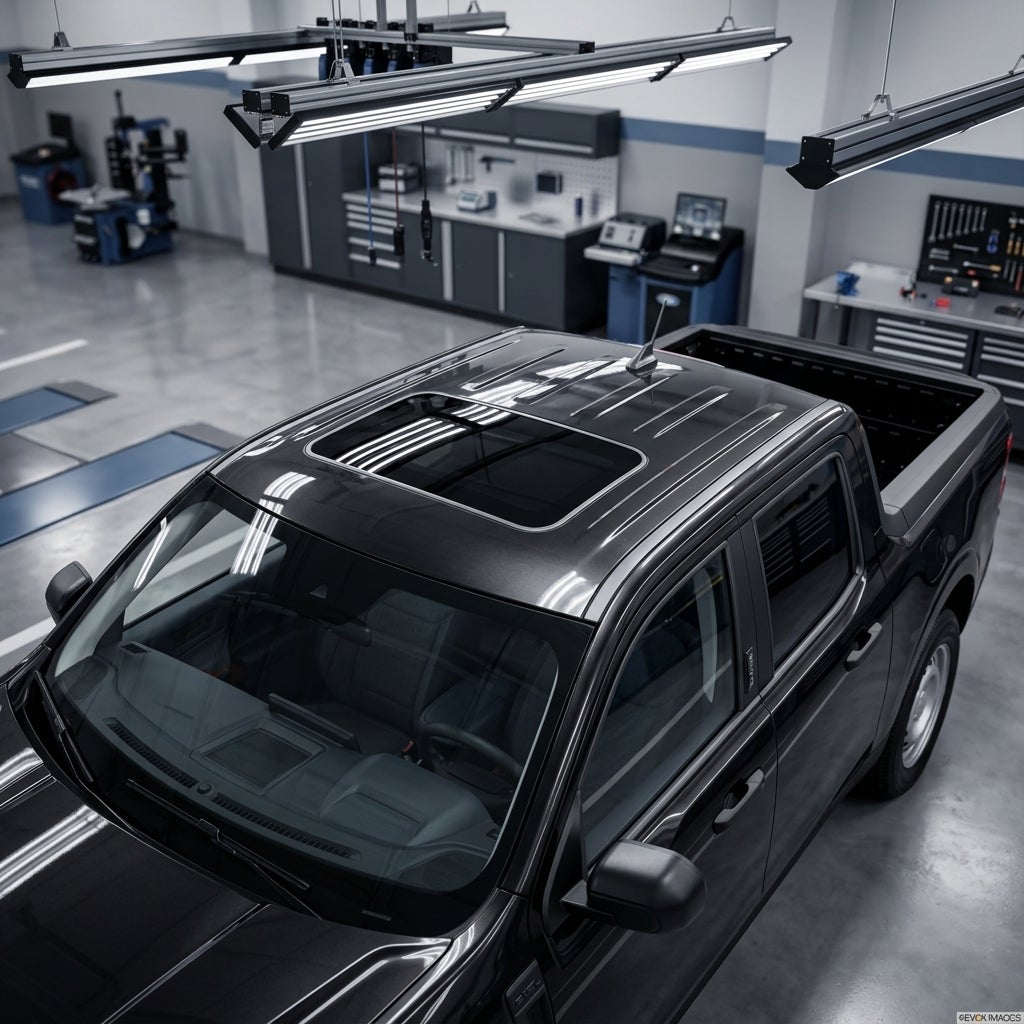
A photorealistic high-angle shot of a sleek 2026 Ford Maverick pickup truck parked inside a modern, brightly lit professional automotive service center, the primary focal point is the large panoramic glass moonroof panel on the vehicle's roof, cinematic overhead LED lighting highlighting the reflect

Understanding the 2026 Ford Maverick Moonroof Glass Recall

Ford has issued a safety recall for specific 2025–2026 Maverick trucks equipped with a power moonroof due to a potential glass detachment issue. The core of the problem lies in the assembly process, where the sliding glass panel may not have been properly bonded to the moonroof frame. This defect, identified under NHTSA recall number 26V157 and Ford’s internal recall number 26S34, affects a small population of approximately 323 vehicles. If the primer or adhesive was applied incorrectly during manufacturing, the glass panel could lift or completely separate from the vehicle while in motion, creating a significant road hazard for other drivers.

Our service team prioritizes your safety, and we want to ensure every truck on the road near Calcutta meets the highest manufacturing standards. Ford and the NHTSA have indicated that this defect can present an immediate risk, with some reports suggesting owners should have the inspection completed before further operation. While there have been no reported injuries or crashes tied to this specific campaign, the potential for the glass to detach at highway speeds makes prompt attention essential. If you notice excessive wind noise, water leaks, or any visible vibration from your moonroof, please reach out to our local Ford service center immediately to verify your vehicle's status.

We understand that a recall can be an inconvenience for your busy schedule. To make the process easier, we offer Ford Mobile Service for many types of inspections, allowing our technicians to come to your home or workplace. For repairs that require a bay, our valet pickup and delivery can handle the logistics for you. If you have questions about whether your specific 17-character VIN is included in this safety campaign, you can give our service advisors (330) 462-7578 a quick call for a status check. For those who prefer to visit us in person, you can find our service department address easily to drop off your vehicle.

Table of Contents

What Our Technicians Look For During the Maverick Moonroof Inspection

When you bring your truck in for a recall appointment, our factory-trained technicians follow a specific diagnostic protocol to determine if your glass bonding is secure. The primary focus of the inspection is the perimeter of the moonroof glass where it meets the frame. We check for any gaps in the adhesive or signs that the primer was not applied correctly during the factory build. Technicians look for physical lifting, uneven seating of the glass, or any "play" in the panel when light pressure is applied. This is a precision-based safety check designed to catch the defect before it leads to a total separation.

Beyond the visual inspection, we also evaluate the moonroof’s operation to ensure the sliding mechanism isn't putting undue stress on the bonding points. In a cold-winter climate like ours, the expansion and contraction of materials can sometimes exacerbate bonding issues, so we pay close attention to the integrity of the seals. If the adhesive is found to be within Ford's strict tolerance levels, the inspection is documented, and you are back on the road. However, if any signs of improper adhesion are found, the glass panel assembly must be replaced to ensure the vehicle remains safe for long-term use.

This inspection is part of the overall maintenance health of your vehicle, similar to the routine checks we perform on our F-Series work inventory to keep local businesses running reliably. While our finance department handles the paperwork for new purchases, recall services are always performed at no cost to the owner. To ensure we have a technician and the necessary tools ready for your arrival, we recommend that you schedule a service appointment online or via the FordPass app.

The Official Repair Process and Glass Replacement Standards

If your 2026 Maverick fails the initial adhesion test, the official remedy involves replacing the moonroof glass panel assembly entirely. Our technicians do not simply "re-glue" the existing glass; we remove the affected panel and install a new assembly using the correct primer and adhesive sequence mandated by Ford engineering. This process ensures that the bonding surface is clean and that the chemical primer can create a permanent, structural hold. This is a meticulous repair that requires a controlled environment to allow the adhesives to cure properly, ensuring the glass stays put even under high wind resistance or heavy rain.

Quality control is paramount during this repair. We use only genuine Ford components sourced through our parts department to ensure the fit and finish match the original factory specifications. Once the new glass is installed, we perform a series of leak tests and operational checks to confirm the moonroof functions smoothly and quietly. Because the 2026 Maverick features a standard Ford Connectivity Package, we also ensure that any sensors or electronic controls integrated near the roofline remain fully calibrated and functional after the mechanical work is complete.

For owners who are considering a new vehicle custom order, it is reassuring to know that Ford identifies and corrects these manufacturing anomalies quickly through the recall process. We maintain transparency throughout the repair, providing you with a full report of the work performed. You can also check our current service and parts offers to see if there are other maintenance items, such as cabin air filters or wiper blades, that you would like us to address while your truck is already in the shop for the recall.
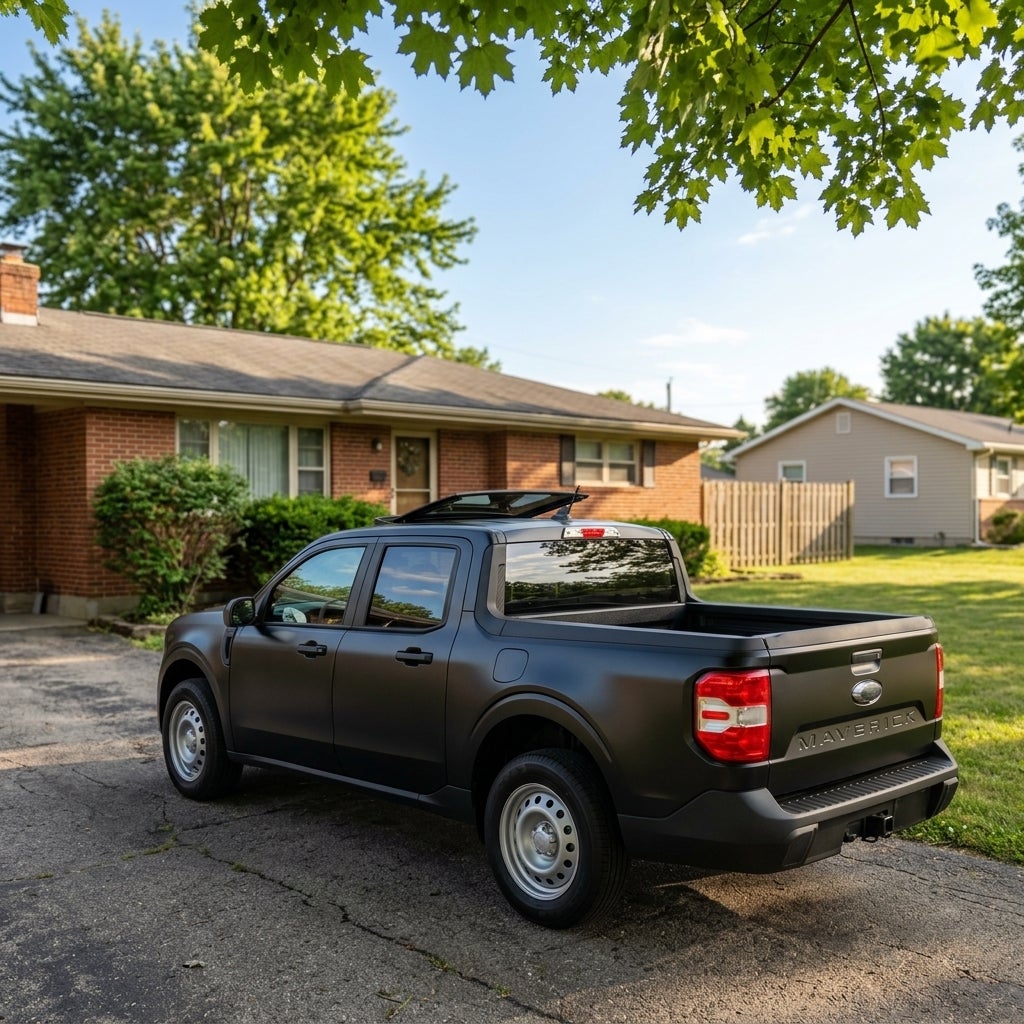
​Ford Maverick compact pickup truck, 2026 model, parked in a modest asphalt driveway of a traditional mid-century brick ranch house, Calcutta Ohio suburban neighborhood, late June afternoon, lush green maple trees, clear blue summer sky with soft hazy sunshine, focus on the power moonroof glass panel

Completing Your Maverick Recall Service in East Liverpool

Our facility is uniquely equipped to handle the specialized glass work required for the Maverick moonroof recall. Located near the Ohio River, we serve a community of truck owners who rely on their vehicles for both work and family life. We understand that your truck is a tool, whether you are hauling gear to a job site or taking the kids to a local park. Completing this recall is not just about following a manufacturer mandate; it is about protecting the structural integrity of your cab. Our service center uses advanced diagnostic tools to ensure every repair meets the rugged standards expected of a Ford truck.

While your Maverick is in our care, we can perform a comprehensive multi-point inspection to catch other potential issues. For instance, the heavy road-salt use during our local winters can be tough on electrical systems, so we often suggest a professional battery test to ensure your starting power remains strong in sub-freezing temperatures. We also encourage owners to browse our monthly manufacturer service specials for discounts on oil changes, tire rotations, and brake services that can be performed during the same visit.

For those who may be looking to upgrade their vehicle, completing all open recalls is a vital step before seeking a KBB instant cash offer or trading in your truck. A clean vehicle history report with no outstanding safety campaigns makes the process much smoother. Our team is here to support the hardworking families of the community by providing honest communication and expert technical care for every Ford model, from the compact Maverick to the largest commercial vans.

Addressing Open Recalls and Protecting Your Truck's Value

Maintaining a record of completed recall repairs is essential for preserving the long-term value and reliability of your 2026 Maverick. When it comes time to sell or trade your vehicle, savvy buyers will look for documentation that safety issues, like the moonroof detachment recall, were addressed by an authorized dealer. This truck holds a unique position in the market, offering a 2.5L I4 hybrid engine with an EPA-rated 40 mpg city / 34 hwy, and keeping it in top mechanical shape ensures you get the most out of that investment. A truck with a "Good" IIHS side-impact rating and a completed safety history is always more desirable on the secondary market.

If you are currently looking at our new truck inventory and have concerns about open recalls on a potential purchase, rest assured that we verify and repair every vehicle before it reaches the front line. We apply the same rigorous standards to our new work truck inventory, ensuring that every fleet vehicle is ready for the road. You can also explore manufacturer vehicle specials that might apply to newer models with the latest safety updates and interior utility features, such as the power-sliding rear window now available on higher trims.

Ultimately, safety recalls are a proactive way for Ford to ensure their "Built Ford Tough" reputation remains intact. Whether you drive an entry-level XL or a street-performance Lobo Premium, your safety is our primary concern. By addressing the moonroof inspection now, you prevent a potential road hazard and ensure your Maverick remains a dependable partner for your daily commute and weekend adventures across the tri-state area.

Answers to Common Questions About the Maverick Moonroof Recall

Q: Is there a safety recall for the 2026 Ford Maverick moonroof glass?

Yes, certain 2025 and 2026 Maverick models equipped with a power moonroof are under recall due to a bonding issue. The sliding glass panel may not have been properly adhered to the frame during assembly, which could lead to the glass detaching while driving. You should check your VIN through the Ford owner portal or contact our service team to see if your truck is affected.

Q: What is the official fix for the 2026 Maverick moonroof glass detachment recall?

The official remedy involves a professional inspection of the glass panel's adhesion to the frame. If our technicians find that the bonding is insufficient or shows signs of lifting, we will replace the moonroof glass panel assembly. This repair uses specific primers and adhesives to ensure a permanent, safe bond that meets factory standards.

Q: Can I drive my Maverick while waiting for the moonroof inspection?

Ford generally allows continued use of the vehicle, but they recommend scheduling the inspection as soon as possible. If you notice any unusual wind noise, water intrusion, or visible movement of the glass, you should stop driving the vehicle and contact us immediately. We can arrange for a quick service consultation to determine the safest next steps for your situation.

Q: Is the moonroof glass repair covered under warranty?

Recall repairs are performed free of charge to the owner, regardless of your vehicle's current mileage or warranty status. While the Maverick comes with a 3-year / 36,000-mile New Vehicle Limited Warranty, safety recalls like this one are covered by the manufacturer to ensure the vehicle meets federal safety standards.

Q: Where can I take my 2026 Ford Maverick for moonroof recall service?

You can bring your truck to our authorized service center for all recall-related work. We have the specialized tools and certified technicians required to perform the glass bonding inspection and replacement. For those managing a fleet of Transit work vans or other Ford vehicles, we can coordinate multiple service appointments to minimize downtime.

If you have received a recall notice in the mail or have noticed issues with your moonroof glass, please do not delay. You can find directions to our East Liverpool location online to visit our service department. Our team is dedicated to providing transparent, trusted vehicle care to keep your Ford running like new for years to come.


© 2026 Tri State Ford. All rights reserved.

Posted in:

Recommended Posts

f

How Do You Fix an Oil Leak on a 2026 Ford?

To fix an oil leak on a 2026 Ford, you must clean the engine bay, identify the exact origin using fluorescent ultraviolet dye or inspection powder, replace the compromised gasket or fitting, and refill the crankcase to the proper level. Minor seeps at the valve cover or oil pan require installing a new pre-formed seal or applying Motorcraft High Performance Engine RTV Silicone, whereas pressurized leaks along turbocharger oil feed lines require replacing degraded line fittings and copper seals before fluid loss harms internal components. Identifying an engine oil leak early prevents thermal damage and protects critical engine components from lubrication starvation. Fresh engine oil appears amber or light brown with a slick feel, whereas older oil turns dark brown or black. If oil drips onto hot exhaust manifolds, it generates a harsh burning odor and light white smoke under the hood. Continuing to drive with severe oil loss can lead to low oil pressure warnings, premature bearing wear, or severe engine overheating. When inspecting a leak at home, place a clean sheet of white cardboard directly beneath the engine crossmember overnight. Engine oil leaves a distinct dark brown or black stain, distinguishing it from red transmission fluid or pink coolant. If you notice persistent puddling, check the dipstick level before starting the vehicle to ensure sufficient oil remains in the crankcase. For persistent or high-pressure leaks, professional diagnostic equipment provides the most accurate answer. You can visit our service department at 1503 Pennsylvania Ave for a comprehensive multi-point inspection, or give our service team a quick call at (330) 462-7578 to discuss observed symptoms with a certified technician. Table of Contents What Are the Common Causes and Leak Points on Ford EcoBoost Engines? 2026 Ford F-150 vs Ram 1500: Which Truck Offers Better Oil Leak Resistance? How to Inspect Your Ford for Oil Leaks and Check for Safety Recalls Can You Use an Extended Warranty to Cover Ford Oil Leak Repairs? Frequently Asked Questions About Ford Engine Oil Leaks Schedule Professional Oil Leak Diagnostics What Are the Common Causes and Leak Points on Ford EcoBoost Engines? Common oil leak points on Ford EcoBoost engines center around high-heat and high-pressure zones, including the valve cover gaskets, lower oil pan mating surfaces, timing chain covers, and turbocharger oil supply lines. Modern forced-induction engines subject engine seals to rapid thermal expansion and contraction cycles, which causes rubber gaskets to harden and RTV sealant bonds to degrade over extended mileage. On the 2.0L EcoBoost engine, which powers versatile crossover models like the 2026 Ford Escape with standard all-wheel drive, primary leak points include the front timing cover seal and the valve cover perimeter gasket. Over time, crankcase pressure can force oil past hardened valve cover corner seals, allowing oil to pool around spark plug wells or seep down the front engine cover. The 2.0L EcoBoost in the 2026 Ford Explorer also requires careful inspection around the front crankshaft seal, where road debris and heat can accelerate rubber breakdown. The twin-turbocharged 3.5L EcoBoost V6 presents a distinct set of potential leak areas due to its tight engine bay packaging and elevated turbocharger operating temperatures: Vacuum Pump Seal: On older 3.5L engine architectures, the mechanical vacuum pump mounted to the rear of the passenger-side cylinder head can develop a slow oil seep that drips directly onto the transmission bell housing. Turbocharger Oil Lines: High exhaust gas temperatures near the turbochargers can degrade the small rubber O-rings and crush washers on the oil feed and return lines, causing oil to vaporize against the exhaust piping. Composite Oil Pan Sealant: Certain previous-generation engine designs utilized composite plastic oil pans sealed with liquid RTV sealant. Repeated heat cycles caused minor pan flexing, leading to slow seeps along the lower engine block rail. Recent Ford engine designs have addressed this by utilizing updated pan structures and press-in-place gaskets. When truck owners bring an EcoBoost into our service bay with an oil leak, our technicians usually check the rear vacuum pump and valve covers before looking at the lower oil pan. Driving across varied elevations, such as the rolling hills around State Route 170 in Calcutta, puts steady load on the turbocharger cooling and lubrication system. Maintaining clean engine oil and replacing PCV valves at recommended intervals relieves excess crankcase pressure, protecting internal seals across all EcoBoost engine configurations. 2026 Ford F-150 vs Ram 1500: Which Truck Offers Better Oil Leak Resistance? The 2026 Ford F-150 offers exceptional long-term oil leak resistance by pairing refined engine sealing techniques with durable metal oil pans and press-in-place synthetic rubber gaskets across its powertrain lineup. While Ram 1500 trucks historically relied on standard stamped steel or cast aluminum oil pans, earlier generations of full-size trucks faced persistent valve cover and oil cooler adapter leaks. Modern Ford engineering focuses on heavy-duty crankcase ventilation and robust gasket designs built for heavy towing and demanding commercial service. In full-size work trucks, engine oil integrity directly impacts productivity and long-term durability. The 2026 Ford F-150 equipped with the 3.5L EcoBoost V6 delivers an impressive 10,400 lbs towing capacity, supported by a heavy-duty engine oil cooler and a precise SelectShift® automatic transmission. To withstand high oil pressures during heavy hauling, Ford utilizes engineered press-in gaskets at major engine mating surfaces rather than relying solely on liquid sealant beads, preventing the gasket distortion that affected older truck engines. To keep work fleets running smoothly without unexpected downtime, proper maintenance of cooling and lubrication systems remains essential. You can explore our current new work truck lineup to see how modern Ford powertrains are configured for heavy-duty work, or check out our complete new truck inventory to compare cab styles and engine options built to handle rigorous regional workloads. How to Inspect Your Ford for Oil Leaks and Check for Safety Recalls Performing an accurate DIY oil leak inspection requires a systematic approach to trace fluid back to its highest point of origin on the engine assembly. Gravity causes leaking oil to travel downward and backward along the chassis frame rails while driving, which often makes a minor valve cover leak appear as a major oil pan failure underneath the vehicle. Follow this step-by-step diagnostic process to isolate an oil leak: Clean the Engine Bay: Spray a dedicated automotive degreaser over the dirty lower engine surfaces and rinse carefully with low-pressure water, taking care to avoid delicate electrical connectors. Apply Leak Detection Powder or UV Dye: Dust suspected leak areas with aerosol leak detection powder, or pour a bottle of fluorescent engine oil UV dye directly into the oil filler cap. Run the Engine: Idle the vehicle for 10 to 15 minutes, or drive a short distance to allow oil pressure to build up within the engine galleries. Inspect with an Ultraviolet Light: Shine a blacklight around timing covers, valve cover rails, and oil filter housings. The fluorescent dye will glow brightly at the exact crack or gasket breach where fluid emerges. If a previous repair attempt failed to fix the issue, your vehicle may have been misdiagnosed. Misdiagnoses frequently occur when residual oil from a upper engine leak accumulates around the rear main seal or transmission torque converter housing. Requesting a UV dye tracer test ensures technicians verify the top-most active leak source before replacing expensive structural components. In some cases, oil leaks stem from specific factory service actions or safety recalls rather than normal wear. For instance, manufacturer safety recalls have previously addressed missing cylinder head ball plugs on select 2.0L EcoBoost and 2.3L EcoBoost engines that could allow oil to escape near hot exhaust manifolds. You can check your vehicle's safety recall status at any time by entering your 17-character Vehicle Identification Number (VIN) into the official Ford owner portal or the NHTSA recall lookup tool. Drivers navigating daily trips near Market Street in Boardman can rely on authorized Ford service centers to complete all recall repairs free of charge. Can You Use an Extended Warranty to Cover Ford Oil Leak Repairs? Official Ford Protect Extended Service Plans cover major engine oil leak repairs, including the replacement of oil pan gaskets, valve cover seals, timing cover gaskets, and internal engine oil seals damaged through normal operational wear. Coverage eligibility depends on the specific plan tier selected at contract activation: PowertrainCARE: Covers fundamental mechanical components, including internal engine seals, oil pump assemblies, and cylinder head gaskets across 29 core powertrain parts. BaseCARE: Expands coverage to 84 mechanical components, adding steering gear housing seals and primary engine cooling hardware. ExtraCARE: Protects 113 key parts, covering complex electronic sensors, fuel systems, and engine accessory seals. PremiumCARE: Comprehensive bumper-to-bumper protection covering over 1,000 components, including high-tech engine sensors, turbocharger oil lines, and complete gasket sets. Warranty claims require proof that the vehicle was maintained according to the recommended service schedule published in the owner manual. Failing to perform regular oil changes can lead to sludge buildup, which restricts crankcase ventilation and damages internal seals. Keep all oil change receipts and maintenance logs organized to ensure seamless claim processing when service is required. Component damage resulting from aftermarket engine modifications, improper installation, or pre-existing conditions prior to contract coverage is not covered under extended warranty terms. When repairing an active leak, using genuine factory components preserves engine tolerances and ensures precise fitment. You can schedule a service appointment with our factory-trained technicians to inspect covered components, or order genuine OEM parts directly through our service department for approved maintenance tasks. Frequently Asked Questions About Ford Engine Oil Leaks Q: Can a failing vacuum pump cause an oil leak on a 3.5L EcoBoost engine? Yes, on earlier 3.5L EcoBoost V6 engine designs, the mechanical vacuum pump attached to the back of the passenger-side cylinder head can develop an oil leak at its mounting seal. As the seal degrades, engine oil seeps out and drips down onto the top of the transmission housing, often mimicking a leaking valve cover gasket or rear main seal failure. Q: Is it safe to drive my Ford if it has a minor oil leak? You can drive short distances with a slow oil seep provided you regularly check the dipstick and maintain proper oil levels in the crankcase. However, if oil leaks directly onto hot exhaust components, creates a strong burning smell, or causes the low oil pressure light to illuminate, you should pull over immediately and switch off the engine to prevent severe mechanical damage or thermal hazards. Q: What should I do if a technician misdiagnoses my vehicle's oil leak? If an initial repair fails to stop an oil leak, request a comprehensive ultraviolet dye test to trace the fluid's exact path from the highest point on the engine. Ask the service advisor to review official Technical Service Bulletins related to your specific engine code, which often outline updated diagnostic steps for complex leaks around timing covers, turbo oil lines, and oil pan seals. Q: How do I know if my Ford oil leak is covered by a factory recall? You can verify recall eligibility by locating your 17-character VIN on your registration card or driver-side dashboard and entering it into the official Ford support website or the NHTSA recall tool. If an active safety recall applies to your engine's oil system, an authorized Ford dealership will perform the necessary inspection and component replacement at no cost to you. Q: What is the difference between fresh engine oil and other leaking fluids? Fresh engine oil has an amber or light brown appearance with a slick feel, turning dark brown or black as it ages. Red or dark pink fluid indicates automatic transmission or power steering fluid, clear light brown or blue fluid with a sweet odor points to engine coolant, and clear thin fluid near the passenger side footwell is typically harmless air conditioning condensation. Schedule Professional Oil Leak Diagnostics Addressing an engine oil leak promptly protects your vehicle's mechanical reliability, maintains resale value, and ensures your engine remains fully lubricated under heavy driving loads. Whether your vehicle requires a simple valve cover gasket replacement, updated turbocharger oil line fittings, or a complete multi-point inspection, professional diagnostic care provides lasting peace of mind on local roads and work sites. Our factory-certified technicians utilize specialized diagnostic tools, genuine Motorcraft fluids, and precise OEM replacement seals engineered specifically for your vehicle's powertrain. You can get directions to Tri State Ford to drop off your vehicle for expert care, or give our team a call at (330) 462-7578 to speak directly with a knowledgeable service advisor. If you are also considering an upgraded truck or SUV while your vehicle is in for service, feel free to schedule a test drive online today. © 2026 Tri State Ford. All rights reserved. Vehicle specification data © JATO Dynamics Limited. Title Tags 2026 Ford Oil Leak Repair in East Liverpool OH | Tri State Ford Meta Description Keywords Open Graph Twitter Card Canonical Article Metadata Geographic Targeting { "@context": "https://schema.org", "@graph": [ { "@type": "NewsArticle", "@id": "#article", "headline": "How Do You Fix an Oil Leak on a 2026 Ford?", "datePublished": "2026-09-04T21:14:36.270Z", "dateModified": "2026-09-04T21:16:19.597Z", "author": { "@id": "#author" }, "publisher": { "@id": "#dealer" }, "wordCount": 2129, "description": "Learn how to diagnose and repair an oil leak on a 2026 Ford, from identifying damaged gaskets to replacing seals and preventing engine damage." }, { "@type": "AutoDealer", "@id": "#dealer", "name": "Tri State Ford", "url": "https://www.tristateford.net", "telephone": "+13304627578", "sameAs": [ "https://maps.google.com/?cid=1136336406351438323" ], "address": { "@type": "PostalAddress", "streetAddress": "1503 Pennsylvania Ave", "addressLocality": "East Liverpool", "addressRegion": "OH", "postalCode": "43920", "addressCountry": "US" }, "areaServed": { "@type": "GeoCircle", "geoMidpoint": { "@type": "GeoCoordinates", "latitude": "40.6367833", "longitude": "-80.5443033" }, "geoRadius": "48280" }, "geo": { "@type": "GeoCoordinates", "latitude": "40.6367833", "longitude": "-80.5443033" }, "openingHours": [ "Mo 09:00-20:00", "Tu 09:00-18:00", "We 09:00-18:00", "Th 09:00-20:00", "Fr 09:00-18:00", "Sa 09:00-15:00" ] }, { "@type": "FAQPage", "@id": "#faq", "mainEntity": [ { "@type": "Question", "name": "Can a failing vacuum pump cause an oil leak on a 3.5L EcoBoost engine?", "acceptedAnswer": { "@type": "Answer", "text": "Yes, on earlier 3.5L EcoBoost V6 engine designs, the mechanical vacuum pump attached to the back of the passenger-side cylinder head can develop an oil leak at its mounting seal. As the seal degrades, engine oil seeps out and drips down onto the top of the transmission housing, often mimicking a leaking valve cover gasket or rear main seal failure." } }, { "@type": "Question", "name": "Is it safe to drive my Ford if it has a minor oil leak?", "acceptedAnswer": { "@type": "Answer", "text": "You can drive short distances with a slow oil seep provided you regularly check the dipstick and maintain proper oil levels in the crankcase. However, if oil leaks directly onto hot exhaust components, creates a strong burning smell, or causes the low oil pressure light to illuminate, you should pull over immediately and switch off the engine to prevent severe mechanical damage or thermal hazards." } }, { "@type": "Question", "name": "What should I do if a technician misdiagnoses my vehicle's oil leak?", "acceptedAnswer": { "@type": "Answer", "text": "If an initial repair fails to stop an oil leak, request a comprehensive ultraviolet dye test to trace the fluid's exact path from the highest point on the engine. Ask the service advisor to review official Technical Service Bulletins related to your specific engine code, which often outline updated diagnostic steps for complex leaks around timing covers, turbo oil lines, and oil pan seals." } }, { "@type": "Question", "name": "How do I know if my Ford oil leak is covered by a factory recall?", "acceptedAnswer": { "@type": "Answer", "text": "You can verify recall eligibility by locating your 17-character VIN on your registration card or driver-side dashboard and entering it into the official Ford support website or the NHTSA recall tool. If an active safety recall applies to your engine's oil system, an authorized Ford dealership will perform the necessary inspection and component replacement at no cost to you." } }, { "@type": "Question", "name": "What is the difference between fresh engine oil and other leaking fluids?", "acceptedAnswer": { "@type": "Answer", "text": "Fresh engine oil has an amber or light brown appearance with a slick feel, turning dark brown or black as it ages. Red or dark pink fluid indicates automatic transmission or power steering fluid, clear light brown or blue fluid with a sweet odor points to engine coolant, and clear thin fluid near the passenger side footwell is typically harmless air conditioning condensation." } } ] } ] }

d

Is a Transmission Flush Necessary for Your Ford Vehicle?

A transmission flush is necessary for your Ford vehicle when the fluid becomes contaminated, oxidized, or thermal degradation compromises hydraulic performance. While Ford schedules normal-duty fluid changes at 150,000 miles for modern transmissions like the 10R80, severe operating conditions demand fluid servicing every 30,000 to 60,000 miles. Performing a complete flush exchanges 100% of aged fluid throughout the gear case, lines, and torque converter, protecting internal valve bodies, maintaining precise clutch engagement, and preventing thermal breakdown. Automatic transmission fluid functions as a hydraulic medium, friction modifier, and heat sink simultaneously. Over tens of thousands of miles, thermal cycling and friction debris diminish the fluid's ability to maintain optimal pressure. When fluid breakdown occurs, internal clutch plates experience slippage, shift timing suffers, and internal operating temperatures rise rapidly. Routine fluid maintenance prevents minor varnish buildup from escalating into major mechanical failure, keeping your drivetrain responsive under heavy demands. For drivers who regularly use their trucks for heavy work, following severe duty service guidelines is essential. Severe duty includes frequent towing, carrying heavy cargo loads, commercial extended idling, or driving through steep elevations and extreme ambient temperatures. Local drivers navigating the elevation changes and suburban stop-and-go routes along State Route 170 in Calcutta experience higher transmission thermal stress than typical long-haul highway commuters. Servicing the fluid at recommended severe intervals keeps hydraulic pressures consistent and prevents premature wear on critical internal components. When you notice delayed engagement, harsh shifting between gears, or elevated transmission fluid temperatures on your instrument cluster, schedule an inspection promptly. You can find our East Liverpool facility directions online, or call our service department directly at (330) 462-7578 to speak with a factory-trained service advisor about your vehicle's maintenance needs. Table of Contents Is Doing Multiple Drain and Fills Equivalent to a Full Transmission Flush? What Equipment and Processes Are Involved in a Ford Transmission Flush? How Fresh Fluid Extends the Operating Life of Your Ford Transmission Why a Transmission Flush Costs More Than a Standard Engine Oil Change Why Schedule Your Transmission Service at Tri State Ford in East Liverpool? Frequently Asked Questions About Ford Transmission Flushes Keeping Your Ford Drivetrain Dependable for the Road Ahead Is Doing Multiple Drain and Fills Equivalent to a Full Transmission Flush? Performing multiple drain-and-fill procedures is not equivalent to a professional transmission flush because a standard pan drain removes only 30% to 40% of the total fluid volume. The remaining majority stays trapped inside the torque converter, fluid cooler, and hydraulic control lines. Even if a technician drains and refills the pan three consecutive times, old contaminated fluid remains mixed with the new fluid, achieving only roughly 80% to 85% dilution while consuming significantly more fluid and labor time. When a technician unbolts the transmission pan or removes the drain plug, only the fluid resting inside the oil pan evacuates. Modern Ford transmissions, including modern 6-speed and 10-speed automatic units, hold between 10 and 14 quarts of specialized fluid. A basic pan drop releases roughly 4 to 5 quarts. The contaminated fluid trapped in the torque converter contains suspended clutch material, microscopic metallic particles, and degraded friction additives that immediately mix with and contaminate the newly added fluid. Service Method Fluid Volume Exchanged Torque Converter Cleared? Cooler Lines Evacuated? Labor & Fluid Efficiency Standard Pan Drain 30% - 40% No No Low (Leaves old fluid behind) Triple Drain & Fill 80% - 85% Partial (via dilution) Partial (via dilution) Poor (Requires 15+ quarts & repeated labor) Professional Flush 95% - 100% Yes Yes High (Complete single-step exchange) When truck owners ask our service team whether multiple drain-and-fills do the same job as a full flush, we show them how a standard pan drop leaves several quarts of old fluid trapped inside the torque converter and cooler lines. A professional fluid exchange machine connects directly to the transmission cooling loop. As the vehicle's internal pump runs, the equipment uses fluid pressure to displace degraded fluid while simultaneously injecting clean, factory-specified fluid at the exact same rate. This process fully purges the system without leaving dirty fluid behind. Attempting to achieve fluid cleanliness through repeated pan drains increases long-term maintenance costs without delivering complete system restoration. Purchasing multiple short-interval fluid fills requires extra shop time and extra containers of specialized fluid. Using our online portal to order genuine Motorcraft parts ensures you get the exact filters, gaskets, and fluids engineered specifically for your Ford's transmission model. What Equipment and Processes Are Involved in a Ford Transmission Flush? A Ford transmission flush utilizes specialized inline fluid exchange equipment that connects directly to the vehicle's transmission cooling circuit to cycle out dirty fluid while introducing fresh fluid under controlled pressure. The process involves preliminary diagnostic testing, fluid temperature verification, inline fluid exchange, pan filter service when applicable, and accurate fluid level verification using Ford factory diagnostic protocols. The procedure begins with a preliminary inspection and road test to verify current transmission operation and scan for stored diagnostic trouble codes. Technicians bring the transmission up to operating temperature, as accurate fluid exchange and level setting depend on specific thermal parameters. The fluid exchange machine attaches to the cooler inlet and outlet lines. By operating in series with the transmission's internal oil pump, the exchange machine safely transfers clean fluid into the system while capturing old, oxidized fluid without over-pressurizing delicate internal seals or solenoids. Technicians attach inline quick-connect adapters to the transmission fluid cooler lines. The fluid exchange machine monitors system flow and matches incoming clean fluid to outgoing waste fluid. Fresh Motorcraft MERCON ULV fluid replaces contaminated fluid throughout the gear set, torque converter, and cooling lines. The technician accesses the transmission pan to clean internal magnets and install a fresh filter when required by vehicle architecture. The system undergoes thermal level verification using Ford diagnostic tools to guarantee exact fluid volume. Proper equipment operation ensures that sensitive electronic shift solenoids and complex valve bodies remain free from debris during service. On high-mileage vehicles where maintenance has been deferred, factory-trained technicians inspect fluid condition prior to service to confirm that a complete exchange is appropriate for the transmission's mechanical state. To simplify your service visit, Tri State Ford provides flexible scheduling options designed around your busy day. Customers can take advantage of our convenient pickup and delivery service options to have their vehicle serviced and returned without taking time away from work or family commitments. How Fresh Fluid Extends the Operating Life of Your Ford Transmission Fresh transmission fluid extends operating life by maintaining exact hydraulic pressure, reducing thermal friction, preventing internal varnish accumulation, and protecting delicate clutch friction materials. Clean fluid contains active chemical additives that suppress foaming, prevent corrosion on internal copper and steel alloys, and keep rubber seals pliable to prevent internal pressure losses. Over time, high operating temperatures cause transmission fluid to oxidize, turning from a bright translucent pink or red to dark brown or black. Oxidized fluid loses its shear stability, meaning it thins out under extreme pressure and high temperatures. Thin, degraded fluid allows metal-to-metal contact on planetary gear sets and bearings, accelerating mechanical wear. Fresh synthetic fluid maintains its viscosity under extreme loads, ensuring a protective hydrodynamic film remains between sliding metal components. Commuters navigating daily stop-and-go traffic around Market Street in Boardman subject their transmissions to continuous thermal cycling and frequent gear shifts. This type of driving breaks down friction modifiers faster than steady highway cruising. Fresh fluid restores precise clutch plate friction properties, preventing subtle slippage that generates localized heat spikes. Lower internal operating temperatures directly correlate with extended component longevity for valve bodies, torque converter clutches, and internal seals. Regular fluid exchanges yield substantial long-term economic benefits by protecting your vehicle against major powertrain repairs. Investing in preventative fluid maintenance at recommended intervals costs a fraction of a full transmission overhaul or replacement, maintaining your vehicle's resale value and driving dependability for years to come. Why a Transmission Flush Costs More Than a Standard Engine Oil Change A transmission flush costs more than a standard engine oil change because it requires significantly higher fluid capacity, specialized full-synthetic fluid formulations, dedicated fluid exchange machinery, and specialized technician labor time. While a routine engine oil change typically replaces 5 to 6 quarts of oil, a complete transmission fluid flush utilizes 10 to 14 quarts of specialized fluid along with complex inline hookup procedures. The high cost of transmission service stems directly from fluid chemistry, material volume, and labor complexity: Fluid Volume: Transmissions require double or triple the fluid volume of a standard engine oil sump to fill the pan, torque converter, valve body, and cooler circuit. Fluid Specification: Advanced formulations like Motorcraft MERCON ULV utilize precise synthetic base stocks and friction modifiers engineered specifically for high-gear-count automatics. Equipment & Labor: Technicians must connect specialized exchange machinery, monitor live diagnostic temperature data, and perform specialized fluid level verification procedures. <strong>FLUID SERVICE COMPARISON BREAKDOWN</strong> | ENGINE OIL CHANGE | TRANSMISSION FLUSH SERVICE | | --- | --- | | • 5 to 6 Quarts Capacity | • 10 to 14 Quarts Capacity | | • Gravity Drain Pan Sump | • Inline Machine Fluid Exchange | | • Standard Filter Replacement | • Specialized OEM Synthetic Fluid | | • Simple Dipstick Level Check | • Thermal Diagnostic Level Check | Accurately checking and setting the fluid level on modern Ford transmissions requires factory diagnostic software. Many late-model transmissions do not feature a traditional under-hood dipstick; instead, technicians must monitor transmission fluid temperature via diagnostic tools and check fluid standpipes underneath the vehicle at specific thermal thresholds. Investing in correct service procedures protects your drivetrain from costly damage caused by improper fluid levels or non-compliant universal fluids. You can easily schedule a maintenance appointment online with our certified service team to ensure your transmission receives precise, factory-aligned care. Why Schedule Your Transmission Service at Tri State Ford in East Liverpool? Scheduling your transmission flush at Tri State Ford guarantees that your vehicle is serviced by factory-certified technicians using genuine Motorcraft fluids and specialized Ford exchange equipment. Independent repair shops frequently utilize universal multi-vehicle fluids that fail to match the precise viscosity and friction coefficient requirements of modern Ford transmissions like the 10R80 or 6R80. Our service department follows strict Ford technical service bulletins and engineering guidelines during every fluid exchange. Using non-spec fluid can lead to harsh gear engagement, torque converter shudder, accelerated clutch wear, and potential warranty complications. Our team utilizes genuine Motorcraft MERCON ULV fluid formulated specifically for your vehicle's exact transmission architecture, protecting your factory warranty and maintaining shift quality. Beyond transmission maintenance, our technicians perform comprehensive multi-point inspections during your visit to identify potential issues before they cause road trouble. From checking brake pad thickness to conducting routine battery and electrical system checks, we ensure your entire vehicle remains dependable. We know your time is valuable, which is why we offer flexible maintenance options tailored to your schedule. For routine upkeep and minor services, ask our service team about our mobile service capabilities, bringing certified Ford care directly to your driveway or workplace. Frequently Asked Questions About Ford Transmission Flushes Q: Does a transmission flush clean or replace the filter in a Ford vehicle? Did you know that some Ford transmissions have easily accessible filters, while others require more involved procedures for replacement? On models with a removable pan, technicians drop the pan, clean internal collection magnets, and replace the filter element alongside the fluid exchange service. On sealed units or designs where the filter is internal, fluid exchange purges suspended debris from the system. Q: Can a transmission flush cause shifting issues on high-mileage Ford vehicles? A transmission flush will not damage a healthy transmission, but on extremely high-mileage vehicles that have never received fluid maintenance, a pressurized flush can dislodge heavy sludge deposits into sensitive valve body passages. In cases where fluid is severely burnt or heavy friction debris is present in the pan, factory technicians may recommend a traditional pan drain and filter change rather than a high-pressure flush. Q: How long does a professional transmission flush take at the dealership? A professional transmission flush service typically takes between 1 and 2 hours at our dealership. This timeframe accounts for initial vehicle diagnostics, bringing the transmission up to operating thermal thresholds, connecting inline exchange machinery, performing the full fluid exchange, servicing the pan filter when applicable, and executing final diagnostic fluid level checks. Q: Do independent mechanics use genuine Motorcraft fluid for Ford flushes? Independent mechanics frequently use universal multi-vehicle transmission fluids supplied in bulk to cover multiple vehicle makes. While these fluids claim broad compatibility, modern Ford transmissions require exact fluid specifications such as Motorcraft MERCON ULV. Using non-OEM universal fluid can cause shift hesitation, internal shudder, and premature wear on clutch packs. Q: How do I know if my Ford transmission fluid needs to be replaced? Common indicators that your transmission fluid requires replacement include dark or burnt-smelling fluid, delayed gear engagement, harsh or clunky shifting, shuddering during acceleration, or elevated transmission temperatures on your dashboard display. Following your owner's manual maintenance schedule or servicing fluid every 30,000 to 60,000 miles for severe duty prevents these degradation symptoms. Keeping Your Ford Drivetrain Dependable for the Road Ahead Maintaining clean transmission fluid is one of the most effective steps you can take to protect your vehicle's longevity, fuel efficiency, and driving performance. Whether you use your truck for daily family transportation, heavy trailer towing, or job site hauling, routine fluid maintenance prevents internal heat damage and keeps your automatic transmission shifting smoothly. When you bring your vehicle to Tri State Ford, our factory-trained service technicians ensure every step of your transmission flush is completed to strict Ford engineering standards. From precise thermal level checks to genuine Motorcraft synthetic fluids, we provide transparent, high-quality care that keeps your vehicle performing at its best. Take the next step in protecting your drivetrain today. View our dealership map page for easy directions to our service center, or give our service advisors a call at (330) 462-7578 to reserve your maintenance appointment. © 2026 Tri State Ford. All rights reserved. Title Tags Transmission Flush Services in East Liverpool OH | Tri State Ford Meta Description Keywords Open Graph Twitter Card Canonical Article Metadata Geographic Targeting { "@context": "https://schema.org", "@graph": [ { "@type": "NewsArticle", "@id": "#article", "headline": "Is a Transmission Flush Necessary for Your Ford Vehicle?", "datePublished": "2026-09-04T21:02:44.546Z", "dateModified": "2026-09-04T21:04:48.190Z", "author": { "@id": "#author" }, "publisher": { "@id": "#dealer" }, "wordCount": 2396, "description": "Learn when a transmission flush is necessary for your Ford vehicle, including recommended service intervals and signs of fluid degradation." }, { "@type": "AutoDealer", "@id": "#dealer", "name": "Tri State Ford", "url": "https://www.tristateford.net", "telephone": "+13304627578", "sameAs": [ "https://maps.google.com/?cid=1136336406351438323" ], "address": { "@type": "PostalAddress", "streetAddress": "1503 Pennsylvania Ave", "addressLocality": "East Liverpool", "addressRegion": "OH", "postalCode": "43920", "addressCountry": "US" }, "areaServed": { "@type": "GeoCircle", "geoMidpoint": { "@type": "GeoCoordinates", "latitude": "40.6367833", "longitude": "-80.5443033" }, "geoRadius": "48280" }, "geo": { "@type": "GeoCoordinates", "latitude": "40.6367833", "longitude": "-80.5443033" }, "openingHours": [ "Mo 09:00-20:00", "Tu 09:00-18:00", "We 09:00-18:00", "Th 09:00-20:00", "Fr 09:00-18:00", "Sa 09:00-15:00" ] }, { "@type": "FAQPage", "@id": "#faq", "mainEntity": [ { "@type": "Question", "name": "Does a transmission flush clean or replace the filter in a Ford vehicle?", "acceptedAnswer": { "@type": "Answer", "text": "Did you know that some Ford transmissions have easily accessible filters, while others require more involved procedures for replacement? On models with a removable pan, technicians drop the pan, clean internal collection magnets, and replace the filter element alongside the fluid exchange service. On sealed units or designs where the filter is internal, fluid exchange purges suspended debris from the system." } }, { "@type": "Question", "name": "Can a transmission flush cause shifting issues on high-mileage Ford vehicles?", "acceptedAnswer": { "@type": "Answer", "text": "A transmission flush will not damage a healthy transmission, but on extremely high-mileage vehicles that have never received fluid maintenance, a pressurized flush can dislodge heavy sludge deposits into sensitive valve body passages. In cases where fluid is severely burnt or heavy friction debris is present in the pan, factory technicians may recommend a traditional pan drain and filter change rather than a high-pressure flush." } }, { "@type": "Question", "name": "How long does a professional transmission flush take at the dealership?", "acceptedAnswer": { "@type": "Answer", "text": "A professional transmission flush service typically takes between 1 and 2 hours at our dealership. This timeframe accounts for initial vehicle diagnostics, bringing the transmission up to operating thermal thresholds, connecting inline exchange machinery, performing the full fluid exchange, servicing the pan filter when applicable, and executing final diagnostic fluid level checks." } }, { "@type": "Question", "name": "Do independent mechanics use genuine Motorcraft fluid for Ford flushes?", "acceptedAnswer": { "@type": "Answer", "text": "Independent mechanics frequently use universal multi-vehicle transmission fluids supplied in bulk to cover multiple vehicle makes. While these fluids claim broad compatibility, modern Ford transmissions require exact fluid specifications such as Motorcraft MERCON ULV . Using non-OEM universal fluid can cause shift hesitation, internal shudder, and premature wear on clutch packs." } }, { "@type": "Question", "name": "How do I know if my Ford transmission fluid needs to be replaced?", "acceptedAnswer": { "@type": "Answer", "text": "Common indicators that your transmission fluid requires replacement include dark or burnt-smelling fluid, delayed gear engagement, harsh or clunky shifting, shuddering during acceleration, or elevated transmission temperatures on your dashboard display. Following your owner's manual maintenance schedule or servicing fluid every 30,000 to 60,000 miles for severe duty prevents these degradation symptoms." } } ] } ] }

J

Which 2027 Ford Bronco Trim Should You Buy for Your Off-Road and Daily Driving Needs?

.hrizn-rte-content .e-rte-image{border:0;max-width:100%;height:auto} .hrizn-rte-content .e-rte-image.e-imginline{display:inline-block;float:none;margin-left:5px;margin-right:5px;max-width:calc(100% - 10px);vertical-align:bottom} .hrizn-rte-content .e-rte-image.e-imgbreak,.hrizn-rte-content .e-rte-image.e-imgcenter{display:block;float:none;margin:5px auto;max-width:100%} .hrizn-rte-content .e-rte-image.e-imgleft{float:left;margin:0 12px 8px 0;max-width:100%} .hrizn-rte-content .e-rte-image.e-imgright{float:right;margin:0 0 8px 12px;max-width:100%} .hrizn-rte-content figure.e-rte-image{margin:8px auto;max-width:100%} .hrizn-rte-content figure.e-imgleft{float:left;margin:0 12px 8px 0} .hrizn-rte-content figure.e-imgright{float:right;margin:0 0 8px 12px} .hrizn-rte-content figure.e-imgcenter{display:block;margin:8px auto;text-align:center} The Big Bend equipped with the Sasquatch Package offers a strong balance of features and capability for drivers who split time between daily highway commutes and serious off-road trails. For commuters seeking premium comfort, the Outer Banks delivers refined interior touches and painted exterior trim, while dedicated trail drivers benefit most from the Badlands with its standard hydraulic front sway-bar disconnect. Selecting the right configuration requires balancing daily driving comfort against the specific hardware needed for off-road terrain. Industry previews place starting pricing for entry models around $43,000, with specialized releases such as the Filson edition arriving in early 2027 and the performance-tuned RTR anticipated under $60,000. Every trim features standard four-wheel drive, body-on-frame construction, and removable doors and roof panels. For local drivers, trail requirements vary significantly based on where you plan to spend your weekends. The steep, gravel access roads around Beaver Creek near Calcutta make high-ground clearance and all-terrain traction an immediate asset when hauling camping gear or kayaks. Pairing the base engine with functional off-road upgrades gives you trail capability without paying for luxury features you might not need. At Tri State Ford, we walk buyers through every configuration to ensure your SUV matches your lifestyle and budget. You can explore our current new Ford inventory online, visit our showroom location to see these models in person, or give our sales team a call directly at (330) 462-7578 to discuss incoming availability. Table of Contents What Are the Main Ford Bronco Trim Levels and Special Editions Available? How Do the Bronco Big Bend, Outer Banks, and Badlands Trims Differ in Performance and Features? What Comes Included in the Ford Bronco Sasquatch Package Across Trims? How Do Ford Bronco Trims Compare in Price and Off-Road Features to Jeep Wrangler Trims? Frequently Asked Questions About Ford Bronco Trims and Configurations Take the Next Step Toward Driving Your Ideal Ford Bronco What Are the Main Ford Bronco Trim Levels and Special Editions Available? The core Ford Bronco lineup includes seven distinct models: Big Bend, Heritage Edition, Outer Banks, Badlands, Wildtrak, Stroppe Special Edition, and Raptor. Beyond the core lineup, Ford expands the offering with wilderness and performance special editions, including the upcoming Filson edition and the RTR. Base power comes from a 2.3-liter EcoBoost turbo-four engine producing 300 hp and 325 lb-ft of torque, paired with either a 7-speed manual or a 10-speed automatic. Buyers seeking additional pass-through power can opt for the 2.7-liter EcoBoost twin-turbo V6, which generates 330 hp and 415 lb-ft of torque. The high-performance Raptor tops the lineup with an exclusive 3.0-liter EcoBoost V6 delivering 418 hp. Shoppers comparing trim levels on our lot frequently ask whether the two-door configuration limits rear legroom or cargo space before making a final selection. While the two-door model offers classic proportions and a tighter turning radius, the four-door configuration extends wheelbase length, increases rear legroom, and expands rear cargo space to hold all four removed doors inside the vehicle. Special editions bring unique aesthetic and functional enhancements: Heritage Edition: Highlights classic styling with Oxford White roof panels, a vintage-inspired grille, and retro body graphics. Stroppe Special Edition: Honors Ford's off-road racing legacy with custom exterior accents and factory performance hardware. Filson edition: Features heavy-duty canvas, premium leather appointments, and wilderness-oriented gear integration. RTR: Incorporates tactical exterior styling, upgraded suspension components, and custom wheel packages. Buyers researching pre-owned options will find that earlier model years maintain strong capability across these same core configurations. You can browse pre-owned single-owner vehicles to compare feature availability across recent model years. How Do the Bronco Big Bend, Outer Banks, and Badlands Trims Differ in Performance and Features? The Big Bend serves as the practical entry point focused on core utility, the Outer Banks emphasizes urban style and cabin comfort, and the Badlands delivers maximum off-road mechanical capability. Understanding the mechanical and interior distinctions between these three popular trims ensures you select the right vehicle for your daily routine. Inside the cabin, materials are engineered to match each trim's intended use. The Badlands features washable rubberized flooring with integrated drain plugs and marine-grade vinyl seats, allowing you to hose out dirt and mud after a day on the trails. In contrast, the Outer Banks upgrades the interior with cloth or optional leather-trimmed seats, ambient lighting, and additional sound-dampening insulation to quiet cabin wind noise during highway travel. Suspension systems also separate these models. While the Big Bend utilizes a standard High-Performance Off-Road Stability Suspension ( HOSS) setup tuned for general road and trail use, the Badlands upgrades to the HOSS 2.0 system featuring Bilstein position-sensitive dampers. The Badlands also includes an electronic hydraulic front sway-bar disconnect that uncouples at the press of a button to maximize front wheel articulation over large rocks and uneven terrain. Commuters navigating Market Street in Boardman who want heated vinyl seats and smooth highway manners usually lean toward the Outer Banks for its balance of comfort and style. Those planning frequent trail excursions prioritize the mechanical locking differentials standard on the Badlands. If you are evaluating factory-backed durability, exploring our certified pre-owned Ford lineup provides access to thoroughly inspected models backed by extended powertrain protection. What Comes Included in the Ford Bronco Sasquatch Package Across Trims? The Sasquatch Package is Ford's comprehensive factory off-road upgrade, adding 35-inch mud-terrain tires wrapped around 17-inch beadlock-capable wheels, position-sensitive Bilstein dampers, and electronic-locking front and rear axles. It transforms any compatible Bronco into an extreme trail vehicle directly from the factory. Key components included in the Sasquatch Package: 35-inch mud-terrain tires: Provides maximum ground clearance and aggressive tread grip. 17-inch beadlock-capable wheels: Allows tire pressure reduction for enhanced sand and rock traction. Electronic-locking front and rear differentials: Locks left and right wheels together to maintain momentum when tires lose contact. 4.7 final drive ratio: Delivers optimal low-end crawl torque for controlled climbing. High-clearance fender flares and suspension lift: Accommodates larger tires while maximizing approach, breakover, and departure angles. Adding the package to a Big Bend or Outer Banks gives buyers the exact off-road running gear found on higher trims without forcing them to buy top-tier luxury options. Towing capacity remains steady at 3,500 pounds, making it easy to haul lightweight utility trailers or recreational equipment to weekend destinations. If you are considering upgrading from your current truck or SUV to a package-equipped model, our team can assist by estimating your trade-in value online to establish your buying power before visiting the dealership. How Do Ford Bronco Trims Compare in Price and Off-Road Features to Jeep Wrangler Trims? The Ford Bronco is often compared with key Jeep Wrangler models across similar trim levels and feature sets. The Big Bend competes with the Wrangler Sport S, the Outer Banks aligns against the Wrangler Sahara, and the Badlands goes head-to-head with the Wrangler Rubicon. On pavement, the Bronco offers different ride characteristics due to its independent front suspension. While the Wrangler uses solid front and rear axles that can cause highway steering wander, the Bronco's steering remains stable and precise at freeway speeds. This makes long highway drives significantly less tiring for drivers who use their vehicle for daily transportation. Feature comparisons across equivalent trim levels: Infotainment: Bronco comes standard with a 12-inch Sync 4 touchscreen featuring wireless Apple CarPlay and Android Auto across all trims, whereas base Wrangler trims feature smaller display screens. Off-Road Technology: Bronco features up to seven GOAT Modes (Goes Over Any Type of Terrain) and Trail Turn Assist, which brakes the inside rear wheel to significantly tighten the vehicle's turning radius on narrow trails. Roof and Door Removal: Bronco side mirrors are mounted directly to the cowl rather than the doors, meaning you retain your side mirrors when driving with the doors removed. In terms of safety technology, both platforms offer driver-assist features like automated emergency braking and blind-spot monitoring. However, Bronco's wider track and independent front end deliver superior emergency braking stability on wet or dry pavement. Planning your purchase is simple with our finance center. You can complete our secure online credit application from home to review competitive financing rates tailored to your monthly budget. Frequently Asked Questions About Ford Bronco Trims and Configurations Q: Which Ford Bronco trim offers the best balance of price and off-road features? Among Bronco enthusiasts, the Big Bend with Sasquatch Package consistently ranks highest for balancing price and off-road capability. It provides 35-inch mud-terrain tires, electronic front and rear locking differentials, and high-clearance suspension while keeping the overall purchase price significantly lower than top-tier off-road trims. Q: Does the Ford Bronco offer a manual transmission on all engine options? The 7-speed manual transmission—which includes an ultra-low crawler gear for controlled trail descending—is available exclusively with the 2.3-liter EcoBoost turbo-four engine. Models equipped with the 2.7-liter EcoBoost twin-turbo V6 or 3.0-liter EcoBoost V6 come standard with the 10-speed automatic transmission. Q: What is the hydraulic front sway-bar disconnect and which trims have it? The hydraulic front sway-bar disconnect allows the front stabilizer bar to uncouple under load, dramatically increasing front wheel articulation over uneven rocks and deep ruts. This feature comes standard on the Badlands and Raptor trims, and can be engaged at the press of a dash-mounted button. Q: What is the maximum towing capacity for the Ford Bronco? Most Ford Bronco trims—including Big Bend, Outer Banks, and Badlands —feature a maximum towing capacity of 3,500 pounds when properly equipped with the factory towing package. The high-performance Raptor increases maximum towing capacity up to 4,500 pounds. Q: What warranty coverage comes standard with a new Ford Bronco? Every new Ford Bronco includes Ford's factory warranty suite, consisting of a 3-year/36,000-mile bumper-to-bumper warranty and a 5-year/60,000-mile powertrain warranty. Additional roadside assistance coverage is also provided for 5 years or 60,000 miles. Take the Next Step Toward Driving Your Ideal Ford Bronco Finding the right Ford Bronco comes down to identifying how you plan to use your vehicle every day. Whether you need a comfortable daily commuter with open-air freedom or a fully locked trail machine ready for severe terrain, our team at Tri State Ford is here to guide you through every trim, engine, and option package. We encourage you to visit our showroom, compare two-door and four-door seating layouts, and test drive different powertrain options to see which combination fits your driving style best. Our straightforward purchasing process ensures current pricing and flexible financing options with a helpful and transparent process. Stop by our dealership address today or reach out to our team at (330) 462-7578 to schedule your test drive and start your next adventure. Keep Your Vehicle Running Strong Keep your vehicle performing at its best with our service team: Order Parts Schedule Service Appt © 2026 Tri State Ford. All rights reserved. Title Tags 2027 Ford Bronco in East Liverpool OH | Tri State Ford Meta Description Keywords Open Graph Twitter Card Canonical Article Metadata Geographic Targeting { "@context": "https://schema.org", "@graph": [ { "@type": "NewsArticle", "@id": "#article", "headline": "Which 2027 Ford Bronco Trim Should You Buy for Your Off-Road and Daily Driving Needs?", "datePublished": "2026-09-04T20:46:33.836Z", "dateModified": "2026-09-04T20:48:35.736Z", "author": { "@id": "#author" }, "publisher": { "@id": "#dealer" }, "wordCount": 1838, "description": "Compare 2027 Ford Bronco trims, including the Big Bend, Outer Banks, and Badlands, to find the ideal balance between off-road capability and daily driving comfort." }, { "@type": "AutoDealer", "@id": "#dealer", "name": "Tri State Ford", "url": "https://www.tristateford.net", "telephone": "+13304627578", "sameAs": [ "https://maps.google.com/?cid=1136336406351438323" ], "address": { "@type": "PostalAddress", "streetAddress": "1503 Pennsylvania Ave", "addressLocality": "East Liverpool", "addressRegion": "OH", "postalCode": "43920", "addressCountry": "US" }, "areaServed": { "@type": "GeoCircle", "geoMidpoint": { "@type": "GeoCoordinates", "latitude": "40.6367833", "longitude": "-80.5443033" }, "geoRadius": "48280" }, "geo": { "@type": "GeoCoordinates", "latitude": "40.6367833", "longitude": "-80.5443033" }, "openingHours": [ "Mo 09:00-20:00", "Tu 09:00-18:00", "We 09:00-18:00", "Th 09:00-20:00", "Fr 09:00-18:00", "Sa 09:00-15:00" ] }, { "@type": "FAQPage", "@id": "#faq", "mainEntity": [ { "@type": "Question", "name": "Which Ford Bronco trim offers the best balance of price and off-road features?", "acceptedAnswer": { "@type": "Answer", "text": "Among Bronco enthusiasts, the Big Bend with Sasquatch Package consistently ranks highest for balancing price and off-road capability. It provides 35-inch mud-terrain tires, electronic front and rear locking differentials, and high-clearance suspension while keeping the overall purchase price significantly lower than top-tier off-road trims." } }, { "@type": "Question", "name": "Does the Ford Bronco offer a manual transmission on all engine options?", "acceptedAnswer": { "@type": "Answer", "text": "The 7-speed manual transmission—which includes an ultra-low crawler gear for controlled trail descending—is available exclusively with the 2.3-liter EcoBoost turbo-four engine. Models equipped with the 2.7-liter EcoBoost twin-turbo V6 or 3.0-liter EcoBoost V6 come standard with the 10-speed automatic transmission." } }, { "@type": "Question", "name": "What is the hydraulic front sway-bar disconnect and which trims have it?", "acceptedAnswer": { "@type": "Answer", "text": "The hydraulic front sway-bar disconnect allows the front stabilizer bar to uncouple under load, dramatically increasing front wheel articulation over uneven rocks and deep ruts. This feature comes standard on the Badlands and Raptor trims, and can be engaged at the press of a dash-mounted button." } }, { "@type": "Question", "name": "What is the maximum towing capacity for the Ford Bronco?", "acceptedAnswer": { "@type": "Answer", "text": "Most Ford Bronco trims—including Big Bend , Outer Banks , and Badlands —feature a maximum towing capacity of 3,500 pounds when properly equipped with the factory towing package. The high-performance Raptor increases maximum towing capacity up to 4,500 pounds ." } }, { "@type": "Question", "name": "What warranty coverage comes standard with a new Ford Bronco?", "acceptedAnswer": { "@type": "Answer", "text": "Every new Ford Bronco includes Ford's factory warranty suite, consisting of a 3-year/36,000-mile bumper-to-bumper warranty and a 5-year/60,000-mile powertrain warranty . Additional roadside assistance coverage is also provided for 5 years or 60,000 miles." } } ] } ] }