Blog / Maintenance & Service, Air Conditioning Repair, Genuine Parts & Accessories, Dealer-Authorized

Why Tri State Ford Is the Trusted Choice for AC Repairs in East Liverpool

Article image

Why Tri State Ford Is the Trusted Choice for AC Repairs in East Liverpool

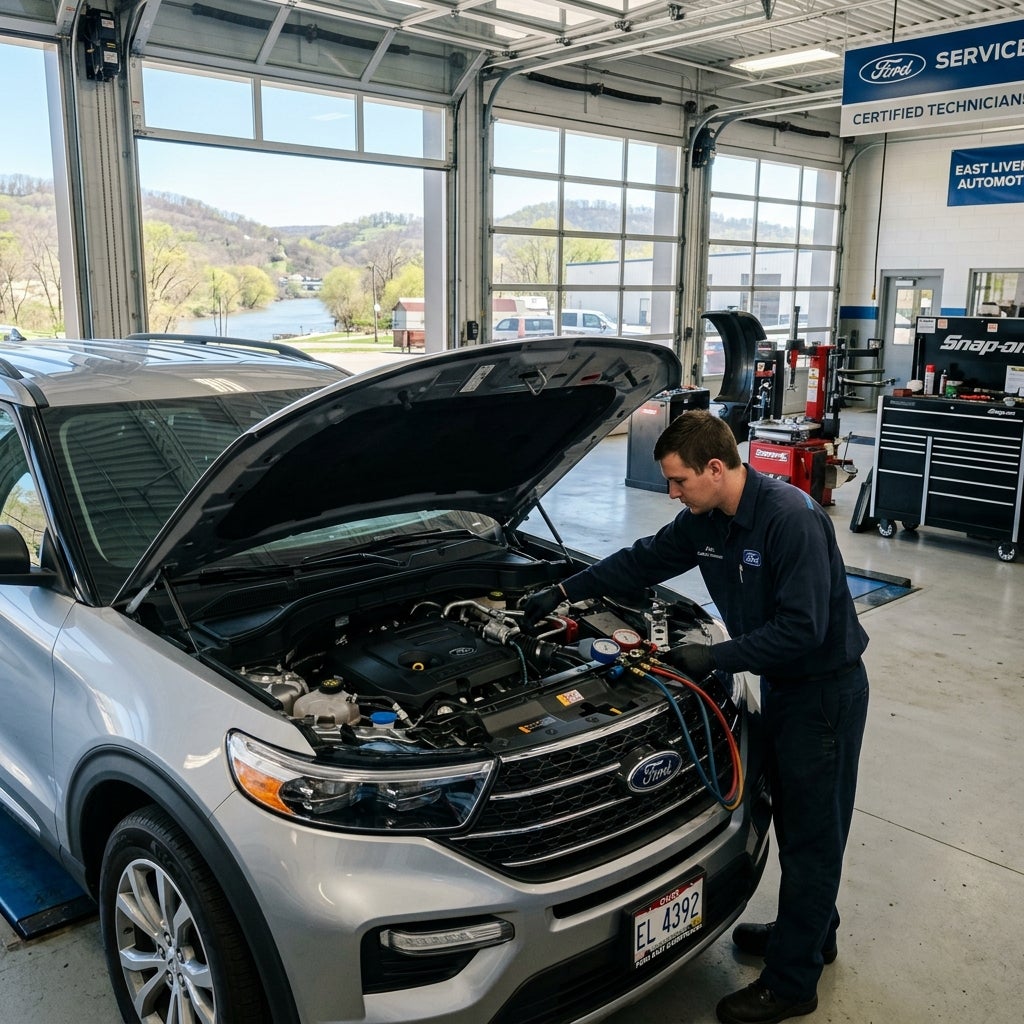
When your Ford's air conditioning system begins to falter, finding a trustworthy and skilled service provider is crucial for comfort and safety, especially during the warmer months in East Liverpool. Tri State Ford stands out as the dependable choice for AC repairs because of our commitment to quality, expert technicians, and genuine parts designed specifically for Ford vehicles. Our service center understands the importance of maintaining your vehicle’s climate control to ensure a cool and comfortable ride wherever your day takes you.

At Tri State Ford, our certified technicians have specialized training in Ford air conditioning systems. This expertise enables them to accurately diagnose issues that might be causing your AC to underperform, including refrigerant leaks, compressor problems, or electrical faults. Their regular training ensures they stay current with Ford’s latest technologies and repair techniques, providing you with service that aligns with manufacturer standards. Whether your vehicle is frequently driven on the streets of Boardman or out in the more rural parts of Calcutta, we tailor our service to meet the unique demands of your driving environment.

Using genuine Ford replacement parts is another reason Tri State Ford is a trusted service provider in the region. These parts are engineered to fit perfectly and perform reliably, extending the life of your AC system while maintaining the vehicle’s original performance. Our commitment to OEM parts means that repairs are dependable and designed to prevent future issues, saving you time and money over the long haul.

Customers in East Liverpool and nearby communities like Chester and Poland benefit from our transparent service approach. We clearly explain the condition of your AC system, the recommended repairs, and the reasons behind them. This honest communication helps you make informed maintenance decisions, ensuring your Ford’s cooling system is restored efficiently without unnecessary expenses.

For those experiencing AC problems, scheduling a service appointment with us is straightforward. You can easily get directions to Tri State Ford or give us a call at (330) 462-7578 to discuss your needs. Our team prioritizes timely, thorough service to get you back on the road with a fully functioning air conditioning system you can rely on.

By choosing Tri State Ford for your AC repairs, you’re selecting a service partner that values durability, precision, and customer care. We understand how vital your vehicle’s climate control is to your daily comfort, and we’re dedicated to delivering expert repairs that keep your Ford running cool and dependable for years to come.

Table of Contents

Comprehensive Air Conditioning Services Available at Tri State Ford

At Tri State Ford, our service center offers an extensive range of air conditioning maintenance and repair solutions tailored specifically for Ford vehicles. Understanding that a properly functioning AC system is essential not only for comfort but also for safety during hot Ohio summers, our certified technicians employ advanced diagnostic tools to accurately pinpoint issues and provide effective repairs.

Our air conditioning services include thorough inspections of system components such as compressors, condensers, evaporators, and refrigerant levels. We provide professional refrigerant recharge to restore optimal cooling performance and prevent compressor damage. When parts require replacement, we use genuine OEM Ford components to ensure durability, proper fit, and seamless integration with your vehicle’s climate control system.

Additionally, Tri State Ford technicians handle heater core repairs and cabin air filter replacements, both critical for maintaining air quality and efficient airflow inside your vehicle. Our team also performs leak detection and system flushes to eliminate contaminants that can cause blockages or corrosion within the AC system. These proactive measures help extend the lifespan of your vehicle’s climate control and reduce the chance of unexpected breakdowns.

For owners of Ford trucks who value comfort, we also service advanced features like dual-zone climate control, ensuring each cabin zone maintains the desired temperature independently. This precision climate management enhances driving pleasure, especially during long hauls or daily commutes in varying weather conditions around areas like Calcutta and Poland, OH. Explore our Truck Inventory to find the perfect Ford truck equipped with these advanced climate features.

By focusing on comprehensive, manufacturer-approved AC service, Tri State Ford guarantees your vehicle’s cooling system operates at peak efficiency, contributing to a safer, more comfortable driving experience throughout the year. Whether you notice reduced cooling, strange noises, or unusual odors, our experts are ready to restore your Ford’s air conditioning system to its full capability.

Understanding Your 2026 Ford Warranty Coverage for AC Repairs

The 2026 Ford warranty provides valuable protection for your vehicle’s air conditioning system, helping to reduce unexpected repair costs and ensure reliable climate control. Typically, the new vehicle limited warranty covers defects in materials or workmanship for a period of three years or 36,000 miles, whichever comes first. This includes components of the air conditioning system such as the compressor, condenser, evaporator, and associated seals and hoses.

Additionally, Ford’s powertrain warranty extends coverage on essential components, which can sometimes include parts of the AC system related to engine or transmission operation. It’s important to note that warranty coverage requires proper maintenance and timely service, which is why following Ford’s recommended maintenance schedule is critical to keep the warranty valid.

Repairs or replacements under warranty are performed using genuine Ford parts, ensuring that your vehicle maintains its original performance and durability. Tri State Ford’s certified technicians are trained to diagnose and repair AC issues efficiently while adhering to warranty requirements, safeguarding your coverage and vehicle integrity.

If your AC system requires service beyond what the warranty covers, Tri State Ford offers expert maintenance and repairs designed to extend the life of your cooling system. Understanding these warranty details can help you plan your vehicle’s upkeep and avoid costly surprises while enjoying the dependable comfort Ford climate systems provide.

Benefits of Choosing Dealer-Authorized Service Over Independent Shops for AC Issues

Opting for dealer-authorized service centers like Tri State Ford ensures your Ford’s air conditioning system receives the precise care it requires. Our technicians undergo rigorous, ongoing training directly from Ford, equipping them with the most current knowledge about your vehicle’s climate control technology. This specialized expertise enables us to accurately diagnose and repair AC issues using factory-approved methods, preventing misdiagnosis or improper repairs that can occur at independent shops.

Another significant advantage lies in the use of genuine Ford parts. These components are designed specifically for your vehicle’s system, guaranteeing optimal performance and longevity. Independent repair shops may substitute generic or aftermarket parts that might not meet Ford’s stringent quality standards, potentially leading to reduced efficiency or premature failures. Tri State Ford’s commitment to OEM parts ensures your AC system maintains its original reliability and preserves your vehicle’s value.

Furthermore, dealer service centers have access to advanced diagnostic tools tailored for Ford vehicles. These tools allow our technicians to pinpoint issues quickly and effectively, reducing repair times and costs. We also adhere strictly to Ford’s service protocols, which helps maintain your warranty coverage and prevents complications that could arise from unauthorized repairs.

Choosing Tri State Ford for AC repairs offers a dependable, transparent experience backed by manufacturer support and a dedication to quality. This level of care is especially valuable for drivers in East Liverpool and neighboring communities who rely on dependable climate control in varying seasonal conditions. By trusting your AC repairs to our dealer-authorized service team, you protect your investment and ensure your Ford stays comfortable and efficient mile after mile.

Maintaining Your Ford’s Climate Control: Cabin Air Filter Replacement and Dual-Zone Advantages

Keeping your Ford’s climate control system in top shape means paying close attention to routine maintenance like cabin air filter replacement. A clean cabin air filter is essential for maintaining fresh, allergen-free air inside your vehicle while also supporting the efficiency of your AC system. Ford recommends inspecting and replacing the cabin air filter at regular intervals, typically every 15,000 to 20,000 miles, but conditions like heavy pollen or dust in areas such as Calcutta, OH, may require more frequent changes.

Dual-zone climate control, featured in many Ford trucks, enhances driver and passenger comfort by allowing independent temperature settings for different areas of the cabin. This technology not only improves comfort but also helps maintain consistent air quality and reduces system strain, which can extend the lifespan of your AC components.

Regular maintenance of these systems at Tri State Ford ensures your truck’s climate control remains reliable and efficient, providing comfortable drives whether commuting in Boardman, OH, or working in Industry, PA. Proper care also helps prevent costly repairs and keeps your vehicle’s interior environment healthy and pleasant year-round.

Recognizing and Addressing Musty Odors in Your Ford’s Air Conditioning System

A musty smell coming from your Ford’s AC system often signals moisture buildup or mold growth within the evaporator or air ducts. This issue can arise from trapped water that doesn’t drain properly, creating an environment for mildew. Ignoring these odors may lead to discomfort and potential health concerns for your family.

At Tri State Ford, our technicians use specialized cleaning and sanitizing treatments to eliminate mold and bacteria safely and effectively. We also inspect drainage systems and cabin air filters to prevent recurrence. For drivers in East Liverpool, OH, and nearby areas, addressing musty odors promptly ensures a fresher, healthier cabin environment. To schedule service, call us at (330) 462-7578 or get directions to Tri State Ford.

© 2026 Tri State Ford. All rights reserved.

Posted in:

Recommended Posts

d

Does Oil Filter Quality Actually Affect Engine Life?

Does Oil Filter Quality Actually Affect Engine Life? Oil filter quality directly impacts engine life by trapping microscopic abrasive particles before they circulate through precision engine components. A high-quality filter maintains structural integrity, retains fine debris down to 20 microns, and preserves steady oil flow under heavy engine loads. Substandard or clogged filters allow dirt to bypass filtration or restrict oil pressure, causing accelerated wear on bearings, crankshafts, and camshafts over time. Engine oil acts as the primary lubricant and coolant for moving internal parts. As oil flows through the engine, it collects metallic dust, combustion soot, and microscopic debris. Without an effective filter in place, these hard contaminants act like abrasive grit against engine bearings, cylinder walls, and valve trains. Over thousands of miles, unfiltered microscopic particles gradually erode precision clearances, reducing oil pressure and shortening the overall operating life of the powerplant. Commuters navigating daily drives along State Route 170 near Calcutta often ask our technicians during routine oil changes whether premium filters are truly necessary. Practical experience shows that consistent filtration quality prevents subtle, cumulative internal erosion that leads to major mechanical repairs. Ford equips modern vehicles with an Intelligent Oil-Life Monitor that calculates maintenance intervals based on real-world driving conditions. To protect engine longevity, replacing the oil filter at every indicated oil change is essential. For expert vehicle maintenance located at 1503 Pennsylvania Ave, East Liverpool, OH 43920, you can get step-by-step directions to our East Liverpool service center or give our service team a call directly at (330) 462-7578 to consult with a technician. Table of Contents What Is a Micron Rating on an Oil Filter and Why Isn't Lower Always Better? Synthetic vs Cellulose Filter Media: Which Protects Engine Components Better? What Is an Oil Filter Bypass Valve and How Does It Protect Your Engine? How Do Extended-Performance Oil Filters Differ from Basic Options to Prevent Repairs? Does Using an Aftermarket Oil Filter Void Your Warranty or Risk Internal Breakdown? Answers to Common Questions About Engine Oil Filters and Ford Service What Is a Micron Rating on an Oil Filter and Why Isn't Lower Always Better? A micron rating measures the smallest size of particle, in micrometers, that an oil filter media can trap from circulating engine oil. A lower micron rating is not automatically better because an overly restrictive filter can choke oil flow, triggering the internal bypass valve and allowing dirty, unfiltered oil to flood engine bearings. One micrometer equals one-millionth of a meter or roughly 1/25,400th of an inch. A human hair averages 70 microns in diameter, whereas particles as small as 10 to 20 microns can slip into the microscopic clearances between crankshaft journals and engine bearings, causing scoring over time. Evaluating a filter requires balancing three distinct performance metrics: Filtration efficiency: The percentage of particles at a specific micron size trapped during fluid passage. Flow rate: The volume of oil allowed to pass through the media per minute without excessive fluid restriction. Dirt-holding capacity: The total amount of debris the media can hold before oil pressure drops. Achieving an ultra-low micron rating with basic materials requires making the media pores extremely dense. Small media pores create high flow resistance, especially when engine oil is cold and thick during initial startup. When oil flow is restricted, pressure drops downstream. The lubrication system responds by opening the bypass valve to protect the engine from oil starvation, allowing unfiltered oil to circulate. Premium filters balance particle capture, fluid throughput, and total capacity in accordance with Society of Automotive Engineers standards such as SAE J1858. Synthetic vs Cellulose Filter Media: Which Protects Engine Components Better? Synthetic filter media protects engine components far better than conventional cellulose media by using engineered synthetic micro-glass fibers that capture smaller particles with higher efficiency while maintaining lower flow restriction. Synthetic media also offers double the dirt-holding capacity and resists high-temperature chemical degradation during extended oil change intervals. Conventional cellulose filter media consists of natural wood pulp paper fibers with irregular shapes and inconsistent pore sizes. Under heat, moisture, and chemical exposure from engine combustion, cellulose paper fibers swell, harden, and break down over time. Synthetic media features laboratory-engineered micro-glass or polyester fibers woven into a dense, uniform structure. This design enables "depth filtration," trapping contaminants throughout the thickness of the material rather than relying solely on the surface layer. Key Media Performance Differences Trapping efficiency: Synthetic media captures particles as small as 15 to 20 microns at over 99% efficiency, whereas standard cellulose paper filters typically capture 30 to 40 micron particles at lower overall efficiency rates. Flow capability: Micro-glass fibers are significantly thinner than paper fibers, leaving larger open pathways for oil to flow freely during cold starts. Thermal and chemical resistance: Modern turbocharged EcoBoost engines operate under intense heat. Synthetic media withstands severe thermal stress and extended drain schedules up to 10,000 miles without tearing or degrading. When servicing your vehicle, utilizing OEM-spec media ensures proper oil flow and filtration depth. Drivers performing home maintenance can conveniently order factory-approved components through our portal for ordering OEM Motorcraft parts to maintain factory performance standards. What Is an Oil Filter Bypass Valve and How Does It Protect Your Engine? An oil filter bypass valve is a spring-loaded safety mechanism that opens when the pressure differential between the filter's inlet and outlet exceeds a safe threshold. It protects the engine by prioritizing oil volume over oil cleanliness, ensuring moving components never suffer total oil starvation during cold starts or severe filter blockage. The oil pump forces fluid into the outer chamber of the filter housing, through the filter media, and out the center core to the engine. If the filter media becomes heavily clogged with debris or if cold oil is too viscous to pass quickly, pressure builds up on the inlet side. Once this pressure differential reaches a factory-calibrated limit—typically between 8 PSI and 15 PSI —the spring compresses, opening the valve and allowing oil to bypass the media directly to the engine bearings. During sub-zero winter morning starts in Boardman, engine oil thickens considerably. Without a functioning bypass valve, dense oil would be unable to pass through the filter media quickly enough, causing several seconds of destructive friction before fluid pressure normalizes. Working alongside the bypass valve is the anti-drainback valve, a flexible seal located behind the filter inlet holes. It prevents oil from draining out of the filter canister back into the oil pan when the engine is turned off. A durable silicone anti-drainback valve remains soft and pliable across extreme temperature ranges, preventing "dry starts" by maintaining immediate oil pressure upon ignition. How Do Extended-Performance Oil Filters Differ from Basic Options to Prevent Repairs? Extended-performance oil filters differ from basic filters by incorporating heavy-gauge steel canisters, synthetic micro-glass filtration media, wire-mesh media reinforcement, and high-temp silicone valves engineered for extended drain intervals. These heavy-duty components resist structural collapse, hold twice as much debris, and maintain proper pressure, preventing costly engine repairs caused by bearing wear and oil pressure loss. Component Feature Basic Filter Extended-Performance Filter Canister Strength Standard thin-gauge steel Heavy-gauge steel rated above 300 PSI burst pressure Filter Media Organic cellulose paper Synthetic micro-glass with wire-mesh backing Anti-Drainback Valve Nitrile rubber Premium silicone anti-drainback valve Service Rating 3,000 to 5,000 miles 10,000 miles or more End Cap Construction Glued composite or paper Stamped steel or heavy synthetic composite Using a basic filter beyond its rated capacity risks media saturation. Once saturated, the filter operates in continuous bypass mode, circulating microscopic grit that scores camshaft lobes, turbocharger shaft bearings, and variable camshaft timing phasers. Keeping up with filter replacements using high-grade components protects internal mechanical tolerances. Owners can ensure timely maintenance by scheduling a service appointment online with our factory-trained technicians. Does Using an Aftermarket Oil Filter Void Your Warranty or Risk Internal Breakdown? Under the federal Magnuson-Moss Warranty Act, using an aftermarket oil filter does not void a vehicle's factory warranty unless the dealer or manufacturer proves that the specific aftermarket filter caused the engine failure. However, installing low-quality or incorrectly specified filters carries a high risk of internal breakdown, including media shredding and improper bypass valve calibration. Federal law protects consumer choice in routine vehicle maintenance. Vehicle owners may choose replacement parts as long as the part meets original equipment specifications for flow rate, burst strength, and filtration efficiency. However, if an inferior filter collapses, tears, or leaks, the vehicle warranty will not cover the resulting internal engine repairs. Substandard paper filter media can deteriorate under sustained thermal stress, shedding loose fibers into the lubrication stream. These loose fibers and circulating sludge travel directly to sensitive engine components, clogging narrow passages in variable valve timing solenoids, oil pressure sensors, and turbocharger oil supply lines. Severe media restriction leads to sustained low oil pressure, triggering dash warning lights and accelerating wear. To avoid installation failures, always inspect the mounting engine pad to ensure the old rubber gasket did not remain stuck to the filter housing—a condition called "double-gasketing" that causes immediate, severe oil loss upon engine startup. Hand-tighten spin-on filters according to specification, and select factory-tested filters like Motorcraft designed specifically for your Ford engine's flow requirements. Answers to Common Questions About Engine Oil Filters and Ford Service Q: How often should an engine oil filter be replaced? Ford recommends replacing the engine oil filter at every oil change, as directed by your vehicle's Intelligent Oil-Life Monitor. For most modern Ford vehicles driven under normal conditions, this interval ranges between 7,500 and 10,000 miles or once per year. Replacing the filter every time you change the oil ensures fresh dirt-holding capacity and prevents accumulated debris from contaminating fresh fluid. Q: What are the signs of a clogged or failing oil filter? Key warning signs of a failing or restricted oil filter include an illuminated oil pressure warning light, dark or sludgy oil on the dipstick, unusual metallic clattering from the engine during acceleration, and elevated operating temperatures. If the oil pressure warning light comes on while driving, safely pull over immediately and turn off the engine to prevent severe mechanical damage. Q: What is the difference between spin-on and cartridge oil filters? A spin-on oil filter is a self-contained metal canister containing the filter media, anti-drainback valve, and bypass mechanism, which threads directly onto the engine block. A cartridge oil filter consists of a replaceable paper or synthetic filter element that drops into an engine-mounted housing, utilizing a reusable cap and new rubber O-rings. Both perform identical filtration functions when properly matched to the engine design. Q: Can an oil filter cause oil pressure problems? An improper or severely clogged oil filter can cause low oil pressure if the internal media collapses or if the bypass valve fails to open under high restriction. Conversely, installing an incorrectly sized filter with an improper bypass pressure setting can alter flow dynamics within the lubrication system, potentially triggering diagnostic trouble codes or insufficient bearing lubrication. Q: Why should routine multi-point inspections include battery testing alongside oil changes? Routine maintenance is most effective when treating the vehicle as a complete system. Testing the battery during an oil service identifies weak cells before cold weather causes sudden starting failure. Combining oil filter replacements with battery checks, fluid top-offs, and tire pressure adjustments ensures total operational reliability for every drive. Maintaining proper engine lubrication with high-quality filtration is one of the most effective ways to ensure long-term vehicle durability. Whether you need routine maintenance or specific replacement parts, our team provides transparent, trusted service using factory-certified components. You can reach our service team directly at (330) 462-7578, schedule your visit online, or drop by by getting directions to our East Liverpool location. We are also happy to assist with comprehensive electrical checks including routine battery service and testing during your next visit. © 2026 Tri State Ford. All rights reserved. Oil Filter Importance in East Liverpool OH | Tri State Ford

g

How Do You Choose the Right Used Car as a First-Time Buyer?

How Do You Choose the Right Used Car as a First-Time Buyer? The best used vehicle for a first-time buyer is a well-maintained compact car, crossover, or versatile small truck with between 60,000 and 100,000 miles, complete service records, and proven driver-assist safety systems. Choosing the right vehicle requires balancing realistic mileage limits, verifying past maintenance history, calculating total ownership expenses beyond the sticker price, and securing affordable financing tailored to your established budget. Navigating the pre-owned market for your first vehicle can feel overwhelming, but focusing on practical core capabilities keeps the process clear and straightforward. Compact vehicles like a pre-owned crossover or a versatile compact pickup like a used Ford Maverick offer easy maneuvering, practical interior room, and modern safety technology without the high price tag of a brand-new model. For daily travel across the riverfront bluffs and inland hills in East Liverpool, finding a vehicle that combines strong fuel efficiency with dependable handling gives new drivers long-term confidence behind the wheel. Evaluating individual condition and long-term operating costs is far more critical than simply shopping by model name alone. A properly maintained vehicle with slightly higher mileage often delivers greater reliability than a lower-mileage car that suffered from deferred maintenance or inconsistent care. Prioritizing vehicles equipped with standard driver-assist capabilities, thorough inspection reports, and transparent history records ensures your initial automotive investment remains safe, comfortable, and budget-friendly for years to come. When you are ready to explore reliable pre-owned options in person, you can easily visit our dealership showroom located at 1503 Pennsylvania Ave, East Liverpool, OH 43920 or reach out directly to our sales team at (330) 462-7578 to speak with a knowledgeable advisor. Table of Contents What Mileage Range and Maintenance History Should First-Time Car Buyers Look For? What Out-of-Pocket Costs and Fuel Differences Should You Expect Beyond the Sticker Price? How Can First-Time Buyers Secure Auto Financing with No Credit History? Which Safety Features Matter Most and How Do You Verify Vehicle Safety Systems? Common First-Time Buyer Questions About Used Vehicles and Financing Take the Next Step Toward Your First Vehicle at Tri State Ford What Mileage Range and Maintenance History Should First-Time Car Buyers Look For? A target mileage range between 60,000 and 100,000 miles offers the ideal sweet spot for first-time buyers by providing significant purchase price savings while retaining extensive remaining service life. Verifying comprehensive routine maintenance history is essential to ensure critical components like timing belts, cooling systems, and driveline fluids were serviced on schedule. Odometer mileage only tells part of a vehicle's story. A vehicle driven primarily on open highways accumulates far less mechanical wear per mile than one subjected to constant stop-and-go city driving. When evaluating potential vehicles, look for documented service records showing regular oil changes, tire rotations, and scheduled fluid flushes. Vehicles reaching the 100,000-mile mark typically require specific major service items, including spark plug replacements, coolant flushes, transmission fluid changes, and suspension component inspections. Confirming whether these key services have already been performed helps prevent unexpected maintenance expenses immediately following your purchase. Selecting a certified pre-owned vehicle provides an additional layer of security for first-time shoppers. Certified programs require vehicles to undergo rigorous multi-point mechanical and safety inspections before being offered for sale, ensuring that brakes, tires, steering linkage, and engine performance meet strict factory standards. These vehicles frequently include extended powertrain warranty coverage, offering invaluable peace of mind to buyers who want to avoid surprise repair costs during their first years of vehicle ownership. You can easily view our current selection of verified pre-owned options by exploring our certified pre-owned Ford inventory online. Our team notices that first-time buyers evaluating used vehicles usually inspect overall cabin room and daily utility before asking about specific financing terms. Vehicles such as a pre-owned Ford Escape or Ford Bronco Sport deliver excellent versatility for carrying active gear or commuting, making thorough maintenance verification even more valuable for long-term ownership. What Out-of-Pocket Costs and Fuel Differences Should You Expect Beyond the Sticker Price? First-time buyers should budget an additional 10% to 15% above the vehicle's agreed purchase price to cover essential out-of-pocket costs such as state sales tax, title transfer fees, license plate registration, and dealer documentation charges. Additionally, choosing between a compact sedan and a compact SUV can account for an annual fuel expenditure difference of $200 to $450 depending on driving habits and powertrain selection. Understanding the complete financial picture prevents costly surprises when finalizing your purchase. Beyond the initial transaction fees, ongoing ownership expenses include insurance premiums, seasonal maintenance, and daily fuel consumption. Insurance costs vary based on driver age, location, and the specific vehicle identification number, making it wise to request insurance estimates before committing to a purchase. Fuel economy plays a continuous role in your monthly budget. For daily driving around the rolling suburban terrain of State Route 170 in Calcutta, selecting an efficient powertrain significantly reduces operating expenses. A compact sedan typically achieves higher highway efficiency, but modern compact trucks and crossovers equipped with advanced hybrid tech close that gap effectively. For example, a Ford Maverick equipped with the standard 2.5-liter hybrid FWD setup delivers an EPA-estimated 42 mpg city and 35 mpg highway, providing exceptional efficiency alongside a practical 4-foot-5-inch pickup bed with about 33 cubic feet of cargo volume. Trading in an existing family vehicle is a practical strategy to offset these initial out-of-pocket costs and lower your required loan balance. You can get a clear picture of your current vehicle's worth right now when you value your trade online through our simple evaluation tool. How Can First-Time Buyers Secure Auto Financing with No Credit History? First-time buyers without established credit history can successfully secure auto financing by applying with a qualified co-signer, providing a down payment of 15% to 20%, and supplying proof of steady income and employment. Demonstrating financial stability through verifiable pay stubs and personal references gives auto lenders the confidence needed to approve competitive loan terms. Lacking an established credit score is a common challenge for young adults and first-time car buyers, but it does not have to stand in the way of purchasing a dependable used vehicle. Financing institutions look at the complete financial picture rather than a credit score alone. Bringing standard documentation—including recent pay stubs, utility bills verifying your physical residence, bank statements, and a valid driver's license—speeds up the approval process and demonstrates reliability to underwriters. Placing a larger down payment reduces the total amount borrowed, which lowers the lender's risk and directly decreases your monthly payment obligations. A substantial down payment also helps protect you against negative equity, ensuring that your loan balance stays aligned with the vehicle's resale value over time. Working with a dedicated automotive finance department allows you to explore multiple lending channels, including specialized first-time buyer programs designed specifically to help build positive credit history. Taking time to organize your documentation and calculate a comfortable monthly budget allows you to approach the purchase process with confidence. To review available financing options customized to your circumstances, you can complete our secure online credit application from home before visiting the dealership. Which Safety Features Matter Most and How Do You Verify Vehicle Safety Systems? Essential safety features for first-time car buyers include electronic stability control, anti-lock brakes, side-curtain airbags, and active driver-assist technologies such as pre-collision assist with automatic emergency braking and blind-spot monitoring. Verifying that these systems operate properly requires checking dashboard indicator lights during engine startup, running a diagnostic scan, and completing a thorough test drive. Modern safety technology significantly reduces collision risks for newer drivers. Features like electronic stability control —which became mandatory on all light passenger vehicles starting in the 2012 model year—help prevent skids and loss of control in adverse weather conditions. Advanced driver-assist systems utilize forward-facing cameras and radar sensors to monitor traffic patterns, alert drivers to potential hazards, and apply braking force automatically if an impact is imminent. When shopping for a pre-owned Ford Bronco Sport or Ford Escape, verifying the inclusion of Ford Co-Pilot360 tech gives drivers enhanced awareness on busy roadways. Testing and inspecting safety systems is a vital step in the used car shopping process. During your initial walkaround and test drive, ensure that all dashboard warning lights turn on briefly when the ignition key is turned to the ON position and extinguish once the engine runs. If warning lights like the ABS or airbag indicator remain illuminated, the system requires professional diagnosis. Furthermore, camera and radar sensors mounted behind the windshield or front grille must be clean and properly aligned; windshield replacements or prior body repairs can sometimes require system recalibration. If you decide that a factory-fresh model with the very latest active safety technology best fits your needs, you can explore specialized options like a new vehicle custom order directly through our team. You can also review current inventory and contact our team for up-to-date pricing and availability. Common First-Time Buyer Questions About Used Vehicles and Financing Q: What additional out-of-pocket fees should buyers budget for beyond the car purchase price? In many states, additional fees like sales tax and registration can add up to 15% more than the vehicle's sticker price, a crucial factor for first-time buyers to consider. These administrative costs are separate from the vehicle price and are standard across automotive purchases. Factoring these figures into your total budget early ensures a smooth financing process without unexpected upfront payment demands at signing. Q: What major maintenance services are typically needed around 100,000 miles? At 100,000 miles, standard maintenance schedules typically require replacing spark plugs, performing a cooling system flush, replacing transmission fluid, and inspecting brake lines, belts, and suspension components. On vehicles equipped with a timing belt, replacement is usually mandated around this interval to prevent severe engine damage. Verifying whether a pre-owned vehicle has already undergone these scheduled services helps you avoid immediate maintenance bills after purchase. Q: How do annual routine maintenance costs compare between popular compact models? Annual routine maintenance costs for mainstream compact sedans and crossovers are very comparable, generally averaging between $350 and $450 per year for standard items like synthetic oil changes, tire rotations, air filter replacements, and brake pad service. Choosing a vehicle with widely available OEM parts keeps routine upkeep simple and affordable over years of ownership. Q: What is the annual fuel cost difference between a compact sedan and a compact SUV? A compact crossover typically uses between 10% and 20% more fuel than a traditional compact sedan due to its higher ride height, elevated aerodynamic drag, and increased curb weight. Driving 15,000 miles per year usually results in higher annual fuel costs for the crossover, though modern hybrid options can reduce that difference. Q: How can a buyer verify if a used vehicle driver-assist system is functioning properly? Buyers can verify system function by ensuring all diagnostic lights illuminate during startup and turn off completely once running, conducting a diagnostic code scan with an OBD-II tool, and testing blind-spot and lane-keeping features on a test drive. Choosing certified pre-owned vehicles or requesting a professional pre-purchase inspection confirms that sensor calibration and safety modules operate according to original factory specifications. To compare pre-owned selections against factory-fresh inventory options, feel free to explore new Ford lineup options or browse our current inventory of pre-owned single-owner vehicles to find the best fit for your budget. Take the Next Step Toward Your First Vehicle at Tri State Ford Finding the ideal first vehicle comes down to selecting a reliable, well-maintained model that fits your lifestyle and monthly budget without unexpected ownership expenses. Whether you choose an efficient compact truck, a practical crossover, or a reliable pre-owned sedan, taking a methodical approach to mileage, safety verification, and credit approval ensures complete confidence in your decision. Our experienced team is here to guide you through every step of the purchasing process with zero pressure, helping you compare models, explore flexible auto financing options, and find the right vehicle for your daily drive. You can get simple driving route details to visit our showroom by pulling up our dealership directions online, or give our sales staff a quick call today to schedule your first test drive. Keep Your Vehicle Running Strong Keep your vehicle performing at its best with our service team: Order Parts Schedule Service Appt © 2026 Tri State Ford. All rights reserved. Used Cars for First-Time Buyers in East Liverpool OH | Tri State Ford

f

What Determines the Total Cost of a Brake Repair?

The total cost of a brake repair depends primarily on which components need replacement, the quality tier of the replacement parts, and the specific labor required for your vehicle's setup. A basic service replacing only friction pads costs significantly less than a full overhaul that includes new rotors, refurbished calipers, hardware replacement, and a complete brake fluid flush. Brake systems rely on multiple components working together to safely slow down your vehicle. When you press the brake pedal, hydraulic pressure forces the caliper to press friction pads against a rotating metal disk called a rotor. Over time, friction wears down the pad material, while heat and mechanical pressure stress the rotors. A simple brake job may only require installing fresh friction pads on an otherwise healthy system. However, if inspection reveals scored rotors, leaking caliper seals, or contaminated fluid, the repair scope expands to return the system to factory safety standards. Parts selection also accounts for major price differences across service quotes. Replacement friction components range from value options to original-equipment specification parts engineered specifically for your vehicle. High-grade friction materials cost more upfront, but they deliver superior stopping power, reduced brake dust, and longer component life. Additionally, labor complexity varies depending on your vehicle's drive layout, rust exposure from regional road treatments, and whether specialized diagnostic tools are required to reset electronic system components. For drivers needing a physical inspection or customized estimate, visiting our service team at 1503 Pennsylvania Ave in East Liverpool will provide a complete breakdown of component health. If you hear unexpected squealing or feel pedal vibration, give our service department a quick call to discuss system performance before minor pad wear turns into major rotor damage. Table of Contents Why Do Brake Repair Quotes Vary Between Auto Shops? What Is the Price Difference Between Organic, Semi-Metallic, and Ceramic Brake Pads? What Is the Cost Difference Between Resurfacing Rotors and Replacing Them? Why Do Initial Quotes Often Change After a Brake Inspection? How Often Should Front Brake Pads Be Replaced Compared to Rear Pads? Do Aftermarket Brake Components Void Your Vehicle Warranty? Common Questions About Brake Repair Costs Schedule Trusted Brake Care at Tri State Ford Why Do Brake Repair Quotes Vary Between Auto Shops? Brake repair quotes vary between auto repair shops because each business calculates labor rates based on local overhead, technician certification levels, and the exact scope of parts included in the estimate. A lower quote frequently covers only basic aftermarket pad installation on a single axle, while a comprehensive estimate includes factory-spec parts, rotor resurfacing or replacement, new hardware, and complete fluid care. The definition of a standard brake job differs across service facilities. Posted prices at independent garages often show a baseline for replacing pad sets on a single axle. When comparing estimates, examining the itemized breakdown reveals whether the price covers pad installation alone or includes crucial secondary maintenance. Proper brake service requires cleaning and lubricating caliper slide pins, replacing anti-rattle hardware clips, and inspecting hydraulic lines. Skipping these detail steps saves short-term labor costs but often leads to premature pad wear, uneven braking, and persistent noise. Technician expertise and facility tooling directly influence shop labor rates. Dealership service centers employ factory-trained technicians who specialize in specific vehicle lineups, utilizing specialized equipment to service complex systems like modern electronic parking brake modules and advanced anti-lock braking controls. Independent repair shops may offer lower hourly labor fees, but they may use generic multi-fit parts tiers. Understanding what is included in your estimate ensures you pay for lasting safety rather than a temporary fix. To maintain optimal stopping performance, you can schedule a service appointment with our technicians for a complete diagnostic evaluation. If you prefer carrying out your own maintenance using factory-approved components, you can easily order original parts directly through our dealership parts counter. Service Level Typical Scope of Included Parts Primary Pricing Drivers Long-Term Service Benefit Basic Pad Replacement Friction pads only value parts, fast turn time Lowest immediate cost for high-margin vehicles Full Axle Service Friction pads, hardware clips, slide pin lube OEM-spec pads, hardware kit labor Prevents uneven pad wear and brake chatter Comprehensive System Overhaul Pads, new rotors, caliper rebuild, fluid flush Premium pads, replacement rotors, full system bleed Restores factory stopping distances and pedal feel What Is the Price Difference Between Organic, Semi-Metallic, and Ceramic Brake Pads? The price difference between brake pad materials reflects their composition and durability, with organic pads being the most affordable, semi-metallic pads sitting in the middle price tier, and ceramic pads commanding the highest cost. Organic pad sets are generally the most affordable, semi-metallic sets fall in the middle, and high-performance ceramic pad sets are typically the most expensive for parts alone. Non-asbestos organic pads are manufactured from materials such as rubber, glass, kevlar, and resin bonding agents. Because these materials are softer, organic pads operate quietly and produce smooth initial pedal response, making them suitable for light daily commuting. However, they wear out faster than other options, create substantial brake dust, and degrade rapidly under high heat, requiring more frequent replacement over the life of your vehicle. Semi-metallic brake pads consist of 30 to 65 percent metal filings, including steel, iron, and copper, combined with synthetic lubricants. This metal composition makes semi-metallic pads extremely durable and efficient at dissipating heat away from the braking system. They are ideal for heavy-duty applications, such as towing trailers or hauling heavy bed payloads, though they generate more rotor wear and audible noise than organic or ceramic alternatives. Ceramic brake pads combine dense ceramic fibers with copper compounds to deliver exceptional heat resistance and consistent stopping power across wide temperature ranges. They produce fine, light-colored dust that does not stick to aluminum wheels and offer long service life with minimal rotor abrasion. While ceramic pads require a higher initial investment, their durability and quiet operation make them a preferred choice for modern passenger cars and family SUVs. What Is the Cost Difference Between Resurfacing Rotors and Replacing Them? Resurfacing brake rotors typically costs less than replacing them, whereas installing replacement rotors generally costs more in parts and labor. While resurfacing reduces initial costs by machining away minor surface imperfections, replacement becomes necessary when rotors wear past minimum safety thickness or develop deep heat cracks. Rotor resurfacing, also known as turning, involves mounting the rotor on a precision lathe to shave off a thin layer of metal, smoothing out light grooves and removing minor warpage. This process creates a pristine surface for new brake pads to grip properly, eliminating pedal pulsation without the expense of purchasing new castings. However, turning a rotor thins the disc material, reducing its ability to absorb and dissipate heat during hard braking. Modern vehicles are increasingly built with lighter, thinner rotors designed to optimize vehicle weight and fuel value. These components often have narrower discard thickness tolerances, meaning they can rarely survive more than one resurfacing cycle before dropping below manufacturer safety specifications. When a rotor is worn too thin, machining it creates a safety risk because the thinned metal can warp rapidly or fracture under intense thermal stress. Deciding between resurfacing and replacement comes down to measured thickness and overall rotor condition. Our advisors see that daily driving around the stop-and-go corridors of State Route 170 in Calcutta frequently causes localized heat buildup on rotors. If an inspection shows sufficient discard thickness remaining, machining provides an economical solution. If severe rust pitting or deep thermal scoring is present, installing fresh replacement rotors ensures reliable, noise-free braking performance over thousands of miles. Why Do Initial Quotes Often Change After a Brake Inspection? Initial brake repair estimates often change after a physical inspection because phone or online quotes only assume a standard pad replacement on an otherwise healthy system. Once a technician removes the wheels, hidden issues such as uneven rotor wear, seized caliper pins, contaminated brake fluid, or damaged hardware frequently require additional parts and service. Visual inspection from outside the wheel assembly provides limited information about internal system wear. Phone estimates rely on the driver's description of symptom noises, which may sound like simple friction indicator squealing but actually stem from metal-to-metal contact. Once the vehicle is hoisted on a service lift and calipers are detached, technicians measure rotor thickness with micrometers and inspect inner pad linings that cannot be seen while mounted. Mechanical components exposed to moisture and road deicing chemicals often exhibit hidden degradation. Guide pins can seize inside caliper brackets due to rust buildup, preventing friction pads from retracting properly after you release the brake pedal. When calipers drag, they overheat the assembly, ruin new pads within months, and boil the hydraulic fluid inside the lines. Identifying these secondary failures during teardown protects you from leaving the shop with unaddressed safety issues. Transparent communication prevents unexpected invoice surprises when physical inspections reveal extra wear. Reliable facilities contact vehicle owners directly after hands-on disassembly, detailing why additional components—such as fresh caliper hardware or hydraulic fluid service—are necessary. Providing clear photos or physical measurements helps drivers understand the exact condition of their stopping equipment before any additional work begins. How Often Should Front Brake Pads Be Replaced Compared to Rear Pads? Front brake pads typically require replacement every 30,000 to 50,000 miles, whereas rear brake pads often last between 50,000 and 70,000 miles under normal driving conditions. Front brakes wear out faster because weight transfers toward the front axle during deceleration, forcing front calipers and pads to absorb roughly 70 percent of the vehicle's total stopping force. Vehicle weight distribution during braking creates a natural imbalance in wear rates between front and rear axles. When you press the pedal, kinetic energy forces the vehicle's mass forward, pressing the front tires firmly onto the pavement. To match this kinetic force, front brake pads and rotors are designed with larger surface areas and thicker friction linings than rear components, yet they still wear faster due to the heavier workload. Rear brake systems handle less stopping pressure, but modern vehicle technology has altered traditional wear patterns. Many current cars and crossovers utilize electronic brake force distribution systems that dynamically adjust hydraulic pressure to the rear axle under light pedal effort, keeping the chassis flat during gentle stops. Additionally, vehicle traction control and stability management systems selectively apply individual rear brakes to correct sway or slip, which can accelerate rear pad wear in bad weather. Navigating steep riverfront bluffs along the Ohio River in East Liverpool places elevated strain on front braking systems during downhill descents. Heavy vehicle loads, aggressive driving habits, and frequent stop-and-go commuting further accelerate friction material loss across both axles. Having your pad thickness checked during routine oil changes and tire rotations ensures you catch uneven wear before metal backings scratch your rotors. Do Aftermarket Brake Components Void Your Vehicle Warranty? Installing aftermarket brake components does not automatically void your original vehicle manufacturer warranty under federal law. However, if a non-original aftermarket component directly causes damage to a covered factory part, the manufacturer can legally deny warranty coverage for that specific failure. Under the federal Magnuson-Moss Warranty Act, auto manufacturers cannot void a bumper-to-bumper or powertrain warranty simply because an owner used non-original replacement parts for maintenance. You have the legal right to service your vehicle at independent facilities or install third-party brake components. The burden of proof rests on the vehicle manufacturer to demonstrate that an aftermarket component directly caused a system failure before refusing a warranty claim. Potential warranty conflicts arise when low-quality aftermarket parts fail and damage surrounding assembly units. For example, if an unapproved aftermarket brake pad disintegrates under heat and damages an original-equipment anti-lock brake sensor or hydraulic caliper, the repair for that sensor or caliper will not be covered under factory warranty. Conversely, installing aftermarket rear pads will never invalidate factory warranty coverage on an engine, transmission, or electrical module. Using original-equipment components, such as factory-spec Motorcraft pads and rotors engineered for Ford models, provides complete assurance that all system parts match strict vehicle tolerances. If you are interested in acquiring a new vehicle, our team can help you build a custom new Ford vehicle order with complete factory warranty protections. For immediate maintenance questions or to review your current coverage, give our team a call or visit our service department at our local East Liverpool showroom. Common Questions About Brake Repair Costs Q: What proportion of a brake job cost is parts versus labor? On average, replacement parts represent 40 to 60 percent of a total brake repair invoice, while shop labor accounts for the remaining 40 to 60 percent. This ratio fluctuates based on vehicle complexity, local labor rates, and component selection. Basic pad swaps involve lower parts expenses, while jobs requiring new rotors, specialized electronic parking brake service modes, or complete hydraulic flushes increase labor time and overall cost. Q: Does an electronic parking brake increase brake service labor costs? Servicing vehicles with an electronic parking brake can slightly increase shop labor time because technicians must put the rear brake calipers into service mode using a diagnostic scanner before retracting the pistons. Attempting to force caliper pistons back manually without activating service mode can destroy internal electric actuator motors, resulting in costly component repairs beyond basic pad replacement. Q: Is brake fluid replacement included in a standard brake job quote? Brake fluid flushes are generally quoted as a separate service from routine pad and rotor replacements. Over time, glycol-based brake fluid absorbs moisture from the atmosphere, lowering its boiling point and inducing corrosion inside internal master cylinder bores and caliper lines. Most vehicle manufacturers recommend flushing fluid every two years or 30,000 miles to preserve responsive pedal feel. Q: How do driving habits in hilly terrain affect brake replacement intervals? Driving regularly in hilly or mountainous terrain forces brakes to dissipate extreme heat during long downhill descents, significantly accelerating friction pad wear and thermal rotor expansion. Drivers who frequently navigate steep inclines may need fresh front pads every 20,000 to 30,000 miles compared to highway commuters who coast smoothly and experience much longer pad lifespans. Q: Does Ford offer any warranty on replacement brake pads? Ford offers warranty coverage on replacement parts through its Motorcraft program, which includes a limited lifetime brake pad guarantee on eligible friction sets for consumer vehicles. This coverage covers replacement pads if the friction material wears out under normal driving conditions, though it explicitly excludes labor installation charges and secondary components like rotors or calipers. Schedule Trusted Brake Care at Tri State Ford Maintaining your vehicle's braking performance is essential for keeping your family safe on every daily commute and weekend trip. Understanding the variables behind brake repair pricing helps you make informed choices about your vehicle's maintenance needs, ensuring you receive high-quality parts and expert installation at transparent rates. Our factory-trained technicians use genuine original-equipment parts engineered to deliver precise fitment, quiet stopping power, and long-term durability. Whether you require a routine pad thickness check, rotor resurfacing, or a complete hydraulic service, our service center provides clear inspections and reliable estimates upfront. Contact our team today to schedule your next service appointment and enjoy complete peace of mind on the road. © 2026 Tri State Ford. All rights reserved. Affordable Brake Repair in East Liverpool OH | Tri State Ford