Blog / Maintenance & Service, Repair Tips & Techniques, Vehicle Care & Ownership

How to Identify and Respond to an Oil Leak in Your Ford

Article image

How to Identify and Respond to an Oil Leak in Your Ford

Today, we’re speaking with Matt Shaw, Service Manager at Tri State Ford, who brings over a decade of experience in vehicle maintenance and repair. Matt is here to provide clear and practical advice on how Ford owners can recognize and address oil leaks effectively, ensuring their vehicles remain reliable and safe on the roads around East Liverpool and neighboring communities like Calcutta and Boardman.

Oil leaks are one of the more common issues Ford drivers might encounter, especially in hardworking trucks such as the F-150, which is designed for durability for families and professionals alike. Recognizing the signs early is crucial because even a small leak can lead to significant engine problems if left unattended. Matt explains that spotting an oil leak starts with a close look at your vehicle's surroundings and regular maintenance checks.

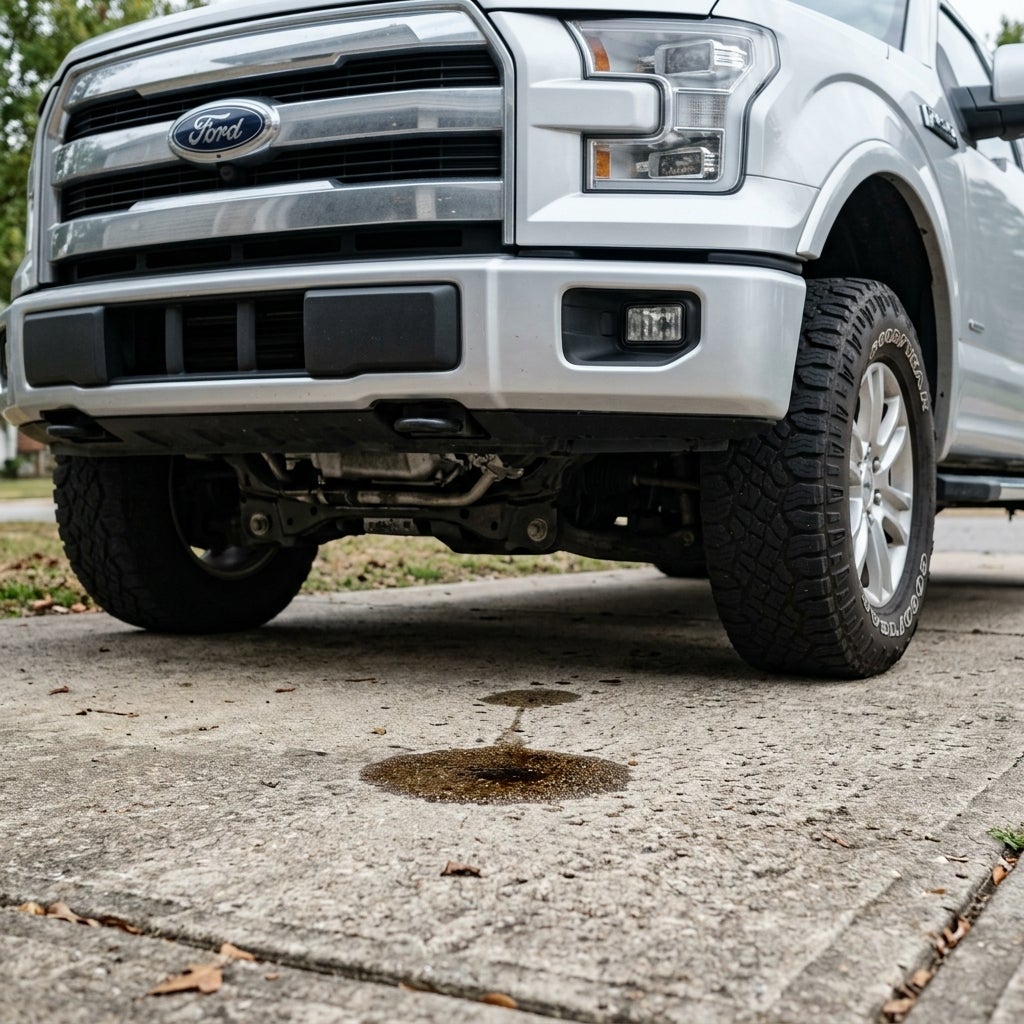
One of the most noticeable indicators of an oil leak is finding dark, oily spots or puddles where you typically park your vehicle. These drips often appear under the engine area but can occasionally be found toward the rear depending on where the leak originates. For residents in places like Canfield or Poland, where long commutes are common, checking your driveway or parking spot for these stains can save you from expensive repairs down the line.

Matt emphasizes that sometimes oil leaks can be less obvious. For instance, you might notice a distinct burning oil smell while driving or after parking your Ford. This smell results from oil dripping onto hot engine components such as the exhaust manifold. Additionally, if you see smoke coming from under the hood or experience the oil pressure warning light illuminating on your dashboard, these are urgent signs that require immediate attention to prevent engine damage.

It’s important to monitor your oil levels regularly, especially if you suspect a leak. Using the dipstick to check oil quantity can help detect a leak before it worsens. Matt advises drivers in nearby communities like Austintown Township and Lowellville to keep a close eye on their oil levels during routine stops or before longer trips.

If you suspect an oil leak, the best course of action is to schedule a thorough inspection with certified technicians who specialize in Ford vehicles. At Tri State Ford, our service team uses genuine Ford parts and follows manufacturer guidelines to diagnose the exact source of the leak. This process typically involves a detailed visual inspection and may include cleaning the engine bay to track fresh leaks or using specialized UV dyes to pinpoint the problem area.

Addressing oil leaks promptly not only protects your engine but also helps maintain the overall performance and longevity of your Ford. Whether it’s a worn gasket, a loose oil pan bolt, or a failing seal, expert repair ensures your vehicle stays on the road safely and efficiently.

For Ford owners in East Liverpool and surrounding areas, trusting the expertise of a local dealership’s service department means you benefit from transparent pricing, honest communication, and quality workmanship. If you notice any signs of leaking oil or want a routine check, don’t hesitate to reach out to us at Tri State Ford. You can easily call us at (330) 462-7578 or get directions to our service center for expert care tailored to your Ford truck or SUV.

By staying attentive to these early warning signs and working with knowledgeable professionals, drivers can avoid costly engine damage andkeep your Ford running smoothly for years to come.

Table of Contents

How can I tell if a small oil leak in my Ford needs urgent repair?

That’s an important question that many Ford owners ask. Even a minor oil leak can escalate into a serious issue if left unchecked, but not every small drip calls for immediate emergency repair. The key is to monitor the condition carefully and understand the risks involved.

Small oil leaks often develop due to aging seals or gaskets, but they don't always lead to immediate engine failure. If the leak is minor and the oil level remains stable, you may have some time before urgent repairs are necessary. However, you should never ignore the leak or delay routine maintenance checks. Regularly inspecting your oil level using the dipstick is crucial, especially if you’re commuting daily through areas like Calcutta or Poland, where temperatures and driving conditions can affect your engine’s performance.

If you notice that the leak causes oil spots on the ground or a burning oil smell from the engine bay, these are signs that the leak is worsening and could soon damage engine components. In such cases, prompt professional service at a trusted facility like Tri State Ford is essential to prevent costly repairs later. For those considering vehicle options, exploring our Truck Inventory might be a good step.

Driving with even a small leak requires vigilance. Consistently topping off the oil is a temporary measure, but the goal should be a thorough inspection and repair. Ignoring a small leak risks oil starvation, which can impact critical parts like camshaft bearings and timing components. For dependable service on your Ford, including routine checks and repairs, rely on certified technicians who use genuine parts to maintain your vehicle’s longevity and reliability.

What are some common signs of oil leaks while driving, and what should they tell me about my Ford's condition?

Recognizing the symptoms of an oil leak while driving is crucial for protecting your Ford’s engine and ensuring safety on the road. One of the most noticeable signs is a burning oil smell coming from the engine area. This typically occurs when leaking oil drips onto the hot exhaust manifold or other heated components, causing the oil to burn off and emit a distinct odor. Drivers in places like Calcutta, OH, or Boardman, OH, might notice this smell during their daily commutes, especially if the leak has been developing unnoticed.

Another common indication is seeing oil spots or puddles forming beneath your vehicle when parked. However, keep in mind that some leaks only appear when the engine is running, so spotting a small drip on the ground isn’t always a reliable indicator of the leak’s severity. A low oil level warning light on your dashboard is a critical alert; it signals that your engine oil is dropping to unsafe levels, which can lead to severe engine damage if not addressed promptly.

Additionally, if you observe smoke coming from under the hood or notice reduced engine performance, these could be linked to oil leaks affecting engine components. Because an oil leak can impact lubrication, it may cause increased engine wear or overheating. If you drive regularly through areas like East Liverpool, OH, or Poland, OH, where temperatures fluctuate, these symptoms might worsen due to thermal expansion affecting seals and gaskets.

Early detection and professional diagnosis are key. Having your Ford inspected at the first signs of these symptoms helps prevent costly repairs and keeps your vehicle operating reliably. At Tri State Ford, our certified technicians specialize in identifying and repairing oil leaks efficiently, using genuine parts to maintain your Ford’s durability and performance.

What are the most effective repair solutions for oil leaks on 2026 Ford vehicles?

Addressing an oil leak promptly on your 2026 Ford is crucial to preserving engine health and preventing further damage. The repair approach depends on the leak’s source, which our certified technicians at Tri State Ford carefully diagnose through thorough inspections. Common causes include worn gaskets, seals, or oil pan damage, each requiring specific repair techniques tailored to your Ford model.

For many 2026 Ford trucks and SUVs, a typical repair involves replacing the oil pan gasket. This gasket seals the connection between the oil pan and engine block, and over time, it can degrade or fail due to heat and wear. Our service team utilizes genuine Ford parts or trusted aftermarket alternatives like Fel-Pro gaskets, known for their durability and precise fit. Using OEM or high-quality parts ensures a reliable seal that maintains proper oil pressure, vital for your engine’s lubrication system.

In the case of leaks from seals such as the rear main seal, repairs can be more involved. These often require partial engine disassembly to access and replace the faulty seal. At Tri State Ford, our technicians follow the latest Ford Technical Service Bulletins (TSBs), which provide detailed procedures to correctly address these issues, including TSB 24-2331 for rear main seal leaks. This ensures repairs meet Ford’s stringent standards for reliability and safety.

Another effective solution for certain 2026 Ford models, especially those with EcoBoost engines, is upgrading from composite oil pans to cast aluminum versions. Composite pans are prone to warping and leaks over time, while aluminum pans provide a sturdier, longer-lasting seal. This upgrade reduces the chance of recurring leaks and supports your vehicle’s long-term durability, particularly for drivers in Calcutta or Boardman.

Once repairs are completed, our technicians perform comprehensive leak tests to confirm the problem is fully resolved. We also recommend routine maintenance checks to catch any future issues early, helping drivers in Poland or Chester maintain their Ford’s performance. Trusting your oil leak repairs to Tri State Ford means expert care, transparent communication, and genuine parts that keep your vehicle running smoothly and safely on the roads of East Liverpool and surrounding communities.

How can I manage repair costs effectively and choose the right service for my Ford’s oil leak?

That’s an important consideration for every Ford owner. Repair costs for oil leaks can vary widely depending on the source and severity of the leak. For example, replacing an oil pan gasket on a 4x4 F-150 often involves more labor because the front differential must be removed, increasing overall expenses. On the other hand, minor seal repairs might be quicker and less costly.

Choosing a trusted service provider who uses genuine Ford parts is key to ensuring a lasting repair and avoiding repeated visits. At Tri State Ford, our certified technicians specialize in Ford vehicles and follow manufacturer-recommended procedures, so repairs match the quality and durability your vehicle demands. This approach helps prevent future leaks and protects your engine’s longevity.

We recommend scheduling an inspection as soon as you notice signs of an oil leak. Regular maintenance and timely repairs can save you money by avoiding more extensive engine damage. For residents of East Liverpool or Calcutta, our service team is ready to provide transparent estimates and expert care. You can easily schedule your service appointment online or call us at (330) 462-7578. We know your time is valuable, and we’re here to keep your Ford running strong.


© 2026 Tri State Ford. All rights reserved.
Posted in:

Recommended Posts

f

What Does a Flashing Check Engine Light Mean? Insights from Our Service Manager

.hrizn-rte-content .e-rte-image{border:0;max-width:100%;height:auto} .hrizn-rte-content .e-rte-image.e-imginline{display:inline-block;float:none;margin-left:5px;margin-right:5px;max-width:calc(100% - 10px);vertical-align:bottom} .hrizn-rte-content .e-rte-image.e-imgbreak,.hrizn-rte-content .e-rte-image.e-imgcenter{display:block;float:none;margin:5px auto;max-width:100%} .hrizn-rte-content .e-rte-image.e-imgleft{float:left;margin:0 12px 8px 0;max-width:100%} .hrizn-rte-content .e-rte-image.e-imgright{float:right;margin:0 0 8px 12px;max-width:100%} .hrizn-rte-content figure.e-rte-image{margin:8px auto;max-width:100%} .hrizn-rte-content figure.e-imgleft{float:left;margin:0 12px 8px 0} .hrizn-rte-content figure.e-imgright{float:right;margin:0 0 8px 12px} .hrizn-rte-content figure.e-imgcenter{display:block;margin:8px auto;text-align:center} What Does a Flashing Check Engine Light Mean? Insights from Our Service Manager What Does a Flashing Check Engine Light Indicate? A flashing check engine light indicates an active, severe engine misfire occurring right now, allowing unburned fuel to dump directly into your exhaust system. Under SAE J2012 and OBD-II standards, the engine computer blinks the warning lamp when misfire rates reach a threshold high enough to overheat and permanently destroy the catalytic converter within minutes. As the Service Manager at Tri State Ford with a decade of hands-on experience in automotive diagnostics, I see drivers face this issue every month. When your dashboard malfunction indicator lamp flashes rather than staying solid, your vehicle is signaling an immediate mechanical emergency. The computer has detected that one or more cylinders are not firing correctly, which sends raw gasoline down the exhaust stream. When that fuel reaches the extremely hot catalytic converter, it ignites inside the exhaust housing rather than inside the combustion chamber. This secondary combustion rapidly elevates catalytic converter temperatures well past normal operating limits. In severe cases, the internal ceramic honeycombs melt or disintegrate, turning what could have been a straightforward ignition fix into a costly catalytic converter replacement. Drivers navigating the riverfront bluffs and rising terrain around East Liverpool should take this warning seriously, as pulling heavy loads up hills with an active misfire accelerates exhaust system damage. If your light starts blinking while you are on the road, give our team a call at (330) 462-7578 to discuss immediate vehicle care, or find directions to our service center location to bring your vehicle in safely via flatbed tow. Table of Contents Is a Steady Check Engine Light Different From a Flashing Warning? What Causes the Engine Misfire Behind a Flashing Engine Light? Is It Safe to Drive a Short Distance With a Flashing Check Engine Light? How Does an OBD-II Scanner Diagnose Misfire Diagnostic Trouble Codes? How Much Do Professional OBD-II Diagnostic Scans and Repairs Cost? Is a Steady Check Engine Light Different From a Flashing Warning? A steady check engine light signals a non-critical emissions or engine performance fault that requires attention but generally allows you to complete your trip safely. Conversely, a flashing check engine light signifies an ongoing misfire that actively damages vital engine and exhaust hardware every second the vehicle runs. When the warning light remains solid, the onboard computer has logged a diagnostic code for a system operating outside normal tolerances. Common triggers for a steady light include a loose gas cap, a failing oxygen sensor, or a minor leak in the evaporative emissions system. While a steady light should be diagnosed promptly to preserve fuel efficiency and overall engine health, it rarely leaves you stranded on the shoulder or causes sudden catalyst failure. In many instances, the computer initiates a limited operation mode to protect mechanical parts while permitting short-distance driving. A flashing warning light leaves zero room for delay. The constant pulsing pattern—typically blinking once per second—is specifically reserved for conditions that threaten catastrophic hardware breakdown. When drivers ask our service bay about warning lights, I explain that a steady light gives you time to plan a routine diagnostic visit, whereas a flashing light requires shutting off the ignition as soon as you pull into a safe location. Addressing steady lights early by ordering genuine OEM parts like replacement gas caps or sensors helps prevent minor sensor wear from turning into bigger drivability trouble later. What Causes the Engine Misfire Behind a Flashing Engine Light? An engine misfire triggering a flashing check engine light is caused by an interruption in the air, fuel, or spark required for proper cylinder combustion. The primary culprits are worn spark plugs, failed ignition coils, faulty fuel injectors, or a loss of mechanical cylinder compression. In modern engines like the Ford 2.3L EcoBoost inline-four or the 5.0L V8, combustion relies on precise timing. If an ignition coil pack fails or a spark plug gap expands due to wear, the electrical arc fails to ignite the air-fuel mixture inside the cylinder. The unfired fuel mixture is pushed past the exhaust valve during the exhaust stroke. The same outcome occurs when a fuel injector sticks open, flooding the cylinder with excessive fuel, or when a vacuum leak starves a cylinder of proper atmospheric pressure. Worn or fouled spark plugs that fail to produce a strong electrical spark Failed coil-on-plug ignition units that stop delivering high voltage Clogged, leaking, or stuck-open fuel injectors disrupting the fuel charge Mechanical compression loss from burnt valves, damaged piston rings, or head gasket leaks Intake vacuum leaks causing an extreme lean misfire on specific cylinders When raw fuel reaches the exhaust manifold, temperatures can exceed 1,600 degrees Fahrenheit inside the exhaust piping. That thermal spike breaks down the precious metals within the catalyst core. Identifying whether the misfire stems from electrical, fuel delivery, or mechanical causes requires methodical shop testing. Is It Safe to Drive a Short Distance With a Flashing Check Engine Light? Driving even a short distance with a flashing check engine light is unsafe because unburned fuel entering the exhaust manifold can melt the internal structure of your catalytic converter within two to three miles. To prevent compounding repair bills, you should pull over safely, turn off the engine, and arrange emergency vehicle transport. Continuing to drive under heavy engine load or at highway speeds while the light blinks magnifies the mechanical strain. Drivers commuting along Route 170 near Calcutta often experience noticeable engine shaking, sluggish acceleration, or severe power loss when a misfire occurs. Operating a misfiring engine under load causes raw fuel to continuously wash down cylinder walls, diluting protective engine oil and increasing internal friction on crankshaft bearings and cylinder liners. If your dashboard light flashes while driving, reduce your speed immediately, avoid hard acceleration, and find a safe spot off the roadway. For Ford owners, safety coverage includes access to official Ford Roadside Assistance at (800) 241-3673, which provides specialized towing to authorized facilities where factory-trained technicians handle complex powertrain repairs. While our service technicians inspect and repair your vehicle in the bay, customers interested in exploring our current vehicle lineup can consider scheduling a test drive in a new model to experience the latest Ford safety features firsthand. How Does an OBD-II Scanner Diagnose Misfire Diagnostic Trouble Codes? An OBD-II scanner diagnoses a flashing check engine light by plugging directly into the vehicle diagnostic port to retrieve stored numerical trouble codes from the engine control module. These diagnostic codes pinpoint whether misfires are isolated to a single cylinder or spread across multiple combustion chambers. When an engine misfire occurs, the vehicle computer logs specific diagnostic trouble codes categorized as active, pending, or stored. Active codes reflect severe, recurring faults that trigger immediate warning lights, whereas pending codes represent initial detection events awaiting confirmation across secondary drive cycles. Stored codes preserve historical diagnostic information for technician reference. P0300: Indicates a random or multiple cylinder misfire where the computer cannot isolate the issue to a single cylinder P0301 through P0308: Identifies a specific cylinder experiencing a misfire, with the final digit matching the affected cylinder number P0316: Signals that an engine misfire was detected during the first 1,000 engine revolutions after startup While an entry-level handheld scanner identifies the numerical code, professional diagnostic equipment goes much deeper. Advanced tools run live power balance tests, monitor real-time oxygen sensor waveforms, and track fuel trim percentages. This comprehensive data allows a technician to distinguish between an electrical coil breakdown, a clogged fuel injector, or a mechanical valve fault before replacing any components. How Much Do Professional OBD-II Diagnostic Scans and Repairs Cost? A professional OBD-II diagnostic scan typically ranges from $80 to $150, which covers hands-on technician evaluation, electrical pin-point testing, and computerized system analysis. Total repair expenses depend on the underlying cause, ranging from minor ignition parts to extensive catalytic converter replacement. Reading the initial trouble code is only the first step in proper auto service. The diagnostic fee pays for an experienced technician to verify sensor values, check system wiring, conduct smoke tests for vacuum leaks, and perform compression checks. Replacing a single spark plug or ignition coil pack is relatively inexpensive, whereas replacing a damaged catalytic converter ruined by prolonged driving with a flashing light can push repair bills significantly higher. Repair Service Typical Cost Factors Primary Benefit Diagnostic Evaluation Professional technician labor, scanner hookup, pinpoint testing Identifies accurate root cause without guessing Spark Plug & Coil Replacement Number of cylinders, engine access, genuine OEM parts Restores clean ignition spark and engine power Fuel Injector Service Injector cleaning, solenoid testing, unit replacement Ensures correct air-fuel mixture in combustion chamber Catalytic Converter Replacement Direct-fit exhaust assembly, manifold labor, oxygen sensors Restores exhaust flow and vehicle emissions compliance Taking prompt action when your warning light flashes preserves your engine, protects your exhaust hardware, and keeps long-term maintenance costs manageable. If you suspect an engine misfire or need an accurate vehicle diagnostic check, feel free to give our team a quick call, stop by our East Liverpool service center, or secure your spot by scheduling your service appointment online today. © 2026 Tri State Ford. All rights reserved. Title Tags Flashing Check Engine Light Repair in East Liverpool OH | Tri State Ford Meta Description Keywords Open Graph Twitter Card Canonical Article Metadata Geographic Targeting { "@context": "https://schema.org", "@graph": [ { "@type": "NewsArticle", "@id": "#article", "headline": "What Does a Flashing Check Engine Light Mean? Insights from Our Service Manager", "datePublished": "2026-09-11T18:52:41.462Z", "dateModified": "2026-09-11T18:54:12.374Z", "author": { "@id": "#author" }, "publisher": { "@id": "#dealer" }, "wordCount": 1570, "description": "A flashing check engine light indicates a severe engine misfire that can quickly destroy your catalytic converter. Learn what causes this emergency warning." }, { "@type": "AutoDealer", "@id": "#dealer", "name": "Tri State Ford", "url": "https://www.tristateford.net", "telephone": "+13304627578", "sameAs": [ "https://maps.google.com/?cid=1136336406351438323" ], "address": { "@type": "PostalAddress", "streetAddress": "1503 Pennsylvania Ave", "addressLocality": "East Liverpool", "addressRegion": "OH", "postalCode": "43920", "addressCountry": "US" }, "areaServed": { "@type": "GeoCircle", "geoMidpoint": { "@type": "GeoCoordinates", "latitude": "40.6367833", "longitude": "-80.5443033" }, "geoRadius": "48280" }, "geo": { "@type": "GeoCoordinates", "latitude": "40.6367833", "longitude": "-80.5443033" }, "openingHours": [ "Mo 09:00-20:00", "Tu 09:00-18:00", "We 09:00-18:00", "Th 09:00-20:00", "Fr 09:00-18:00", "Sa 09:00-15:00" ] }, { "@type": "FAQPage", "@id": "#faq", "mainEntity": [ { "@type": "Question", "name": "What Does a Flashing Check Engine Light Indicate?", "acceptedAnswer": { "@type": "Answer", "text": "A flashing check engine light indicates an active, severe engine misfire occurring right now, allowing unburned fuel to dump directly into your exhaust system. Under SAE J2012 and OBD-II standards, the engine computer blinks the warning lamp when misfire rates reach a threshold high enough to overheat and permanently destroy the catalytic converter within minutes." } }, { "@type": "Question", "name": "Is a Steady Check Engine Light Different From a Flashing Warning?", "acceptedAnswer": { "@type": "Answer", "text": "A steady check engine light signals a non-critical emissions or engine performance fault that requires attention but generally allows you to complete your trip safely. Conversely, a flashing check engine light signifies an ongoing misfire that actively damages vital engine and exhaust hardware every second the vehicle runs." } }, { "@type": "Question", "name": "What Causes the Engine Misfire Behind a Flashing Engine Light?", "acceptedAnswer": { "@type": "Answer", "text": "An engine misfire triggering a flashing check engine light is caused by an interruption in the air, fuel, or spark required for proper cylinder combustion. The primary culprits are worn spark plugs, failed ignition coils, faulty fuel injectors, or a loss of mechanical cylinder compression." } }, { "@type": "Question", "name": "Is It Safe to Drive a Short Distance With a Flashing Check Engine Light?", "acceptedAnswer": { "@type": "Answer", "text": "Driving even a short distance with a flashing check engine light is unsafe because unburned fuel entering the exhaust manifold can melt the internal structure of your catalytic converter within two to three miles. To prevent compounding repair bills, you should pull over safely, turn off the engine, and arrange emergency vehicle transport." } }, { "@type": "Question", "name": "How Does an OBD-II Scanner Diagnose Misfire Diagnostic Trouble Codes?", "acceptedAnswer": { "@type": "Answer", "text": "An OBD-II scanner diagnoses a flashing check engine light by plugging directly into the vehicle diagnostic port to retrieve stored numerical trouble codes from the engine control module. These diagnostic codes pinpoint whether misfires are isolated to a single cylinder or spread across multiple combustion chambers." } }, { "@type": "Question", "name": "How Much Do Professional OBD-II Diagnostic Scans and Repairs Cost?", "acceptedAnswer": { "@type": "Answer", "text": "A professional OBD-II diagnostic scan typically ranges from $80 to $150, which covers hands-on technician evaluation, electrical pin-point testing, and computerized system analysis. Total repair expenses depend on the underlying cause, ranging from minor ignition parts to extensive catalytic converter replacement." } } ] } ] }

d

Expert Braking Insights: Why Is My Car Making a Grinding Noise When I Brake?

.hrizn-rte-content .e-rte-image{border:0;max-width:100%;height:auto} .hrizn-rte-content .e-rte-image.e-imginline{display:inline-block;float:none;margin-left:5px;margin-right:5px;max-width:calc(100% - 10px);vertical-align:bottom} .hrizn-rte-content .e-rte-image.e-imgbreak,.hrizn-rte-content .e-rte-image.e-imgcenter{display:block;float:none;margin:5px auto;max-width:100%} .hrizn-rte-content .e-rte-image.e-imgleft{float:left;margin:0 12px 8px 0;max-width:100%} .hrizn-rte-content .e-rte-image.e-imgright{float:right;margin:0 0 8px 12px;max-width:100%} .hrizn-rte-content figure.e-rte-image{margin:8px auto;max-width:100%} .hrizn-rte-content figure.e-imgleft{float:left;margin:0 12px 8px 0} .hrizn-rte-content figure.e-imgright{float:right;margin:0 0 8px 12px} .hrizn-rte-content figure.e-imgcenter{display:block;margin:8px auto;text-align:center} Expert Braking Insights: Why Is My Car Making a Grinding Noise When I Brake? A harsh, metallic grinding noise during braking almost always indicates that your brake pad friction material is completely depleted, causing the steel backing plate to scrape directly against the rotor. To explain the mechanical causes, safety risks, and repair expectations behind these sounds, we sat down with Matt Shaw, Service Manager at Tri State Ford, who brings 10 years of specialized automotive service experience to drivers seeking trusted vehicle care. Q: What primary mechanical issues cause a car to make a grinding noise when braking? A: A grinding noise during braking is primarily caused by brake pads wearing down to their steel backing plates, which then scrape directly against the cast-iron rotor surfaces. While friction material depletion accounts for the vast majority of cases, severe grinding can also stem from road debris such as small stones lodged between the dust shield and the rotor, or broken caliper mounting hardware rubbing against rotating components. When you press the brake pedal, the hydraulic caliper clamps the brake pads against the spinning rotor to slow your vehicle. Under normal conditions, friction material made of semi-metallic or organic compounds absorbs that intense contact safely. Once that layer wears past its minimum thickness, the remaining steel backing plate contacts the rotor directly. This steel-on-steel friction creates immediate scoring, severe heat buildup, and a dramatic drop in stopping power. Drivers navigating the rolling elevation changes near State Route 170 in Calcutta frequently notice this sound on downhill descents, where thermal stress accelerates pad wear. In other instances, the noise presents suddenly without prior wear symptoms. A piece of loose gravel caught between the brake rotor and the metal dust shield can produce a piercing rasp or scraping sound that changes with wheel speed rather than pedal pressure. Foreign objects in the caliper assembly or missing anti-rattle clips can also allow components to shift and rub. If you suspect severe pad wear or backing plate contact, you can reach our East Liverpool service center on Pennsylvania Avenue or give our service team a call for a quick diagnostic walk-through and expert advice. Q: Do ceramic brake pads eliminate grinding noises completely? A: Ceramic brake pads virtually eliminate high-frequency squeals and dust-related noise during normal operation, but they cannot eliminate metal-on-metal grinding if the pad wears down to its backing plate. Because ceramic pads still rely on a hard steel backing plate for structural mounting in the caliper, driving on fully depleted friction material will produce the exact same damaging metallic friction against the rotor as semi-metallic pads. The primary benefit of ceramic friction formulations lies in their composition, which uses dense ceramic compounds and embedded copper or synthetic fibers instead of coarse steel strands. This design dampens noise frequencies above human hearing thresholds and generates light-colored dust that does not stick readily to wheels. Under everyday driving conditions, high-grade ceramic pads operate significantly quieter than high-metallic alternatives. However, no friction formulation exempts a braking system from mechanical wear. Once the ceramic layer wears below 2 millimeters, the mechanical wear indicator or the steel plate itself will contact the rotor. Expecting ceramic pads to prevent metal grinding after complete wear is a common misconception. Maintaining quiet, responsive stopping performance requires replacing pads before the friction material disappears, which you can support by ordering genuine OEM brake components tailored specifically to your vehicle specifications. Q: How far can you safely drive on grinding brakes before catastrophic failure occurs? A: You should not drive a vehicle with grinding brakes beyond the few miles required to reach a certified repair facility. Extended driving on worn backing plates can cause caliper pistons to overextend beyond their fluid seals, leading to complete hydraulic fluid loss and sudden brake failure. "When you hear metal grinding against metal, your stopping distance is already compromised and every extra mile risks turning a basic pad service into a complete hydraulic overhaul." Continuing to press steel against cast iron creates extreme localized friction heat. This thermal spike can warp the rotor, crack the friction surfaces, and boil the brake fluid inside the caliper lines. Vaporized fluid creates air pockets in the sealed hydraulic circuit, causing the brake pedal to sink to the floor without generating stopping pressure. Additionally, the intense heat can scorch caliper piston boots, causing rubber seals to melt and leak fluid directly onto the hot disc. If severe grinding occurs unexpectedly while you are far from home or stranded on the road, utilizing Ford Roadside Assistance: 1-800-241-3673 provides towing support directly to a qualified service bay. During emergency vehicle evaluations, technicians perform comprehensive safety checks, including routine electrical and battery checks, to verify that all electronic safety systems function properly before putting the vehicle back on the road. Q: Can severe grinding brakes cause a vehicle to pull to one side while stopping? A: Severe grinding can cause a vehicle to pull toward one side during braking whenever friction levels or hydraulic caliper pressures become unequal across an axle. When one brake pad wears down to its metal backing plate before the opposing side, or if a caliper slide pin seizes due to extreme friction heat, the uneven stopping force pulls the steering wheel toward the side with stronger friction or binding. Unequal wear patterns frequently develop when caliper slide pins lack proper lubrication or when a caliper piston sticks inside its bore. The stuck pad remains pinned against the rotor while driving, grinding away its friction layer at double the normal rate. When you apply the brakes, the side with intact friction material grips effectively, while the metal-on-metal side slides with reduced efficiency. This differential torque creates a noticeable yaw moment that pulls the front end off course. Drivers negotiating steep riverfront bluffs in East Liverpool near the Ohio River often notice this pull immediately on downhill stops, as weight shifts forward and exaggerates axle imbalances. Inspecting caliper slide pins, hardware boots, and hydraulic lines prevents one-sided binding from destroying rotors prematurely. For added convenience when dealing with braking issues at home or work, exploring Ford Mobile Service options allows certified technicians to perform remote maintenance inspections directly in your driveway. Q: Why do new brake pads sometimes squeak after installation, and how does that differ from grinding? A: New brake pads sometimes produce a high-pitched squeak during their initial break-in period due to microscopic surface vibrations, light glazing, or a lack of dampening lubricant behind the backing plate. That high-frequency squeal is fundamentally different from a harsh, low-frequency metal grinding sound, which indicates physical gouging and heavy mechanical contact between steel and rotor iron. During the initial bedding-in phase, new pad material transfers a thin, uniform layer of friction compound onto the smooth rotor surface. Until that transfer layer fully stabilizes across several dozen moderate stops, light vibration frequencies can resonate through the caliper frame as a squeak. Technicians mitigate this sound by applying specialized anti-squeal dampening shims and high-temperature silicone grease to the rear backing contact points during assembly. Grinding, by contrast, is never a normal break-in sound. A grinding noise signifies deep structural gouging, uneven rotor scoring, or severe mechanical interference. If a newly serviced brake system produces a harsh metal-on-metal sound, it typically means an anti-rattle clip was installed improperly or a mounting bolt has loosened. Drivers who prefer seamless maintenance scheduling can take advantage of Ford Pick Up & Delivery service to have their vehicle transported to the shop and returned after a complete inspection. Q: What should drivers expect regarding brake replacement service costs and professional inspections? A: Professional brake service costs vary based on whether you require a simple pad replacement or a full pad-and-rotor overhaul per axle, with routine maintenance costing significantly less than repairing damaged calipers and gouged rotors. A comprehensive brake inspection includes measuring pad thickness in millimeters, evaluating rotor surface variation, checking caliper slide operation, and testing hydraulic fluid condition. When caught early, replacing brake pads on a single axle remains a straightforward, cost-effective maintenance item. However, allowing pads to grind down to their steel backing plates quickly cuts deep grooves into the rotors, making resurfacing impossible and requiring full rotor replacement. In severe cases, extreme heat damages the caliper assembly itself, requiring fluid flushes and new hydraulic hardware that increases total repair expenses. During a professional inspection at our convenient East Liverpool facility, factory-trained technicians measure remaining friction depth against original manufacturer tolerances. Catching wear before metal-on-metal contact protects your rotors and ensures reliable stopping distance. If you hear unexpected braking sounds or want peace of mind before a long trip, (330) 462-7578 is available for quick questions, or you can get started by scheduling your service appointment online today. © 2026 Tri State Ford. All rights reserved. Title Tags Brake Grinding Noise Repair in East Liverpool OH | Tri State Ford Meta Description Keywords Open Graph Twitter Card Canonical Article Metadata Geographic Targeting { "@context": "https://schema.org", "@graph": [ { "@type": "NewsArticle", "@id": "#article", "headline": "Expert Braking Insights: Why Is My Car Making a Grinding Noise When I Brake?", "datePublished": "2026-09-11T18:40:51.880Z", "dateModified": "2026-09-11T18:42:37.227Z", "author": { "@id": "#author" }, "publisher": { "@id": "#dealer" }, "wordCount": 1464, "description": "A grinding noise when braking usually indicates worn brake pads scraping against rotors or trapped debris, reducing stopping power and requiring repair." }, { "@type": "AutoDealer", "@id": "#dealer", "name": "Tri State Ford", "url": "https://www.tristateford.net", "telephone": "+13304627578", "sameAs": [ "https://maps.google.com/?cid=1136336406351438323" ], "address": { "@type": "PostalAddress", "streetAddress": "1503 Pennsylvania Ave", "addressLocality": "East Liverpool", "addressRegion": "OH", "postalCode": "43920", "addressCountry": "US" }, "areaServed": { "@type": "GeoCircle", "geoMidpoint": { "@type": "GeoCoordinates", "latitude": "40.6367833", "longitude": "-80.5443033" }, "geoRadius": "48280" }, "geo": { "@type": "GeoCoordinates", "latitude": "40.6367833", "longitude": "-80.5443033" }, "openingHours": [ "Mo 09:00-20:00", "Tu 09:00-18:00", "We 09:00-18:00", "Th 09:00-20:00", "Fr 09:00-18:00", "Sa 09:00-15:00" ] }, { "@type": "FAQPage", "@id": "#faq", "mainEntity": [ { "@type": "Question", "name": "What primary mechanical issues cause a car to make a grinding noise when braking?", "acceptedAnswer": { "@type": "Answer", "text": "A grinding noise during braking is primarily caused by brake pads wearing down to their steel backing plates, which then scrape directly against the cast-iron rotor surfaces. While friction material depletion accounts for the vast majority of cases, severe grinding can also stem from road debris such as small stones lodged between the dust shield and the rotor, or broken caliper mounting hardware rubbing against rotating components. When you press the brake pedal, the hydraulic caliper clamps the brake pads against the spinning rotor to slow your vehicle. Under normal conditions, friction material made of semi-metallic or organic compounds absorbs that intense contact safely. Once that layer wears past its minimum thickness, the remaining steel backing plate contacts the rotor directly. This steel-on-steel friction creates immediate scoring, severe heat buildup, and a dramatic drop in stopping power. Drivers navigating the rolling elevation changes near State Route 170 in Calcutta frequently notice this sound on downhill descents, where thermal stress accelerates pad wear. In other instances, the noise presents suddenly without prior wear symptoms. A piece of loose gravel caught between the brake rotor and the metal dust shield can produce a piercing rasp or scraping sound that changes with wheel speed rather than pedal pressure. Foreign objects in the caliper assembly or missing anti-rattle clips can also allow components to shift and rub. If you suspect severe pad wear or backing plate contact, you can reach our East Liverpool service center on Pennsylvania Avenue or give our service team a call for a quick diagnostic walk-through and expert advice." } }, { "@type": "Question", "name": "Do ceramic brake pads eliminate grinding noises completely?", "acceptedAnswer": { "@type": "Answer", "text": "Ceramic brake pads virtually eliminate high-frequency squeals and dust-related noise during normal operation, but they cannot eliminate metal-on-metal grinding if the pad wears down to its backing plate. Because ceramic pads still rely on a hard steel backing plate for structural mounting in the caliper, driving on fully depleted friction material will produce the exact same damaging metallic friction against the rotor as semi-metallic pads. The primary benefit of ceramic friction formulations lies in their composition, which uses dense ceramic compounds and embedded copper or synthetic fibers instead of coarse steel strands. This design dampens noise frequencies above human hearing thresholds and generates light-colored dust that does not stick readily to wheels. Under everyday driving conditions, high-grade ceramic pads operate significantly quieter than high-metallic alternatives. However, no friction formulation exempts a braking system from mechanical wear. Once the ceramic layer wears below 2 millimeters, the mechanical wear indicator or the steel plate itself will contact the rotor. Expecting ceramic pads to prevent metal grinding after complete wear is a common misconception. Maintaining quiet, responsive stopping performance requires replacing pads before the friction material disappears, which you can support by ordering genuine OEM brake components tailored specifically to your vehicle specifications." } }, { "@type": "Question", "name": "How far can you safely drive on grinding brakes before catastrophic failure occurs?", "acceptedAnswer": { "@type": "Answer", "text": "You should not drive a vehicle with grinding brakes beyond the few miles required to reach a certified repair facility. Extended driving on worn backing plates can cause caliper pistons to overextend beyond their fluid seals, leading to complete hydraulic fluid loss and sudden brake failure. > \"When you hear metal grinding against metal, your stopping distance is already compromised and every extra mile risks turning a basic pad service into a complete hydraulic overhaul.\" Continuing to press steel against cast iron creates extreme localized friction heat. This thermal spike can warp the rotor, crack the friction surfaces, and boil the brake fluid inside the caliper lines. Vaporized fluid creates air pockets in the sealed hydraulic circuit, causing the brake pedal to sink to the floor without generating stopping pressure. Additionally, the intense heat can scorch caliper piston boots, causing rubber seals to melt and leak fluid directly onto the hot disc. If severe grinding occurs unexpectedly while you are far from home or stranded on the road, utilizing Ford Roadside Assistance: 1-800-241-3673 provides towing support directly to a qualified service bay. During emergency vehicle evaluations, technicians perform comprehensive safety checks, including routine electrical and battery checks , to verify that all electronic safety systems function properly before putting the vehicle back on the road." } }, { "@type": "Question", "name": "Can severe grinding brakes cause a vehicle to pull to one side while stopping?", "acceptedAnswer": { "@type": "Answer", "text": "Severe grinding can cause a vehicle to pull toward one side during braking whenever friction levels or hydraulic caliper pressures become unequal across an axle. When one brake pad wears down to its metal backing plate before the opposing side, or if a caliper slide pin seizes due to extreme friction heat, the uneven stopping force pulls the steering wheel toward the side with stronger friction or binding. Unequal wear patterns frequently develop when caliper slide pins lack proper lubrication or when a caliper piston sticks inside its bore. The stuck pad remains pinned against the rotor while driving, grinding away its friction layer at double the normal rate. When you apply the brakes, the side with intact friction material grips effectively, while the metal-on-metal side slides with reduced efficiency. This differential torque creates a noticeable yaw moment that pulls the front end off course. Drivers negotiating steep riverfront bluffs in East Liverpool near the Ohio River often notice this pull immediately on downhill stops, as weight shifts forward and exaggerates axle imbalances. Inspecting caliper slide pins, hardware boots, and hydraulic lines prevents one-sided binding from destroying rotors prematurely. For added convenience when dealing with braking issues at home or work, exploring Ford Mobile Service options allows certified technicians to perform remote maintenance inspections directly in your driveway." } }, { "@type": "Question", "name": "Why do new brake pads sometimes squeak after installation, and how does that differ from grinding?", "acceptedAnswer": { "@type": "Answer", "text": "New brake pads sometimes produce a high-pitched squeak during their initial break-in period due to microscopic surface vibrations, light glazing, or a lack of dampening lubricant behind the backing plate. That high-frequency squeal is fundamentally different from a harsh, low-frequency metal grinding sound, which indicates physical gouging and heavy mechanical contact between steel and rotor iron. During the initial bedding-in phase, new pad material transfers a thin, uniform layer of friction compound onto the smooth rotor surface. Until that transfer layer fully stabilizes across several dozen moderate stops, light vibration frequencies can resonate through the caliper frame as a squeak. Technicians mitigate this sound by applying specialized anti-squeal dampening shims and high-temperature silicone grease to the rear backing contact points during assembly. Grinding, by contrast, is never a normal break-in sound. A grinding noise signifies deep structural gouging, uneven rotor scoring, or severe mechanical interference. If a newly serviced brake system produces a harsh metal-on-metal sound, it typically means an anti-rattle clip was installed improperly or a mounting bolt has loosened. Drivers who prefer seamless maintenance scheduling can take advantage of Ford Pick Up & Delivery service to have their vehicle transported to the shop and returned after a complete inspection." } }, { "@type": "Question", "name": "What should drivers expect regarding brake replacement service costs and professional inspections?", "acceptedAnswer": { "@type": "Answer", "text": "Professional brake service costs vary based on whether you require a simple pad replacement or a full pad-and-rotor overhaul per axle, with routine maintenance costing significantly less than repairing damaged calipers and gouged rotors. A comprehensive brake inspection includes measuring pad thickness in millimeters, evaluating rotor surface variation, checking caliper slide operation, and testing hydraulic fluid condition. When caught early, replacing brake pads on a single axle remains a straightforward, cost-effective maintenance item. However, allowing pads to grind down to their steel backing plates quickly cuts deep grooves into the rotors, making resurfacing impossible and requiring full rotor replacement. In severe cases, extreme heat damages the caliper assembly itself, requiring fluid flushes and new hydraulic hardware that increases total repair expenses. During a professional inspection at our convenient East Liverpool facility , factory-trained technicians measure remaining friction depth against original manufacturer tolerances. Catching wear before metal-on-metal contact protects your rotors and ensures reliable stopping distance. If you hear unexpected braking sounds or want peace of mind before a long trip, (330) 462-7578 is available for quick questions, or you can get started by scheduling your service appointment online today. --- © 2026 Tri State Ford. All rights reserved." } } ] } ] }

d

Valuing Your Trade-In: Expert Advice with Tri State Ford

.hrizn-rte-content .e-rte-image{border:0;max-width:100%;height:auto} .hrizn-rte-content .e-rte-image.e-imginline{display:inline-block;float:none;margin-left:5px;margin-right:5px;max-width:calc(100% - 10px);vertical-align:bottom} .hrizn-rte-content .e-rte-image.e-imgbreak,.hrizn-rte-content .e-rte-image.e-imgcenter{display:block;float:none;margin:5px auto;max-width:100%} .hrizn-rte-content .e-rte-image.e-imgleft{float:left;margin:0 12px 8px 0;max-width:100%} .hrizn-rte-content .e-rte-image.e-imgright{float:right;margin:0 0 8px 12px;max-width:100%} .hrizn-rte-content figure.e-rte-image{margin:8px auto;max-width:100%} .hrizn-rte-content figure.e-imgleft{float:left;margin:0 12px 8px 0} .hrizn-rte-content figure.e-imgright{float:right;margin:0 0 8px 12px} .hrizn-rte-content figure.e-imgcenter{display:block;margin:8px auto;text-align:center} Valuing Your Trade-In: Expert Advice with Tri State Ford Finding the true value of your trade-in involves pairing estimates from online valuation tools with an in-person appraisal at a dealership to account for mechanical condition, wear and tear, and regional market demand. Today, we are speaking with Nick Pirl, Sales Manager at Tri State Ford with 9 years of automotive experience, who shares expert advice on how to evaluate your vehicle, navigate trade-in estimates, and maximize your vehicle's overall trade-in credit. Q: How do I find the value of my trade-in? A: You can find the value of your trade-in by gathering preliminary market ranges from online valuation tools and pairing them with a professional physical appraisal at a local dealership. Online estimators establish a helpful baseline, but an on-site inspection evaluates your vehicle's specific mechanical condition, overall cosmetic appearance, local buyer demand, and current wholesale market trends. Combining digital research with an expert physical evaluation ensures you receive an accurate and competitive offer for your vehicle. When local drivers visit our showroom at 1503 Pennsylvania Ave, Nick Pirl walks them through the appraisal process step by step. Dealerships calculate trade-in allowances by reviewing recent transaction data from wholesale auctions and regional market sales, then subtracting estimated reconditioning expenses such as tire replacements, detailing, or mechanical touch-ups. If you want to discuss your vehicle before traveling to the lot, giving our sales specialists a quick call helps you gather initial insights into your car's market standing. Commuters traveling daily along the Ohio River around East Liverpool frequently ask whether an online valuation guarantees a final offer price. Digital software provides a solid starting point, but it cannot assess transmission smoothness, brake condition, or paint finish. A brief hands-on examination by an experienced appraiser is required to confirm a final offer or trade-in credit toward a new Ford model. Q: How do I calculate the trade-in value of my car using online tools? A: Calculating your car's trade-in value online requires entering your exact vehicle identification number or license plate, precise mileage, trim details, and an honest assessment of its current condition into a market valuation tool. Online calculators reference extensive databases of recent sales, auction results, and regional supply figures to generate an estimated price range. Providing complete details regarding minor scratches, interior wear, or accident history delivers the most accurate baseline estimate. Nick notes that accuracy depends heavily on selecting the correct condition category when inputting your vehicle's information. Most vehicle owners naturally tend to rate their vehicle in excellent condition, but only a small fraction of pre-owned vehicles truly meet that strict standard without needing reconditioning. When you utilize our online tool to value your trade-in, selecting the good or fair tier if your car shows standard daily wear keeps your expectations closely aligned with the final written offer. Drivers residing in suburban neighborhoods throughout Calcutta who travel along State Route 170 know that maintaining consistent service records and keeping interior surfaces clean supports vehicle value over time. If you want to see how clean, well-maintained vehicles are priced on the market, you can explore our pre-owned single-owner vehicle inventory to see how single-owner history and documented maintenance protect overall vehicle equity. Q: What factors affect my vehicle's trade-in value the most? A: Total mileage, mechanical health, body condition, vehicle history reports, and current regional demand affect your trade-in value more than any other factors. Crossing notable mileage thresholds, such as every 10,000 miles or major markers like 60,000 and 100,000 miles, creates noticeable adjustments in wholesale valuation due to upcoming maintenance schedules. Furthermore, documented damage on a vehicle history report or unaddressed mechanical issues directly lowers what an appraiser can offer. "An appraiser looks past a morning car wash to evaluate structural integrity, tire tread, service records, and true market demand." According to Nick, popular factory options like four-wheel drive systems, advanced driver-assist features, and spacious seating configurations consistently boost trade-in values for trucks and family SUVs. Presenting complete service documentation reassures appraisers that key mechanical systems, brakes, and engine components have been maintained according to manufacturer specifications. Conversely, non-factory modifications like aftermarket exhaust systems or custom suspension lifts tend to reduce trade-in value because they restrict resale appeal. If you are planning to trade in your current vehicle to lower your payments on a new Ford, reviewing current factory incentive offers can increase your overall savings. Shoppers looking for a specific trim level, paint color, or equipment group can also use our custom factory order portal to configure their ideal vehicle while applying trade-in credit directly to the build. Additionally, those seeking certified quality with warranty protection can browse our certified pre-owned Ford lineup to evaluate how certified models preserve long-term value. Q: How does the trade-in sales tax credit work on a new purchase? A: A trade-in sales tax credit reduces your state sales tax obligation by subtracting your trade-in vehicle's agreed value from the purchase price of the new vehicle before sales tax is calculated. In states where this tax benefit applies, you only pay sales tax on the net price difference rather than the full purchase price of the new automobile. This financial mechanism creates significant savings that help close the gap between trade-in offers and private sale prices. Nick explains that this tax structure offers immediate financial relief that many buyers forget to include in their budget comparisons. For instance, if you receive a trade-in allowance toward a new vehicle, that amount is deducted from the taxable total, saving you money on state sales tax out of pocket. As you view our current new Ford inventory, factoring in this tax reduction helps lower your total financed amount and overall interest charges. To see how your trade-in credit and tax savings shape your overall monthly financing structure, you can submit a secure online credit application prior to visiting the dealership. Business owners and commercial drivers seeking to upgrade their work fleet can also leverage these tax benefits by reviewing our F-Series commercial work truck selection to optimize business expenses and vehicle performance. Q: What is the difference between Kelley Blue Book and Edmunds trade-in values? A: The primary difference between Kelley Blue Book and Edmunds comes down to their data inputs and proprietary pricing models. Kelley Blue Book places heavy emphasis on wholesale dealer auction results, regional dealer transaction data, and consumer sales trends across localized geographic markets. Edmunds uses a distinct algorithm that factors in active retail dealer inventory, regional supply and demand ratios, and historic consumer buying patterns to establish estimated values. Nick points out that because these two platforms weight market variables differently, their trade-in estimates for the exact same vehicle can vary by several hundred dollars. KBB values tend to shift quickly based on auction trends, whereas Edmunds values often reflect broader retail market availability and dealer supply. Understanding these operational differences allows consumers to view online pricing guides as helpful references rather than non-negotiable prices. When buyers bring in figures from multiple valuation websites, Nick recommends using the overlapping price range as a realistic target. An appraiser will ultimately evaluate your car against live market condition reports and current local inventory demand. Utilizing both online resources provides realistic expectations, but the finalized offer rests on a physical walk-around and real-time wholesale demand. Q: How do negative equity and existing car loans affect a trade-in? A: Trading in a car with an existing balance requires paying off the loan, and if the vehicle's trade-in value is less than the loan payoff, the remaining balance is called negative equity. Dealerships assist buyers by paying off the original lender directly and rolling the negative equity balance into the new vehicle loan, subject to lender approval. While this allows you to complete your trade-in without paying cash upfront, it increases the total principal and monthly payment on your new loan. Nick advises drivers with negative equity to review their financing options carefully before finalizing a transaction. If you owe more than your vehicle's current market worth, applying a cash down payment or selecting a new model with substantial factory rebates can help absorb the balance and keep your loan-to-value ratio healthy. Paying down your current loan balance prior to trading in is often a smart financial step if you are not facing an immediate need to swap vehicles. When you are ready to review your vehicle's trade-in potential and discuss your financing options in person, you can access interactive directions to our dealership location. Our sales and finance specialists are here to provide clear, transparent advice on trade-in appraisals, payoff balances, and payment terms. If you want to review your trade-in scenarios before visiting, feel free to give our team a direct phone call today. Keep Your Vehicle Running Strong Keep your vehicle performing at its best with our service team: Order Parts Schedule Service Appt © 2026 Tri State Ford. All rights reserved. Title Tags Trade-In Vehicle Valuation in East Liverpool OH | Tri State Ford Meta Description Keywords Open Graph Twitter Card Canonical Article Metadata Geographic Targeting { "@context": "https://schema.org", "@graph": [ { "@type": "NewsArticle", "@id": "#article", "headline": "Valuing Your Trade-In: Expert Advice with Tri State Ford", "datePublished": "2026-09-11T18:28:01.635Z", "dateModified": "2026-09-11T18:29:38.602Z", "author": { "@id": "#author" }, "publisher": { "@id": "#dealer" }, "wordCount": 1490, "description": "Learn how to accurately value your trade-in by combining online estimates with an in-person dealership appraisal to maximize your vehicle's credit." }, { "@type": "AutoDealer", "@id": "#dealer", "name": "Tri State Ford", "url": "https://www.tristateford.net", "telephone": "+13304627578", "sameAs": [ "https://maps.google.com/?cid=1136336406351438323" ], "address": { "@type": "PostalAddress", "streetAddress": "1503 Pennsylvania Ave", "addressLocality": "East Liverpool", "addressRegion": "OH", "postalCode": "43920", "addressCountry": "US" }, "areaServed": { "@type": "GeoCircle", "geoMidpoint": { "@type": "GeoCoordinates", "latitude": "40.6367833", "longitude": "-80.5443033" }, "geoRadius": "48280" }, "geo": { "@type": "GeoCoordinates", "latitude": "40.6367833", "longitude": "-80.5443033" }, "openingHours": [ "Mo 09:00-20:00", "Tu 09:00-18:00", "We 09:00-18:00", "Th 09:00-20:00", "Fr 09:00-18:00", "Sa 09:00-15:00" ] }, { "@type": "FAQPage", "@id": "#faq", "mainEntity": [ { "@type": "Question", "name": "How do I find the value of my trade-in?", "acceptedAnswer": { "@type": "Answer", "text": "You can find the value of your trade-in by gathering preliminary market ranges from online valuation tools and pairing them with a professional physical appraisal at a local dealership. Online estimators establish a helpful baseline, but an on-site inspection evaluates your vehicle's specific mechanical condition, overall cosmetic appearance, local buyer demand, and current wholesale market trends. Combining digital research with an expert physical evaluation ensures you receive an accurate and competitive offer for your vehicle. When local drivers visit our showroom at 1503 Pennsylvania Ave , Nick Pirl walks them through the appraisal process step by step. Dealerships calculate trade-in allowances by reviewing recent transaction data from wholesale auctions and regional market sales, then subtracting estimated reconditioning expenses such as tire replacements, detailing, or mechanical touch-ups. If you want to discuss your vehicle before traveling to the lot, giving our sales specialists a quick call helps you gather initial insights into your car's market standing. Commuters traveling daily along the Ohio River around East Liverpool frequently ask whether an online valuation guarantees a final offer price. Digital software provides a solid starting point, but it cannot assess transmission smoothness, brake condition, or paint finish. A brief hands-on examination by an experienced appraiser is required to confirm a final offer or trade-in credit toward a new Ford model." } }, { "@type": "Question", "name": "How do I calculate the trade-in value of my car using online tools?", "acceptedAnswer": { "@type": "Answer", "text": "Calculating your car's trade-in value online requires entering your exact vehicle identification number or license plate, precise mileage, trim details, and an honest assessment of its current condition into a market valuation tool. Online calculators reference extensive databases of recent sales, auction results, and regional supply figures to generate an estimated price range. Providing complete details regarding minor scratches, interior wear, or accident history delivers the most accurate baseline estimate. Nick notes that accuracy depends heavily on selecting the correct condition category when inputting your vehicle's information. Most vehicle owners naturally tend to rate their vehicle in excellent condition, but only a small fraction of pre-owned vehicles truly meet that strict standard without needing reconditioning. When you utilize our online tool to value your trade-in , selecting the good or fair tier if your car shows standard daily wear keeps your expectations closely aligned with the final written offer. Drivers residing in suburban neighborhoods throughout Calcutta who travel along State Route 170 know that maintaining consistent service records and keeping interior surfaces clean supports vehicle value over time. If you want to see how clean, well-maintained vehicles are priced on the market, you can explore our pre-owned single-owner vehicle inventory to see how single-owner history and documented maintenance protect overall vehicle equity." } }, { "@type": "Question", "name": "What factors affect my vehicle's trade-in value the most?", "acceptedAnswer": { "@type": "Answer", "text": "Total mileage, mechanical health, body condition, vehicle history reports, and current regional demand affect your trade-in value more than any other factors. Crossing notable mileage thresholds, such as every 10,000 miles or major markers like 60,000 and 100,000 miles, creates noticeable adjustments in wholesale valuation due to upcoming maintenance schedules. Furthermore, documented damage on a vehicle history report or unaddressed mechanical issues directly lowers what an appraiser can offer. > \"An appraiser looks past a morning car wash to evaluate structural integrity, tire tread, service records, and true market demand.\" According to Nick, popular factory options like four-wheel drive systems, advanced driver-assist features , and spacious seating configurations consistently boost trade-in values for trucks and family SUVs. Presenting complete service documentation reassures appraisers that key mechanical systems, brakes, and engine components have been maintained according to manufacturer specifications. Conversely, non-factory modifications like aftermarket exhaust systems or custom suspension lifts tend to reduce trade-in value because they restrict resale appeal. If you are planning to trade in your current vehicle to lower your payments on a new Ford, reviewing current factory incentive offers can increase your overall savings. Shoppers looking for a specific trim level, paint color, or equipment group can also use our custom factory order portal to configure their ideal vehicle while applying trade-in credit directly to the build. Additionally, those seeking certified quality with warranty protection can browse our certified pre-owned Ford lineup to evaluate how certified models preserve long-term value." } }, { "@type": "Question", "name": "How does the trade-in sales tax credit work on a new purchase?", "acceptedAnswer": { "@type": "Answer", "text": "A trade-in sales tax credit reduces your state sales tax obligation by subtracting your trade-in vehicle's agreed value from the purchase price of the new vehicle before sales tax is calculated. In states where this tax benefit applies, you only pay sales tax on the net price difference rather than the full purchase price of the new automobile. This financial mechanism creates significant savings that help close the gap between trade-in offers and private sale prices. Nick explains that this tax structure offers immediate financial relief that many buyers forget to include in their budget comparisons. For instance, if you receive a $15,000 trade-in allowance toward a new vehicle, that $15,000 is deducted from the taxable total, saving you money on state sales tax out of pocket. As you view our current new Ford inventory , factoring in this tax reduction helps lower your total financed amount and overall interest charges. To see how your trade-in credit and tax savings shape your overall monthly financing structure, you can submit a secure online credit application prior to visiting the dealership. Business owners and commercial drivers seeking to upgrade their work fleet can also leverage these tax benefits by reviewing our F-Series commercial work truck selection to optimize business expenses and vehicle performance." } }, { "@type": "Question", "name": "What is the difference between Kelley Blue Book and Edmunds trade-in values?", "acceptedAnswer": { "@type": "Answer", "text": "The primary difference between Kelley Blue Book and Edmunds comes down to their data inputs and proprietary pricing models. Kelley Blue Book places heavy emphasis on wholesale dealer auction results, regional dealer transaction data, and consumer sales trends across localized geographic markets. Edmunds uses a distinct algorithm that factors in active retail dealer inventory, regional supply and demand ratios, and historic consumer buying patterns to establish estimated values. Nick points out that because these two platforms weight market variables differently, their trade-in estimates for the exact same vehicle can vary by several hundred dollars. KBB values tend to shift quickly based on auction trends, whereas Edmunds values often reflect broader retail market availability and dealer supply. Understanding these operational differences allows consumers to view online pricing guides as helpful references rather than non-negotiable prices. When buyers bring in figures from multiple valuation websites, Nick recommends using the overlapping price range as a realistic target. An appraiser will ultimately evaluate your car against live market condition reports and current local inventory demand. Utilizing both online resources provides realistic expectations, but the finalized offer rests on a physical walk-around and real-time wholesale demand." } }, { "@type": "Question", "name": "How do negative equity and existing car loans affect a trade-in?", "acceptedAnswer": { "@type": "Answer", "text": "Trading in a car with an existing balance requires paying off the loan, and if the vehicle's trade-in value is less than the loan payoff, the remaining balance is called negative equity. Dealerships assist buyers by paying off the original lender directly and rolling the negative equity balance into the new vehicle loan, subject to lender approval. While this allows you to complete your trade-in without paying cash upfront, it increases the total principal and monthly payment on your new loan. Nick advises drivers with negative equity to review their financing options carefully before finalizing a transaction. If you owe more than your vehicle's current market worth, applying a cash down payment or selecting a new model with substantial factory rebates can help absorb the balance and keep your loan-to-value ratio healthy. Paying down your current loan balance prior to trading in is often a smart financial step if you are not facing an immediate need to swap vehicles. When you are ready to review your vehicle's trade-in potential and discuss your financing options in person, you can access interactive directions to our dealership location . Our sales and finance specialists are here to provide clear, transparent advice on trade-in appraisals, payoff balances, and payment terms. If you want to review your trade-in scenarios before visiting, feel free to give our team a direct phone call today." } } ] } ] }