
Expert Interview: Why Matt Shaw Recommends Replacing Brake Pads and Rotors Together
Today, we're interviewing Matt Shaw, our Service Manager at Tri State Ford. With 10 years of experience in the automotive industry, Matt is uniquely qualified to answer your questions and provide expert insights on the critical relationship between brake pads and rotors. In this interview, readers will learn the technical reasons behind combined brake service, how to identify rotor wear, and why following manufacturer maintenance schedules is essential for family safety on the road.
Q: Matt, why is it so important to view brake pads and rotors as a single system rather than separate parts?
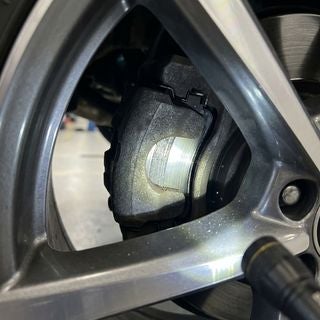
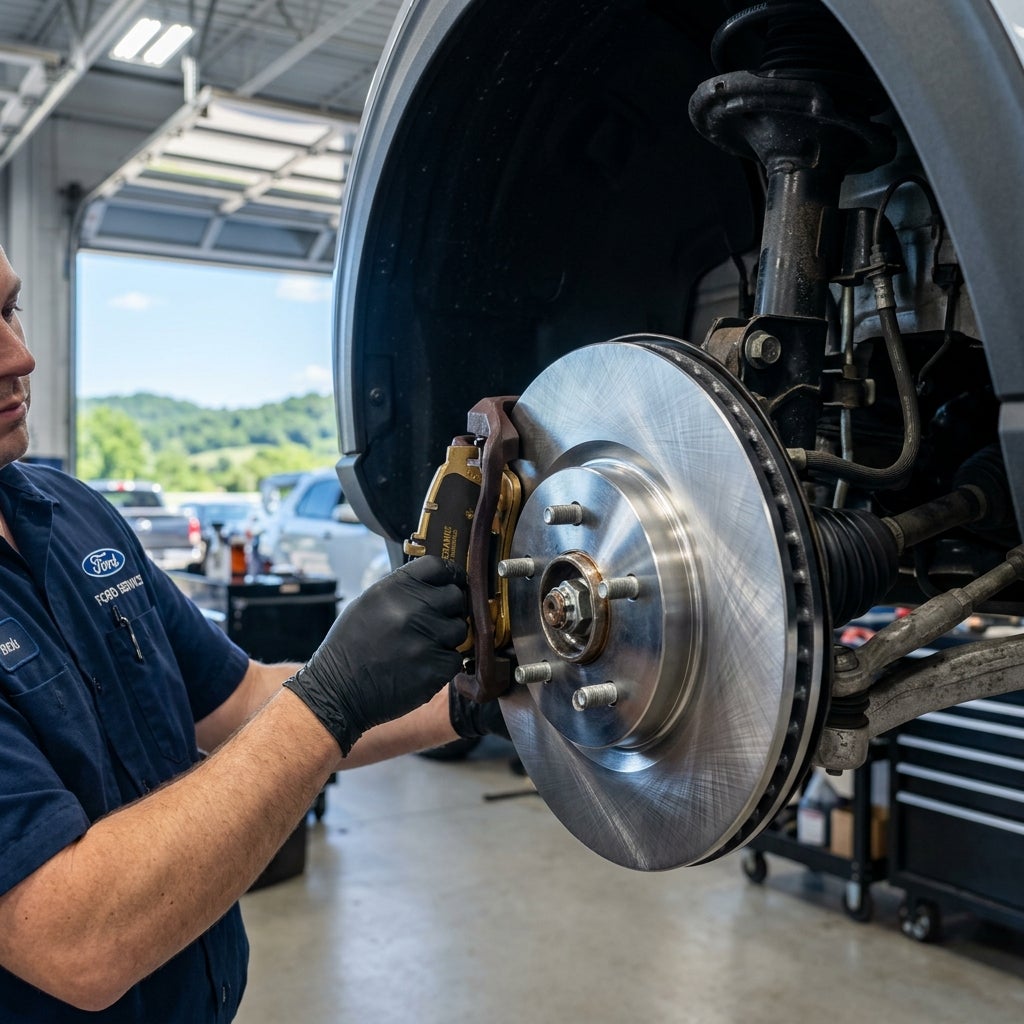
<p><strong>A:</strong> When you are driving through the rolling hills around Calcutta, your braking system is dealing with a massive amount of kinetic energy that has to be converted into heat. The relationship between the pad and the rotor is what we call a friction pair. The **disc brake rotors** provide a smooth, flat surface for the pads to grab onto. According to Ford maintenance guidelines, these components should be inspected at least every **10,000 miles** or once a year. When I walk a customer through a repair, I explain that if the rotor surface isn't perfectly true, the new pads won't be able to make full contact, which significantly reduces your stopping power.</p>
<p><strong>A:</strong> Most people don't realize that rotors are designed to wear down just like the pads do, although usually at a slower rate. Because they are made to dissipate heat, they undergo thousands of heat cycles that can eventually lead to warping or "thinning" of the metal. If you are noticing any noise or a change in how the pedal feels, I suggest <a href="/serviceappmt.aspx">booking a maintenance visit</a> as soon as possible. Our team at <a href="https://www.google.com/maps/search/?api=1&query=1503%20Pennsylvania%20Ave%2C%20East%20Liverpool%2C%20OH%2043920&query_place_id=ChIJSf5vV6cWNIgR8-Hr5fATxQ8" target="_blank"> our East Liverpool service center</a> has the specialized equipment to check if your friction pair is still within safe operating limits. If you have immediate concerns about a grinding sound, feel free to give us <a href="tel:+13304627578">(330) 462-7578</a> a quick call for advice.</p>
Q: What are the actual risks if a driver decides to only replace the pads while keeping their old, worn rotors?
<p><strong>A:</strong> One of the most common issues I see when someone skips the rotors is a condition called "glazing." Old rotors often have microscopic grooves, heat spots, or a layer of old friction material baked onto them. When you slap new pads onto that uneven surface, the pads only touch the high spots at first. This creates extreme localized heat that can harden the pad material, leading to a loud squealing noise and a much longer stopping distance. For those operating heavy equipment or a vehicle from <a href="https://tristateford.worktrucksolutions.com/?filters=Chassis.Condition:New" target="_blank"> our used work vehicle selection</a>, that loss of performance can be a major safety liability under load.</p>
<p><strong>A:</strong> Beyond the noise, you'll often feel a **brake pulsation** or vibration in the steering wheel. This happens because the new pads are fighting against the "run-out" or wobble of the old rotor. Over time, this vibration can actually damage other suspension components like your wheel bearings or tie rods. To avoid these headaches, we always recommend <a href="/orderparts.aspx">ordering genuine Ford components</a> that are specifically engineered to work together. We also understand that unexpected repairs can be a stretch for some budgets, which is why we offer <a href="/finance.aspx">service financing options</a> to ensure you don't have to compromise on your family's safety just to maintain your family's safety.</p>
Q: Is it reasonable for a customer to ask to see the actual measurements of their rotors before agreeing to a replacement?
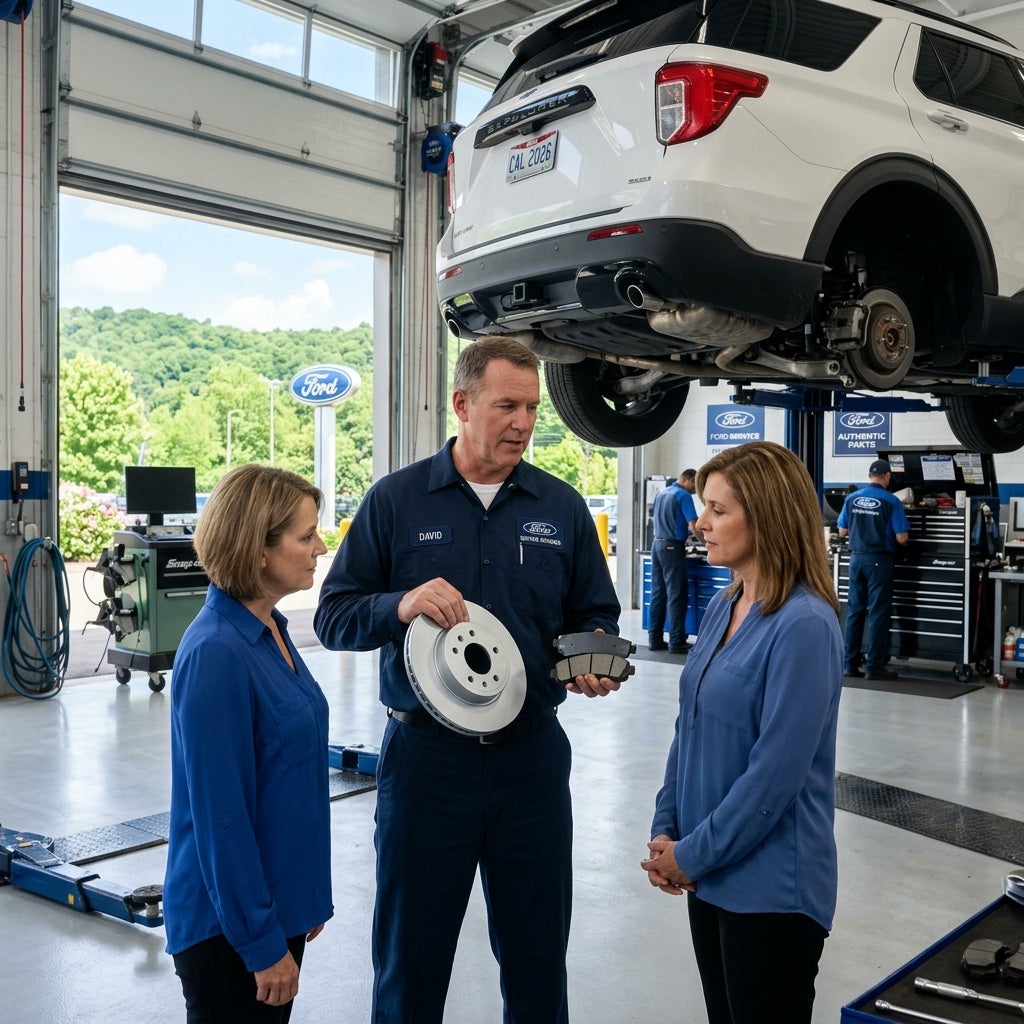
<p><strong>A:</strong> It is absolutely reasonable, and I actually encourage it because it builds trust. Every rotor has a specific **minimum brake rotor thickness** that is cast or stamped right onto the part itself, often labeled as **MIN TH**. We use precision micrometers to measure this thickness in several spots. If the measurement is at or below that limit, the rotor can no longer safely dissipate heat and is at risk of cracking or failing under stress. When I show these readings to a customer, it makes the decision much clearer because it's based on hard data from the Ford workshop manuals rather than just a visual guess.</p>
<blockquote>"After ten years in the shop, the most important thing I've learned is that a micrometer measurement doesn't lie about your safety."</blockquote>
<p><strong>A:</strong> We also check for deep scoring and "blueing," which indicates the metal has been overheated to the point of changing its molecular structure. While some rotors can be resurfaced if they have enough "meat" left on them, modern rotors are often built thinner to save weight and improve fuel economy, leaving less room for machining. You can often find <a href="/manufacturer-service-specials.html">monthly service offers</a> that make a full replacement more affordable than you might think. For those who can't make it into the shop, our <a href="/mobileservice">Ford Mobile Service</a> can often perform these inspections right in your driveway. While we're looking at the brakes, we can even handle other tasks like <a href="/battery-service-advice.html">battery health checks</a> to keep your whole vehicle in top shape.</p>
Q: How do driving habits in our local area, like commuting through East Liverpool, affect the lifespan of these parts?
<p><strong>A:</strong> Driving in a riverfront city like East Liverpool means you're dealing with a mix of stop-and-go city traffic and the steep grades coming off the bluffs. This is particularly hard on SUVs and trucks. Heavy vehicles generate significantly more heat during braking, which can accelerate the wear on both the pads and the rotors. While standard brake pads might last anywhere from **25,000 to 65,000 miles**, that range drops quickly if you're frequently navigating the hills with a full load of passengers or gear for the riverfront trails.</p>
<p><strong>A:</strong> For owners who use their vehicles for more than just a commute, such as those who rely on our <a href="https://tristateford.worktrucksolutions.com/?filters=Chassis.Condition:New" target="_blank"> new commercial inventory</a>, the stakes are even higher. Frequent hauling causes the rotors to go through more intense heat cycles, which is the primary cause of warping. If you're in the market for a vehicle that can handle this kind of stress, you might look at our <a href="/searchnew.aspx?BodyType=Truck%20-%20Crew%20Cab,Truck%20-%20Extended%20Cab,Truck%20-%20Regular%20Cab"> available new trucks</a>, which feature heavy-duty braking systems designed for high-demand environments. We also frequently have <a href="/manufacturer-specials.aspx">current manufacturer incentives</a> that can help you move into a more capable vehicle if your current one is struggling with the local terrain.</p>
Q: Does replacing everything at once actually save the customer money in the long run?
<p><strong>A:</strong> It definitely does, primarily because of the labor overlap. To get to the pads, we already have the vehicle on the lift and the wheels off. If we replace the rotors at the same time, you aren't paying for that setup and teardown labor a second time six months down the road. Furthermore, new pads installed on old, rough rotors will wear out much faster—sometimes in half the time of a properly matched set. By doing the job right the first time, you're protecting your investment in those new pads and ensuring you won't be back in the shop for the same axle anytime soon.</p>
<p><strong>A:</strong> We try to make this process as convenient as possible for our busy customers. For instance, <a href="/Ford-pickup-delivery-service.html">Ford Pick Up & Delivery</a> allows us to handle your brake service without you ever having to leave your house or office. This is a great option for someone <a href="/searchnew.aspx?BodyType=Truck%20-%20Crew%20Cab,Truck%20-%20Extended%20Cab,Truck%20-%20Regular%20Cab"> finding your next pickup</a> or even those <a href="/custom-build-price.html">building a custom Ford</a> who want to maintain that factory-new performance for as long as possible. When you consider the extended life of the parts and the saved labor costs, the combined replacement is almost always the more frugal choice over a two-year period.</p>
Q: Matt, what is your advice for someone considering doing their own brake job at home versus bringing it to the dealership?
<p><strong>A:</strong> I have a lot of respect for the DIY crowd, but modern braking systems are more complex than they used to be. Many newer Fords have electronic parking brakes that require a specific "service mode" to retract the calipers without damaging the internal motors. If you don't have the right diagnostic tools, you can easily turn a simple pad swap into a very expensive repair. When you bring your vehicle to us, you're getting the peace of mind that comes with certified technicians who see these systems every single day and use parts that carry a nationwide warranty.</p>
<p><strong>A:</strong> If you're weighing the cost of a major repair against the value of an older vehicle, it might be worth <a href="/kbb-instant-cash-offer.html">valuing your trade-in</a> to see if a newer model makes more sense. However, if you love your current ride, we are here to help keep it safe. You can always start by <a href="tel:+13304627578">calling our service desk</a> to discuss your symptoms and get an honest assessment. Whether you're <a href="https://www.google.com/maps/search/?api=1&query=1503%20Pennsylvania%20Ave%2C%20East%20Liverpool%2C%20OH%2043920&query_place_id=ChIJSf5vV6cWNIgR8-Hr5fATxQ8" target="_blank"> visiting us in person</a> or using our remote services, our goal is to ensure that every time you hit that brake pedal, your vehicle responds exactly the way it was designed to.</p>
Ensuring your vehicle's braking system is functioning at its peak is not just about maintenance; it is about protecting the people inside the cabin. Matt Shaw and the entire team at Tri State Ford are dedicated to providing transparent, expert care for every vehicle that enters our service bay. If you have noticed a change in your braking performance or simply want the peace of mind that comes with a professional inspection, we invite you to reach out to our team today to keep your Ford running safely for years to come.