
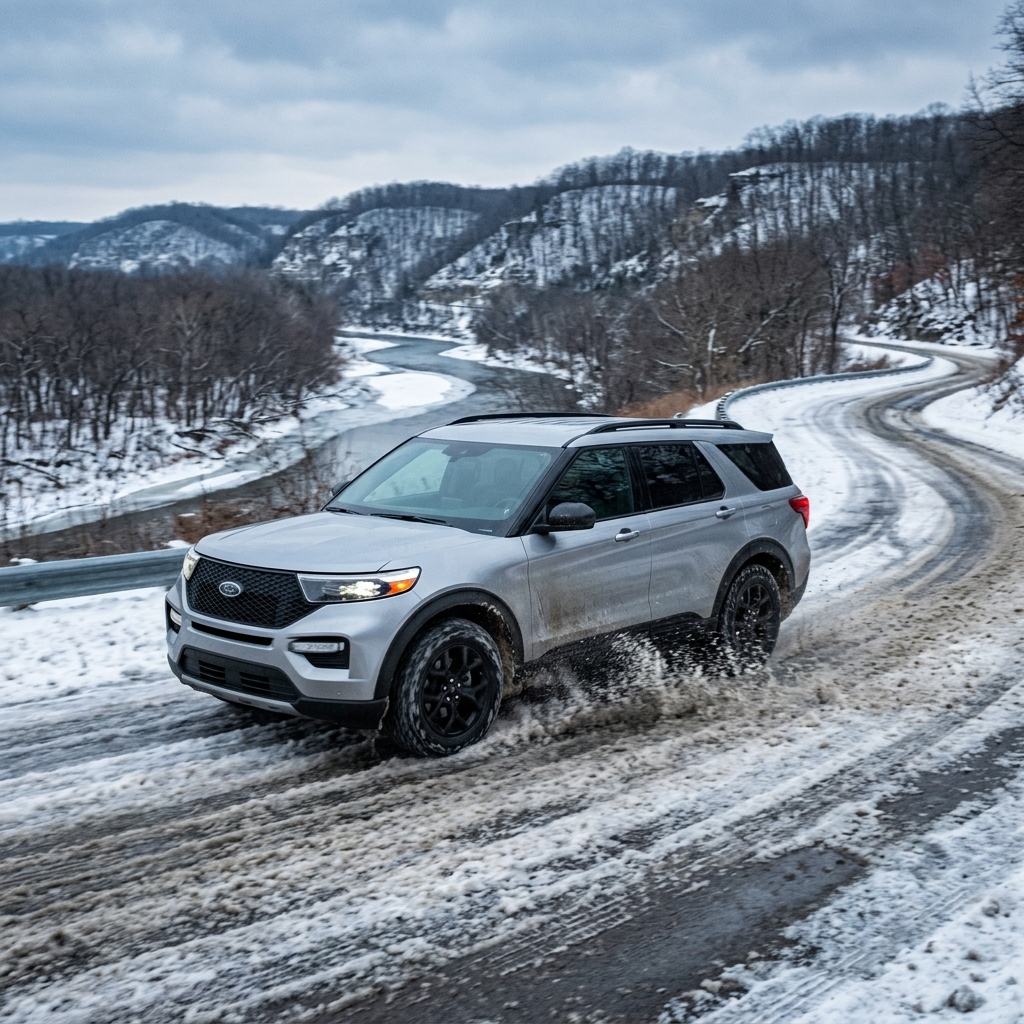
All-wheel drive (AWD) is better for most drivers facing typical winter conditions on plowed, mixed-traction roads because it automatically routes torque to all four wheels without driver intervention. Four-wheel drive (4WD) is better for navigating deep, unplowed snow, steep unpaved grades, or severe off-road conditions where a locked transfer case and low-range gearing provide maximum low-speed traction. For everyday winter commuting across variable pavement, AWD delivers superior continuous stability and efficiency.
In East Liverpool, where steep riverfront bluffs and sudden elevation changes make winter commutes unpredictable, choosing between these two drivetrains comes down to how and where you drive. An AWD vehicle monitors wheel speed continuously, sending power to the axle with the most grip the instant road conditions deteriorate. This automated response makes AWD exceptionally convenient when transitioning from dry highways to slush-covered neighborhood streets. Drivers do not need to flip switches or predict traction loss before it happens.
Traditional 4WD, by contrast, is engineered for heavy-duty utility and maximum mechanical grip. When engaged, a 4WD system locks the front and rear driveshafts together, forcing both axles to turn at the same speed regardless of individual tire traction. This brute force enables 4WD trucks and rugged SUVs to push through heavy snowdrifts and rutted mud that might bog down a lighter crossover. However, because part-time 4WD locks the axles, operating it on dry or merely damp pavement can cause severe drivetrain binding.
For personalized guidance on selecting the right drivetrain for your daily route, feel free to give our sales team a quick call at (330) 462-7578 or stop by our showroom at 1503 Pennsylvania Ave to test-drive both configurations in person.
Table of Contents
- How Do All-Wheel Drive and Four-Wheel Drive Differ in Technical Operation?
- How Do AWD and 4WD Compare in Daily Driving and Snow?
- Does AWD Help You Stop Faster or Handle Ice Better Than Winter Tires?
- Should You Choose an AWD Crossover or a 4WD Truck for Ohio Valley Terrain?
- Common Questions About Winter Drivetrains
- Which Ford SUV and Truck Models Offer AWD or 4WD?
How Do All-Wheel Drive and Four-Wheel Drive Differ in Technical Operation?
All-wheel drive uses electronic sensors, hydraulic clutch packs, or a center differential to automatically distribute engine torque between the front and rear axles as road conditions change. Four-wheel drive relies on a heavy-duty mechanical transfer case that locks the front and rear output shafts together, forcing both axles to rotate at identical speeds. Understanding these mechanical distinctions helps drivers select a system that matches their physical driving environment.
An AWD system functions through active Electronic Control Units that monitor wheel rotation thousands of times per second. When a tire begins to slip on wet pavement or patch ice, the system commands an internal clutch pack to route engine torque away from the spinning wheel toward the axle with firm traction. Modern AWD setups react in less than 200 milliseconds, adjusting power delivery before the driver even notices a loss of control. Because a center differential allows the front and rear wheels to rotate at different speeds during turns, AWD can remain engaged continuously on dry asphalt without damaging mechanical components.
Four-wheel drive operates through a physical transfer case located directly behind the transmission. When the driver selects a 4x4 mode via a dashboard dial or floor lever, a shift fork mechanically locks the front and rear driveshafts. Many traditional 4WD systems offer two distinct operating ranges:
- 4-High (4H): Delivers full mechanical traction at normal road speeds for driving through deep snow, loose gravel, or heavy slush.
- 4-Low (4L): Engages lower gear ratios inside the transfer case to multiply engine torque at low speeds, providing the climbing power necessary to navigate steep rocky trails or pull heavy loads out of deep mud.
Because part-time 4WD lacks a center differential to absorb speed differences between the front and rear tires when turning, engaging 4x4 on dry roads forces the tires to scrub against the pavement, placing immense stress on axle U-joints and transfer case gears. When you are ready to evaluate how these systems perform on local roads, you can schedule a test drive with our team. If you prefer a pre-owned vehicle, you can browse our single-owner pre-owned selection, or speak with our service department to order genuine maintenance parts for your current vehicle.

How Do AWD and 4WD Compare in Daily Driving and Snow?
In daily winter driving on variable road surfaces like rain, slush, and light snow, AWD operates continuously in the background to deliver immediate stability and seamless acceleration. Traditional 4WD remains ideal for heavy-duty hauling and deep snowdrifts, but part-time 4WD systems cannot be driven safely on dry or merely wet pavement without risking severe drivetrain damage. Matching drivetrain capabilities to actual road conditions prevents unnecessary mechanical wear while keeping your family secure on every trip.
AWD crossovers excel during routine winter commuting because their computer-controlled systems adapt to changing pavement instantly. On a typical morning drive featuring a mix of clear highway, icy bridges, and slushy exit ramps, an AWD system automatically shifts power between axles to maintain forward momentum. Drivers maintain full steering control without worrying about binding drivetrain components during tight parking maneuvers. Furthermore, modern AWD systems disengage the secondary axle when extra traction is unneeded, helping reduce internal friction and preserve overall fuel economy.
Traditional 4WD shines when winter weather renders paved roads unrecognizable. In unplowed rural drifts or deep mud, the equal power distribution of a locked transfer case ensures that even if three tires lose traction entirely, the single wheel with grip receives half the engine power to pull the vehicle forward. However, this mechanical rigors comes with daily operating compromises:
- Driver Management: The operator must monitor road conditions constantly and manually disengage 4WD when returning to clear asphalt.
- Fuel Drag: Heavy solid axles, thick driveshafts, and robust transfer cases add hundreds of pounds to the vehicle, creating mechanical drag that typically reduces fuel efficiency by 1 to 3 mpg.
- Low-Speed Binding: Turning tightly in 4WD on high-traction surfaces causes steering wheel chatter and severe mechanical strain.
Shoppers evaluating daily commuting needs against heavy winter demands can explore our certified pre-owned Ford inventory to compare versatile AWD crossovers and rugged 4x4 trucks side by side.
Does AWD Help You Stop Faster or Handle Ice Better Than Winter Tires?
All-wheel drive does not help a vehicle stop faster on icy roads because every modern passenger car, truck, and SUV already utilizes four-wheel braking regardless of its drivetrain configuration. Dedicated winter tires deliver far shorter stopping distances and superior cornering grip on ice because their specialized rubber compounds and engineered siping create physical friction against frozen surfaces. Drivetrains only distribute engine torque; tires create the actual grip between the vehicle and the road.
A common driver misconception is assuming that rapid acceleration on a slippery surface equals overall braking and cornering traction. While an AWD system distributes acceleration torque across four contact patches to prevent wheelspin when pulling away from an intersection, it provides zero assistance when you apply the brakes. When stopping on ice, vehicle weight, anti-lock braking system calibration, and tire rubber flexibility dictate the stopping distance. Standard all-season tire compounds stiffen when ambient temperatures drop below 45 degrees Fahrenheit, turning hard and losing the ability to conform to microscopic road textures.
Dedicated winter tires solve the fundamental physical limits of cold-weather traction through specialized tire engineering:
- Flexible Cold-Weather Compounds: Formulated with high silica content to remain soft and pliable in sub-freezing temperatures, maximizing rubber-to-ice contact.
- High-Density Siping: Cut with thousands of microscopic slits that open under load, creating biting edges that key into snow crystals and ice surfaces.
- Deep Slush Grooves: Designed with wide circumferential channels that pump slush and standing water away from the contact patch to prevent hydroplaning.
Combining an AWD vehicle with dedicated winter tires offers the ultimate winter setup, giving you power delivery to move forward along with the physical grip needed to turn and stop safely. To prepare your vehicle for severe weather, you can schedule a service appointment, use our tire lookup tool to locate cold-weather tires, or check your KBB trade-in value if you are considering upgrading to an AWD model.
Should You Choose an AWD Crossover or a 4WD Truck for Ohio Valley Terrain?
Choose an AWD crossover if your daily routine consists of suburban commuting, highway travel, and variable winter weather where effortless automatic traction and fuel efficiency matter most. Select a 4WD truck if your work or lifestyle requires heavy towing, high payload capacity, or navigating unplowed back roads and rugged job sites. Aligning your vehicle choice with regional terrain features ensures dependable year-round utility.
For suburban drivers navigating the rolling hills and local corridors around Calcutta, an AWD crossover delivers exceptional all-weather capability without sacrificing ride comfort or gas mileage. Vehicles equipped with intelligent AWD provide generous interior passenger room, flexible cargo space, and active driver-assist safety features designed to protect what matters most. The automatic drivetrain seamlessly manages unexpected snow patches on hilly neighborhood streets, allowing parents and commuters to travel with confidence while enjoying responsive highway handling.
Conversely, a 4WD truck represents the ultimate workhorse for drivers who encounter severe terrain, haul heavy machinery, or demand extreme off-road clearance. Trucks built with traditional body-on-frame architecture offer superior frame rigidity, solid rear axles, and low-range transfer cases engineered to conquer steep unpaved grades and deep mud. Key considerations when comparing these body styles include:
- Towing and Cargo Needs: A 4WD truck delivers strong towing capacity and an open bed for hauling heavy equipment, gravel, or winter supplies.
- Ground Clearance: High-riding 4WD trucks clear deep snowdrifts and rutted trails that could high-center a lower crossover.
- Efficiency and Convenience: AWD crossovers offer smooth car-like ride quality, easier parking, and lower ownership costs for daily driving.
To explore purchasing options that match your monthly budget, you can submit an online credit application to get pre-approved before visiting our showroom.

Common Questions About Winter Drivetrains
How does AWD work in snow compared to 4WD?
Many drivers in snowy regions rely on AWD systems because they enhance traction by automatically adjusting power distribution based on road grip. A 4WD system uses a mechanical transfer case to lock power equally to both axles, providing maximum brute force for driving through deep, unplowed snowdrifts at lower speeds.
Do I need winter tires if my SUV has all-wheel drive?
Yes. AWD helps your vehicle accelerate by distributing engine power to all four wheels, but it does not improve braking distance or cornering grip on snow and ice. Dedicated winter tires feature soft rubber compounds and engineered siping that provide the physical traction needed to stop and steer safely in freezing weather.
Can driving in 4WD on dry pavement cause mechanical damage?
Operating a traditional part-time 4WD system on dry asphalt forces the front and rear axles to turn at the exact same speed during turns. Because the tires cannot slip on dry pavement to relieve rotational tension, this binds the drivetrain, which can overheat fluid and shatter axle joints or transfer case gears.
Does 4WD hold better resale value than AWD in hilly winter regions?
Full-size 4WD trucks and body-on-frame SUVs maintain exceptional resale value due to their heavy towing capacity and commercial utility. However, AWD crossovers maintain equally strong demand and trade-in value among suburban commuters who prioritize automatic winter traction and daily fuel efficiency.
Will an AWD vehicle consume more fuel than a front-wheel-drive model?
Yes. AWD systems add between 100 and 200 pounds of mechanical components and create slight internal parasitic drag, which typically reduces overall fuel efficiency by 1 to 2 mpg compared to an equivalent two-wheel-drive model. Modern systems minimize this penalty by disconnecting the secondary axle when extra traction is unneeded.
Which Ford SUV and Truck Models Offer AWD or 4WD?
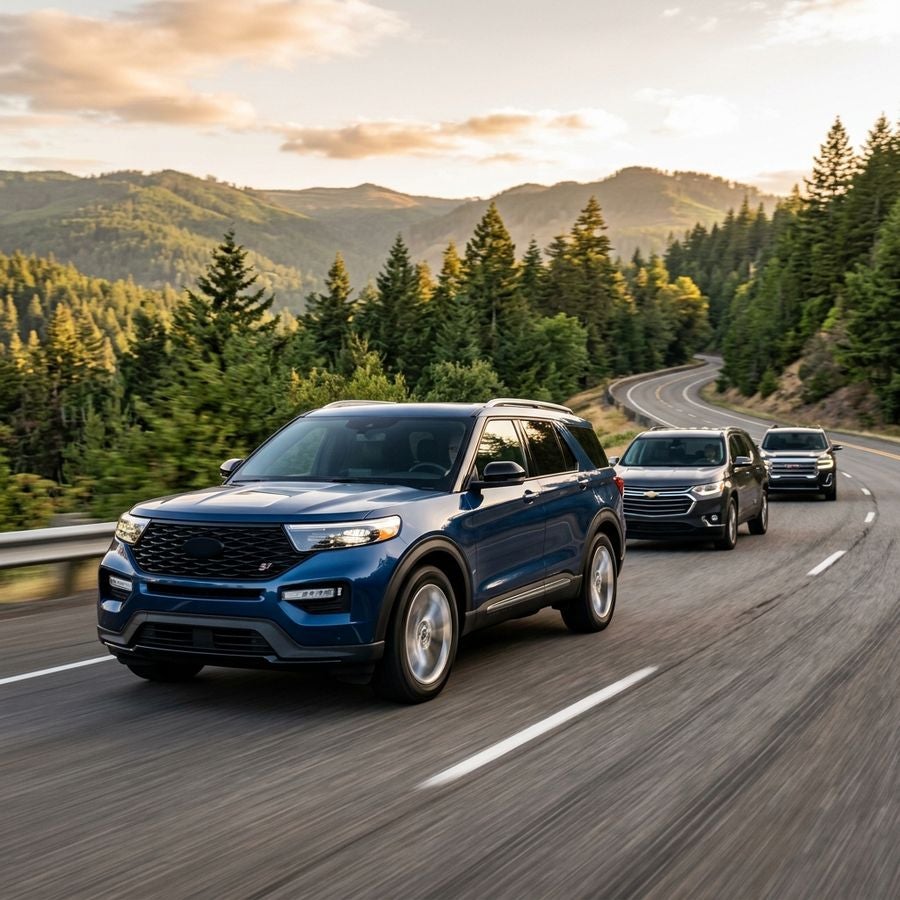
Ford offers intelligent AWD across versatile crossovers like the Escape and Explorer, while providing rugged 4x4 systems on off-road legends like the Bronco and hard-working F-150 trucks. Matching the right Ford model to your winter driving demands ensures optimal capability, passenger comfort, and long-term durability. Exploring the Ford lineup reveals options tailored to every family size, work requirement, and budget.
For compact versatility, the 2026 Ford Escape ST-Line features available intelligent AWD paired with a 1.5L engine and an automatic 8-speed transmission. Starting at an MSRP of $31,750, it achieves an EPA-estimated 26 city / 32 hwy mpg, offers seating for 5, provides about 38 cubic feet of rear cargo space, and delivers a 2,000 lbs towing capacity—making it an ideal, fuel-efficient option for daily winter commutes.
Families needing expanded seating and towing capability will appreciate the 2026 Ford Explorer ST-Line. Starting at an MSRP of $42,585, this midsize SUV comes standard with intelligent AWD, a powerful 2.3L EcoBoost® engine, and a SelectShift® transmission. It delivers an EPA-estimated 20 city / 27 hwy mpg, seating for 6 across three rows, about 16 cubic feet of cargo room behind the third row, and a robust 5,000 lbs towing capacity to handle winter trailers with ease.
Drivers seeking maximum off-road capability or truck utility have powerful options within the Ford lineup:
- 2026 Ford Bronco Badlands: Features an advanced 4x4 system with selectable G.O.A.T. Modes® ( Slippery, Off-Road) and up to 13.1 inches of available ground clearance to navigate deep snow drifts effortlessly.
- 2025 Ford Bronco Sport: Comes standard with 4x4 across all trims, providing 8.8 inches of ground clearance and dedicated terrain settings for dependable foul-weather control.
- Ford F-150: Offers proven 4x4 configurations with off-road variants like the Raptor providing 9.8 inches of ground clearance, strong towing power, and spacious bed capacity for demanding winter job sites.
To experience these vehicles in person, feel free to visit our East Liverpool showroom, give us a quick call at (330) 462-7578, or explore our new Ford inventory online to find your ideal winter vehicle today.
© 2026 Tri State Ford. All rights reserved.