Blog / Automotive News, New Vehicle Reviews, Buying Guides, Financing & Insurance, Seasonal Driving Tips

Why Local Farmers are Upgrading to the 2026 Ford F-350 for Mid-Summer Harvest Prep

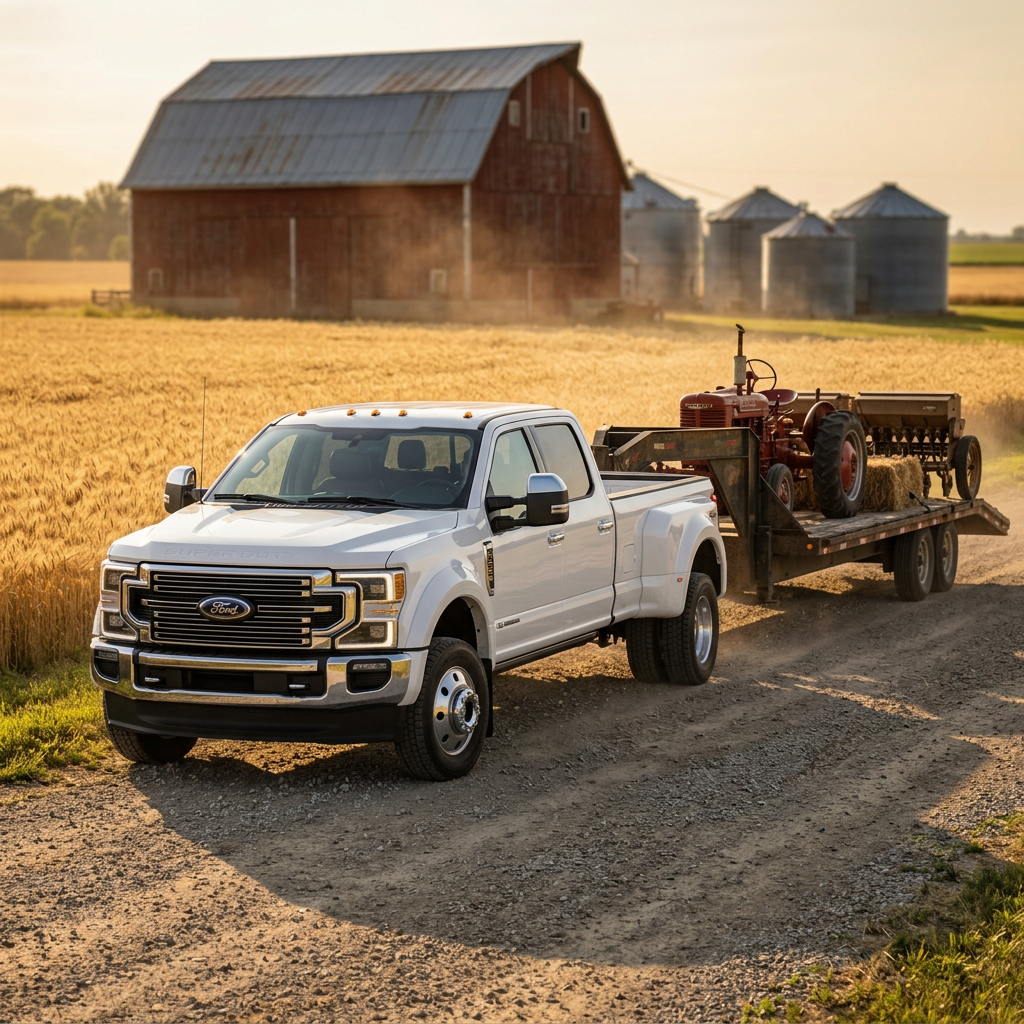
A white Ford Super Duty dually pickup truck towing a trailer with a vintage red tractor down a dirt road past a barn. (Representative image for illustration purposes only. Actual vehicle may vary based on trim and configuration.)

Why Local Farmers are Upgrading to the 2026 Ford F-350 for Mid-Summer Harvest Prep

## Preparing for the Mid-Summer Harvest with the 2026 Ford F-350

I am Nick Pirl, Sales Manager at Tri State Ford, and over my nine years of helping folks find the right work vehicles, I have learned that timing is everything. Mid-summer is a critical window for agricultural operations, and preparing your equipment ahead of the rush makes all the difference when the crops are ready. If you are looking for a reliable partner to handle the heaviest demands of the season, our team is ready to show you how the latest heavy-duty lineup can transform your daily operations. You can find us easily by checking the map to our physical showroom or give us a quick call to discuss your specific work requirements.

The agricultural properties and elevated valley terrain around Calcutta require vehicles that do not back down from steep grades or heavy payloads. As the harvest season approaches, farmers are realizing that older equipment might not cut it under tight deadlines. Upgrading to a modern heavy-duty truck ensures you stay on schedule without worrying about mechanical setbacks. For busy professionals who cannot take time away from the fields, we make the buying and ownership experience seamless. We offer convenient options like valet pickup and delivery for your vehicle needs, and we can even bring maintenance directly to your farm with our specialized on-site mobile vehicle care. If you have been searching for a reliable local commercial vehicle source, our showroom is fully equipped to help you gear up for the busy season ahead.

Table of Contents

How the 2026 Ford F-350 Towing and Payload Capacity Handles Heavy Farm Equipment

Now, when it comes to hauling heavy gravity wagons, seed tenders, and massive livestock trailers, you need a truck built for extreme physical demands. The 2026 Ford F-350 is designed to handle these exact agricultural challenges with ease. When configured properly with dual rear wheels and the gas engine, this heavy-duty workhorse offers a maximum payload capacity of up to 8,000 pounds. This massive payload rating means you can load up the bed with heavy tools, fuel tanks, or feed bags without stressing the suspension or compromising vehicle control.

Navigating the steep riverfront bluffs and Appalachian elevation changes in East Liverpool requires robust frame construction and dependable braking power. The truck's high-strength steel chassis and heavy-duty axles provide a solid foundation for pulling massive gooseneck trailers through uneven pasture gates and onto paved state routes. To make hooking up these large rigs simpler, the optional 5th-Wheel/Gooseneck Hitch Prep Package provides factory-installed under-bed frame brackets and a bed-mounted 7-pin connector, allowing you to drop in a ball and secure your trailer in minutes.

For those looking to trade in a lighter truck or expand their current commercial fleet, we offer a wide variety of high-quality pre-owned options. You can explore our single-owner used vehicle inventory to find dependable heavy-duty models that are ready for the field. We also make sure our buyers get the best possible value, which is why we encourage you to check our current manufacturer vehicle incentives before making a decision. To keep your investment running strong through the grueling harvest months, you can also take advantage of our monthly manufacturer service promotions for expert care.

​

Comparing the 2026 Ford F-350 Gas and Power Stroke Diesel Engine Options

Let's talk about the engine options available for work-focused buyers, who can choose from four distinct powerplants engineered to match specific agricultural demands. The standard engine on the entry-level XL trim is a 6.8-liter gas V8 that generates 405 horsepower and 445 lb-ft of torque, paired with a heavy-duty TorqShift-G 10-speed SelectShift automatic transmission designed to deliver power early in the rev range. If you need more gas-powered muscle, the available 7.3-liter gas V8 steps things up to 430 horsepower and 485 lb-ft of torque, providing excellent mid-range pulling power for moderate towing duties.

For the ultimate in heavy-duty capability, the diesel lineup delivers unmatched torque and efficiency under continuous load. The standard 6.7-liter turbo diesel V8 pumps out 475 horsepower, while the top-tier high-output 6.7-liter turbo diesel V8 pushes performance to a massive 500 horsepower and 1,200 lb-ft of torque. This high-output Power Stroke diesel is the go-to choice for farmers who regularly pull the heaviest multi-implement haulers or fully loaded grain wagons across soft fields and up steep highway ramps.

Finding the exact combination of engine, bed length, and cab style is easy when you work with our sales team. You can easily browse our new Ford inventory online to see what configurations we have available on the lot today. If you prefer a highly specific setup, such as a dual-rear-wheel regular cab with the high-output diesel, we can help you submit a new vehicle custom order directly to the factory. To narrow down your search specifically to heavy-duty pickups, feel free to explore our dedicated new truck inventory page to find the perfect match for your farm.

​

Evaluating the Price Difference Between Gas and Diesel Engines on the 2026 F-350

Many customers wonder about the price difference between gas and diesel engines, which represents a significant upfront financial decision that requires careful calculation. Choosing the diesel engine typically adds several thousand dollars to the manufacturer's suggested retail price, reflecting the complex engineering and robust components required to produce high torque. For example, the base XL Crew Cab short bed with the standard gas engine starts at an MSRP of about $51,495, while premium trims like the Platinum Crew Cab 4WD can start around $80,265 before adding diesel power. Buyers must weigh this initial cost against the long-term benefits of superior fuel efficiency under heavy loads and exceptional resale value.

Diesel engines excel at maintaining fuel economy when pulling heavy loads, making them highly cost-effective for farms that log high annual towing miles. The immense torque also reduces strain on the transmission, which can translate to fewer mechanical issues over years of hard labor. However, for farms that primarily use their trucks for shorter utility runs, light hauling, and stationary power supply, the standard gas engines offer a lower entry cost and simpler maintenance requirements that might make better financial sense.

Our team is here to help you analyze these costs and find a payment structure that fits your farm's operating budget. You can start by checking our external new commercial vehicle inventory to compare current pricing on gas and diesel models. If you have an older truck to trade in, you can get a quick, reliable valuation using our online trade-in appraisal tool to see how much equity you can apply to your new purchase. Once you have a clear picture of your trade-in value, our finance department specialists can walk you through customized commercial purchasing options.

​

Maximizing Your Farm Write-Offs with the Section 179 Tax Deduction and F-350 GVWR

Another important thing to know about buying a new work truck is how it affects your tax planning and agricultural business write-offs. Under the current tax guidelines, the Section 179 tax deduction allows qualifying agricultural businesses to immediately write off up to $2,560,000 of eligible equipment placed in service during the year. This deduction begins to phase out once total qualifying equipment purchases exceed $4,090,000. Because heavy-duty work trucks are primary business assets, they represent an excellent opportunity to reduce your overall tax liability while modernizing your fleet.

Vehicle weight plays a critical role in determining how much of the purchase price you can deduct immediately. Vehicles with a Gross Vehicle Weight Rating (GVWR) between 6,000 and 14,000 pounds qualify for substantial immediate write-offs, while passenger-focused SUVs in this weight class are subject to a specific $32,000 limitation. The F-350 easily surpasses these minimum thresholds, with a standard GVWR of 10,500 lbs and a Gross Combined Weight Rating of 21,000 lbs. This commercial-grade rating means that when the truck is used more than 50% for business, it qualifies as a non-passenger work vehicle, allowing you to deduct the full purchase price in the first year.

To take advantage of these tax savings before the year-end deadline, our team can help you secure the right vehicle and financing quickly. You can get a head start on the paperwork by submitting our secure online credit application from the comfort of your home. We also encourage you to browse our external inventory of new commercial work trucks to find models that meet the exact weight ratings your business needs. To maximize your savings even further, be sure to keep an eye on our current new vehicle pricing for promotional offers on our heavy-duty lineup.
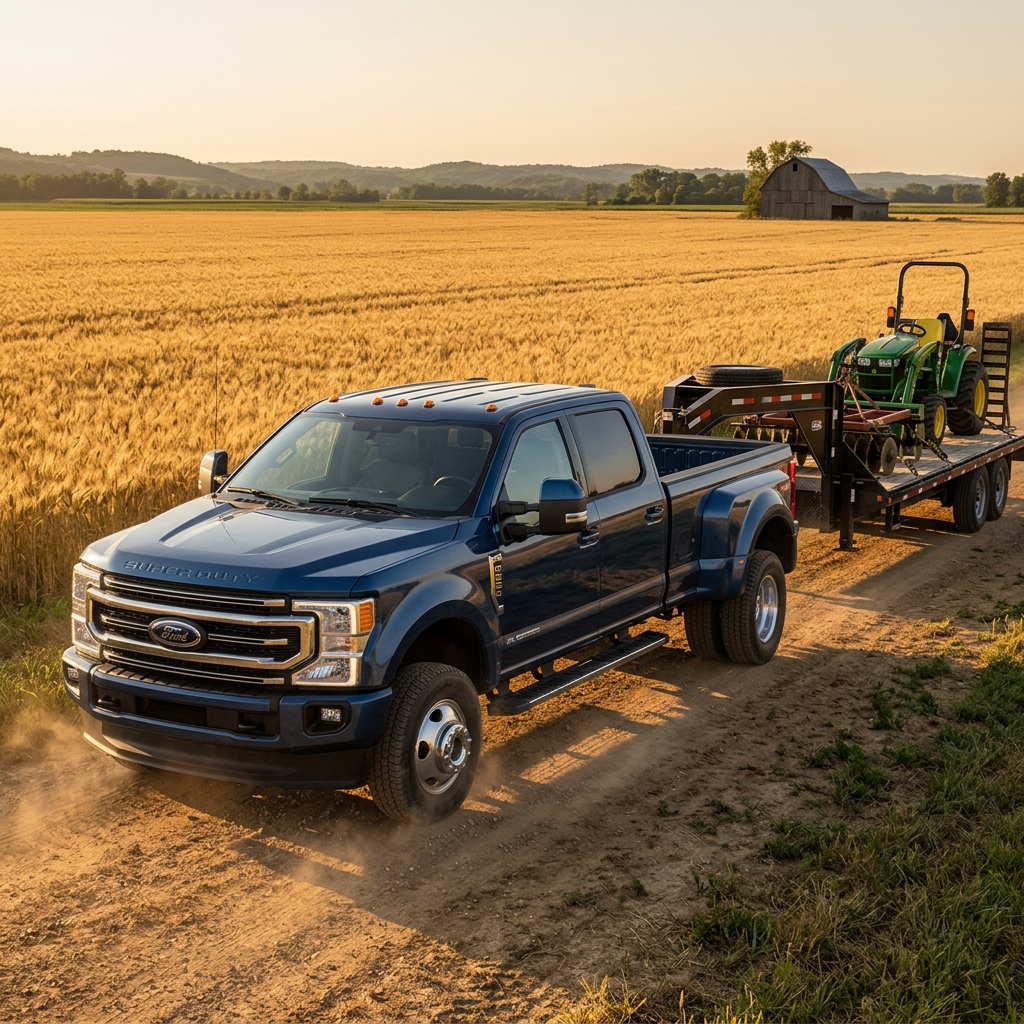
​A blue Ford Super Duty dually truck towing a green tractor on a flatbed trailer down a dirt road next to a wheat field. (Representative image for illustration purposes only. Actual vehicle may vary based on trim and configuration.)

Why Farmers Upgrade to the 2026 F-350 Super Duty Over Half-Ton Pickups

One thing I always tell customers about choosing a heavy-duty truck over a light-duty option is that half-ton pickups quickly reach their physical limits under the demanding conditions of a busy farm. A standard light-duty truck typically tops out around 13,000 pounds of towing capacity, which is insufficient for hauling loaded grain wagons, large tractors, or multi-bale hay trailers. Upgrading to the heavy-duty chassis of the F-350 provides the structural rigidity, advanced cooling systems, and heavy-duty braking needed to pull up to 38,000 pounds safely. This massive capability gap ensures that you can move your largest implements without putting excessive wear on your vehicle.

Durability and long-term peace of mind are also major factors when choosing a heavy-duty truck for agricultural work. Every new model comes backed by a comprehensive manufacturer warranty, including a basic bumper-to-bumper warranty of 3 years or 36,000 miles, a powertrain warranty of 5 years or 60,000 miles, and corrosion protection for 5 years with unlimited miles. In addition to these strong warranty terms, owners benefit from manufacturer-backed emergency support. If you ever run into an issue in the field or on the road, you can rely on manufacturer-backed roadside assistance or use the direct helpline at Ford Roadside Assistance: 1-800-241-3673 to coordinate towing, flat tire changes, or fuel delivery directly to an authorized service center.

Making the switch to a heavy-duty truck is a straightforward process that starts with evaluating your current vehicle's worth. Our team can help you easily value your trade-in online to see how much value you can carry over toward an upgrade. When you are ready to explore the lineup in person and find the right truck for your farm, stop by our showroom to speak with our experienced sales staff.

Keep Your Vehicle Running Strong

Keep your vehicle performing at its best with our service team:


© 2026 Tri State Ford. All rights reserved.

Posted in:

Related Posts

f

Can You Buy a Car Entirely From Home?

Can You Buy a Car Entirely From Home? You can purchase a vehicle entirely from home by selecting an inventory model, finalizing your trade-in appraisal, securing loan approval, and completing your sales contract through digital dealership tools. Digital automotive platforms allow buyers to complete every step of the transaction remotely without showroom visits, concluding with doorstep vehicle delivery or scheduled curbside pickup. Digital vehicle shopping has evolved from browsing photo listings into a complete remote transaction channel. Modern automotive retail platforms connect inventory databases, appraisal estimators, and digital finance portals directly to your home computer or mobile device. Buyers can research models, calculate real payment scenarios, verify vehicle history, and submit credit details securely. Completing the transaction remotely requires clear communication with the dealership staff. Once you locate a vehicle, sales consultants can provide detailed documentation, window stickers, and purchase agreements via email or secure customer portals. State titling and registration paperwork can either be completed via encrypted electronic signature systems or delivered alongside the vehicle for signature upon drop-off. If you prefer to finalize your purchase remotely but want the option to visit in person, our staff is readily accessible. Drivers can plan a trip using our dealership location on Pennsylvania Avenue or reach our sales advisors with (330) 462-7578 to guide every stage of the remote buying path. Table of Contents Online Retailers vs Traditional Dealership Websites: Pricing, Trade-Ins, and Return Policies How Do Virtual Vehicle Walkarounds and Digital Inspection Tools Work? How Do You Negotiate an Out-the-Door Price When Shopping for a Vehicle Online? Can You Secure Independent Auto Financing and Complete Paperwork Remotely? Key Questions Buyers Ask About Online Car Shopping Start Your Online Purchase Journey With Tri State Ford Online Retailers vs Traditional Dealership Websites: Pricing, Trade-Ins, and Return Policies Online-only catalog retailers utilize fixed, non-negotiable pricing algorithms and short return windows, whereas franchised dealership websites offer flexible negotiations, verified manufacturer incentives, and direct trade-in appraisals backed by physical facilities. Buying through a local dealer combines digital convenience with real vehicle accountability and local warranty support. National online platforms often advertise fixed pricing as a convenience, yet this model eliminates the opportunity to negotiate discounts or adjust trade-in numbers. When working through an authorized dealer portal, shoppers can communicate directly with sales teams to review current factory rebates, promotional interest rates, and tailored trade-in values. For families living in Calcutta who frequently commute along State Route 170, working with an established local dealership provides a reliable point of contact for long-term ownership needs rather than a remote call center located states away. Trade-in procedures also show major differences between platforms: Automated Algorithm Quotes: Online-only retailers rely on automated sight-unseen estimates that can be downgraded upon final collection if minor discrepancies are discovered. Accurate Dealership Appraisals: Local dealers allow you to value your trade-in online using verified market data, with actual appraisers available to account for maintenance history, installed accessories, and high-demand options. Return Guarantees vs Pre-Delivery Inspections: While digital platforms emphasize limited seven-day return periods to compensate for the inability to inspect the car before delivery, franchised dealerships provide verified inspection reports and certified guarantees before funds transfer. Shoppers looking for pre-owned quality can inspect verified history by reviewing our Carfax single-owner pre-owned inventory, which provides comprehensive service records and title verification. Choosing a reliable local Ford dealership ensures that your vehicle is backed by factory-trained technicians and established regional customer support. How Do Virtual Vehicle Walkarounds and Digital Inspection Tools Work? Virtual vehicle walkarounds utilize high-definition video calls and interactive digital imaging to provide prospective buyers with a live, bumper-to-bumper examination of a vehicle's mechanical and cosmetic condition. Dealership specialists use handheld mobile devices to highlight exterior body panels, paint condition, tire tread depth, undercarriage surfaces, and interior cabin features in real time. During a scheduled virtual demonstration, you direct the presentation from your living room. You can ask the sales representative to start the engine, cycle through infotainment menus, demonstrate seat folding sequences, or measure cargo volume. High-resolution digital inspection tools complement this process by providing close-up photo galleries of wheel rims, engine bays, glass surfaces, and interior seating wear, leaving no hidden flaws prior to purchase. Virtual inspections allow you to evaluate specific functional packages tailored to your lifestyle: Family Comfort and Space: Explore how the 2026 Ford Explorer accommodates passengers with seating for six, about 16 cubic feet of cargo room behind the third row, and a 5,000-pound towing capacity powered by its 2.3L engine and SelectShift® automatic transmission. Everyday Commuting Efficiency: Inspect the 2026 Ford Escape, which delivers an EPA-rated 26 city / 32 hwy mpg with its 1.5L engine and 8-speed automatic, offering about 38 cubic feet of cargo space behind the second row. Commercial and Fleet Configurations: Commercial buyers can inspect heavy-duty frames and commercial upfits through our dedicated F-Series work truck inventory online. Buyers seeking personalized vehicle configurations can also utilize our custom factory build and pricing tool to order a vehicle built to exact factory specifications. If you prefer verified late-model used vehicles, our team can guide you through our certified pre-owned Ford inventory, showing point-by-point digital inspections that meet strict factory certification standards. How Do You Negotiate an Out-the-Door Price When Shopping for a Vehicle Online? Negotiating an out-the-door price online requires requesting a complete, itemized purchase agreement that details the base vehicle price, applicable manufacturer rebates, dealership documentation fees, sales taxes, and state registration charges before committing to terms. Securing this full breakdown in writing via email or chat prevents unexpected add-ons from appearing at delivery. The out-the-door figure represents the absolute total amount required to take ownership of the vehicle. When shopping online, always focus negotiations on this bottom-line total rather than discussing target monthly payments. Monthly payment targets allow finance departments to adjust loan durations or interest terms to hide higher vehicle costs. Dealership advisors observe that remote shoppers who request an itemized worksheet upfront experience a smoother closing process, as every line item can be reviewed without time pressure. Online purchasing often proves more cost-effective than in-person shopping because it allows you to compare written itemized estimates side by side. When negotiating remotely: Request the Full Invoice Breakdown: Ask your sales representative to provide a formal quote showing the MSRP, dealer discount, factory rebates, document fees, and exact local taxes. Review Dealer Add-Ons: Identify whether optional charges such as exterior paint protection, interior fabric sealant, or window tinting have been added, and negotiate their inclusion or removal. Validate Regional Incentives: Verify that all eligible retail customer cash, trade-in assistance, or military and first-responder discounts are applied directly to the principal cost. Compare Across Equivalent Configurations: Use written quotes from other dealers to request a price match on an identical trim and powertrain. Drivers navigating the steep river bluffs and varied elevations of East Liverpool require vehicles with reliable all-weather capability and durable construction. Reviewing our online new Ford vehicle inventory allows you to evaluate models equipped with intelligent all-wheel drive, smart safety suites, and dependable powertrains, ensuring you secure competitive pricing on vehicles engineered to manage regional driving demands. Can You Secure Independent Auto Financing and Complete Paperwork Remotely? You can secure independent auto financing when buying online by obtaining a loan pre-approval letter from your bank or credit union and submitting the funding instructions directly to the dealership's business office. Dealership finance departments regularly collaborate with independent financial institutions to process loan disbursements alongside digital purchase contracts. Securing financing pre-approval establishes a clear budget and provides a competitive baseline for interest rates. Once your lender provides an approval letter with loan limits, terms, and interest figures, our finance managers can compare those numbers with Ford Credit promotional programs. Dealership finance portals often provide access to manufacturer APR incentives that independent lenders cannot offer, giving buyers multiple rate pathways to evaluate side by side. Remote document execution makes vehicle financing straightforward: Encrypted Electronic Signing: Loan contracts, retail installment agreements, and privacy disclosures can be executed through secure digital signature services on your smartphone or home computer. Remote Identity Verification: Buyers submit secure digital images of their driver's license, proof of current auto insurance, and residency documentation to satisfy state compliance standards. Physical Title and State Requirements: While most sales contracts are signed electronically, certain state motor vehicle titling forms may require physical ink signatures upon vehicle delivery. You can streamline your remote financing process by submitting our secure online credit application, allowing our finance team to assemble competitive loan options before you finalize your vehicle delivery. Key Questions Buyers Ask About Online Car Shopping Q: How does vehicle delivery work when purchasing a car online from home? Vehicle delivery occurs after all financing, trade-in documentation, and purchase agreements are finalized digitally. The dealership schedules a delivery window where a transport representative delivers the vehicle directly to your driveway or office. Upon arrival, you inspect the vehicle to verify its cosmetic and mechanical condition, verify the mileage, test the keys, and complete any remaining state-mandated physical registration paperwork before accepting the keys. Q: What documents must I submit to complete a remote vehicle purchase? Completing a digital car purchase requires a valid driver's license, proof of current automotive insurance covering the new vehicle, proof of physical residence such as a utility statement, and financing approval documentation. If trading in an existing car, you must also provide the vehicle title or current loan payoff statement, active registration card, and lien release forms prior to finalizing the transaction. Q: Can I add genuine factory accessories to an online order before home delivery? You can add genuine Ford accessories to an online vehicle order before finalizing your financing agreement. Items such as all-weather floor liners, heavy-duty trailer hitches, cargo management systems, splash guards, and bed covers can be rolled directly into the vehicle's total financing package and installed by certified dealership technicians before the vehicle leaves the lot. Q: How is negative equity handled during a remote online vehicle transaction? Negative equity occurs when your current auto loan balance exceeds the trade-in value of your vehicle. During an online purchase, our finance team calculates this difference and can roll the remaining balance into the new vehicle's financing agreement, subject to lender credit approval and loan-to-value limits, eliminating the need to pay off the balance upfront out of pocket. Q: What happens if a vehicle arrives with undisclosed cosmetic flaws? If a vehicle arrives at your home with damage or discrepancies not disclosed during the virtual walkaround, you note the conditions on the delivery bill of lading before signing acceptance paperwork. The dealership will either arrange to correct the flaws at no expense, provide compensation, or allow you to decline delivery before final title registration takes place. Start Your Online Purchase Journey With Tri State Ford Shopping for a vehicle online from the comfort of home gives you complete control over your purchase schedule, vehicle research, and price negotiations. Our digital retail tools let you compare trims, configure ideal options, discuss current payment options, and complete loan approvals without stepping away from your desk. Every vehicle listed on our platform includes transparent specifications and clear history reports so you can choose your next car with absolute confidence. Whether you are seeking a reliable daily commuter or a capable family hauler, our staff is available to provide live virtual demonstrations and answer every financing question. When you are ready to explore our lineup in person, plan your visit to our showroom at 1503 Pennsylvania Ave in East Liverpool, OH 43920. To start your virtual consultation or schedule a digital walkaround today, call our team directly at (330) 462-7578. Keep Your Vehicle Running Strong Keep your vehicle performing at its best with our service team: Order Parts Schedule Service Appt © 2026 Tri State Ford. All rights reserved. Vehicle specification data © JATO Dynamics Limited. Online Car Buying in East Liverpool OH | Tri State Ford

5

What Current Ford Financing Offers Can Buyers Near East Liverpool Compare?

What Current Ford Financing Offers Can Buyers Near East Liverpool Compare? Published factory incentives for qualified buyers may include manufacturer financing and bonus-cash offers on select 2026 Ford F-150 and Ford Explorer models through Ford Credit, subject to current terms and availability. Buyers exploring midsize SUVs can also compare published terms on the 2026 Ford Bronco. These national and regional promotions establish a baseline for shoppers planning a new vehicle purchase. Financing programs through Ford Credit require credit approval, and specific incentive combinations vary based on vehicle identification numbers, selected trim levels, and home ZIP codes. A customer looking at an entry-level SUV might note the 2026 Ford Escape Active AWD, which pairs an EPA-estimated 26 mpg city / 32 hwy rating from its 1.5L engine with an automatic 8-speed transmission, providing an efficient alternative when lower total loan balances are the priority. Navigating published programs is easier when you evaluate the entire financial package, including manufacturer cash back and retail consumer bonuses, rather than focusing solely on interest rates. Local drivers traveling along the Ohio River bluffs frequently weigh the long-term interest savings of zero-percent financing against upfront cash rebates that lower the initial principal. To review how these manufacturer programs apply to current showroom arrivals or to verify qualification guidelines, plan a visit to our facility using the directions to 1503 Pennsylvania Ave in East Liverpool. You can also connect directly with our finance team by giving us a quick call to check program expirations and eligible vehicle trims. Table of Contents What Financing and Bonus-Cash Offers Are Highlighted for Ford F-150 Buyers? How Do Ford Credit Purchase Loans and Red Carpet Leases Compare? Navigating Taxes, Title Fees, and Trade-In Evaluations Which Dealership Delivers Trusted Ford Financing and Trade-In Solutions? Common Questions About Financing a Ford Finalize Your Ford Financing Plan at Tri State Ford What Financing and Bonus-Cash Offers Are Highlighted for Ford F-150 Buyers? Eligible 2026 Ford F-150 buyers in Ohio can access 0% APR financing for 60 months through Ford Credit combined with $500 in Bonus Cash on qualifying configurations. Additional factory programs on select trim levels like the F-150 XLT deliver up to available manufacturer cash incentives for buyers who choose standard financing terms over specialized low-rate programs. The Ford F-150 lineup provides broad capability configurations, and available financing incentives align with distinct performance tiers. For example, high-end builds like the King Ranch 4x4 SuperCrew feature a 3.5L engine generating 400 hp and 500 lb-ft of torque paired with a SelectShift® automatic transmission. This powertrain achieves an EPA-rated 17 mpg city / 23 hwy while offering a maximum towing capacity of 10,400 lbs and a payload rating of 1,945 lbs, making it suitable for pulling heavy work equipment or recreational trailers. Truck shoppers should consider how bonus cash programs interact with specific packages and options: Promotional APR terms like 0% APR for 60 months are tied to Ford Credit Tier 0 and Tier 1 credit approvals. Retail customer cash bonuses often cannot be combined with subvented low-APR financing rates on the same vehicle. Engine-specific allowances, military recognition offers, and first responder programs can provide supplemental savings for eligible households. Work-ready models like the Super Duty lineup feature distinct commercial incentives, including promotional 60-month financing on select diesel XL and XLT builds. Drivers hauling equipment through the rolling elevation changes along State Route 170 in Calcutta often balance the long-term utility of maximum payload against financing structures. To see qualifying trucks currently on the ground, explore our selection of new Ford vehicles. If you have an existing vehicle to offset your down payment, obtain a rapid market appraisal using our instant cash offer tool, or consider value-focused pre-owned alternatives by browsing our pre-owned single-owner models. How Do Ford Credit Purchase Loans and Red Carpet Leases Compare? Ford Credit purchase loans provide fixed-rate financing terms ranging from 12 to 84 months for complete vehicle ownership, while Red Carpet Leases offer closed-end agreements spanning 24 to 48 months with predetermined mileage allowances. Choosing between them depends on how many miles you log annually and whether your priority is vehicle equity or lower initial contractual commitments. A conventional purchase loan through Ford Credit suits drivers who intend to keep their truck or SUV well past the payment term. When financing an SUV like the three-row 2026 Ford Explorer Active 4WD, which features a 2.3L powertrain delivering 300 hp and a 5,000-lb towing capacity, purchasing allows unlimited driving across state lines without excess mileage calculations. Owners build equity as principal balances diminish, creating value that can be rolled into future purchases. In contrast, a Red Carpet Lease functions as an extended operational agreement. Contract terms include: Pre-selected annual mileage limits, typically structured at 10,500, 12,000, or 15,000 miles per year. Protection from unexpected depreciation, with end-of-lease options to purchase the vehicle outright or return the keys. Lower required upfront capital at lease signing, though excess wear and tear fees apply at final return. Continuous coverage under the factory bumper-to-bumper warranty when choosing 24-month or 36-month lease terms. Before finalizing a structure, submit our secure online credit application to see the loan terms and lease programs your credit profile unlocks. Shoppers seeking manufacturer-backed quality on pre-owned budgets can also check our certified pre-owned inventory, which provides comprehensive limited warranty coverage and thorough mechanical multi-point inspections. Navigating Taxes, Title Fees, and Trade-In Evaluations In Ohio, vehicle sales tax is determined by the buyer's county of residence rather than the dealership's location, meaning tax rates differ across the region even on identical vehicle sales prices. When establishing a final transaction agreement, buyers must also account for standardized state fees, including an $18 certificate-of-title fee and an $18 lien recording fee whenever a vehicle purchase is financed. Lease transactions carry distinct tax considerations under state regulations. Sales tax generally applies to monthly lease payments and to any capitalized cost reduction, such as cash down payments or trade equity applied at signing, calculated at the rate where the vehicle is principally garaged. Factoring these fixed statutory amounts into your preliminary budget prevents unexpected surprises when completing transaction documents. Trade-in equity plays a vital role in managing your taxable base and loan-to-value ratio. Ohio tax guidelines allow the value of a physical trade-in vehicle to reduce the taxable purchase price of the replacement vehicle directly, saving buyers substantial money upfront. To determine the current equity in your present car, truck, or crossover, calculate your baseline valuation with our online trade appraisal resource. Keeping your existing car properly maintained ensures you capture top value on the evaluation drive; you can easily book a routine checkup through our dedicated portal to schedule a service appointment with certified technicians. Which Dealership Delivers Trusted Ford Financing and Trade-In Solutions? Tri State Ford provides comprehensive financing packages, factory incentive access, and transparent vehicle trade-in evaluations directly to drivers in the tri-state border corridor. While some buyers look toward large metropolitan markets like Pittsburgh when researching inventory, our showroom delivers localized automotive financing solutions, direct Ford Credit integration, and hands-on customer attention right near your driveway. Securing an auto loan through our on-site finance department eliminates the friction of third-party coordination. We work directly with Ford Motor Credit alongside regional lending institutions to structure loans tailored to diverse credit profiles, whether you are seeking promotional zero-percent financing on an F-150 or competitive retail financing on a family-sized Explorer. Our finance professionals guide you through each stage of the acquisition process: Evaluating applicable manufacturer rebates against promotional low-rate APR tiers to verify the greatest financial benefit. Establishing accurate trade-in allowances that reflect current regional auction data and local market demand. Presenting clear, itemized breakdowns of state titling fees, local county taxes, and documentation processing. Structuring vehicle protection plans and extended service contracts that protect your vehicle throughout the financing period. Learn more about our dedicated staff, our showroom commitments, and our transparent sales approach by reviewing our history and team background. When you want a dealership partner that understands the demands of local driving, see why we are the preferred choice as your local Ford dealership destination. If you need vehicle upgrades, heavy-duty floor mats, or factory-certified towing hardware before taking delivery of your new truck, you can quickly order authentic Ford accessories through our dedicated parts counter. Common Questions About Financing a Ford Q: What paperwork must I bring to complete an auto financing agreement? Applicants need a valid government-issued driver's license, current proof of vehicle insurance, and their most recent verifiable income documentation, such as pay stubs or recent tax filings. If you are completing a trade-in transaction, you must also provide the vehicle's original title or active lienholder account details, along with the current state vehicle registration card. Bringing all required documents ensures smooth loan processing and quick delivery. Q: How does a larger down payment influence loan approval and interest charges? Submitting a larger down payment immediately lowers the loan-to-value ratio, reducing risk for underwriters and frequently qualifying the borrower for lower interest tiers through Ford Credit. A substantial down payment also reduces your financed balance, which directly reduces your monthly obligation and cuts the total interest accrued over the life of your contract. Q: Can I combine trade-in equity with Ford bonus cash incentives? Positive trade equity functions identically to cash down and can be combined with qualifying Ford manufacturer incentives, including Bonus Cash and customer cash back. When our appraisal team establishes the value of your trade, the net positive equity is deducted from the vehicle purchase price alongside all eligible factory incentives to significantly reduce your financed amount. Q: What credit tiers qualify for promotional zero-percent financing programs? Published subvented financing terms, such as 0% APR for 60 months, are reserved for Tier 0 and Tier 1 credit applicants approved through Ford Credit. While qualification is primarily evaluated on your credit score, underwriters also weigh credit stability, employment history, and debt-to-income ratios. Borrowers in alternative tiers can still access competitive retail rates and tailored term lengths. Q: Are emergency road services included when financing a new Ford model? Every new Ford vehicle purchased or financed includes manufacturer roadside assistance coverage for 5 years or 60,000 miles, whichever comes first. This manufacturer-backed program covers flat tire changes, emergency towing to authorized Ford service facilities, battery jump-starts, and fuel delivery. For immediate assistance or program dispatch, drivers can contact Ford Roadside Assistance: 800-241-3673 for qualified support. Finalize Your Ford Financing Plan at Tri State Ford Selecting the ideal financing strategy requires weighing published manufacturer APR rates, retail cash programs, and trade-in valuations against your long-term ownership goals. Our finance team at Tri State Ford is ready to walk you through active factory programs, outline exact tax and registration numbers, and deliver competitive rates for your next truck or SUV. To review available 2026 models in person and structure your purchase contract, visit our dealership at 1503 Pennsylvania Ave, East Liverpool, OH 43920. If you want to check specific vehicle availability or review current Ford Credit application requirements before stopping by, give our team a quick call to begin your purchase process today. © 2026 Tri State Ford. All rights reserved. Vehicle specification data © JATO Dynamics Limited. Ford Financing in East Liverpool, OH | Tri State Ford
d

Does Oil Filter Quality Actually Affect Engine Life?

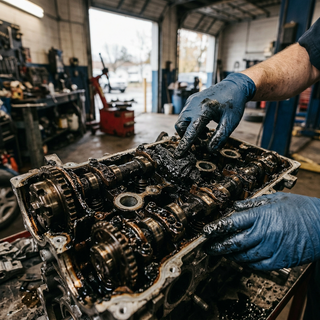
Does Oil Filter Quality Actually Affect Engine Life? Oil filter quality directly impacts engine life by trapping microscopic abrasive particles before they circulate through precision engine components. A high-quality filter maintains structural integrity, retains fine debris down to 20 microns, and preserves steady oil flow under heavy engine loads. Substandard or clogged filters allow dirt to bypass filtration or restrict oil pressure, causing accelerated wear on bearings, crankshafts, and camshafts over time. Engine oil acts as the primary lubricant and coolant for moving internal parts. As oil flows through the engine, it collects metallic dust, combustion soot, and microscopic debris. Without an effective filter in place, these hard contaminants act like abrasive grit against engine bearings, cylinder walls, and valve trains. Over thousands of miles, unfiltered microscopic particles gradually erode precision clearances, reducing oil pressure and shortening the overall operating life of the powerplant. Commuters navigating daily drives along State Route 170 near Calcutta often ask our technicians during routine oil changes whether premium filters are truly necessary. Practical experience shows that consistent filtration quality prevents subtle, cumulative internal erosion that leads to major mechanical repairs. Ford equips modern vehicles with an Intelligent Oil-Life Monitor that calculates maintenance intervals based on real-world driving conditions. To protect engine longevity, replacing the oil filter at every indicated oil change is essential. For expert vehicle maintenance located at 1503 Pennsylvania Ave, East Liverpool, OH 43920, you can get step-by-step directions to our East Liverpool service center or give our service team a call directly at (330) 462-7578 to consult with a technician. Table of Contents What Is a Micron Rating on an Oil Filter and Why Isn't Lower Always Better? Synthetic vs Cellulose Filter Media: Which Protects Engine Components Better? What Is an Oil Filter Bypass Valve and How Does It Protect Your Engine? How Do Extended-Performance Oil Filters Differ from Basic Options to Prevent Repairs? Does Using an Aftermarket Oil Filter Void Your Warranty or Risk Internal Breakdown? Answers to Common Questions About Engine Oil Filters and Ford Service What Is a Micron Rating on an Oil Filter and Why Isn't Lower Always Better? A micron rating measures the smallest size of particle, in micrometers, that an oil filter media can trap from circulating engine oil. A lower micron rating is not automatically better because an overly restrictive filter can choke oil flow, triggering the internal bypass valve and allowing dirty, unfiltered oil to flood engine bearings. One micrometer equals one-millionth of a meter or roughly 1/25,400th of an inch. A human hair averages 70 microns in diameter, whereas particles as small as 10 to 20 microns can slip into the microscopic clearances between crankshaft journals and engine bearings, causing scoring over time. Evaluating a filter requires balancing three distinct performance metrics: Filtration efficiency: The percentage of particles at a specific micron size trapped during fluid passage. Flow rate: The volume of oil allowed to pass through the media per minute without excessive fluid restriction. Dirt-holding capacity: The total amount of debris the media can hold before oil pressure drops. Achieving an ultra-low micron rating with basic materials requires making the media pores extremely dense. Small media pores create high flow resistance, especially when engine oil is cold and thick during initial startup. When oil flow is restricted, pressure drops downstream. The lubrication system responds by opening the bypass valve to protect the engine from oil starvation, allowing unfiltered oil to circulate. Premium filters balance particle capture, fluid throughput, and total capacity in accordance with Society of Automotive Engineers standards such as SAE J1858. Synthetic vs Cellulose Filter Media: Which Protects Engine Components Better? Synthetic filter media protects engine components far better than conventional cellulose media by using engineered synthetic micro-glass fibers that capture smaller particles with higher efficiency while maintaining lower flow restriction. Synthetic media also offers double the dirt-holding capacity and resists high-temperature chemical degradation during extended oil change intervals. Conventional cellulose filter media consists of natural wood pulp paper fibers with irregular shapes and inconsistent pore sizes. Under heat, moisture, and chemical exposure from engine combustion, cellulose paper fibers swell, harden, and break down over time. Synthetic media features laboratory-engineered micro-glass or polyester fibers woven into a dense, uniform structure. This design enables "depth filtration," trapping contaminants throughout the thickness of the material rather than relying solely on the surface layer. Key Media Performance Differences Trapping efficiency: Synthetic media captures particles as small as 15 to 20 microns at over 99% efficiency, whereas standard cellulose paper filters typically capture 30 to 40 micron particles at lower overall efficiency rates. Flow capability: Micro-glass fibers are significantly thinner than paper fibers, leaving larger open pathways for oil to flow freely during cold starts. Thermal and chemical resistance: Modern turbocharged EcoBoost engines operate under intense heat. Synthetic media withstands severe thermal stress and extended drain schedules up to 10,000 miles without tearing or degrading. When servicing your vehicle, utilizing OEM-spec media ensures proper oil flow and filtration depth. Drivers performing home maintenance can conveniently order factory-approved components through our portal for ordering OEM Motorcraft parts to maintain factory performance standards. What Is an Oil Filter Bypass Valve and How Does It Protect Your Engine? An oil filter bypass valve is a spring-loaded safety mechanism that opens when the pressure differential between the filter's inlet and outlet exceeds a safe threshold. It protects the engine by prioritizing oil volume over oil cleanliness, ensuring moving components never suffer total oil starvation during cold starts or severe filter blockage. The oil pump forces fluid into the outer chamber of the filter housing, through the filter media, and out the center core to the engine. If the filter media becomes heavily clogged with debris or if cold oil is too viscous to pass quickly, pressure builds up on the inlet side. Once this pressure differential reaches a factory-calibrated limit—typically between 8 PSI and 15 PSI —the spring compresses, opening the valve and allowing oil to bypass the media directly to the engine bearings. During sub-zero winter morning starts in Boardman, engine oil thickens considerably. Without a functioning bypass valve, dense oil would be unable to pass through the filter media quickly enough, causing several seconds of destructive friction before fluid pressure normalizes. Working alongside the bypass valve is the anti-drainback valve, a flexible seal located behind the filter inlet holes. It prevents oil from draining out of the filter canister back into the oil pan when the engine is turned off. A durable silicone anti-drainback valve remains soft and pliable across extreme temperature ranges, preventing "dry starts" by maintaining immediate oil pressure upon ignition. How Do Extended-Performance Oil Filters Differ from Basic Options to Prevent Repairs? Extended-performance oil filters differ from basic filters by incorporating heavy-gauge steel canisters, synthetic micro-glass filtration media, wire-mesh media reinforcement, and high-temp silicone valves engineered for extended drain intervals. These heavy-duty components resist structural collapse, hold twice as much debris, and maintain proper pressure, preventing costly engine repairs caused by bearing wear and oil pressure loss. Component Feature Basic Filter Extended-Performance Filter Canister Strength Standard thin-gauge steel Heavy-gauge steel rated above 300 PSI burst pressure Filter Media Organic cellulose paper Synthetic micro-glass with wire-mesh backing Anti-Drainback Valve Nitrile rubber Premium silicone anti-drainback valve Service Rating 3,000 to 5,000 miles 10,000 miles or more End Cap Construction Glued composite or paper Stamped steel or heavy synthetic composite Using a basic filter beyond its rated capacity risks media saturation. Once saturated, the filter operates in continuous bypass mode, circulating microscopic grit that scores camshaft lobes, turbocharger shaft bearings, and variable camshaft timing phasers. Keeping up with filter replacements using high-grade components protects internal mechanical tolerances. Owners can ensure timely maintenance by scheduling a service appointment online with our factory-trained technicians. Does Using an Aftermarket Oil Filter Void Your Warranty or Risk Internal Breakdown? Under the federal Magnuson-Moss Warranty Act, using an aftermarket oil filter does not void a vehicle's factory warranty unless the dealer or manufacturer proves that the specific aftermarket filter caused the engine failure. However, installing low-quality or incorrectly specified filters carries a high risk of internal breakdown, including media shredding and improper bypass valve calibration. Federal law protects consumer choice in routine vehicle maintenance. Vehicle owners may choose replacement parts as long as the part meets original equipment specifications for flow rate, burst strength, and filtration efficiency. However, if an inferior filter collapses, tears, or leaks, the vehicle warranty will not cover the resulting internal engine repairs. Substandard paper filter media can deteriorate under sustained thermal stress, shedding loose fibers into the lubrication stream. These loose fibers and circulating sludge travel directly to sensitive engine components, clogging narrow passages in variable valve timing solenoids, oil pressure sensors, and turbocharger oil supply lines. Severe media restriction leads to sustained low oil pressure, triggering dash warning lights and accelerating wear. To avoid installation failures, always inspect the mounting engine pad to ensure the old rubber gasket did not remain stuck to the filter housing—a condition called "double-gasketing" that causes immediate, severe oil loss upon engine startup. Hand-tighten spin-on filters according to specification, and select factory-tested filters like Motorcraft designed specifically for your Ford engine's flow requirements. Answers to Common Questions About Engine Oil Filters and Ford Service Q: How often should an engine oil filter be replaced? Ford recommends replacing the engine oil filter at every oil change, as directed by your vehicle's Intelligent Oil-Life Monitor. For most modern Ford vehicles driven under normal conditions, this interval ranges between 7,500 and 10,000 miles or once per year. Replacing the filter every time you change the oil ensures fresh dirt-holding capacity and prevents accumulated debris from contaminating fresh fluid. Q: What are the signs of a clogged or failing oil filter? Key warning signs of a failing or restricted oil filter include an illuminated oil pressure warning light, dark or sludgy oil on the dipstick, unusual metallic clattering from the engine during acceleration, and elevated operating temperatures. If the oil pressure warning light comes on while driving, safely pull over immediately and turn off the engine to prevent severe mechanical damage. Q: What is the difference between spin-on and cartridge oil filters? A spin-on oil filter is a self-contained metal canister containing the filter media, anti-drainback valve, and bypass mechanism, which threads directly onto the engine block. A cartridge oil filter consists of a replaceable paper or synthetic filter element that drops into an engine-mounted housing, utilizing a reusable cap and new rubber O-rings. Both perform identical filtration functions when properly matched to the engine design. Q: Can an oil filter cause oil pressure problems? An improper or severely clogged oil filter can cause low oil pressure if the internal media collapses or if the bypass valve fails to open under high restriction. Conversely, installing an incorrectly sized filter with an improper bypass pressure setting can alter flow dynamics within the lubrication system, potentially triggering diagnostic trouble codes or insufficient bearing lubrication. Q: Why should routine multi-point inspections include battery testing alongside oil changes? Routine maintenance is most effective when treating the vehicle as a complete system. Testing the battery during an oil service identifies weak cells before cold weather causes sudden starting failure. Combining oil filter replacements with battery checks, fluid top-offs, and tire pressure adjustments ensures total operational reliability for every drive. Maintaining proper engine lubrication with high-quality filtration is one of the most effective ways to ensure long-term vehicle durability. Whether you need routine maintenance or specific replacement parts, our team provides transparent, trusted service using factory-certified components. You can reach our service team directly at (330) 462-7578, schedule your visit online, or drop by by getting directions to our East Liverpool location. We are also happy to assist with comprehensive electrical checks including routine battery service and testing during your next visit. © 2026 Tri State Ford. All rights reserved. Oil Filter Importance in East Liverpool OH | Tri State Ford