Blog / New Vehicle Reviews, Buying Guides, Model Comparisons, Financing &

Why is the 2026 Ford Maverick EcoBoost such a smart choice for your daily commute in the tri-state area?

Article image

Why is the 2026 Ford Maverick EcoBoost such a smart choice for your daily commute in the tri-state area?

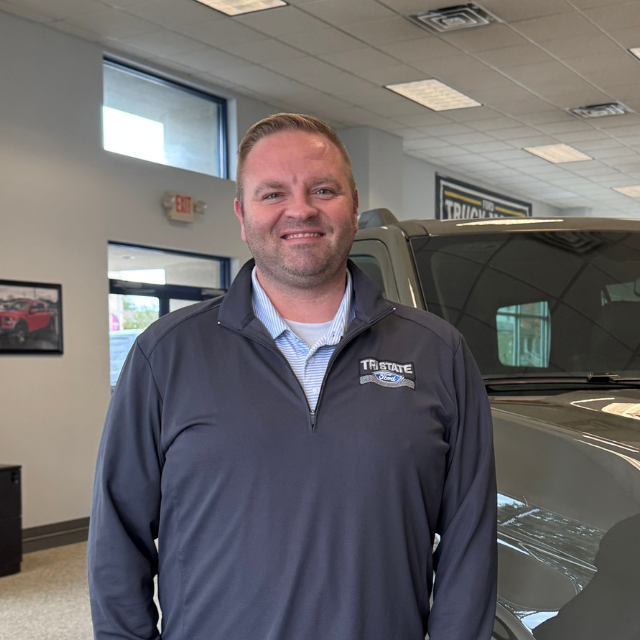
We sat down with Nick Pirl, Sales Manager at Tri State Ford, who has seven years of experience helping drivers in East Liverpool and neighboring communities find the perfect vehicle for their needs. Nick shared why the 2026 Ford Maverick EcoBoost stands out as an ideal option for anyone navigating the diverse roads between Ohio, Pennsylvania, and West Virginia. Nick explained that the Maverick EcoBoost is designed to balance power, efficiency, and versatility — qualities that resonate strongly with commuters in the tri-state region. For example, those traveling from Calcutta, OH to industry hubs like Midland, PA often face a mix of suburban streets and open highways. The Maverick’s turbocharged 2.0-liter EcoBoost engine delivers a robust 250 horsepower and 277 lb-ft of torque, ensuring confident acceleration and smooth merging onto faster roads without sacrificing fuel economy. This makes it a practical choice for daily drives where efficiency matters just as much as responsiveness. Another key factor Nick highlighted is the Maverick’s compact size paired with a spacious interior. This truck fits comfortably into tight parking spots around East Liverpool and Boardman, OH, while still offering plenty of cargo space for work tools, sports gear, or weekend getaway essentials. Its practical configuration appeals to families balancing school runs, errands, and outdoor adventures throughout the tri-state area. Nick also emphasized the value of the Maverick’s affordability combined with Ford’s reputation for durability. Families and professionals in communities like Chester, WV and Industry, PA appreciate a vehicle that is affordable upfront but built to last. The EcoBoost engine’s modern design helps reduce fuel costs over time, making it a smart investment for those conscious of both monthly expenses and long-term reliability. For buyers prioritizing convenience, the Maverick EcoBoost comes with user-friendly tech features and driver-assist systems that make daily commutes safer and more connected. Whether navigating rural roads near Ohioville, PA or busy streets in Calcutta, the Maverick’s technology supports drivers with intuitive smartphone integration and advanced safety aids. For those ready to experience the Maverick firsthand, Nick encourages scheduling a visit. You can get directions to Tri State Ford or simply call us at (330) 462-7578 for personalized assistance. Exploring our inventory is also a great way to find the right Maverick model that fits your commute and lifestyle.

Table of Contents

Could you explain how the EcoBoost engine options vary across the different 2026 Ford Maverick trims?

The 2026 Ford Maverick offers the EcoBoost engine as a key choice for buyers seeking a balance of power and efficiency, but it’s important to understand how this option fits across the various trims available. The EcoBoost engine is a 2.0-liter, turbocharged inline-4 that delivers a robust 250 horsepower along with 277 lb-ft of torque, making it a strong performer for daily driving and light towing needs typical of tri-state area commutes around Calcutta and East Liverpool. Not every Maverick trim comes standard with the EcoBoost. For example, the base XL trim primarily features the 2.5-liter hybrid engine, which appeals to those prioritizing fuel economy. On the other hand, the XLT and LARIAT trims often include the EcoBoost as a standard or available engine, especially when buyers opt for all-wheel drive configurations that enhance traction on varied terrain like the rolling hills near Boardman, OH. This ensures that customers can select trims tailored to their preferences for power or efficiency without sacrificing key features. Choosing an EcoBoost-equipped Maverick means gaining access to an eight-speed automatic transmission designed for smooth shifts and responsive acceleration. This setup supports confident highway merges and quick responsiveness in urban settings like Midland, PA. In contrast, the hybrid trims focus more on CVT transmissions optimized for maximizing fuel savings. For shoppers in the tri-state region interested in exploring the full range of Maverick trims with EcoBoost engines, browsing our Browse New Inventory at Tri State Ford is the best way to find models matching your specific driving needs and budget. Whether you’re drawn to the practical XLT or the more feature-packed LARIAT, the EcoBoost delivers a dependable and spirited drive that aligns well with everyday tasks and weekend adventures.

Can you explain the key performance and towing capabilities of the 2026 Maverick EcoBoost?

The 2026 Ford Maverick equipped with the EcoBoost engine brings a compelling blend of power and practicality, making it a smart choice for drivers across the tri-state area who need a versatile truck capable of handling both daily commuting and more demanding tasks. Under the hood, the Maverick's 2.0-liter EcoBoost four-cylinder engine generates a robust 250 horsepower and 277 lb-ft of torque. This level of performance provides confident acceleration and responsive handling, whether you're navigating city streets in Calcutta, OH or heading out for weekend projects in nearby Poland, OH. One of the Maverick EcoBoost’s standout features is its impressive towing capacity. When properly equipped with the Max Trailer Tow Package, this model can tow up to 4,000 pounds. This capability allows owners in East Liverpool, OH and surrounding communities to haul trailers, boats, or work equipment without compromising control or safety. The truck’s payload capacity is equally practical, supporting up to approximately 1,500 pounds, which is ideal for transporting heavier loads within the truck bed. The EcoBoost engine's turbocharging technology ensures that power delivery remains smooth and efficient, balancing fuel economy with performance. This balance is particularly beneficial for drivers who require a vehicle that can manage both everyday errands and occasional heavy-duty use, such as towing a camper for family trips or hauling supplies for landscaping jobs near Boardman, OH. The Maverick’s compact size combined with its towing strength gives it an edge over larger trucks when it comes to maneuverability in suburban or tight rural settings. For buyers considering used options, exploring our selection of Shop Carfax 1-Owner Vehicles can be a valuable way to find well-maintained Maverick EcoBoost models that offer these strong performance features at a competitive price. Overall, the 2026 Maverick EcoBoost aligns with the needs of tri-state drivers looking for a truck that’s both capable and efficient, making it a reliable partner for work and play alike.

What advanced technology features come standard with the 2026 Ford Maverick?

The 2026 Ford Maverick is designed to offer drivers practical, user-friendly technology that enhances both convenience and safety. At the core, every Maverick comes equipped with Ford’s SYNC® 3 infotainment system, which includes a responsive 8-inch touchscreen. This system supports seamless smartphone integration through Apple CarPlay® and Android Auto®, allowing drivers in East Liverpool, Calcutta, and surrounding tri-state communities to stay connected without distraction during their daily commutes. Safety features are thoughtfully integrated too, with standard driver-assist technologies such as automatic emergency braking, lane-keeping assist, and a rearview camera. These systems provide an added layer of confidence, especially on busy routes or rural roads outside of Calcutta and East Liverpool. The Maverick’s tech suite also includes available WiFi hotspot capability, keeping passengers connected even on longer trips. In addition, the Maverick's keyless entry and push-button start simplify access and ignition, making it easier to get on the road quickly. These smart, accessible features reflect Ford’s commitment to delivering a practical yet modern driving experience well-suited for families and professionals in the tri-state area. For shoppers ready to explore the latest technology-packed Maverick models, browsing our New Inventory offers a firsthand look at these features in action, helping you find the perfect fit for your lifestyle and budget.

What incentives and financing options are currently available for the 2026 Maverick EcoBoost at Tri State Ford?

When considering the 2026 Ford Maverick EcoBoost for your daily drive across East Liverpool, Calcutta, or nearby communities, it’s important to take advantage of available incentives that make purchasing this versatile truck more affordable. Tri State Ford regularly offers competitive incentives designed to provide real value to our customers, helping you save on your new Maverick EcoBoost purchase. These incentives often include manufacturer-backed rebates and special finance rates that can significantly reduce your upfront costs or monthly payments. Depending on your credit profile and eligibility, you may qualify for attractive financing terms tailored to fit your budget, making the Maverick EcoBoost a practical choice for families and professionals balancing work and weekend plans. Our finance specialists at Tri State Ford are experienced in guiding buyers through the process, ensuring transparency and clarity without pressure. Whether you’re interested in straightforward financing or exploring trade-in options on your current vehicle, we’re here to support a smooth purchasing experience. To explore current offers and financing solutions, we encourage you to visit us in person or browse our Truck Inventory online. For directions to our dealership, please click here to visit Tri State Ford. To speak directly with our team, call us at (330) 462-7578.

© 2026 Tri State Ford. All rights reserved.
Posted in:

Recommended Posts

f

Do You Need a Ford F-250 Instead of an F-150?

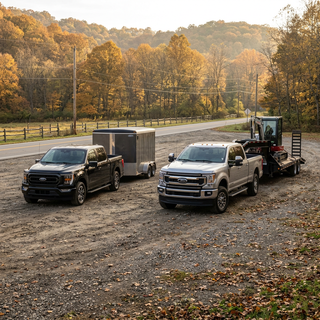
You need a Ford F-250 Super Duty if you regularly tow trailers weighing over 13,500 pounds, carry bed payloads above 2,440 pounds, or require fifth-wheel or gooseneck hitching for commercial equipment and heavy campers. If your trailering needs stay below 13,500 pounds and you prioritize daily ride comfort, easier maneuvering, and lower fuel expense, the half-ton Ford F-150 is the ideal truck for your drive. Selecting between a half-ton pickup and a three-quarter-ton heavy-duty truck comes down to how much work you place on the frame, axle, and powertrain every week. Drivers pulling heavy equipment trailers or large horse trailers across steep terrain require the heavy-duty chassis and immense high-end torque of the F-250. Meanwhile, light-duty truck buyers pulling ski boats, travel trailers, or bed-loaded cargo find that the F-150 provides more than enough structural backbone. At Tri State Ford, our team helps truck buyers match precise trailer weight ratings and bed cargo needs to the exact vehicle build. You can check your current vehicle trade value or drop by our showroom at 1503 Pennsylvania Ave, East Liverpool, OH 43920 to compare these two haulers side by side. If you have questions about current lot availability or spec packages, give us a quick call at (330) 462-7578 to speak with a truck specialist. Table of Contents What Is the Main Difference Between a Ford F-150 and an F-250 Super Duty? How Much Towing and Payload Capacity Do You Get with an F-150 vs. F-250? What Engine Options Power the F-150 vs. F-250, and What Does Diesel Cost? Can an F-250 Fit in a Residential Garage, and How Do Cab and Bed Dimensions Compare? Why Are F-250 Fuel Economy Numbers Not Listed on the Window Sticker? Common Questions About Choosing Between a Ford F-150 and F-250 Find Your Next Ford Pickup at Tri State Ford What Is the Main Difference Between a Ford F-150 and an F-250 Super Duty? The fundamental difference between the Ford F-150 and F-250 Super Duty is vehicle engineering and Gross Vehicle Weight Rating classification: the F-150 is a half-ton light-duty pickup built on a lighter boxed-steel frame for personal daily driving and light hauling, while the F-250 is a three-quarter-ton heavy-duty truck engineered with a thicker high-strength steel frame, heavy-duty solid axles, and commercial-grade suspension components. While both trucks offer modern cab comfort and similar interior dimensions across extended and crew cab models, the underlying hardware operates on entirely different scales. The F-150 utilizes an independent front suspension to absorb road bumps and deliver a smooth car-like ride during daily highway commutes. The F-250 Super Duty utilizes a heavy-duty front axle setup designed to sustain thousands of pounds of continuous tongue weight and extreme payload pressure without sagging or compromising structural integrity. This engineering contrast extends to braking and thermal management. The F-250 houses larger brake rotors, heavy-duty cooling radiators, and commercial transmission fluid coolers that keep operating temperatures stable while pulling maximum weight up steep highway grades. Truck buyers looking for an everyday commuter vehicle that doubles as a weekend boat hauler will find optimal efficiency in our new Ford truck inventory, whereas commercial contractors and heavy equipment operators require the uncompromising steel underpinnings of the Super Duty. How Much Towing and Payload Capacity Do You Get with an F-150 vs. F-250? The Ford F-150 and F-250 Super Duty differ significantly in towing and payload: the F-150 maxes out at 13,500 pounds towing and 2,440 pounds payload, whereas the F-250 can tow up to 22,500 pounds conventionally and 40,000 pounds with a gooseneck setup. Towing capacities on the F-150 vary depending on your choice of engine and axle ratio. Configurations equipped with the 2.7-liter EcoBoost V6 offer up to 8,400 pounds of towing, while the 3.5-liter PowerBoost hybrid V6 achieves up to 11,600 pounds or 12,400 pounds depending on trim setup. Upgrading to the 5.0-liter V8 increases towing capability to 12,800 pounds, and the standard 3.5-liter EcoBoost V6 tops the half-ton lineup at 13,500 pounds. The F-250 Super Duty moves into a higher capability tier entirely. Gas-powered models equipped with the 7.3-liter gas V8 handle up to 22,500 pounds of conventional towing. Specifying the 6.7-liter High-Output Power Stroke diesel V8 along with the High-Capacity Gooseneck Tow Package unlocks maximum pull ratings up to 40,000 pounds across the broader Super Duty line. Maximum payload on the Super Duty lineup reaches up to 8,000 pounds, with F-250 models typically rated around 4,200 pounds depending on cab and bed selection. For buyers navigating rolling hills around Calcutta while pulling loaded utility trailers, having heavy-duty frame strength ensures confidence on back roads. Shoppers seeking pre-owned towing setups can also browse our single-owner pre-owned truck inventory to locate late-model trucks equipped with factory tow packages. What Engine Options Power the F-150 vs. F-250, and What Does Diesel Cost? The Ford F-150 features gas and hybrid powertrains focused on balancing horsepower with fuel efficiency, whereas the F-250 Super Duty offers large-displacement V8 gas engines and a high-output turbodiesel engine engineered for massive low-rpm torque production. Selecting the 6.7-liter Power Stroke Turbo Diesel V8 on an F-250 adds approximately $10,000 to $12,500 to the truck's purchase price compared to standard gas engines. The F-150 engine lineup includes: 2.7-liter EcoBoost V6: Delivers quick acceleration and responsive fuel economy for light daily work. 5.0-liter Coyote V8: Offers traditional naturally aspirated V8 exhaust note and dependable workhorse power. 3.5-liter EcoBoost V6: Supplies maximum light-duty towing power through twin-turbocharged torque. 3.5-liter PowerBoost Hybrid V6: Combines turbocharged gas power with an electric motor for onboard generator capabilities and strong low-end pulling power. The F-250 Super Duty lineup focuses strictly on heavy-duty performance: 7.3-liter Godzilla Gas V8: Generates 430 hp and 485 lb-ft of torque, offering high output without diesel maintenance requirements. 6.7-liter Power Stroke Turbo Diesel V8: Produces up to 500 hp and 1,200 lb-ft of torque, providing unmatched torque for continuous heavy towing over long distances. While the diesel option commands a higher initial price tag, commercial operators and long-distance haulers offset the cost through superior pull power, extended engine longevity, and higher resale values. Buyers seeking factory warranty coverage on heavy-duty powertrains can explore our certified pre-owned Ford inventory for additional protection options. Can an F-250 Fit in a Residential Garage, and How Do Cab and Bed Dimensions Compare? A standard Ford F-250 Super Duty generally will not fit inside a standard 7-foot residential garage opening, as it stands approximately 79 to 81 inches tall and spans up to 250 inches in overall length on SuperCrew configurations. Cab interior dimensions between the F-150 and F-250 SuperCrew models are nearly identical in passenger volume and legroom. Both cabs offer spacious seating for up to six adults, modern touchscreens, and flat rear load floors. However, the F-250 sits noticeably higher off the ground due to its taller frame rails and heavy-duty suspension, making running boards a practical feature for daily entry and exit. Bed length options differ based on your work demands: Ford F-150: Available with a 5.5-foot short bed, a 6.5-foot standard bed, or an 8.0-foot long bed. Ford F-250 Super Duty: Available with a 6.75-foot standard bed or an 8.0-foot long bed. Drivers who commute through suburban retail areas or tight parking lots around Boardman will find the F-150 significantly easier to park and turn. Our team sees many buyers measure their home driveway and garage depth before committing to a long-bed Super Duty. If you are preparing to trade in a smaller vehicle for a full-size or heavy-duty truck, you can value your trade-in online to establish your trade equity before visiting our showroom. Why Are F-250 Fuel Economy Numbers Not Listed on the Window Sticker? Ford F-250 Super Duty trucks do not display EPA fuel economy estimates on their window stickers because vehicles with a Gross Vehicle Weight Rating exceeding 8,500 pounds are classified as heavy-duty commercial vehicles and are exempt from federal consumer fuel economy testing mandates. The Environmental Protection Agency requires mandatory fuel economy testing and Monroney window sticker labeling only for passenger cars and light-duty trucks rated under 8,500 pounds GVWR. Because the F-150 sits below this weight threshold, every new F-150 lists official city, highway, and combined MPG ratings on its window sticker. The F-250, with its reinforced frame and higher payload capabilities, easily exceeds the 8,500-pound limit. Real-world highway testing shows that an F-250 equipped with the 7.3-liter gas V8 typically delivers around 15 mpg on highway runs, while the 6.7-liter Power Stroke diesel V8 achieves approximately 20 mpg under similar unladen highway conditions. Actual figures vary depending on rear axle ratios, trailer weight, speed, and terrain. Buyers planning their vehicle budget can submit an online credit application to secure pre-approved financing terms before selecting their truck configuration. Common Questions About Choosing Between a Ford F-150 and F-250 Q: Which truck rides smoother during daily driving without a trailer? The Ford F-150 delivers a noticeably smoother ride during daily unladen driving thanks to its independent front suspension and light-duty coil-spring setup. The F-250 Super Duty features stiffer heavy-duty leaf springs designed to support high payload weights, resulting in a firmer ride when the bed is empty. Q: Do the F-150 and F-250 share the same cab structure? Yes, the F-150 and F-250 share similar aluminum-alloy cab shell structures and general interior dimensions for SuperCab and SuperCrew models. However, the F-250 rests on a larger chassis with reinforced mounting points, resulting in a higher overall cab height and ground clearance. Q: Is a commercial driver's license required to drive an F-250 Super Duty? No, a commercial driver's license is not required to operate a Ford F-250 for personal use. A standard driver's license covers non-commercial operation of heavy-duty pickups under standard state weight limits. Q: Can an F-150 pull a fifth-wheel or gooseneck camper? While select properly configured F-150 models can pull light gooseneck trailers, fifth-wheel and gooseneck towing is best handled by the F-250 Super Duty. The Super Duty's frame structure, axle ratings, and factory gooseneck hitch prep packages are specifically engineered for heavy pin-weight distribution. Q: How does maintenance cost differ between gas and diesel trucks? Gas engines like the F-150's 3.5-liter EcoBoost or the F-250's 7.3-liter V8 require standard oil capacities and conventional service intervals. The 6.7-liter Power Stroke diesel V8 requires larger oil volumes, regular Diesel Exhaust Fluid refills, and specialized fuel filter replacements, making routine upkeep costs higher over time. Find Your Next Ford Pickup at Tri State Ford Choosing between the versatile Ford F-150 and the heavy-duty F-250 Super Duty comes down to your daily trailering requirements, garage dimensions, and payload demands. Whether you need an efficient half-ton truck for family trips and weekend towing or a high-torque Super Duty for heavy job site equipment, our showroom offers a wide selection of trims and cab configurations ready for a test drive. Visit Tri State Ford at 1503 Pennsylvania Ave, East Liverpool, OH 43920 to inspect bed lengths, step up into the cabs, and compare towing hardware in person. To check current vehicle availability or schedule your test drive appointment, give our team a call at (330) 462-7578 today. Keep Your Vehicle Running Strong Keep your vehicle performing at its best with our service team: Order Parts Schedule Service Appt © 2026 Tri State Ford. All rights reserved. Ford F-250 Heavy Duty Trucks in East Liverpool OH | Tri State Ford

b

When Should You Replace Your Car Tires?

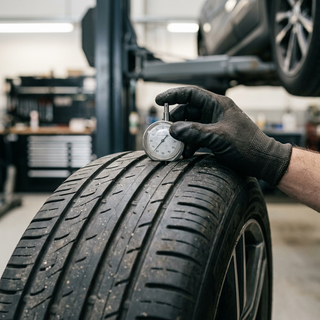
Replace your tires when the tread depth drops to 2/32 inch, when the rubber reaches six years of age, or immediately if you spot sidewall bulges, severe cracking, or deep cuts. The built-in tread wear indicators become level with the tread surface at 2/32 inch, signaling the absolute safety minimum. However, wet-weather stopping distance increases significantly once tread wears below 4/32 inch. Routine monthly checks help identify shallow tread, uneven wear, or structural rubber damage before a tire fails on the road. Tires serve as the single physical link between your vehicle and the pavement, bearing the entire vehicle weight while transferring steering, braking, and acceleration forces. Over time, friction wears down the outer rubber compound, reducing the depth of the circumferential grooves designed to channel water away from the contact patch. The National Highway Traffic Safety Administration (NHTSA) reports that worn tread and tire failures contribute to thousands of highway incidents annually, emphasizing the critical importance of timely tire replacement. Driving conditions around northeastern Ohio place heavy demands on vehicle rubber throughout the year. For example, navigating the riverfront bluffs and elevated steep grades in East Liverpool demands strong traction during seasonal rain, sleet, and winter ice. When rubber hardens from age or wears thin from mileage, stopping distances expand, and cornering grip degrades rapidly. Monitoring tire health involves checking air pressure cold at least once a month, inspecting the sidewalls for physical injury, and verifying that the remaining tread meets safety standards. If you suspect an issue or experience unusual steering wheel vibration, our team at Tri State Ford is available at (330) 462-7578 to conduct a comprehensive tire safety inspection. You can also visit our East Liverpool service center for professional tire balancing, alignment, and tread measurements. Table of Contents How Low Can Tire Tread Get and How Do You Measure It? What Physical Damage and Aging Require Buying New Tires? How Do Worn Tires Impact Braking and Driving Performance? Where Should Two New Tires Be Installed on a Front-Wheel-Drive Car? Common Tire Replacement Questions Answered Schedule Professional Tire Care at Tri State Ford How Low Can Tire Tread Get and How Do You Measure It? Tires must be replaced when tread depth reaches 2/32 inch, which represents the legally enforced safety minimum across most of the United States. Safety experts and original equipment manufacturers strongly advise replacing tires at 4/32 inch to preserve essential wet-road traction and emergency braking performance. As tires wear down, the depth of their tread channels decreases, limiting the volume of water the tire can clear from under the contact patch. When driving at highway speeds through heavy rain, a tire with 2/32 inch of tread takes drastically longer to stop than a new tire with full depth. Measuring Tread Depth with the Penny Test The penny test provides a quick, accessible method to estimate remaining tread depth at home: Select a standard U.S. penny and locate a main tread groove where the rubber appears most worn. Turn the coin so Abraham Lincoln’s head points upside down and faces toward you. Insert the coin straight into the center tread groove. Observe whether the top of Lincoln’s head is covered by the tread rubber. If the entire top of Lincoln’s head remains visible, your tread depth is at or below 2/32 inch, meaning the tire is worn out and requires immediate replacement. Using the Quarter Test for Extended Wet Safety The quarter test measures whether your tires have reached the recommended replacement threshold of 4/32 inch: Insert a U.S. quarter upside down into a primary tread groove with George Washington’s head facing you. Check if the top of Washington’s head is obscured by the rubber. If the top of his head is fully visible, the tread depth has dropped below 4/32 inch. While legally permissible, rubber at this level loses significant traction on wet roads, indicating it is time to start shopping for replacement tires. Identifying Built-In Tread Wear Indicator Bars Modern passenger tires feature built-in tread wear indicator bars molded directly into the primary circumferential grooves. These indicator bars consist of narrow bridges of raised rubber set at exactly 2/32 inch above the bottom of the groove. When the surrounding tread rubber wears down flush with these indicator bars, the tire has reached its legal wear limit and must be taken out of service. Utilizing Digital and Mechanical Tread Depth Gauges For precise readings, technicians use a dedicated tread depth gauge calibrated in thirty-seconds of an inch. To use a manual or digital gauge: Push the gauge probe all the way out. Place the base of the gauge flat against the outer tread block surrounding a main groove. Press the central probe down into the lowest point of the groove until it rests flush against the base rubber. Read the measurement displayed on the barrel or digital screen. Measure across three distinct locations on the tire—the inner shoulder, center tread, and outer shoulder—to identify uneven wear patterns caused by improper alignment or inflation issues. What Physical Damage and Aging Require Buying New Tires? A tire requires immediate replacement if it displays sidewall bulges, severe rubber cracking, deep cuts that expose internal steel belts, or if it reaches six years of age regardless of remaining tread depth. Physical damage to the tire carcass weakens its structural integrity, making it unsafe for high-speed driving. Rubber degrades over time due to exposure to atmospheric oxygen, ultraviolet light, ozone, and thermal changes. Even if a vehicle is driven infrequently and retains deep tread, the internal chemical bonds within the rubber compound break down over time. Ford guidelines recommend replacing tires every six years, or sooner if physical wear dictates, and replacing unused spare tires after six years in storage. Identifying Structural Sidewall Damage Sidewall injuries represent a severe safety hazard because the sidewall absorbs flexing forces during cornering and load carrying. Common forms of structural damage include: Sidewall Bulges and Blisters: A outward bubble on the sidewall indicates that internal fabric cords have snapped after a pothole or curb impact, allowing pressurized air to push through the inner liner. This condition cannot be repaired and requires immediate replacement. Deep Cuts and Gouges: Scrapes or punctures that slice deep enough into the sidewall or shoulder rubber to reveal cord fabric or steel plies compromise the strength of the tire casing. Radial Weather Cracking: Dry rot manifests as fine networks of cracks along the sidewall or inside the tread grooves, signaling that the rubber compounds have dried out and lost elasticity. Tread Separation: Ripples, bulges, or localized elevated areas on the tread surface indicate that the outer tread layer is detaching from the underlying steel belt structure. Reading the DOT Date Code Every tire stamped with a Department of Transportation (DOT) code displays its manufacturing date within the final four digits of the Tire Identification Number (TIN) located on the lower sidewall: DOT PJ8X L5R1 2523 In the example above, the final four digits ( 2523) indicate that the tire was manufactured during the 20th week of 2023. Checking this code ensures you know the exact age of your tires. Puncture Repair Limits According to United States Tire Manufacturers Association (USTMA) industry standards, punctures are only repairable if they occur within the central tread area and measure 1/4 inch or less in diameter. Punctures located on the tire shoulder, sidewall, or bead area cannot be safely patched or plugged, as these flexible zones endure extreme structural loads. Additionally, driving on a flat or underinflated tire causes internal heat damage and rubber shaving, rendering the casing unsuitable for repair. When physical damage or advanced age requires getting new tires, you can use our online tire finder tool to filter exact original equipment tire sizes and speed ratings for your specific vehicle. How Do Worn Tires Impact Braking and Driving Performance? Worn tire tread increases stopping distances on wet roads, degrades cornering grip, and drastically raises the risk of hydroplaning by reducing the tire’s ability to evacuate water from under the contact patch. Shallow tread grooves cannot clear accumulated water, forcing the tire to ride on a thin film of liquid and losing contact with the road surface. Emergency braking tests demonstrate the severe performance penalty of driving on worn rubber. Vehicles stopping on wet pavement at 60 mph on tires worn down to 4/32 inch require an average of 87 additional feet to come to a complete stop compared to vehicles on new tires. That additional stopping distance equals roughly a full second of travel time at highway speeds, which can mean the difference between a safe stop and a severe rear-end collision. Reduced Handling and Cornering Traction Beyond straight-line braking, shallow tread negatively impacts overall handling stability: Steering Response: Worn tires exhibit sluggish turn-in response, causing the steering wheel to feel loose or uncommunicative during lane changes. Lateral Grip: Reduced tread block height lowers lateral grip, causing the vehicle to slide outward during tight cornering maneuvers. Accelerative Traction: Slippery or wet pavement causes worn tires to spin easily under power, triggering traction control intervention and reducing momentum. Elevated Heat Build-Up: Reduced tread depth means less rubber mass to dissipate heat generated during high-speed driving, increasing thermal strain on the internal casing. The rolling terrain and wooded roads near Calcutta demand reliable traction during seasonal rain and freezing weather. Vehicles such as the 2026 Ford Escape equipped with All-wheel drive and a 1.5L EcoBoost engine rely on deep, aggressive tread blocks to distribute power effectively across all four wheels. When tread wears thin, even advanced driver-assist safety technology like anti-lock braking and electronic stability control cannot overcome the fundamental loss of mechanical grip. Where Should Two New Tires Be Installed on a Front-Wheel-Drive Car? When replacing only two tires on a front-wheel-drive vehicle, the new tires must always be installed on the rear axle. Installing fresh tires with full tread depth on the rear wheels maintains directional stability and prevents dangerous rear-end fishtailing on wet or slick roads. Many drivers assume that because a front-wheel-drive car uses its front tires for steering, acceleration, and the majority of braking force, fresh rubber belongs on the front. However, automotive safety engineers, tire manufacturers, and the NHTSA unanimously advise placing new tires on the rear axle regardless of whether the vehicle is front-wheel-drive, rear-wheel-drive, or all-wheel-drive. The Physics of Rear Traction and Hydroplaning Placing worn tires on the rear axle creates a critical traction imbalance during rain or emergency maneuvers: Oversteer Risk: If the rear tires have shallower tread than the front tires, the rear wheels will lose grip first when driving through standing water or making a sudden lane change. Loss of Control: When the rear tires hydroplane, the back end of the car slides outward, causing sudden oversteer (fishtailing). Oversteer is extremely difficult for most drivers to correct. Understeer Management: Conversely, if fresh tires sit on the rear and worn tires remain on the front, the front tires may lose traction first during hard cornering (understeer). Understeer causes the car to push straight ahead, which is easily managed by simply easing off the accelerator pedal. Tire Replacement Rules for All-Wheel-Drive Systems Vehicles equipped with full-time or automatic all-wheel-drive systems, such as the 2026 Ford Explorer featuring a 2.3L EcoBoost engine and a SelectShift® automatic transmission, operate under stricter tire replacement requirements. AWD transfer cases and center differentials require all four tires to roll at virtually identical circumferences. Variations in tread depth greater than 2/32 inch between tires cause the front and rear axles to rotate at slightly different speeds, generating constant friction and heat within the mechanical transfer case. On AWD models, replacing all four tires simultaneously is standard practice to protect complex drivetrain components from expensive mechanical damage. If you ever experience a sudden blowout, flat tire, or severe vibration while driving, remember that complimentary roadside assistance coverage is available for covered Ford owners by contacting Ford Roadside Assistance: 1-800-241-3673. If you suspect uneven tire wear or wish to evaluate your vehicle's overall road performance, you can schedule a test drive or vehicle safety evaluation with our service team to review your tire condition and suspension geometry. Common Tire Replacement Questions Answered Understanding tire care helps you protect your investment, maintain vehicle safety, and prevent premature wear. Below are concise answers to common questions about tire lifespan, repair safety, and driving diagnostics. Q: How do you read the DOT date code on a tire sidewall to check its age? Look at the outer sidewall for the DOT Tire Identification Number, which ends in a four-digit numerical code. The first two digits represent the calendar week of production, while the final two digits indicate the year. For example, a code reading 4222 indicates the tire was produced during the 42nd week of 2022. Tires older than six years should be inspected annually by a professional, and those reaching ten years should be replaced regardless of tread depth. Q: Is it safe to drive on a tire with a plug after a puncture? A plug applied from the outside without removing the tire from the wheel is considered a temporary emergency repair only. Safe puncture repair requires a combination plug-patch installed from inside the tire casing after taking the tire off the rim. This process seals the inner liner and fills the puncture path through the tread plies, preventing moisture from rusting the internal steel belts. Q: Why does my vehicle pull to one side even when tire pressures are balanced? A persistent vehicle pull can be caused by uneven tread wear, internal tire conicity, improper wheel alignment, or dragging brake components. Conicity occurs when manufacturing variations or internal belt shifts cause a tire to roll slightly cone-shaped, creating a lateral pulling force. Swapping the front tires from left to right can help determine if the pull stems from a tire structural issue or suspension alignment misalignment. Q: What tire maintenance helps extend tread life between replacements? Rotating your tires every 5,000 to 8,000 miles promotes balanced rubber wear across all four positions, while maintaining correct cold inflation pressures prevents shoulder or center wear. Additionally, scheduling a four-wheel alignment after hitting harsh potholes or curbs prevents uneven edge scrubbing. For owners performing routine garage maintenance or replacing damaged wheel hardware, our service counter provides quick access for ordering genuine Ford parts and tires engineered specifically for your model. Schedule Professional Tire Care at Tri State Ford Maintaining healthy tires is essential for keeping your vehicle safe, responsive, and efficient through every season. Whether your vehicle needs a routine rotation, wheel alignment, or a fresh set of factory-recommended tires, our team is equipped to handle all your maintenance needs with certified care. We invite you to visit our state-of-the-art facility for quick, transparent tire inspections and expert advice on choosing the right replacement rubber for your driving habits. You can stop by our dealership location at 1503 Pennsylvania Ave, East Liverpool, OH 43920 or speak directly with a service advisor by calling (330) 462-7578. Ready to make sure your vehicle is prepared for the road ahead? Take a moment to schedule a service appointment online today and let our service team keep your vehicle running smoothly and safely. © 2026 Tri State Ford. All rights reserved. Vehicle specification data © JATO Dynamics Limited. Car Tire Replacement Guide in East Liverpool OH | Tri State Ford
s

What Is the Best Used Car to Buy Under $15,000?

The best used car to buy within a value-focused-conscious price range is a well-maintained midsize or compact sedan—such as a pre-owned Ford Fusion, Toyota Corolla, or Honda Civic—or a practical compact crossover like a Ford Escape, offering an optimal balance of vehicle age, mechanical condition, and structural durability. Choosing a model with documented maintenance history and a proven powertrain delivers long-term dependability and lower ownership costs within a strict value-focused. Navigating the pre-owned market at this price point requires strategic evaluation. Recent market data from Cox Automotive shows that used vehicles listed within a value-focused-conscious price range represented just 32 days of supply, compared to 46 days for the overall pre-owned market. Because high-quality value-focused vehicles sell quickly, finding the right option means prioritizing mechanical integrity and verified maintenance records over cosmetic extras or cosmetic trim packages. When evaluating choices in this price range, midsize sedans like the Ford Fusion present exceptional value. Models equipped with the naturally aspirated 2.5-liter Duratec four-cylinder engine or the 2.0-liter hybrid powertrain deliver strong long-term reliability while avoiding complex turbocharger maintenance. For buyers who prefer compact cars, pre-owned options like the Toyota Corolla and Honda Civic are widely recognized for minimal repair needs and stable resale retention. If extra cabin height and expanded cargo capacity are priorities, compact crossovers such as the Ford Escape provide versatile family transportation without exceeding value-focused parameters. At Tri State Ford, our pre-owned inventory is carefully selected and inspected to ensure value-focused-conscious shoppers receive maximum reliability. Whether you commute daily along State Route 170 in suburban Calcutta or drive across state lines for work, our sales team is ready to guide you toward a vehicle that fits your financial goals. You can reach out to our team at (330) 462-7578 or stop by our showroom location in East Liverpool to explore current vehicles in stock. Table of Contents What Are the Most Reliable Used Cars and Sedans within a value-focused-conscious price range? What Mileage Range and Service History Are Ideal When Shopping within a value-focused-conscious price range? Which Used SUVs within a value-focused-conscious price range Offer All-Wheel Drive and Family Utility? Which Used Trucks Can You Buy for within a value-focused-conscious price range? What Essential Safety Features and Financing Options Should You Look For? Common Questions About Buying Used Vehicles within a value-focused-conscious price range Drive Home in a Dependable Used Car from Tri State Ford What Are the Most Reliable Used Cars and Sedans within a value-focused-conscious price range? The most reliable pre-owned sedans available within a value-focused-conscious price range include the Ford Fusion, Toyota Corolla, Honda Civic, Toyota Camry, and Honda Accord. These vehicles consistently demonstrate long-term mechanical endurance, low annual repair expenses, and wide replacement part availability, making them smart financial investments for daily drivers. Sedans remain one of the strongest value segments within a value-focused-conscious price range because they experience less dramatic price inflation than trucks or large SUVs. Ford guidance highlights non-turbo versions of the Ford Fusion as standout value candidates. Models equipped with the 2.5-liter iVCT engine mated to a smooth 6-speed automatic transmission provide uncomplicated, heavy-duty service over many years. Furthermore, the Ford Fusion Hybrid offers exceptional urban fuel efficiency, making it an excellent choice for daily commuters seeking reduced fuel spending. For shoppers expanding their search across top Japanese manufacturers, long-standing industry benchmarks deliver consistent results: Toyota Corolla: Renowned for straightforward mechanical design, achieving up to 30 mpg city / 40 mpg highway on standard trim levels. Honda Civic: Offers sharp handling, comfortable cabin space, and robust engine reliability across multiple model generations. Toyota Camry: Delivers midsize roominess, refined ride quality, and low lifetime ownership costs. Honda Accord: Features spacious rear seating, intuitive interior ergonomics, and strong crash-test performance history. Finding a dependable vehicle requires looking beyond the brand name on the grille. Prioritizing vehicles with clear vehicle history reports ensures you avoid hidden collision damage or neglected service schedules. Buyers looking for total peace of mind can explore our selection of Carfax 1-owner pre-owned vehicles to verify single-ownership care, or browse our Ford certified pre-owned inventory for rigorous multipoint inspections and manufacturer-backed coverage options. What Mileage Range and Service History Are Ideal When Shopping within a value-focused-conscious price range? An ideal mileage range when purchasing a used car within a value-focused-conscious price range is between 60,000 and 90,000 miles, providing a sweet spot between affordable purchase pricing, remaining component lifespan, and modern interior safety features. However, a well-documented service record on a vehicle with 100,000 miles often represents a better overall purchase than an unmaintained vehicle showing 70,000 miles. Evaluating vehicle age against total mileage is a core part of value-focused shopping. Edmunds' research indicates that sub-$15,000 buyers frequently weigh a three-year difference in age or an additional 35,000 miles when balancing price against condition. A higher-mileage vehicle that underwent routine oil changes every 5,000 to 7,500 miles and received comprehensive fluid flushes every 30,000 miles for the transmission, cooling system, and brakes will consistently outlast a lower-mileage vehicle that suffered from deferred maintenance. When assessing a pre-owned vehicle that has reached or passed the 80,000-mile mark, buyers should verify that major service milestones have been completed: Cooling & Drive Belts: Inspection or replacement of accessory drive belts, radiator hoses, and engine coolant. Brake System: Replacement of brake pads, rotors, and fresh brake fluid flush to maintain hydraulic pressure. Transmission Care: Transmission fluid and filter refresh to protect internal gears and solenoid function. Spark Plugs & Ignition: Fresh spark plugs and air filters to preserve original engine horsepower and fuel economy. Battery & Electrical: Diagnostic testing of the charging system to prevent unexpected starting issues. For shoppers who decide that a higher-mileage vehicle does not align with their ownership goals, stepping up to brand-new Ford models provides factory warranties and pristine component health. For current owners looking after an existing vehicle, our technicians offer routine battery service guidance and convenient off-site support through the Ford Mobile Service program to handle essential maintenance right in your driveway. Which Used SUVs within a value-focused-conscious price range Offer All-Wheel Drive and Family Utility? Pre-owned compact crossovers within a value-focused-conscious price range that deliver reliable all-wheel drive, spacious interiors, and versatile cargo utility include the Ford Escape, Honda CR-V, Toyota RAV4, and Subaru Forester. These utility vehicles provide confident traction on slick road surfaces while maintaining reasonable fuel economy for daily commuting. Compact SUVs have become the preferred choice for families who need flexible interior packaging for sport equipment, grocery runs, and child safety seats. A pre-owned Ford Escape from recent model generations stands out by offering up to 34 cubic feet of rear cargo volume behind the second row, which expands to over 67 cubic feet when the rear seats are folded flat. Models equipped with intelligent all-wheel drive automatically monitor road traction, transferring torque to the rear wheels before wheel slippage occurs on steep riverfront bluffs or unpaved rural inclines. Comparing popular crossover choices within a value-focused-conscious price range highlights specific lifestyle advantages: Ford Escape: Features responsive handling, intuitive infotainment controls, and available all-wheel drive for confident winter driving. Honda CR-V: Highly regarded for wide door openings, flat cargo floor loading, and excellent rear legroom. Toyota RAV4: Known for durable interior materials, intuitive dash controls, and strong resale value retention. Subaru Forester: Offers standard symmetrical all-wheel drive, generous ground clearance, and expansive outward visibility. When shopping for an AWD utility vehicle in this price class, buyers should confirm that all-wheel drive is actually installed on the specific listing rather than assuming it comes standard on every trim. Upgrading to an SUV is straightforward when leveraging existing vehicle equity. You can quickly calculate your current car's purchase power using our online trade-in appraisal tool to apply its value directly toward your pre-owned down payment. Which Used Trucks Can You Buy for within a value-focused-conscious price range? Pre-owned pickup trucks available within a value-focused-conscious price range primarily consist of older model years of full-size trucks like the Ford F-150 and Chevrolet Silverado 1500, or midsize trucks such as the Nissan Frontier and Toyota Tacoma. These trucks typically feature higher mileage or regular cab configurations while retaining substantial towing and hauling capability. Finding a capable truck on a $15,000 value-focused requires prioritizing mechanical frame strength, powertrain health, and axle ratings over pristine cosmetic body condition. A pre-owned Ford F-150 equipped with the 3.7-liter V6 or 5.0-liter V8 engine provides proven work-ready performance, capable of towing 5,000 to 8,500 lb when properly equipped. Midsize options like the Nissan Frontier with a 4.0-liter V6 offer a narrower body footprint and easier maneuverability in tight parking spots while maintaining a bed payload rating of over 1,200 lb. Key considerations when evaluating value-focused pickup trucks include: Frame & Undercarriage Integrity: Inspecting structural frame rails for heavy surface rust or corrosion from winter road salt exposure. Drivetrain Configuration: Choosing between two-wheel drive for lower maintenance costs or four-wheel drive with a dual-range transfer case for mud and snow traction. Cab & Bed Dimensions: Balancing regular cab models with longer 6.5-foot beds against SuperCab or crew cab models that offer rear passenger seating. Service & Towing History: Checking whether the vehicle was used for heavy commercial towing, which places added wear on transmission cooling systems and rear differentials. Securing competitive auto financing makes purchasing a pre-owned truck smooth and affordable. You can start the pre-approval process from home by completing our secure online financing application to review monthly payment plans tailored to your personal value-focused. What Essential Safety Features and Financing Options Should You Look For? Essential safety features to prioritize in used cars within a value-focused-conscious price range include electronic stability control, side-curtain airbags, a rearview camera, and available driver-assist technologies such as blind-spot monitoring or automatic emergency braking. Comparing safety records helps ensure maximum protection for every family member on board. Safety performance remains a top concern for pre-owned buyers. National Highway Traffic Safety Administration (NHTSA) testing evaluates vehicles through frontal, side barrier, side pole, and rollover tests, assigning an Overall Vehicle Score up to 5 stars. When comparing popular sedans like the Honda Civic and Toyota Corolla, both models consistently achieve 5-star overall safety ratings from NHTSA and earn Top Safety Pick designations from the Insurance Institute for Highway Safety (IIHS) across modern model years. Key driver-assist and safety features to check on a test drive include: Electronic Stability Control: Helps prevent skids and loss of steering control on wet or icy pavement. Rearview Camera Systems: Standard on 2018 and newer vehicles, aiding rear visibility while backing out of driveways. Blind-Spot Monitoring: Alerts drivers to vehicles traveling in adjacent lane blind spots. Forward Collision Warning: Warns of approaching obstacles ahead to help reduce collision severity. Evaluating auto financing options is equally important when closing a pre-owned transaction. Getting pre-approved helps set a clear purchasing ceiling and clarifies interest rate expectations before choosing a car. Our finance team works with local and national lenders to construct practical financing packages regardless of your credit background. When you are ready to take the next step toward a dependable vehicle, visit our East Liverpool dealership for a personal test drive. Our team is standing by to answer your questions—give us a call directly at (330) 462-7578 to speak with a pre-owned specialist today. Common Questions About Buying Used Vehicles within a value-focused-conscious price range Q: How do buyers verify if a pre-owned vehicle within a value-focused-conscious price range has an active recall? Buyers can verify active recall status by entering the vehicle’s 17-digit Vehicle Identification Number (VIN) into the official NHTSA recall lookup tool online. This free database displays uncompleted safety recalls and safety campaign notices. Dealership sales advisors can also pull current recall reports and ensure required safety repairs are completed prior to vehicle delivery. Q: Can buyers obtain auto financing for pre-owned cars with higher mileage? Yes, financing is widely available for pre-owned vehicles with higher mileage, though current loan terms and interest rates depend on lender guidelines, vehicle age, and credit profile. Lenders evaluate overall credit history, income stability, and down payment amount alongside vehicle condition. Submitting a structured credit application helps determine exact loan approval terms. Q: What documents should shoppers bring to the dealership when buying a used car within a value-focused-conscious price range? Shoppers should bring a valid government-issued driver’s license, current proof of auto insurance, recent pay stubs or proof of income, and a utility bill for address verification. If trading in an existing vehicle, bring the title, current vehicle registration, and all keys or key fobs to ensure a smooth paperwork process. Q: How does all-wheel drive affect fuel economy on pre-owned crossovers? All-wheel-drive systems add physical weight and mechanical drag to a vehicle’s driveline, typically reducing fuel economy by approximately 1 to 2 mpg compared to two-wheel-drive equivalents. Modern intelligent AWD systems mitigate this impact by engaging the rear wheels only when front-wheel traction slip is detected. Q: Is a pre-purchase vehicle inspection recommended before completing a used car transaction? A pre-purchase inspection by a certified technician is strongly recommended when purchasing any pre-owned vehicle. A comprehensive inspection evaluates frame integrity, brake wear, suspension bushings, engine diagnostics, and fluid conditions, revealing potential mechanical needs before purchase decisions are finalized. Drive Home in a Dependable Used Car from Tri State Ford Finding a high-quality, reliable vehicle within a value-focused-conscious price range requires working with a dealership committed to thorough vehicle preparation and customer satisfaction. At Tri State Ford, our pre-owned inventory features carefully inspected sedans, versatile crossovers, and practical trucks engineered to deliver years of dependable transportation. Our experienced team is here to walk you through vehicle specs, compare model features, and arrange flexible financing tailored to your monthly value-focused. Start your journey today by browsing our online selection, getting an instant appraisal on your trade-in, or scheduling a test drive. Contact our sales department or visit our showroom to test drive your next vehicle today. Keep Your Vehicle Running Strong Keep your vehicle performing at its best with our service team: Order Parts Schedule Service Appt © 2026 Tri State Ford. All rights reserved. Used Cars Under $15,000 in East Liverpool OH | Tri State Ford