

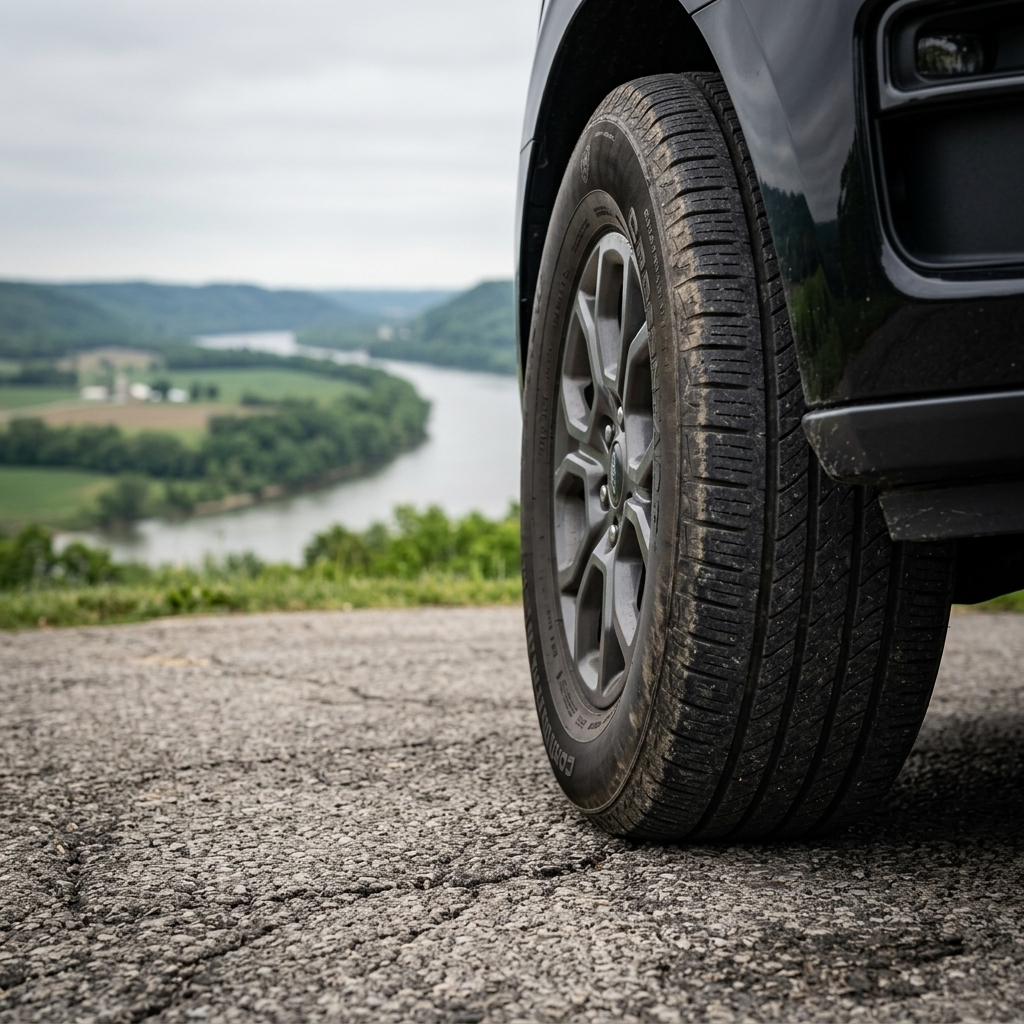
 Recognizing When Your Vehicle Needs a Fresh Set of Tires
Tires are the only point of contact between your vehicle and the road, making their condition a primary factor in your family’s safety. Over time, the rubber compounds naturally degrade, even if you do not drive long distances every day. We often see tires that look fine at a glance but show signs of dry rot or structural weakness upon closer inspection. If you notice a persistent vibration in the steering wheel or hear a rhythmic thumping noise while driving, these are often indicators that the internal belts of a tire have shifted or that the tread has become uneven.
The terrain around East Liverpool features riverfront bluffs and rising hills that can put extra stress on your vehicle’s grip, especially during wet or icy conditions. Structural damage is another critical concern; we recommend checking your sidewalls regularly for any visible cracks, cuts, or bulges. These “bubbles” in the sidewall indicate that the internal structure has failed, and the tire is at a high risk of a sudden blowout. If you find any of these issues, it is important to schedule a service appointment immediately to have a certified technician evaluate the damage.
For those who have kept their vehicles for several years, age is just as important as tread depth. Industry standards from the NHTSA suggest that tires should generally be replaced every six to ten years regardless of how much tread is left. If you are unsure how old your current set is, you can use our online tire finder tool to see which options are recommended for your specific model. Sometimes, the cost of extensive repairs and a full set of new tires might lead you to consider if a different vehicle fits your needs better. In those cases, you can look into a new vehicle custom order or browse our current new vehicle specials to see if a fresh start is the more practical path. We also maintain a list of used vehicle specials and manufacturer vehicle specials for those looking for dependable alternatives. If you need a professional opinion on your current set, feel free to give our service team a quick call or stop by for on-site assistance at our Pennsylvania Ave location.
Table of Contents
- Mastering the Penny Test and Measuring Tread Depth
- Decoding the Numbers and Symbols on Your Sidewall
- Choosing Between All-Season and All-Weather Tires for Ohio Winters
- Understanding Installation Costs and the Importance of Regular Rotation
- Quick Answers Regarding Tire Maintenance and Replacement
- Ensuring Road Safety with Expert Tire Service
Mastering the Penny Test and Measuring Tread Depth
How can you tell if your tread has reached the end of its useful life without specialized tools? The most common and effective method is the penny test. To perform this, take a standard copper penny and insert it into the tread groove with Abraham Lincoln’s head facing down toward the tire. If you can see the top of Lincoln’s head, your tread depth is likely at or below 2/32 of an inch, which is the legal minimum in most states. At this level, the tire can no longer effectively channel water away, significantly increasing the risk of hydroplaning on wet roads.
The gently rolling hills in Calcutta require consistent traction, particularly when navigating the small valleys and streams that can collect water during a heavy rain. While 2/32 of an inch is the legal limit, many safety organizations recommend replacing tires sooner. For instance, all-season tires begin to lose significant snow traction once they drop below 5/32 of an inch. If you frequently drive on the moderately elevated terrain of northeastern Ohio, maintaining deeper tread is a matter of financial prudence and family security.
If your tires pass the penny test but you still feel a loss of confidence on the road, it might be time to experience how a fresh set of tires—or a newer vehicle—handles the local roads. You can schedule a test drive to compare the feel of a new Ford against your current ride. Our finance department is available to discuss how maintenance costs factor into your long-term budget, and for those who need rugged reliability for work or home, we have a wide truck inventory featuring the latest safety and traction technologies.
Decoding the Numbers and Symbols on Your Sidewall
Every tire has a story written on its sidewall in a series of numbers and letters that describe its size, capabilities, and age. A typical code might look like P225/65R17. The P stands for P-Metric, meaning it is designed for passenger vehicles. The first three digits, 225, represent the tire’s width in millimeters from sidewall to sidewall. The second number, 65, is the aspect ratio, which tells you the height of the tire’s cross-section as a percentage of its width. The R indicates radial construction, and the 17 is the diameter of the wheel in inches.
Understanding these numbers is vital when you are looking to maintain the performance of your vehicle, especially for commercial users. If you are managing a fleet, you might be looking at our new work truck inventory where load ratings and ply counts become even more important. Another critical piece of information is the DOT code, a four-digit number that tells you exactly when the tire was manufactured. The first two digits represent the week, and the last two represent the year. A code of 1223 means the tire was made in the 12th week of 2023.
We know your time is valuable, which is why we offer pickup and delivery service for many maintenance needs, allowing you to stay focused on your day while we handle the technical details. If you want to learn more about which tire specifications are right for your specific Ford model, you can find our hours and directions online to plan a visit. Our team can walk you through the load index and speed symbols to ensure your tires are perfectly matched to your driving habits.

Choosing Between All-Season and All-Weather Tires for Ohio Winters
While many drivers assume all-season tires are sufficient for year-round use, there is a distinct difference between “all-season” and “all-weather” options. Standard all-season tires use a rubber compound that begins to harden when temperatures drop below 45 degrees Fahrenheit, which reduces their ability to grip the road. All-weather tires, however, are a hybrid that carries the Three-Peak Mountain Snowflake (3PMSF) symbol. This indicates the tire has been tested to provide improved traction in severe snow conditions while still being suitable for summer driving.
In cold climates like ours, dedicated winter tires are still the gold standard for stopping distance on ice. They stay soft in extreme cold and feature deep sipes designed to bite into packed snow. If you are operating a business with our transit work vans, choosing the right seasonal tire can be the difference between making a delivery on time or getting stuck. We take pride in being a supportive part of the community, and our dealership team is always ready to explain these differences in plain language so you can make an informed choice for your family’s safety.
If you are considering upgrading your vehicle to something with Intelligent 4WD or All-Wheel Drive to better handle the winter, you can start by getting a KBB instant cash offer for your current car. Combining the right tires with a capable drivetrain provides the ultimate peace of mind during those unpredictable Ohio lake-effect snow squalls.
Understanding Installation Costs and the Importance of Regular Rotation
When budgeting for new tires, it is important to look beyond the price of the rubber itself. A professional installation includes several necessary steps to ensure the vehicle runs smoothly and safely. This typically involves mounting the tire to the wheel, balancing the assembly to prevent vibrations, and replacing the valve stems or servicing the Tire Pressure Monitoring System (TPMS) sensors. There is also a small environmental disposal fee for your old tires. We are committed to transparent communication, so we always provide a clear breakdown of these costs before any work begins.
Once your new tires are on the road, regular rotation is the best way to protect your investment. Most manufacturers recommend rotating your tires every 5,000 to 7,500 miles, or roughly every time you get an oil change. Because the front tires handle most of the steering and braking forces, they tend to wear out faster than the rears. Swapping their positions ensures they wear evenly, which can extend the life of the set by thousands of miles. You can find more tips on vehicle longevity and maintenance by visiting our automotive blog.
For our commercial customers utilizing our F-Series work inventory or our used work truck options, keeping up with rotations is even more critical due to the heavy loads these vehicles carry. Uneven wear on a heavy-duty truck can lead to decreased fuel efficiency and increased strain on the suspension components.
Quick Answers Regarding Tire Maintenance and Replacement
Q: How can I tell if my tires are wearing unevenly?
You can check for uneven wear by running your hand across the tread. If one side feels smoother than the other, or if you see “cupping” (dips in the tread), your vehicle may be out of alignment. This is a common issue we see after hitting a deep pothole or a curb, and it should be addressed quickly to prevent ruining a new tire.
Q: Do I need to replace all four tires at the same time?
On All-Wheel Drive vehicles, it is highly recommended to replace all four at once to avoid damaging the drivetrain. If the tires have different diameters due to uneven wear, it can trick the computer system into thinking a wheel is slipping. For front-wheel-drive cars, you can sometimes replace just two, but they should always be installed on the rear axle for better stability.
Q: What should I do if I find a nail in my tire?
If the puncture is in the main tread area and is smaller than a quarter-inch, it can often be repaired with a professional plug and patch. However, if the damage is on the shoulder or the sidewall, the tire cannot be safely repaired and must be replaced. You can order genuine parts and tires through our service center to ensure a proper fit.
Q: Why is my tire pressure light on when it gets cold?
Air density changes with the temperature; for every 10-degree drop, your tire pressure can decrease by about 1 psi. If your light comes on during the first cold snap of the year, it likely just needs a quick top-off. If you are looking for a vehicle with more advanced monitoring, feel free to browse our current truck inventory. As a trusted Ford dealership near you, we are happy to check your pressures for you anytime.
Ensuring Road Safety with Expert Tire Service
Your tires are the foundation of your vehicle’s safety system, affecting everything from braking distance to fuel economy. Whether you are commuting across the tri-state area or taking the family to a local park, having dependable rubber under you is essential. Our expert technicians use only high-quality parts and the latest equipment to keep your Ford running like new. We also offer mobile service options for certain maintenance tasks, bringing our expertise directly to your driveway.
Before your next trip, take a moment to check your tread and battery health. We offer specialized battery service and advice to ensure your vehicle starts reliably in any weather. Don’t forget to check our monthly service specials for savings on routine maintenance. If you have any concerns about your tires, give us a quick call or get directions to our shop. For added peace of mind, remember that Ford owners have access to manufacturer-backed support; you can reach Ford Roadside Assistance at 1-800-241-3673 for help with flats or breakdowns.
Connect with us


- Automotive News, New Vehicle Reviews, Buying Guides, Financing & Insurance, Seasonal Driving Tips
- Buying Guides, Financing & Insurance, New Vehicle Reviews, Commercial Fleet Sales, Custom Orders & Factory Builds
- Buying Guides, Financing & Insurance, New Vehicle Reviews, Model Comparisons, Sales & Promotions
- Buying Guides, Financing & Insurance, New Vehicle Reviews, Model Comparisons, Technology & Innovation
- Buying Guides, Financing & Insurance, Used Vehicle Guides, New Vehicle Reviews, Cross-Border Purchasing
- Buying Guides, Financing & Insurance, Vehicle Inventory & Offers, Dealership Visit Preparation, Trade-In & Valuation
- Buying Guides, New Vehicle Reviews, Financing & Insurance, Commercial Vehicle Sales, Model Comparisons
- Commercial Leasing Options, Business Fleet Solutions, Financing & Leasing Programs, Commercial Vehicle Inventory, Business Vehicle Acquisition
- Commercial Truck Sales, Fleet Purchasing Guides, Financing & Lease Options, Work Truck Customization, New Vehicle Inventory
- Commercial Truck Sales, Fleet Vehicle Financing, Custom Work Truck Upfits, Commercial Vehicle Buying Guides, Used Commercial Truck Inventory
- Commercial Vehicle Sales, Financing & Leasing, Small Business Vehicle Incentives, Fleet Purchasing Guides, Tax Benefits for Vehicle Buyers
- Commercial Vehicle Sales, Fleet Leasing & Management, Commercial Financing & Tax Incentives, Upfitting & Customization Solutions, Trade & Lease Programs
- Commercial Vehicle Sales, Fleet Purchasing & Management, Financing & Leasing for Businesses, New & Used Work Truck Inventory, Commercial Truck Ordering Process
- Community Engagement & Events, New Vehicle Promotions, Financing & Trade-In Options, Maintenance & Service, Used Vehicle Offers
- Community Events & Customer Appreciation, New Vehicle Reviews, Financing & Trade-In Guides, Maintenance & Service Specials, Commercial & Work Truck Solutions
- Community Events & Dealership News, New Vehicle Promotions & Incentives, Maintenance & Service Specials, Financing & Trade-In Guidance, Family-Friendly Dealership Experiences
- Community Events & Dealership News, New Vehicle Reviews, Financing & Insurance, Maintenance & Service, Work Trucks & Commercial Vehicles
- Community Events, New Vehicle Buying Guides, Financing & Insurance, Maintenance & Service, Local Dealership News
- Compare Cars
- Custom Ordering & Build Process, New Vehicle Inventory & Offers, Financing & Trade-In Guidance, Manufacturer Incentives & Rebates, Vehicle Purchase & Order Tracking
- Dealership Events & Promotions, Financing & Trade-In Options, Maintenance & Service Specials, Community Involvement & Charity, New & Used Vehicle Buying Guides
- East Liverpool, OH Ford Dealer
- East Liverpool, OH Used Cars
- Financing & Insurance, Buying Guides, Commercial Vehicle Solutions, Fleet Management, Inventory and Availability
- Financing & Insurance, Buying Guides, New Vehicle Reviews, Used Vehicle Guides, Automotive Sales & Inventory
- Financing & Insurance, Buying Guides, New Vehicle Reviews, Used Vehicle Guides, Automotive Sales Strategies
- Financing & Insurance, Buying Guides, New Vehicle Reviews, Used Vehicle Guides, Model Comparisons
- Financing & Insurance, Buying Guides, Used Vehicle Guides, New Vehicle Reviews, Automotive Sales Strategies
- Financing & Insurance, Buying Guides, Used Vehicle Guides, Trade-In Tips, New Vehicle Sales
- Financing & Insurance, Buying Guides, Vehicle Inventory & Offers, Trade-In & Appraisal, Dealership Services
- Financing & Insurance, Buying Guides, Vehicle Trade-In Tips, Dealership Sales Process, New Vehicle Promotions
- Financing & Insurance, Leasing Benefits, Model Comparisons, Technology & Innovation, Buying Guides
- Leasing & Financing Options, Buying Guides, Model Comparisons, Negotiation Tips, Inventory & Specials
- Leasing & Financing Options, Buying Guides, New Vehicle Reviews, Model Comparisons, Technology & Innovation
- Leasing & Financing Options, New Vehicle Leasing Guides, Buying Guides, Inventory Spotlight, Trade
- Leasing & Lease Deals, Financing & Insurance, New Vehicle Sales, Commercial Vehicle Leasing, Vehicle Trade-In & Purchase Options
- Leasing Options, Financing & Insurance, New Vehicle Reviews, Buying Guides, Technology & Innovation
- Leasing Options, Financing & Insurance, New Vehicle Sales, Buying Guides, Vehicle Inventory
- Maintenance & Service, Air Conditioning Repair, Genuine Parts & Accessories, Dealer-Authorized Service, Vehicle Ownership Care
- Maintenance & Service, Automotive Air Conditioning Repair, Vehicle Cooling System Care, Diagnostic & Leak Detection, Seasonal Vehicle Maintenance
- Maintenance & Service, Automotive Detailing & Cleaning, Seasonal Vehicle Care, Vehicle Protection & Preservation, Service Center Expertise
- Maintenance & Service, Automotive Detailing & Paint Care, Vehicle Exterior Protection, Paint Repair & Restoration, Parts & Accessories Installation
- Maintenance & Service, Automotive Detailing & Protection, Corrosion & Rust Prevention, Paint & Exterior Care, Professional Vehicle Care
- Maintenance & Service, Automotive Detailing, Paint Protection & Care, Seasonal Vehicle Care, Professional Vehicle Servicing
- Maintenance & Service, Automotive Detailing, Vehicle Care & Protection, Off-Road Vehicle Maintenance, Parts & Repairs
- Maintenance & Service, Automotive Electrical Systems, Battery Care & Replacement, Diagnostics & Repairs, Electric Vehicle Maintenance
- Maintenance & Service, Automotive Electrical Systems, Battery Care & Replacement, Vehicle Lighting & Electrical Issues, Roadside Assistance & Emergency Services
- Maintenance & Service, Automotive Fluids & Lubricants, Vehicle Care & Ownership, Dealership Service & Repairs, Preventive Maintenance
- Maintenance & Service, Automotive Glass Repair, Safety Features, Technology & Innovation, Mobile & Convenient Service
- Maintenance & Service, Automotive Lighting & Electrical, Vehicle Safety & Visibility, DIY Vehicle Care, Parts & Accessories
- Maintenance & Service, Automotive Parts & Accessories, Seasonal Vehicle Care, Vehicle Safety & Visibility, Professional Auto Service
- Maintenance & Service, Automotive Parts & Accessories, Vehicle Air Quality & HVAC Care, Preventive Vehicle Maintenance, Service Tips & FAQs
- Maintenance & Service, Automotive Parts & Accessories, Vehicle Ownership Care, Engine Care & Protection, Warranty & Service Contracts
- Maintenance & Service, Automotive Parts & Accessories, Vehicle Safety & Repair, Warranty & Coverage, Service Specials & Offers
- Maintenance & Service, Automotive Parts & Components, Vehicle Safety & Repair, Warranty & Service Coverage, Preventative Vehicle Care
- Maintenance & Service, Automotive Parts & Repairs, Vehicle Warranty & Protection, Service Center Tips, Cost-Effective Vehicle Care
- Maintenance & Service, Automotive Repair Tips, Service Team Selection, Warranty & Service Policies, Vehicle Ownership Care
- Maintenance & Service, Automotive Repair, Mobile & Remote Vehicle Service, Warranty & Roadside Assistance, OEM Parts & Service Specials
- Maintenance & Service, Automotive Repair, Parts & Accessories, Vehicle Ownership Care, Technology & Innovation in Service
- Maintenance & Service, Automotive Repair, Parts & OEM Components, Vehicle Longevity & Care, Service Department Insights
- Maintenance & Service, Automotive Technology & Diagnostics, Vehicle Electronics & Sensors, Seasonal Vehicle Care, Parts & Repairs
- Maintenance & Service, Automotive Technology & Software Updates, Warranty & Recall Service, Mobile Vehicle Repair & Convenience, Customer Service & Transparency
- Maintenance & Service, Battery Care & Diagnostics, Electric Vehicle (EV) Maintenance, Seasonal Vehicle Care, Automotive Electrical Systems
- Maintenance & Service, Battery Care & Replacement, Vehicle Electrical Systems, Seasonal Vehicle Maintenance, Professional Automotive Repairs
- Maintenance & Service, Brake System Care, OEM Parts & Replacement, Vehicle Safety & Inspections, Expert Technician Services
- Maintenance & Service, Brake System Care, Vehicle Repair Tips, Automotive Parts & Components, Safety Features
- Maintenance & Service, Brake System Care, Vehicle Safety & Inspection, Automotive Repair Tips, Service Financing & Convenience
- Maintenance & Service, Brake System Care, Vehicle Safety & Inspection, Parts Quality & Replacement, Heavy Duty Vehicle Maintenance
- Maintenance & Service, Brake System Care, Vehicle Safety & Inspections, Parts & Components, Professional Automotive Services
- Maintenance & Service, Brake System Care, Vehicle Safety & Inspections, Parts & Repairs, Expert Tips & Advice
- Maintenance & Service, Brake System Care, Vehicle Safety Inspections, Automotive Repair Tips, OEM Parts & Service
- Maintenance & Service, Brake Systems & Repair, Vehicle Parts & Accessories, Towing & Load Management, Seasonal Driving Tips
- Maintenance & Service, Certified Technician Insights, Warranty & Service Coverage, Genuine OEM Parts, Service Center Selection Guidance
- Maintenance & Service, Cooling System Repairs, Vehicle Ownership Care, Diagnostic & Troubleshooting, Automotive Parts & Components
- Maintenance & Service, Diagnostic Services, Vehicle Health & Diagnostics, Service Tips & Advice, Check Engine Light Solutions
- Maintenance & Service, Engine Care & Performance, Parts & Accessories, Genuine vs. After
- Maintenance & Service, Essential Vehicle Care, Preventive Maintenance Tips, Vehicle Longevity Strategies, Truck Maintenance Essentials
- Maintenance & Service, Expert Repairs & Diagnostics, Genuine Parts & Accessories, Engine Care & Performance, Vehicle Ownership & Care
- Maintenance & Service, Mobile Vehicle Services, Vehicle Care & Ownership, Genuine Parts & Repairs, Seasonal Maintenance Tips
- Maintenance & Service, Paint Protection & Detailing, Vehicle Exterior Care, Seasonal Vehicle Maintenance, Professional Auto Detailing
- Maintenance & Service, Parts & Accessories, Engine Care & Repair, Vehicle Longevity Tips, OEM Parts Benefits
- Maintenance & Service, Parts & Accessories, Vehicle HVAC Care, Seasonal Vehicle Maintenance, DIY Vehicle Maintenance
- Maintenance & Service, Parts & Replacements, Vehicle Care Tips, Seasonal Maintenance, DIY Vehicle Maintenance
- Maintenance & Service, Recall Information, Safety & Reliability, Vehicle Ownership Care, Parts & Repairs
- Maintenance & Service, Recall Updates & Safety Notices, Genuine Parts & Accessories, Truck Care & Maintenance Tips
- Maintenance & Service, Repair & Diagnostics, OEM Parts & Accessories, Warranty & Recall Information, Vehicle Care & Ownership Tips
- Maintenance & Service, Repair & Diagnostics, Parts & Accessories, Vehicle Ownership Care, Service Plans & Extended Warranty
- Maintenance & Service, Repair & Diagnostics, Parts & Components, Preventive Care & Tips, Warranty & Recalls
- Maintenance & Service, Repair & Diagnostics, Tire & Wheel Care, Vehicle Safety & Inspection, Parts & Replacement Services
- Maintenance & Service, Repair & Diagnostics, Warranty & Service Coverage, Genuine OEM Parts & Repairs, Vehicle Ownership Care
- Maintenance & Service, Repair & Parts, Vehicle Ownership Care, Safety Features, Technology & Innovation
- Maintenance & Service, Repair & Parts, Vehicle Ownership Care, Transmission
- Maintenance & Service, Repair Solutions, Vehicle Ownership Care, Parts & Accessories, Diagnostic Tips
- Maintenance & Service, Repair Tips & Techniques, Vehicle Care & Ownership
- Maintenance & Service, Safety Features, Automotive Recalls & Repairs, Parts & Warranty Services, Vehicle Ownership Care
- Maintenance & Service, Safety Features, Automotive Recalls & Repairs, Technology & Innovation, Seasonal Driving Tips
- Maintenance & Service, Safety Features, Automotive Recalls, Vehicle Ownership Care, Parts & Repairs
- Maintenance & Service, Safety Features, Parts & Repairs, Vehicle Ownership Care, Automotive Service Tips
- Maintenance & Service, Safety Features, Recall & Repair Updates, Parts & Repairs, Vehicle Ownership Care
- Maintenance & Service, Safety Features, Recall & Safety Campaigns, Vehicle Inspection & Repairs, Vehicle Ownership Care
- Maintenance & Service, Safety Features, Recall & Warranty Information, Vehicle Diagnostics & Repair, Certified Service & Genuine Parts
- Maintenance & Service, Safety Features, Recall Repairs & Safety Campaigns, Parts & Genuine Components, Vehicle Ownership Care
- Maintenance & Service, Safety Features, Recalls & Repairs, Parts & Accessories, Vehicle Ownership Care
- Maintenance & Service, Safety Features, Repair & Recall Updates, Parts & Components, Vehicle Ownership Care
- Maintenance & Service, Safety Features, Repair & Replacement, Vehicle Care & Inspection, Parts & Accessories
- Maintenance & Service, Safety Features, Seasonal Driving Tips, Technology & Innovation, Parts & Repairs
- Maintenance & Service, Safety Features, Technology & Innovation, Automotive Electrical Systems, Parts & Repairs
- Maintenance & Service, Safety Features, Technology & Innovation, Automotive News, Parts & Repairs
- Maintenance & Service, Safety Features, Technology & Innovation, Automotive Parts & Accessories, Seasonal Driving Tips
- Maintenance & Service, Safety Features, Technology & Innovation, Automotive Recalls, Parts & Repairs
- Maintenance & Service, Safety Features, Technology & Innovation, Automotive Recalls, Vehicle Ownership Care
- Maintenance & Service, Safety Features, Technology & Innovation, Automotive Service Tips, Recall & Repair Updates
- Maintenance & Service, Safety Features, Technology & Innovation, Parts & Repairs, Seasonal Driving Tips
- Maintenance & Service, Safety Features, Technology & Innovation, Parts & Repairs, Vehicle Ownership Care
- Maintenance & Service, Safety Features, Technology & Innovation, Recall & Warranty Information, Vehicle Care & Repairs
- Maintenance & Service, Safety Features, Technology & Innovation, Repair & Recall Information, Parts & Vehicle Care
- Maintenance & Service, Safety Features, Technology & Innovation, Seasonal Driving Tips, Parts & Accessories
- Maintenance & Service, Safety Features, Technology & Innovation, Seasonal Driving Tips, Parts & Repairs
- Maintenance & Service, Safety Features, Technology & Innovation, Tire Care & Replacement, Diagnostic & Repair Services
- Maintenance & Service, Safety Features, Vehicle Inspections, DIY Vehicle Care, Repair & Diagnostics
- Maintenance & Service, Safety Recalls & Repairs, Vehicle Safety & Compliance, Powertrain & Drivetrain Maintenance, Towing & Hauling Maintenance
- Maintenance & Service, Seasonal Driving Tips, Model Comparisons, Technology & Innovation, Safety Features
- Maintenance & Service, Seasonal Driving Tips, Safety Features, Technology & Innovation, Automotive News
- Maintenance & Service, Seasonal Driving Tips, Safety Features, Technology & Innovation, Parts & Repairs
- Maintenance & Service, Seasonal Driving Tips, Vehicle Care & Ownership, Brake System Maintenance, Tire & Wheel Care
- Maintenance & Service, Seasonal Driving Tips, Vehicle Care & Ownership, Parts & Accessories, Safety Features
- Maintenance & Service, Seasonal Driving Tips, Vehicle Care & Ownership, Safety Features, Professional Repair & Service Techniques
- Maintenance & Service, Seasonal Driving Tips, Vehicle Care & Protection, Brake Maintenance, Tire Care & Safety
- Maintenance & Service, Seasonal Driving Tips, Vehicle Care & Warranty, Service Specials & Packages, Automotive Repair Insights
- Maintenance & Service, Seasonal Driving Tips, Vehicle Cooling Systems, Automotive Safety Features, Parts & Repairs
- Maintenance & Service, Service Scheduling & Convenience, Vehicle Repair & Diagnostics, Parts & Accessories, Fleet & Commercial Vehicle Service
- Maintenance & Service, Technology & Innovation, Automotive Service Transparency, Digital Vehicle Inspections, Vehicle Ownership Care
- Maintenance & Service, Technology & Innovation, Safety Features, Parts & Warranty, Vehicle Ownership Care
- Maintenance & Service, Technology & Innovation, Vehicle Diagnostics & Telematics, Fleet Management Solutions, Parts & Accessories
- Maintenance & Service, Tire Care & Repair, Roadside Assistance, Vehicle Safety & Inspections, Automotive Parts & Replacements
- Maintenance & Service, Tire Care & Repair, Wheel Alignment & Balancing, Suspension Maintenance, Vehicle Performance Optimization
- Maintenance & Service, Tire Care & Replacement, Seasonal Vehicle Care, Safety Features, Automotive Service Tips
- Maintenance & Service, Tire Care & Replacement, Vehicle Safety & Handling, Seasonal Vehicle Preparation, Drivetrain & Tire Maintenance
- Maintenance & Service, Tire Care & Replacement, Vehicle Safety & Inspection, Emergency Roadside Assistance, Automotive Parts & Accessories
- Maintenance & Service, Tire Care & Replacement, Vehicle Safety & Inspections, Seasonal Vehicle Maintenance, Automotive Parts & Accessories
- Maintenance & Service, Transmission Care & Repair, Vehicle Fluid Services, Automotive Diagnostics, Warranty & Resale Value Maintenance
- Maintenance & Service, Transmission Care, Repair & Parts, Vehicle Ownership Care, Common Vehicle Issues
- Maintenance & Service, Vehicle Care & Longevity, Scheduled Service Packages, Oil Changes & Fluid Top-offs, Tire & Brake Maintenance
- Maintenance & Service, Vehicle Care Tips, Parts & Accessories, Seasonal Vehicle Maintenance, Service Specials & Packages
- Maintenance & Service, Vehicle Detailing & Care, Parts & Accessories, Seasonal Vehicle Preparation, Service Scheduling & Convenience
- Maintenance & Service, Vehicle Detailing & Cosmetic Care, Automotive Cleaning & Protection, Service Scheduling & Preparation, Vehicle Ownership Care
- Maintenance & Service, Vehicle Detailing & Cosmetic Care, Service Scheduling & Convenience, Seasonal Vehicle Care, Vehicle Ownership Tips
- Maintenance & Service, Vehicle Detailing & Protection, Repair & Inspection, Parts & Accessories, Vehicle Care & Warranty
- Maintenance & Service, Vehicle Detailing & Protection, Vehicle Care Tips, Seasonal Vehicle Maintenance, Dealership Service Benefits
- Maintenance & Service, Vehicle Diagnostics & Repair, Engine Performance & Troubleshooting, Fuel System Care, Preventative Maintenance Strategies
- Maintenance & Service, Vehicle Fluids & Lubrication, Engine Care & Repair, Parts & Accessories, Professional Vehicle Care
- Maintenance & Service, Vehicle Inspection & Diagnostics, Parts & Repairs, Warranty & Resale Value, Service Specials & Convenience
- Maintenance & Service, Vehicle Inspections, Oil Change & Fluid Services, Tire Care & Battery Maintenance, Seasonal Vehicle Preparation
- Maintenance & Service, Vehicle Interior Care, Technology & Innovation in Service, Professional Detailing, Seasonal Vehicle Care
- Maintenance & Service, Vehicle Lighting & Electrical Systems, Automotive Safety & Inspection, OEM Parts & Repairs, Seasonal Vehicle Care
- Maintenance & Service, Vehicle Ownership Care, Mobile Repair Services, Genuine Parts & Certified Technicians, Electric Vehicle Maintenance
- Maintenance & Service, Vehicle Ownership Care, Parts & Accessories, Repair & Diagnostics, Certified Technician Insights
- Maintenance & Service, Vehicle Pickup & Delivery, Mobile Service & On-Site Repairs, Oil Change & Fluid Care, Vehicle Care Technology & Apps
- Maintenance & Service, Vehicle Repair & Diagnostics, Parts & Accessories, DIY Vehicle Care, Safety & Reliability Tips
- Maintenance & Service, Vehicle Repair & Diagnostics, Parts & Accessories, Hybrid & Electric Vehicle Care, Seasonal Vehicle Care
- Maintenance & Service, Vehicle Repair & Diagnostics, Parts & Accessories, Seasonal Driving Tips, Battery Care & Replacement
- Maintenance & Service, Vehicle Repair & Diagnostics, Parts & Accessories, Service Lane Tips & Insights, Vehicle Ownership Care
- Maintenance & Service, Vehicle Repair & Diagnostics, Parts & Accessories, Towing & Performance Care, Mobile & Convenient Service Options
- Maintenance & Service, Vehicle Repair & Parts, Service Convenience & Customer Care, Roadside Assistance & Support, Vehicle Ownership Tips
- Maintenance & Service, Vehicle Repair Tips, Parts & Accessories, Safety Features, Technology & Innovation
- Maintenance & Service, Vehicle Service Warranties, Repair & Coverage Plans, Ownership & Vehicle Care, Automotive Service Tips
- Maintenance & Service, Vehicle Software Updates, Safety Features, Technology & Innovation, Recall & Warranty Information
- Maintenance & Service, Warranty & Recalls, Repair & Diagnostics, Parts & Accessories, Vehicle Ownership & Care
- Maintenance & Service, Warranty & Service Contracts, Repair & Diagnostics, Parts & Components Coverage, Vehicle Ownership Care
- Model Comparisons, Buying Guides, New Vehicle Reviews, Financing & Insurance, Inventory Updates
- Model Comparisons, Buying Guides, New Vehicle Reviews, Technology & Innovation, Safety Features
- Model Comparisons, Buying Guides, Technology & Innovation, Safety Features, Maintenance & Service
- Model Comparisons, New Vehicle Reviews, Buying Guides, Technology & Innovation, Financing & Insurance
- Model Comparisons, New Vehicle Reviews, Buying Guides, Technology & Innovation, Safety Features
- Model Comparisons, New Vehicle Reviews, Safety Features, Technology & Innovation, Seasonal Driving Tips
- Model Comparisons, New Vehicle Reviews, Technology & Innovation, Buying Guides, Maintenance & Service
- Model Comparisons, New Vehicle Reviews, Technology & Innovation, Maintenance & Service, Buying Guides
- Model Comparisons, New Vehicle Reviews, Technology & Innovation, Safety Features, Buying Guides
- Model Comparisons, Towing & Hauling Guides, Maintenance & Service, Technology & Innovation, New Vehicle Reviews
- New Vehicle Promotions, Buying Guides, Financing & Insurance, New Vehicle Reviews, Inventory Highlights
- New Vehicle Reviews, Buying Guides, Financing & Insurance, Model Comparisons, Automotive News
- New Vehicle Reviews, Buying Guides, Financing & Insurance, Model Comparisons, Automotive Sales Strategies
- New Vehicle Reviews, Buying Guides, Financing & Insurance, Model Comparisons, Automotive Technology & Innovation
- New Vehicle Reviews, Buying Guides, Financing & Insurance, Model Comparisons, Commercial & Work Truck Sales
- New Vehicle Reviews, Buying Guides, Financing & Insurance, Model Comparisons, Inventory Highlights
- New Vehicle Reviews, Buying Guides, Financing & Insurance, Model Comparisons, Inventory Updates
- New Vehicle Reviews, Buying Guides, Financing & Insurance, Model Comparisons, Used Vehicle Guides
- New Vehicle Reviews, Buying Guides, Financing & Insurance, Model Comparisons, Vehicle Customization & Accessories
- New Vehicle Reviews, Buying Guides, Financing & Insurance, Model Comparisons, Vehicle Inventory Updates
- New Vehicle Reviews, Buying Guides, Financing & Insurance, New Vehicle Specials, Trade-In & Value Estimation
- New Vehicle Reviews, Buying Guides, Financing & Insurance, Used Vehicle Guides, Inventory Updates
- New Vehicle Reviews, Buying Guides, Financing & Insurance, Used Vehicle Guides, Model Comparisons
- New Vehicle Reviews, Buying Guides, Financing & Insurance, Vehicle Inventory & Specials, Model Comparisons
- New Vehicle Reviews, Buying Guides, Financing & Insurance, Vehicle Inventory, Model Comparisons
- New Vehicle Reviews, Buying Guides, Model Comparisons, Financing &
- New Vehicle Reviews, Buying Guides, Model Comparisons, Financing & Insurance, Inventory & Sales
- New Vehicle Reviews, Buying Guides, Model Comparisons, Maintenance & Service, Technology & Innovation
- New Vehicle Reviews, Buying Guides, Safety Features, Technology & Innovation, Model Comparisons
- New Vehicle Reviews, Buying Guides, Technology & Innovation, Safety Features, Maintenance & Service
- New Vehicle Reviews, Buying Guides, Technology & Innovation, Safety Features, Seasonal Driving Tips
- New Vehicle Reviews, Financing & Insurance, Buying Guides, New Vehicle Specials, Model Comparisons
- New Vehicle Reviews, Financing & Insurance, Buying Guides, Technology & Innovation, Automotive Inventory Updates
- New Vehicle Reviews, Financing & Insurance, Buying Guides, Used Vehicle Guides, Model Comparisons
- New Vehicle Reviews, Model Comparisons, Buying Guides, Technology & Innovation, Safety Features
- New Vehicle Reviews, Model Comparisons, Commercial Truck Guides, Technology & Innovation, Maintenance & Service
- New Vehicle Reviews, Model Comparisons, Financing & Insurance, Technology & Innovation, Safety Features
- New Vehicle Reviews, Model Comparisons, Off-Road Adventures, Technology & Innovation, Maintenance & Service
- New Vehicle Reviews, Model Comparisons, Safety Features, Technology & Innovation, Buying Guides
- New Vehicle Reviews, Model Comparisons, Technology & Innovation, Financing & Insurance, Maintenance & Service
- New Vehicle Reviews, Model Comparisons, Technology & Innovation, Safety Features, Buying Guides
- New Vehicle Reviews, Model Comparisons, Technology & Innovation, Safety Features, Maintenance & Service
- New Vehicle Reviews, Off-Road Capabilities, Outdoor Adventure Vehicles, Technology & Innovation, Local Driving Destinations
- New Vehicle Reviews, Technology & Innovation, Buying Guides, Maintenance & Service, Model Comparisons
- New Vehicle Reviews, Technology & Innovation, Buying Guides, Safety Features, Model Comparisons
- New Vehicle Reviews, Technology & Innovation, Safety Features, Maintenance & Service, Buying Guides
- New Vehicle Sales, Financing & Incentives, Trade-In & Appraisal, Special Sales Events, Electric Vehicle Purchasing
- New Vehicle Sales, Financing & Incentives, Trade-In & Value Guides, Manufacturer Promotions, Commercial Vehicle Sales
- New Vehicle Sales, Financing & Insurance, Buying Guides, Manufacturer Incentives & Discounts, Trade-In & Vehicle Valuation
- New Vehicle Sales, Vehicle Delivery & Logistics, Financing & Credit Applications, Trade-In & Vehicle Valuation, Commercial Vehicle Sales
- Tips
- Trucks
- Uncategorized
- Used Vehicle Guides, Buying Guides, Financing & Insurance, Model Comparisons, Selling Your Car
- Used Vehicle Guides, Financing & Insurance, Buying Guides, Model Comparisons, Local Dealership Highlights
- Used Vehicle Guides, Financing & Insurance, Buying Guides, New Vehicle Reviews, Commercial Vehicle Sales
- Used Vehicle Guides, Financing & Insurance, Buying Guides, Pre-Owned Vehicle Sales, Vehicle Trade-In & Appraisal
- Used Vehicle Guides, Financing & Insurance, Buying Guides, Trade-In Advice, Certified Pre-Owned Programs
- Used Vehicle Guides, Financing & Insurance, Buying Guides, Vehicle Warranty Information, Pre-Owned Vehicle Sales
- Vehicle Sales Events, Financing & Leasing, Trade-In & Trade-Up Guides, New Vehicle Inventory Highlights, Dealership Buying Experience
- Vehicle Sales Events, New Vehicle Buying Guides, Financing & Incentives, Dealership Inventory Highlights, Commercial Vehicle Sales
- Vehicle Sales Events, New Vehicle Pricing & Incentives, Financing & Lease Options, Trade-In & Appraisal Guides, Dealership Buying Experience
- Vehicle Sales Events, New Vehicle Pricing, Financing & Credit Applications, Trade-In & Loyalty Programs, Leasing vs Buying Guides
- Vehicle Sales Events, New Vehicle Purchasing, Incentives & Discounts, Financing & Pre-Approval, Trade-In & Appraisal Guidance
- Vehicle Sales Process, Financing & Credit Applications, New and Used Vehicle Inventory, Pickup and Delivery Services, Online Vehicle Purchasing
- Vehicle Sales Process, Online Vehicle Purchasing, Financing & Loan Approval, Trade-In & Vehicle Valuation, Vehicle Delivery Services
- Vehicle Sales Promotions, New Vehicle Buying Guides, Financing & Credit Applications, Dealership Inventory Highlights, Model Pricing Comparisons
- Vehicle Sales Promotions, New Vehicle Buying Guides, Financing & Incentives, Trade-In & Valuation, Dealership Sales Events
- Vehicle Sales, Online Car Buying, Financing & Incentives, Trade-In Guides, New Vehicle Delivery Services, Youngstown Dealership
- Vehicle Trade-In Advice, Financing & Insurance, Buying Guides, Used Vehicle Guides, New Vehicle Sales
- Vehicle Trade-In Tips, Financing & Insurance, Buying Guides, Dealership Sales Strategies, Inventory & Specials