
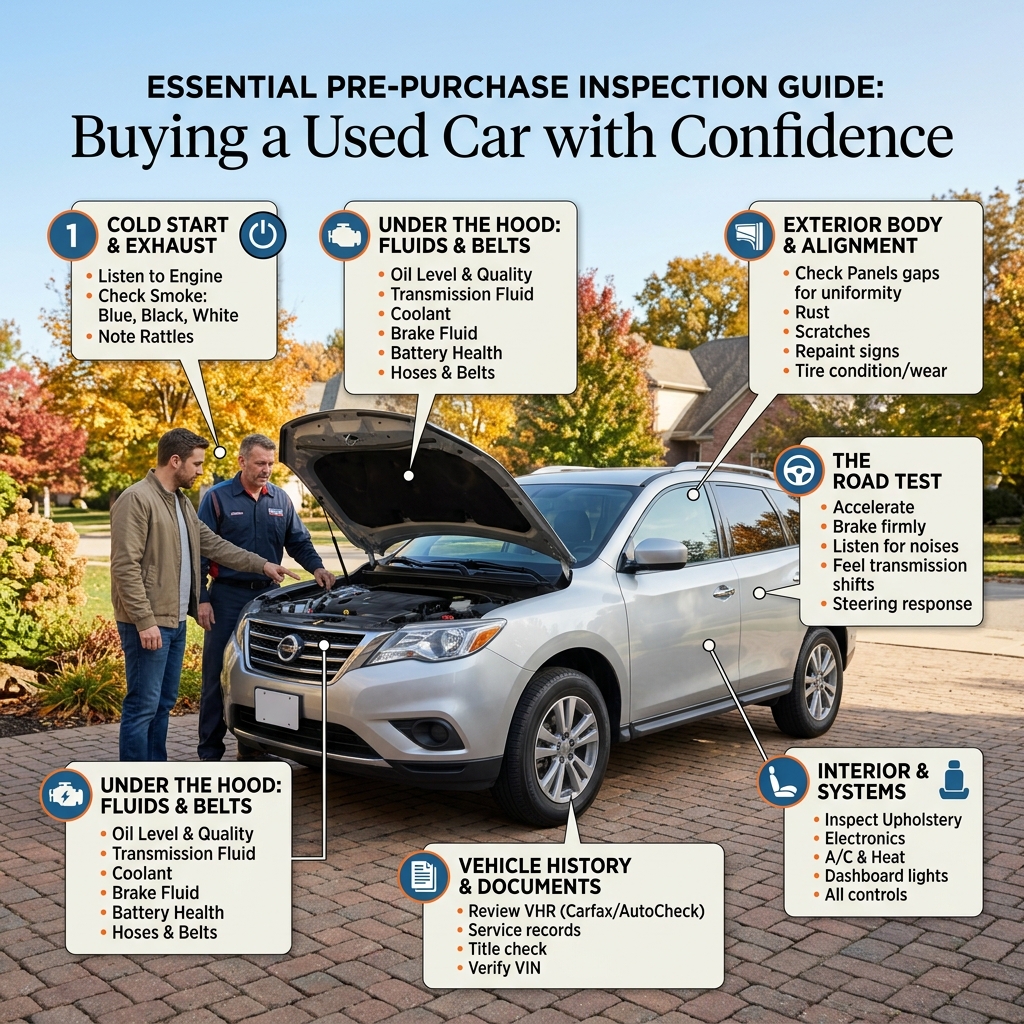
Before buying a used car, perform a systematic pre-purchase evaluation covering five core areas: a stone-cold engine start, an under-hood fluid and belt inspection, an exterior check for paint overspray and panel misalignments, a comprehensive road test across all speeds, and a complete title and vehicle history verification. Checking these key items protects your investment, identifies hidden structural or mechanical issues, and gives you clear leverage during purchase evaluation.
A thorough used car assessment requires systematically working from the engine bay to the test drive route. Running the 17-character VIN through the official NHTSA recall lookup ensures there are no unresolved safety recalls before you commit to a vehicle purchase. You should also verify that the seller's identification matches the name printed on the physical title, examine state title records, and review a full vehicle history report to rule out previous flood exposure or title fraud.
When walking buyers through a pre-owned truck or SUV on the lot, the first thing shoppers usually ask to see is a true cold start before taking it out on the road. Gathering your financial documentation ahead of time streamlines the entire transaction once you find the right vehicle. Completing an online credit application helps establish your purchasing budget before setting foot on the lot. If you want to view pre-owned cars in person or schedule a professional vehicle appraisal, you can obtain directions to our showroom at 1503 Pennsylvania Ave, East Liverpool, OH 43920 or give our sales team a quick call to check current vehicle availability.
Table of Contents
- What Cold-Start Checks on a Used Car Reveal Hidden Engine Issues?
- What Key Mechanical Components and Fluids Should You Inspect Under the Hood?
- What Exterior and Body Condition Signs Indicate Prior Accident Damage or Rust?
- How Do You Determine Fair Market Value and Negotiate a Purchase Value in Calcutta?
- What Is the Difference Between Manufacturer CPO and Dealer Certified Programs?
- What Questions Do Used Car Buyers Ask Most Before Finalizing a Deal?
What Cold-Start Checks on a Used Car Reveal Hidden Engine Issues?
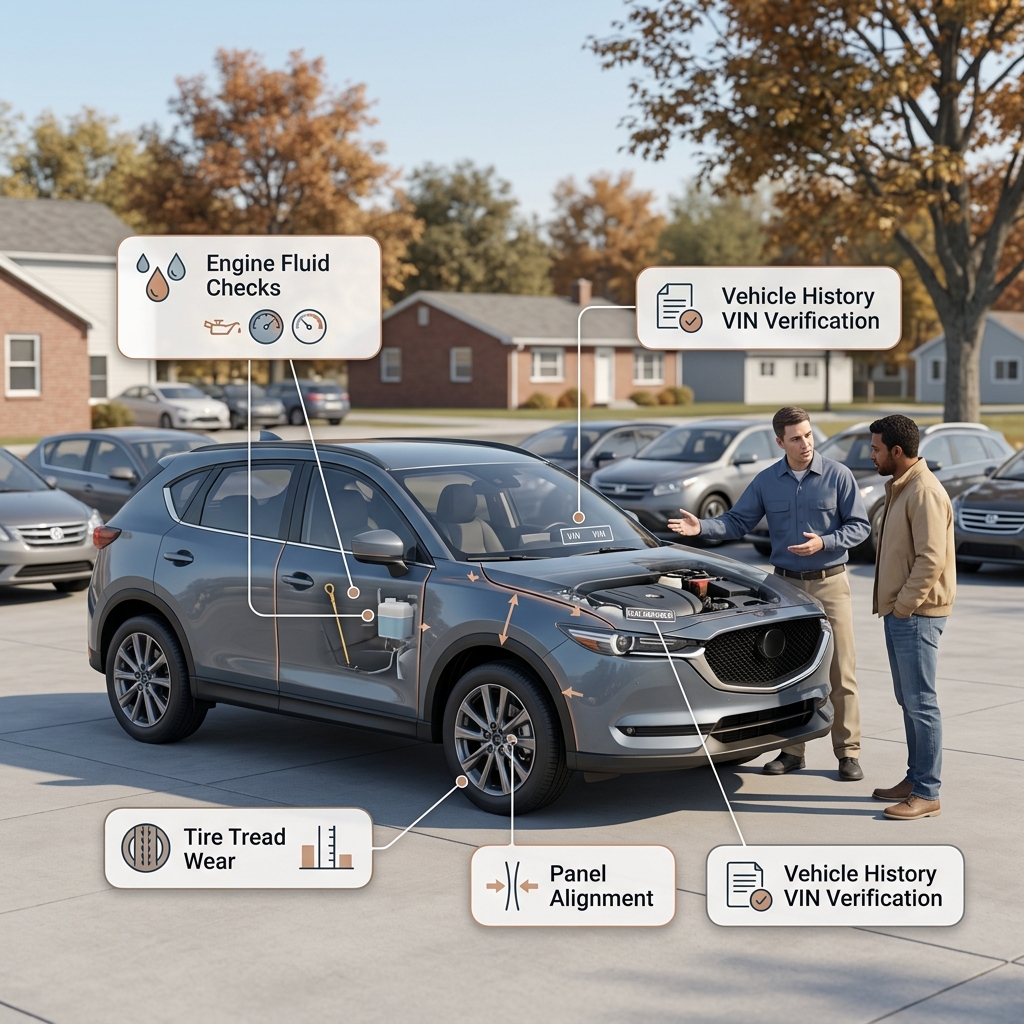
Insisting on a true cold start reveals critical engine flaws—such as worn valve stem seals, timing chain slack, and failing fuel pumps—that a pre-warmed engine easily conceals. Starting the vehicle when the engine block is completely cold forces hidden rattles, smoke emissions, and rough idle issues to present themselves immediately.
Arranging your visit in advance allows you to request that the seller leave the vehicle untouched for several hours before you arrive. Touching the hood upon arrival lets you confirm the engine block is stone-cold. When turning the key, observe the tailpipe for exhaust smoke; persistent blue smoke indicates burning oil from worn piston rings or valve guides, while heavy white smoke that smells sweet points to internal coolant leaks.
Listen closely during the first two seconds after startup. A sharp metallic rattle that disappears once oil pressure builds often indicates a loose timing chain or worn hydraulic lifters. Browsing carefully maintained pre-owned single-owner models reduces the likelihood of encountering these deferred maintenance issues, as complete service records typically accompany well cared-for vehicles.
What Key Mechanical Components and Fluids Should You Inspect Under the Hood?
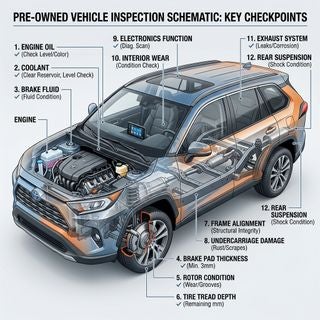
Inspecting the vital engine fluids, rubber hoses, serpentine belt, and battery connections under the hood reveals how consistently the previous owner maintained the vehicle. Healthy fluids display clear coloration without burnt smells or contamination, directly indicating the internal health of the engine, transmission, and cooling system.
Pulling the engine oil dipstick allows you to verify both fluid level and consistency. Oil should range from amber to dark brown; a gritty texture signals neglected oil changes, while a milky, frothy appearance under the oil cap or on the dipstick indicates coolant mixing with the oil due to a blown head gasket or cracked block.
Inspecting the transmission fluid dipstick—where equipped—is equally critical. Healthy automatic transmission fluid is bright red, whereas dark brown or black fluid with a burnt odor signifies severe clutch wear and internal thermal breakdown. Examine the coolant expansion tank for oily films or rust deposits, check drive belts for frays or cracking, and look for white corrosion around battery terminals to ensure the electrical system remains sound.
What Exterior and Body Condition Signs Indicate Prior Accident Damage or Rust?
Uneven body panel gaps, inconsistent paint texture, scratched fender bolt heads, and bubbling paint near wheel arches are clear physical indicators of prior collision repair or advancing corrosion. Spotting these exterior defects helps you identify structural damage that unibody repairs may have tried to mask.
Evaluating exterior body condition requires inspecting panel alignment along the hood, doors, and trunk seam lines. Consistent gaps along every edge indicate factory assembly, whereas a gap that narrows or widens sharply suggests a panel was removed or realigned following an impact. Sighting down the side of the body panels under natural light helps uncover subtle ripples or heavy orange peel texture from non-factory resprays.
Checking fender bolts inside the engine compartment reveals whether body panels have been unbolted for repairs; scratched paint on bolt heads proves a wrench was used. Running a light plastic-coated magnet over lower door panels and rear quarters confirms whether steel sheet metal or plastic body filler lies beneath the paint. Examining the riverfront bluffs terrain along East Liverpool highlights why inspecting the undercarriage for frame rust and pinch-weld damage is essential on local vehicles exposed to moisture and road salt.
How Do You Determine Fair Market Value and Negotiate a Purchase Value in Calcutta?
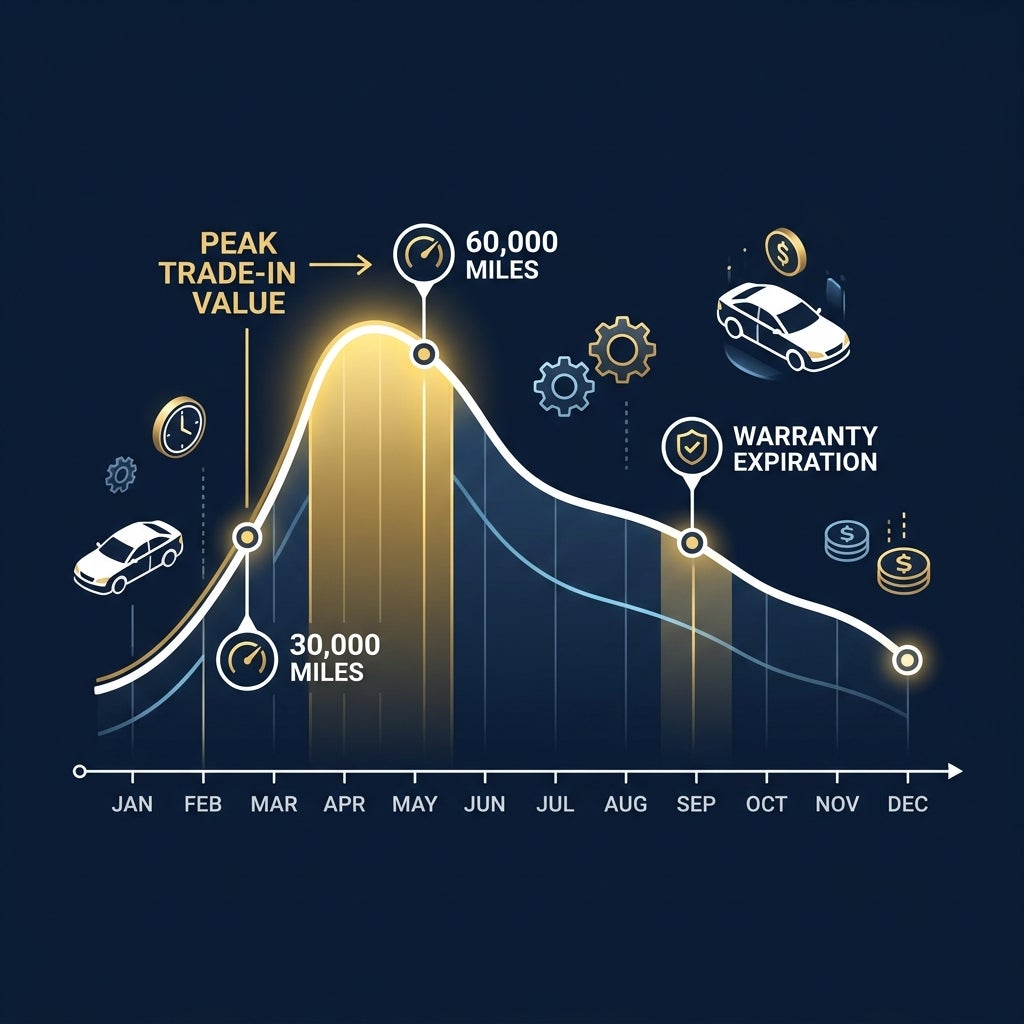
Determining fair market value requires comparing local market vehicle listings against trusted valuation guides while adjusting for exact mileage, trim level, vehicle condition, and history. Presenting documented repair estimates from an independent inspection gives you firm, factual leverage to negotiate a reasonable price adjustment.
Establishing a realistic offer begins with researching recent sales data for identical vehicle configurations in your region. Adjusting your target price based on documented condition issues—such as uneven tire wear indicating alignment or suspension faults—provides an objective foundation for negotiation rather than aggressive haggling.
Evaluating your current vehicle's worth online using a trusted trade-in valuation tool gives you an exact baseline for offset financing when buying a pre-owned truck or SUV. Navigating the gently rolling hills around Calcutta requires a capable, dependable vehicle, whether you are choosing between a quality used truck or exploring brand-new Ford inventory options to match your daily driving needs.
What Is the Difference Between Manufacturer CPO and Dealer Certified Programs?
Manufacturer Certified Pre-Owned (CPO) programs provide factory-backed warranty protection honored at authorized brand dealerships nationwide, whereas dealer-certified programs rely on third-party service contracts restricted to specific dealer networks. Choosing a factory CPO model guarantees original equipment replacement parts and standardized multi-point factory inspections.
A factory CPO vehicle undergoes an exhaustive inspection process administered by factory-trained technicians to meet strict age and mileage thresholds. A Gold Certified Ford vehicle includes a 12-month/12,000-mile comprehensive limited warranty alongside a 7-year/100,000-mile powertrain limited warranty, providing peace of mind backed directly by the manufacturer.
Exploring our selection of certified pre-owned Ford vehicles allows you to combine factory-backed protection with advanced features like Ford Co-Pilot360 and SYNC 4 infotainment technology. Buyers can also take advantage of current national vehicle incentives on select models, or review available factory service offers to keep their vehicle running smoothly over the long haul.
What Questions Do Used Car Buyers Ask Most Before Finalizing a Deal?
Q: What documentation should I bring to the dealership when buying a used car?
You should bring a valid driver's license, current proof of auto insurance, your most recent pay stubs or proof of income, and proof of residency such as a utility bill. If you plan to trade in your current vehicle, bring the physical title, current registration, and all original set of keys. Having these documents ready prevents paperwork delays and speeds up loan approval.
Q: How long does a thorough test drive need to be when evaluating a used vehicle?
A complete test drive should take about 15 to 20 minutes to evaluate the car across different driving conditions. You need enough time to test low-speed maneuvering on local streets, complete several firm stops to check brake feel, and accelerate up to highway speeds to listen for wheel bearing noise, transmission slipping, or steering vibration.
Q: Does a clean vehicle history report guarantee that a used car has never been in an accident?
No, a clean history report only reflects incidents reported to insurance companies, law enforcement, or repair databases. Private accident repairs paid out-of-pocket leave no official paper trail on history reports. Always combine a vehicle history report with a thorough physical inspection of panel gaps, seam sealers, and bolt heads to verify body integrity.
Q: Should I test drive a used car on both surface streets and the highway?
Yes, driving across both environments reveals distinct mechanical behaviors. Low-speed surface driving highlights power steering noise, suspension clunks over bumps, and low-gear transmission engagement. Highway speeds reveal wheel imbalance, alignment pulling, high-rpm engine performance, and wind noise around door seals that low-speed parking lot drives completely miss.
Q: Can missing original accessories or spare keys affect the final purchase price?
Yes, missing factory items like key fobs, floor mats, cargo covers, or owner's manuals add real out-of-pocket replacement costs after purchase. Modern electronic key fobs with remote start or push-button ignition can cost several hundred dollars to cut and program. Pointing out missing original equipment provides legitimate justification for asking the seller for a value discussion.
When you are ready to shop for your next pre-owned vehicle with total confidence, visit our dealership or call our friendly sales team at (330) 462-7578 to schedule your test drive today.
Keep Your Vehicle Running Strong
Keep your vehicle performing at its best with our service team:
© 2026 Tri State Ford. All rights reserved.