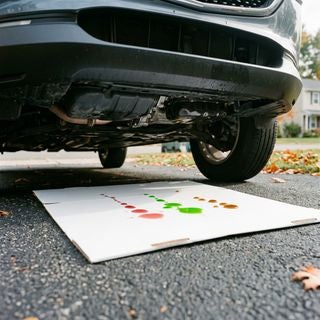

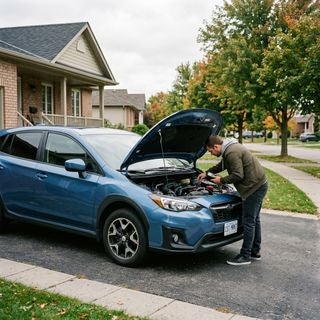
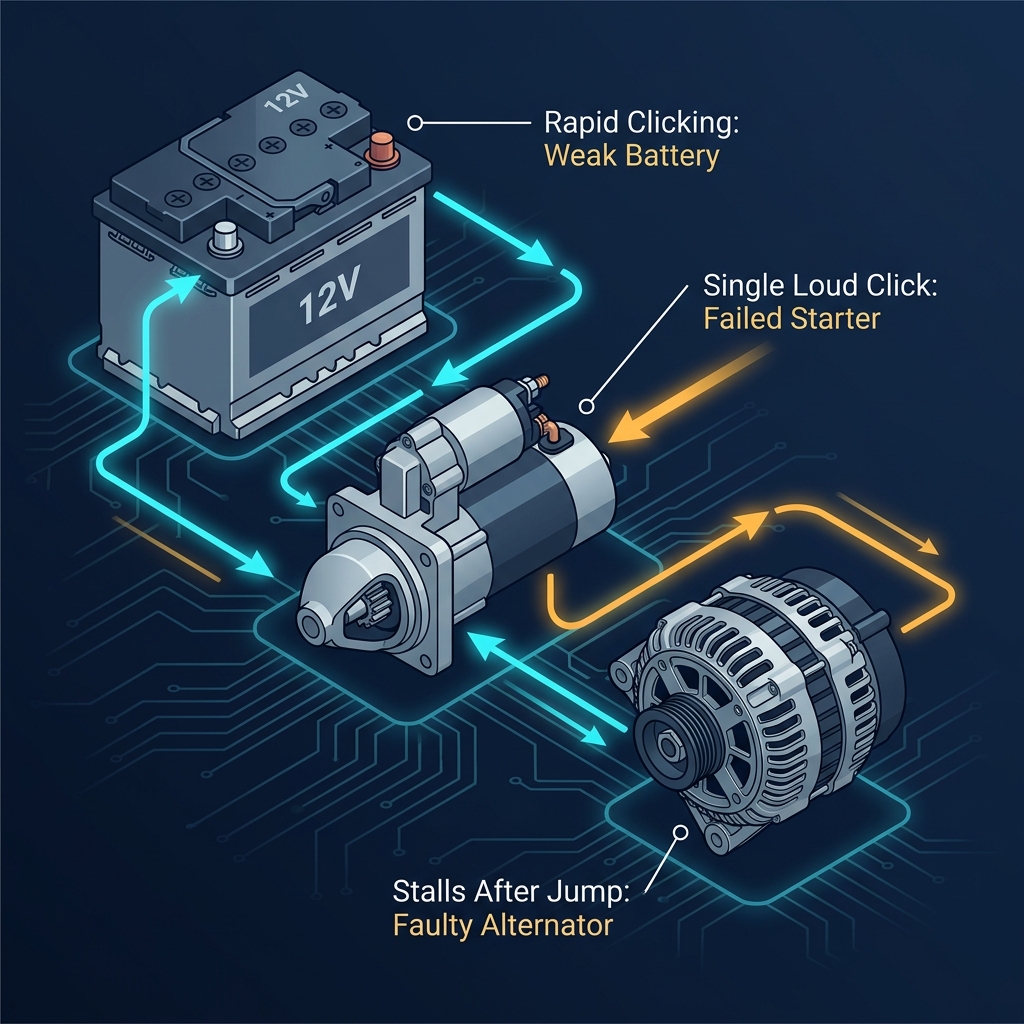
To troubleshoot a car that won't start, listen carefully while turning the key or pressing the start button: rapid clicking or a slow crank points to a weak battery, a single loud click with bright dash lights indicates a failed starter, and an engine that starts with a jump but stalls shortly after driving signals a faulty alternator. Checking terminal connections and measuring rested voltage confirms which component is failing before replacing any parts.
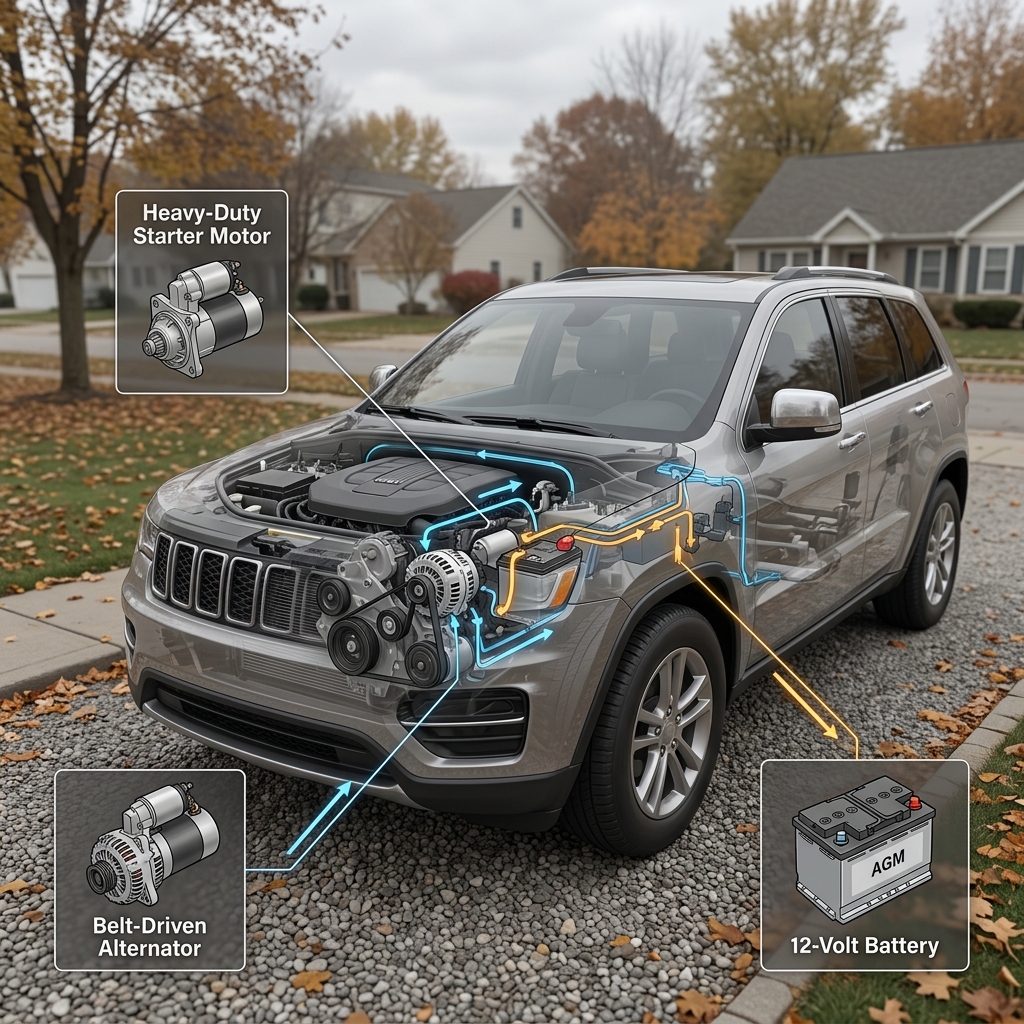
Understanding how these three distinct components interact prevents misdiagnosis and saves unnecessary repair costs. The 12-volt battery delivers a concentrated burst of chemical energy to energize the starter motor, which physically spins the engine flywheel to initiate combustion. Once the engine fires and achieves idling speed, the belt-driven alternator takes over the primary electrical load, generating power to supply vehicle systems while simultaneously replenishing the energy consumed from the battery during startup.
When a starting failure occurs, evaluating the specific vehicle behavior pinpointing whether energy storage, mechanical engagement, or power generation has ceased operating properly is essential. Modern vehicles feature complex electronics, such as the Ford Intelligent Battery Management System and Auto Start-Stop technology found on models like the Ford Escape ST-Line and Ford Explorer XLT. These systems continuously monitor battery state of charge and system current draw, shutting down non-essential comfort accessories or disabling automatic engine idling stops when electrical power drops below safe starting parameters.
If your vehicle exhibits starting hesitation or fails to crank, having the electrical system inspected protects sensitive onboard modules from low-voltage damage. You can easily find our East Liverpool dealership directions to bring your vehicle in, or give our service department a quick call to discuss your symptoms with a certified technician.
Table of Contents
- What Symptoms Distinguish a Bad Starter Motor from a Weak Battery?
- How Does Vehicle Behavior After a Jump-Start Pinpoint an Alternator Failure?
- What Multimeter Voltage Readings Confirm a Failing Battery or Alternator?
- Why Professional Electrical System Testing Keeps Your Vehicle Reliable
- Common Questions About Battery, Starter, and Alternator Diagnostics
- Schedule Your Electrical System Service
What Symptoms Distinguish a Bad Starter Motor from a Weak Battery?
A bad starter motor typically produces a single solid click or complete silence while interior accessories and headlights remain fully illuminated, whereas a weak battery causes rapid chattering clicks, flickering dashboard displays, or a slow, labored engine crank. Dissecting how the car reacts under key rotation clarifies whether electrical energy is missing or mechanical rotation has stalled.
The headlight test offers a fast, reliable diagnostic method to separate starter failure from battery depletion:
- Bright lights with a single click: If turning the ignition switch produces a single distinct click while the headlights remain clear and bright, the battery holds sufficient power. The starter solenoid is receiving control voltage, but the starter motor brushes, internal windings, or mechanical bendix drive have failed to turn the flywheel.
- Dimming lights with rapid clicking: If the headlights dim severely or extinguish completely when attempting to crank, the battery cannot supply the heavy electrical amperage required to turn the starter. Rapid clicking occurs because the battery has enough voltage to throw the starter solenoid forward, but as soon as the heavy electric motor engages, system voltage drops instantly, causing the solenoid to release and repeat the cycle rapidly.
- Total system silence: If no dashboard lights illuminate and turning the key produces zero sound, the battery is either completely drained, or heavy corrosion at the terminal posts has created an open circuit.
Suburban drivers making frequent short trips along State Route 170 in Calcutta often place high demands on the starting system without allowing sufficient continuous driving time for the alternator to top off the battery. Corrosion, loose cable clamps, or internal plate sulfation can mimic starter failure by preventing full current flow.
When vehicle owners encounter a sudden no-start situation, scheduling routine battery maintenance and diagnostic inspections helps catch weak cells early. If component replacement is necessary, our parts department allows you to order OEM Ford starter components engineered specifically for your powertrain specifications.
How Does Vehicle Behavior After a Jump-Start Pinpoint an Alternator Failure?
If a vehicle starts successfully with jumper cables connected but stalls shortly after driving or immediately when the jumper cables are disconnected, the alternator has failed to supply the vehicle's running electrical load. Conversely, if the engine continues running smoothly and starts on its own after a 20-minute drive, the alternator is functioning properly and the initial failure stemmed from a discharged or worn battery.
The underlying electrical dynamics explain why this post-jump behavior occurs:
- Sustained engine operation: The battery acts as a temporary power reservoir to get the engine running. Once the engine catches, the alternator must generate between 13.8 and 14.7 volts to supply power to the fuel injectors, ignition coils, engine control modules, and secondary accessories.
- Engine stalling mid-drive: If the alternator's internal diode bridge, rotor windings, or voltage regulator fail, the vehicle operates purely on whatever residual charge remains in the battery. As the electric fuel pump and control units draw down that remaining reserve, running voltage drops below critical operational thresholds, causing the engine to stall completely mid-drive.
- Visual and auditory warning signs: A struggling alternator frequently triggers the dashboard battery-shaped warning light (or an ALT / GEN indicator) while driving. Drivers may also notice headlights that dim at idle speed but brighten when revving the engine, sluggish power window operation, or a high-pitched whining noise from the front accessory belt drive caused by worn alternator bearings.
Modern vehicles equipped with sophisticated electronics, such as the Ford Explorer XLT featuring its 2.3L EcoBoost engine and SelectShift® automatic transmission, rely heavily on stable system voltage. Operating a vehicle with a failing alternator forces the battery into continuous deep-discharge cycles, which will permanently destroy internal lead plates and ruin a newly installed battery in a matter of days.
What Multimeter Voltage Readings Confirm a Failing Battery or Alternator?
A healthy, rested 12-volt automotive battery measures between 12.4 and 12.6 volts with the engine off, while an operational alternator produces between 13.8 and 14.7 volts with the engine idling. Measuring exact direct current voltage using a basic digital multimeter removes all ambiguity when evaluating electrical system health.
Performing a structured voltage assessment involves three clear steps:
- Rested battery voltage (Engine OFF): Set the multimeter to DC volts and connect the red probe to the positive terminal and the black probe to the negative terminal. A reading of 12.6 volts represents a 100 percent state of charge. A reading of 12.2 volts indicates a 50 percent charge, while any reading below 12.0 volts reflects a severely discharged or failing battery requiring immediate charging and conductance testing.
- Charging system output (Engine ON): With the engine running at normal idle, check the voltage across the battery terminals again. The reading should instantly rise to between 13.8 and 14.7 volts. If the reading remains at or below rested battery voltage (under 13.5 volts), the alternator is undercharging. If the multimeter registers above 15.0 volts, the internal voltage regulator has failed, which can boil internal battery electrolyte and damage sensitive control modules.
- Full electrical load test: With the engine idling, turn on the high-beam headlights, climate control fan on high, and rear window defroster. A functional charging system maintains system voltage above 13.0 volts even under peak accessory demand.
In addition to voltage levels, parasitic current draw can drain a healthy battery overnight. Utilizing a meter in series at the negative battery cable allows technicians to verify whether parasitic draw remains below the acceptable 100 mA limit after vehicle computers enter sleep mode.
| Electrical Component State | Engine Status | Multimeter Voltage Target | Diagnostic Conclusion |
|---|---|---|---|
| Fully Charged Battery | Engine OFF (Rested) | 12.4V to 12.6V | Battery holds healthy static charge |
| Discharged / Weak Battery | Engine OFF (Rested) | Below 12.0V | Battery needs charging or cell replacement |
| Healthy Alternator Output | Engine ON (Idle) | 13.8V to 14.7V | Charging system actively replenishing battery |
| Undercharging Alternator | Engine ON (Idle) | Below 13.5V | Alternator or belt drive failing under load |
| Overcharging Regulator | Engine ON (Idle) | Above 15.0V | Voltage regulator failed; risks electronics |
Why Professional Electrical System Testing Keeps Your Vehicle Reliable
Professional electrical system testing utilizes digital conductance analyzers and carbon-pile load testers to evaluate internal plate resistance, cold cranking amps (CCA), and alternator diode ripple far beyond what static voltage checks can reveal. While a simple voltage reading indicates surface charge, a specialized load test measures how much current the battery can deliver under true starting load conditions.
Sub-freezing winter mornings along the riverfront bluffs in East Liverpool drop battery chemical capacity by up to 30 percent while simultaneously thickening engine oil, creating severe mechanical resistance during startup. Routine pre-winter inspections identify degrading battery capacity before severe weather leaves drivers stranded on cold mornings.
When replacing a battery on late-model Ford vehicles, professional service includes resetting the onboard Intelligent Battery Management System using diagnostic scan tools. Registering the new battery resets the computer's learned battery age profile, ensuring the alternator applies the correct charging algorithm and preventing overcharging or premature battery degradation. Certified technicians also inspect the serpentine belt condition, tensioner alignment, and main ground connections to maintain optimal power distribution throughout the vehicle's lifespan.
Common Questions About Battery, Starter, and Alternator Diagnostics
Q: Can a bad alternator ruin a newly installed car battery?
Yes, a malfunctioning alternator can ruin a brand-new battery within weeks. An alternator that undercharges leaves the new battery in a constant state of discharge, causing internal lead plates to sulfate and lose capacity. Alternatively, a failed internal voltage regulator can overcharge the battery above 15.0 volts, boiling off liquid electrolyte, warping internal grids, and permanently destroying the new battery's ability to hold a charge.
Q: Why does my Ford Auto Start-Stop system stop working when the battery is weak?
The Ford Intelligent Battery Management System continuously monitors 12-volt battery state of charge, temperature, and current draw. If battery health drops below a predetermined threshold, the control module automatically disables the Auto Start-Stop feature to conserve electrical energy for critical starting functions and protect engine components from low-voltage crank scenarios.
Q: What causes a single loud click when turning the key if the battery is fully charged?
A single sharp click accompanied by bright dashboard lights usually indicates a failed starter motor solenoid or worn starter brushes. The click confirms that ignition switch voltage has successfully reached the starter solenoid, but the internal contact disk or electrical motor mechanism has failed to engage and rotate the engine flywheel.
Q: Is it safe to jump-start an Advanced Glass Mat (AGM) battery?
Yes, jump-starting an AGM battery is completely safe when performed using proper cable connections. Always attach the positive jumper cable to the positive terminal post (or dedicated remote jump post) and connect the final negative clamp to a clean, unpainted bare metal engine ground located away from the battery case to avoid sparking near venting gasses.
Q: How long can a car drive on battery power alone if the alternator fails?
A vehicle typically operates on battery reserves for 15 to 30 minutes after an alternator fails completely. The exact duration depends on initial battery state of charge and electrical accessory usage. Running headlights, windshield wipers, and HVAC blower motors accelerates drain, eventually dropping system voltage until the electronic fuel pump and ignition modules shut down.
Schedule Your Electrical System Service
Determining whether a starting issue stems from a weak battery, a failing starter motor, or a worn alternator requires precision diagnostic equipment and expert technical knowledge. Ignoring early warning signs like slow engine cranking, dimming headlights, or battery warning lights can lead to unexpected breakdowns and secondary electrical damage.
Our factory-trained service team provides transparent testing, genuine OEM replacement parts, and complete system calibration to keep your vehicle starting reliably in all driving conditions. If your vehicle is exhibiting electrical hesitation or requires routine maintenance, you can check our East Liverpool service facility location, contact our technicians directly by giving us a quick phone call, or conveniently schedule a service appointment online today.