Expert Interview: Proactive Care for Your F-150 with Matt Shaw
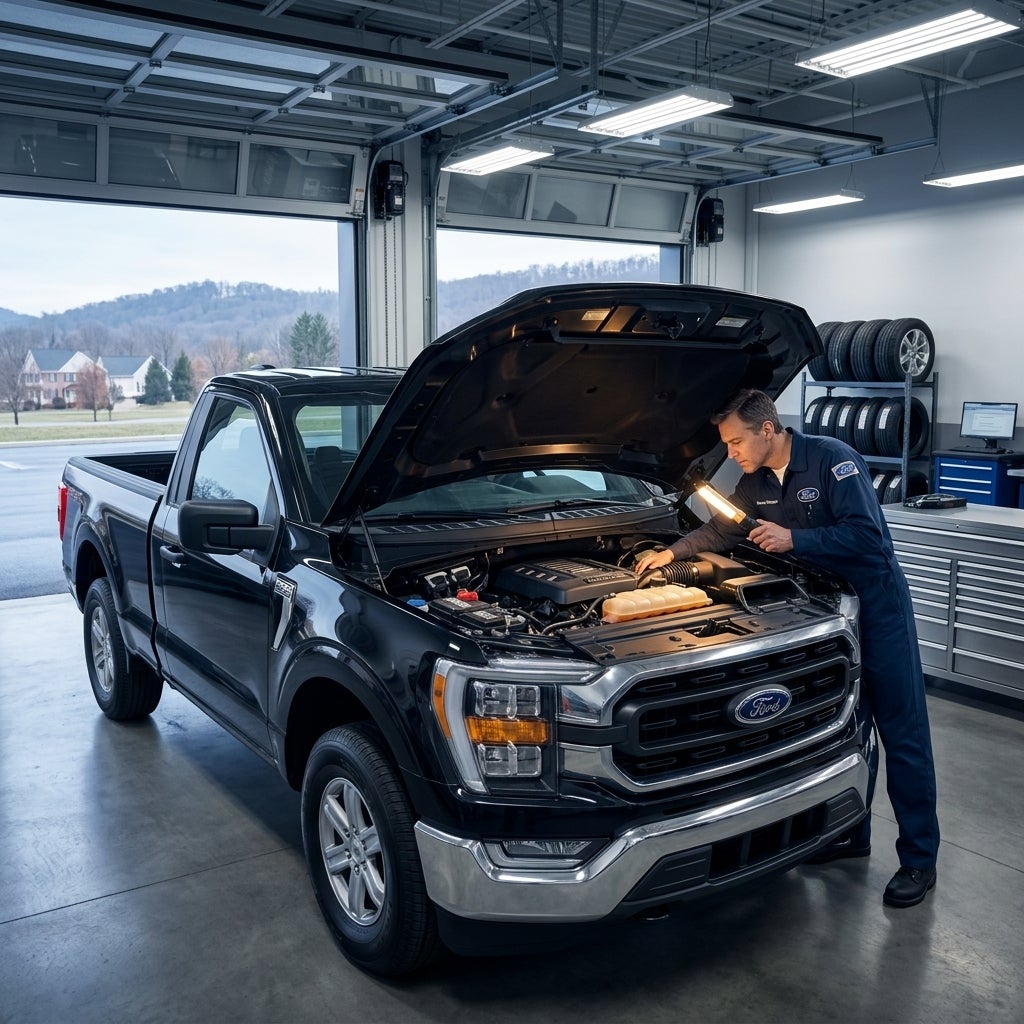
Today, we are sitting down with Matt Shaw, the Service Manager at Tri State Ford, who brings over a decade of hands-on experience to our shop floor. Matt has overseen thousands of maintenance procedures on the Ford truck lineup, making him a premier authority on how to maximize the lifespan of the 2026 Ford F-150. In this discussion, Matt shares his professional insights on preventative strategies, early warning signs, and the mechanical realities of heavy-duty truck usage to help local owners avoid costly long-term repairs.
Q: Matt, what are the most critical preventative maintenance steps owners should take to keep a 2026 Ford F-150 running reliably for years?
A: That is a question we hear quite often, especially from our truck owners in Calcutta who rely on their vehicles for both family duties and heavy labor. The foundation of a long-lasting **2026 Ford F-150** is strictly adhering to the **Intelligent Oil Life Monitor**. While Ford recommends an **oil and filter change** roughly every 7,500 to 10,000 miles under normal conditions, our local terrain and cold-winter climate often push trucks into the "severe duty" category. For those drivers, I suggest coming in sooner to ensure the **5.0L V8** or **3.5L V6** remains properly lubricated against the friction of hill climbs and sub-freezing starts.
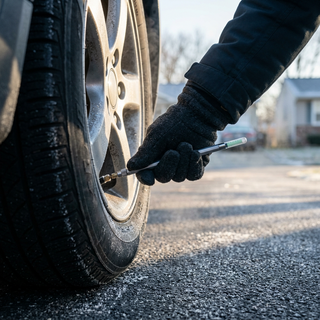
Beyond the engine, tire health is paramount for safety and efficiency. We recommend a **tire rotation** every 7,500 miles to ensure even tread wear, which is especially important for the **4WD** systems found on trims like the **XL** and **STX**. During these visits, our technicians perform a comprehensive multi-point inspection, checking **brake pads**, fluid levels, and the cooling system. If your schedule is packed, we offer a convenient pickup and delivery service where we handle the logistics of getting your truck to the shop and back, or you can utilize our mobile service van for basic maintenance right in your driveway.
For those who prefer to plan ahead, the easiest way to stay on track is to schedule a service appointment online through our portal. If you are looking for a Ford service center in your area, our team is ready to help. You can reach us at (330) 462-7578 to discuss your specific maintenance needs. If you are visiting us for the first time, you can find our location on Pennsylvania Ave for easy navigation from anywhere in the tri-state area.
Q: What are the common early warning signs that F-150 drivers should watch for to prevent a small issue from becoming a major mechanical failure?
A: One of the first things I tell owners is to develop a "mechanical ear" for their truck. In a working city like East Liverpool, these trucks see a lot of stop-and-go traffic and industrial site usage, which can accelerate wear on components. If you notice a high-pitched squeal when braking, that is usually the wear indicator on your **brake pads** telling you it is time for a replacement before you damage the rotors. Similarly, any unusual vibration in the steering wheel or a rhythmic "thumping" sound often points to a tire balance issue or a failing wheel bearing that needs immediate attention to avoid a roadside breakdown.
Fluid leaks are another dead giveaway. If you see spots on your driveway, don't ignore them. Red fluid typically indicates a transmission or power steering issue, while green or orange usually means a coolant leak. Addressing a small coolant leak early can save the head gaskets on your **3.5L V6**. Our parts department stocks genuine OEM components, including filters and belts, to ensure any repair meets factory specifications. For our commercial partners managing an F-Series work truck fleet, catching these signs early is the difference between a quick afternoon fix and a week of lost productivity. If an unexpected repair does arise, our service financing options can help break down the cost into manageable payments to keep your budget on track.
Q: Matt, many drivers get nervous when they see a check engine light. What does it mean if that light stays on but the truck still feels like it is driving perfectly fine?
A: It is a common misconception that a check engine light always means an immediate engine failure. Often, a steady light indicates a "soft code," which could be something as simple as a loose gas cap or a failing oxygen sensor. However, even if the truck feels normal, the computer has detected that the engine is no longer operating at peak efficiency. Ignoring this can lead to "clogging" your catalytic converters or reducing the fuel economy of your **XLT** or **Lariat**, which are rated for up to **24 mpg city / 28 mpg highway**. Over time, a minor sensor error can lead to poor combustion, which eventually damages much more expensive internal components.
"A check engine light is your truck's way of asking for a check-up before a minor sensor glitch turns into a major component failure."
I always recommend getting a diagnostic scan as soon as possible. If you are currently in the market and browsing our available truck inventory, you will notice that modern F-150s come with advanced onboard diagnostics that can even send alerts to your phone. If you want to see how these systems work in person, you can book a test drive and we can walk you through the FordPass connectivity features. For business owners looking at our new work truck options, staying ahead of these alerts is a key part of maintaining the **5-year / 60,000-mile powertrain warranty** protection.
Q: From a mechanical standpoint, what actually happens to the truck if a driver routinely exceeds the maximum towing or payload capacity?
A: When you push a truck past its limits, you aren't just straining the engine; you are heat-soaking the entire drivetrain. The **2026 Ford F-150** is incredibly capable, with a **best-in-class max available torque** of **640 lb-ft**, but exceeding the rated capacity causes the transmission fluid to break down rapidly due to extreme heat. This leads to friction wear on the clutches and can eventually cause the transmission to slip or fail. Furthermore, the suspension and frame are engineered for specific stress loads. Overloading can lead to bowed leaf springs or blown shocks, which compromises your ability to steer and stop safely.
Brake fade is another major risk. If you are hauling more than the truck is rated for, the **brake pads** and rotors have to work significantly harder to dissipate the kinetic energy, which can lead to warped rotors or a total loss of braking power on long descents. If you find that your current setup isn't meeting your needs, you might consider a new vehicle custom order to spec a truck with the Heavy-Duty Payload Package. We also frequently have incentives on new models that feature higher towing capacities, as well as deals on pre-owned trucks that are already equipped for heavy-duty work. Maintaining the integrity of your truck's frame and drivetrain is essential for preserving its long-term value and safety.
Q: Why is excessive idling considered so "hard" on modern pickup engines, and how does it affect the maintenance schedule?
A: Many of our customers in Chester who use their trucks for job site management tend to leave the engine running for long periods. The problem with excessive idling is that the engine isn't reaching its optimal operating temperature or airflow. This can lead to fuel dilution, where unburnt gasoline seeps past the piston rings and thins out your engine oil. Thinner oil doesn't protect the bearings as well, which can lead to premature engine wear. In **EcoBoost** engines, idling can also contribute to carbon buildup on the intake valves because there isn't enough high-velocity air moving through the system to keep them clean.
Ford actually calculates idling time into the service intervals. If your truck spends hours idling, you should follow the "severe duty" schedule, which might mean changing your oil every 5,000 miles instead of 10,000. It also puts extra strain on your **battery** and alternator. If you are worried about the health of your current vehicle, you can use our instant cash offer tool to see what your truck is worth before maintenance costs start to climb. Additionally, keep an eye on your tires; idling on rough job sites can lead to uneven wear or punctures, so check out our online tire center if you need a fresh set. You can always find our current service hours online to stop by for a quick oil health check.
Q: How can a truck owner verify if a service center has the specific expertise needed for commercial-grade F-150 repairs?
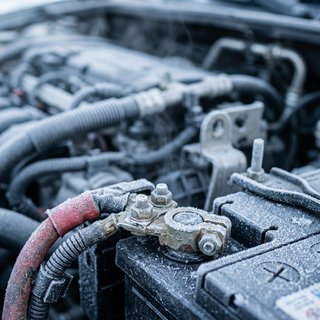
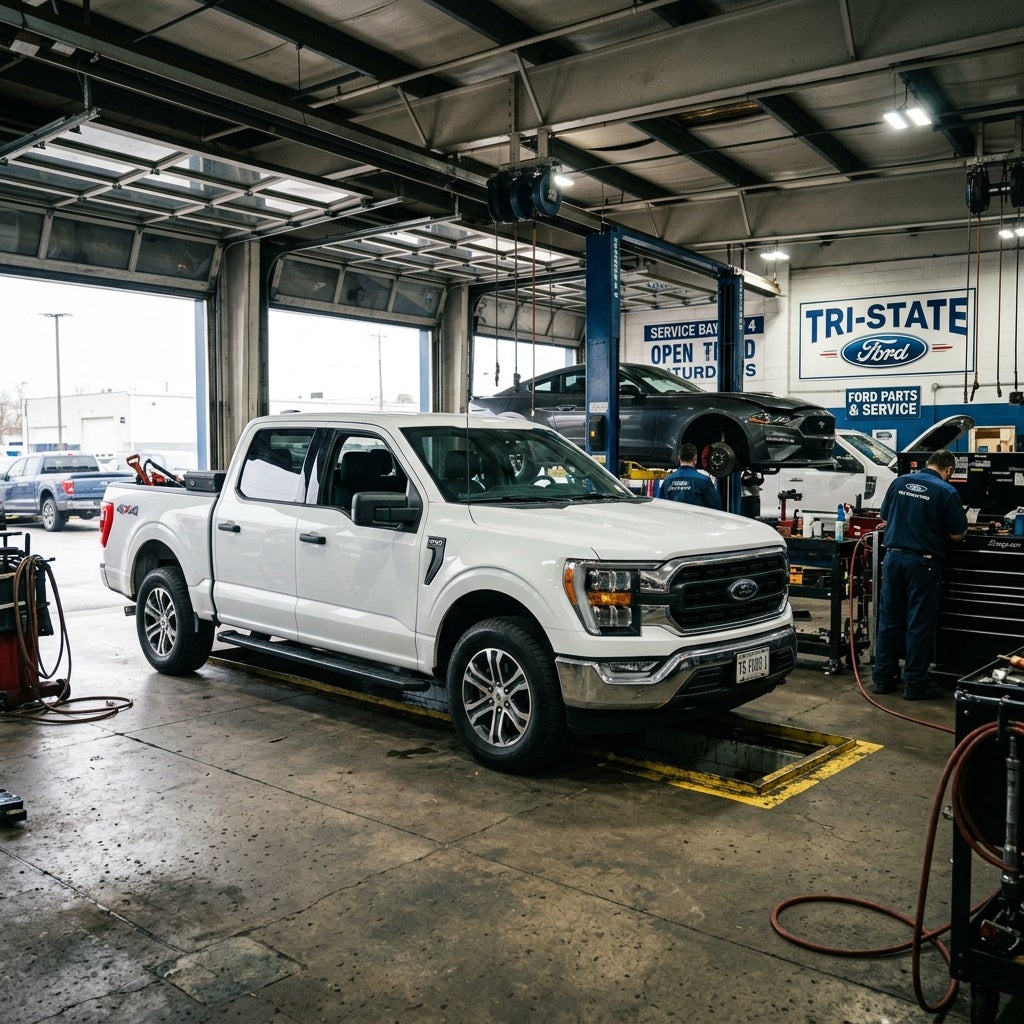
A: Working with commercial and heavy-duty trucks requires more than just a standard lift; it requires technicians who understand the specific duty cycles of a work vehicle. At Tri State Ford, our team is factory-certified and specifically trained on Ford’s truck architecture, including the high-voltage systems in the PowerBoost hybrid and the heavy-duty components of the **Tremor** and **Police Responder** models. We use specialized diagnostic tools that talk directly to Ford’s engineering database to troubleshoot complex issues that generic scanners might miss. We also focus on the "small things" like testing your battery's cold-cranking amps to ensure you aren't stranded during an Ohio winter.
We know that for a business, if the truck isn't moving, it isn't making money. That is why we offer monthly maintenance specials to help keep fleet costs down and ensure preventative care is affordable. We also keep a close eye on current vehicle offers for those looking to rotate their aging units out of service. When you bring your truck to a dedicated Ford facility, you are getting parts and labor that are backed by a national warranty, which is something a local independent shop often cannot match for commercial-grade equipment.
Q: Is it actually worth the investment to look into extended service plans or prepaid maintenance for a new F-150?
A: In my experience, for anyone planning to keep their truck past the **3-year / 36,000-mile bumper-to-bumper warranty**, an extended service plan is a very wise move. These trucks are more advanced than ever, and while they are **exceptionally durable**, the cost of sensors, infotainment modules, and advanced driver-assist components can add up quickly if they fail out of warranty. A Ford Protect Extended Service Plan locks in your repair costs and ensures that only genuine Ford parts are used. It also often includes Ford Roadside Assistance: 1-800-241-3673, which provides peace of mind if you ever run into trouble away from home.
Prepaid maintenance is equally beneficial because it protects you against the rising costs of parts and labor. You are essentially "pre-buying" your future oil changes and rotations at today's prices. This is especially popular with our customers who manage Transit work van fleets or high-mileage F-150s, as it makes budgeting for the year much simpler. If you want to discuss these plans in detail, you can give our service advisors a call or visit our dealership in East Liverpool. We can sit down and look at your typical mileage and usage to see which plan offers the best value for your specific situation.
Maintaining a **2026 Ford F-150** is about more than just checking boxes on a list; it is about protecting one of your most valuable tools. By staying ahead of routine intervals and listening to the early warning signs Matt Shaw described, you can ensure your truck remains a dependable partner for years to come. Whether you are hauling gear through the hills of Calcutta or managing a job site in East Liverpool, the expert team at Tri State Ford is here to support your ownership journey with professional care and genuine Ford expertise. Don't wait for a small noise to become a big repair—reach out to our service department today to keep your F-150 in peak condition.