
I have spent over a decade as a Service Manager, and one of the most stressful calls I get from drivers in East Liverpool starts with them describing a sudden loss of power while trying to merge or climb a hill. When you push the gas pedal and the engine doesn’t respond, it usually means there is a breakdown in the combustion cycle. Your engine needs a precise mix of air, fuel, and spark to create horsepower, and if any of those three are restricted, the vehicle will feel sluggish or completely unresponsive.
In my experience, this “no power” sensation often stems from the engine control module detecting an imbalance. If the computer sees that the throttle position sensor is calling for acceleration but the mass air flow sensor isn’t seeing enough oxygen, it may limit performance to protect the internal components. If you are experiencing this right now, you can reach our team at (330) 462-7578 to discuss the symptoms before they lead to a total breakdown on the road. We see this quite often with high-mileage vehicles that haven’t had a fuel system cleaning or a fresh engine air filter in a few years.
While some power loss issues are simple maintenance fixes, others might indicate that it is time to move into a more reliable setup. For those looking for long-term dependability, our team can help you with a new vehicle custom order to ensure your next truck or SUV is built exactly to your specifications. We also keep a rotating selection of manufacturer vehicle offers and new vehicle specials for those who need a fresh start. If you prefer a pre-owned option, checking our used vehicle specials is a great way to find a reliable daily driver. If you need to drop your vehicle off for a diagnostic, our service center location is easy to find right on Pennsylvania Ave.
## Restricted Airflow and Fuel Delivery Faults That Kill Acceleration
Think of your engine like a pair of lungs; if it can’t breathe in or “exhale” properly, it can’t perform. A heavily clogged engine air filter is one of the most common mechanical causes for a car not accelerating. When dirt and debris block the intake, the air-fuel ratio becomes too “rich,” meaning there is too much gas and not enough oxygen. This results in a stumble or hesitation when you step on the gas. If the air can get in but the exhaust can’t get out due to a clogged catalytic converter, the backpressure will choke the engine, making it feel like you are towing a heavy trailer even when the bed is empty.
Fuel delivery is the other half of that equation. I often tell my customers that a failing fuel pump or a restricted fuel filter will show its true colors under load. You might idle fine in a parking lot in Calcutta, but the moment you try to accelerate onto the highway, the pump can’t maintain the fuel pressure required for higher speeds. This starvation causes the engine to sputter or lose power entirely. Dirty fuel injectors can also cause a poor spray pattern, leading to inefficient combustion and a noticeable drop in torque.
If your vehicle is struggling to stay responsive, we recommend using genuine OEM components for the repair. You can order parts directly through our department to ensure you are getting the exact filters and pumps designed for your Ford. To make things easier for busy families, we offer Ford Pick Up & Delivery so you don’t have to spend your afternoon in a waiting room. If you find that the repair costs are starting to outweigh the vehicle’s value, you can get a KBB Instant Cash Offer to see what your current car is worth toward a more dependable model.
Table of Contents
- Ignition Failures and Spark Issues Under Heavy Load
- Understanding Protective Limp Mode and Warning Lights
- How Our Technicians Diagnose Sluggish Performance and Engine Loss
- Preventative Maintenance Strategies to Keep Your Vehicle Responsive
Ignition Failures and Spark Issues Under Heavy Load
Does your vehicle start to shake or hesitate specifically when you are pushing the engine hard? This is a classic sign of an ignition system failure. Spark plugs and ignition coils have a finite lifespan, usually requiring replacement every 60,000 to 100,000 miles depending on your driving habits. When a spark plug is worn, the gap the electricity must jump becomes too wide. Under heavy acceleration, the increased pressure inside the combustion chamber makes it even harder for that spark to fire, resulting in a misfire.
For our local business owners driving Transit work vans, ignition health is critical for maintaining fuel economy and uptime. A single failing coil can cause a dead cylinder, which puts immense strain on the rest of the powertrain. If you are hauling equipment or products across the state line, that lost power translates directly into lost time and higher fuel costs. We also see this frequently with high-mileage used work trucks that have spent a lot of time idling on job sites, which can carbon up the plugs faster than standard highway driving.
Ignoring a misfire doesn’t just make the drive uncomfortable; it can lead to expensive catalytic converter damage as unburned fuel dumps into the exhaust system. Our finance department is available to help customers look at their options if a major engine repair makes a vehicle upgrade a more sensible financial path. Keeping your ignition coils and wires in top shape ensures that every drop of fuel is converted into movement, keeping your engine running cool and responsive even when the payload is at its limit.
Understanding Protective Limp Mode and Warning Lights
Modern Ford vehicles are equipped with a protective software state commonly known as limp mode. If the powertrain control module detects a high-risk fault—like a major transmission slip or a cooling system failure—it will intentionally de-rate the engine. You will notice that the RPMs are capped and the vehicle won’t shift into higher gears. This is a safety feature designed to give you just enough power to get off the road without melting down the engine block or destroying the transmission.
When this happens, you will almost always see a check engine light or a wrench icon on the dash. If that light is flashing, it is a signal of an immediate, “Type A” misfire that can cause fire or permanent emissions system failure. For those operating an F-Series work truck, being forced into limp mode while towing can be dangerous. It is vital to pull over safely and check your fluid levels and temperatures. If you’re looking for a vehicle with the latest onboard diagnostics to help avoid these surprises, you can browse our truck inventory to see the newest safety and monitoring tech. We also specialize in new work truck inventory that features advanced telematics to alert fleet managers of these issues before the driver even feels them.
One way to tell the difference between an engine issue and a transmission slip is to watch your tachometer. If the RPMs climb rapidly but your speed stays the same, the transmission is likely slipping and failing to transfer power to the wheels. If the gas pedal feels “dead” and the engine won’t rev at all, the issue is almost certainly on the engine or sensor side. In either case, continuing to drive in limp mode for long distances is not recommended, as it puts localized heat stress on the drivetrain.
How Our Technicians Diagnose Sluggish Performance and Engine Loss
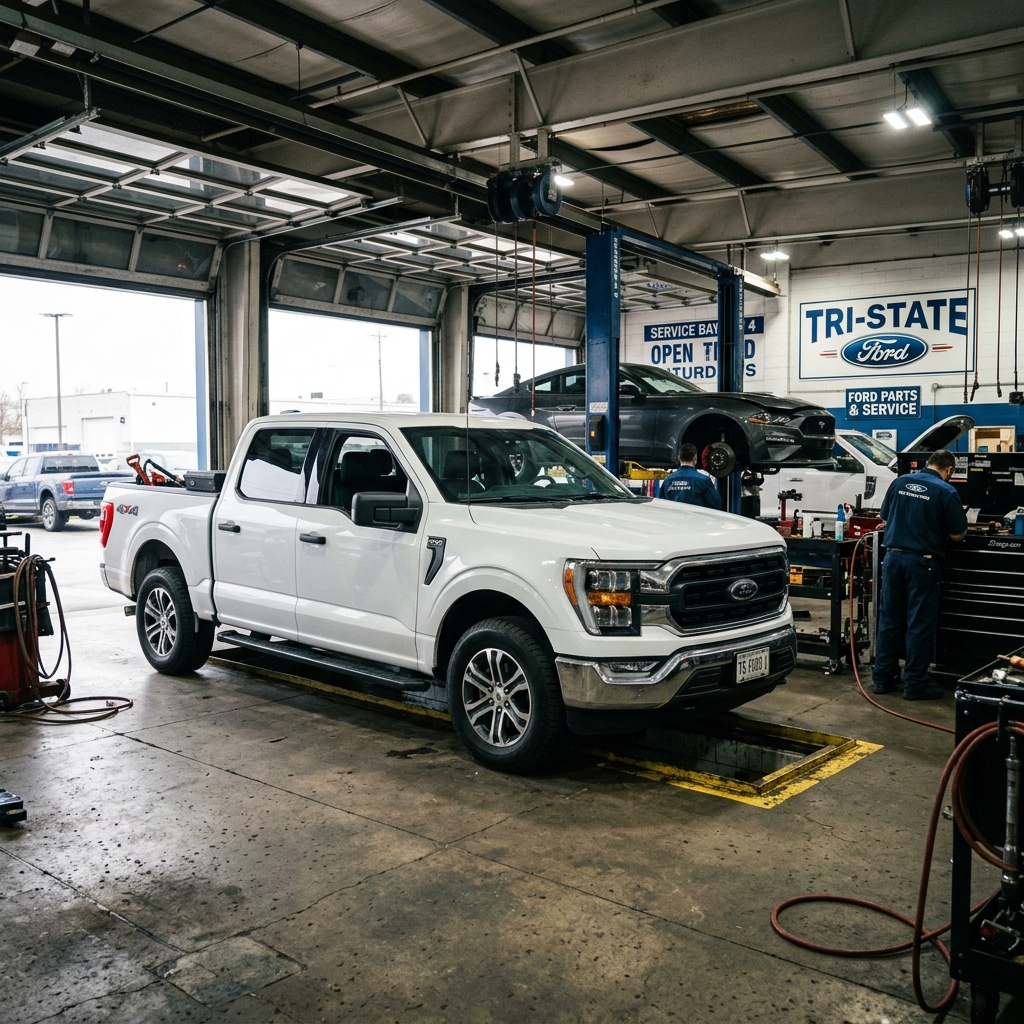
The first thing we do when a sluggish vehicle enters our service bay is perform a diagnostic scan. Every modern vehicle stores diagnostic trouble codes (DTCs) that act as a roadmap for our technicians. For example, a code for “System Too Lean” immediately points us toward the fuel pump or a vacuum leak, while a “Cylinder Misfire” code tells us exactly which ignition coil to test. We don’t believe in just “throwing parts” at a problem; we use live data streaming to watch how your engine performs in real-time.
Sometimes, the lack of “get up and go” isn’t under the hood at all. We often find that rolling resistance from a sticking brake caliper or severely worn tires can make a vehicle feel like it has lost 10% of its power. During a diagnostic, we may recommend you order tires if we see that uneven wear or low pressure is affecting your fuel efficiency. We also check the transmission fluid for signs of burnt material, which could indicate that the torque converter is failing to lock up properly. If you are worried about the cost of a deep-dive diagnostic, be sure to check our manufacturer monthly service specials for discounts on essential maintenance and inspections.
For our heavy-duty customers, we pay special attention to the turbocharger and intercooler systems. A small crack in a plastic turbo boot can cause a massive “boost leak,” resulting in a total loss of power under load. Whether you are driving a family SUV or a vehicle from our truck inventory, our goal is to identify the root cause—whether it is a $20 sensor or a mechanical internal issue—and get you back on the road with a transparent repair plan.
Preventative Maintenance Strategies to Keep Your Vehicle Responsive
The best way to ensure you never have to deal with a “dead” gas pedal is to stay ahead of your owner’s manual service intervals. Many drivers in Chester deal with steep hills and variable temperatures that put extra stress on spark plugs and fluids. I always recommend a fuel induction service every 30,000 miles to clear out carbon deposits from the throttle body and valves. This simple cleaning can restore that “crisp” throttle response you felt when the vehicle was brand new.
Regularly replacing your engine air filter and fuel filter is the cheapest insurance policy you can buy for your engine’s longevity. If you can’t remember the last time your ignition system was inspected, it is probably time to schedule a service appointment for a comprehensive health check. Our team is trained to spot the early warning signs of sensor failure or belt wear before they leave you stranded. If you have questions about a specific noise or a change in how your car drives, give us a quick call and we can walk you through the likely culprits.
Your vehicle is a complex machine that relies on a steady flow of clean air and high-pressure fuel. When you take care of the small things—like oil changes and filter swaps—the large components like the engine and transmission will take care of you. If you are in the neighborhood, feel free to stop by our East Liverpool service center and we can help you set up a maintenance schedule that fits your specific driving needs and budget.

