
 Common Ford Transmission Problems: Shuddering, Slipping, and Gear Lag
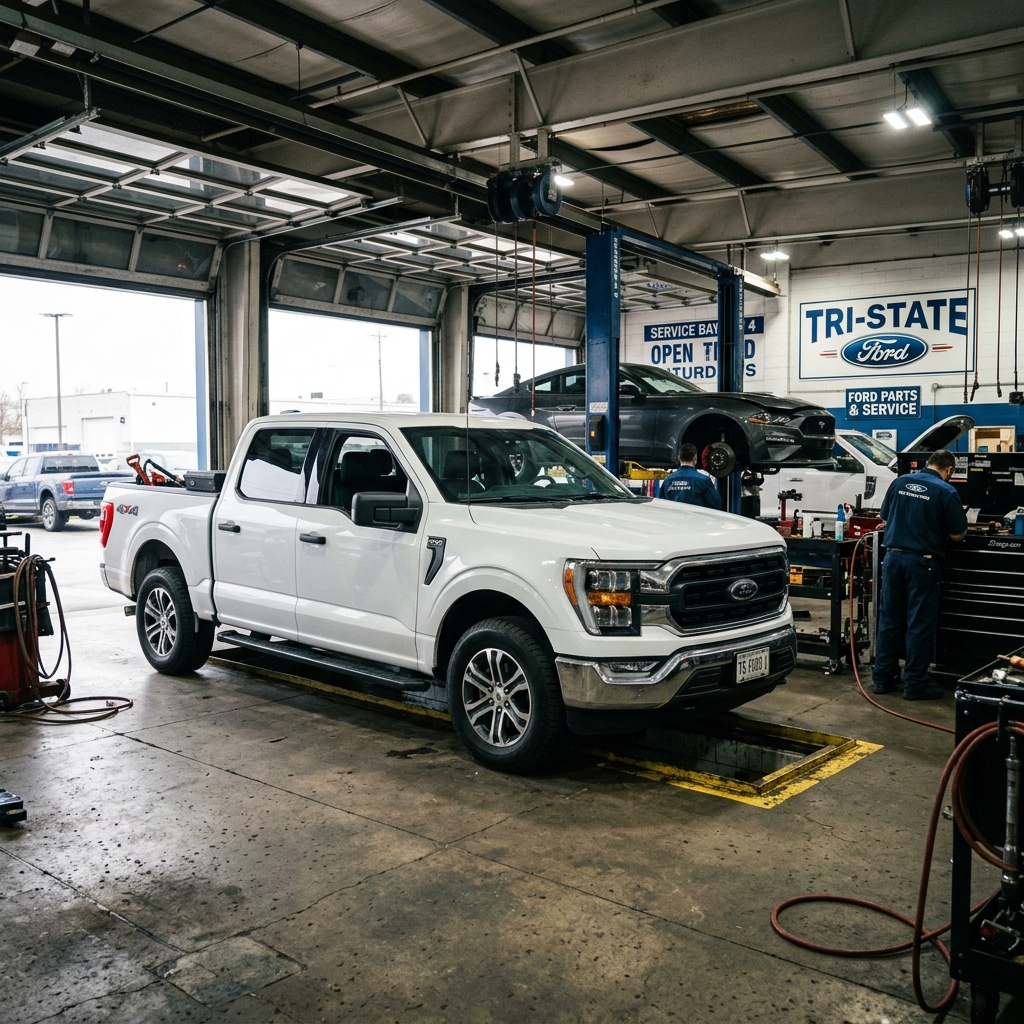
I am Matt Shaw, Service Manager at Tri State Ford, and I have spent over 10 years helping local drivers keep their vehicles on the road. One of the most frequent conversations I have with our customers involves the modern 10-speed automatic transmission. While these units provide excellent efficiency for your daily drive through East Liverpool, they can occasionally develop specific behaviors like shuddering, slipping, or a noticeable gear lag. Recognizing these warning signs early is the best way to prevent a minor sensor issue from turning into a major mechanical repair.
When I am helping a driver diagnose a potential transmission issue, I look for “RPM flare,” which is when the engine revs up during a shift but the vehicle doesn’t speed up accordingly. This often happens between the third and fourth gears on models like the 2026 Ford Escape or the 2026 Ford F-150 XLT. Other common red flags include a harsh “clunk” when shifting from Park into Drive or a hesitation when you press the accelerator to merge onto the highway. If you are noticing these symptoms, you can reach out to our team at (330) 462-7578 to discuss what your vehicle is doing.
We know that your schedule is busy, which is why we offer Ford Pick Up & Delivery for many maintenance needs, or you can even utilize Ford Mobile Service for certain software-related diagnostics. If you prefer to drop the vehicle off yourself, you can find easy directions to our service center located right here in town. For those who are simply curious about how a brand-new, perfectly calibrated 10-speed feels, you are always welcome to schedule a test drive to experience the latest SelectShift technology. Finding a trusted Ford dealership near me is the first step in ensuring your transmission’s long-term health.
## Inside the 10R80: The CDF Clutch Drum and Technical Shifting Defects
The technical heart of many shifting complaints in the 10R80 transmission involves a specific component called the CDF clutch drum. In some earlier versions of this 10-speed unit, an internal bushing within the drum could actually slide out of its intended position. When this bushing moves, it allows Teflon seals to fail, which leads to a loss of internal hydraulic pressure. This pressure loss is exactly what causes the “slipping” or “jerking” sensation that many F-150 owners describe during low-speed acceleration.
In my experience, this isn’t a problem that clears up on its own. If the bushing has migrated, the transmission can no longer maintain the precise timing required to manage ten different gear ratios. This is particularly relevant for those using their trucks for heavy-duty work around Calcutta, where constant stop-and-go driving puts more stress on the internal clutches. If you rely on your vehicle for your livelihood, you might want to look at our F-Series work truck inventory to see the latest mechanical revisions Ford has implemented to solve these early design hurdles.
Ford has since released a revised CDF drum with a redesigned flange that prevents the bushing from moving. When our technicians perform a heavy-duty repair or rebuild, we ensure these updated parts are used to provide a permanent fix. For those managing a fleet, keeping an eye on our current truck inventory can help you stay ahead of maintenance cycles. If you ever have questions about service-related protection plans, our finance department can explain the different extended service contracts available to cover these high-tech components.
Table of Contents
- Shuddering and Vibrations: Torque Converter and Fluid Degradation Issues
- Software Updates vs. Physical Repairs for Shifting Hesitation
- Managing Repair Costs for Slipping and Gear Lag Symptoms
- Navigating Ford Transmission Recalls and Safety Service Actions
- Preventive Maintenance Strategies for Long-Term Transmission Health
Shuddering and Vibrations: Torque Converter and Fluid Degradation Issues
Does your vehicle feel like you are driving over “rumble strips” when you are cruising at a steady speed between 40 and 60 mph? This sensation is almost always torque converter clutch shudder. The torque converter acts as a fluid coupling between the engine and the transmission, and it uses a lock-up clutch to improve fuel economy at highway speeds. If the transmission fluid has degraded or if the clutch is engaging inconsistently, you will feel a distinct vibration through the floorboards.
Heat is the primary enemy here. When you are towing a trailer through the hills of Chester, your transmission can reach temperatures over 200 degrees. High heat causes the fluid to break down, losing its ability to lubricate the torque converter clutch effectively. This is why we pay close attention to fluid color and smell during every inspection. If your fluid has turned dark brown or smells acrid, it is no longer protecting those sensitive internal surfaces.
For those who do a lot of hauling, I recommend checking out our new work truck options which often come equipped with enhanced cooling systems. We also frequently feature new vehicle specials on models like the 2026 Ford Explorer, which features a 2.3L I4 engine and a 10-speed transmission designed for smooth family commutes. If you are currently driving an older model and noticing these vibrations, browsing our available truck inventory might be a good way to see how the latest cooling and transmission tech has evolved.
Software Updates vs. Physical Repairs for Shifting Hesitation
One misconception I often encounter is the idea that every transmission jerk requires a full rebuild. In many cases, the fix is actually found in the Powertrain Control Module (PCM) or Transmission Control Module (TCM). Modern Ford transmissions are “adaptive,” meaning they learn your driving habits over time. Sometimes, the computer’s “adaptive learning table” can become corrupted or stuck in a logic loop, leading to gear lag or harsh shifting. A simple software reflash or an adaptive reset can often smooth out these electronic glitches.
However, it is important to be realistic: software cannot fix a broken CDF drum bushing or a warped valve body. If the hesitation is caused by a mechanical failure, the software update might temporarily mask the symptom, but the underlying issue will persist. When you schedule a service appointment, our team uses factory diagnostic tools to determine if the problem is digital or physical. This ensures we aren’t just guessing with your vehicle’s health.
If a physical repair is necessary, we always prioritize using genuine OEM Ford parts. You can even order specific components directly through our parts department if you are a DIY enthusiast. For those who want a vehicle built exactly to their specifications with the latest factory-installed software versions, you can use our new vehicle custom order tool. This allows you to get a fresh start with a powertrain that features all the most recent engineering updates from the assembly line.
Managing Repair Costs for Slipping and Gear Lag Symptoms
I know that transmission repairs can be a significant concern for any family’s budget. The cost to address slipping or gear lag varies wildly depending on the root cause. A simple transmission fluid flush or a solenoid replacement might cost a few hundred dollars, whereas a complete 10R80 rebuild—including a new torque converter and valve body—can reach several thousand dollars. Catching the problem while it is still a “soft” symptom like a slight delay is the key to keeping those costs on the lower end of the spectrum.
For our commercial customers in East Liverpool who operate a fleet of Transit vans, we understand that downtime is just as expensive as the repair itself. We invite you to look through our Transit work van inventory if your current high-mileage vehicle is starting to show signs of internal wear. Sometimes, the most cost-effective path is trading in a vehicle before a major failure occurs. You can get a KBB Instant Cash Offer online to see exactly what your current vehicle is worth toward a newer, more reliable model.
Don’t forget that other maintenance items can also impact how your vehicle feels on the road. For example, worn tires can sometimes mimic transmission vibrations. Our team can help you find the right tires for your Ford to ensure your ride is as smooth as possible. By staying on top of these smaller maintenance tasks, you protect the more expensive components like your transmission from unnecessary stress and vibration.
Navigating Ford Transmission Recalls and Safety Service Actions
Ford is very proactive about addressing widespread issues through safety recalls and Customer Satisfaction Programs (CSPs). For instance, Recall 24V407 was issued for certain 2014 F-150 trucks to address an issue where the 6-speed transmission could suddenly downshift into first gear due to a faulty output speed sensor. More recently, Recall 25S19 affected some 2024–2025 F-150 models regarding a main control valve body that could cause unexpected vehicle movement.
If your vehicle is covered by a recall, the repair is performed at no cost to you. I always recommend that drivers check their 17-digit VIN on the official Ford website or give us a call so we can check our database for you. Beyond recalls, we also watch for Technical Service Bulletins (TSBs) that provide our technicians with the most recent “best practices” for fixing common complaints. We often have manufacturer monthly service specials that can help cover the cost of diagnostic inspections or related maintenance.
While we are checking your transmission, we can also perform a comprehensive multi-point inspection. This includes checking your powertrain 5 years / 60,000 miles warranty status and providing essential battery service to ensure your electronic control modules are receiving consistent voltage. If you are considering moving into a newer vehicle with full warranty coverage, we have a great selection of new work trucks that have been thoroughly inspected by our certified team.
Preventive Maintenance Strategies for Long-Term Transmission Health
The single best way to avoid the CDF drum issues and torque converter shudder I’ve described is to stick to a strict transmission fluid service schedule. Although some manuals suggest very long intervals, our local environment—with its steep hills and heavy winter road salt—is much harder on a vehicle. I personally recommend checking your fluid condition every 30,000 miles, especially if you use your F-150 or Explorer for towing or frequent short trips around Calcutta.
Keeping your transmission cool and your fluid clean will extend the life of your clutch packs and seals significantly. If you ever smell something burning or notice a red puddle on your driveway, don’t wait. Give our team a quick call or get directions to our shop so we can take a look. We are committed to helping you get the most out of your Ford, whether that is through expert repair or helping you find manufacturer vehicle specials on a brand-new model.
Your 2026 Ford F-150 or Escape is a complex machine, but with the right care, it is built to last. From providing the latest specials to performing precision internal repairs, our service team is here to support you. We live and work in this community just like you do, and we take pride in keeping our neighbors’ vehicles running smoothly. Stop by and see us anytime you have a question about your transmission’s performance.

