

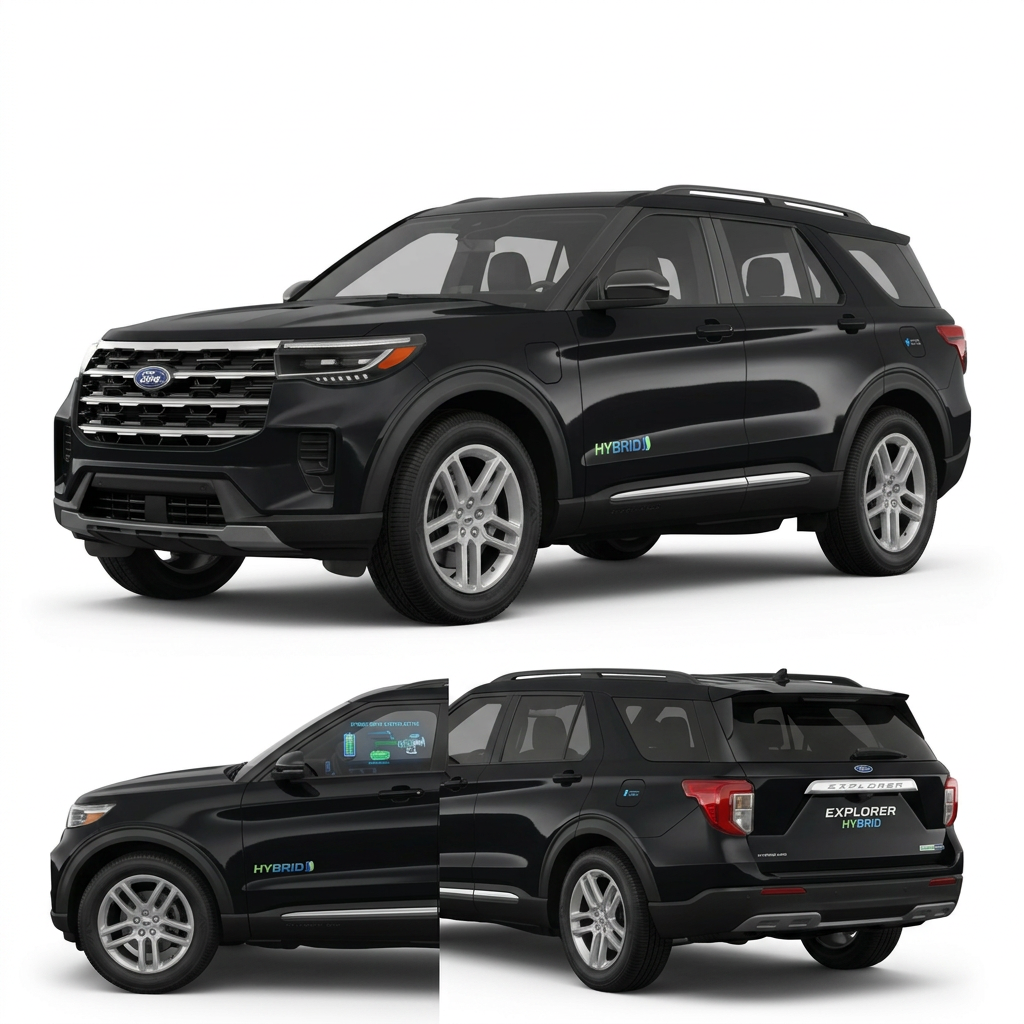
Choosing the right powertrain for your next vehicle is one of the most important decisions you will make during the buying process. The primary distinction between a traditional gasoline vehicle and a hybrid is how they generate propulsion. A standard gasoline vehicle relies solely on an internal combustion engine fueled by gasoline. In contrast, a hybrid vehicle combines an internal combustion engine with an electric motor and a high-voltage battery pack. This pairing allows the vehicle to switch seamlessly between gasoline power, electric power, or a combination of both to optimize performance and efficiency.
When you begin researching your next purchase, you will find that Ford offers versatile options across both powertrain types. For buyers who prefer the simplicity and traditional feel of a pure internal combustion engine, gasoline-powered models deliver familiar performance and robust capability. For those looking to reduce trips to the pump without changing their driving habits, hybrid configurations offer an intelligent transition. Our team is always ready to help you compare these options in person, and you can easily browse our new-vehicle inventory online to see what we currently have available.
Finding the perfect balance of capability and efficiency depends heavily on your daily driving patterns. If your routine involves frequent stop-and-go driving, a hybrid powertrain can dramatically lower your fuel costs by utilizing electric power during low-speed acceleration. If you are ready to find a model that perfectly fits your lifestyle, you can start a new vehicle custom order directly through our website to configure your preferred engine, trim, and features.
We make the purchasing process straightforward and stress-free. To help you get the best possible value on your next vehicle, we keep our website updated with the latest new vehicle specials and competitive used vehicle specials. You can also explore national incentives by viewing our manufacturer vehicle specials online. If you would like to speak with an expert or ask specific questions about our current lineup, feel free to give us a quick call or get easy-to-follow directions to our showroom to visit us in person.
Table of Contents
- Do Hybrids Require Charging and Can They Run on Gas Alone?
- How Regenerative Braking and 12V Starter Batteries Function Together
- How Atkinson Cycle Engines and Electric Motors Shape Horsepower and Transmissions
- Comparing Weight and Real-World Fuel Economy Across Different Terrains
- Common Questions About Choosing Between Hybrid and Gasoline Vehicles
- Finding the Perfect Match at Tri State Ford
Do Hybrids Require Charging and Can They Run on Gas Alone?
A common question among first-time buyers is whether a hybrid vehicle needs to be plugged in to operate. A standard hybrid vehicle, often referred to as a self-charging hybrid, does not need to be plugged into an electrical outlet. The high-voltage battery pack is charged automatically while you drive, using a combination of the gasoline engine and energy captured during braking. If you want the ability to charge your vehicle for short trips using pure electricity, you might consider a plug-in hybrid, which features a larger battery pack that can be plugged into an outlet but still operates as a standard hybrid once the initial charge runs out, providing flexibility for both electric and gasoline driving.
Another important operational detail is whether a hybrid can continue running on gasoline alone if the high-voltage battery pack fails or is completely depleted. In a standard hybrid system, the vehicle cannot run if the high-voltage battery is dead. The hybrid battery is a critical component of the drivetrain; it is responsible for starting the gasoline engine and controlling the electronic transmission components. Because the system is designed as an integrated partnership, the vehicle requires both the gasoline engine and the battery pack to be functional to operate safely and reliably under all driving conditions.
This integrated design is engineered for long-term durability, giving buyers peace of mind when shopping for pre-owned options. If you are searching for a reliable pre-owned vehicle with a verified history, you can shop our one-owner used vehicles to find high-quality cars, SUVs, and trucks. Our pre-owned selection includes highly efficient models that have been thoroughly inspected to ensure the battery and powertrain components are in excellent working order.
For business owners and commercial buyers, understanding how these powertrains handle demanding work cycles is key to managing fleet costs. If you need a vehicle built for tough commercial tasks, you can explore our new work truck inventory to compare heavy-duty capabilities. We also maintain a robust selection of pre-owned commercial options, which you can view by browsing our used work truck inventory online to find the right tool for your business.

How Regenerative Braking and 12V Starter Batteries Function Together
To understand how a hybrid maintains its battery charge without a plug, you have to look at regenerative braking. In a traditional gasoline vehicle, pressing the brake pedal squeezes the brake pads against the rotors, creating friction that slows the vehicle down and releases energy as wasted heat. A hybrid vehicle handles this process differently. When you lift your foot off the accelerator or gently press the brake pedal, the electric motor reverses its role, acting as a generator. It resists the vehicle’s forward momentum to slow it down, capturing that kinetic energy and converting it into electricity to recharge the high-voltage hybrid battery.
While the high-voltage battery handles the heavy lifting of driving and starting the engine, hybrids still carry a conventional 12V auxiliary battery. This smaller battery operates much like the one in a traditional gas car, powering low-voltage electronics such as the headlights, infotainment screen, climate control computers, and door locks. Because the 12-volt battery is critical for booting up the vehicle’s computer systems so they can engage the high-voltage system, keeping it in good health is vital. If you ever have questions about battery health or want to learn more about maintaining these systems, you can read through our battery service advice page for helpful tips.
For drivers navigating the hilly terrain around Calcutta, regenerative braking is a massive advantage. Coasting down rolling hills allows the system to continuously capture energy that would otherwise be lost, storing it to assist you when climbing the next incline. This makes a hybrid SUV or truck highly efficient for local travel. If you are looking for a vehicle with excellent ground clearance and towing capability for outdoor recreation, you can explore our new truck inventory to see our latest utility-focused models.
When you are ready to upgrade your ride, we make it simple to transition out of your current vehicle. You can easily estimate your current vehicle’s trade-in value online to receive a competitive Kelley Blue Book trade-in value. Knowing what your trade is worth helps you establish a clear budget before you step onto the showroom floor.
How Atkinson Cycle Engines and Electric Motors Shape Horsepower and Transmissions
The mechanical differences between hybrid and gas vehicles extend deep into the engine block. Traditional gasoline vehicles typically use an Otto cycle engine, which is tuned to maximize peak power density and quick throttle response. Hybrids, however, often pair their electric motors with an Atkinson cycle engine. The Atkinson cycle keeps the intake valve open slightly longer during the compression stroke, allowing some of the air-fuel mixture to push back into the intake manifold. This reduces pumping losses and makes the engine exceptionally fuel-efficient, though it sacrifices some low-end torque.
+------------------------+------------------------------------+---------------------------------------+
| Feature                | Traditional Gasoline Powertrain    | Hybrid Powertrain                     |
+------------------------+------------------------------------+---------------------------------------+
| Engine Cycle           | Otto Cycle (Prioritizes Peak Power)| Atkinson Cycle (Prioritizes Efficiency)|
+------------------------+------------------------------------+---------------------------------------+
| Low-End Torque         | Built up gradually through RPMs    | Instantaneous from Electric Motor     |
+------------------------+------------------------------------+---------------------------------------+
| Transmission Type      | Multi-Speed Automatic (e.g., 10-Sp)| Electronic CVT (e-CVT)                |
+------------------------+------------------------------------+---------------------------------------+
| Power Delivery         | Stepped gear shifts                | Continuous, linear power blending     |
+------------------------+------------------------------------+---------------------------------------+
Because an Atkinson cycle engine is less powerful at low speeds, the electric motor is the perfect partner. The electric motor delivers instant torque the moment you press the accelerator, effortlessly launching the vehicle while the gasoline engine transitions into its most efficient operating range. When calculating total system power, you cannot simply add the horsepower of the gas engine and the electric motor together. Because they reach their peak power at different engine speeds (RPMs), manufacturers use complex calculations to determine the combined net horsepower available when both power sources work together.
The way this power reaches the wheels is also unique. While a gas-only vehicle often uses a traditional multi-speed automatic transmission, such as a 10-speed automatic transmission, many hybrids utilize an electronically controlled continuously variable transmission, or e-CVT. Despite the similar name, an e-CVT is mechanically different from a belt-driven CVT. It uses planetary gearsets to seamlessly blend the power of the electric motor and the gas engine, providing smooth, linear acceleration without the physical shifting of gears.
If you are planning your purchase and want to explore your financing options, our finance department is here to help you secure a plan that fits your budget. You can save time at the dealership by completing our secure online credit application from the comfort of your home. Additionally, we offer convenient services like Ford pickup and delivery for qualifying transactions to make your buying experience as seamless as possible.
Comparing Weight and Real-World Fuel Economy Across Different Terrains
The physical components of a hybrid system, including the electric motor, power electronics, and battery pack, add weight to the vehicle. On average, a hybrid is about 200 to 400 pounds heavier than an equivalent gas-only model. However, because this weight is placed low in the chassis, it often improves the vehicle’s center of gravity, delivering a planted and comfortable ride. The electric motor’s instant torque easily offsets this extra weight, ensuring that acceleration feels responsive and agile.
This weight difference is far outweighed by the efficiency gains. A hybrid vehicle typically delivers a significant improvement in fuel economy compared to a gas-only counterpart, especially in urban environments. While a traditional gas vehicle loses energy during idling and constant braking in traffic, a hybrid shuts off its engine when stopped and uses regenerative braking to recover energy. This is why hybrids often achieve better fuel economy ratings in the city than on the highway, reversing the typical efficiency pattern of gasoline cars.
+------------------------+------------------------------------+---------------------------------------+
| Driving Environment    | Gasoline Vehicle Behavior          | Hybrid Vehicle Behavior               |
+------------------------+------------------------------------+---------------------------------------+
| City / Stop-and-Go     | High fuel consumption, idling loss | Electric-only driving, energy recovery|
+------------------------+------------------------------------+---------------------------------------+
| Highway / Cruising     | Optimal gear ratios, steady RPMs   | Continuous gas engine, minimal regen  |
+------------------------+------------------------------------+---------------------------------------+
The daily commute from Boardman into nearby employment centers highlights these real-world efficiency differences. Drivers facing stop-and-go traffic on busy retail corridors will find that a hybrid operates extensively in electric mode, significantly reducing fuel consumption. On the other hand, if your drive consists almost entirely of steady highway speeds, the efficiency gap between hybrid and gas narrows, as the gasoline engine does most of the work in both configurations.
If you are looking for a highly capable vehicle that balances towing power with modern efficiency, we offer a great selection of trucks. You can browse our versatile truck inventory to find the right configuration for your needs. For commercial operations, our specialized F-Series work truck inventory provides the heavy-duty strength required for demanding jobs. We also feature rotating manufacturer monthly service specials on our website to support your ownership journey.
Common Questions About Choosing Between Hybrid and Gasoline Vehicles
Choosing between a hybrid and a gasoline vehicle involves understanding how these technologies fit into your daily life. Below are some of the most common questions our team answers for shoppers looking to make the right decision for their next vehicle purchase.
Q: Does running the air conditioning in a hybrid reduce its gas mileage?
Yes, running the air conditioning can slightly reduce a hybrid’s fuel economy, but the system is much more efficient than a traditional setup. Hybrids use an electric AC compressor powered by the high-voltage battery, allowing the cabin to stay cool even when the gasoline engine shuts off at a red light. In a gas car, the AC compressor is driven by an engine belt, meaning the engine must run continuously to keep the cabin cool, which consumes more fuel during idling.
Q: How does cold winter weather affect hybrid efficiency?
Cold weather temporarily reduces the efficiency of both gas and hybrid vehicles, but hybrids experience a more noticeable drop in fuel economy. Low temperatures slow down the chemical reactions inside the hybrid battery, reducing its capacity. Additionally, because the gasoline engine must run more frequently to generate heat for the cabin defroster and heater, the vehicle cannot rely as heavily on electric-only power during winter drives.
Q: What is the average fuel economy of a hybrid vehicle?
While the exact fuel economy varies by vehicle size and class, many modern hybrid sedans and compact SUVs achieve an average of 40 to 50 mpg combined. Even larger hybrid trucks and midsize SUVs regularly deliver fuel economy ratings in the 20 to 30 mpg range, representing a substantial efficiency improvement over their traditional gasoline-only counterparts.
Q: How do I get an accurate value for my current vehicle if I want to trade it in?
Getting a real-world value for your trade-in is simple and can be done entirely online. You can use our secure online tool to receive a customized trade-in offer estimate based on your vehicle’s specific condition, mileage, and options, which you can then bring directly to our showroom to apply toward your next purchase.
Finding the Perfect Match at Tri State Ford
Selecting the ideal powertrain comes down to your personal driving habits, budget, and performance needs. Traditional gasoline vehicles offer robust, familiar capability and a lower initial purchase price, making them a great choice for drivers who prioritize maximum towing capacity or travel long highway distances. Hybrid vehicles excel in stop-and-go driving, offering exceptional fuel savings, smooth electric assistance, and advanced engineering that fits seamlessly into a busy lifestyle.
At Tri State Ford, we are dedicated to helping you navigate these choices with complete transparency and zero pressure. Our team is proud to serve families and professionals throughout the region, offering a welcoming environment where you can compare these technologies side by side. We invite you to schedule a test drive online today to experience the difference between hybrid and gasoline performance firsthand on local roads. Let us help you drive home in the perfect vehicle for your next adventure.
Keep Your Vehicle Running Strong
Keep your vehicle performing at its best with our service team:
© 2026 Tri State Ford. All rights reserved.
Connect with us


- Automotive News, New Vehicle Reviews, Buying Guides, Financing & Insurance, Seasonal Driving Tips
- Buying Guides, Financing & Insurance, New Vehicle Reviews, Model Comparisons, Sales & Promotions
- Buying Guides, Financing & Insurance, New Vehicle Reviews, Model Comparisons, Technology & Innovation
- Buying Guides, Financing & Insurance, Vehicle Inventory & Offers, Dealership Visit Preparation, Trade-In & Valuation
- Commercial Leasing Options, Business Fleet Solutions, Financing & Leasing Programs, Commercial Vehicle Inventory, Business Vehicle Acquisition
- Commercial Truck Sales, Fleet Purchasing Guides, Financing & Lease Options, Work Truck Customization, New Vehicle Inventory
- Commercial Vehicle Sales, Financing & Leasing, Small Business Vehicle Incentives, Fleet Purchasing Guides, Tax Benefits for Vehicle Buyers
- Commercial Vehicle Sales, Fleet Leasing & Management, Commercial Financing & Tax Incentives, Upfitting & Customization Solutions, Trade & Lease Programs
- Community Engagement & Events, New Vehicle Promotions, Financing & Trade-In Options, Maintenance & Service, Used Vehicle Offers
- Community Events & Customer Appreciation, New Vehicle Reviews, Financing & Trade-In Guides, Maintenance & Service Specials, Commercial & Work Truck Solutions
- Community Events & Dealership News, New Vehicle Promotions & Incentives, Maintenance & Service Specials, Financing & Trade-In Guidance, Family-Friendly Dealership Experiences
- Community Events & Dealership News, New Vehicle Reviews, Financing & Insurance, Maintenance & Service, Work Trucks & Commercial Vehicles
- Community Events, New Vehicle Buying Guides, Financing & Insurance, Maintenance & Service, Local Dealership News
- Compare Cars
- Dealership Events & Promotions, Financing & Trade-In Options, Maintenance & Service Specials, Community Involvement & Charity, New & Used Vehicle Buying Guides
- East Liverpool, OH Ford Dealer
- East Liverpool, OH Used Cars
- Financing & Insurance, Buying Guides, Commercial Vehicle Solutions, Fleet Management, Inventory and Availability
- Financing & Insurance, Buying Guides, New Vehicle Reviews, Used Vehicle Guides, Automotive Sales & Inventory
- Financing & Insurance, Buying Guides, New Vehicle Reviews, Used Vehicle Guides, Automotive Sales Strategies
- Financing & Insurance, Buying Guides, New Vehicle Reviews, Used Vehicle Guides, Model Comparisons
- Financing & Insurance, Buying Guides, Used Vehicle Guides, Trade-In Tips, New Vehicle Sales
- Financing & Insurance, Buying Guides, Vehicle Trade-In Tips, Dealership Sales Process, New Vehicle Promotions
- Financing & Insurance, Leasing Benefits, Model Comparisons, Technology & Innovation, Buying Guides
- Leasing & Financing Options, Buying Guides, Model Comparisons, Negotiation Tips, Inventory & Specials
- Leasing & Financing Options, Buying Guides, New Vehicle Reviews, Model Comparisons, Technology & Innovation
- Leasing & Financing Options, New Vehicle Leasing Guides, Buying Guides, Inventory Spotlight, Trade
- Leasing & Lease Deals, Financing & Insurance, New Vehicle Sales, Commercial Vehicle Leasing, Vehicle Trade-In & Purchase Options
- Leasing Options, Financing & Insurance, New Vehicle Reviews, Buying Guides, Technology & Innovation
- Leasing Options, Financing & Insurance, New Vehicle Sales, Buying Guides, Vehicle Inventory
- Maintenance & Service, Air Conditioning Repair, Genuine Parts & Accessories, Dealer-Authorized Service, Vehicle Ownership Care
- Maintenance & Service, Automotive Air Conditioning Repair, Vehicle Cooling System Care, Diagnostic & Leak Detection, Seasonal Vehicle Maintenance
- Maintenance & Service, Automotive Detailing & Cleaning, Seasonal Vehicle Care, Vehicle Protection & Preservation, Service Center Expertise
- Maintenance & Service, Automotive Detailing & Protection, Corrosion & Rust Prevention, Paint & Exterior Care, Professional Vehicle Care
- Maintenance & Service, Automotive Detailing, Paint Protection & Care, Seasonal Vehicle Care, Professional Vehicle Servicing
- Maintenance & Service, Automotive Electrical Systems, Battery Care & Replacement, Diagnostics & Repairs, Electric Vehicle Maintenance
- Maintenance & Service, Automotive Electrical Systems, Battery Care & Replacement, Vehicle Lighting & Electrical Issues, Roadside Assistance & Emergency Services
- Maintenance & Service, Automotive Fluids & Lubricants, Vehicle Care & Ownership, Dealership Service & Repairs, Preventive Maintenance
- Maintenance & Service, Automotive Lighting & Electrical, Vehicle Safety & Visibility, DIY Vehicle Care, Parts & Accessories
- Maintenance & Service, Automotive Parts & Accessories, Seasonal Vehicle Care, Vehicle Safety & Visibility, Professional Auto Service
- Maintenance & Service, Automotive Parts & Accessories, Vehicle Air Quality & HVAC Care, Preventive Vehicle Maintenance, Service Tips & FAQs
- Maintenance & Service, Automotive Parts & Accessories, Vehicle Ownership Care, Engine Care & Protection, Warranty & Service Contracts
- Maintenance & Service, Automotive Parts & Accessories, Vehicle Safety & Repair, Warranty & Coverage, Service Specials & Offers
- Maintenance & Service, Automotive Parts & Components, Vehicle Safety & Repair, Warranty & Service Coverage, Preventative Vehicle Care
- Maintenance & Service, Automotive Parts & Repairs, Vehicle Warranty & Protection, Service Center Tips, Cost-Effective Vehicle Care
- Maintenance & Service, Automotive Repair, Mobile & Remote Vehicle Service, Warranty & Roadside Assistance, OEM Parts & Service Specials
- Maintenance & Service, Automotive Repair, Parts & Accessories, Vehicle Ownership Care, Technology & Innovation in Service
- Maintenance & Service, Automotive Technology & Diagnostics, Vehicle Electronics & Sensors, Seasonal Vehicle Care, Parts & Repairs
- Maintenance & Service, Automotive Technology & Software Updates, Warranty & Recall Service, Mobile Vehicle Repair & Convenience, Customer Service & Transparency
- Maintenance & Service, Battery Care & Diagnostics, Electric Vehicle (EV) Maintenance, Seasonal Vehicle Care, Automotive Electrical Systems
- Maintenance & Service, Battery Care & Replacement, Vehicle Electrical Systems, Seasonal Vehicle Maintenance, Professional Automotive Repairs
- Maintenance & Service, Brake System Care, OEM Parts & Replacement, Vehicle Safety & Inspections, Expert Technician Services
- Maintenance & Service, Brake System Care, Vehicle Safety & Inspection, Automotive Repair Tips, Service Financing & Convenience
- Maintenance & Service, Brake System Care, Vehicle Safety & Inspection, Parts Quality & Replacement, Heavy Duty Vehicle Maintenance
- Maintenance & Service, Brake System Care, Vehicle Safety & Inspections, Parts & Components, Professional Automotive Services
- Maintenance & Service, Brake System Care, Vehicle Safety & Inspections, Parts & Repairs, Expert Tips & Advice
- Maintenance & Service, Brake Systems & Repair, Vehicle Parts & Accessories, Towing & Load Management, Seasonal Driving Tips
- Maintenance & Service, Certified Technician Insights, Warranty & Service Coverage, Genuine OEM Parts, Service Center Selection Guidance
- Maintenance & Service, Cooling System Repairs, Vehicle Ownership Care, Diagnostic & Troubleshooting, Automotive Parts & Components
- Maintenance & Service, Diagnostic Services, Vehicle Health & Diagnostics, Service Tips & Advice, Check Engine Light Solutions
- Maintenance & Service, Engine Care & Performance, Parts & Accessories, Genuine vs. After
- Maintenance & Service, Essential Vehicle Care, Preventive Maintenance Tips, Vehicle Longevity Strategies, Truck Maintenance Essentials
- Maintenance & Service, Expert Repairs & Diagnostics, Genuine Parts & Accessories, Engine Care & Performance, Vehicle Ownership & Care
- Maintenance & Service, Mobile Vehicle Services, Vehicle Care & Ownership, Genuine Parts & Repairs, Seasonal Maintenance Tips
- Maintenance & Service, Parts & Accessories, Engine Care & Repair, Vehicle Longevity Tips, OEM Parts Benefits
- Maintenance & Service, Parts & Accessories, Vehicle HVAC Care, Seasonal Vehicle Maintenance, DIY Vehicle Maintenance
- Maintenance & Service, Parts & Replacements, Vehicle Care Tips, Seasonal Maintenance, DIY Vehicle Maintenance
- Maintenance & Service, Recall Information, Safety & Reliability, Vehicle Ownership Care, Parts & Repairs
- Maintenance & Service, Recall Updates & Safety Notices, Genuine Parts & Accessories, Truck Care & Maintenance Tips
- Maintenance & Service, Repair & Diagnostics, OEM Parts & Accessories, Warranty & Recall Information, Vehicle Care & Ownership Tips
- Maintenance & Service, Repair & Diagnostics, Parts & Accessories, Vehicle Ownership Care, Service Plans & Extended Warranty
- Maintenance & Service, Repair & Diagnostics, Parts & Components, Preventive Care & Tips, Warranty & Recalls
- Maintenance & Service, Repair & Parts, Vehicle Ownership Care, Safety Features, Technology & Innovation
- Maintenance & Service, Repair & Parts, Vehicle Ownership Care, Transmission
- Maintenance & Service, Repair Solutions, Vehicle Ownership Care, Parts & Accessories, Diagnostic Tips
- Maintenance & Service, Repair Tips & Techniques, Vehicle Care & Ownership
- Maintenance & Service, Safety Features, Parts & Repairs, Vehicle Ownership Care, Automotive Service Tips
- Maintenance & Service, Safety Features, Recall & Repair Updates, Parts & Repairs, Vehicle Ownership Care
- Maintenance & Service, Safety Features, Recall & Safety Campaigns, Vehicle Inspection & Repairs, Vehicle Ownership Care
- Maintenance & Service, Safety Features, Recall & Warranty Information, Vehicle Diagnostics & Repair, Certified Service & Genuine Parts
- Maintenance & Service, Safety Features, Recall Repairs & Safety Campaigns, Parts & Genuine Components, Vehicle Ownership Care
- Maintenance & Service, Safety Features, Recalls & Repairs, Parts & Accessories, Vehicle Ownership Care
- Maintenance & Service, Safety Features, Repair & Recall Updates, Parts & Components, Vehicle Ownership Care
- Maintenance & Service, Safety Features, Repair & Replacement, Vehicle Care & Inspection, Parts & Accessories
- Maintenance & Service, Safety Features, Technology & Innovation, Automotive Parts & Accessories, Seasonal Driving Tips
- Maintenance & Service, Safety Features, Technology & Innovation, Automotive Recalls, Parts & Repairs
- Maintenance & Service, Safety Features, Technology & Innovation, Automotive Recalls, Vehicle Ownership Care
- Maintenance & Service, Safety Features, Technology & Innovation, Automotive Service Tips, Recall & Repair Updates
- Maintenance & Service, Safety Features, Technology & Innovation, Parts & Repairs, Seasonal Driving Tips
- Maintenance & Service, Safety Features, Technology & Innovation, Parts & Repairs, Vehicle Ownership Care
- Maintenance & Service, Safety Features, Technology & Innovation, Repair & Recall Information, Parts & Vehicle Care
- Maintenance & Service, Safety Features, Technology & Innovation, Seasonal Driving Tips, Parts & Repairs
- Maintenance & Service, Safety Features, Technology & Innovation, Tire Care & Replacement, Diagnostic & Repair Services
- Maintenance & Service, Safety Recalls & Repairs, Vehicle Safety & Compliance, Powertrain & Drivetrain Maintenance, Towing & Hauling Maintenance
- Maintenance & Service, Seasonal Driving Tips, Model Comparisons, Technology & Innovation, Safety Features
- Maintenance & Service, Seasonal Driving Tips, Safety Features, Technology & Innovation, Parts & Repairs
- Maintenance & Service, Seasonal Driving Tips, Vehicle Care & Ownership, Brake System Maintenance, Tire & Wheel Care
- Maintenance & Service, Seasonal Driving Tips, Vehicle Care & Ownership, Parts & Accessories, Safety Features
- Maintenance & Service, Seasonal Driving Tips, Vehicle Care & Ownership, Safety Features, Professional Repair & Service Techniques
- Maintenance & Service, Seasonal Driving Tips, Vehicle Care & Protection, Brake Maintenance, Tire Care & Safety
- Maintenance & Service, Seasonal Driving Tips, Vehicle Cooling Systems, Automotive Safety Features, Parts & Repairs
- Maintenance & Service, Service Scheduling & Convenience, Vehicle Repair & Diagnostics, Parts & Accessories, Fleet & Commercial Vehicle Service
- Maintenance & Service, Technology & Innovation, Automotive Service Transparency, Digital Vehicle Inspections, Vehicle Ownership Care
- Maintenance & Service, Technology & Innovation, Safety Features, Parts & Warranty, Vehicle Ownership Care
- Maintenance & Service, Technology & Innovation, Vehicle Diagnostics & Telematics, Fleet Management Solutions, Parts & Accessories
- Maintenance & Service, Tire Care & Repair, Roadside Assistance, Vehicle Safety & Inspections, Automotive Parts & Replacements
- Maintenance & Service, Tire Care & Repair, Wheel Alignment & Balancing, Suspension Maintenance, Vehicle Performance Optimization
- Maintenance & Service, Tire Care & Replacement, Seasonal Vehicle Care, Safety Features, Automotive Service Tips
- Maintenance & Service, Tire Care & Replacement, Vehicle Safety & Handling, Seasonal Vehicle Preparation, Drivetrain & Tire Maintenance
- Maintenance & Service, Tire Care & Replacement, Vehicle Safety & Inspections, Seasonal Vehicle Maintenance, Automotive Parts & Accessories
- Maintenance & Service, Transmission Care & Repair, Vehicle Fluid Services, Automotive Diagnostics, Warranty & Resale Value Maintenance
- Maintenance & Service, Transmission Care, Repair & Parts, Vehicle Ownership Care, Common Vehicle Issues
- Maintenance & Service, Vehicle Care & Longevity, Scheduled Service Packages, Oil Changes & Fluid Top-offs, Tire & Brake Maintenance
- Maintenance & Service, Vehicle Care Tips, Parts & Accessories, Seasonal Vehicle Maintenance, Service Specials & Packages
- Maintenance & Service, Vehicle Detailing & Care, Parts & Accessories, Seasonal Vehicle Preparation, Service Scheduling & Convenience
- Maintenance & Service, Vehicle Detailing & Cosmetic Care, Service Scheduling & Convenience, Seasonal Vehicle Care, Vehicle Ownership Tips
- Maintenance & Service, Vehicle Detailing & Protection, Vehicle Care Tips, Seasonal Vehicle Maintenance, Dealership Service Benefits
- Maintenance & Service, Vehicle Diagnostics & Repair, Engine Performance & Troubleshooting, Fuel System Care, Preventative Maintenance Strategies
- Maintenance & Service, Vehicle Fluids & Lubrication, Engine Care & Repair, Parts & Accessories, Professional Vehicle Care
- Maintenance & Service, Vehicle Inspection & Diagnostics, Parts & Repairs, Warranty & Resale Value, Service Specials & Convenience
- Maintenance & Service, Vehicle Ownership Care, Mobile Repair Services, Genuine Parts & Certified Technicians, Electric Vehicle Maintenance
- Maintenance & Service, Vehicle Ownership Care, Parts & Accessories, Repair & Diagnostics, Certified Technician Insights
- Maintenance & Service, Vehicle Repair & Diagnostics, Parts & Accessories, DIY Vehicle Care, Safety & Reliability Tips
- Maintenance & Service, Vehicle Repair & Diagnostics, Parts & Accessories, Hybrid & Electric Vehicle Care, Seasonal Vehicle Care
- Maintenance & Service, Vehicle Repair & Diagnostics, Parts & Accessories, Seasonal Driving Tips, Battery Care & Replacement
- Maintenance & Service, Vehicle Repair & Diagnostics, Parts & Accessories, Service Lane Tips & Insights, Vehicle Ownership Care
- Maintenance & Service, Vehicle Repair & Diagnostics, Parts & Accessories, Towing & Performance Care, Mobile & Convenient Service Options
- Maintenance & Service, Vehicle Repair & Parts, Service Convenience & Customer Care, Roadside Assistance & Support, Vehicle Ownership Tips
- Maintenance & Service, Vehicle Service Warranties, Repair & Coverage Plans, Ownership & Vehicle Care, Automotive Service Tips
- Maintenance & Service, Vehicle Software Updates, Safety Features, Technology & Innovation, Recall & Warranty Information
- Maintenance & Service, Warranty & Recalls, Repair & Diagnostics, Parts & Accessories, Vehicle Ownership & Care
- Model Comparisons, Buying Guides, New Vehicle Reviews, Financing & Insurance, Inventory Updates
- Model Comparisons, Buying Guides, Technology & Innovation, Safety Features, Maintenance & Service
- Model Comparisons, New Vehicle Reviews, Safety Features, Technology & Innovation, Seasonal Driving Tips
- Model Comparisons, New Vehicle Reviews, Technology & Innovation, Buying Guides, Maintenance & Service
- Model Comparisons, New Vehicle Reviews, Technology & Innovation, Safety Features, Buying Guides
- Model Comparisons, Towing & Hauling Guides, Maintenance & Service, Technology & Innovation, New Vehicle Reviews
- New Vehicle Promotions, Buying Guides, Financing & Insurance, New Vehicle Reviews, Inventory Highlights
- New Vehicle Reviews, Buying Guides, Financing & Insurance, Model Comparisons, Automotive News
- New Vehicle Reviews, Buying Guides, Financing & Insurance, Model Comparisons, Automotive Sales Strategies
- New Vehicle Reviews, Buying Guides, Financing & Insurance, Model Comparisons, Automotive Technology & Innovation
- New Vehicle Reviews, Buying Guides, Financing & Insurance, Model Comparisons, Commercial & Work Truck Sales
- New Vehicle Reviews, Buying Guides, Financing & Insurance, Model Comparisons, Inventory Highlights
- New Vehicle Reviews, Buying Guides, Financing & Insurance, Model Comparisons, Used Vehicle Guides
- New Vehicle Reviews, Buying Guides, Financing & Insurance, Model Comparisons, Vehicle Inventory Updates
- New Vehicle Reviews, Buying Guides, Financing & Insurance, New Vehicle Specials, Trade-In & Value Estimation
- New Vehicle Reviews, Buying Guides, Financing & Insurance, Used Vehicle Guides, Model Comparisons
- New Vehicle Reviews, Buying Guides, Financing & Insurance, Vehicle Inventory, Model Comparisons
- New Vehicle Reviews, Buying Guides, Model Comparisons, Financing &
- New Vehicle Reviews, Buying Guides, Model Comparisons, Financing & Insurance, Inventory & Sales
- New Vehicle Reviews, Buying Guides, Model Comparisons, Maintenance & Service, Technology & Innovation
- New Vehicle Reviews, Buying Guides, Safety Features, Technology & Innovation, Model Comparisons
- New Vehicle Reviews, Buying Guides, Technology & Innovation, Safety Features, Seasonal Driving Tips
- New Vehicle Reviews, Financing & Insurance, Buying Guides, New Vehicle Specials, Model Comparisons
- New Vehicle Reviews, Financing & Insurance, Buying Guides, Technology & Innovation, Automotive Inventory Updates
- New Vehicle Reviews, Financing & Insurance, Buying Guides, Used Vehicle Guides, Model Comparisons
- New Vehicle Reviews, Model Comparisons, Buying Guides, Technology & Innovation, Safety Features
- New Vehicle Reviews, Model Comparisons, Financing & Insurance, Technology & Innovation, Safety Features
- New Vehicle Reviews, Model Comparisons, Off-Road Adventures, Technology & Innovation, Maintenance & Service
- New Vehicle Reviews, Model Comparisons, Safety Features, Technology & Innovation, Buying Guides
- New Vehicle Reviews, Model Comparisons, Technology & Innovation, Financing & Insurance, Maintenance & Service
- New Vehicle Reviews, Model Comparisons, Technology & Innovation, Safety Features, Buying Guides
- New Vehicle Reviews, Model Comparisons, Technology & Innovation, Safety Features, Maintenance & Service
- New Vehicle Reviews, Off-Road Capabilities, Outdoor Adventure Vehicles, Technology & Innovation, Local Driving Destinations
- New Vehicle Reviews, Technology & Innovation, Buying Guides, Safety Features, Model Comparisons
- New Vehicle Reviews, Technology & Innovation, Safety Features, Maintenance & Service, Buying Guides
- New Vehicle Sales, Financing & Incentives, Trade-In & Appraisal, Special Sales Events, Electric Vehicle Purchasing
- New Vehicle Sales, Financing & Incentives, Trade-In & Value Guides, Manufacturer Promotions, Commercial Vehicle Sales
- New Vehicle Sales, Financing & Insurance, Buying Guides, Manufacturer Incentives & Discounts, Trade-In & Vehicle Valuation
- New Vehicle Sales, Vehicle Delivery & Logistics, Financing & Credit Applications, Trade-In & Vehicle Valuation, Commercial Vehicle Sales
- Tips
- Trucks
- Uncategorized
- Used Vehicle Guides, Buying Guides, Financing & Insurance, Model Comparisons, Selling Your Car
- Used Vehicle Guides, Financing & Insurance, Buying Guides, Model Comparisons, Local Dealership Highlights
- Used Vehicle Guides, Financing & Insurance, Buying Guides, New Vehicle Reviews, Commercial Vehicle Sales
- Used Vehicle Guides, Financing & Insurance, Buying Guides, Vehicle Warranty Information, Pre-Owned Vehicle Sales
- Vehicle Sales Events, Financing & Leasing, Trade-In & Trade-Up Guides, New Vehicle Inventory Highlights, Dealership Buying Experience
- Vehicle Sales Events, New Vehicle Buying Guides, Financing & Incentives, Dealership Inventory Highlights, Commercial Vehicle Sales
- Vehicle Sales Events, New Vehicle Pricing & Incentives, Financing & Lease Options, Trade-In & Appraisal Guides, Dealership Buying Experience
- Vehicle Sales Events, New Vehicle Pricing, Financing & Credit Applications, Trade-In & Loyalty Programs, Leasing vs Buying Guides
- Vehicle Sales Events, New Vehicle Purchasing, Incentives & Discounts, Financing & Pre-Approval, Trade-In & Appraisal Guidance
- Vehicle Sales Process, Financing & Credit Applications, New and Used Vehicle Inventory, Pickup and Delivery Services, Online Vehicle Purchasing
- Vehicle Sales Promotions, New Vehicle Buying Guides, Financing & Credit Applications, Dealership Inventory Highlights, Model Pricing Comparisons
- Vehicle Sales Promotions, New Vehicle Buying Guides, Financing & Incentives, Trade-In & Valuation, Dealership Sales Events
- Vehicle Sales, Online Car Buying, Financing & Incentives, Trade-In Guides, New Vehicle Delivery Services, Youngstown Dealership
- Vehicle Trade-In Tips, Financing & Insurance, Buying Guides, Dealership Sales Strategies, Inventory & Specials