

What I Tell Customers About Clay Bar Treatments and Paint Protection
## Understanding Paint Decontamination and Why Your Vehicle Needs a Clay Bar
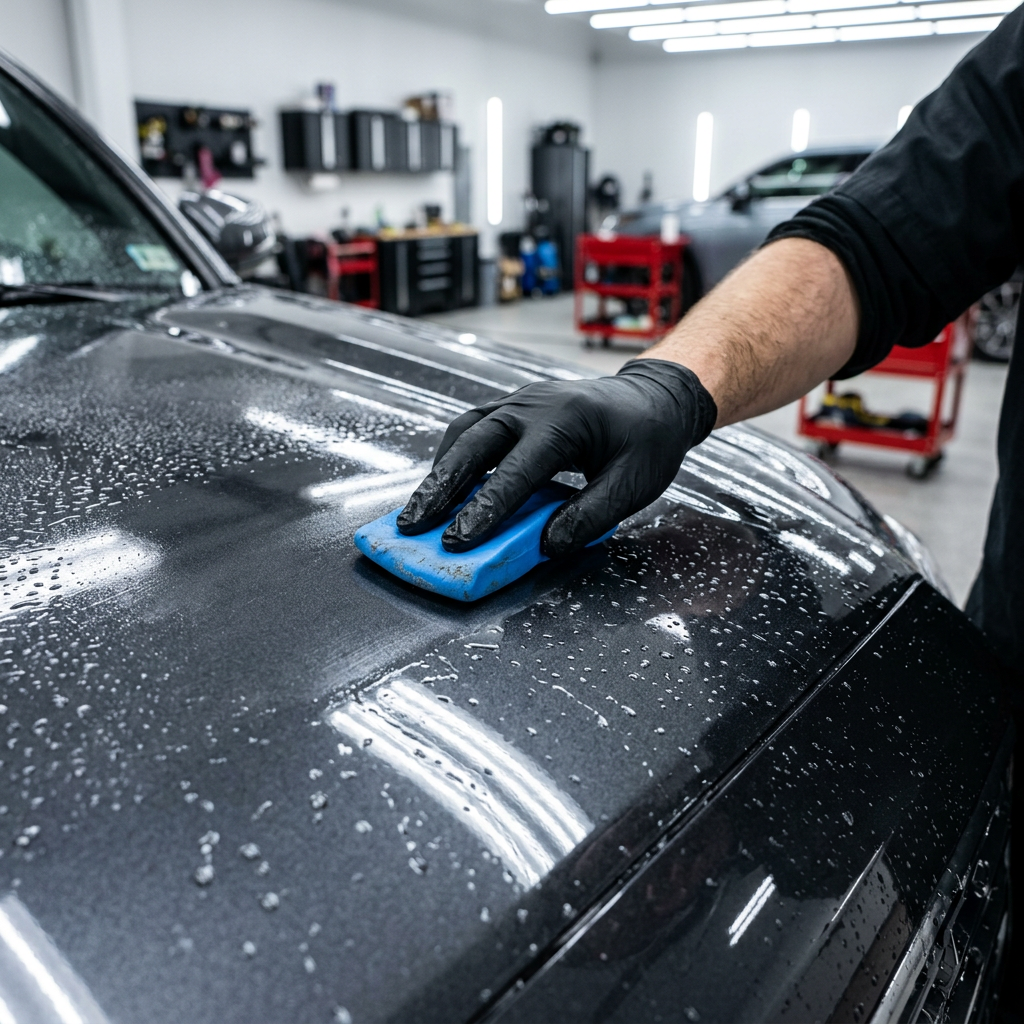
When I'm helping drivers keep their vehicles looking like new, one of the most misunderstood detailing steps I discuss is the clay bar process. Many people assume that a standard car wash is enough to keep their exterior clean, but washing only removes loose surface dirt. Over time, microscopic debris bonds physically to your vehicle's clearcoat, creating a rough texture that regular soap and water cannot touch. A clay bar treatment is a specialized restoration process that uses a synthetic or natural resin clay, lubricated with a slick spray, to mechanically pull these bonded surface contaminants off the paint without damaging the finish.
When local truck owners ask me why their paint feels rough even after a thorough scrub, I usually walk them through how microscopic debris bonds to the clearcoat. There is an incredibly simple diagnostic trick you can perform at home called the plastic bag test. After thoroughly washing and drying your vehicle, place your hand inside a thin, clean plastic sandwich bag and gently glide your fingers over the hood or fenders. If the surface feels gritty, rough, or bumpy through the plastic, your paint has bonded contamination and is a prime candidate for a professional clay treatment.
Ignoring these bonded impurities does more than just ruin the smooth feel of your paint; it actively accelerates clearcoat degradation. If you want to keep your vehicle looking showroom-fresh, our team at our East Liverpool service center can inspect your exterior finish and recommend the right paint care plan. To discuss our professional detailing options or ask any questions about maintaining your vehicle's exterior, feel free to give our service advisors a call at (330) 462-7578 today.
Table of Contents
- What Contaminants Are Silently Damaging Your Clear Coat
- Comparing Traditional Detailing Clay Bars to Modern Mitts and Towels
- The Critical Role of Proper Lubrication in Paint Decontamination
- How Often Can You Safely Clay Your Paint Without Causing Damage
- How Claying Prepares Your Vehicle for Long Lasting Wax and Protection
- Professional Paint Care and Detailing Services
What Contaminants Are Silently Damaging Your Clear Coat
The clearcoat on your vehicle is constantly bombarded by environmental hazards that slowly eat away at the gloss. Among the most common culprits are industrial fallout, rail dust, and tiny metallic flecks known as brake dust. When you apply your brakes, microscopic metal shards shear off the rotors, heat up, and launch into the air, eventually landing on your paint and melting directly into the clearcoat. Other stubborn materials like tree sap mist, airborne paint overspray, and sticky road tar also bond tightly to the surface, refusing to budge during a standard wash cycle.
Many families in Calcutta take their SUVs out near Beaver Creek for weekend fishing trips, which means their clearcoat is constantly exposed to tree sap mist and organic fallout. When we service heavy-duty commercial vehicles, such as hardworking F-Series work trucks equipped with powerful PowerStroke V8 diesel engines, we often find heavy accumulations of industrial soot and rail dust embedded on the flat surfaces of the hood and roof. If these metallic and organic particles are left untreated, they can oxidize over time, creating tiny rust spots that compromise the integrity of the paint.
It is important to understand the difference between claying and other paint correction steps like polishing. While claying mechanically pulls contaminants out of the clearcoat pores, polishing uses fine abrasives to physically shave down a microscopic layer of the clearcoat to level out scratches and swirl marks. If you prefer to handle minor detailing touch-ups at home, you can order specialized paint care products directly through our parts department to maintain your vehicle's finish effectively. Additionally, keeping your vehicle riding smoothly on fresh rubber can minimize the excess metallic brake dust kicked up by worn tires, which you can easily address by browsing our online tire finder to select the correct tire specifications for your model.
Comparing Traditional Detailing Clay Bars to Modern Mitts and Towels
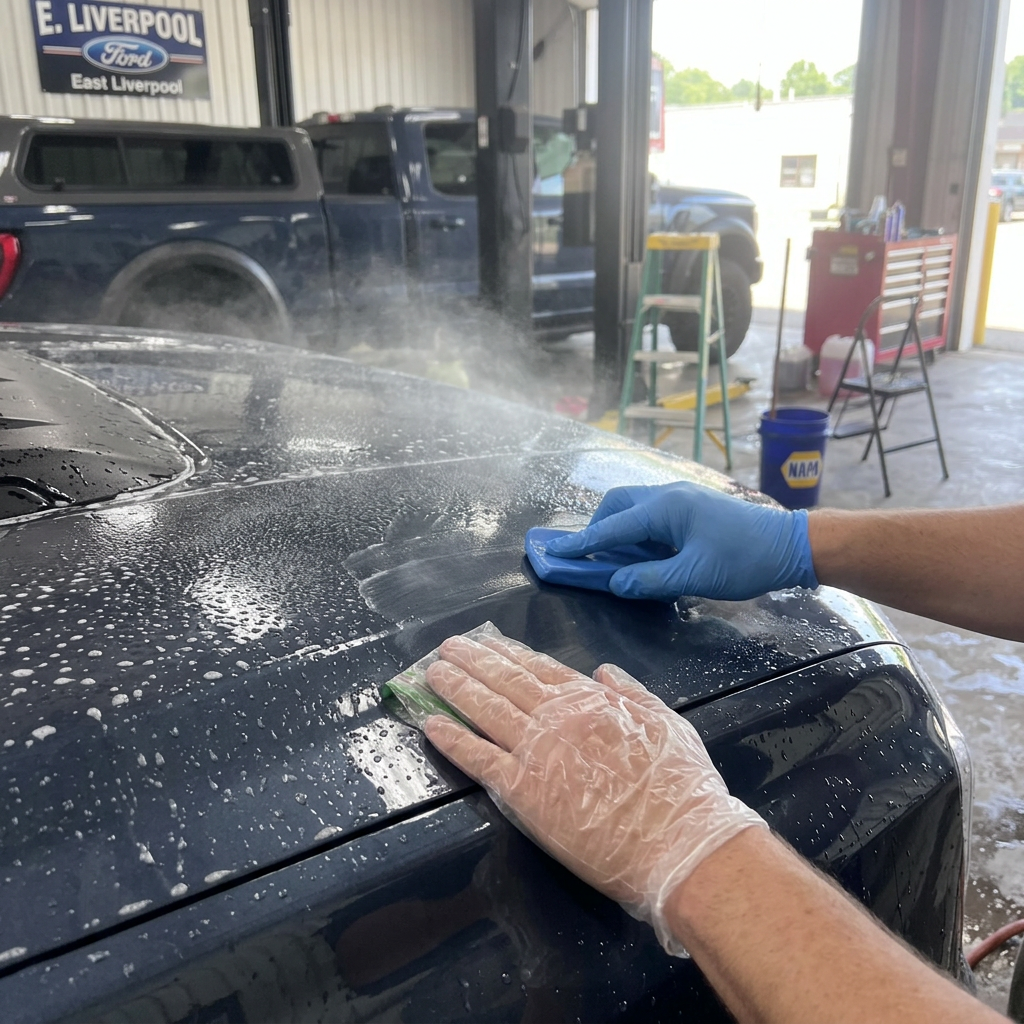
While the classic clay bar remains the gold standard for deep paint decontamination, modern synthetic alternatives have completely changed how we approach vehicle care. Traditional detailing clay consists of a natural or synthetic plastic resin mixture that is highly pliable and elastic. As you glide the lubricated bar across the paint, it physically shears off and traps the embedded debris inside the clay matrix. This requires you to constantly knead and fold the clay to expose a clean surface, ensuring you do not rub trapped grit back onto your clearcoat.
Modern detailing technology has introduced clay mitts and clay towels, which feature a specialized rubber polymer coating on one side that mimics the performance of traditional clay. These synthetic alternatives offer several distinct advantages for both professional detailers and DIY enthusiasts:
- Rinsability: If you drop a traditional clay bar on the ground, it must be thrown away immediately because it will pick up dirt and rocks that will scratch your paint. A clay mitt or towel can simply be rinsed off with water and reused.
- Speed and Efficiency: The larger surface area of a mitt or towel allows you to cover body panels much faster than a small clay bar.
- Longevity: Synthetic polymer mitts typically last through dozens of vehicles, whereas a standard clay bar is usually discarded after a few heavy uses.
Despite the convenience of modern mitts, traditional clay bars still hold a slight edge when it comes to precision. The pliable nature of a clay bar allows it to conform perfectly into tight body lines, emblems, and complex trim pieces. For vehicles with heavy, deeply embedded contamination, the concentrated physical grabbing power of a traditional clay bar remains unmatched.
The Critical Role of Proper Lubrication in Paint Decontamination
A common mistake that leads to micro-scratches on a vehicle's clearcoat is trying to save a few dollars by using plain tap water during the detailing process. Without a dedicated lubricant, the clay will stick, drag, and mar the clearcoat, leaving behind unsightly cloudy patches. Proper lubrication creates a microscopic barrier between the clay and the paint, allowing the clay to hydroplane smoothly across the surface while only grabbing the contaminants that protrude above the clearcoat.
To ensure a safe and effective treatment, you should always use a dedicated quick detailer spray or a specially formulated clay lubricant. These commercial detailers provide the exact level of surface slickness required to prevent the clay from sticking. Avoid using household dish soap mixed with water, as the harsh detergents in dish soap will break down the synthetic polymers in the clay, causing it to crumble and deteriorate prematurely.
Commuters driving from Boardman down to the Youngstown area face plenty of highway debris, making regular paint decontamination a necessity. If you do not have the time or tools to perform this delicate process yourself, our team offers a convenient valet pickup and delivery service for scheduled maintenance and detailing appointments. You can easily find our service department online to schedule a professional paint inspection and let our certified technicians handle the hard work for you.
How Often Can You Safely Clay Your Paint Without Causing Damage
Paint decontamination is not a weekly or even monthly chore, as overworking the clearcoat can actually do more harm than good. Because the clay bar process involves physical friction against the clearcoat, claying too frequently can gradually wear down your protective layers and introduce fine micro-marring. As a general rule of thumb, most vehicles parked in normal conditions only require a clay bar treatment once or twice a year.
The ideal schedule is to perform a decontamination treatment right before the harsh winter weather hits, and then once again in the spring to remove the accumulated road salt and grime. Rather than relying on a calendar, you should always perform the plastic bag test to determine if a treatment is actually necessary. If the paint still feels perfectly slick after a wash, skip the clay bar and go straight to your favorite protective wax or sealant.
To consult with our detailing experts in person about your vehicle's specific maintenance needs, check our department operating hours and stop by our service drive. We can help you evaluate the condition of your clearcoat and set up a balanced maintenance routine that keeps your vehicle looking pristine without overworking the delicate exterior finish.
How Claying Prepares Your Vehicle for Long Lasting Wax and Protection
Applying a fresh coat of wax over contaminated paint is like building a house on a shaky foundation. If the clearcoat is covered in microscopic dirt, brake dust, and road grime, your wax, paint sealant, or ceramic coating cannot bond directly to the paint. Instead, the protective product bonds to the contaminants themselves, which quickly wash away and leave your clearcoat completely exposed to the elements.
When you perform a clay bar treatment first, you expose a perfectly clean, virgin clearcoat surface. This allows your wax or sealant to bond at a molecular level, which can easily double the lifespan and durability of the protective layer. Additionally, removing those tiny, light-blocking particles dramatically improves overall paint clarity and enhances the deep, wet-look gloss of your final wax.
It is crucial to remember that claying is a stripping process that will mechanically remove any existing wax or paint sealants. Because of this, you must always apply a fresh layer of paint protection immediately after finishing a clay bar treatment. At our dealership, we prioritize long-term preventative maintenance to help protect your automotive investment, ensuring that every layer of defense on your vehicle performs at its absolute best.
Professional Paint Care and Detailing Services
If the idea of rubbing a detailing clay bar across your vehicle's clearcoat feels a bit intimidating, you do not have to tackle it alone. Our factory-trained technicians understand the exact techniques, lubricants, and pressure required to safely decontaminate your paint without causing micro-scratches. We treat every vehicle with the utmost care, utilizing professional-grade products designed to preserve your exterior finish.
While paint finish issues from environmental damage aren't typically covered under the standard 3-year/36,000-mile bumper-to-bumper warranty, keeping your clearcoat clean prevents long-term corrosion and rust. You can easily schedule a service appointment online to have our professionals handle your paint decontamination and exterior protection. Be sure to browse our monthly maintenance information before you book to see how you can save on your next visit.
While we have your vehicle in the shop, we can also perform a comprehensive multi-point inspection, including testing your battery health to ensure your vehicle is running as beautifully as it looks. For ultimate convenience, ask about our mobile service options that bring expert care directly to your driveway, saving you a trip to the dealership while keeping your vehicle in peak condition.
© 2026 Tri State Ford. All rights reserved.