

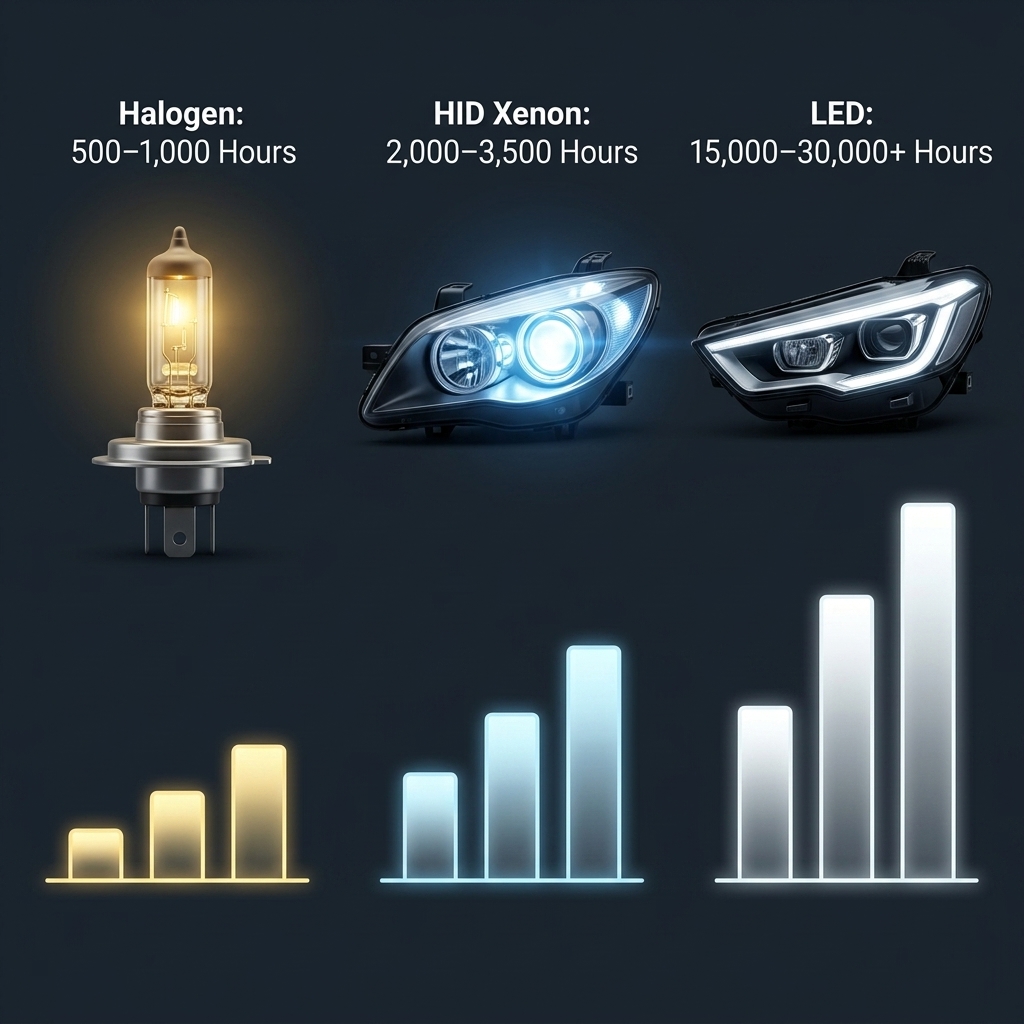
Standard automotive headlights last anywhere from 500 hours to over 30,000 hours depending on the specific lighting technology installed. Conventional halogen bulbs usually require replacement every one to three years ( 500 hours to 1,000 hours of use). High-Intensity Discharge ( HID) xenon bulbs generally deliver three to six years of service ( 2,000 hours to 3,500 hours). Modern factory-integrated LED assemblies are built for long-term vehicle ownership, often providing 15,000 hours to 30,000 hours of illumination, which frequently outlasts the vehicle itself under standard driving conditions.
Vehicle lighting systems are among the most critical safety components on your automobile, directly affecting night visibility and road awareness. While total operating hours offer a technical baseline, real-world lifespan is heavily influenced by local road conditions, operating temperatures, voltage stability, and daily usage patterns. Drivers navigating the gently rolling hills along State Route 170 in Calcutta experience frequent suspension movement, which can accelerate filament wear in standard halogen bulbs over time compared to highway driving on flat terrain.
Knowing when vehicle lights are approaching the end of their operational lifespan helps prevent unexpected outages during dark evening commutes. While a dead bulb is an obvious issue, subtle warning signs like dimming output, color shifting, or minor lens flickering often indicate that a light component is failing. Regular vehicle inspections allow technicians to identify degrading bulbs or loose connections before a headlight goes out completely on the road.
If you notice a dim light or erratic headlight performance, our team at Tri State Ford can inspect your entire electrical and lighting system. You can easily find our location at 1503 Pennsylvania Ave, East Liverpool, OH 43920 or give our service department a quick call at (330) 462-7578 to speak with a factory-trained technician.
Table of Contents
- How long do standard halogen headlight bulbs usually last before they break?
- How do halogen, HID, and LED lifespans compare in years of ownership?
- Over a decade, how do replacement costs compare between halogen and LED setups?
- How do headlight failures impact driver safety, convenience, and routine maintenance?
- If an HID or LED module fails, can it be serviced locally or does it require special ordering?
- When is it better to have professional service for a failed headlight assembly?
- Common Headlight Maintenance Questions
- Keeping Your Vehicle Lighting Dependable and Safe
How long do standard halogen headlight bulbs usually last before they break?
Standard halogen headlight bulbs typically last between 500 hours and 1,000 hours of active operation before breaking, which equates to roughly one to three years of routine daily driving. This relatively short operational lifespan stems directly from how halogen technology generates light using a delicate tungsten filament enclosed within a glass capsule filled with halogen gas.
As electrical current passes through the filament, the wire heats to extreme temperatures to produce visible light. Over time, the continuous heating and cooling cycles cause the tungsten to gradually thin and weaken. Vibrations from rough road surfaces, potholes, and sudden impacts put physical stress on this fragile, glowing wire, eventually causing it to snap.
Environmental factors inside the engine compartment also play a major role in how quickly halogen units degrade:
- Thermal stress: Trapped heat inside the headlight enclosure shortens the physical integrity of the filament.
- Vibration exposure: Unpaved roads or uneven pavement rattle the bulb capsule, causing premature wire fatigue.
- Voltage fluctuations: A weak battery or fluctuating alternator output subjects the filament to harmful power spikes.
- Oil contamination: Touching the glass capsule with bare hands during installation transfers skin oils that create concentrated hot spots, leading to rapid glass cracking or early filament failure.
Because halogen bulbs lose light output gradually as tungsten deposits build up on the inside of the glass, brightness can drop significantly before the filament breaks entirely. Replacing these bulbs in pairs every two years helps maintain balanced road illumination and prevents the inconvenience of one side going dark unexpectedly.
How do halogen, HID, and LED lifespans compare in years of ownership?
In typical vehicle ownership, halogen bulbs require replacement every one to three years, HID xenon systems last three to six years, and factory LED assemblies routinely serve for ten to fifteen years without requiring bulb changes. Understanding these performance differences helps vehicle owners plan routine ownership maintenance and evaluate overall lighting reliability.
HID (High-Intensity Discharge) headlights replace the traditional wire filament with a capsule filled with xenon gas and metallic salts. An electrical arc struck between two electrodes ignites the gas, producing an intense, clear white beam. Because there is no fragile filament to break from road shock, HID units survive vibration far better than halogen options, lasting between 2,000 hours and 3,500 hours. However, the electronic ballasts and igniters that regulate voltage to HID capsules can fail over time due to heat and electrical wear.
Factory-integrated LED (Light Emitting Diode) lighting represents the most durable automotive illumination technology available. Rather than heating gas or wire, LED chips transfer electricity through semiconductors to produce instant, bright light with minimal power draw. High-quality LED headlight systems can deliver 15,000 hours to 30,000 hours or more of illumination.
| Lighting Technology | Expected Hours | Average Years of Service | Primary Failure Mechanism | Light Output Character |
|---|---|---|---|---|
| Halogen | 500 – 1,000 hours | 1 – 3 years | Filament burnout or glass thermal shock | Warm yellow (3,000K – 4,200K) |
| HID Xenon | 2,000 – 3,500 hours | 3 – 6 years | Electrode erosion or ballast circuit breakdown | Crisp white / bluish (4,200K – 6,000K) |
| LED | 15,000 – 30,000+ hours | 10 – 15+ years | Driver module overheating or circuit aging | Cool daylight white (5,000K – 6,500K) |
While LED chips rarely burn out in the traditional sense, they do experience minor lumen degradation over many years of continuous use. Drivers who bring their vehicle into our service bay after noticing a flickering headlight often find that road vibration loosened a connector terminal or degraded a control module rather than burning out the actual LED light chip itself.

Over a decade, how do replacement costs compare between halogen and LED setups?
Over a ten-year ownership period, halogen lighting setups incur lower upfront parts costs but require frequent bulb purchases and repeated service labor, whereas factory LED systems cost significantly more if an entire unit fails but rarely require any expenditure during a decade of normal operation. Evaluating long-term maintenance expenses involves looking beyond the price of a single bulb.
A driver maintaining halogen headlights over ten years can expect to replace headlight bulbs approximately three to five times per side. When accounting for two bulbs per replacement cycle plus the labor time needed to access modern, tight engine bays, maintenance costs steadily add up over the vehicle’s lifetime. Additionally, tail lights, brake lights, and turn signals using standard incandescent bulbs require separate replacements over that same ten-year window.
Conversely, solid-state LED systems virtually eliminate routine bulb replacements. Because LED setups draw up to 70 percent less electrical power than halogen units, they also reduce load on the vehicle’s alternator and battery. However, if a complete sealed LED headlamp assembly suffers physical impact damage or internal control module breakdown after its warranty period, replacing the integrated housing costs substantially more than a simple plug-in bulb.
To maintain reliable lighting without surprise expenses, sourcing high-quality Original Equipment Manufacturer (OEM) components is vital. Drivers seeking long-lasting performance can simplify maintenance by ordering genuine OEM parts directly through our dedicated parts center.
How do headlight failures impact driver safety, convenience, and routine maintenance?
A failed headlight drastically reduces nighttime visibility, increases crash risk in low-light conditions, and creates an immediate legal liability that can lead to traffic citations and failed safety inspections. Driving with a single headlight impairs your ability to spot pedestrians, wildlife, or debris, while also making your vehicle appear smaller or further away to oncoming traffic.
Beyond safety risks, unexpected light outages disrupt daily schedules and commuting routines. Nighttime commutes along the Ohio River bluffs in East Liverpool demand dependable lighting to spot road hazards clearly in heavy fog, rain, or winter snow. A sudden outage forces drivers to arrange prompt repairs, often requiring time away from work or family commitments.
Routine lighting checks integrated into regular vehicle service intervals prevent these unexpected disruptions. Technicians inspect exterior lights during standard tire rotations and oil changes to check for:
- Dimming or uneven beam brightness between left and right headlamps
- Color shifting in HID bulbs (turning pink or purple as they age)
- Condensation or standing water inside sealed plastic housings
- Cracked lenses that allow dirt and moisture to corrode internal sockets
- Hazy or yellowed polycarbonate lenses that block up to 50 percent of light output
If an unexpected light failure or vehicle breakdown leaves you stranded on the road, emergency coverage provides peace of mind. Owners covered by active manufacturer programs can call Ford Roadside Assistance: 1-800-241-3673 for prompt towing and emergency support to an authorized facility.
When routine bulb checks reveal dimming or moisture issues, you can prevent driving hazards by scheduling a service appointment online for a comprehensive multi-point inspection.
If an HID or LED module fails, can it be serviced locally or does it require special ordering?
While standard halogen bulbs are kept in stock locally for same-day replacement, specialized HID ballasts and factory LED control modules often require dedicated ordering through factory distribution networks depending on the vehicle model and trim level. Knowing what components are readily available helps set realistic repair timelines when lighting issues occur.
Traditional halogen capsules use standardized socket shapes (such as H11, 9008, or 9005) that fit across many vehicle lines, making them easy to source instantly. In contrast, modern LED headlamps are sophisticated electronic units containing specialized circuit boards, internal cooling fans, micro-projectors, and vehicle-specific communication chips.
When servicing complex lighting systems, repair procedures vary by technology:
- Component-level replacement: Certain HID systems allow individual swapping of the bulb, igniter, or external ballast wire without replacing the entire housing.
- Sealed assembly replacement: Many factory LED systems integrate the light source, daytime running lights, and control drivers into a single sealed unit. If an internal chip or driver fails, the complete assembly must be swapped.
- System diagnostics: Electronic lighting faults require dealer-grade diagnostic scan tools to determine whether an issue stems from the light module, a blown fuse, a faulty relay, or an underlying body control computer glitch.
Unstable voltage from a dying battery or corroded ground terminal can cause LED and HID drivers to flicker or shut down prematurely. Performing routine electrical and battery inspections protects sensitive lighting electronics from power spikes. For busy owners needing convenient vehicle care, utilizing Ford Mobile Service options allows certified technicians to handle routine maintenance directly at your home or workplace.
When is it better to have professional service for a failed headlight assembly?
Professional service is strongly recommended when replacing full LED headlamp assemblies, troubleshooting high-voltage HID xenon circuits, or servicing modern vehicles where light access requires removing bumper covers and grille trim. What used to be a simple five-minute bulb swap has evolved into a precise electronic and mechanical procedure on modern vehicles.
High-Intensity Discharge systems operate under high voltage created by an ignition ballast. Working on these components without proper safety protocols creates electrical shock risks. Additionally, modern vehicle front-end design packs components tightly, requiring delicate clip removal and trim disassembly that can break fragile plastic tabs if done incorrectly.
Key technical reasons to choose professional lighting service include:
- Correct beam alignment: Replacing a headlight unit alters the beam angle. Technicians use precision optical aiming tools to ensure the light pattern illuminates the road correctly without blinding oncoming drivers.
- Proper seal verification: Professional installation ensures weather dust boots and wiring grommets are seated correctly, preventing moisture intrusion and internal lens fogging.
- Safety system calibration: Vehicles equipped with advanced driver assistance features—such as Ford Co-Pilot360 with automatic high-beam controls or adaptive bending headlamps—require electronic sensor recalibration after headlamp housing removal.
- Diagnostic accuracy: Factory tools verify whether a dead light is caused by a burnt element, a bad module, damaged wiring, or a blown relay, preventing unnecessary parts purchases.
Our experienced technical team stands ready to resolve any lighting or electrical issues with genuine parts and factory precision. Drivers can drop by our service center after finding our service facility online, or call our team directly at (330) 462-7578 to speak with an advisor.
Common Headlight Maintenance Questions
Q: Why do halogen headlight bulbs seem to burn out faster in winter?
Cold winter temperatures increase electrical resistance in cold lamp filaments, causing an initial surge of current when you turn lights on. Combined with increased vibration from icy, uneven roads and higher alternator output to power heated accessories, halogen filaments experience accelerated physical stress during winter months.
Q: Is it normal for headlight lenses to have light fogging or moisture inside?
Minor, temporary fogging inside the lens can happen during sudden humidity or temperature changes and typically clears within an hour of running the lights. However, persistent water droplets, standing water, or heavy condensation inside the housing indicate a failed seal or cracked lens that requires prompt inspection before internal corrosion damages electrical terminals.
Q: Can I upgrade my halogen headlights to LED bulbs myself?
While aftermarket LED replacement bulbs exist, placing an LED bulb inside a housing designed for a halogen filament often scatters the light beam, causing blinding glare for oncoming traffic and poor beam distance for the driver. Installing full factory-approved, complete LED assemblies ensures correct beam patterns, proper cooling, and legal road compliance.
Q: Should headlight bulbs always be replaced in pairs?
Yes. Replacing bulbs in pairs ensures identical brightness, uniform color output, and balanced road visibility. Because headlight bulbs of the same type share identical operating hours and thermal cycles, when one bulb burns out, the opposing side usually fails shortly thereafter.
Q: Why do my headlights dim when the vehicle is idling?
Headlights that dim significantly at idle or flicker when powering electric windows often indicate an aging car battery or a failing alternator. When engine speed drops, the charging system output decreases, causing low voltage across the electrical system that directly affects headlight brightness.
Keeping Your Vehicle Lighting Dependable and Safe
Maintaining fully operational vehicle headlights is essential for road safety, nighttime visibility, and overall vehicle performance. Whether your automobile utilizes traditional halogen bulbs, intense HID xenon capsules, or advanced factory-integrated LED lighting, addressing dimming output, lens fogging, or flickering lights preserves your safety on the road.
Regular exterior lighting inspections during routine vehicle servicing help catch minor wiring degradation, terminal corrosion, or lens clouding before complete light failure occurs. Upgrading worn lighting components with genuine OEM parts ensures exact fitment, factory durability, and proper electrical compatibility with your vehicle’s onboard computers.
Our team at Tri State Ford is committed to keeping your vehicle operating at peak safety standards. To schedule your next vehicle health check or lighting inspection, reach out to our service team today. You can visit our facility in person, book your appointment online, or call our service department directly to speak with an expert technician.
Connect with us


- Automotive News, New Vehicle Reviews, Buying Guides, Financing & Insurance, Seasonal Driving Tips
- Buying Guides, Financing & Insurance, New Vehicle Reviews, Commercial Fleet Sales, Custom Orders & Factory Builds
- Buying Guides, Financing & Insurance, New Vehicle Reviews, Model Comparisons, Sales & Promotions
- Buying Guides, Financing & Insurance, New Vehicle Reviews, Model Comparisons, Technology & Innovation
- Buying Guides, Financing & Insurance, Used Vehicle Guides, New Vehicle Reviews, Cross-Border Purchasing
- Buying Guides, Financing & Insurance, Vehicle Inventory & Offers, Dealership Visit Preparation, Trade-In & Valuation
- Buying Guides, New Vehicle Reviews, Financing & Insurance, Commercial Vehicle Sales, Model Comparisons
- Commercial Leasing Options, Business Fleet Solutions, Financing & Leasing Programs, Commercial Vehicle Inventory, Business Vehicle Acquisition
- Commercial Truck Sales, Fleet Purchasing Guides, Financing & Lease Options, Work Truck Customization, New Vehicle Inventory
- Commercial Truck Sales, Fleet Vehicle Financing, Custom Work Truck Upfits, Commercial Vehicle Buying Guides, Used Commercial Truck Inventory
- Commercial Vehicle Sales, Financing & Leasing, Small Business Vehicle Incentives, Fleet Purchasing Guides, Tax Benefits for Vehicle Buyers
- Commercial Vehicle Sales, Fleet Leasing & Management, Commercial Financing & Tax Incentives, Upfitting & Customization Solutions, Trade & Lease Programs
- Commercial Vehicle Sales, Fleet Purchasing & Management, Financing & Leasing for Businesses, New & Used Work Truck Inventory, Commercial Truck Ordering Process
- Community Engagement & Events, New Vehicle Promotions, Financing & Trade-In Options, Maintenance & Service, Used Vehicle Offers
- Community Events & Customer Appreciation, New Vehicle Reviews, Financing & Trade-In Guides, Maintenance & Service Specials, Commercial & Work Truck Solutions
- Community Events & Dealership News, New Vehicle Promotions & Incentives, Maintenance & Service Specials, Financing & Trade-In Guidance, Family-Friendly Dealership Experiences
- Community Events & Dealership News, New Vehicle Reviews, Financing & Insurance, Maintenance & Service, Work Trucks & Commercial Vehicles
- Community Events, New Vehicle Buying Guides, Financing & Insurance, Maintenance & Service, Local Dealership News
- Compare Cars
- Custom Ordering & Build Process, New Vehicle Inventory & Offers, Financing & Trade-In Guidance, Manufacturer Incentives & Rebates, Vehicle Purchase & Order Tracking
- Dealership Events & Promotions, Financing & Trade-In Options, Maintenance & Service Specials, Community Involvement & Charity, New & Used Vehicle Buying Guides
- East Liverpool, OH Ford Dealer
- East Liverpool, OH Used Cars
- Financing & Insurance, Buying Guides, Commercial Vehicle Solutions, Fleet Management, Inventory and Availability
- Financing & Insurance, Buying Guides, New Vehicle Reviews, Used Vehicle Guides, Automotive Sales & Inventory
- Financing & Insurance, Buying Guides, New Vehicle Reviews, Used Vehicle Guides, Automotive Sales Strategies
- Financing & Insurance, Buying Guides, New Vehicle Reviews, Used Vehicle Guides, Model Comparisons
- Financing & Insurance, Buying Guides, Used Vehicle Guides, New Vehicle Reviews, Automotive Sales Strategies
- Financing & Insurance, Buying Guides, Used Vehicle Guides, Trade-In Tips, New Vehicle Sales
- Financing & Insurance, Buying Guides, Vehicle Inventory & Offers, Trade-In & Appraisal, Dealership Services
- Financing & Insurance, Buying Guides, Vehicle Trade-In Tips, Dealership Sales Process, New Vehicle Promotions
- Financing & Insurance, Leasing Benefits, Model Comparisons, Technology & Innovation, Buying Guides
- Leasing & Financing Options, Buying Guides, Model Comparisons, Negotiation Tips, Inventory & Specials
- Leasing & Financing Options, Buying Guides, New Vehicle Reviews, Model Comparisons, Technology & Innovation
- Leasing & Financing Options, New Vehicle Leasing Guides, Buying Guides, Inventory Spotlight, Trade
- Leasing & Lease Deals, Financing & Insurance, New Vehicle Sales, Commercial Vehicle Leasing, Vehicle Trade-In & Purchase Options
- Leasing Options, Financing & Insurance, New Vehicle Reviews, Buying Guides, Technology & Innovation
- Leasing Options, Financing & Insurance, New Vehicle Sales, Buying Guides, Vehicle Inventory
- Maintenance & Service, Air Conditioning Repair, Genuine Parts & Accessories, Dealer-Authorized Service, Vehicle Ownership Care
- Maintenance & Service, Automotive Air Conditioning Repair, Vehicle Cooling System Care, Diagnostic & Leak Detection, Seasonal Vehicle Maintenance
- Maintenance & Service, Automotive Detailing & Cleaning, Seasonal Vehicle Care, Vehicle Protection & Preservation, Service Center Expertise
- Maintenance & Service, Automotive Detailing & Paint Care, Vehicle Exterior Protection, Paint Repair & Restoration, Parts & Accessories Installation
- Maintenance & Service, Automotive Detailing & Protection, Corrosion & Rust Prevention, Paint & Exterior Care, Professional Vehicle Care
- Maintenance & Service, Automotive Detailing, Paint Protection & Care, Seasonal Vehicle Care, Professional Vehicle Servicing
- Maintenance & Service, Automotive Detailing, Vehicle Care & Protection, Off-Road Vehicle Maintenance, Parts & Repairs
- Maintenance & Service, Automotive Electrical Systems, Battery Care & Replacement, Diagnostics & Repairs, Electric Vehicle Maintenance
- Maintenance & Service, Automotive Electrical Systems, Battery Care & Replacement, Vehicle Lighting & Electrical Issues, Roadside Assistance & Emergency Services
- Maintenance & Service, Automotive Fluids & Lubricants, Vehicle Care & Ownership, Dealership Service & Repairs, Preventive Maintenance
- Maintenance & Service, Automotive Glass Repair, Safety Features, Technology & Innovation, Mobile & Convenient Service
- Maintenance & Service, Automotive Lighting & Electrical, Vehicle Safety & Visibility, DIY Vehicle Care, Parts & Accessories
- Maintenance & Service, Automotive Parts & Accessories, Seasonal Vehicle Care, Vehicle Safety & Visibility, Professional Auto Service
- Maintenance & Service, Automotive Parts & Accessories, Vehicle Air Quality & HVAC Care, Preventive Vehicle Maintenance, Service Tips & FAQs
- Maintenance & Service, Automotive Parts & Accessories, Vehicle Ownership Care, Engine Care & Protection, Warranty & Service Contracts
- Maintenance & Service, Automotive Parts & Accessories, Vehicle Safety & Repair, Warranty & Coverage, Service Specials & Offers
- Maintenance & Service, Automotive Parts & Components, Vehicle Safety & Repair, Warranty & Service Coverage, Preventative Vehicle Care
- Maintenance & Service, Automotive Parts & Repairs, Vehicle Warranty & Protection, Service Center Tips, Cost-Effective Vehicle Care
- Maintenance & Service, Automotive Repair Tips, Service Team Selection, Warranty & Service Policies, Vehicle Ownership Care
- Maintenance & Service, Automotive Repair, Mobile & Remote Vehicle Service, Warranty & Roadside Assistance, OEM Parts & Service Specials
- Maintenance & Service, Automotive Repair, Parts & Accessories, Vehicle Ownership Care, Technology & Innovation in Service
- Maintenance & Service, Automotive Technology & Diagnostics, Vehicle Electronics & Sensors, Seasonal Vehicle Care, Parts & Repairs
- Maintenance & Service, Automotive Technology & Software Updates, Warranty & Recall Service, Mobile Vehicle Repair & Convenience, Customer Service & Transparency
- Maintenance & Service, Battery Care & Diagnostics, Electric Vehicle (EV) Maintenance, Seasonal Vehicle Care, Automotive Electrical Systems
- Maintenance & Service, Battery Care & Replacement, Vehicle Electrical Systems, Seasonal Vehicle Maintenance, Professional Automotive Repairs
- Maintenance & Service, Brake System Care, OEM Parts & Replacement, Vehicle Safety & Inspections, Expert Technician Services
- Maintenance & Service, Brake System Care, Vehicle Safety & Inspection, Automotive Repair Tips, Service Financing & Convenience
- Maintenance & Service, Brake System Care, Vehicle Safety & Inspection, Parts Quality & Replacement, Heavy Duty Vehicle Maintenance
- Maintenance & Service, Brake System Care, Vehicle Safety & Inspections, Parts & Components, Professional Automotive Services
- Maintenance & Service, Brake System Care, Vehicle Safety & Inspections, Parts & Repairs, Expert Tips & Advice
- Maintenance & Service, Brake System Care, Vehicle Safety Inspections, Automotive Repair Tips, OEM Parts & Service
- Maintenance & Service, Brake Systems & Repair, Vehicle Parts & Accessories, Towing & Load Management, Seasonal Driving Tips
- Maintenance & Service, Certified Technician Insights, Warranty & Service Coverage, Genuine OEM Parts, Service Center Selection Guidance
- Maintenance & Service, Cooling System Repairs, Vehicle Ownership Care, Diagnostic & Troubleshooting, Automotive Parts & Components
- Maintenance & Service, Diagnostic Services, Vehicle Health & Diagnostics, Service Tips & Advice, Check Engine Light Solutions
- Maintenance & Service, Engine Care & Performance, Parts & Accessories, Genuine vs. After
- Maintenance & Service, Essential Vehicle Care, Preventive Maintenance Tips, Vehicle Longevity Strategies, Truck Maintenance Essentials
- Maintenance & Service, Expert Repairs & Diagnostics, Genuine Parts & Accessories, Engine Care & Performance, Vehicle Ownership & Care
- Maintenance & Service, Mobile Vehicle Services, Vehicle Care & Ownership, Genuine Parts & Repairs, Seasonal Maintenance Tips
- Maintenance & Service, Paint Protection & Detailing, Vehicle Exterior Care, Seasonal Vehicle Maintenance, Professional Auto Detailing
- Maintenance & Service, Parts & Accessories, Engine Care & Repair, Vehicle Longevity Tips, OEM Parts Benefits
- Maintenance & Service, Parts & Accessories, Vehicle HVAC Care, Seasonal Vehicle Maintenance, DIY Vehicle Maintenance
- Maintenance & Service, Parts & Replacements, Vehicle Care Tips, Seasonal Maintenance, DIY Vehicle Maintenance
- Maintenance & Service, Recall Information, Safety & Reliability, Vehicle Ownership Care, Parts & Repairs
- Maintenance & Service, Recall Updates & Safety Notices, Genuine Parts & Accessories, Truck Care & Maintenance Tips
- Maintenance & Service, Repair & Diagnostics, OEM Parts & Accessories, Warranty & Recall Information, Vehicle Care & Ownership Tips
- Maintenance & Service, Repair & Diagnostics, Parts & Accessories, Vehicle Ownership Care, Service Plans & Extended Warranty
- Maintenance & Service, Repair & Diagnostics, Parts & Components, Preventive Care & Tips, Warranty & Recalls
- Maintenance & Service, Repair & Diagnostics, Tire & Wheel Care, Vehicle Safety & Inspection, Parts & Replacement Services
- Maintenance & Service, Repair & Parts, Vehicle Ownership Care, Safety Features, Technology & Innovation
- Maintenance & Service, Repair & Parts, Vehicle Ownership Care, Transmission
- Maintenance & Service, Repair Solutions, Vehicle Ownership Care, Parts & Accessories, Diagnostic Tips
- Maintenance & Service, Repair Tips & Techniques, Vehicle Care & Ownership
- Maintenance & Service, Safety Features, Automotive Recalls & Repairs, Parts & Warranty Services, Vehicle Ownership Care
- Maintenance & Service, Safety Features, Automotive Recalls & Repairs, Technology & Innovation, Seasonal Driving Tips
- Maintenance & Service, Safety Features, Automotive Recalls, Vehicle Ownership Care, Parts & Repairs
- Maintenance & Service, Safety Features, Parts & Repairs, Vehicle Ownership Care, Automotive Service Tips
- Maintenance & Service, Safety Features, Recall & Repair Updates, Parts & Repairs, Vehicle Ownership Care
- Maintenance & Service, Safety Features, Recall & Safety Campaigns, Vehicle Inspection & Repairs, Vehicle Ownership Care
- Maintenance & Service, Safety Features, Recall & Warranty Information, Vehicle Diagnostics & Repair, Certified Service & Genuine Parts
- Maintenance & Service, Safety Features, Recall Repairs & Safety Campaigns, Parts & Genuine Components, Vehicle Ownership Care
- Maintenance & Service, Safety Features, Recalls & Repairs, Parts & Accessories, Vehicle Ownership Care
- Maintenance & Service, Safety Features, Repair & Recall Updates, Parts & Components, Vehicle Ownership Care
- Maintenance & Service, Safety Features, Repair & Replacement, Vehicle Care & Inspection, Parts & Accessories
- Maintenance & Service, Safety Features, Seasonal Driving Tips, Technology & Innovation, Parts & Repairs
- Maintenance & Service, Safety Features, Technology & Innovation, Automotive Electrical Systems, Parts & Repairs
- Maintenance & Service, Safety Features, Technology & Innovation, Automotive Parts & Accessories, Seasonal Driving Tips
- Maintenance & Service, Safety Features, Technology & Innovation, Automotive Recalls, Parts & Repairs
- Maintenance & Service, Safety Features, Technology & Innovation, Automotive Recalls, Vehicle Ownership Care
- Maintenance & Service, Safety Features, Technology & Innovation, Automotive Service Tips, Recall & Repair Updates
- Maintenance & Service, Safety Features, Technology & Innovation, Parts & Repairs, Seasonal Driving Tips
- Maintenance & Service, Safety Features, Technology & Innovation, Parts & Repairs, Vehicle Ownership Care
- Maintenance & Service, Safety Features, Technology & Innovation, Recall & Warranty Information, Vehicle Care & Repairs
- Maintenance & Service, Safety Features, Technology & Innovation, Repair & Recall Information, Parts & Vehicle Care
- Maintenance & Service, Safety Features, Technology & Innovation, Seasonal Driving Tips, Parts & Repairs
- Maintenance & Service, Safety Features, Technology & Innovation, Tire Care & Replacement, Diagnostic & Repair Services
- Maintenance & Service, Safety Features, Vehicle Inspections, DIY Vehicle Care, Repair & Diagnostics
- Maintenance & Service, Safety Recalls & Repairs, Vehicle Safety & Compliance, Powertrain & Drivetrain Maintenance, Towing & Hauling Maintenance
- Maintenance & Service, Seasonal Driving Tips, Model Comparisons, Technology & Innovation, Safety Features
- Maintenance & Service, Seasonal Driving Tips, Safety Features, Technology & Innovation, Parts & Repairs
- Maintenance & Service, Seasonal Driving Tips, Vehicle Care & Ownership, Brake System Maintenance, Tire & Wheel Care
- Maintenance & Service, Seasonal Driving Tips, Vehicle Care & Ownership, Parts & Accessories, Safety Features
- Maintenance & Service, Seasonal Driving Tips, Vehicle Care & Ownership, Safety Features, Professional Repair & Service Techniques
- Maintenance & Service, Seasonal Driving Tips, Vehicle Care & Protection, Brake Maintenance, Tire Care & Safety
- Maintenance & Service, Seasonal Driving Tips, Vehicle Care & Warranty, Service Specials & Packages, Automotive Repair Insights
- Maintenance & Service, Seasonal Driving Tips, Vehicle Cooling Systems, Automotive Safety Features, Parts & Repairs
- Maintenance & Service, Service Scheduling & Convenience, Vehicle Repair & Diagnostics, Parts & Accessories, Fleet & Commercial Vehicle Service
- Maintenance & Service, Technology & Innovation, Automotive Service Transparency, Digital Vehicle Inspections, Vehicle Ownership Care
- Maintenance & Service, Technology & Innovation, Safety Features, Parts & Warranty, Vehicle Ownership Care
- Maintenance & Service, Technology & Innovation, Vehicle Diagnostics & Telematics, Fleet Management Solutions, Parts & Accessories
- Maintenance & Service, Tire Care & Repair, Roadside Assistance, Vehicle Safety & Inspections, Automotive Parts & Replacements
- Maintenance & Service, Tire Care & Repair, Wheel Alignment & Balancing, Suspension Maintenance, Vehicle Performance Optimization
- Maintenance & Service, Tire Care & Replacement, Seasonal Vehicle Care, Safety Features, Automotive Service Tips
- Maintenance & Service, Tire Care & Replacement, Vehicle Safety & Handling, Seasonal Vehicle Preparation, Drivetrain & Tire Maintenance
- Maintenance & Service, Tire Care & Replacement, Vehicle Safety & Inspection, Emergency Roadside Assistance, Automotive Parts & Accessories
- Maintenance & Service, Tire Care & Replacement, Vehicle Safety & Inspections, Seasonal Vehicle Maintenance, Automotive Parts & Accessories
- Maintenance & Service, Transmission Care & Repair, Vehicle Fluid Services, Automotive Diagnostics, Warranty & Resale Value Maintenance
- Maintenance & Service, Transmission Care, Repair & Parts, Vehicle Ownership Care, Common Vehicle Issues
- Maintenance & Service, Vehicle Care & Longevity, Scheduled Service Packages, Oil Changes & Fluid Top-offs, Tire & Brake Maintenance
- Maintenance & Service, Vehicle Care Tips, Parts & Accessories, Seasonal Vehicle Maintenance, Service Specials & Packages
- Maintenance & Service, Vehicle Detailing & Care, Parts & Accessories, Seasonal Vehicle Preparation, Service Scheduling & Convenience
- Maintenance & Service, Vehicle Detailing & Cosmetic Care, Automotive Cleaning & Protection, Service Scheduling & Preparation, Vehicle Ownership Care
- Maintenance & Service, Vehicle Detailing & Cosmetic Care, Service Scheduling & Convenience, Seasonal Vehicle Care, Vehicle Ownership Tips
- Maintenance & Service, Vehicle Detailing & Protection, Repair & Inspection, Parts & Accessories, Vehicle Care & Warranty
- Maintenance & Service, Vehicle Detailing & Protection, Vehicle Care Tips, Seasonal Vehicle Maintenance, Dealership Service Benefits
- Maintenance & Service, Vehicle Diagnostics & Repair, Engine Performance & Troubleshooting, Fuel System Care, Preventative Maintenance Strategies
- Maintenance & Service, Vehicle Fluids & Lubrication, Engine Care & Repair, Parts & Accessories, Professional Vehicle Care
- Maintenance & Service, Vehicle Inspection & Diagnostics, Parts & Repairs, Warranty & Resale Value, Service Specials & Convenience
- Maintenance & Service, Vehicle Interior Care, Technology & Innovation in Service, Professional Detailing, Seasonal Vehicle Care
- Maintenance & Service, Vehicle Lighting & Electrical Systems, Automotive Safety & Inspection, OEM Parts & Repairs, Seasonal Vehicle Care
- Maintenance & Service, Vehicle Ownership Care, Mobile Repair Services, Genuine Parts & Certified Technicians, Electric Vehicle Maintenance
- Maintenance & Service, Vehicle Ownership Care, Parts & Accessories, Repair & Diagnostics, Certified Technician Insights
- Maintenance & Service, Vehicle Pickup & Delivery, Mobile Service & On-Site Repairs, Oil Change & Fluid Care, Vehicle Care Technology & Apps
- Maintenance & Service, Vehicle Repair & Diagnostics, Parts & Accessories, DIY Vehicle Care, Safety & Reliability Tips
- Maintenance & Service, Vehicle Repair & Diagnostics, Parts & Accessories, Hybrid & Electric Vehicle Care, Seasonal Vehicle Care
- Maintenance & Service, Vehicle Repair & Diagnostics, Parts & Accessories, Seasonal Driving Tips, Battery Care & Replacement
- Maintenance & Service, Vehicle Repair & Diagnostics, Parts & Accessories, Service Lane Tips & Insights, Vehicle Ownership Care
- Maintenance & Service, Vehicle Repair & Diagnostics, Parts & Accessories, Towing & Performance Care, Mobile & Convenient Service Options
- Maintenance & Service, Vehicle Repair & Parts, Service Convenience & Customer Care, Roadside Assistance & Support, Vehicle Ownership Tips
- Maintenance & Service, Vehicle Repair Tips, Parts & Accessories, Safety Features, Technology & Innovation
- Maintenance & Service, Vehicle Service Warranties, Repair & Coverage Plans, Ownership & Vehicle Care, Automotive Service Tips
- Maintenance & Service, Vehicle Software Updates, Safety Features, Technology & Innovation, Recall & Warranty Information
- Maintenance & Service, Warranty & Recalls, Repair & Diagnostics, Parts & Accessories, Vehicle Ownership & Care
- Model Comparisons, Buying Guides, New Vehicle Reviews, Financing & Insurance, Inventory Updates
- Model Comparisons, Buying Guides, New Vehicle Reviews, Technology & Innovation, Safety Features
- Model Comparisons, Buying Guides, Technology & Innovation, Safety Features, Maintenance & Service
- Model Comparisons, New Vehicle Reviews, Buying Guides, Technology & Innovation, Safety Features
- Model Comparisons, New Vehicle Reviews, Safety Features, Technology & Innovation, Seasonal Driving Tips
- Model Comparisons, New Vehicle Reviews, Technology & Innovation, Buying Guides, Maintenance & Service
- Model Comparisons, New Vehicle Reviews, Technology & Innovation, Safety Features, Buying Guides
- Model Comparisons, Towing & Hauling Guides, Maintenance & Service, Technology & Innovation, New Vehicle Reviews
- New Vehicle Promotions, Buying Guides, Financing & Insurance, New Vehicle Reviews, Inventory Highlights
- New Vehicle Reviews, Buying Guides, Financing & Insurance, Model Comparisons, Automotive News
- New Vehicle Reviews, Buying Guides, Financing & Insurance, Model Comparisons, Automotive Sales Strategies
- New Vehicle Reviews, Buying Guides, Financing & Insurance, Model Comparisons, Automotive Technology & Innovation
- New Vehicle Reviews, Buying Guides, Financing & Insurance, Model Comparisons, Commercial & Work Truck Sales
- New Vehicle Reviews, Buying Guides, Financing & Insurance, Model Comparisons, Inventory Highlights
- New Vehicle Reviews, Buying Guides, Financing & Insurance, Model Comparisons, Inventory Updates
- New Vehicle Reviews, Buying Guides, Financing & Insurance, Model Comparisons, Used Vehicle Guides
- New Vehicle Reviews, Buying Guides, Financing & Insurance, Model Comparisons, Vehicle Inventory Updates
- New Vehicle Reviews, Buying Guides, Financing & Insurance, New Vehicle Specials, Trade-In & Value Estimation
- New Vehicle Reviews, Buying Guides, Financing & Insurance, Used Vehicle Guides, Inventory Updates
- New Vehicle Reviews, Buying Guides, Financing & Insurance, Used Vehicle Guides, Model Comparisons
- New Vehicle Reviews, Buying Guides, Financing & Insurance, Vehicle Inventory & Specials, Model Comparisons
- New Vehicle Reviews, Buying Guides, Financing & Insurance, Vehicle Inventory, Model Comparisons
- New Vehicle Reviews, Buying Guides, Model Comparisons, Financing &
- New Vehicle Reviews, Buying Guides, Model Comparisons, Financing & Insurance, Inventory & Sales
- New Vehicle Reviews, Buying Guides, Model Comparisons, Maintenance & Service, Technology & Innovation
- New Vehicle Reviews, Buying Guides, Safety Features, Technology & Innovation, Model Comparisons
- New Vehicle Reviews, Buying Guides, Technology & Innovation, Safety Features, Maintenance & Service
- New Vehicle Reviews, Buying Guides, Technology & Innovation, Safety Features, Seasonal Driving Tips
- New Vehicle Reviews, Financing & Insurance, Buying Guides, New Vehicle Specials, Model Comparisons
- New Vehicle Reviews, Financing & Insurance, Buying Guides, Technology & Innovation, Automotive Inventory Updates
- New Vehicle Reviews, Financing & Insurance, Buying Guides, Used Vehicle Guides, Model Comparisons
- New Vehicle Reviews, Model Comparisons, Buying Guides, Technology & Innovation, Safety Features
- New Vehicle Reviews, Model Comparisons, Commercial Truck Guides, Technology & Innovation, Maintenance & Service
- New Vehicle Reviews, Model Comparisons, Financing & Insurance, Technology & Innovation, Safety Features
- New Vehicle Reviews, Model Comparisons, Off-Road Adventures, Technology & Innovation, Maintenance & Service
- New Vehicle Reviews, Model Comparisons, Safety Features, Technology & Innovation, Buying Guides
- New Vehicle Reviews, Model Comparisons, Technology & Innovation, Financing & Insurance, Maintenance & Service
- New Vehicle Reviews, Model Comparisons, Technology & Innovation, Safety Features, Buying Guides
- New Vehicle Reviews, Model Comparisons, Technology & Innovation, Safety Features, Maintenance & Service
- New Vehicle Reviews, Off-Road Capabilities, Outdoor Adventure Vehicles, Technology & Innovation, Local Driving Destinations
- New Vehicle Reviews, Technology & Innovation, Buying Guides, Safety Features, Model Comparisons
- New Vehicle Reviews, Technology & Innovation, Safety Features, Maintenance & Service, Buying Guides
- New Vehicle Sales, Financing & Incentives, Trade-In & Appraisal, Special Sales Events, Electric Vehicle Purchasing
- New Vehicle Sales, Financing & Incentives, Trade-In & Value Guides, Manufacturer Promotions, Commercial Vehicle Sales
- New Vehicle Sales, Financing & Insurance, Buying Guides, Manufacturer Incentives & Discounts, Trade-In & Vehicle Valuation
- New Vehicle Sales, Vehicle Delivery & Logistics, Financing & Credit Applications, Trade-In & Vehicle Valuation, Commercial Vehicle Sales
- Tips
- Trucks
- Uncategorized
- Used Vehicle Guides, Buying Guides, Financing & Insurance, Model Comparisons, Selling Your Car
- Used Vehicle Guides, Financing & Insurance, Buying Guides, Model Comparisons, Local Dealership Highlights
- Used Vehicle Guides, Financing & Insurance, Buying Guides, New Vehicle Reviews, Commercial Vehicle Sales
- Used Vehicle Guides, Financing & Insurance, Buying Guides, Pre-Owned Vehicle Sales, Vehicle Trade-In & Appraisal
- Used Vehicle Guides, Financing & Insurance, Buying Guides, Trade-In Advice, Certified Pre-Owned Programs
- Used Vehicle Guides, Financing & Insurance, Buying Guides, Vehicle Warranty Information, Pre-Owned Vehicle Sales
- Vehicle Sales Events, Financing & Leasing, Trade-In & Trade-Up Guides, New Vehicle Inventory Highlights, Dealership Buying Experience
- Vehicle Sales Events, New Vehicle Buying Guides, Financing & Incentives, Dealership Inventory Highlights, Commercial Vehicle Sales
- Vehicle Sales Events, New Vehicle Pricing & Incentives, Financing & Lease Options, Trade-In & Appraisal Guides, Dealership Buying Experience
- Vehicle Sales Events, New Vehicle Pricing, Financing & Credit Applications, Trade-In & Loyalty Programs, Leasing vs Buying Guides
- Vehicle Sales Events, New Vehicle Purchasing, Incentives & Discounts, Financing & Pre-Approval, Trade-In & Appraisal Guidance
- Vehicle Sales Process, Financing & Credit Applications, New and Used Vehicle Inventory, Pickup and Delivery Services, Online Vehicle Purchasing
- Vehicle Sales Process, Online Vehicle Purchasing, Financing & Loan Approval, Trade-In & Vehicle Valuation, Vehicle Delivery Services
- Vehicle Sales Promotions, New Vehicle Buying Guides, Financing & Credit Applications, Dealership Inventory Highlights, Model Pricing Comparisons
- Vehicle Sales Promotions, New Vehicle Buying Guides, Financing & Incentives, Trade-In & Valuation, Dealership Sales Events
- Vehicle Sales, Online Car Buying, Financing & Incentives, Trade-In Guides, New Vehicle Delivery Services, Youngstown Dealership
- Vehicle Trade-In Advice, Financing & Insurance, Buying Guides, Used Vehicle Guides, New Vehicle Sales
- Vehicle Trade-In Tips, Financing & Insurance, Buying Guides, Dealership Sales Strategies, Inventory & Specials