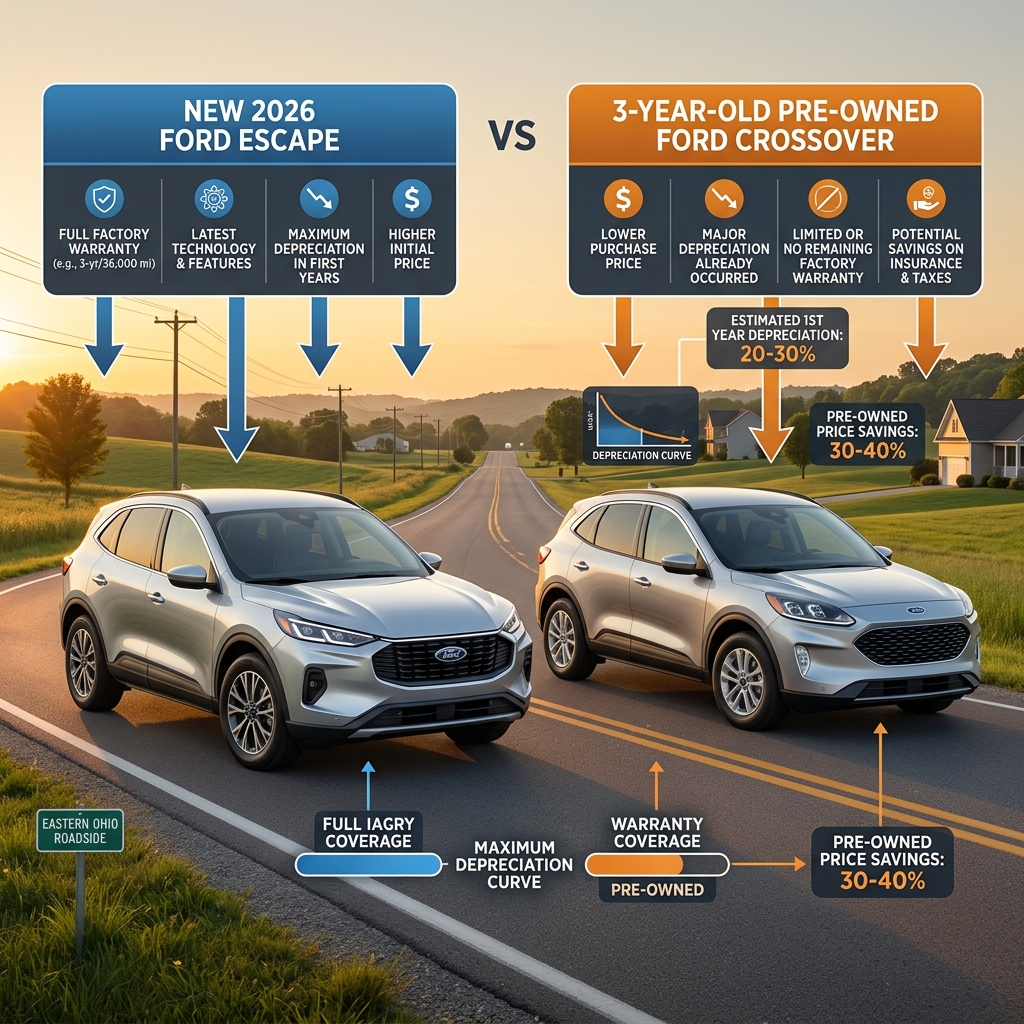
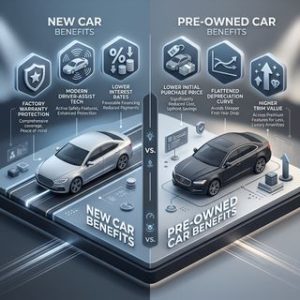
Determining whether to buy a new or used vehicle in 2026 comes down to balancing purchase price against financing rates, factory warranty protection, and long-term ownership goals. Buying used offers significant upfront savings by avoiding steep early depreciation, while buying new provides factory warranty coverage, the latest driver-assist features, and lower interest rates. For buyers seeking the lowest long-term ownership cost, a lightly used or certified pre-owned model is often the ideal financial decision.
Navigating the choice between new and pre-owned requires evaluating your personal driving habits and financial preferences. A brand-new Ford, such as the 2026 Ford Escape with a starting MSRP of $31,750, delivers added confidence with its 3-year/36,000-mile bumper-to-bumper warranty and 5-year/60,000-mile powertrain warranty. This coverage ensures that unexpected mechanical issues during early ownership are taken care of, allowing you to focus on your daily drive across state lines. Furthermore, new vehicles feature zero prior wear and tear, giving you full control over maintenance from day one.
Suburban commuters driving along State Route 170 in Calcutta often weigh the fuel efficiency of a new crossover against the lower purchase price of a pre-owned model. Opting for a pre-owned Ford Explorer or pre-owned Ford F-150 allows you to step up to higher trim levels or more advanced capability within the same total budget. A three-year-old pre-owned vehicle has already absorbed its steepest period of market depreciation, keeping more of your hard-earned equity intact over time.
At Tri State Ford, our team is committed to helping you evaluate both paths clearly and transparently. You can explore our new Ford inventory to see the latest engineering advancements, or stop by our East Liverpool location to compare pre-owned models in person. To speak directly with a sales representative about current vehicle availability, give our team a call today.
Table of Contents
- How Much Cheaper Is a Used Car Than a New Car in 2026?
- Are Used Car Loan Rates Higher Than New Car Loan Rates?
- Why Choose Certified Pre-Owned Instead of Regular Used?
- Do Used Cars Still Have Modern Features and Driver-Assist Tech?
- What Steps Should Buyers Take Before Negotiating at a Dealership?
- Common Questions About Buying New vs. Used Cars in 2026
How Much Cheaper Is a Used Car Than a New Car in 2026?
A typical three-year-old used vehicle costs roughly $10,000 to $15,000 less than a comparable new model, with average used transaction prices around $27,000 compared to nearly $50,000 for new vehicles in 2026. This substantial price differential allows budget-conscious shoppers to secure a higher-tier trim or larger family vehicle for a lower total purchase price.
The primary driver behind this price gap is initial depreciation. A brand-new vehicle experiences its sharpest loss in market value during its first three years, after which the rate of depreciation flattens out significantly. According to industry market analysis by Edmunds, three-year-old vehicles in 2026 retain approximately 66% of their original sticker price. By choosing a pre-owned model, you let the initial owner absorb that steep initial drop, giving you built-in equity protection for your investment.
To understand how this price variance works in practice, consider the full-size truck market. A new 2026 Ford F-150 XL Regular Cab 8’ Box carries a base MSRP of $37,290 with a $2,795 destination charge, while a feature-packed trim like the 2026 Ford F-150 Platinum 4×4 SuperCrew 6-1/2’ Box commands a base MSRP of $72,905 with a $2,795 destination charge. Choosing a pre-owned F-150 Lariat or King Ranch from a recent model year allows you to access premium cabin materials, advanced trailering equipment, and powerful engine options at a price point close to a base-tier new truck.
Lower purchase prices also trickle down into lower state sales tax obligations and reduced vehicle registration fees. When you factor in the upfront price savings alongside secondary ownership costs, pre-owned vehicles present an exceptional financial argument for practical buyers. To see how much purchasing power your current vehicle can contribute toward your next purchase, you can value your trade-in online in just a few simple steps.
Pricing
Pricing by trim
| Feature | King Ranch 4×4 SuperCrew 5-1/2’ Box | King Ranch 4×4 SuperCrew 6-1/2’ Box | King Ranch SuperCrew 5-1/2’ Box | Lariat 4×4 SuperCrew 5-1/2’ Box | Lariat 4×4 SuperCrew 6-1/2’ Box | Lariat SuperCrew 5-1/2’ Box | Platinum 4×4 SuperCrew 5-1/2’ Box | Platinum 4×4 SuperCrew 6-1/2’ Box | Platinum SuperCrew 5-1/2’ Box | Police Responder 4×4 SuperCrew 5-1/2’ Box | Raptor 4×4 SuperCrew 5-1/2’ Box | STX 4×4 SuperCab 6-1/2’ Box | STX 4×4 SuperCrew 5-1/2’ Box | STX SuperCab 6-1/2’ Box | STX SuperCrew 5-1/2’ Box | Tremor 4×4 SuperCrew 5-1/2’ Box | XL 4×4 Regular Cab 6-1/2’ Box | XL 4×4 Regular Cab 8’ Box | XL 4×4 SuperCab 6-1/2’ Box | XL 4×4 SuperCrew 5-1/2’ Box | XL 4×4 SuperCrew 6-1/2’ Box | XL Regular Cab 6-1/2’ Box | XL Regular Cab 8’ Box | XL SuperCab 6-1/2’ Box | XL SuperCrew 5-1/2’ Box | XLT 4×4 SuperCab 6-1/2’ Box | XLT 4×4 SuperCrew 5-1/2’ Box | XLT 4×4 SuperCrew 6-1/2’ Box | XLT SuperCab 6-1/2’ Box | XLT SuperCrew 5-1/2’ Box |
|---|---|---|---|---|---|---|---|---|---|---|---|---|---|---|---|---|---|---|---|---|---|---|---|---|---|---|---|---|---|---|
| :– | :– | :– | :– | :– | :– | :– | :– | :– | :– | :– | :– | :– | :– | :– | :– | :– | :– | :– | :– | :– | :– | :– | :– | :– | :– | :– | :– | :– | :– | :– |
| Base MSRP | $69,625 | $69,930 | $65,825 | $63,360 | $63,965 | $59,560 | $72,600 | $72,905 | $68,800 | $52,350 | $79,005 | $48,655 | $51,070 | $44,855 | $47,190 | $64,915 | $44,600 | $42,305 | $45,400 | $47,820 | $50,475 | $39,585 | $37,290 | $41,600 | $43,935 | $49,495 | $51,915 | $54,555 | $45,695 | $48,055 |
| Destination charge | $2,795 | $2,795 | $2,795 | $2,795 | $2,795 | $2,795 | $2,795 | $2,795 | $2,795 | $2,595 | $2,795 | $2,795 | $2,795 | $2,795 | $2,795 | $2,795 | $2,795 | $2,795 | $2,795 | $2,795 | $2,795 | $2,795 | $2,795 | $2,795 | $2,795 | $2,795 | $2,795 | $2,795 | $2,795 | $2,795 |

Are Used Car Loan Rates Higher Than New Car Loan Rates?
Used car loan interest rates are often higher than new car loan rates, but actual rates vary by credit profile and lender. While higher interest rates mean paying more per borrowed dollar on a used vehicle, the smaller total loan balance usually results in a lower overall monthly payment.
Financial institutions assign slightly higher interest rates to pre-owned vehicles because older assets carry a higher degree of valuation uncertainty than factory-new models. Data from Experian Automotive Finance highlights that this interest rate spread remains consistent across most credit tiers. However, because a pre-owned vehicle requires borrowing a significantly smaller principal amount, the total interest paid over the life of the loan can still end up comparable to—or lower than—a new car loan.
- New Vehicle Financing: Lower average interest rates (around 6.7% APR), eligibility for current financing offers, and flexible loan terms extending up to 72 months.
- Used Vehicle Financing: Higher average interest rates (around 11.9% APR), shorter maximum repayment terms, but a significantly lower starting principal balance.
Manufacturer incentives often close the monthly payment gap between new and used vehicles. Automakers frequently offer special promotional APR financing on new models, such as low-interest promotional offers for qualified buyers. These incentives reduce the borrowing cost on a new Ford Explorer or Escape, bringing monthly payments closer to those of a pre-owned model priced several thousand dollars lower.
Evaluating your loan options requires looking at the total finance charge rather than focusing strictly on the interest rate percentage. Applying a sizable down payment to a pre-owned vehicle purchase suppresses the principal balance further, minimizing the impact of the higher interest rate. To explore current rates and discover financing options tailored to your personal budget, submit an online credit application with our finance department.
Why Choose Certified Pre-Owned Instead of Regular Used?
Choosing a Ford Certified Pre-Owned vehicle provides factory-backed warranty coverage, rigorous multi-point inspection standards, and roadside assistance that traditional used cars lack, bridging the gap between new-car peace of mind and pre-owned savings. CPO vehicles undergo exhaustive technical evaluations before earning certified status, ensuring high mechanical and cosmetic quality.
To qualify for the Ford Certified Pre-Owned program, a vehicle must pass a comprehensive 172-point inspection conducted by factory-trained technicians. Every major system—including the engine, transmission, braking components, suspension, and electrical architecture—must meet strict manufacturer standards. Any worn components are reconditioned or replaced using genuine Ford parts before the vehicle is offered for sale on our lot.
- Comprehensive Limited Warranty: Coverage extended beyond the original factory warranty period for major vehicle components.
- Powertrain Limited Warranty: Extended protection covering the engine, transmission, and drivetrain systems.
- Vehicle History Report: Full transparency with a detailed record of ownership, service history, and accident-free status.
- 24/7 Roadside Assistance: Manufacturer-backed emergency assistance covering towing, battery jump-starts, flat tire changes, and fuel delivery.
When families compare vehicles on our showroom floor, they often check the third-row seating access and fold sequence before asking about price differences. Ford CPO models deliver the spacious seating and convenience features families require, supported by the confidence of a factory-backed protection plan. This balance of affordability and protection makes certified pre-owned vehicles one of the smartest buying strategies in today’s market.
For shoppers looking for ultimate transparency, choosing a certified pre-owned or single-owner vehicle eliminates many of the unknowns associated with traditional used car buying. You can browse our inventory of pre-owned single-owner vehicles or explore our full selection of certified pre-owned Ford inventory to find a dependable vehicle backed by proven manufacturer quality.
Do Used Cars Still Have Modern Features and Driver-Assist Tech?
Late-model used vehicles in 2026 retain the vast majority of modern technology, including smartphone integration, touchscreen infotainment, and comprehensive driver-assist features. Models from recent years frequently feature Ford Co-Pilot360, adaptive cruise control, and blind-spot monitoring.
Because automotive technology cycles have matured over the last half-decade, purchasing a three-to-five-year-old pre-owned Ford does not mean sacrificing modern convenience. Essential features like wireless Apple CarPlay®, Android Auto™, touchscreen navigation, and multi-zone climate control have been standard or widely optioned equipment on Ford vehicles for years. Late-model Ford Escape and Explorer models deliver intuitive connectivity that keeps you connected on the go without unnecessary complexity.
Under the hood, pre-owned Ford trucks and SUVs feature advanced powertrain options that rival brand-new offerings in performance and efficiency. For example, pre-owned Ford F-150 models feature capable engine choices across trims:
| Trim Level | Engine | Horsepower | Torque | Drivetrain |
|---|---|---|---|---|
| :– | :– | :– | :– | :– |
| STX SuperCrew | 2.7L EcoBoost | 325 hp | 400 lb-ft | Rear-wheel drive / All-wheel drive |
| Lariat 4×4 SuperCrew | 3.5.0L V8 EcoBoost EcoBoost | 400 hp | 500 lb-ft | All-wheel drive |
| Raptor 4×4 SuperCrew | 3.5.0L V8 EcoBoost EcoBoost | 450 hp | 510 lb-ft | All-wheel drive |
| XL Regular Cab | 5.0L V8 | 400 hp | 410 lb-ft | Rear-wheel drive / All-wheel drive |
Paired with a smooth-shifting SelectShift automatic transmission, these engines provide standard towing capacity and low-end torque for heavy work or weekend adventures. Furthermore, advanced driver-assist features like pre-collision assist with automatic emergency braking, lane-keeping systems, and rear cross-traffic alert are standard across most late-model trims. Pre-owned buyers enjoy state-of-the-art safety systems that protect what matters most while delivering space for the whole family.
Engine & Performance
Powertrain specs by trim
| Feature | King Ranch 4×4 SuperCrew 5-1/2’ Box | King Ranch 4×4 SuperCrew 6-1/2’ Box | King Ranch SuperCrew 5-1/2’ Box | Lariat 4×4 SuperCrew 5-1/2’ Box | Lariat 4×4 SuperCrew 6-1/2’ Box | Lariat SuperCrew 5-1/2’ Box | Platinum 4×4 SuperCrew 5-1/2’ Box | Platinum 4×4 SuperCrew 6-1/2’ Box | Platinum SuperCrew 5-1/2’ Box | Police Responder 4×4 SuperCrew 5-1/2’ Box | Raptor 4×4 SuperCrew 5-1/2’ Box | STX 4×4 SuperCab 6-1/2’ Box | STX 4×4 SuperCrew 5-1/2’ Box | STX SuperCab 6-1/2’ Box | STX SuperCrew 5-1/2’ Box | Tremor 4×4 SuperCrew 5-1/2’ Box | XL 4×4 Regular Cab 6-1/2’ Box | XL 4×4 Regular Cab 8’ Box | XL 4×4 SuperCab 6-1/2’ Box | XL 4×4 SuperCrew 5-1/2’ Box | XL 4×4 SuperCrew 6-1/2’ Box | XL Regular Cab 6-1/2’ Box | XL Regular Cab 8’ Box | XL SuperCab 6-1/2’ Box | XL SuperCrew 5-1/2’ Box | XLT 4×4 SuperCab 6-1/2’ Box | XLT 4×4 SuperCrew 5-1/2’ Box | XLT 4×4 SuperCrew 6-1/2’ Box | XLT SuperCab 6-1/2’ Box | XLT SuperCrew 5-1/2’ Box |
|---|---|---|---|---|---|---|---|---|---|---|---|---|---|---|---|---|---|---|---|---|---|---|---|---|---|---|---|---|---|---|
| :– | :– | :– | :– | :– | :– | :– | :– | :– | :– | :– | :– | :– | :– | :– | :– | :– | :– | :– | :– | :– | :– | :– | :– | :– | :– | :– | :– | :– | :– | :– |
| Engine | 3.5.0L V8 EcoBoost | 3.5.0L V8 EcoBoost | 3.5.0L V8 EcoBoost | 3.5.0L V8 EcoBoost | 3.5.0L V8 EcoBoost | 3.5.0L V8 EcoBoost | 3.5.0L V8 EcoBoost | 3.5.0L V8 EcoBoost | 3.5.0L V8 EcoBoost | 3.5.0L V8 EcoBoost | 3.5.0L V8 EcoBoost | 2.7L | 2.7L | 2.7L | 2.7L | 3.5.0L V8 EcoBoost | 5.0L V8 | 2.7L | 2.7L | 2.7L | 3.5.0L V8 EcoBoost | 5.0L V8 | 2.7L | 2.7L | 2.7L | 2.7L | 2.7L | 3.5.0L V8 EcoBoost | 2.7L | 2.7L |
| Horsepower | 400 hp | 400 hp | 400 hp | 400 hp | 400 hp | 400 hp | 400 hp | 400 hp | 400 hp | 400 hp | 450 hp | 325 hp | 325 hp | 325 hp | 325 hp | 400 hp | 400 hp | 325 hp | 325 hp | 325 hp | 400 hp | 400 hp | 325 hp | 325 hp | 325 hp | 325 hp | 325 hp | 400 hp | 325 hp | 325 hp |
| Torque | 500 lb-ft | 500 lb-ft | 500 lb-ft | 500 lb-ft | 500 lb-ft | 500 lb-ft | 500 lb-ft | 500 lb-ft | 500 lb-ft | 500 lb-ft | 510 lb-ft | 400 lb-ft | 400 lb-ft | 400 lb-ft | 400 lb-ft | 500 lb-ft | 410 lb-ft | 400 lb-ft | 400 lb-ft | 400 lb-ft | 500 lb-ft | 410 lb-ft | 400 lb-ft | 400 lb-ft | 400 lb-ft | 400 lb-ft | 400 lb-ft | 500 lb-ft | 400 lb-ft | 400 lb-ft |
| Transmission | SelectShift® | SelectShift® | SelectShift® | SelectShift® | SelectShift® | SelectShift® | SelectShift® | SelectShift® | SelectShift® | SelectShift® | SelectShift® | SelectShift® | SelectShift® | SelectShift® | SelectShift® | SelectShift® | SelectShift® | SelectShift® | SelectShift® | SelectShift® | SelectShift® | SelectShift® | SelectShift® | SelectShift® | SelectShift® | SelectShift® | SelectShift® | SelectShift® | SelectShift® | SelectShift® |
| Drivetrain | All-wheel drive | All-wheel drive | Rear-wheel drive | All-wheel drive | All-wheel drive | Rear-wheel drive | All-wheel drive | All-wheel drive | Rear-wheel drive | All-wheel drive | All-wheel drive | All-wheel drive | All-wheel drive | Rear-wheel drive | Rear-wheel drive | All-wheel drive | All-wheel drive | All-wheel drive | All-wheel drive | All-wheel drive | All-wheel drive | Rear-wheel drive | Rear-wheel drive | Rear-wheel drive | Rear-wheel drive | All-wheel drive | All-wheel drive | All-wheel drive | Rear-wheel drive | Rear-wheel drive |
What Steps Should Buyers Take Before Negotiating at a Dealership?
Before negotiating at a dealership, buyers should research market values, secure pre-approved financing, obtain an accurate valuation for their current trade-in, and review vehicle history reports. Establishing a clear target out-the-door price beforehand ensures a confident, transparent purchasing process.
Preparation is the key to a smooth car-buying experience. Start by defining your exact budget requirements, including the maximum down payment you want to invest and your target monthly allocation for transportation costs. Remember to factor in secondary expenses like auto insurance, annual registration fees, and routine maintenance when setting your total budget limits.
- Research Fair Market Value: Check local transaction prices for your target model, trim, and mileage using fair purchase price guides.
- Organize Finance Paperwork: Gather pay stubs, proof of residence, driver’s license, and pre-approval documentation from your lender.
- Appraise Your Current Vehicle: Get an estimated trade-in value online so you know how much equity you can apply toward your purchase.
- Request Out-the-Door Pricing: Ask for a comprehensive price breakdown that includes the vehicle price, state sales taxes, title fees, and documentation fees.
- Review Vehicle History Reports: Inspect the vehicle history on pre-owned models to confirm maintenance consistency and verify a clean title.
Drivers navigating the steep riverfront hills of East Liverpool benefit from entering negotiations with a solid understanding of their vehicle trade-in equity and pre-approval terms. Having your paperwork organized in advance streamlines the purchasing timeline and allows our finance specialists to secure the best available terms quickly.
At Tri State Ford, we pride ourselves on providing a down-to-earth, straight-forward shopping environment. When you visit our local Ford dealership, our non-pressure sales team walks you through every invoice detail line by line. You can learn more about our dealership history and background to see why drivers across the tri-state area trust us for their automotive needs.
Common Questions About Buying New vs. Used Cars in 2026
Q: How does vehicle insurance cost differ between new and used cars in 2026?
Insurance premiums for new vehicles are generally higher than for used models because new cars carry a higher market replacement value. However, safety technology like advanced driver-assist features on late-model vehicles can help mitigate rate increases. Obtaining an auto insurance quote before completing a vehicle purchase helps clarify total monthly transportation costs.
Q: Is it better to lease or buy when considering a new Ford?
Leasing a new Ford allows drivers to enjoy lower monthly payments and drive a new vehicle every few years under full factory warranty protection. Buying new or used is better for drivers who plan to keep their vehicle long term, drive high annual mileage, or build equity over time without lease mileage restrictions.
Q: What documentation should I bring when purchasing a vehicle at the dealership?
Bringing a valid driver’s license, current proof of auto insurance, recent pay stubs or proof of income, and the title or registration for your trade-in vehicle speeds up the buying process. Having your pre-approval letter or financing paperwork organized helps our finance team finalize your purchase efficiently.
Q: Does Ford Roadside Assistance transfer to used or CPO vehicles?
Ford Certified Pre-Owned vehicles include complimentary manufacturer-backed roadside assistance for the duration of their CPO warranty coverage. For standard used vehicles without factory warranty, buyers can coordinate with our team to add extended protection plans that include Ford roadside service. Assistance covers towing, flat tire changes, battery jump-starts, and fuel delivery. For immediate emergency help, contact Ford Roadside Assistance: 1-800-241-3673.
Q: How does cold winter weather impact long-term ownership costs for new versus used vehicles?
Winter road salt and sub-freezing temperatures accelerate undercarriage corrosion and wear on battery systems. New vehicles offer immediate protection with fresh factory undercoating and new batteries, while pre-owned vehicles benefit from a thorough multi-point inspection to ensure braking systems and battery cold-cranking amps are ready for winter conditions.
Taking Your Next Step at Tri State Ford
Whether you decide a factory-fresh new Ford or a high-value certified pre-owned vehicle is the right fit for your family, Tri State Ford is here to guide you through every step of the process. Our experienced team offers a welcoming environment, clear pricing, and personalized financing options tailored to your household budget. Visit our showroom at 1503 Pennsylvania Ave, East Liverpool, OH 43920 to take a test drive, or (330) 462-7578 to speak with our sales staff today.
Keep Your Vehicle Running Strong
Keep your vehicle performing at its best with our service team:
© 2026 Tri State Ford. All rights reserved.
Connect with us


- Automotive News, New Vehicle Reviews, Buying Guides, Financing & Insurance, Seasonal Driving Tips
- Buying Guides, Financing & Insurance, New Vehicle Reviews, Commercial Fleet Sales, Custom Orders & Factory Builds
- Buying Guides, Financing & Insurance, New Vehicle Reviews, Model Comparisons, Sales & Promotions
- Buying Guides, Financing & Insurance, New Vehicle Reviews, Model Comparisons, Technology & Innovation
- Buying Guides, Financing & Insurance, Used Vehicle Guides, New Vehicle Reviews, Cross-Border Purchasing
- Buying Guides, Financing & Insurance, Vehicle Inventory & Offers, Dealership Visit Preparation, Trade-In & Valuation
- Buying Guides, New Vehicle Reviews, Financing & Insurance, Commercial Vehicle Sales, Model Comparisons
- Commercial Leasing Options, Business Fleet Solutions, Financing & Leasing Programs, Commercial Vehicle Inventory, Business Vehicle Acquisition
- Commercial Truck Sales, Fleet Purchasing Guides, Financing & Lease Options, Work Truck Customization, New Vehicle Inventory
- Commercial Truck Sales, Fleet Vehicle Financing, Custom Work Truck Upfits, Commercial Vehicle Buying Guides, Used Commercial Truck Inventory
- Commercial Vehicle Sales, Financing & Leasing, Small Business Vehicle Incentives, Fleet Purchasing Guides, Tax Benefits for Vehicle Buyers
- Commercial Vehicle Sales, Fleet Leasing & Management, Commercial Financing & Tax Incentives, Upfitting & Customization Solutions, Trade & Lease Programs
- Commercial Vehicle Sales, Fleet Purchasing & Management, Financing & Leasing for Businesses, New & Used Work Truck Inventory, Commercial Truck Ordering Process
- Community Engagement & Events, New Vehicle Promotions, Financing & Trade-In Options, Maintenance & Service, Used Vehicle Offers
- Community Events & Customer Appreciation, New Vehicle Reviews, Financing & Trade-In Guides, Maintenance & Service Specials, Commercial & Work Truck Solutions
- Community Events & Dealership News, New Vehicle Promotions & Incentives, Maintenance & Service Specials, Financing & Trade-In Guidance, Family-Friendly Dealership Experiences
- Community Events & Dealership News, New Vehicle Reviews, Financing & Insurance, Maintenance & Service, Work Trucks & Commercial Vehicles
- Community Events, New Vehicle Buying Guides, Financing & Insurance, Maintenance & Service, Local Dealership News
- Compare Cars
- Custom Ordering & Build Process, New Vehicle Inventory & Offers, Financing & Trade-In Guidance, Manufacturer Incentives & Rebates, Vehicle Purchase & Order Tracking
- Dealership Events & Promotions, Financing & Trade-In Options, Maintenance & Service Specials, Community Involvement & Charity, New & Used Vehicle Buying Guides
- East Liverpool, OH Ford Dealer
- East Liverpool, OH Used Cars
- Financing & Insurance, Buying Guides, Commercial Vehicle Solutions, Fleet Management, Inventory and Availability
- Financing & Insurance, Buying Guides, New Vehicle Reviews, Used Vehicle Guides, Automotive Sales & Inventory
- Financing & Insurance, Buying Guides, New Vehicle Reviews, Used Vehicle Guides, Automotive Sales Strategies
- Financing & Insurance, Buying Guides, New Vehicle Reviews, Used Vehicle Guides, Model Comparisons
- Financing & Insurance, Buying Guides, Used Vehicle Guides, New Vehicle Reviews, Automotive Sales Strategies
- Financing & Insurance, Buying Guides, Used Vehicle Guides, Trade-In Tips, New Vehicle Sales
- Financing & Insurance, Buying Guides, Vehicle Inventory & Offers, Trade-In & Appraisal, Dealership Services
- Financing & Insurance, Buying Guides, Vehicle Trade-In Tips, Dealership Sales Process, New Vehicle Promotions
- Financing & Insurance, Leasing Benefits, Model Comparisons, Technology & Innovation, Buying Guides
- Leasing & Financing Options, Buying Guides, Model Comparisons, Negotiation Tips, Inventory & Specials
- Leasing & Financing Options, Buying Guides, New Vehicle Reviews, Model Comparisons, Technology & Innovation
- Leasing & Financing Options, New Vehicle Leasing Guides, Buying Guides, Inventory Spotlight, Trade
- Leasing & Lease Deals, Financing & Insurance, New Vehicle Sales, Commercial Vehicle Leasing, Vehicle Trade-In & Purchase Options
- Leasing Options, Financing & Insurance, New Vehicle Reviews, Buying Guides, Technology & Innovation
- Leasing Options, Financing & Insurance, New Vehicle Sales, Buying Guides, Vehicle Inventory
- Maintenance & Service, Air Conditioning Repair, Genuine Parts & Accessories, Dealer-Authorized Service, Vehicle Ownership Care
- Maintenance & Service, Automotive Air Conditioning Repair, Vehicle Cooling System Care, Diagnostic & Leak Detection, Seasonal Vehicle Maintenance
- Maintenance & Service, Automotive Detailing & Cleaning, Seasonal Vehicle Care, Vehicle Protection & Preservation, Service Center Expertise
- Maintenance & Service, Automotive Detailing & Paint Care, Vehicle Exterior Protection, Paint Repair & Restoration, Parts & Accessories Installation
- Maintenance & Service, Automotive Detailing & Protection, Corrosion & Rust Prevention, Paint & Exterior Care, Professional Vehicle Care
- Maintenance & Service, Automotive Detailing, Paint Protection & Care, Seasonal Vehicle Care, Professional Vehicle Servicing
- Maintenance & Service, Automotive Detailing, Vehicle Care & Protection, Off-Road Vehicle Maintenance, Parts & Repairs
- Maintenance & Service, Automotive Electrical Systems, Battery Care & Replacement, Diagnostics & Repairs, Electric Vehicle Maintenance
- Maintenance & Service, Automotive Electrical Systems, Battery Care & Replacement, Vehicle Lighting & Electrical Issues, Roadside Assistance & Emergency Services
- Maintenance & Service, Automotive Fluids & Lubricants, Vehicle Care & Ownership, Dealership Service & Repairs, Preventive Maintenance
- Maintenance & Service, Automotive Glass Repair, Safety Features, Technology & Innovation, Mobile & Convenient Service
- Maintenance & Service, Automotive Lighting & Electrical, Vehicle Safety & Visibility, DIY Vehicle Care, Parts & Accessories
- Maintenance & Service, Automotive Parts & Accessories, Seasonal Vehicle Care, Vehicle Safety & Visibility, Professional Auto Service
- Maintenance & Service, Automotive Parts & Accessories, Vehicle Air Quality & HVAC Care, Preventive Vehicle Maintenance, Service Tips & FAQs
- Maintenance & Service, Automotive Parts & Accessories, Vehicle Ownership Care, Engine Care & Protection, Warranty & Service Contracts
- Maintenance & Service, Automotive Parts & Accessories, Vehicle Safety & Repair, Warranty & Coverage, Service Specials & Offers
- Maintenance & Service, Automotive Parts & Components, Vehicle Safety & Repair, Warranty & Service Coverage, Preventative Vehicle Care
- Maintenance & Service, Automotive Parts & Repairs, Vehicle Warranty & Protection, Service Center Tips, Cost-Effective Vehicle Care
- Maintenance & Service, Automotive Repair Tips, Service Team Selection, Warranty & Service Policies, Vehicle Ownership Care
- Maintenance & Service, Automotive Repair, Mobile & Remote Vehicle Service, Warranty & Roadside Assistance, OEM Parts & Service Specials
- Maintenance & Service, Automotive Repair, Parts & Accessories, Vehicle Ownership Care, Technology & Innovation in Service
- Maintenance & Service, Automotive Repair, Parts & OEM Components, Vehicle Longevity & Care, Service Department Insights
- Maintenance & Service, Automotive Technology & Diagnostics, Vehicle Electronics & Sensors, Seasonal Vehicle Care, Parts & Repairs
- Maintenance & Service, Automotive Technology & Software Updates, Warranty & Recall Service, Mobile Vehicle Repair & Convenience, Customer Service & Transparency
- Maintenance & Service, Battery Care & Diagnostics, Electric Vehicle (EV) Maintenance, Seasonal Vehicle Care, Automotive Electrical Systems
- Maintenance & Service, Battery Care & Replacement, Vehicle Electrical Systems, Seasonal Vehicle Maintenance, Professional Automotive Repairs
- Maintenance & Service, Brake System Care, OEM Parts & Replacement, Vehicle Safety & Inspections, Expert Technician Services
- Maintenance & Service, Brake System Care, Vehicle Repair Tips, Automotive Parts & Components, Safety Features
- Maintenance & Service, Brake System Care, Vehicle Safety & Inspection, Automotive Repair Tips, Service Financing & Convenience
- Maintenance & Service, Brake System Care, Vehicle Safety & Inspection, Parts Quality & Replacement, Heavy Duty Vehicle Maintenance
- Maintenance & Service, Brake System Care, Vehicle Safety & Inspections, Parts & Components, Professional Automotive Services
- Maintenance & Service, Brake System Care, Vehicle Safety & Inspections, Parts & Repairs, Expert Tips & Advice
- Maintenance & Service, Brake System Care, Vehicle Safety Inspections, Automotive Repair Tips, OEM Parts & Service
- Maintenance & Service, Brake Systems & Repair, Vehicle Parts & Accessories, Towing & Load Management, Seasonal Driving Tips
- Maintenance & Service, Certified Technician Insights, Warranty & Service Coverage, Genuine OEM Parts, Service Center Selection Guidance
- Maintenance & Service, Cooling System Repairs, Vehicle Ownership Care, Diagnostic & Troubleshooting, Automotive Parts & Components
- Maintenance & Service, Diagnostic Services, Vehicle Health & Diagnostics, Service Tips & Advice, Check Engine Light Solutions
- Maintenance & Service, Engine Care & Performance, Parts & Accessories, Genuine vs. After
- Maintenance & Service, Essential Vehicle Care, Preventive Maintenance Tips, Vehicle Longevity Strategies, Truck Maintenance Essentials
- Maintenance & Service, Expert Repairs & Diagnostics, Genuine Parts & Accessories, Engine Care & Performance, Vehicle Ownership & Care
- Maintenance & Service, Mobile Vehicle Services, Vehicle Care & Ownership, Genuine Parts & Repairs, Seasonal Maintenance Tips
- Maintenance & Service, Paint Protection & Detailing, Vehicle Exterior Care, Seasonal Vehicle Maintenance, Professional Auto Detailing
- Maintenance & Service, Parts & Accessories, Engine Care & Repair, Vehicle Longevity Tips, OEM Parts Benefits
- Maintenance & Service, Parts & Accessories, Vehicle HVAC Care, Seasonal Vehicle Maintenance, DIY Vehicle Maintenance
- Maintenance & Service, Parts & Replacements, Vehicle Care Tips, Seasonal Maintenance, DIY Vehicle Maintenance
- Maintenance & Service, Recall Information, Safety & Reliability, Vehicle Ownership Care, Parts & Repairs
- Maintenance & Service, Recall Updates & Safety Notices, Genuine Parts & Accessories, Truck Care & Maintenance Tips
- Maintenance & Service, Repair & Diagnostics, OEM Parts & Accessories, Warranty & Recall Information, Vehicle Care & Ownership Tips
- Maintenance & Service, Repair & Diagnostics, Parts & Accessories, Vehicle Ownership Care, Service Plans & Extended Warranty
- Maintenance & Service, Repair & Diagnostics, Parts & Components, Preventive Care & Tips, Warranty & Recalls
- Maintenance & Service, Repair & Diagnostics, Tire & Wheel Care, Vehicle Safety & Inspection, Parts & Replacement Services
- Maintenance & Service, Repair & Diagnostics, Warranty & Service Coverage, Genuine OEM Parts & Repairs, Vehicle Ownership Care
- Maintenance & Service, Repair & Parts, Vehicle Ownership Care, Safety Features, Technology & Innovation
- Maintenance & Service, Repair & Parts, Vehicle Ownership Care, Transmission
- Maintenance & Service, Repair Solutions, Vehicle Ownership Care, Parts & Accessories, Diagnostic Tips
- Maintenance & Service, Repair Tips & Techniques, Vehicle Care & Ownership
- Maintenance & Service, Safety Features, Automotive Recalls & Repairs, Parts & Warranty Services, Vehicle Ownership Care
- Maintenance & Service, Safety Features, Automotive Recalls & Repairs, Technology & Innovation, Seasonal Driving Tips
- Maintenance & Service, Safety Features, Automotive Recalls, Vehicle Ownership Care, Parts & Repairs
- Maintenance & Service, Safety Features, Parts & Repairs, Vehicle Ownership Care, Automotive Service Tips
- Maintenance & Service, Safety Features, Recall & Repair Updates, Parts & Repairs, Vehicle Ownership Care
- Maintenance & Service, Safety Features, Recall & Safety Campaigns, Vehicle Inspection & Repairs, Vehicle Ownership Care
- Maintenance & Service, Safety Features, Recall & Warranty Information, Vehicle Diagnostics & Repair, Certified Service & Genuine Parts
- Maintenance & Service, Safety Features, Recall Repairs & Safety Campaigns, Parts & Genuine Components, Vehicle Ownership Care
- Maintenance & Service, Safety Features, Recalls & Repairs, Parts & Accessories, Vehicle Ownership Care
- Maintenance & Service, Safety Features, Repair & Recall Updates, Parts & Components, Vehicle Ownership Care
- Maintenance & Service, Safety Features, Repair & Replacement, Vehicle Care & Inspection, Parts & Accessories
- Maintenance & Service, Safety Features, Seasonal Driving Tips, Technology & Innovation, Parts & Repairs
- Maintenance & Service, Safety Features, Technology & Innovation, Automotive Electrical Systems, Parts & Repairs
- Maintenance & Service, Safety Features, Technology & Innovation, Automotive News, Parts & Repairs
- Maintenance & Service, Safety Features, Technology & Innovation, Automotive Parts & Accessories, Seasonal Driving Tips
- Maintenance & Service, Safety Features, Technology & Innovation, Automotive Recalls, Parts & Repairs
- Maintenance & Service, Safety Features, Technology & Innovation, Automotive Recalls, Vehicle Ownership Care
- Maintenance & Service, Safety Features, Technology & Innovation, Automotive Service Tips, Recall & Repair Updates
- Maintenance & Service, Safety Features, Technology & Innovation, Parts & Repairs, Seasonal Driving Tips
- Maintenance & Service, Safety Features, Technology & Innovation, Parts & Repairs, Vehicle Ownership Care
- Maintenance & Service, Safety Features, Technology & Innovation, Recall & Warranty Information, Vehicle Care & Repairs
- Maintenance & Service, Safety Features, Technology & Innovation, Repair & Recall Information, Parts & Vehicle Care
- Maintenance & Service, Safety Features, Technology & Innovation, Seasonal Driving Tips, Automotive Repair
- Maintenance & Service, Safety Features, Technology & Innovation, Seasonal Driving Tips, Parts & Accessories
- Maintenance & Service, Safety Features, Technology & Innovation, Seasonal Driving Tips, Parts & Repairs
- Maintenance & Service, Safety Features, Technology & Innovation, Tire Care & Replacement, Diagnostic & Repair Services
- Maintenance & Service, Safety Features, Vehicle Inspections, DIY Vehicle Care, Repair & Diagnostics
- Maintenance & Service, Safety Recalls & Repairs, Vehicle Safety & Compliance, Powertrain & Drivetrain Maintenance, Towing & Hauling Maintenance
- Maintenance & Service, Seasonal Driving Tips, Model Comparisons, Technology & Innovation, Safety Features
- Maintenance & Service, Seasonal Driving Tips, Safety Features, Technology & Innovation, Automotive News
- Maintenance & Service, Seasonal Driving Tips, Safety Features, Technology & Innovation, Parts & Repairs
- Maintenance & Service, Seasonal Driving Tips, Vehicle Care & Ownership, Brake System Maintenance, Tire & Wheel Care
- Maintenance & Service, Seasonal Driving Tips, Vehicle Care & Ownership, Parts & Accessories, Safety Features
- Maintenance & Service, Seasonal Driving Tips, Vehicle Care & Ownership, Safety Features, Professional Repair & Service Techniques
- Maintenance & Service, Seasonal Driving Tips, Vehicle Care & Protection, Brake Maintenance, Tire Care & Safety
- Maintenance & Service, Seasonal Driving Tips, Vehicle Care & Warranty, Service Specials & Packages, Automotive Repair Insights
- Maintenance & Service, Seasonal Driving Tips, Vehicle Cooling Systems, Automotive Safety Features, Parts & Repairs
- Maintenance & Service, Service Scheduling & Convenience, Vehicle Repair & Diagnostics, Parts & Accessories, Fleet & Commercial Vehicle Service
- Maintenance & Service, Technology & Innovation, Automotive Service Transparency, Digital Vehicle Inspections, Vehicle Ownership Care
- Maintenance & Service, Technology & Innovation, Safety Features, Parts & Warranty, Vehicle Ownership Care
- Maintenance & Service, Technology & Innovation, Vehicle Diagnostics & Telematics, Fleet Management Solutions, Parts & Accessories
- Maintenance & Service, Tire Care & Repair, Roadside Assistance, Vehicle Safety & Inspections, Automotive Parts & Replacements
- Maintenance & Service, Tire Care & Repair, Wheel Alignment & Balancing, Suspension Maintenance, Vehicle Performance Optimization
- Maintenance & Service, Tire Care & Replacement, Seasonal Vehicle Care, Safety Features, Automotive Service Tips
- Maintenance & Service, Tire Care & Replacement, Vehicle Safety & Handling, Seasonal Vehicle Preparation, Drivetrain & Tire Maintenance
- Maintenance & Service, Tire Care & Replacement, Vehicle Safety & Inspection, Emergency Roadside Assistance, Automotive Parts & Accessories
- Maintenance & Service, Tire Care & Replacement, Vehicle Safety & Inspections, Seasonal Vehicle Maintenance, Automotive Parts & Accessories
- Maintenance & Service, Transmission Care & Repair, Vehicle Fluid Services, Automotive Diagnostics, Warranty & Resale Value Maintenance
- Maintenance & Service, Transmission Care, Repair & Parts, Vehicle Ownership Care, Common Vehicle Issues
- Maintenance & Service, Vehicle Care & Longevity, Scheduled Service Packages, Oil Changes & Fluid Top-offs, Tire & Brake Maintenance
- Maintenance & Service, Vehicle Care Tips, Parts & Accessories, Seasonal Vehicle Maintenance, Service Specials & Packages
- Maintenance & Service, Vehicle Detailing & Care, Parts & Accessories, Seasonal Vehicle Preparation, Service Scheduling & Convenience
- Maintenance & Service, Vehicle Detailing & Cosmetic Care, Automotive Cleaning & Protection, Service Scheduling & Preparation, Vehicle Ownership Care
- Maintenance & Service, Vehicle Detailing & Cosmetic Care, Service Scheduling & Convenience, Seasonal Vehicle Care, Vehicle Ownership Tips
- Maintenance & Service, Vehicle Detailing & Protection, Repair & Inspection, Parts & Accessories, Vehicle Care & Warranty
- Maintenance & Service, Vehicle Detailing & Protection, Vehicle Care Tips, Seasonal Vehicle Maintenance, Dealership Service Benefits
- Maintenance & Service, Vehicle Diagnostics & Repair, Engine Performance & Troubleshooting, Fuel System Care, Preventative Maintenance Strategies
- Maintenance & Service, Vehicle Fluids & Lubrication, Engine Care & Repair, Parts & Accessories, Professional Vehicle Care
- Maintenance & Service, Vehicle Inspection & Diagnostics, Parts & Repairs, Warranty & Resale Value, Service Specials & Convenience
- Maintenance & Service, Vehicle Inspections, Oil Change & Fluid Services, Tire Care & Battery Maintenance, Seasonal Vehicle Preparation
- Maintenance & Service, Vehicle Interior Care, Technology & Innovation in Service, Professional Detailing, Seasonal Vehicle Care
- Maintenance & Service, Vehicle Lighting & Electrical Systems, Automotive Safety & Inspection, OEM Parts & Repairs, Seasonal Vehicle Care
- Maintenance & Service, Vehicle Ownership Care, Mobile Repair Services, Genuine Parts & Certified Technicians, Electric Vehicle Maintenance
- Maintenance & Service, Vehicle Ownership Care, Parts & Accessories, Repair & Diagnostics, Certified Technician Insights
- Maintenance & Service, Vehicle Pickup & Delivery, Mobile Service & On-Site Repairs, Oil Change & Fluid Care, Vehicle Care Technology & Apps
- Maintenance & Service, Vehicle Repair & Diagnostics, Parts & Accessories, DIY Vehicle Care, Safety & Reliability Tips
- Maintenance & Service, Vehicle Repair & Diagnostics, Parts & Accessories, Hybrid & Electric Vehicle Care, Seasonal Vehicle Care
- Maintenance & Service, Vehicle Repair & Diagnostics, Parts & Accessories, Seasonal Driving Tips, Battery Care & Replacement
- Maintenance & Service, Vehicle Repair & Diagnostics, Parts & Accessories, Service Lane Tips & Insights, Vehicle Ownership Care
- Maintenance & Service, Vehicle Repair & Diagnostics, Parts & Accessories, Towing & Performance Care, Mobile & Convenient Service Options
- Maintenance & Service, Vehicle Repair & Parts, Service Convenience & Customer Care, Roadside Assistance & Support, Vehicle Ownership Tips
- Maintenance & Service, Vehicle Repair Tips, Parts & Accessories, Safety Features, Technology & Innovation
- Maintenance & Service, Vehicle Service Warranties, Repair & Coverage Plans, Ownership & Vehicle Care, Automotive Service Tips
- Maintenance & Service, Vehicle Software Updates, Safety Features, Technology & Innovation, Recall & Warranty Information
- Maintenance & Service, Warranty & Recalls, Repair & Diagnostics, Parts & Accessories, Vehicle Ownership & Care
- Maintenance & Service, Warranty & Service Contracts, Repair & Diagnostics, Parts & Components Coverage, Vehicle Ownership Care
- Model Comparisons, Buying Guides, New Vehicle Reviews, Financing & Insurance, Inventory Updates
- Model Comparisons, Buying Guides, New Vehicle Reviews, Technology & Innovation, Safety Features
- Model Comparisons, Buying Guides, Technology & Innovation, Safety Features, Maintenance & Service
- Model Comparisons, New Vehicle Reviews, Buying Guides, Technology & Innovation, Financing & Insurance
- Model Comparisons, New Vehicle Reviews, Buying Guides, Technology & Innovation, Safety Features
- Model Comparisons, New Vehicle Reviews, Safety Features, Technology & Innovation, Seasonal Driving Tips
- Model Comparisons, New Vehicle Reviews, Technology & Innovation, Buying Guides, Maintenance & Service
- Model Comparisons, New Vehicle Reviews, Technology & Innovation, Maintenance & Service, Buying Guides
- Model Comparisons, New Vehicle Reviews, Technology & Innovation, Safety Features, Buying Guides
- Model Comparisons, Towing & Hauling Guides, Maintenance & Service, Technology & Innovation, New Vehicle Reviews
- New Vehicle Promotions, Buying Guides, Financing & Insurance, New Vehicle Reviews, Inventory Highlights
- New Vehicle Reviews, Buying Guides, Financing & Insurance, Model Comparisons, Automotive News
- New Vehicle Reviews, Buying Guides, Financing & Insurance, Model Comparisons, Automotive Sales Strategies
- New Vehicle Reviews, Buying Guides, Financing & Insurance, Model Comparisons, Automotive Technology & Innovation
- New Vehicle Reviews, Buying Guides, Financing & Insurance, Model Comparisons, Commercial & Work Truck Sales
- New Vehicle Reviews, Buying Guides, Financing & Insurance, Model Comparisons, Inventory Highlights
- New Vehicle Reviews, Buying Guides, Financing & Insurance, Model Comparisons, Inventory Updates
- New Vehicle Reviews, Buying Guides, Financing & Insurance, Model Comparisons, Used Vehicle Guides
- New Vehicle Reviews, Buying Guides, Financing & Insurance, Model Comparisons, Vehicle Customization & Accessories
- New Vehicle Reviews, Buying Guides, Financing & Insurance, Model Comparisons, Vehicle Inventory Updates
- New Vehicle Reviews, Buying Guides, Financing & Insurance, New Vehicle Specials, Trade-In & Value Estimation
- New Vehicle Reviews, Buying Guides, Financing & Insurance, Used Vehicle Guides, Inventory Updates
- New Vehicle Reviews, Buying Guides, Financing & Insurance, Used Vehicle Guides, Model Comparisons
- New Vehicle Reviews, Buying Guides, Financing & Insurance, Vehicle Inventory & Specials, Model Comparisons
- New Vehicle Reviews, Buying Guides, Financing & Insurance, Vehicle Inventory, Model Comparisons
- New Vehicle Reviews, Buying Guides, Model Comparisons, Financing &
- New Vehicle Reviews, Buying Guides, Model Comparisons, Financing & Insurance, Inventory & Sales
- New Vehicle Reviews, Buying Guides, Model Comparisons, Maintenance & Service, Technology & Innovation
- New Vehicle Reviews, Buying Guides, Safety Features, Technology & Innovation, Model Comparisons
- New Vehicle Reviews, Buying Guides, Technology & Innovation, Safety Features, Maintenance & Service
- New Vehicle Reviews, Buying Guides, Technology & Innovation, Safety Features, Seasonal Driving Tips
- New Vehicle Reviews, Financing & Insurance, Buying Guides, New Vehicle Specials, Model Comparisons
- New Vehicle Reviews, Financing & Insurance, Buying Guides, Technology & Innovation, Automotive Inventory Updates
- New Vehicle Reviews, Financing & Insurance, Buying Guides, Used Vehicle Guides, Model Comparisons
- New Vehicle Reviews, Model Comparisons, Buying Guides, Technology & Innovation, Maintenance & Service
- New Vehicle Reviews, Model Comparisons, Buying Guides, Technology & Innovation, Safety Features
- New Vehicle Reviews, Model Comparisons, Commercial Truck Guides, Technology & Innovation, Maintenance & Service
- New Vehicle Reviews, Model Comparisons, Financing & Insurance, Technology & Innovation, Safety Features
- New Vehicle Reviews, Model Comparisons, Off-Road Adventures, Technology & Innovation, Maintenance & Service
- New Vehicle Reviews, Model Comparisons, Safety Features, Technology & Innovation, Buying Guides
- New Vehicle Reviews, Model Comparisons, Technology & Innovation, Financing & Insurance, Maintenance & Service
- New Vehicle Reviews, Model Comparisons, Technology & Innovation, Safety Features, Buying Guides
- New Vehicle Reviews, Model Comparisons, Technology & Innovation, Safety Features, Maintenance & Service
- New Vehicle Reviews, Off-Road Capabilities, Outdoor Adventure Vehicles, Technology & Innovation, Local Driving Destinations
- New Vehicle Reviews, Technology & Innovation, Buying Guides, Maintenance & Service, Model Comparisons
- New Vehicle Reviews, Technology & Innovation, Buying Guides, Safety Features, Model Comparisons
- New Vehicle Reviews, Technology & Innovation, Safety Features, Maintenance & Service, Buying Guides
- New Vehicle Reviews, Used Vehicle Guides, Financing & Insurance, Buying Guides, Model Comparisons
- New Vehicle Sales, Financing & Incentives, Trade-In & Appraisal, Special Sales Events, Electric Vehicle Purchasing
- New Vehicle Sales, Financing & Incentives, Trade-In & Value Guides, Manufacturer Promotions, Commercial Vehicle Sales
- New Vehicle Sales, Financing & Insurance, Buying Guides, Manufacturer Incentives & Discounts, Trade-In & Vehicle Valuation
- New Vehicle Sales, Vehicle Delivery & Logistics, Financing & Credit Applications, Trade-In & Vehicle Valuation, Commercial Vehicle Sales
- Tips
- Trucks
- Uncategorized
- Used Vehicle Guides, Buying Guides, Financing & Insurance, Model Comparisons, Selling Your Car
- Used Vehicle Guides, Financing & Insurance, Buying Guides, Model Comparisons, Local Dealership Highlights
- Used Vehicle Guides, Financing & Insurance, Buying Guides, New Vehicle Reviews, Commercial Vehicle Sales
- Used Vehicle Guides, Financing & Insurance, Buying Guides, Pre-Owned Vehicle Sales, Vehicle Trade-In & Appraisal
- Used Vehicle Guides, Financing & Insurance, Buying Guides, Trade-In & Appraisal Tips, Inventory & Sales Updates
- Used Vehicle Guides, Financing & Insurance, Buying Guides, Trade-In Advice, Certified Pre-Owned Programs
- Used Vehicle Guides, Financing & Insurance, Buying Guides, Vehicle Warranty Information, Pre-Owned Vehicle Sales
- Vehicle Sales Events, Financing & Leasing, Trade-In & Trade-Up Guides, New Vehicle Inventory Highlights, Dealership Buying Experience
- Vehicle Sales Events, New Vehicle Buying Guides, Financing & Incentives, Dealership Inventory Highlights, Commercial Vehicle Sales
- Vehicle Sales Events, New Vehicle Pricing & Incentives, Financing & Lease Options, Trade-In & Appraisal Guides, Dealership Buying Experience
- Vehicle Sales Events, New Vehicle Pricing, Financing & Credit Applications, Trade-In & Loyalty Programs, Leasing vs Buying Guides
- Vehicle Sales Events, New Vehicle Purchasing, Incentives & Discounts, Financing & Pre-Approval, Trade-In & Appraisal Guidance
- Vehicle Sales Process, Financing & Credit Applications, New and Used Vehicle Inventory, Pickup and Delivery Services, Online Vehicle Purchasing
- Vehicle Sales Process, Online Vehicle Purchasing, Financing & Loan Approval, Trade-In & Vehicle Valuation, Vehicle Delivery Services
- Vehicle Sales Promotions, New Vehicle Buying Guides, Financing & Credit Applications, Dealership Inventory Highlights, Model Pricing Comparisons
- Vehicle Sales Promotions, New Vehicle Buying Guides, Financing & Incentives, Trade-In & Valuation, Dealership Sales Events
- Vehicle Sales, Online Car Buying, Financing & Incentives, Trade-In Guides, New Vehicle Delivery Services, Youngstown Dealership
- Vehicle Trade-In Advice, Financing & Insurance, Buying Guides, Used Vehicle Guides, New Vehicle Sales
- Vehicle Trade-In Tips, Financing & Insurance, Buying Guides, Dealership Sales Strategies, Inventory & Specials