

Passing a Pennsylvania state vehicle inspection requires your car to meet mechanical safety and environmental standards established under Title 67, Chapter 175 of the PA Code. A certified technician must verify that critical safety systems—including brakes, tires, suspension, steering, glass, lighting, and exhaust—function without severe wear or structural defects. In designated emissions counties, the vehicle must also pass an onboard diagnostic scan or visual anti-tampering test to confirm pollution controls are working properly.
Pennsylvania mandates an annual safety inspection for most registered passenger cars, light trucks, and SUVs. When a vehicle successfully clears evaluation, the inspection mechanic applies an official certificate of inspection to the lower driver-side windshield. In counties where emissions testing is mandatory, vehicles display two separate stickers: one certifying safety compliance and one certifying emissions status.
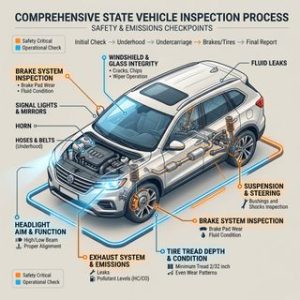
The safety evaluation examines specific physical parameters across every major vehicle system. Brakes are pulled and measured for minimum lining thickness, steering linkages are tested for mechanical play, tires are checked for tread depth and sidewall integrity, and the exhaust system is inspected from the engine manifold back to the tailpipe for leaks or missing components. If any single component falls below statutory limits, the vehicle cannot receive a passing sticker until that specific failure point is repaired.
Preparing your vehicle before the sticker expires helps avoid unexpected downtime or roadside citations. Drivers can visit our service location at 1503 Pennsylvania Ave for thorough pre-inspection testing, or give our service team a quick call at (330) 462-7578 to discuss specific state standards for your vehicle.
Table of Contents
- What Are the Most Common Mechanical Reasons Cars Fail PA Safety Inspection?
- How Do Tires, Mismatched Sizes, and Lighting Cause State Inspection Failures?
- Can You Clear Check Engine Light Codes Right Before a PA Emissions Test?
- What Are the Most Expensive Common Repairs After Failing Pennsylvania Inspection?
- What Penalties Can You Face for Driving a Vehicle That Failed PA Inspection?
- What Should You Include in a DIY Pre-Inspection Checklist Before Visiting Service?
- Quick Answers About Pennsylvania State Inspection Requirements
- Keep Your Vehicle Compliant with Professional Service
What Are the Most Common Mechanical Reasons Cars Fail PA Safety Inspection?
Vehicles most frequently fail Pennsylvania safety inspections due to worn brake friction material, deteriorated suspension joints, exhaust system leaks, or structural body rust. Inspection standards mandate minimum friction material thresholds, tight steering tolerances, sealed exhaust pathways, and complete chassis structural integrity before an inspection sticker can be awarded.
Brake system wear represents one of the leading failure categories during state testing. Under state guidelines, brake pads or shoes must have at least 2/32 inch of friction material remaining on the bonded or riveted lining. If linings fall below this measurement, if brake rotors or drums are worn thinner than OEM discard specifications, or if hydraulic lines and wheel cylinders show active fluid leakage, the vehicle automatically fails.
Suspension and steering components receive equal scrutiny during the undercarriage check. Certified inspectors physically shake down steering linkages, tie-rod ends, ball joints, and control arm bushings to detect dangerous mechanical play. Steering wheel free play exceeding 2 inches on power steering systems triggers an immediate rejection. Similarly, leaking shock absorbers or broken coil springs will prevent a passing grade.
Exhaust leaks and structural rust round out the top failure points. The exhaust system must be fully sealed from the engine block to the rear bumper to prevent carbon monoxide from seeping into the passenger compartment. Any rust hole that penetrates into the cab area, leaves sharp outer body edges, or compromises structural unibody rails results in an automatic inspection failure. Drivers navigating the elevated, rolling hills near State Route 170 in Calcutta frequently experience accelerated wear on brake rotors and ball joints from daily elevation shifts and winter road treatments.

How Do Tires, Mismatched Sizes, and Lighting Cause State Inspection Failures?
A vehicle fails inspection if its tire tread depth falls below 2/32 inch in any two adjacent grooves, if tires on the same axle have mismatched sizes or construction types, or if any factory-equipped exterior light fails to illuminate properly. Tire condition and vehicle lighting are among the most strictly enforced exterior safety checkpoints under state law.
State inspection standards mandate that all tires mounted on a vehicle have adequate tread and remain free of structural damage. Tires showing bulges, sidewall cracks, exposed cord plies, or uneven tread wear down to the wear bars will result in a failure notice. Additionally, Pennsylvania Code §175.110 prohibits mixing tire sizes or construction types across the same axle. Radial and bias-ply tires cannot be combined on the same axle, nor can tires of different dimensional designations, because mismatched rolling diameters compromise anti-lock braking systems and vehicle handling stability.
Vehicle lighting requirements apply to every bulb originally installed by the manufacturer. To pass inspection, a car must have operational:
- High and low beam headlights with proper aim and intact lenses
- Front and rear turn signals, hazard flashers, and parking lamps
- Brake lights that illuminate immediately under pedal pressure
- Reverse lamps and rear license plate illumination bulbs
When local drivers visit our service center after a failed inspection, our certified technicians usually find worn brake friction material or incomplete OBD readiness monitors as the underlying trigger. Burnt-out license plate lamps or temporary spare tires left mounted on a drive axle are equally common causes of failure that catch vehicle owners off guard. To address these issues before test day, drivers can easily schedule a service appointment online for a full lighting and tire evaluation.
Can You Clear Check Engine Light Codes Right Before a PA Emissions Test?
Clearing Check Engine light diagnostic codes right before an emissions test causes an immediate test rejection because resetting the engine control computer clears the internal OBD-II readiness monitors. Pennsylvania emissions testing stations require these monitors to be set to “Ready,” which only occurs after completing a full drive cycle under varied driving conditions.
When a vehicle’s computer detects an emissions-related fault, it illuminates the Malfunction Indicator Lamp and stores a diagnostic trouble code. Attempting to bypass the test by clearing codes with an handheld scan tool or by disconnecting the battery clears the stored code, but it also resets the system’s internal readiness monitors—such as those monitoring the catalytic converter, oxygen sensors, and evaporative emission control system—to an “Incomplete” or “Not Ready” state.
During the state emissions test, the station’s analyzer communicates directly with the vehicle’s diagnostic port. If the computer detects that too many readiness monitors are incomplete, the testing software automatically rejects the vehicle before a pass/fail determination can even be rendered. The driver is turned away and instructed to operate the vehicle through a complete drive cycle.
Resolving an emissions failure requires identifying and repairing the root mechanical or electrical issue. Replacing a failing oxygen sensor, fixing a vacuum leak, or installing a new gas cap resolves the underlying fault. Once the mechanical repair is executed, driving the car through a mixture of city and highway miles allows the onboard computer to re-run its self-diagnostics and set all readiness monitors to “Ready” for a valid inspection attempt.
What Are the Most Expensive Common Repairs After Failing Pennsylvania Inspection?
The most expensive repairs resulting from a failed Pennsylvania inspection typically involve catalytic converter replacements, complete brake system overhauls, structural frame rust repairs, and major suspension component replacements. These complex mechanical failures require intensive labor and high-spec replacement hardware to restore full safety and emissions compliance.
Exhaust and emissions system failures often head the list of costly repairs. Replacing a degraded catalytic converter that no longer cleans exhaust gases can represent a significant expenditure, particularly on modern vehicles with integrated manifold assemblies. If the vehicle fails emissions due to severe exhaust leaks, replacing rusted headers, flex pipes, and rusted-out mufflers adds substantial labor and material costs.
Structural rust repairs and major suspension work also generate higher repair bills. When road salt causes deep corrosion through unibody frame rails or floor pans, certified welding and structural reinforcement are necessary to make the vehicle safe for road use. Commuters who travel along Market Street in Boardman during harsh winter months face heavy road salt exposure, which often leads to severe undercarriage corrosion on brake lines and structural frame rails.
Complete brake system overhauls present another major repair expense when neglect allows wear to spread across multiple components. Replacing scored rotors, seized hydraulic calipers, worn pads, and rusted metal brake lines on all four wheels requires extensive shop time. When unexpected mechanical failures occur during an inspection, our department lets you order genuine OEM parts directly to ensure every replacement component meets factory durability standards.
What Penalties Can You Face for Driving a Vehicle That Failed PA Inspection?
Driving a vehicle on public roads with an expired or failed inspection sticker can lead to official police citations, monetary fines, court costs, and potential vehicle impoundment. Operating a vehicle with known safety defects also exposes the driver to severe legal liability and potential insurance claim denials in the event of an accident.
Under Section 4703 of the Pennsylvania Vehicle Code, operating a motor vehicle without a valid, current certificate of inspection is a summary traffic offense. While the base statutory fine for an uninspected vehicle is fixed by law, local court costs, administrative fees, and state surcharges significantly increase the total out-of-pocket penalty for a single traffic stop.
Receiving a rejection sticker during an inspection does not provide a temporary pass to drive an unsafe car. A rejection sticker alerts law enforcement that the vehicle was formally evaluated and found unfit for highway use. If an officer stops a vehicle displaying a rejection sticker—or no sticker at all—and determines that critical components like brakes, steering, or tires pose an active hazard, the officer can issue immediate citations and order the vehicle towed from the scene.
Consequences extend beyond police fines if an uninspected vehicle is involved in a collision. If a mechanical defect like worn brakes or bald tires contributes to a crash, insurance carriers may scrutinize the claim, and injured parties can use the lack of a valid inspection sticker as clear evidence of owner negligence in civil court proceedings.
What Should You Include in a DIY Pre-Inspection Checklist Before Visiting Service?
A comprehensive DIY pre-inspection checklist should cover all exterior lights, tire tread depth and matching sizes, windshield wiper condition, horn operation, fluid leaks, seatbelt latching, and confirming that no dashboard warning lights remain lit. Checking these accessible items before your appointment prevents simple, low-cost failures from delaying your state inspection approval.
Performing a pre-inspection walkaround at home allows you to identify minor defects that are easy to fix before bringing your car to a certified inspection facility:
- Exterior Lighting: Switch on headlights (both low and high beams), activate turn signals and hazard flashers, and have a helper verify that brake lights, reverse lights, and license plate lamps illuminate cleanly.
- Tires and Wheels: Check tread depth across all main grooves using a tread gauge or penny, inspect sidewalls for cracks or bulges, and confirm that tires on the same axle match in size and radial construction.
- Windshield and Wipers: Inspect the glass for cracks in the driver’s direct line of sight, test the windshield wipers for streak-free operation, and top off washer fluid to confirm the spray pump works.
- Dashboard Indicators: Start the engine and verify that the Check Engine light, ABS light, and airbag warning symbols turn off after initial startup cycles complete.
- Interior Safety Systems: Pull each seatbelt to confirm proper ratcheting and latching, verify side and rearview mirrors adjust smoothly, and press the horn to test for clear sound volume.
Catching a burnt-out bulb or a split wiper blade in your driveway saves time and keeps your inspection visit moving smoothly. For professional diagnostic help or undercarriage checks, visit our East Liverpool facility, get in touch with our team with a quick phone call, or check our guide on routine electrical and battery maintenance to keep your vehicle running smoothly.
Quick Answers About Pennsylvania State Inspection Requirements
Q: Are safety and emissions inspection stickers separate in Pennsylvania?
In Pennsylvania counties that require emissions testing, vehicles display two separate stickers side-by-side on the lower driver-side windshield. One sticker documents mechanical safety compliance, while the second certifies OBD-II or visual emissions compliance. Both stickers must be current for the vehicle to be legally operated on public highways.
Q: How long do I have to repair my vehicle after failing a PA inspection?
If your vehicle fails inspection, you generally have 30 days to complete necessary mechanical repairs and return to the same station for a retest without paying an additional inspection fee. However, a failure rejection notice does not grant legal permission to drive an unsafe vehicle with severe safety defects on public roads during that 30-day window.
Q: Will a cracked windshield automatically fail a Pennsylvania state inspection?
A cracked windshield fails inspection if the damage is located within the acute area directly in the driver’s normal line of vision—defined as an area 8 and a half inches wide by 5 and a half inches high—or anywhere within the sweep of the windshield wipers. Small stone chips outside the driver’s direct view may pass if they do not impair visibility or structural integrity.
Q: Can body rust cause my car to fail the state inspection?
Excessive body rust causes an inspection failure if it creates holes into the passenger compartment, forms sharp outer edges that could injure pedestrians, or compromises structural frame rails and suspension mounting points. Surface rust on cosmetic panels is generally acceptable as long as structural integrity remains intact.
Q: Does a brand-new vehicle require an inspection in Pennsylvania?
Newly purchased vehicles registered in Pennsylvania must display a valid state inspection sticker within 10 days of registration. Licensed dealerships selling new vehicles typically perform the official state safety and emissions inspection prior to customer delivery, providing a valid sticker at the point of sale.
Keep Your Vehicle Compliant with Professional Service
Staying ahead of annual state inspection requirements protects your vehicle’s mechanical integrity and keeps you fully compliant with Pennsylvania highway laws. Routine maintenance—such as monitoring brake lining thickness, checking tire tread depth, and addressing Check Engine lights promptly—prevents minor component wear from turning into costly inspection failures.
Our certified technicians perform thorough state safety and emissions inspections using factory-grade diagnostic tools and genuine replacement parts. Whether you need a pre-inspection checkup, routine brake service, or diagnostic work to clear an active emissions code, our service team provides clear, straightforward guidance every step of the way. Contact our service department today to schedule your upcoming inspection appointment and keep your vehicle running safely all year round.
Connect with us


- Automotive News, New Vehicle Reviews, Buying Guides, Financing & Insurance, Seasonal Driving Tips
- Buying Guides, Financing & Insurance, New Vehicle Reviews, Commercial Fleet Sales, Custom Orders & Factory Builds
- Buying Guides, Financing & Insurance, New Vehicle Reviews, Model Comparisons, Sales & Promotions
- Buying Guides, Financing & Insurance, New Vehicle Reviews, Model Comparisons, Technology & Innovation
- Buying Guides, Financing & Insurance, Used Vehicle Guides, New Vehicle Reviews, Cross-Border Purchasing
- Buying Guides, Financing & Insurance, Vehicle Inventory & Offers, Dealership Visit Preparation, Trade-In & Valuation
- Buying Guides, New Vehicle Reviews, Financing & Insurance, Commercial Vehicle Sales, Model Comparisons
- Commercial Leasing Options, Business Fleet Solutions, Financing & Leasing Programs, Commercial Vehicle Inventory, Business Vehicle Acquisition
- Commercial Truck Sales, Fleet Purchasing Guides, Financing & Lease Options, Work Truck Customization, New Vehicle Inventory
- Commercial Truck Sales, Fleet Vehicle Financing, Custom Work Truck Upfits, Commercial Vehicle Buying Guides, Used Commercial Truck Inventory
- Commercial Vehicle Sales, Financing & Leasing, Small Business Vehicle Incentives, Fleet Purchasing Guides, Tax Benefits for Vehicle Buyers
- Commercial Vehicle Sales, Fleet Leasing & Management, Commercial Financing & Tax Incentives, Upfitting & Customization Solutions, Trade & Lease Programs
- Commercial Vehicle Sales, Fleet Purchasing & Management, Financing & Leasing for Businesses, New & Used Work Truck Inventory, Commercial Truck Ordering Process
- Community Engagement & Events, New Vehicle Promotions, Financing & Trade-In Options, Maintenance & Service, Used Vehicle Offers
- Community Events & Customer Appreciation, New Vehicle Reviews, Financing & Trade-In Guides, Maintenance & Service Specials, Commercial & Work Truck Solutions
- Community Events & Dealership News, New Vehicle Promotions & Incentives, Maintenance & Service Specials, Financing & Trade-In Guidance, Family-Friendly Dealership Experiences
- Community Events & Dealership News, New Vehicle Reviews, Financing & Insurance, Maintenance & Service, Work Trucks & Commercial Vehicles
- Community Events, New Vehicle Buying Guides, Financing & Insurance, Maintenance & Service, Local Dealership News
- Compare Cars
- Custom Ordering & Build Process, New Vehicle Inventory & Offers, Financing & Trade-In Guidance, Manufacturer Incentives & Rebates, Vehicle Purchase & Order Tracking
- Dealership Events & Promotions, Financing & Trade-In Options, Maintenance & Service Specials, Community Involvement & Charity, New & Used Vehicle Buying Guides
- East Liverpool, OH Ford Dealer
- East Liverpool, OH Used Cars
- Financing & Insurance, Buying Guides, Commercial Vehicle Solutions, Fleet Management, Inventory and Availability
- Financing & Insurance, Buying Guides, New Vehicle Reviews, Used Vehicle Guides, Automotive Sales & Inventory
- Financing & Insurance, Buying Guides, New Vehicle Reviews, Used Vehicle Guides, Automotive Sales Strategies
- Financing & Insurance, Buying Guides, New Vehicle Reviews, Used Vehicle Guides, Model Comparisons
- Financing & Insurance, Buying Guides, Used Vehicle Guides, New Vehicle Reviews, Automotive Sales Strategies
- Financing & Insurance, Buying Guides, Used Vehicle Guides, Trade-In Tips, New Vehicle Sales
- Financing & Insurance, Buying Guides, Vehicle Inventory & Offers, Trade-In & Appraisal, Dealership Services
- Financing & Insurance, Buying Guides, Vehicle Trade-In Tips, Dealership Sales Process, New Vehicle Promotions
- Financing & Insurance, Leasing Benefits, Model Comparisons, Technology & Innovation, Buying Guides
- Leasing & Financing Options, Buying Guides, Model Comparisons, Negotiation Tips, Inventory & Specials
- Leasing & Financing Options, Buying Guides, New Vehicle Reviews, Model Comparisons, Technology & Innovation
- Leasing & Financing Options, New Vehicle Leasing Guides, Buying Guides, Inventory Spotlight, Trade
- Leasing & Lease Deals, Financing & Insurance, New Vehicle Sales, Commercial Vehicle Leasing, Vehicle Trade-In & Purchase Options
- Leasing Options, Financing & Insurance, New Vehicle Reviews, Buying Guides, Technology & Innovation
- Leasing Options, Financing & Insurance, New Vehicle Sales, Buying Guides, Vehicle Inventory
- Maintenance & Service, Air Conditioning Repair, Genuine Parts & Accessories, Dealer-Authorized Service, Vehicle Ownership Care
- Maintenance & Service, Automotive Air Conditioning Repair, Vehicle Cooling System Care, Diagnostic & Leak Detection, Seasonal Vehicle Maintenance
- Maintenance & Service, Automotive Detailing & Cleaning, Seasonal Vehicle Care, Vehicle Protection & Preservation, Service Center Expertise
- Maintenance & Service, Automotive Detailing & Paint Care, Vehicle Exterior Protection, Paint Repair & Restoration, Parts & Accessories Installation
- Maintenance & Service, Automotive Detailing & Protection, Corrosion & Rust Prevention, Paint & Exterior Care, Professional Vehicle Care
- Maintenance & Service, Automotive Detailing, Paint Protection & Care, Seasonal Vehicle Care, Professional Vehicle Servicing
- Maintenance & Service, Automotive Detailing, Vehicle Care & Protection, Off-Road Vehicle Maintenance, Parts & Repairs
- Maintenance & Service, Automotive Electrical Systems, Battery Care & Replacement, Diagnostics & Repairs, Electric Vehicle Maintenance
- Maintenance & Service, Automotive Electrical Systems, Battery Care & Replacement, Vehicle Lighting & Electrical Issues, Roadside Assistance & Emergency Services
- Maintenance & Service, Automotive Fluids & Lubricants, Vehicle Care & Ownership, Dealership Service & Repairs, Preventive Maintenance
- Maintenance & Service, Automotive Glass Repair, Safety Features, Technology & Innovation, Mobile & Convenient Service
- Maintenance & Service, Automotive Lighting & Electrical, Vehicle Safety & Visibility, DIY Vehicle Care, Parts & Accessories
- Maintenance & Service, Automotive Parts & Accessories, Seasonal Vehicle Care, Vehicle Safety & Visibility, Professional Auto Service
- Maintenance & Service, Automotive Parts & Accessories, Vehicle Air Quality & HVAC Care, Preventive Vehicle Maintenance, Service Tips & FAQs
- Maintenance & Service, Automotive Parts & Accessories, Vehicle Ownership Care, Engine Care & Protection, Warranty & Service Contracts
- Maintenance & Service, Automotive Parts & Accessories, Vehicle Safety & Repair, Warranty & Coverage, Service Specials & Offers
- Maintenance & Service, Automotive Parts & Components, Vehicle Safety & Repair, Warranty & Service Coverage, Preventative Vehicle Care
- Maintenance & Service, Automotive Parts & Repairs, Vehicle Warranty & Protection, Service Center Tips, Cost-Effective Vehicle Care
- Maintenance & Service, Automotive Repair Tips, Service Team Selection, Warranty & Service Policies, Vehicle Ownership Care
- Maintenance & Service, Automotive Repair, Mobile & Remote Vehicle Service, Warranty & Roadside Assistance, OEM Parts & Service Specials
- Maintenance & Service, Automotive Repair, Parts & Accessories, Vehicle Ownership Care, Technology & Innovation in Service
- Maintenance & Service, Automotive Repair, Parts & OEM Components, Vehicle Longevity & Care, Service Department Insights
- Maintenance & Service, Automotive Technology & Diagnostics, Vehicle Electronics & Sensors, Seasonal Vehicle Care, Parts & Repairs
- Maintenance & Service, Automotive Technology & Software Updates, Warranty & Recall Service, Mobile Vehicle Repair & Convenience, Customer Service & Transparency
- Maintenance & Service, Battery Care & Diagnostics, Electric Vehicle (EV) Maintenance, Seasonal Vehicle Care, Automotive Electrical Systems
- Maintenance & Service, Battery Care & Replacement, Vehicle Electrical Systems, Seasonal Vehicle Maintenance, Professional Automotive Repairs
- Maintenance & Service, Brake System Care, OEM Parts & Replacement, Vehicle Safety & Inspections, Expert Technician Services
- Maintenance & Service, Brake System Care, Vehicle Repair Tips, Automotive Parts & Components, Safety Features
- Maintenance & Service, Brake System Care, Vehicle Safety & Inspection, Automotive Repair Tips, Service Financing & Convenience
- Maintenance & Service, Brake System Care, Vehicle Safety & Inspection, Parts Quality & Replacement, Heavy Duty Vehicle Maintenance
- Maintenance & Service, Brake System Care, Vehicle Safety & Inspections, Parts & Components, Professional Automotive Services
- Maintenance & Service, Brake System Care, Vehicle Safety & Inspections, Parts & Repairs, Expert Tips & Advice
- Maintenance & Service, Brake System Care, Vehicle Safety Inspections, Automotive Repair Tips, OEM Parts & Service
- Maintenance & Service, Brake Systems & Repair, Vehicle Parts & Accessories, Towing & Load Management, Seasonal Driving Tips
- Maintenance & Service, Certified Technician Insights, Warranty & Service Coverage, Genuine OEM Parts, Service Center Selection Guidance
- Maintenance & Service, Cooling System Repairs, Vehicle Ownership Care, Diagnostic & Troubleshooting, Automotive Parts & Components
- Maintenance & Service, Diagnostic Services, Vehicle Health & Diagnostics, Service Tips & Advice, Check Engine Light Solutions
- Maintenance & Service, Engine Care & Performance, Parts & Accessories, Genuine vs. After
- Maintenance & Service, Essential Vehicle Care, Preventive Maintenance Tips, Vehicle Longevity Strategies, Truck Maintenance Essentials
- Maintenance & Service, Expert Repairs & Diagnostics, Genuine Parts & Accessories, Engine Care & Performance, Vehicle Ownership & Care
- Maintenance & Service, Mobile Vehicle Services, Vehicle Care & Ownership, Genuine Parts & Repairs, Seasonal Maintenance Tips
- Maintenance & Service, Paint Protection & Detailing, Vehicle Exterior Care, Seasonal Vehicle Maintenance, Professional Auto Detailing
- Maintenance & Service, Parts & Accessories, Engine Care & Repair, Vehicle Longevity Tips, OEM Parts Benefits
- Maintenance & Service, Parts & Accessories, Vehicle HVAC Care, Seasonal Vehicle Maintenance, DIY Vehicle Maintenance
- Maintenance & Service, Parts & Replacements, Vehicle Care Tips, Seasonal Maintenance, DIY Vehicle Maintenance
- Maintenance & Service, Recall Information, Safety & Reliability, Vehicle Ownership Care, Parts & Repairs
- Maintenance & Service, Recall Updates & Safety Notices, Genuine Parts & Accessories, Truck Care & Maintenance Tips
- Maintenance & Service, Repair & Diagnostics, OEM Parts & Accessories, Warranty & Recall Information, Vehicle Care & Ownership Tips
- Maintenance & Service, Repair & Diagnostics, Parts & Accessories, Vehicle Ownership Care, Service Plans & Extended Warranty
- Maintenance & Service, Repair & Diagnostics, Parts & Components, Preventive Care & Tips, Warranty & Recalls
- Maintenance & Service, Repair & Diagnostics, Tire & Wheel Care, Vehicle Safety & Inspection, Parts & Replacement Services
- Maintenance & Service, Repair & Diagnostics, Warranty & Service Coverage, Genuine OEM Parts & Repairs, Vehicle Ownership Care
- Maintenance & Service, Repair & Parts, Vehicle Ownership Care, Safety Features, Technology & Innovation
- Maintenance & Service, Repair & Parts, Vehicle Ownership Care, Transmission
- Maintenance & Service, Repair Solutions, Vehicle Ownership Care, Parts & Accessories, Diagnostic Tips
- Maintenance & Service, Repair Tips & Techniques, Vehicle Care & Ownership
- Maintenance & Service, Safety Features, Automotive Recalls & Repairs, Parts & Warranty Services, Vehicle Ownership Care
- Maintenance & Service, Safety Features, Automotive Recalls & Repairs, Technology & Innovation, Seasonal Driving Tips
- Maintenance & Service, Safety Features, Automotive Recalls, Vehicle Ownership Care, Parts & Repairs
- Maintenance & Service, Safety Features, Parts & Repairs, Vehicle Ownership Care, Automotive Service Tips
- Maintenance & Service, Safety Features, Recall & Repair Updates, Parts & Repairs, Vehicle Ownership Care
- Maintenance & Service, Safety Features, Recall & Safety Campaigns, Vehicle Inspection & Repairs, Vehicle Ownership Care
- Maintenance & Service, Safety Features, Recall & Warranty Information, Vehicle Diagnostics & Repair, Certified Service & Genuine Parts
- Maintenance & Service, Safety Features, Recall Repairs & Safety Campaigns, Parts & Genuine Components, Vehicle Ownership Care
- Maintenance & Service, Safety Features, Recalls & Repairs, Parts & Accessories, Vehicle Ownership Care
- Maintenance & Service, Safety Features, Repair & Recall Updates, Parts & Components, Vehicle Ownership Care
- Maintenance & Service, Safety Features, Repair & Replacement, Vehicle Care & Inspection, Parts & Accessories
- Maintenance & Service, Safety Features, Seasonal Driving Tips, Technology & Innovation, Parts & Repairs
- Maintenance & Service, Safety Features, Technology & Innovation, Automotive Electrical Systems, Parts & Repairs
- Maintenance & Service, Safety Features, Technology & Innovation, Automotive News, Parts & Repairs
- Maintenance & Service, Safety Features, Technology & Innovation, Automotive Parts & Accessories, Seasonal Driving Tips
- Maintenance & Service, Safety Features, Technology & Innovation, Automotive Recalls, Parts & Repairs
- Maintenance & Service, Safety Features, Technology & Innovation, Automotive Recalls, Vehicle Ownership Care
- Maintenance & Service, Safety Features, Technology & Innovation, Automotive Service Tips, Recall & Repair Updates
- Maintenance & Service, Safety Features, Technology & Innovation, Parts & Repairs, Seasonal Driving Tips
- Maintenance & Service, Safety Features, Technology & Innovation, Parts & Repairs, Vehicle Ownership Care
- Maintenance & Service, Safety Features, Technology & Innovation, Recall & Warranty Information, Vehicle Care & Repairs
- Maintenance & Service, Safety Features, Technology & Innovation, Repair & Recall Information, Parts & Vehicle Care
- Maintenance & Service, Safety Features, Technology & Innovation, Seasonal Driving Tips, Automotive Repair
- Maintenance & Service, Safety Features, Technology & Innovation, Seasonal Driving Tips, Parts & Accessories
- Maintenance & Service, Safety Features, Technology & Innovation, Seasonal Driving Tips, Parts & Repairs
- Maintenance & Service, Safety Features, Technology & Innovation, Tire Care & Replacement, Diagnostic & Repair Services
- Maintenance & Service, Safety Features, Vehicle Inspections, DIY Vehicle Care, Repair & Diagnostics
- Maintenance & Service, Safety Recalls & Repairs, Vehicle Safety & Compliance, Powertrain & Drivetrain Maintenance, Towing & Hauling Maintenance
- Maintenance & Service, Seasonal Driving Tips, Model Comparisons, Technology & Innovation, Safety Features
- Maintenance & Service, Seasonal Driving Tips, Safety Features, Technology & Innovation, Automotive News
- Maintenance & Service, Seasonal Driving Tips, Safety Features, Technology & Innovation, Parts & Repairs
- Maintenance & Service, Seasonal Driving Tips, Vehicle Care & Ownership, Brake System Maintenance, Tire & Wheel Care
- Maintenance & Service, Seasonal Driving Tips, Vehicle Care & Ownership, Parts & Accessories, Safety Features
- Maintenance & Service, Seasonal Driving Tips, Vehicle Care & Ownership, Safety Features, Professional Repair & Service Techniques
- Maintenance & Service, Seasonal Driving Tips, Vehicle Care & Protection, Brake Maintenance, Tire Care & Safety
- Maintenance & Service, Seasonal Driving Tips, Vehicle Care & Warranty, Service Specials & Packages, Automotive Repair Insights
- Maintenance & Service, Seasonal Driving Tips, Vehicle Cooling Systems, Automotive Safety Features, Parts & Repairs
- Maintenance & Service, Service Scheduling & Convenience, Vehicle Repair & Diagnostics, Parts & Accessories, Fleet & Commercial Vehicle Service
- Maintenance & Service, Technology & Innovation, Automotive Service Transparency, Digital Vehicle Inspections, Vehicle Ownership Care
- Maintenance & Service, Technology & Innovation, Safety Features, Parts & Warranty, Vehicle Ownership Care
- Maintenance & Service, Technology & Innovation, Vehicle Diagnostics & Telematics, Fleet Management Solutions, Parts & Accessories
- Maintenance & Service, Tire Care & Repair, Roadside Assistance, Vehicle Safety & Inspections, Automotive Parts & Replacements
- Maintenance & Service, Tire Care & Repair, Wheel Alignment & Balancing, Suspension Maintenance, Vehicle Performance Optimization
- Maintenance & Service, Tire Care & Replacement, Seasonal Vehicle Care, Safety Features, Automotive Service Tips
- Maintenance & Service, Tire Care & Replacement, Vehicle Safety & Handling, Seasonal Vehicle Preparation, Drivetrain & Tire Maintenance
- Maintenance & Service, Tire Care & Replacement, Vehicle Safety & Inspection, Emergency Roadside Assistance, Automotive Parts & Accessories
- Maintenance & Service, Tire Care & Replacement, Vehicle Safety & Inspections, Seasonal Vehicle Maintenance, Automotive Parts & Accessories
- Maintenance & Service, Transmission Care & Repair, Vehicle Fluid Services, Automotive Diagnostics, Warranty & Resale Value Maintenance
- Maintenance & Service, Transmission Care, Repair & Parts, Vehicle Ownership Care, Common Vehicle Issues
- Maintenance & Service, Vehicle Care & Longevity, Scheduled Service Packages, Oil Changes & Fluid Top-offs, Tire & Brake Maintenance
- Maintenance & Service, Vehicle Care Tips, Parts & Accessories, Seasonal Vehicle Maintenance, Service Specials & Packages
- Maintenance & Service, Vehicle Detailing & Care, Parts & Accessories, Seasonal Vehicle Preparation, Service Scheduling & Convenience
- Maintenance & Service, Vehicle Detailing & Cosmetic Care, Automotive Cleaning & Protection, Service Scheduling & Preparation, Vehicle Ownership Care
- Maintenance & Service, Vehicle Detailing & Cosmetic Care, Service Scheduling & Convenience, Seasonal Vehicle Care, Vehicle Ownership Tips
- Maintenance & Service, Vehicle Detailing & Protection, Repair & Inspection, Parts & Accessories, Vehicle Care & Warranty
- Maintenance & Service, Vehicle Detailing & Protection, Vehicle Care Tips, Seasonal Vehicle Maintenance, Dealership Service Benefits
- Maintenance & Service, Vehicle Diagnostics & Repair, Engine Performance & Troubleshooting, Fuel System Care, Preventative Maintenance Strategies
- Maintenance & Service, Vehicle Fluids & Lubrication, Engine Care & Repair, Parts & Accessories, Professional Vehicle Care
- Maintenance & Service, Vehicle Inspection & Diagnostics, Parts & Repairs, Warranty & Resale Value, Service Specials & Convenience
- Maintenance & Service, Vehicle Inspections, Oil Change & Fluid Services, Tire Care & Battery Maintenance, Seasonal Vehicle Preparation
- Maintenance & Service, Vehicle Interior Care, Technology & Innovation in Service, Professional Detailing, Seasonal Vehicle Care
- Maintenance & Service, Vehicle Lighting & Electrical Systems, Automotive Safety & Inspection, OEM Parts & Repairs, Seasonal Vehicle Care
- Maintenance & Service, Vehicle Ownership Care, Mobile Repair Services, Genuine Parts & Certified Technicians, Electric Vehicle Maintenance
- Maintenance & Service, Vehicle Ownership Care, Parts & Accessories, Repair & Diagnostics, Certified Technician Insights
- Maintenance & Service, Vehicle Pickup & Delivery, Mobile Service & On-Site Repairs, Oil Change & Fluid Care, Vehicle Care Technology & Apps
- Maintenance & Service, Vehicle Repair & Diagnostics, Parts & Accessories, DIY Vehicle Care, Safety & Reliability Tips
- Maintenance & Service, Vehicle Repair & Diagnostics, Parts & Accessories, Hybrid & Electric Vehicle Care, Seasonal Vehicle Care
- Maintenance & Service, Vehicle Repair & Diagnostics, Parts & Accessories, Seasonal Driving Tips, Battery Care & Replacement
- Maintenance & Service, Vehicle Repair & Diagnostics, Parts & Accessories, Service Lane Tips & Insights, Vehicle Ownership Care
- Maintenance & Service, Vehicle Repair & Diagnostics, Parts & Accessories, Towing & Performance Care, Mobile & Convenient Service Options
- Maintenance & Service, Vehicle Repair & Parts, Service Convenience & Customer Care, Roadside Assistance & Support, Vehicle Ownership Tips
- Maintenance & Service, Vehicle Repair Tips, Parts & Accessories, Safety Features, Technology & Innovation
- Maintenance & Service, Vehicle Service Warranties, Repair & Coverage Plans, Ownership & Vehicle Care, Automotive Service Tips
- Maintenance & Service, Vehicle Software Updates, Safety Features, Technology & Innovation, Recall & Warranty Information
- Maintenance & Service, Warranty & Recalls, Repair & Diagnostics, Parts & Accessories, Vehicle Ownership & Care
- Maintenance & Service, Warranty & Service Contracts, Repair & Diagnostics, Parts & Components Coverage, Vehicle Ownership Care
- Model Comparisons, Buying Guides, New Vehicle Reviews, Financing & Insurance, Inventory Updates
- Model Comparisons, Buying Guides, New Vehicle Reviews, Technology & Innovation, Safety Features
- Model Comparisons, Buying Guides, Technology & Innovation, Safety Features, Maintenance & Service
- Model Comparisons, New Vehicle Reviews, Buying Guides, Technology & Innovation, Financing & Insurance
- Model Comparisons, New Vehicle Reviews, Buying Guides, Technology & Innovation, Safety Features
- Model Comparisons, New Vehicle Reviews, Safety Features, Technology & Innovation, Seasonal Driving Tips
- Model Comparisons, New Vehicle Reviews, Technology & Innovation, Buying Guides, Maintenance & Service
- Model Comparisons, New Vehicle Reviews, Technology & Innovation, Maintenance & Service, Buying Guides
- Model Comparisons, New Vehicle Reviews, Technology & Innovation, Safety Features, Buying Guides
- Model Comparisons, Towing & Hauling Guides, Maintenance & Service, Technology & Innovation, New Vehicle Reviews
- New Vehicle Promotions, Buying Guides, Financing & Insurance, New Vehicle Reviews, Inventory Highlights
- New Vehicle Reviews, Buying Guides, Financing & Insurance, Model Comparisons, Automotive News
- New Vehicle Reviews, Buying Guides, Financing & Insurance, Model Comparisons, Automotive Sales Strategies
- New Vehicle Reviews, Buying Guides, Financing & Insurance, Model Comparisons, Automotive Technology & Innovation
- New Vehicle Reviews, Buying Guides, Financing & Insurance, Model Comparisons, Commercial & Work Truck Sales
- New Vehicle Reviews, Buying Guides, Financing & Insurance, Model Comparisons, Inventory Highlights
- New Vehicle Reviews, Buying Guides, Financing & Insurance, Model Comparisons, Inventory Updates
- New Vehicle Reviews, Buying Guides, Financing & Insurance, Model Comparisons, Used Vehicle Guides
- New Vehicle Reviews, Buying Guides, Financing & Insurance, Model Comparisons, Vehicle Customization & Accessories
- New Vehicle Reviews, Buying Guides, Financing & Insurance, Model Comparisons, Vehicle Inventory Updates
- New Vehicle Reviews, Buying Guides, Financing & Insurance, New Vehicle Specials, Trade-In & Value Estimation
- New Vehicle Reviews, Buying Guides, Financing & Insurance, Used Vehicle Guides, Inventory Updates
- New Vehicle Reviews, Buying Guides, Financing & Insurance, Used Vehicle Guides, Model Comparisons
- New Vehicle Reviews, Buying Guides, Financing & Insurance, Vehicle Inventory & Specials, Model Comparisons
- New Vehicle Reviews, Buying Guides, Financing & Insurance, Vehicle Inventory, Model Comparisons
- New Vehicle Reviews, Buying Guides, Model Comparisons, Financing &
- New Vehicle Reviews, Buying Guides, Model Comparisons, Financing & Insurance, Inventory & Sales
- New Vehicle Reviews, Buying Guides, Model Comparisons, Maintenance & Service, Technology & Innovation
- New Vehicle Reviews, Buying Guides, Safety Features, Technology & Innovation, Model Comparisons
- New Vehicle Reviews, Buying Guides, Technology & Innovation, Safety Features, Maintenance & Service
- New Vehicle Reviews, Buying Guides, Technology & Innovation, Safety Features, Seasonal Driving Tips
- New Vehicle Reviews, Financing & Insurance, Buying Guides, New Vehicle Specials, Model Comparisons
- New Vehicle Reviews, Financing & Insurance, Buying Guides, Technology & Innovation, Automotive Inventory Updates
- New Vehicle Reviews, Financing & Insurance, Buying Guides, Used Vehicle Guides, Model Comparisons
- New Vehicle Reviews, Model Comparisons, Buying Guides, Technology & Innovation, Maintenance & Service
- New Vehicle Reviews, Model Comparisons, Buying Guides, Technology & Innovation, Safety Features
- New Vehicle Reviews, Model Comparisons, Commercial Truck Guides, Technology & Innovation, Maintenance & Service
- New Vehicle Reviews, Model Comparisons, Financing & Insurance, Technology & Innovation, Safety Features
- New Vehicle Reviews, Model Comparisons, Off-Road Adventures, Technology & Innovation, Maintenance & Service
- New Vehicle Reviews, Model Comparisons, Safety Features, Technology & Innovation, Buying Guides
- New Vehicle Reviews, Model Comparisons, Technology & Innovation, Financing & Insurance, Maintenance & Service
- New Vehicle Reviews, Model Comparisons, Technology & Innovation, Safety Features, Buying Guides
- New Vehicle Reviews, Model Comparisons, Technology & Innovation, Safety Features, Maintenance & Service
- New Vehicle Reviews, Off-Road Capabilities, Outdoor Adventure Vehicles, Technology & Innovation, Local Driving Destinations
- New Vehicle Reviews, Technology & Innovation, Buying Guides, Maintenance & Service, Model Comparisons
- New Vehicle Reviews, Technology & Innovation, Buying Guides, Safety Features, Model Comparisons
- New Vehicle Reviews, Technology & Innovation, Safety Features, Maintenance & Service, Buying Guides
- New Vehicle Sales, Financing & Incentives, Trade-In & Appraisal, Special Sales Events, Electric Vehicle Purchasing
- New Vehicle Sales, Financing & Incentives, Trade-In & Value Guides, Manufacturer Promotions, Commercial Vehicle Sales
- New Vehicle Sales, Financing & Insurance, Buying Guides, Manufacturer Incentives & Discounts, Trade-In & Vehicle Valuation
- New Vehicle Sales, Vehicle Delivery & Logistics, Financing & Credit Applications, Trade-In & Vehicle Valuation, Commercial Vehicle Sales
- Tips
- Trucks
- Uncategorized
- Used Vehicle Guides, Buying Guides, Financing & Insurance, Model Comparisons, Selling Your Car
- Used Vehicle Guides, Financing & Insurance, Buying Guides, Model Comparisons, Local Dealership Highlights
- Used Vehicle Guides, Financing & Insurance, Buying Guides, New Vehicle Reviews, Commercial Vehicle Sales
- Used Vehicle Guides, Financing & Insurance, Buying Guides, Pre-Owned Vehicle Sales, Vehicle Trade-In & Appraisal
- Used Vehicle Guides, Financing & Insurance, Buying Guides, Trade-In & Appraisal Tips, Inventory & Sales Updates
- Used Vehicle Guides, Financing & Insurance, Buying Guides, Trade-In Advice, Certified Pre-Owned Programs
- Used Vehicle Guides, Financing & Insurance, Buying Guides, Vehicle Warranty Information, Pre-Owned Vehicle Sales
- Vehicle Sales Events, Financing & Leasing, Trade-In & Trade-Up Guides, New Vehicle Inventory Highlights, Dealership Buying Experience
- Vehicle Sales Events, New Vehicle Buying Guides, Financing & Incentives, Dealership Inventory Highlights, Commercial Vehicle Sales
- Vehicle Sales Events, New Vehicle Pricing & Incentives, Financing & Lease Options, Trade-In & Appraisal Guides, Dealership Buying Experience
- Vehicle Sales Events, New Vehicle Pricing, Financing & Credit Applications, Trade-In & Loyalty Programs, Leasing vs Buying Guides
- Vehicle Sales Events, New Vehicle Purchasing, Incentives & Discounts, Financing & Pre-Approval, Trade-In & Appraisal Guidance
- Vehicle Sales Process, Financing & Credit Applications, New and Used Vehicle Inventory, Pickup and Delivery Services, Online Vehicle Purchasing
- Vehicle Sales Process, Online Vehicle Purchasing, Financing & Loan Approval, Trade-In & Vehicle Valuation, Vehicle Delivery Services
- Vehicle Sales Promotions, New Vehicle Buying Guides, Financing & Credit Applications, Dealership Inventory Highlights, Model Pricing Comparisons
- Vehicle Sales Promotions, New Vehicle Buying Guides, Financing & Incentives, Trade-In & Valuation, Dealership Sales Events
- Vehicle Sales, Online Car Buying, Financing & Incentives, Trade-In Guides, New Vehicle Delivery Services, Youngstown Dealership
- Vehicle Trade-In Advice, Financing & Insurance, Buying Guides, Used Vehicle Guides, New Vehicle Sales
- Vehicle Trade-In Tips, Financing & Insurance, Buying Guides, Dealership Sales Strategies, Inventory & Specials