

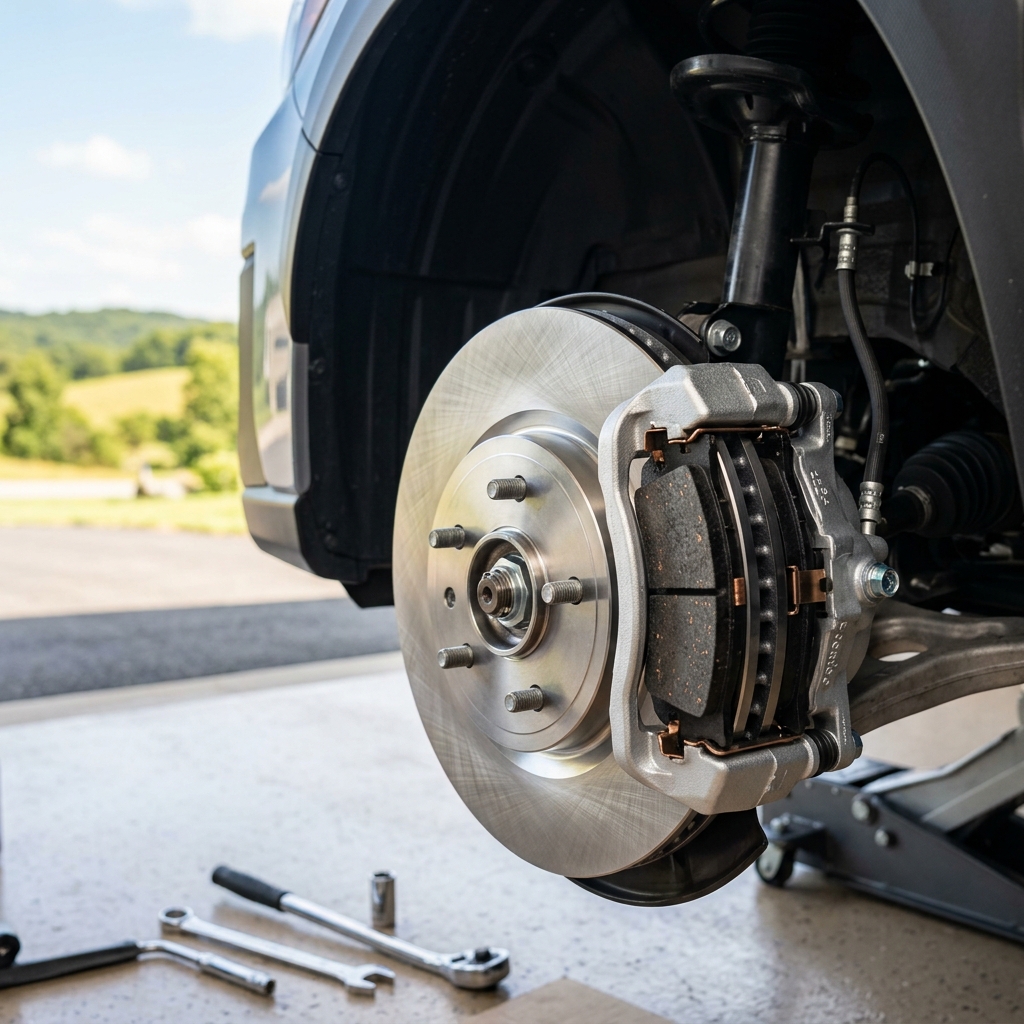
Replacing brake pads and rotors together is strongly recommended because new friction pads require a flat, uniform disc surface to bed in properly and achieve maximum stopping power. Installing new pads onto worn, scored, or heat-grooved rotors causes uneven contact, excessive brake noise, pedal vibration, and premature wear on the new pads, which ultimately reduces overall vehicle braking efficiency and safety.
+-------------------------------------------------------------------+
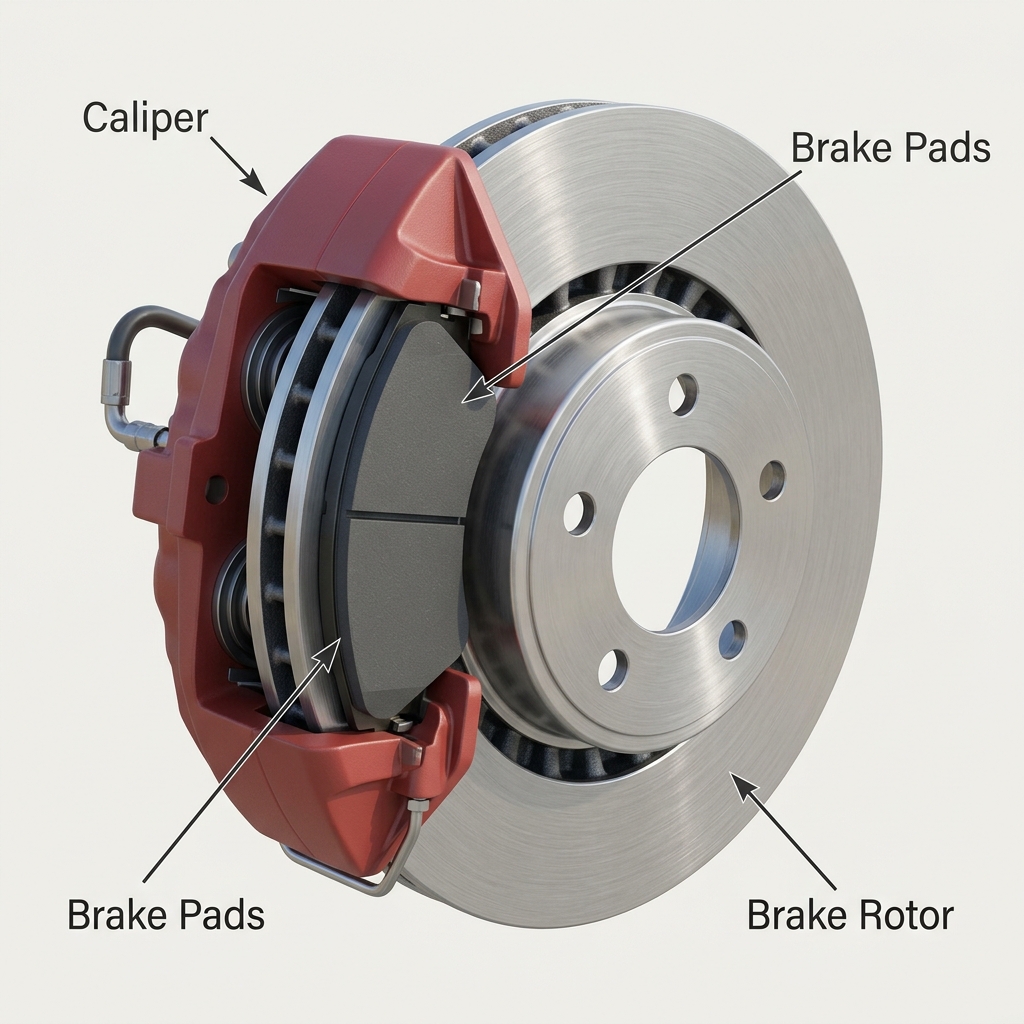
|                     BRAKE SYSTEM COMPONENTS                       |
+-------------------------------------------------------------------+
|  [Caliper]  --> Clamps pads against the spinning disc             |
|  [Brake Pads] --> High-friction friction blocks (3 mm discard limit)|
|  [Brake Rotor] --> Heavy iron disc absorbing stopping energy      |
+-------------------------------------------------------------------+
When you step on the brake pedal, hydraulic pressure forces the brake caliper to squeeze the brake pads against the flat sides of the rotating brake rotor. This physical friction generates intense thermal energy, transforming the kinetic energy of your moving vehicle into heat to bring thousands of pounds of vehicle to a complete stop. Because brake pads and rotors operate in tandem as a matched friction pair, their physical condition directly impacts how quickly and smoothly your vehicle slows down.
Over thousands of miles, brake pads wear down their friction material while simultaneously carving microscopic ridges, grooves, and heat spots into the metal rotor face. If you install fresh, flat brake pads against an old, uneven rotor, the new friction material only contacts the high spots of the grooved metal surface. This reduced contact patch severely decreases initial stopping power and concentrates frictional heat into small areas on the pad, leading to friction material glazing, squeal, and pedal pulsation.
Modern vehicles are engineered with lightweight rotor castings designed to maximize heat dissipation while reducing unsprung weight. As a result, today’s rotors wear thinner alongside the brake pads rather than outlasting multiple pad changes like heavier friction discs from decades past. Inspecting disc thickness and friction pad depth together ensures your vehicle retains its original stopping performance. Drivers navigating the gently rolling hills around Calcutta know that consistent stopping power is essential during daily trips and family drives.
When you notice squealing, grinding, or steering wheel vibration while slowing down, bringing your vehicle to our service facility ensures a thorough multi-point brake system evaluation. You can visit our service center in East Liverpool to have our factory-trained technicians inspect your complete brake setup, or give our service desk a quick call to speak with an advisor about your vehicle’s maintenance schedule.
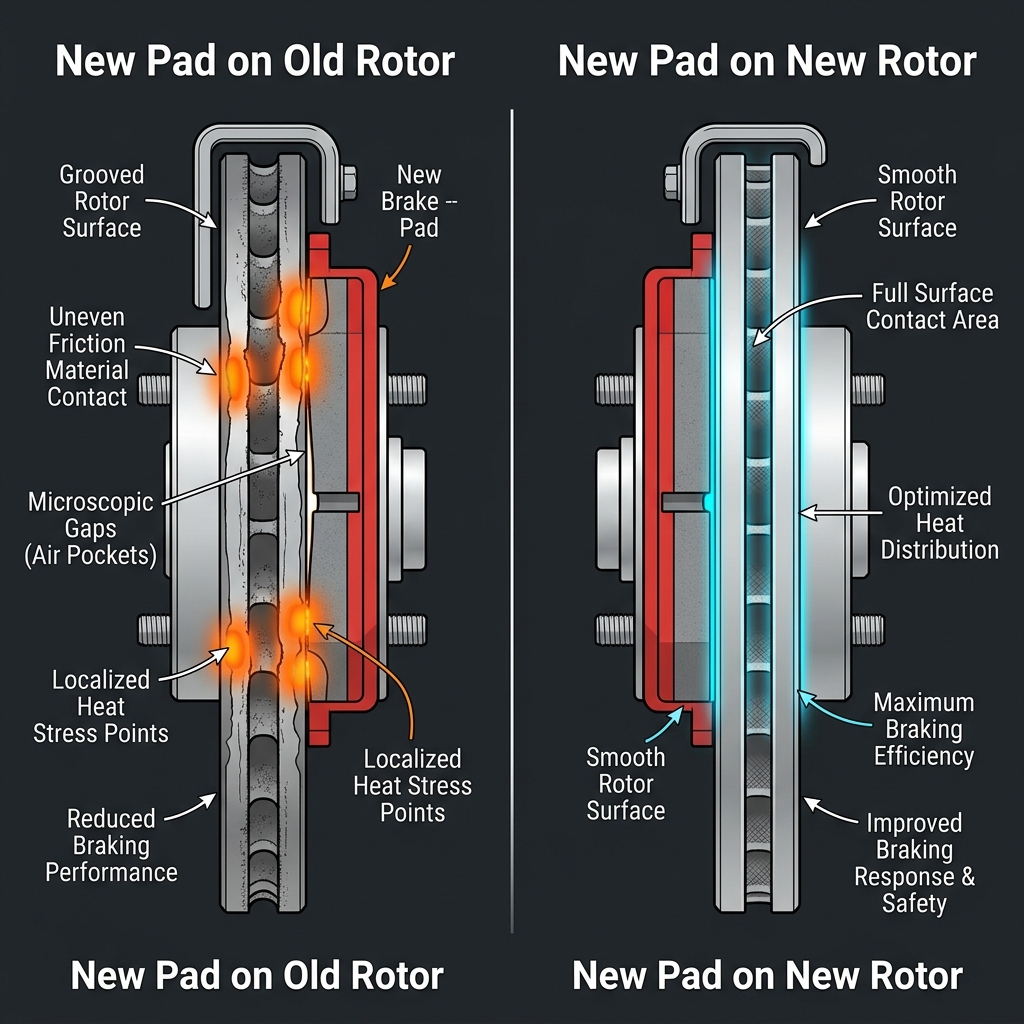
Table of Contents
- Is It Always Necessary to Replace Rotors or Can You Just Change Pads?
- Does Replacing Brake Pads and Rotors Together Save Money on Labor?
- What Does It Mean to Turn or Resurface a Brake Rotor?
- How Do EV Regenerative Braking and Specialized Rotors Impact Service?
- Questions Drivers Ask About Brake Bedding Procedures and Rotor Care
- Key Questions Local Drivers Ask Before Servicing Their Brakes
- What Questions to Ask Before Approving a Brake Job
Is It Always Necessary to Replace Rotors or Can You Just Change Pads?
Brake rotors can often be reused if they meet strict criteria such as minimum thickness and absence of damage, saving you unnecessary replacement costs. However, installing new pads without replacing or resurfacing worn rotors frequently results in noisy operation, extended stopping distances, and rapid pad degradation.
Friction material thickness on new brake pads typically measures around 12 mm, and professional service guidelines recommend planning replacement once the pad compound wears down to 3 mm or 4 mm. The absolute minimum discard threshold is 2 mm, at which point the metal backing plate risks contacting the rotor disc directly. Rotors also feature a critical measurement known as the MIN TH (minimum thickness) limit, which is permanently stamped directly on the outer edge or hub of the casting.
- Pad replacement threshold: 3 mm to 4 mm remaining friction material
- Absolute pad discard limit: 2 mm remaining compound depth
- Rotor minimum thickness: Stamped MIN TH specification on disc edge
- Maximum lateral runout tolerance: 0.004 inches of disc wobble
To evaluate whether an existing rotor can safely remain in service, technicians measure disc thickness across multiple points around the surface using a digital micrometer. If the lowest measured reading rests at or below the stamped MIN TH spec, the rotor lacks sufficient mass to absorb and dissipate heat without warping, making immediate replacement mandatory.
When walking owners through a multi-point inspection, our technicians measure rotor thickness at several points across the disc surface using a micrometer to verify it stays well above the factory minimum threshold before recommending pad-only service. If your vehicle requires replacement components, choosing factory-engineered parts ensures precise fitment and thermal endurance. You can order genuine Motorcraft parts through our dealership parts department to maintain original factory braking standards.
Does Replacing Brake Pads and Rotors Together Save Money on Labor?
Replacing brake pads and rotors in a single service visit saves significant money on labor costs because the technician completes the disassembly process only once. Because access to the brake rotor requires unbolting the caliper and removing the brake pads, performing both jobs simultaneously eliminates paying twice for redundant labor hours.
+-------------------------------------------------------------------+
|                   LABOR SAVINGS COMPARISON                        |
+-------------------------------------------------------------------+
| Combined Service:  Wheel Removal -> Caliper Unbolt -> Swap Pads   |
|                    & Rotors Together (1 Teardown Charge)          |
|                                                                   |
| Separate Service:  Visit 1: Wheel & Caliper Teardown for Pads     |
|                    Visit 2: Wheel & Caliper Teardown for Rotors   |
|                    (2 Full Teardown Labor Charges)                |
+-------------------------------------------------------------------+
When a technician performs a brake service, the majority of the labor time involves placing the vehicle on a hoist, removing the road wheels, unbolting the brake caliper, clearing away road debris, and servicing the caliper sliding pins and hardware. Once the caliper and old pads are dismounted, sliding the old rotor off the wheel hub and installing a fresh rotor adds only a few minutes to the overall service procedure.
If you opt to install new pads while keeping worn rotors, and those old rotors warp or develop severe pulsation 5,000 miles later, you must pay full labor charges a second time to teardown the exact same wheel assemblies. Furthermore, riding on uneven rotors rapidly damages the fresh brake pads, forcing you to purchase a second set of pads far earlier than normal.
Completing pad and rotor replacement as a unified package protects your investment in new friction components. Fresh pads bedding into pristine rotors achieve maximum thermal stability, reducing wear on slide pins, anti-rattle clips, and caliper pistons over tens of thousands of miles.
What Does It Mean to Turn or Resurface a Brake Rotor?
Turning or resurfacing a brake rotor involves mounting the disc onto a precision mechanical lathe to cut away a thin layer of surface metal, restoring a perfectly smooth, flat, and parallel friction face. This machining process removes light surface scoring, minor rust ridges, and minor glaze buildup so new brake pads can bed in correctly.
+-------------------------------------------------------------------+
|                   ROTOR RESURFACING CRITERIA                      |
+-------------------------------------------------------------------+
| ALLOWED:                                                          |
|  - Adequate metal thickness exceeding Machine Minimum limit       |
|  - Minor surface glazing or light pitting                         |
|  - Minimal lateral runout under 0.004 inches                      |
|                                                                   |
| FORBIDDEN (REPLACEMENT REQUIRED):                                 |
|  - Thickness at or below stamped MIN TH specification             |
|  - Deep thermal cracking, blue heat spots, or hard spots          |
|  - Heavy rust scale or structural flange corrosion                |
+-------------------------------------------------------------------+
Before a rotor can be resurfaced, technicians calculate whether machining will remove too much metal. Rotors possess two distinct thickness specifications: the discard limit ( MIN TH) and a slightly higher machine-minimum limit. If lathe turning would reduce the rotor mass below the machine-minimum threshold, the disc cannot legally or safely be resurfaced and must be replaced with a new component.
Machining is only appropriate for rotors that maintain structural integrity and plenty of metal reserve. If a rotor displays severe thermal warping, deep grooves from metal-on-metal pad contact, micro-cracking from extreme heat, or lateral runout exceeding 0.004 inches, resurfacing cannot resolve the underlying structural weakness. Modern replacement rotors are priced competitively enough that installing fresh units is frequently more cost-effective and durable than machining older metal down to its bare limit.
How Do EV Regenerative Braking and Specialized Rotors Impact Service?
Electric vehicles and hybrid powertrains utilize regenerative braking to slow the vehicle using the electric drive motor, which drastically reduces physical friction wear on mechanical brake pads and rotors. However, this lack of regular mechanical engagement creates a unique maintenance challenge: corrosion and rust accumulation on rotor surfaces due to inactivity.
Because EV friction brakes remain disused during gentle slowing, moisture, humidity, and road de-icers accumulate on the rotor surfaces without being swept clean by daily pad contact. Vehicle owners operating near the riverfront bluffs of East Liverpool face damp winter air and road salt, which speeds up surface rust on rarely used EV friction brakes. Periodic professional brake inspections ensure hydraulic calipers do not seize up from disuse and friction surfaces remain free of heavy pitting.
High-performance applications, such as heavy towing or severe duty, often feature specialized drilled or slotted rotors:
- Slotted rotors utilize machined channels to vent gas, dust, and water away from the pad contact zone under heavy braking.
- Drilled rotors feature cross-drilled holes that enhance thermal dissipation and reduce rotating mass.
- Drilled and slotted designs resist brake fade during steep mountain descents or heavy trailer hauling.
- Specialized performance rotors generally cannot be resurfaced on a standard lathe and must be replaced when worn.
Maintaining hybrid and electric powertrain systems requires specialized technical knowledge alongside traditional brake hardware maintenance. You can explore ev battery service and care information on our website, or request our mobile technicians to perform routine maintenance at your home through Ford mobile service options.
Questions Drivers Ask About Brake Bedding Procedures and Rotor Care
Brake pad bedding, also referred to as burnishing or break-in, is the process of transferring an even, microscopic layer of pad friction material onto the smooth surface of a new rotor through controlled heating cycles. This chemical transfer film optimizes friction adhesion between the components, preventing brake judder, reducing noise, and ensuring consistent pedal feel.
Proper bedding requires gradually raising the temperature of the friction components without causing severe thermal shock:
- Accelerate to approximately 35 mph and apply moderate pedal pressure to slow the vehicle to 10 mph without stopping complete motion.
- Repeat this moderate deceleration 6 to 8 times, allowing 30 seconds of driving between slowdowns to release heat buildup.
- Perform 2 to 3 firmer slowdowns from 45 mph to 15 mph to build higher friction temperatures.
- Drive for 5 to 10 minutes with minimal brake usage to allow air cooling across the rotor vanes before parking.
- Avoid engaging the parking brake immediately after heated bedding passes to prevent transfer film imprinting on hot metal.
Failing to bed in new pads and rotors properly causes uneven, patchy film transfer, creating spots of varying friction across the disc face. Over time, these uneven spots develop into hot spots that cause steering wheel shake and brake pedal pulsation during highway stopping.
Most standard replacement pads require 300 to 400 miles of moderate city driving to fully establish an even friction layer if a manual burnishing routine is not conducted. Avoiding sudden, violent panic stops during this initial break-in period allows the pad compound and metal rotor face to mate seamlessly. To keep your vehicle stopping reliably, you can schedule a service appointment online for a comprehensive multi-point brake evaluation.
Key Questions Local Drivers Ask Before Servicing Their Brakes
Q: How can I tell if my brake rotors are warped without taking off the wheel?
Pedal pulsation or steering wheel shake while slowing down at highway speeds is the most common indicator of rotor thickness variation or warping. When the rotor disc surface develops uneven high and low spots, the caliper piston pulses inward and outward as the disc rotates, pushing fluid back through the hydraulic lines directly into your foot.
Q: Will putting new pads on rusted rotors cause squeaking or brake noise?
Installing fresh brake pads over rusted or pitted rotors leads to intense squealing and grinding noises. Flaking rust around the outer edge or hub of an old rotor scrapes against the new pad backing plate, while pitted friction surfaces strip material off the new pad unevenly, creating severe noise and vibration.
Q: How many miles do OEM brake pads and rotors typically last on a truck or SUV?
Original equipment brake pads and rotors typically last between 30,000 and 70,000 miles depending on driving habits, cargo loads, and towing frequency. Stop-and-go commuting, heavy payload hauling, and mountain driving accelerate friction wear, whereas steady highway driving extends the lifespan of both pads and rotors toward the upper limit.
Q: What happens if a rotor drops below its stamped minimum thickness limit?
A rotor worn below its stamped MIN TH rating lacks sufficient mass to absorb the intense thermal energy created during hard braking. This thermal overload leads to extreme rotor warping, micro-cracking, extended stopping distances, structural failure, or total loss of braking efficiency under high-heat driving conditions.
Q: Can ceramic brake pads be used on standard steel brake rotors?
Ceramic brake pads perform exceptionally well on standard cast-iron steel rotors, offering low dust generation, quiet operation, and stable high-temperature performance. Premium ceramic pads pair smoothly with fresh cast-iron rotors, providing smooth pedal engagement and long component life for everyday commuting and family driving.
What Questions to Ask Before Approving a Brake Job
Before authorizing a facility to begin work on your braking system, asking your service advisor clear technical questions guarantees you receive proper parts, transparent service, and reliable work. Understanding the exact mechanical condition of your pads and rotors helps you make informed decisions regarding component replacement versus resurfacing.
Key questions to review with your service technician include:
- What are the precise micrometer measurements of my rotors, and how do they compare to the stamped minimum thickness limit?
- Are you installing factory-recommended OEM friction compounds matched to my vehicle’s towing and weight specifications?
- Will the technician clean the hub surfaces, lubricate the slide pins, and install fresh anti-rattle hardware clips?
- Does the quoted brake service price include a full hydraulic fluid check and a comprehensive road test?
- What warranty coverage protects the new friction pads and replacement rotors against defects or premature wear?
At Tri State Ford, located at 1503 Pennsylvania Ave, East Liverpool, OH 43920, our factory-certified technicians inspect every aspect of your brake assembly using precision measuring tools and genuine Motorcraft components. Whether your vehicle needs fresh pads, precision rotor installation, or a comprehensive safety checkup, our team provides trusted service you can rely on for every mile ahead.
To speak directly with our factory-trained service team or request a detailed estimate for your vehicle, visit our East Liverpool service center or contact our advisors by calling (330) 462-7578 to set up your next service visit.
Connect with us


- Automotive News, New Vehicle Reviews, Buying Guides, Financing & Insurance, Seasonal Driving Tips
- Buying Guides, Financing & Insurance, New Vehicle Reviews, Commercial Fleet Sales, Custom Orders & Factory Builds
- Buying Guides, Financing & Insurance, New Vehicle Reviews, Model Comparisons, Sales & Promotions
- Buying Guides, Financing & Insurance, New Vehicle Reviews, Model Comparisons, Technology & Innovation
- Buying Guides, Financing & Insurance, Used Vehicle Guides, New Vehicle Reviews, Cross-Border Purchasing
- Buying Guides, Financing & Insurance, Vehicle Inventory & Offers, Dealership Visit Preparation, Trade-In & Valuation
- Buying Guides, New Vehicle Reviews, Financing & Insurance, Commercial Vehicle Sales, Model Comparisons
- Commercial Leasing Options, Business Fleet Solutions, Financing & Leasing Programs, Commercial Vehicle Inventory, Business Vehicle Acquisition
- Commercial Truck Sales, Fleet Purchasing Guides, Financing & Lease Options, Work Truck Customization, New Vehicle Inventory
- Commercial Truck Sales, Fleet Vehicle Financing, Custom Work Truck Upfits, Commercial Vehicle Buying Guides, Used Commercial Truck Inventory
- Commercial Vehicle Sales, Financing & Leasing, Small Business Vehicle Incentives, Fleet Purchasing Guides, Tax Benefits for Vehicle Buyers
- Commercial Vehicle Sales, Fleet Leasing & Management, Commercial Financing & Tax Incentives, Upfitting & Customization Solutions, Trade & Lease Programs
- Commercial Vehicle Sales, Fleet Purchasing & Management, Financing & Leasing for Businesses, New & Used Work Truck Inventory, Commercial Truck Ordering Process
- Community Engagement & Events, New Vehicle Promotions, Financing & Trade-In Options, Maintenance & Service, Used Vehicle Offers
- Community Events & Customer Appreciation, New Vehicle Reviews, Financing & Trade-In Guides, Maintenance & Service Specials, Commercial & Work Truck Solutions
- Community Events & Dealership News, New Vehicle Promotions & Incentives, Maintenance & Service Specials, Financing & Trade-In Guidance, Family-Friendly Dealership Experiences
- Community Events & Dealership News, New Vehicle Reviews, Financing & Insurance, Maintenance & Service, Work Trucks & Commercial Vehicles
- Community Events, New Vehicle Buying Guides, Financing & Insurance, Maintenance & Service, Local Dealership News
- Compare Cars
- Custom Ordering & Build Process, New Vehicle Inventory & Offers, Financing & Trade-In Guidance, Manufacturer Incentives & Rebates, Vehicle Purchase & Order Tracking
- Dealership Events & Promotions, Financing & Trade-In Options, Maintenance & Service Specials, Community Involvement & Charity, New & Used Vehicle Buying Guides
- East Liverpool, OH Ford Dealer
- East Liverpool, OH Used Cars
- Financing & Insurance, Buying Guides, Commercial Vehicle Solutions, Fleet Management, Inventory and Availability
- Financing & Insurance, Buying Guides, New Vehicle Reviews, Used Vehicle Guides, Automotive Sales & Inventory
- Financing & Insurance, Buying Guides, New Vehicle Reviews, Used Vehicle Guides, Automotive Sales Strategies
- Financing & Insurance, Buying Guides, New Vehicle Reviews, Used Vehicle Guides, Model Comparisons
- Financing & Insurance, Buying Guides, Used Vehicle Guides, New Vehicle Reviews, Automotive Sales Strategies
- Financing & Insurance, Buying Guides, Used Vehicle Guides, Trade-In Tips, New Vehicle Sales
- Financing & Insurance, Buying Guides, Vehicle Inventory & Offers, Trade-In & Appraisal, Dealership Services
- Financing & Insurance, Buying Guides, Vehicle Trade-In Tips, Dealership Sales Process, New Vehicle Promotions
- Financing & Insurance, Leasing Benefits, Model Comparisons, Technology & Innovation, Buying Guides
- Leasing & Financing Options, Buying Guides, Model Comparisons, Negotiation Tips, Inventory & Specials
- Leasing & Financing Options, Buying Guides, New Vehicle Reviews, Model Comparisons, Technology & Innovation
- Leasing & Financing Options, New Vehicle Leasing Guides, Buying Guides, Inventory Spotlight, Trade
- Leasing & Lease Deals, Financing & Insurance, New Vehicle Sales, Commercial Vehicle Leasing, Vehicle Trade-In & Purchase Options
- Leasing Options, Financing & Insurance, New Vehicle Reviews, Buying Guides, Technology & Innovation
- Leasing Options, Financing & Insurance, New Vehicle Sales, Buying Guides, Vehicle Inventory
- Maintenance & Service, Air Conditioning Repair, Genuine Parts & Accessories, Dealer-Authorized Service, Vehicle Ownership Care
- Maintenance & Service, Automotive Air Conditioning Repair, Vehicle Cooling System Care, Diagnostic & Leak Detection, Seasonal Vehicle Maintenance
- Maintenance & Service, Automotive Detailing & Cleaning, Seasonal Vehicle Care, Vehicle Protection & Preservation, Service Center Expertise
- Maintenance & Service, Automotive Detailing & Paint Care, Vehicle Exterior Protection, Paint Repair & Restoration, Parts & Accessories Installation
- Maintenance & Service, Automotive Detailing & Protection, Corrosion & Rust Prevention, Paint & Exterior Care, Professional Vehicle Care
- Maintenance & Service, Automotive Detailing, Paint Protection & Care, Seasonal Vehicle Care, Professional Vehicle Servicing
- Maintenance & Service, Automotive Detailing, Vehicle Care & Protection, Off-Road Vehicle Maintenance, Parts & Repairs
- Maintenance & Service, Automotive Electrical Systems, Battery Care & Replacement, Diagnostics & Repairs, Electric Vehicle Maintenance
- Maintenance & Service, Automotive Electrical Systems, Battery Care & Replacement, Vehicle Lighting & Electrical Issues, Roadside Assistance & Emergency Services
- Maintenance & Service, Automotive Fluids & Lubricants, Vehicle Care & Ownership, Dealership Service & Repairs, Preventive Maintenance
- Maintenance & Service, Automotive Glass Repair, Safety Features, Technology & Innovation, Mobile & Convenient Service
- Maintenance & Service, Automotive Lighting & Electrical, Vehicle Safety & Visibility, DIY Vehicle Care, Parts & Accessories
- Maintenance & Service, Automotive Parts & Accessories, Seasonal Vehicle Care, Vehicle Safety & Visibility, Professional Auto Service
- Maintenance & Service, Automotive Parts & Accessories, Vehicle Air Quality & HVAC Care, Preventive Vehicle Maintenance, Service Tips & FAQs
- Maintenance & Service, Automotive Parts & Accessories, Vehicle Ownership Care, Engine Care & Protection, Warranty & Service Contracts
- Maintenance & Service, Automotive Parts & Accessories, Vehicle Safety & Repair, Warranty & Coverage, Service Specials & Offers
- Maintenance & Service, Automotive Parts & Components, Vehicle Safety & Repair, Warranty & Service Coverage, Preventative Vehicle Care
- Maintenance & Service, Automotive Parts & Repairs, Vehicle Warranty & Protection, Service Center Tips, Cost-Effective Vehicle Care
- Maintenance & Service, Automotive Repair Tips, Service Team Selection, Warranty & Service Policies, Vehicle Ownership Care
- Maintenance & Service, Automotive Repair, Mobile & Remote Vehicle Service, Warranty & Roadside Assistance, OEM Parts & Service Specials
- Maintenance & Service, Automotive Repair, Parts & Accessories, Vehicle Ownership Care, Technology & Innovation in Service
- Maintenance & Service, Automotive Repair, Parts & OEM Components, Vehicle Longevity & Care, Service Department Insights
- Maintenance & Service, Automotive Technology & Diagnostics, Vehicle Electronics & Sensors, Seasonal Vehicle Care, Parts & Repairs
- Maintenance & Service, Automotive Technology & Software Updates, Warranty & Recall Service, Mobile Vehicle Repair & Convenience, Customer Service & Transparency
- Maintenance & Service, Battery Care & Diagnostics, Electric Vehicle (EV) Maintenance, Seasonal Vehicle Care, Automotive Electrical Systems
- Maintenance & Service, Battery Care & Replacement, Vehicle Electrical Systems, Seasonal Vehicle Maintenance, Professional Automotive Repairs
- Maintenance & Service, Brake System Care, OEM Parts & Replacement, Vehicle Safety & Inspections, Expert Technician Services
- Maintenance & Service, Brake System Care, Vehicle Repair Tips, Automotive Parts & Components, Safety Features
- Maintenance & Service, Brake System Care, Vehicle Safety & Inspection, Automotive Repair Tips, Service Financing & Convenience
- Maintenance & Service, Brake System Care, Vehicle Safety & Inspection, Parts Quality & Replacement, Heavy Duty Vehicle Maintenance
- Maintenance & Service, Brake System Care, Vehicle Safety & Inspections, Parts & Components, Professional Automotive Services
- Maintenance & Service, Brake System Care, Vehicle Safety & Inspections, Parts & Repairs, Expert Tips & Advice
- Maintenance & Service, Brake System Care, Vehicle Safety Inspections, Automotive Repair Tips, OEM Parts & Service
- Maintenance & Service, Brake Systems & Repair, Vehicle Parts & Accessories, Towing & Load Management, Seasonal Driving Tips
- Maintenance & Service, Certified Technician Insights, Warranty & Service Coverage, Genuine OEM Parts, Service Center Selection Guidance
- Maintenance & Service, Cooling System Repairs, Vehicle Ownership Care, Diagnostic & Troubleshooting, Automotive Parts & Components
- Maintenance & Service, Diagnostic Services, Vehicle Health & Diagnostics, Service Tips & Advice, Check Engine Light Solutions
- Maintenance & Service, Engine Care & Performance, Parts & Accessories, Genuine vs. After
- Maintenance & Service, Essential Vehicle Care, Preventive Maintenance Tips, Vehicle Longevity Strategies, Truck Maintenance Essentials
- Maintenance & Service, Expert Repairs & Diagnostics, Genuine Parts & Accessories, Engine Care & Performance, Vehicle Ownership & Care
- Maintenance & Service, Mobile Vehicle Services, Vehicle Care & Ownership, Genuine Parts & Repairs, Seasonal Maintenance Tips
- Maintenance & Service, Paint Protection & Detailing, Vehicle Exterior Care, Seasonal Vehicle Maintenance, Professional Auto Detailing
- Maintenance & Service, Parts & Accessories, Engine Care & Repair, Vehicle Longevity Tips, OEM Parts Benefits
- Maintenance & Service, Parts & Accessories, Vehicle HVAC Care, Seasonal Vehicle Maintenance, DIY Vehicle Maintenance
- Maintenance & Service, Parts & Replacements, Vehicle Care Tips, Seasonal Maintenance, DIY Vehicle Maintenance
- Maintenance & Service, Recall Information, Safety & Reliability, Vehicle Ownership Care, Parts & Repairs
- Maintenance & Service, Recall Updates & Safety Notices, Genuine Parts & Accessories, Truck Care & Maintenance Tips
- Maintenance & Service, Repair & Diagnostics, OEM Parts & Accessories, Warranty & Recall Information, Vehicle Care & Ownership Tips
- Maintenance & Service, Repair & Diagnostics, Parts & Accessories, Vehicle Ownership Care, Service Plans & Extended Warranty
- Maintenance & Service, Repair & Diagnostics, Parts & Components, Preventive Care & Tips, Warranty & Recalls
- Maintenance & Service, Repair & Diagnostics, Tire & Wheel Care, Vehicle Safety & Inspection, Parts & Replacement Services
- Maintenance & Service, Repair & Diagnostics, Warranty & Service Coverage, Genuine OEM Parts & Repairs, Vehicle Ownership Care
- Maintenance & Service, Repair & Parts, Vehicle Ownership Care, Safety Features, Technology & Innovation
- Maintenance & Service, Repair & Parts, Vehicle Ownership Care, Transmission
- Maintenance & Service, Repair Solutions, Vehicle Ownership Care, Parts & Accessories, Diagnostic Tips
- Maintenance & Service, Repair Tips & Techniques, Vehicle Care & Ownership
- Maintenance & Service, Safety Features, Automotive Recalls & Repairs, Parts & Warranty Services, Vehicle Ownership Care
- Maintenance & Service, Safety Features, Automotive Recalls & Repairs, Technology & Innovation, Seasonal Driving Tips
- Maintenance & Service, Safety Features, Automotive Recalls, Vehicle Ownership Care, Parts & Repairs
- Maintenance & Service, Safety Features, Parts & Repairs, Vehicle Ownership Care, Automotive Service Tips
- Maintenance & Service, Safety Features, Recall & Repair Updates, Parts & Repairs, Vehicle Ownership Care
- Maintenance & Service, Safety Features, Recall & Safety Campaigns, Vehicle Inspection & Repairs, Vehicle Ownership Care
- Maintenance & Service, Safety Features, Recall & Warranty Information, Vehicle Diagnostics & Repair, Certified Service & Genuine Parts
- Maintenance & Service, Safety Features, Recall Repairs & Safety Campaigns, Parts & Genuine Components, Vehicle Ownership Care
- Maintenance & Service, Safety Features, Recalls & Repairs, Parts & Accessories, Vehicle Ownership Care
- Maintenance & Service, Safety Features, Repair & Recall Updates, Parts & Components, Vehicle Ownership Care
- Maintenance & Service, Safety Features, Repair & Replacement, Vehicle Care & Inspection, Parts & Accessories
- Maintenance & Service, Safety Features, Seasonal Driving Tips, Technology & Innovation, Parts & Repairs
- Maintenance & Service, Safety Features, Technology & Innovation, Automotive Electrical Systems, Parts & Repairs
- Maintenance & Service, Safety Features, Technology & Innovation, Automotive News, Parts & Repairs
- Maintenance & Service, Safety Features, Technology & Innovation, Automotive Parts & Accessories, Seasonal Driving Tips
- Maintenance & Service, Safety Features, Technology & Innovation, Automotive Recalls, Parts & Repairs
- Maintenance & Service, Safety Features, Technology & Innovation, Automotive Recalls, Vehicle Ownership Care
- Maintenance & Service, Safety Features, Technology & Innovation, Automotive Service Tips, Recall & Repair Updates
- Maintenance & Service, Safety Features, Technology & Innovation, Parts & Repairs, Seasonal Driving Tips
- Maintenance & Service, Safety Features, Technology & Innovation, Parts & Repairs, Vehicle Ownership Care
- Maintenance & Service, Safety Features, Technology & Innovation, Recall & Warranty Information, Vehicle Care & Repairs
- Maintenance & Service, Safety Features, Technology & Innovation, Repair & Recall Information, Parts & Vehicle Care
- Maintenance & Service, Safety Features, Technology & Innovation, Seasonal Driving Tips, Parts & Repairs
- Maintenance & Service, Safety Features, Technology & Innovation, Tire Care & Replacement, Diagnostic & Repair Services
- Maintenance & Service, Safety Features, Vehicle Inspections, DIY Vehicle Care, Repair & Diagnostics
- Maintenance & Service, Safety Recalls & Repairs, Vehicle Safety & Compliance, Powertrain & Drivetrain Maintenance, Towing & Hauling Maintenance
- Maintenance & Service, Seasonal Driving Tips, Model Comparisons, Technology & Innovation, Safety Features
- Maintenance & Service, Seasonal Driving Tips, Safety Features, Technology & Innovation, Parts & Repairs
- Maintenance & Service, Seasonal Driving Tips, Vehicle Care & Ownership, Brake System Maintenance, Tire & Wheel Care
- Maintenance & Service, Seasonal Driving Tips, Vehicle Care & Ownership, Parts & Accessories, Safety Features
- Maintenance & Service, Seasonal Driving Tips, Vehicle Care & Ownership, Safety Features, Professional Repair & Service Techniques
- Maintenance & Service, Seasonal Driving Tips, Vehicle Care & Protection, Brake Maintenance, Tire Care & Safety
- Maintenance & Service, Seasonal Driving Tips, Vehicle Care & Warranty, Service Specials & Packages, Automotive Repair Insights
- Maintenance & Service, Seasonal Driving Tips, Vehicle Cooling Systems, Automotive Safety Features, Parts & Repairs
- Maintenance & Service, Service Scheduling & Convenience, Vehicle Repair & Diagnostics, Parts & Accessories, Fleet & Commercial Vehicle Service
- Maintenance & Service, Technology & Innovation, Automotive Service Transparency, Digital Vehicle Inspections, Vehicle Ownership Care
- Maintenance & Service, Technology & Innovation, Safety Features, Parts & Warranty, Vehicle Ownership Care
- Maintenance & Service, Technology & Innovation, Vehicle Diagnostics & Telematics, Fleet Management Solutions, Parts & Accessories
- Maintenance & Service, Tire Care & Repair, Roadside Assistance, Vehicle Safety & Inspections, Automotive Parts & Replacements
- Maintenance & Service, Tire Care & Repair, Wheel Alignment & Balancing, Suspension Maintenance, Vehicle Performance Optimization
- Maintenance & Service, Tire Care & Replacement, Seasonal Vehicle Care, Safety Features, Automotive Service Tips
- Maintenance & Service, Tire Care & Replacement, Vehicle Safety & Handling, Seasonal Vehicle Preparation, Drivetrain & Tire Maintenance
- Maintenance & Service, Tire Care & Replacement, Vehicle Safety & Inspection, Emergency Roadside Assistance, Automotive Parts & Accessories
- Maintenance & Service, Tire Care & Replacement, Vehicle Safety & Inspections, Seasonal Vehicle Maintenance, Automotive Parts & Accessories
- Maintenance & Service, Transmission Care & Repair, Vehicle Fluid Services, Automotive Diagnostics, Warranty & Resale Value Maintenance
- Maintenance & Service, Transmission Care, Repair & Parts, Vehicle Ownership Care, Common Vehicle Issues
- Maintenance & Service, Vehicle Care & Longevity, Scheduled Service Packages, Oil Changes & Fluid Top-offs, Tire & Brake Maintenance
- Maintenance & Service, Vehicle Care Tips, Parts & Accessories, Seasonal Vehicle Maintenance, Service Specials & Packages
- Maintenance & Service, Vehicle Detailing & Care, Parts & Accessories, Seasonal Vehicle Preparation, Service Scheduling & Convenience
- Maintenance & Service, Vehicle Detailing & Cosmetic Care, Automotive Cleaning & Protection, Service Scheduling & Preparation, Vehicle Ownership Care
- Maintenance & Service, Vehicle Detailing & Cosmetic Care, Service Scheduling & Convenience, Seasonal Vehicle Care, Vehicle Ownership Tips
- Maintenance & Service, Vehicle Detailing & Protection, Repair & Inspection, Parts & Accessories, Vehicle Care & Warranty
- Maintenance & Service, Vehicle Detailing & Protection, Vehicle Care Tips, Seasonal Vehicle Maintenance, Dealership Service Benefits
- Maintenance & Service, Vehicle Diagnostics & Repair, Engine Performance & Troubleshooting, Fuel System Care, Preventative Maintenance Strategies
- Maintenance & Service, Vehicle Fluids & Lubrication, Engine Care & Repair, Parts & Accessories, Professional Vehicle Care
- Maintenance & Service, Vehicle Inspection & Diagnostics, Parts & Repairs, Warranty & Resale Value, Service Specials & Convenience
- Maintenance & Service, Vehicle Inspections, Oil Change & Fluid Services, Tire Care & Battery Maintenance, Seasonal Vehicle Preparation
- Maintenance & Service, Vehicle Interior Care, Technology & Innovation in Service, Professional Detailing, Seasonal Vehicle Care
- Maintenance & Service, Vehicle Lighting & Electrical Systems, Automotive Safety & Inspection, OEM Parts & Repairs, Seasonal Vehicle Care
- Maintenance & Service, Vehicle Ownership Care, Mobile Repair Services, Genuine Parts & Certified Technicians, Electric Vehicle Maintenance
- Maintenance & Service, Vehicle Ownership Care, Parts & Accessories, Repair & Diagnostics, Certified Technician Insights
- Maintenance & Service, Vehicle Pickup & Delivery, Mobile Service & On-Site Repairs, Oil Change & Fluid Care, Vehicle Care Technology & Apps
- Maintenance & Service, Vehicle Repair & Diagnostics, Parts & Accessories, DIY Vehicle Care, Safety & Reliability Tips
- Maintenance & Service, Vehicle Repair & Diagnostics, Parts & Accessories, Hybrid & Electric Vehicle Care, Seasonal Vehicle Care
- Maintenance & Service, Vehicle Repair & Diagnostics, Parts & Accessories, Seasonal Driving Tips, Battery Care & Replacement
- Maintenance & Service, Vehicle Repair & Diagnostics, Parts & Accessories, Service Lane Tips & Insights, Vehicle Ownership Care
- Maintenance & Service, Vehicle Repair & Diagnostics, Parts & Accessories, Towing & Performance Care, Mobile & Convenient Service Options
- Maintenance & Service, Vehicle Repair & Parts, Service Convenience & Customer Care, Roadside Assistance & Support, Vehicle Ownership Tips
- Maintenance & Service, Vehicle Repair Tips, Parts & Accessories, Safety Features, Technology & Innovation
- Maintenance & Service, Vehicle Service Warranties, Repair & Coverage Plans, Ownership & Vehicle Care, Automotive Service Tips
- Maintenance & Service, Vehicle Software Updates, Safety Features, Technology & Innovation, Recall & Warranty Information
- Maintenance & Service, Warranty & Recalls, Repair & Diagnostics, Parts & Accessories, Vehicle Ownership & Care
- Maintenance & Service, Warranty & Service Contracts, Repair & Diagnostics, Parts & Components Coverage, Vehicle Ownership Care
- Model Comparisons, Buying Guides, New Vehicle Reviews, Financing & Insurance, Inventory Updates
- Model Comparisons, Buying Guides, New Vehicle Reviews, Technology & Innovation, Safety Features
- Model Comparisons, Buying Guides, Technology & Innovation, Safety Features, Maintenance & Service
- Model Comparisons, New Vehicle Reviews, Buying Guides, Technology & Innovation, Financing & Insurance
- Model Comparisons, New Vehicle Reviews, Buying Guides, Technology & Innovation, Safety Features
- Model Comparisons, New Vehicle Reviews, Safety Features, Technology & Innovation, Seasonal Driving Tips
- Model Comparisons, New Vehicle Reviews, Technology & Innovation, Buying Guides, Maintenance & Service
- Model Comparisons, New Vehicle Reviews, Technology & Innovation, Maintenance & Service, Buying Guides
- Model Comparisons, New Vehicle Reviews, Technology & Innovation, Safety Features, Buying Guides
- Model Comparisons, Towing & Hauling Guides, Maintenance & Service, Technology & Innovation, New Vehicle Reviews
- New Vehicle Promotions, Buying Guides, Financing & Insurance, New Vehicle Reviews, Inventory Highlights
- New Vehicle Reviews, Buying Guides, Financing & Insurance, Model Comparisons, Automotive News
- New Vehicle Reviews, Buying Guides, Financing & Insurance, Model Comparisons, Automotive Sales Strategies
- New Vehicle Reviews, Buying Guides, Financing & Insurance, Model Comparisons, Automotive Technology & Innovation
- New Vehicle Reviews, Buying Guides, Financing & Insurance, Model Comparisons, Commercial & Work Truck Sales
- New Vehicle Reviews, Buying Guides, Financing & Insurance, Model Comparisons, Inventory Highlights
- New Vehicle Reviews, Buying Guides, Financing & Insurance, Model Comparisons, Inventory Updates
- New Vehicle Reviews, Buying Guides, Financing & Insurance, Model Comparisons, Used Vehicle Guides
- New Vehicle Reviews, Buying Guides, Financing & Insurance, Model Comparisons, Vehicle Inventory Updates
- New Vehicle Reviews, Buying Guides, Financing & Insurance, New Vehicle Specials, Trade-In & Value Estimation
- New Vehicle Reviews, Buying Guides, Financing & Insurance, Used Vehicle Guides, Inventory Updates
- New Vehicle Reviews, Buying Guides, Financing & Insurance, Used Vehicle Guides, Model Comparisons
- New Vehicle Reviews, Buying Guides, Financing & Insurance, Vehicle Inventory & Specials, Model Comparisons
- New Vehicle Reviews, Buying Guides, Financing & Insurance, Vehicle Inventory, Model Comparisons
- New Vehicle Reviews, Buying Guides, Model Comparisons, Financing &
- New Vehicle Reviews, Buying Guides, Model Comparisons, Financing & Insurance, Inventory & Sales
- New Vehicle Reviews, Buying Guides, Model Comparisons, Maintenance & Service, Technology & Innovation
- New Vehicle Reviews, Buying Guides, Safety Features, Technology & Innovation, Model Comparisons
- New Vehicle Reviews, Buying Guides, Technology & Innovation, Safety Features, Maintenance & Service
- New Vehicle Reviews, Buying Guides, Technology & Innovation, Safety Features, Seasonal Driving Tips
- New Vehicle Reviews, Financing & Insurance, Buying Guides, New Vehicle Specials, Model Comparisons
- New Vehicle Reviews, Financing & Insurance, Buying Guides, Technology & Innovation, Automotive Inventory Updates
- New Vehicle Reviews, Financing & Insurance, Buying Guides, Used Vehicle Guides, Model Comparisons
- New Vehicle Reviews, Model Comparisons, Buying Guides, Technology & Innovation, Safety Features
- New Vehicle Reviews, Model Comparisons, Commercial Truck Guides, Technology & Innovation, Maintenance & Service
- New Vehicle Reviews, Model Comparisons, Financing & Insurance, Technology & Innovation, Safety Features
- New Vehicle Reviews, Model Comparisons, Off-Road Adventures, Technology & Innovation, Maintenance & Service
- New Vehicle Reviews, Model Comparisons, Safety Features, Technology & Innovation, Buying Guides
- New Vehicle Reviews, Model Comparisons, Technology & Innovation, Financing & Insurance, Maintenance & Service
- New Vehicle Reviews, Model Comparisons, Technology & Innovation, Safety Features, Buying Guides
- New Vehicle Reviews, Model Comparisons, Technology & Innovation, Safety Features, Maintenance & Service
- New Vehicle Reviews, Off-Road Capabilities, Outdoor Adventure Vehicles, Technology & Innovation, Local Driving Destinations
- New Vehicle Reviews, Technology & Innovation, Buying Guides, Maintenance & Service, Model Comparisons
- New Vehicle Reviews, Technology & Innovation, Buying Guides, Safety Features, Model Comparisons
- New Vehicle Reviews, Technology & Innovation, Safety Features, Maintenance & Service, Buying Guides
- New Vehicle Sales, Financing & Incentives, Trade-In & Appraisal, Special Sales Events, Electric Vehicle Purchasing
- New Vehicle Sales, Financing & Incentives, Trade-In & Value Guides, Manufacturer Promotions, Commercial Vehicle Sales
- New Vehicle Sales, Financing & Insurance, Buying Guides, Manufacturer Incentives & Discounts, Trade-In & Vehicle Valuation
- New Vehicle Sales, Vehicle Delivery & Logistics, Financing & Credit Applications, Trade-In & Vehicle Valuation, Commercial Vehicle Sales
- Tips
- Trucks
- Uncategorized
- Used Vehicle Guides, Buying Guides, Financing & Insurance, Model Comparisons, Selling Your Car
- Used Vehicle Guides, Financing & Insurance, Buying Guides, Model Comparisons, Local Dealership Highlights
- Used Vehicle Guides, Financing & Insurance, Buying Guides, New Vehicle Reviews, Commercial Vehicle Sales
- Used Vehicle Guides, Financing & Insurance, Buying Guides, Pre-Owned Vehicle Sales, Vehicle Trade-In & Appraisal
- Used Vehicle Guides, Financing & Insurance, Buying Guides, Trade-In Advice, Certified Pre-Owned Programs
- Used Vehicle Guides, Financing & Insurance, Buying Guides, Vehicle Warranty Information, Pre-Owned Vehicle Sales
- Vehicle Sales Events, Financing & Leasing, Trade-In & Trade-Up Guides, New Vehicle Inventory Highlights, Dealership Buying Experience
- Vehicle Sales Events, New Vehicle Buying Guides, Financing & Incentives, Dealership Inventory Highlights, Commercial Vehicle Sales
- Vehicle Sales Events, New Vehicle Pricing & Incentives, Financing & Lease Options, Trade-In & Appraisal Guides, Dealership Buying Experience
- Vehicle Sales Events, New Vehicle Pricing, Financing & Credit Applications, Trade-In & Loyalty Programs, Leasing vs Buying Guides
- Vehicle Sales Events, New Vehicle Purchasing, Incentives & Discounts, Financing & Pre-Approval, Trade-In & Appraisal Guidance
- Vehicle Sales Process, Financing & Credit Applications, New and Used Vehicle Inventory, Pickup and Delivery Services, Online Vehicle Purchasing
- Vehicle Sales Process, Online Vehicle Purchasing, Financing & Loan Approval, Trade-In & Vehicle Valuation, Vehicle Delivery Services
- Vehicle Sales Promotions, New Vehicle Buying Guides, Financing & Credit Applications, Dealership Inventory Highlights, Model Pricing Comparisons
- Vehicle Sales Promotions, New Vehicle Buying Guides, Financing & Incentives, Trade-In & Valuation, Dealership Sales Events
- Vehicle Sales, Online Car Buying, Financing & Incentives, Trade-In Guides, New Vehicle Delivery Services, Youngstown Dealership
- Vehicle Trade-In Advice, Financing & Insurance, Buying Guides, Used Vehicle Guides, New Vehicle Sales
- Vehicle Trade-In Tips, Financing & Insurance, Buying Guides, Dealership Sales Strategies, Inventory & Specials