

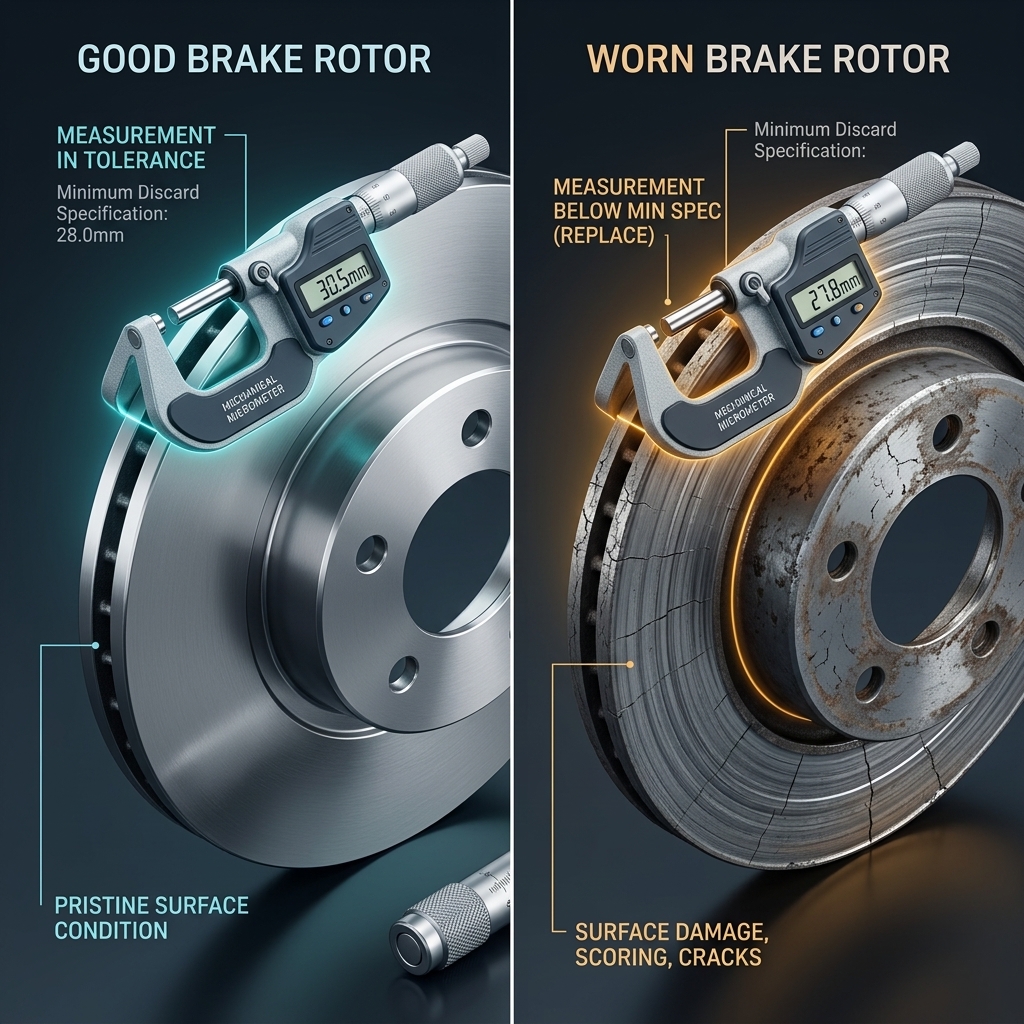
You should replace brake rotors along with your brake pads whenever the disc thickness measures at or below the manufacturer-stamped minimum specification, or if the metal disc shows severe surface scoring, heat cracks, deep corrosion, or thermal warping that causes pedal vibration. If the rotor surface remains smooth, flat, and comfortably above the discard limit, changing only the brake pads is entirely acceptable and safe.
+-----------------------------------+------------------------------------+------------------------------------+
| Inspection Condition              | Pad Recommendation                 | Rotor Recommendation               |
+-----------------------------------+------------------------------------+------------------------------------+
| Friction thickness > 4 mm         | Monitor during routine service     | Retain existing rotor              |
| Friction thickness 3 mm to 4 mm   | Plan replacement soon              | Measure thickness; retain if smooth|
| Friction thickness < 3 mm         | Immediate replacement required     | Resurface if above refinish limit  |
| Deep scoring, cracks, or warping  | Immediate replacement required     | Full replacement required          |
+-----------------------------------+------------------------------------+------------------------------------+
Deciding whether to install new rotors alongside fresh pads comes down to precise physical measurements rather than guesswork. Every brake disc features a manufacturer discard limit cast directly into the metal hat or outer edge. During a routine brake check, technicians use a specialized micrometer to measure the remaining rotor metal across several points. On most modern passenger vehicles and light trucks, a new front rotor starts between 22 mm and 30 mm thick, with a minimum discard specification positioned roughly 2 mm below the original baseline.
Driving conditions around the tri-state area place distinct physical demands on friction components. For instance, managing frequent downhill deceleration while navigating the hilly grade along State Route 170 in Calcutta generates significant thermal energy across the front brake assemblies. When kinetic energy transforms into friction heat, thin or unevenly worn rotors can quickly develop localized hot spots or thickness variations. If a rotor is already approaching its minimum thickness threshold, retaining it through another set of pads risks heat fade, structural cracking, or premature warping before the new pads reach the end of their useful life.
When you bring your truck or SUV in for maintenance, our technicians evaluate the complete mechanical system rather than simply swapping visible wear items. If you suspect your braking system requires attention, you can find our service center location right on Pennsylvania Avenue or give our team a quick call at (330) 462-7578 to discuss your vehicle’s symptoms.
Table of Contents
- When Is It Okay to Replace Just Brake Pads and Keep Your Current Rotors?
- What Symptoms Tell You That Both Brake Pads and Rotors Need Immediate Replacement?
- What Is the Urgency Difference Between Squealing and Grinding Brake Noises?
- How to Measure Rotor Thickness, Specifications, and DIY Tool Requirements
- Average Labor Costs and Professional Ford Brake Service Options
- Common Questions About Ford Brake Inspection and Maintenance
When Is It Okay to Replace Just Brake Pads and Keep Your Current Rotors?
Replacing only the brake pads is appropriate when your current rotors maintain a flat, ungrooved friction surface and measure comfortably above the manufacturer’s discard thickness specification.
Drivers coming in for routine maintenance often ask if they can swap just the friction pads while leaving their existing rotors in place. This pad-only service—frequently referred to in the automotive industry as a pad swap—is a standard maintenance procedure provided the brake discs remain structurally sound. New brake pads generally feature approximately 10 mm to 12 mm of usable friction material. As you drive, this material slowly wears away against the rotor. According to established ASE inspection standards, replacement is strongly advised once the pad friction lining wears down to 3 mm or 4 mm, with 2 mm representing an absolute minimum discard threshold for safe vehicle operation.
If your vehicle’s friction material has reached 3 mm but the metal backing plate has never made direct contact with the rotor face, the underlying disc may still be in excellent condition. In these scenarios, technicians verify three key parameters:
- Absolute metal thickness across the inner and outer friction rings using a rotor micrometer.
- Lateral runout and parallel variation to ensure the disc turns without wobbling.
- Surface smoothness to confirm the absence of deep grooves, lip edges, or heat-induced bluing.
Provided the rotor contains enough remaining metal to safely endure another full pad lifecycle—typically requiring at least 0.5 mm to 1.5 mm of material above the stamped minimum refinish specification—retaining the original rotors is entirely safe. In some instances, light surface glazing or minor imperfections can be corrected by resurfacing the rotor on a precision brake lathe, restoring a fresh, flat mating surface without replacing the entire disc assembly.
What Symptoms Tell You That Both Brake Pads and Rotors Need Immediate Replacement?
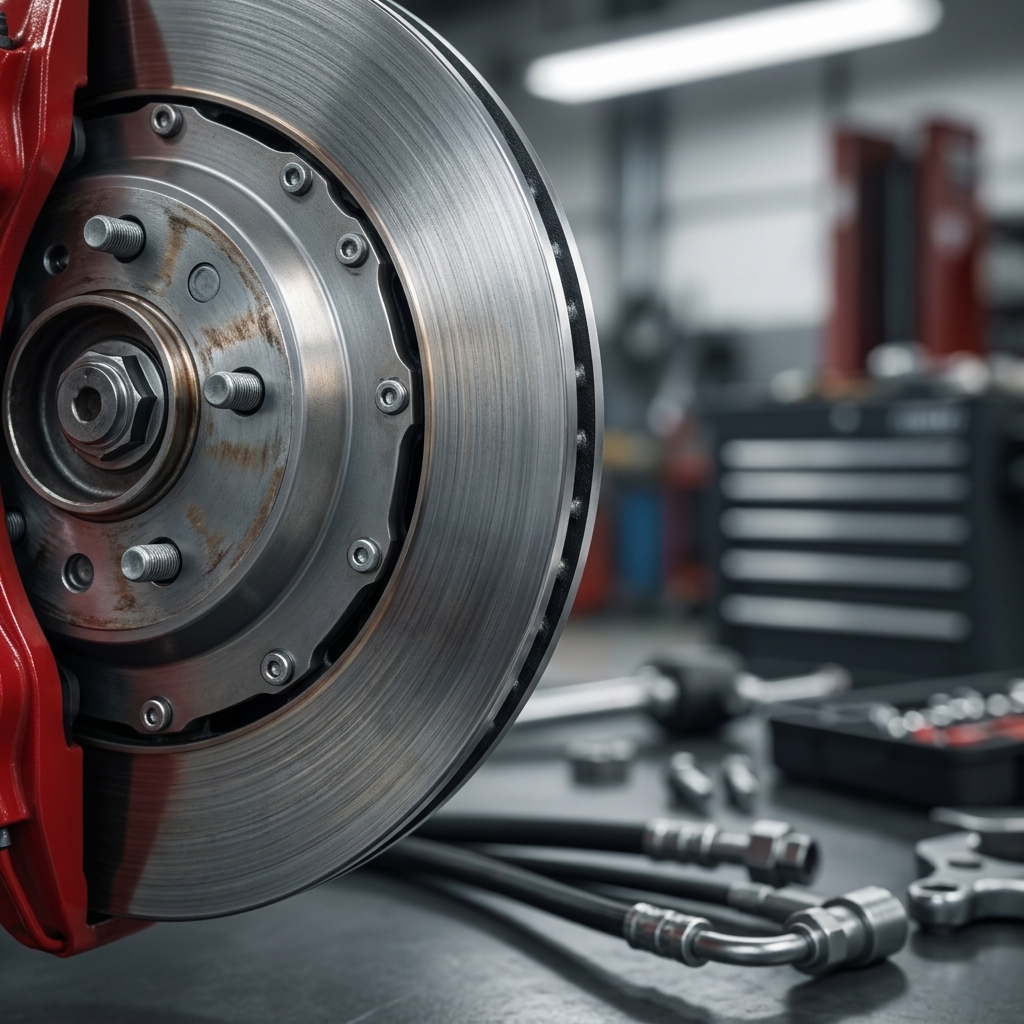
Harsh metal-on-metal grinding noises, persistent steering wheel shudder during deceleration, and visible deep grooves cut into the rotor face indicate that both brake pads and rotors require immediate replacement.
+-----------------------------------+------------------------------------+------------------------------------+
| Observable Symptom                | Mechanical Root Cause              | Recommended Service Action         |
+-----------------------------------+------------------------------------+------------------------------------+
| Loud metallic grinding noise      | Friction lining depleted to steel  | Replace both pads and rotors       |
| Steering wheel or pedal vibration | Lateral runout / warped disc face  | Replace rotors and friction pads   |
| Deep circular gouges on disc face | Embedded debris or bare steel plate| Replace rotors and friction pads   |
| Dashboard brake or ABS light      | Low fluid / sensor wear alert      | Full system inspection & service   |
+-----------------------------------+------------------------------------+------------------------------------+
Ignoring early wear warnings eventually leads to structural damage across the entire wheel end assembly. When friction material depletes completely, the raw steel backing plate of the brake pad presses directly against the cast-iron rotor face. This contact creates a distinct, harsh grinding sound that gets progressively louder under firm pedal pressure. At this stage, every stop carves deep circular gouges into the rotor surface, destroying the disc beyond the point where resurfacing on a lathe is mechanically possible.
Another severe symptom requiring a dual component replacement is thermal warping or significant thickness variation. Descending steep, winding roads near the riverfront bluffs in East Liverpool subjects friction components to intense heat cycles. When high thermal loads interact with uneven cooling or dragging calipers, the rotor surface can develop hard spots composed of iron carbides. These spots wear at a different rate than the surrounding metal, creating microscopic high and low points. When you apply the brakes, the pads ride over these surface variations, sending rapid pulses back through the hydraulic fluid that manifest as pedal shaking or steering wheel vibration.
Beyond physical noises and sensations, dashboard indicators like a red brake warning light or an amber ABS light signal that hydraulic fluid levels have dropped or an electronic wear sensor has tripped. Low fluid frequently occurs when caliper pistons extend far out of their bores to compensate for thin pads and worn rotors. Continuing to operate a vehicle under these conditions increases stopping distances and risks damaging caliper seals. If you prefer performing your own maintenance with factory-spec components, you can order genuine Ford brake components directly through our service department.
What Is the Urgency Difference Between Squealing and Grinding Brake Noises?
A high-pitched squeal serves as an early wear warning that allows a window of several weeks for inspection, whereas a harsh metal grinding noise indicates active component destruction that demands immediate service.
Understanding the mechanical design behind brake noise helps drivers gauge service urgency accurately. Most modern original equipment friction pads incorporate a built-in mechanical wear indicator, commonly called a squeal tab. This small, curved spring-steel clip extends from the pad’s steel backing plate toward the rotor face. Manufacturers position the tab so that when remaining friction lining drops to roughly 2.5 mm or 3.0 mm, the tip of the clip begins scraping against the outer edge of the rotating metal disc.
The high-pitched chirp or squeal produced by the wear indicator is intentionally annoying, but it does not represent immediate danger. It accomplishes a single protective goal: alerting you that friction material is running low before structural damage occurs. When squealing first appears—especially during the initial gentle stop on a cool morning—you generally have a safe window of a few hundred miles to schedule a routine brake check without risking secondary component damage.
Conversely, a grinding noise represents a mechanical emergency. Grinding occurs only after the friction material has worn away completely, leaving the steel backing plate to grind directly into the cast-iron rotor. This metal-on-metal friction creates extreme heat, generates hazardous metal shavings, severely reduces stopping power, and destroys the rotor within miles. Driving on grinding brakes can also cause caliper pistons to overextend or lock up, dramatically increasing repair costs and compromising vehicle control.
How to Measure Rotor Thickness, Specifications, and DIY Tool Requirements
Accurately evaluating brake disc wear requires measuring the rotor thickness with a specialized micrometer and comparing that figure against the minimum discard dimension stamped directly on the casting.
For enthusiasts and hands-on owners planning a DIY brake inspection or component replacement, having the proper tools and exact technical specifications is essential. Standard digital calipers are often inadequate for measuring worn rotors because discs develop a raised ridge along the outer perimeter where the pad does not touch. A dedicated pointed-anvil rotor micrometer bypasses this outer lip to measure the actual contact track where braking friction occurs.
+-----------------------------------+------------------------------------+------------------------------------+
| Tool / Equipment Item             | Primary Function in Brake Job      | Key Operational Specification      |
+-----------------------------------+------------------------------------+------------------------------------+
| Pointed-Anvil Micrometer          | Measures minimum rotor thickness   | Precise to 0.01 mm / 0.001 inch    |
| Caliper Piston Compress Tool      | Retracts caliper piston into bore  | Fits single or dual-piston designs |
| Calibrated Torque Wrench          | Secures mounting bolts to spec     | Foot-pounds per workshop manual    |
| Wire Brush & Brake Cleaner        | Cleans hub face and slider tracks  | Removes rust scale and brake dust  |
+-----------------------------------+------------------------------------+------------------------------------+
Executing a precise measurement involves cleaning dust and road grime off the rotor surface with brake cleaner and a wire brush. Technicians measure disc thickness across four to eight equally spaced points around the circumference, positioned roughly 10 mm inward from the outer edge. This process detects parallel thickness variation; if measurements vary by more than 0.012 mm ( 0.0005 inches) between points, the rotor will cause pedal pulsation even if the average thickness exceeds the discard minimum.
                  ┌─────────────────────────────────────────┐
                  │   Measure thickness at 4 to 8 points    │
                  │   around the rotor friction track       │
                  └────────────────────┬────────────────────┘
                                       │
                                       ▼
                  ┌─────────────────────────────────────────┐
                  │ Compare lowest reading to stamped spec  │
                  └────────────────────┬────────────────────┘
                                       │
            ┌──────────────────────────┴──────────────────────────┐
            ▼                                                     ▼
┌───────────────────────┐                             ┌───────────────────────┐
│ AT OR BELOW MIN SPEC  │                             │ ABOVE MIN SPEC MARGIN │
├───────────────────────┤                             ├───────────────────────┤
│ Discard & Replace     │                             │ Resurface or Retain   │
└───────────────────────┘                             └───────────────────────┘
When performing a home replacement on Ford vehicles, ensure you possess a hydraulic jack, heavy-duty jack stands, a lug wrench, a caliper piston compression tool, high-temperature ceramic brake grease, and a calibrated torque wrench. Caliper bracket bolts and wheel lug nuts must be torqued strictly to factory specifications to prevent hardware loosening or hub distortion.
Average Labor Costs and Professional Ford Brake Service Options
Professional brake service labor pricing varies by vehicle and service needs, so please contact our service department for current pricing and timing.
Total service pricing varies based on vehicle configuration, pad material options, and whether your vehicle requires simple friction pad replacement or complete rotor and hardware overhaul. Choosing professional service at an authorized Ford dealership ensures that factory-trained technicians inspect your entire vehicle safety envelope—including brake lines, master cylinder hydraulic pressure, caliper slide pins, and electronic parking brake actuators.
+-----------------------------------+------------------------------------+------------------------------------+
| Service Scope                     | Estimated Labor Time               | Key Components Included            |
+-----------------------------------+------------------------------------+------------------------------------+
| Single-Axle Pad Replacement       | 1.0 to 1.5 Hours                   | Friction pads, hardware, lube      |
| Single-Axle Pads & Rotors         | 1.5 to 2.5 Hours                   | Pads, new rotors, slide pin service|
| Complete Four-Wheel Overhaul      | 3.0 to 4.5 Hours                   | Full pads/rotors, fluid check      |
+-----------------------------------+------------------------------------+------------------------------------+
Our service department utilizes genuine OEM Motorcraft friction pads and rotor assemblies engineered specifically for Ford vehicle weight profiles and towing ratings. OEM Motorcraft pads undergo rigorous testing to ensure optimal noise damping, minimal dust production, and exact thermal compatibility with factory rotors.
To make vehicle maintenance as convenient as possible for busy owners, we offer flexible service accommodations. If you need vehicle electrical or power checks alongside your brake inspection, our team provides comprehensive battery testing guidance during your write-up. For ultimate convenience, customers can take advantage of our dispatchable Ford Mobile Service van for light maintenance at home or utilize Ford Pickup & Delivery service to have their vehicle serviced and returned without stepping away from work.
Common Questions About Ford Brake Inspection and Maintenance
Q: How long does a standard brake pad and rotor replacement take at the service center?
A standard single-axle brake pad and rotor replacement typically takes between one and two hours to complete. A complete four-wheel brake overhaul generally requires three to four hours, allowing technicians adequate time to clean hub faces, lubricate slide pins, torque fasteners to factory specs, and perform a low-speed test drive to seat the friction material properly.
Q: Can I replace brake pads on the front axle without changing the rear brakes?
Yes, replacing brake pads on only one axle is standard practice because front brakes perform up to 70 percent of a vehicle’s stopping effort and wear down significantly faster than rear brakes. Technicians inspect all four corners during routine service and recommend replacing friction components only on the specific axle that has reached wear limits.
Q: What causes brand-new brake pads to squeak right after installation?
Temporary squeaking following new pad installation usually occurs while the fresh friction material beds into the rotor surface, a process that normally stabilizes within 100 to 200 miles. Persistent squeaking beyond that timeframe may indicate unlubricated caliper slider pins, missing anti-squeal shims, glazed rotor surfaces, or brake dust buildup across the caliper bracket clips.
Q: Do electronic parking brakes require special procedures during a rear brake job?
Yes, vehicles equipped with an electronic parking brake require placing the rear caliper electric actuators into service mode before retracting the caliper pistons. Compressing a rear caliper piston without placing the system into service mode via the dashboard menu or diagnostic scan tool can strip the internal electric motor gears and ruin the caliper assembly.
Q: What should I bring when dropping off my vehicle for a brake check?
When dropping off your vehicle, bring your primary ignition key, wheel lock key socket if your wheels feature locking lug nuts, and any record of recent brake repairs. Communicating specific details—such as whether noise occurs when cold, under light pressure, or at high speeds—helps technicians diagnose the issue faster.
If you suspect your vehicle’s brakes need attention, visit our East Liverpool facility for a comprehensive physical evaluation. Feel free to call our service department at (330) 462-7578 with any questions, or conveniently schedule your next brake inspection online to ensure your vehicle stops safely and smoothly on every drive.
© 2026 Tri State Ford. All rights reserved.
Connect with us


- Automotive News, New Vehicle Reviews, Buying Guides, Financing & Insurance, Seasonal Driving Tips
- Buying Guides, Financing & Insurance, New Vehicle Reviews, Model Comparisons, Sales & Promotions
- Buying Guides, Financing & Insurance, New Vehicle Reviews, Model Comparisons, Technology & Innovation
- Buying Guides, Financing & Insurance, Used Vehicle Guides, New Vehicle Reviews, Cross-Border Purchasing
- Buying Guides, Financing & Insurance, Vehicle Inventory & Offers, Dealership Visit Preparation, Trade-In & Valuation
- Buying Guides, New Vehicle Reviews, Financing & Insurance, Commercial Vehicle Sales, Model Comparisons
- Commercial Leasing Options, Business Fleet Solutions, Financing & Leasing Programs, Commercial Vehicle Inventory, Business Vehicle Acquisition
- Commercial Truck Sales, Fleet Purchasing Guides, Financing & Lease Options, Work Truck Customization, New Vehicle Inventory
- Commercial Truck Sales, Fleet Vehicle Financing, Custom Work Truck Upfits, Commercial Vehicle Buying Guides, Used Commercial Truck Inventory
- Commercial Vehicle Sales, Financing & Leasing, Small Business Vehicle Incentives, Fleet Purchasing Guides, Tax Benefits for Vehicle Buyers
- Commercial Vehicle Sales, Fleet Leasing & Management, Commercial Financing & Tax Incentives, Upfitting & Customization Solutions, Trade & Lease Programs
- Commercial Vehicle Sales, Fleet Purchasing & Management, Financing & Leasing for Businesses, New & Used Work Truck Inventory, Commercial Truck Ordering Process
- Community Engagement & Events, New Vehicle Promotions, Financing & Trade-In Options, Maintenance & Service, Used Vehicle Offers
- Community Events & Customer Appreciation, New Vehicle Reviews, Financing & Trade-In Guides, Maintenance & Service Specials, Commercial & Work Truck Solutions
- Community Events & Dealership News, New Vehicle Promotions & Incentives, Maintenance & Service Specials, Financing & Trade-In Guidance, Family-Friendly Dealership Experiences
- Community Events & Dealership News, New Vehicle Reviews, Financing & Insurance, Maintenance & Service, Work Trucks & Commercial Vehicles
- Community Events, New Vehicle Buying Guides, Financing & Insurance, Maintenance & Service, Local Dealership News
- Compare Cars
- Custom Ordering & Build Process, New Vehicle Inventory & Offers, Financing & Trade-In Guidance, Manufacturer Incentives & Rebates, Vehicle Purchase & Order Tracking
- Dealership Events & Promotions, Financing & Trade-In Options, Maintenance & Service Specials, Community Involvement & Charity, New & Used Vehicle Buying Guides
- East Liverpool, OH Ford Dealer
- East Liverpool, OH Used Cars
- Financing & Insurance, Buying Guides, Commercial Vehicle Solutions, Fleet Management, Inventory and Availability
- Financing & Insurance, Buying Guides, New Vehicle Reviews, Used Vehicle Guides, Automotive Sales & Inventory
- Financing & Insurance, Buying Guides, New Vehicle Reviews, Used Vehicle Guides, Automotive Sales Strategies
- Financing & Insurance, Buying Guides, New Vehicle Reviews, Used Vehicle Guides, Model Comparisons
- Financing & Insurance, Buying Guides, Used Vehicle Guides, New Vehicle Reviews, Automotive Sales Strategies
- Financing & Insurance, Buying Guides, Used Vehicle Guides, Trade-In Tips, New Vehicle Sales
- Financing & Insurance, Buying Guides, Vehicle Inventory & Offers, Trade-In & Appraisal, Dealership Services
- Financing & Insurance, Buying Guides, Vehicle Trade-In Tips, Dealership Sales Process, New Vehicle Promotions
- Financing & Insurance, Leasing Benefits, Model Comparisons, Technology & Innovation, Buying Guides
- Leasing & Financing Options, Buying Guides, Model Comparisons, Negotiation Tips, Inventory & Specials
- Leasing & Financing Options, Buying Guides, New Vehicle Reviews, Model Comparisons, Technology & Innovation
- Leasing & Financing Options, New Vehicle Leasing Guides, Buying Guides, Inventory Spotlight, Trade
- Leasing & Lease Deals, Financing & Insurance, New Vehicle Sales, Commercial Vehicle Leasing, Vehicle Trade-In & Purchase Options
- Leasing Options, Financing & Insurance, New Vehicle Reviews, Buying Guides, Technology & Innovation
- Leasing Options, Financing & Insurance, New Vehicle Sales, Buying Guides, Vehicle Inventory
- Maintenance & Service, Air Conditioning Repair, Genuine Parts & Accessories, Dealer-Authorized Service, Vehicle Ownership Care
- Maintenance & Service, Automotive Air Conditioning Repair, Vehicle Cooling System Care, Diagnostic & Leak Detection, Seasonal Vehicle Maintenance
- Maintenance & Service, Automotive Detailing & Cleaning, Seasonal Vehicle Care, Vehicle Protection & Preservation, Service Center Expertise
- Maintenance & Service, Automotive Detailing & Paint Care, Vehicle Exterior Protection, Paint Repair & Restoration, Parts & Accessories Installation
- Maintenance & Service, Automotive Detailing & Protection, Corrosion & Rust Prevention, Paint & Exterior Care, Professional Vehicle Care
- Maintenance & Service, Automotive Detailing, Paint Protection & Care, Seasonal Vehicle Care, Professional Vehicle Servicing
- Maintenance & Service, Automotive Detailing, Vehicle Care & Protection, Off-Road Vehicle Maintenance, Parts & Repairs
- Maintenance & Service, Automotive Electrical Systems, Battery Care & Replacement, Diagnostics & Repairs, Electric Vehicle Maintenance
- Maintenance & Service, Automotive Electrical Systems, Battery Care & Replacement, Vehicle Lighting & Electrical Issues, Roadside Assistance & Emergency Services
- Maintenance & Service, Automotive Fluids & Lubricants, Vehicle Care & Ownership, Dealership Service & Repairs, Preventive Maintenance
- Maintenance & Service, Automotive Glass Repair, Safety Features, Technology & Innovation, Mobile & Convenient Service
- Maintenance & Service, Automotive Lighting & Electrical, Vehicle Safety & Visibility, DIY Vehicle Care, Parts & Accessories
- Maintenance & Service, Automotive Parts & Accessories, Seasonal Vehicle Care, Vehicle Safety & Visibility, Professional Auto Service
- Maintenance & Service, Automotive Parts & Accessories, Vehicle Air Quality & HVAC Care, Preventive Vehicle Maintenance, Service Tips & FAQs
- Maintenance & Service, Automotive Parts & Accessories, Vehicle Ownership Care, Engine Care & Protection, Warranty & Service Contracts
- Maintenance & Service, Automotive Parts & Accessories, Vehicle Safety & Repair, Warranty & Coverage, Service Specials & Offers
- Maintenance & Service, Automotive Parts & Components, Vehicle Safety & Repair, Warranty & Service Coverage, Preventative Vehicle Care
- Maintenance & Service, Automotive Parts & Repairs, Vehicle Warranty & Protection, Service Center Tips, Cost-Effective Vehicle Care
- Maintenance & Service, Automotive Repair Tips, Service Team Selection, Warranty & Service Policies, Vehicle Ownership Care
- Maintenance & Service, Automotive Repair, Mobile & Remote Vehicle Service, Warranty & Roadside Assistance, OEM Parts & Service Specials
- Maintenance & Service, Automotive Repair, Parts & Accessories, Vehicle Ownership Care, Technology & Innovation in Service
- Maintenance & Service, Automotive Technology & Diagnostics, Vehicle Electronics & Sensors, Seasonal Vehicle Care, Parts & Repairs
- Maintenance & Service, Automotive Technology & Software Updates, Warranty & Recall Service, Mobile Vehicle Repair & Convenience, Customer Service & Transparency
- Maintenance & Service, Battery Care & Diagnostics, Electric Vehicle (EV) Maintenance, Seasonal Vehicle Care, Automotive Electrical Systems
- Maintenance & Service, Battery Care & Replacement, Vehicle Electrical Systems, Seasonal Vehicle Maintenance, Professional Automotive Repairs
- Maintenance & Service, Brake System Care, OEM Parts & Replacement, Vehicle Safety & Inspections, Expert Technician Services
- Maintenance & Service, Brake System Care, Vehicle Safety & Inspection, Automotive Repair Tips, Service Financing & Convenience
- Maintenance & Service, Brake System Care, Vehicle Safety & Inspection, Parts Quality & Replacement, Heavy Duty Vehicle Maintenance
- Maintenance & Service, Brake System Care, Vehicle Safety & Inspections, Parts & Components, Professional Automotive Services
- Maintenance & Service, Brake System Care, Vehicle Safety & Inspections, Parts & Repairs, Expert Tips & Advice
- Maintenance & Service, Brake System Care, Vehicle Safety Inspections, Automotive Repair Tips, OEM Parts & Service
- Maintenance & Service, Brake Systems & Repair, Vehicle Parts & Accessories, Towing & Load Management, Seasonal Driving Tips
- Maintenance & Service, Certified Technician Insights, Warranty & Service Coverage, Genuine OEM Parts, Service Center Selection Guidance
- Maintenance & Service, Cooling System Repairs, Vehicle Ownership Care, Diagnostic & Troubleshooting, Automotive Parts & Components
- Maintenance & Service, Diagnostic Services, Vehicle Health & Diagnostics, Service Tips & Advice, Check Engine Light Solutions
- Maintenance & Service, Engine Care & Performance, Parts & Accessories, Genuine vs. After
- Maintenance & Service, Essential Vehicle Care, Preventive Maintenance Tips, Vehicle Longevity Strategies, Truck Maintenance Essentials
- Maintenance & Service, Expert Repairs & Diagnostics, Genuine Parts & Accessories, Engine Care & Performance, Vehicle Ownership & Care
- Maintenance & Service, Mobile Vehicle Services, Vehicle Care & Ownership, Genuine Parts & Repairs, Seasonal Maintenance Tips
- Maintenance & Service, Paint Protection & Detailing, Vehicle Exterior Care, Seasonal Vehicle Maintenance, Professional Auto Detailing
- Maintenance & Service, Parts & Accessories, Engine Care & Repair, Vehicle Longevity Tips, OEM Parts Benefits
- Maintenance & Service, Parts & Accessories, Vehicle HVAC Care, Seasonal Vehicle Maintenance, DIY Vehicle Maintenance
- Maintenance & Service, Parts & Replacements, Vehicle Care Tips, Seasonal Maintenance, DIY Vehicle Maintenance
- Maintenance & Service, Recall Information, Safety & Reliability, Vehicle Ownership Care, Parts & Repairs
- Maintenance & Service, Recall Updates & Safety Notices, Genuine Parts & Accessories, Truck Care & Maintenance Tips
- Maintenance & Service, Repair & Diagnostics, OEM Parts & Accessories, Warranty & Recall Information, Vehicle Care & Ownership Tips
- Maintenance & Service, Repair & Diagnostics, Parts & Accessories, Vehicle Ownership Care, Service Plans & Extended Warranty
- Maintenance & Service, Repair & Diagnostics, Parts & Components, Preventive Care & Tips, Warranty & Recalls
- Maintenance & Service, Repair & Diagnostics, Tire & Wheel Care, Vehicle Safety & Inspection, Parts & Replacement Services
- Maintenance & Service, Repair & Parts, Vehicle Ownership Care, Safety Features, Technology & Innovation
- Maintenance & Service, Repair & Parts, Vehicle Ownership Care, Transmission
- Maintenance & Service, Repair Solutions, Vehicle Ownership Care, Parts & Accessories, Diagnostic Tips
- Maintenance & Service, Repair Tips & Techniques, Vehicle Care & Ownership
- Maintenance & Service, Safety Features, Automotive Recalls & Repairs, Parts & Warranty Services, Vehicle Ownership Care
- Maintenance & Service, Safety Features, Automotive Recalls & Repairs, Technology & Innovation, Seasonal Driving Tips
- Maintenance & Service, Safety Features, Automotive Recalls, Vehicle Ownership Care, Parts & Repairs
- Maintenance & Service, Safety Features, Parts & Repairs, Vehicle Ownership Care, Automotive Service Tips
- Maintenance & Service, Safety Features, Recall & Repair Updates, Parts & Repairs, Vehicle Ownership Care
- Maintenance & Service, Safety Features, Recall & Safety Campaigns, Vehicle Inspection & Repairs, Vehicle Ownership Care
- Maintenance & Service, Safety Features, Recall & Warranty Information, Vehicle Diagnostics & Repair, Certified Service & Genuine Parts
- Maintenance & Service, Safety Features, Recall Repairs & Safety Campaigns, Parts & Genuine Components, Vehicle Ownership Care
- Maintenance & Service, Safety Features, Recalls & Repairs, Parts & Accessories, Vehicle Ownership Care
- Maintenance & Service, Safety Features, Repair & Recall Updates, Parts & Components, Vehicle Ownership Care
- Maintenance & Service, Safety Features, Repair & Replacement, Vehicle Care & Inspection, Parts & Accessories
- Maintenance & Service, Safety Features, Seasonal Driving Tips, Technology & Innovation, Parts & Repairs
- Maintenance & Service, Safety Features, Technology & Innovation, Automotive Electrical Systems, Parts & Repairs
- Maintenance & Service, Safety Features, Technology & Innovation, Automotive Parts & Accessories, Seasonal Driving Tips
- Maintenance & Service, Safety Features, Technology & Innovation, Automotive Recalls, Parts & Repairs
- Maintenance & Service, Safety Features, Technology & Innovation, Automotive Recalls, Vehicle Ownership Care
- Maintenance & Service, Safety Features, Technology & Innovation, Automotive Service Tips, Recall & Repair Updates
- Maintenance & Service, Safety Features, Technology & Innovation, Parts & Repairs, Seasonal Driving Tips
- Maintenance & Service, Safety Features, Technology & Innovation, Parts & Repairs, Vehicle Ownership Care
- Maintenance & Service, Safety Features, Technology & Innovation, Recall & Warranty Information, Vehicle Care & Repairs
- Maintenance & Service, Safety Features, Technology & Innovation, Repair & Recall Information, Parts & Vehicle Care
- Maintenance & Service, Safety Features, Technology & Innovation, Seasonal Driving Tips, Parts & Repairs
- Maintenance & Service, Safety Features, Technology & Innovation, Tire Care & Replacement, Diagnostic & Repair Services
- Maintenance & Service, Safety Features, Vehicle Inspections, DIY Vehicle Care, Repair & Diagnostics
- Maintenance & Service, Safety Recalls & Repairs, Vehicle Safety & Compliance, Powertrain & Drivetrain Maintenance, Towing & Hauling Maintenance
- Maintenance & Service, Seasonal Driving Tips, Model Comparisons, Technology & Innovation, Safety Features
- Maintenance & Service, Seasonal Driving Tips, Safety Features, Technology & Innovation, Parts & Repairs
- Maintenance & Service, Seasonal Driving Tips, Vehicle Care & Ownership, Brake System Maintenance, Tire & Wheel Care
- Maintenance & Service, Seasonal Driving Tips, Vehicle Care & Ownership, Parts & Accessories, Safety Features
- Maintenance & Service, Seasonal Driving Tips, Vehicle Care & Ownership, Safety Features, Professional Repair & Service Techniques
- Maintenance & Service, Seasonal Driving Tips, Vehicle Care & Protection, Brake Maintenance, Tire Care & Safety
- Maintenance & Service, Seasonal Driving Tips, Vehicle Care & Warranty, Service Specials & Packages, Automotive Repair Insights
- Maintenance & Service, Seasonal Driving Tips, Vehicle Cooling Systems, Automotive Safety Features, Parts & Repairs
- Maintenance & Service, Service Scheduling & Convenience, Vehicle Repair & Diagnostics, Parts & Accessories, Fleet & Commercial Vehicle Service
- Maintenance & Service, Technology & Innovation, Automotive Service Transparency, Digital Vehicle Inspections, Vehicle Ownership Care
- Maintenance & Service, Technology & Innovation, Safety Features, Parts & Warranty, Vehicle Ownership Care
- Maintenance & Service, Technology & Innovation, Vehicle Diagnostics & Telematics, Fleet Management Solutions, Parts & Accessories
- Maintenance & Service, Tire Care & Repair, Roadside Assistance, Vehicle Safety & Inspections, Automotive Parts & Replacements
- Maintenance & Service, Tire Care & Repair, Wheel Alignment & Balancing, Suspension Maintenance, Vehicle Performance Optimization
- Maintenance & Service, Tire Care & Replacement, Seasonal Vehicle Care, Safety Features, Automotive Service Tips
- Maintenance & Service, Tire Care & Replacement, Vehicle Safety & Handling, Seasonal Vehicle Preparation, Drivetrain & Tire Maintenance
- Maintenance & Service, Tire Care & Replacement, Vehicle Safety & Inspection, Emergency Roadside Assistance, Automotive Parts & Accessories
- Maintenance & Service, Tire Care & Replacement, Vehicle Safety & Inspections, Seasonal Vehicle Maintenance, Automotive Parts & Accessories
- Maintenance & Service, Transmission Care & Repair, Vehicle Fluid Services, Automotive Diagnostics, Warranty & Resale Value Maintenance
- Maintenance & Service, Transmission Care, Repair & Parts, Vehicle Ownership Care, Common Vehicle Issues
- Maintenance & Service, Vehicle Care & Longevity, Scheduled Service Packages, Oil Changes & Fluid Top-offs, Tire & Brake Maintenance
- Maintenance & Service, Vehicle Care Tips, Parts & Accessories, Seasonal Vehicle Maintenance, Service Specials & Packages
- Maintenance & Service, Vehicle Detailing & Care, Parts & Accessories, Seasonal Vehicle Preparation, Service Scheduling & Convenience
- Maintenance & Service, Vehicle Detailing & Cosmetic Care, Automotive Cleaning & Protection, Service Scheduling & Preparation, Vehicle Ownership Care
- Maintenance & Service, Vehicle Detailing & Cosmetic Care, Service Scheduling & Convenience, Seasonal Vehicle Care, Vehicle Ownership Tips
- Maintenance & Service, Vehicle Detailing & Protection, Repair & Inspection, Parts & Accessories, Vehicle Care & Warranty
- Maintenance & Service, Vehicle Detailing & Protection, Vehicle Care Tips, Seasonal Vehicle Maintenance, Dealership Service Benefits
- Maintenance & Service, Vehicle Diagnostics & Repair, Engine Performance & Troubleshooting, Fuel System Care, Preventative Maintenance Strategies
- Maintenance & Service, Vehicle Fluids & Lubrication, Engine Care & Repair, Parts & Accessories, Professional Vehicle Care
- Maintenance & Service, Vehicle Inspection & Diagnostics, Parts & Repairs, Warranty & Resale Value, Service Specials & Convenience
- Maintenance & Service, Vehicle Interior Care, Technology & Innovation in Service, Professional Detailing, Seasonal Vehicle Care
- Maintenance & Service, Vehicle Ownership Care, Mobile Repair Services, Genuine Parts & Certified Technicians, Electric Vehicle Maintenance
- Maintenance & Service, Vehicle Ownership Care, Parts & Accessories, Repair & Diagnostics, Certified Technician Insights
- Maintenance & Service, Vehicle Pickup & Delivery, Mobile Service & On-Site Repairs, Oil Change & Fluid Care, Vehicle Care Technology & Apps
- Maintenance & Service, Vehicle Repair & Diagnostics, Parts & Accessories, DIY Vehicle Care, Safety & Reliability Tips
- Maintenance & Service, Vehicle Repair & Diagnostics, Parts & Accessories, Hybrid & Electric Vehicle Care, Seasonal Vehicle Care
- Maintenance & Service, Vehicle Repair & Diagnostics, Parts & Accessories, Seasonal Driving Tips, Battery Care & Replacement
- Maintenance & Service, Vehicle Repair & Diagnostics, Parts & Accessories, Service Lane Tips & Insights, Vehicle Ownership Care
- Maintenance & Service, Vehicle Repair & Diagnostics, Parts & Accessories, Towing & Performance Care, Mobile & Convenient Service Options
- Maintenance & Service, Vehicle Repair & Parts, Service Convenience & Customer Care, Roadside Assistance & Support, Vehicle Ownership Tips
- Maintenance & Service, Vehicle Repair Tips, Parts & Accessories, Safety Features, Technology & Innovation
- Maintenance & Service, Vehicle Service Warranties, Repair & Coverage Plans, Ownership & Vehicle Care, Automotive Service Tips
- Maintenance & Service, Vehicle Software Updates, Safety Features, Technology & Innovation, Recall & Warranty Information
- Maintenance & Service, Warranty & Recalls, Repair & Diagnostics, Parts & Accessories, Vehicle Ownership & Care
- Model Comparisons, Buying Guides, New Vehicle Reviews, Financing & Insurance, Inventory Updates
- Model Comparisons, Buying Guides, New Vehicle Reviews, Technology & Innovation, Safety Features
- Model Comparisons, Buying Guides, Technology & Innovation, Safety Features, Maintenance & Service
- Model Comparisons, New Vehicle Reviews, Buying Guides, Technology & Innovation, Safety Features
- Model Comparisons, New Vehicle Reviews, Safety Features, Technology & Innovation, Seasonal Driving Tips
- Model Comparisons, New Vehicle Reviews, Technology & Innovation, Buying Guides, Maintenance & Service
- Model Comparisons, New Vehicle Reviews, Technology & Innovation, Safety Features, Buying Guides
- Model Comparisons, Towing & Hauling Guides, Maintenance & Service, Technology & Innovation, New Vehicle Reviews
- New Vehicle Promotions, Buying Guides, Financing & Insurance, New Vehicle Reviews, Inventory Highlights
- New Vehicle Reviews, Buying Guides, Financing & Insurance, Model Comparisons, Automotive News
- New Vehicle Reviews, Buying Guides, Financing & Insurance, Model Comparisons, Automotive Sales Strategies
- New Vehicle Reviews, Buying Guides, Financing & Insurance, Model Comparisons, Automotive Technology & Innovation
- New Vehicle Reviews, Buying Guides, Financing & Insurance, Model Comparisons, Commercial & Work Truck Sales
- New Vehicle Reviews, Buying Guides, Financing & Insurance, Model Comparisons, Inventory Highlights
- New Vehicle Reviews, Buying Guides, Financing & Insurance, Model Comparisons, Inventory Updates
- New Vehicle Reviews, Buying Guides, Financing & Insurance, Model Comparisons, Used Vehicle Guides
- New Vehicle Reviews, Buying Guides, Financing & Insurance, Model Comparisons, Vehicle Inventory Updates
- New Vehicle Reviews, Buying Guides, Financing & Insurance, New Vehicle Specials, Trade-In & Value Estimation
- New Vehicle Reviews, Buying Guides, Financing & Insurance, Used Vehicle Guides, Inventory Updates
- New Vehicle Reviews, Buying Guides, Financing & Insurance, Used Vehicle Guides, Model Comparisons
- New Vehicle Reviews, Buying Guides, Financing & Insurance, Vehicle Inventory & Specials, Model Comparisons
- New Vehicle Reviews, Buying Guides, Financing & Insurance, Vehicle Inventory, Model Comparisons
- New Vehicle Reviews, Buying Guides, Model Comparisons, Financing &
- New Vehicle Reviews, Buying Guides, Model Comparisons, Financing & Insurance, Inventory & Sales
- New Vehicle Reviews, Buying Guides, Model Comparisons, Maintenance & Service, Technology & Innovation
- New Vehicle Reviews, Buying Guides, Safety Features, Technology & Innovation, Model Comparisons
- New Vehicle Reviews, Buying Guides, Technology & Innovation, Safety Features, Maintenance & Service
- New Vehicle Reviews, Buying Guides, Technology & Innovation, Safety Features, Seasonal Driving Tips
- New Vehicle Reviews, Financing & Insurance, Buying Guides, New Vehicle Specials, Model Comparisons
- New Vehicle Reviews, Financing & Insurance, Buying Guides, Technology & Innovation, Automotive Inventory Updates
- New Vehicle Reviews, Financing & Insurance, Buying Guides, Used Vehicle Guides, Model Comparisons
- New Vehicle Reviews, Model Comparisons, Buying Guides, Technology & Innovation, Safety Features
- New Vehicle Reviews, Model Comparisons, Commercial Truck Guides, Technology & Innovation, Maintenance & Service
- New Vehicle Reviews, Model Comparisons, Financing & Insurance, Technology & Innovation, Safety Features
- New Vehicle Reviews, Model Comparisons, Off-Road Adventures, Technology & Innovation, Maintenance & Service
- New Vehicle Reviews, Model Comparisons, Safety Features, Technology & Innovation, Buying Guides
- New Vehicle Reviews, Model Comparisons, Technology & Innovation, Financing & Insurance, Maintenance & Service
- New Vehicle Reviews, Model Comparisons, Technology & Innovation, Safety Features, Buying Guides
- New Vehicle Reviews, Model Comparisons, Technology & Innovation, Safety Features, Maintenance & Service
- New Vehicle Reviews, Off-Road Capabilities, Outdoor Adventure Vehicles, Technology & Innovation, Local Driving Destinations
- New Vehicle Reviews, Technology & Innovation, Buying Guides, Safety Features, Model Comparisons
- New Vehicle Reviews, Technology & Innovation, Safety Features, Maintenance & Service, Buying Guides
- New Vehicle Sales, Financing & Incentives, Trade-In & Appraisal, Special Sales Events, Electric Vehicle Purchasing
- New Vehicle Sales, Financing & Incentives, Trade-In & Value Guides, Manufacturer Promotions, Commercial Vehicle Sales
- New Vehicle Sales, Financing & Insurance, Buying Guides, Manufacturer Incentives & Discounts, Trade-In & Vehicle Valuation
- New Vehicle Sales, Vehicle Delivery & Logistics, Financing & Credit Applications, Trade-In & Vehicle Valuation, Commercial Vehicle Sales
- Tips
- Trucks
- Uncategorized
- Used Vehicle Guides, Buying Guides, Financing & Insurance, Model Comparisons, Selling Your Car
- Used Vehicle Guides, Financing & Insurance, Buying Guides, Model Comparisons, Local Dealership Highlights
- Used Vehicle Guides, Financing & Insurance, Buying Guides, New Vehicle Reviews, Commercial Vehicle Sales
- Used Vehicle Guides, Financing & Insurance, Buying Guides, Pre-Owned Vehicle Sales, Vehicle Trade-In & Appraisal
- Used Vehicle Guides, Financing & Insurance, Buying Guides, Trade-In Advice, Certified Pre-Owned Programs
- Used Vehicle Guides, Financing & Insurance, Buying Guides, Vehicle Warranty Information, Pre-Owned Vehicle Sales
- Vehicle Sales Events, Financing & Leasing, Trade-In & Trade-Up Guides, New Vehicle Inventory Highlights, Dealership Buying Experience
- Vehicle Sales Events, New Vehicle Buying Guides, Financing & Incentives, Dealership Inventory Highlights, Commercial Vehicle Sales
- Vehicle Sales Events, New Vehicle Pricing & Incentives, Financing & Lease Options, Trade-In & Appraisal Guides, Dealership Buying Experience
- Vehicle Sales Events, New Vehicle Pricing, Financing & Credit Applications, Trade-In & Loyalty Programs, Leasing vs Buying Guides
- Vehicle Sales Events, New Vehicle Purchasing, Incentives & Discounts, Financing & Pre-Approval, Trade-In & Appraisal Guidance
- Vehicle Sales Process, Financing & Credit Applications, New and Used Vehicle Inventory, Pickup and Delivery Services, Online Vehicle Purchasing
- Vehicle Sales Process, Online Vehicle Purchasing, Financing & Loan Approval, Trade-In & Vehicle Valuation, Vehicle Delivery Services
- Vehicle Sales Promotions, New Vehicle Buying Guides, Financing & Credit Applications, Dealership Inventory Highlights, Model Pricing Comparisons
- Vehicle Sales Promotions, New Vehicle Buying Guides, Financing & Incentives, Trade-In & Valuation, Dealership Sales Events
- Vehicle Sales, Online Car Buying, Financing & Incentives, Trade-In Guides, New Vehicle Delivery Services, Youngstown Dealership
- Vehicle Trade-In Advice, Financing & Insurance, Buying Guides, Used Vehicle Guides, New Vehicle Sales
- Vehicle Trade-In Tips, Financing & Insurance, Buying Guides, Dealership Sales Strategies, Inventory & Specials