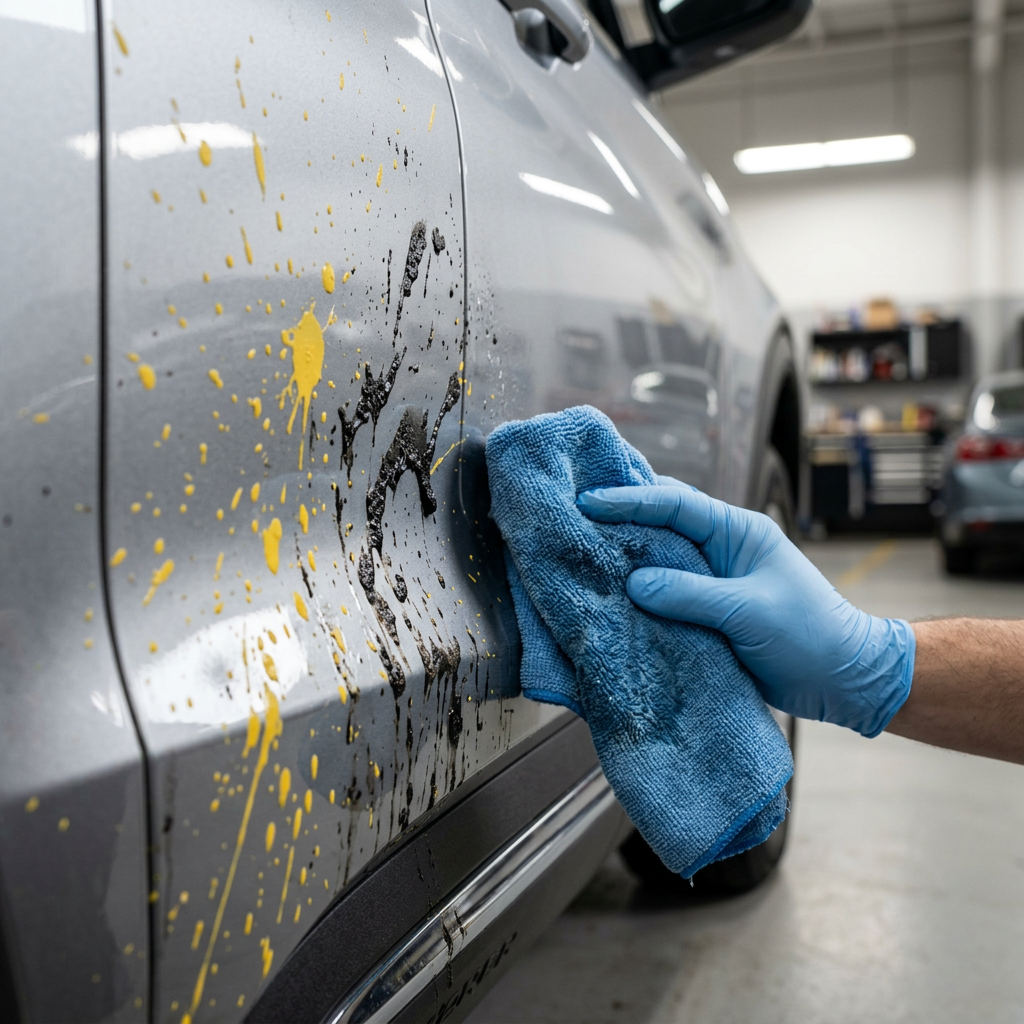
Driving past active construction zones or newly striped lanes can turn a routine commute into an immediate hazard for your vehicle’s exterior. Yellow highway line paint and sticky black asphalt binders stick to rocker panels, wheel wells, and doors, hardening within hours under direct sunlight. When these contaminants bond to your vehicle, standard car washes are not enough to clear the debris, and aggressive scrubbing will only scratch the surrounding clear coat.
At Tri State Ford, our dedicated service team understands how frustrating it is to discover yellow overspray or thick tar on your vehicle. Our technicians use professional-grade decontamination techniques to lift these stubborn materials without scratching the underlying paint. If you have recently driven through road construction and noticed fresh yellow speckles or black splatters along your lower body panels, we recommend scheduling a professional inspection. You can reach our service advisors by giving us a quick call to discuss the best path forward for your vehicle.
For those who prefer to plan ahead or have questions about long-term paint protection options, our team is always ready to assist. If you are bringing your vehicle in for paint decontamination, you can also explore how we can help with a new vehicle custom order to ensure your next ride comes equipped with durable exterior protection. We also invite you to check our current manufacturer vehicle specials, as well as our rotating new vehicle specials and used vehicle specials for seasonal maintenance offers that help keep your vehicle looking and performing its best. If you are ready to drop off your vehicle for a professional finish recovery, you can find our exact location and get turn-by-step directions to our service bays by viewing our dealership address.
Table of Contents
- Why Road Paint and Tar Cause Permanent Clear Coat Damage
- Professional Techniques for Safely Removing Hardened Road Paint
- The Role and Cost of Professional Clay Bar Treatments
- Why Immediate Washing is Essential After Solvent Application
- Frequently Asked Questions About Road Paint and Tar Removal
Why Road Paint and Tar Cause Permanent Clear Coat Damage
Many drivers assume that highway line paint is identical to standard household paint, but it is actually a highly durable, fast-curing acrylic or epoxy-based compound. It is engineered to withstand heavy traffic, extreme weather, and constant tire wear, meaning it bonds to automotive surfaces with incredible strength. As the road paint cures, it undergoes a chemical reaction that is accelerated by ultraviolet radiation from the sun. This curing process causes the contracting road paint to pull on the softer automotive clear coat, which can lead to micro-cracks and permanent etching if left untreated.
Heavy road tar presents a different chemical threat to your vehicle’s exterior. Tar is a petroleum-based mixture that contains acidic organic compounds and sticky asphalt binders. When tar splatters onto your vehicle, these petroleum solvents slowly penetrate the clear coat, dissolving the protective wax or sealant layer first before attacking the paint itself. Over time, the heavy oils in the tar migrate into the clear coat, leaving behind permanent yellow or brown stains that cannot be polished out. This chemical migration is particularly aggressive on lighter-colored vehicles, where the staining becomes visible within just a few days of exposure.
Preventing this level of paint degradation requires prompt action and the right protective accessories. Installing durable exterior additions, such as splash guards or mudflaps, helps block road debris and sticky asphalt from reaching your doors and rocker panels in the first place. If you want to equip your vehicle with these protective accessories, you can easily find and order parts directly through our website. For drivers who regularly navigate rugged utility routes or active work zones, keeping your vehicle’s exterior shielded is just as important as keeping its mechanical systems running. If you are maintaining a hardworking truck, you can browse our specialized truck inventory online to see how modern models feature durable wheel-well liners and lower-body shielding. Additionally, during your next maintenance visit, our team can handle everything from exterior care to essential under-the-hood tasks like professional battery service to keep your vehicle reliable in all driving conditions.
Professional Techniques for Safely Removing Hardened Road Paint
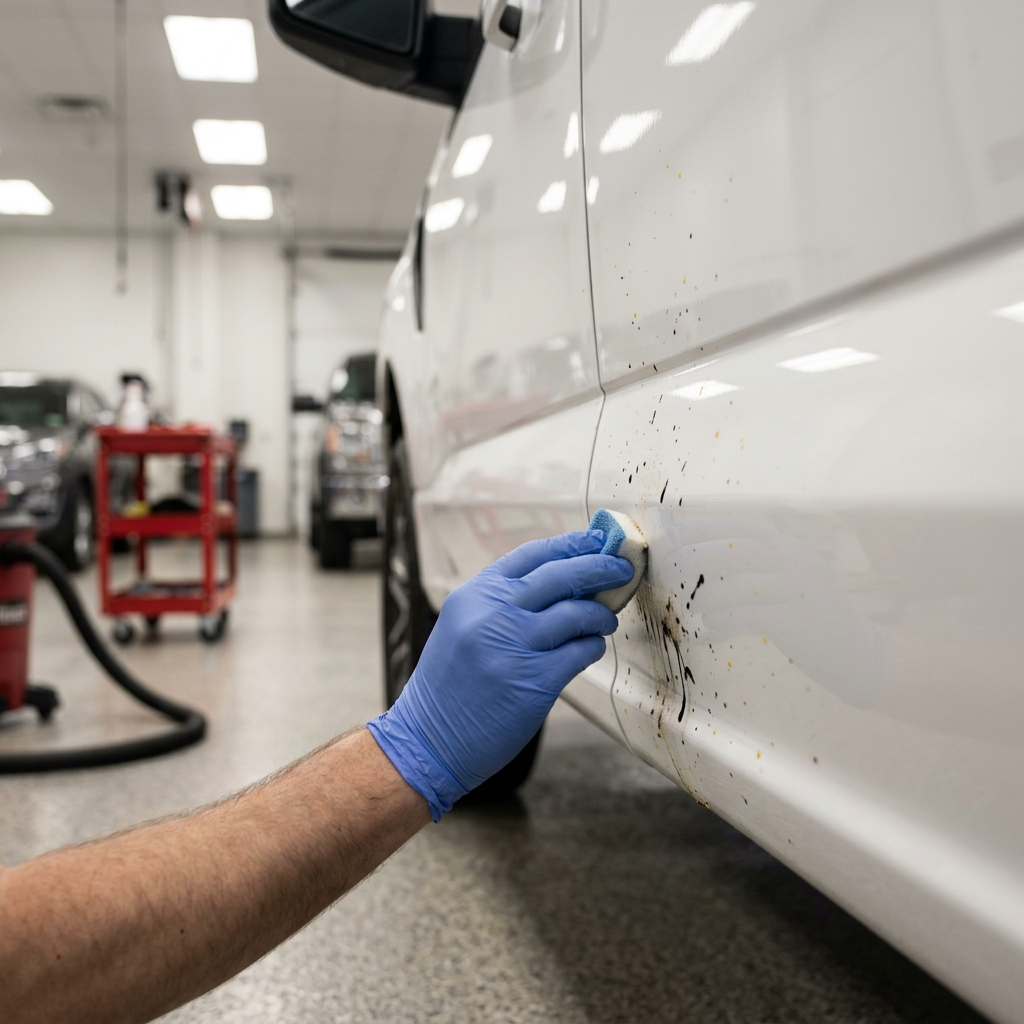
Professional detailers rely on a careful progression of chemical and mechanical steps to safely lift hardened road paint without compromising the factory finish. The process begins with a thorough, touchless pre-wash to remove loose dirt and abrasive road grit that could cause swirl marks during decontamination. Once the surface is clean, detailers evaluate the hardness and thickness of the road paint transfer. For fresh overspray, a highly diluted application of isopropyl alcohol or a specialized chemical solvent is applied directly to the affected spots using a soft microfiber applicator. This softens the binder of the road paint, allowing it to be gently wiped away without aggressive scrubbing.
When road paint has fully cured and bonded to the clear coat, mechanical shearing becomes necessary. Detailers use specialized clay bars or synthetic clay mitts saturated with dedicated detailer lubricant to glide over the surface. The clay grabs the raised edges of the road paint droplets and safely shears them off at the base, trapping the paint particles within the clay matrix. If the paint transfer is exceptionally thick or has settled into deep scratches, technicians may use precision machine polishing or ultra-fine wet-sanding. This process carefully levels the surrounding clear coat by a fraction of a micron, completely removing the shadow of the paint transfer while restoring a mirror-like gloss.
Attempting these advanced mechanical techniques at home without proper training can easily lead to thin spots in your clear coat or severe buffer trails. To avoid costly paint repairs, it is always safest to rely on certified technicians who possess the correct tools and depth gauges. You can easily book an appointment with our expert detailing team by using our online portal to schedule service at your convenience. If you are balancing a busy work week, we also offer a convenient pickup and delivery service where we can collect your vehicle, perform the necessary paint correction, and return it directly to your driveway. For more extensive cosmetic restoration or mechanical repairs, our finance department can help you explore flexible payment options for service and parts so you can protect your vehicle’s value without stress.
The Role and Cost of Professional Clay Bar Treatments
A professional-grade clay bar kit is one of the most effective tools for removing embedded surface contaminants that standard washing cannot touch. For those considering a DIY approach, a complete consumer-grade clay bar kit typically costs between $20 and $35. These retail kits generally include one or two medium-duty clay bars, a bottle of dedicated detailer lubricant, and a high-quality microfiber towel. While consumer kits are excellent for light overspray, industrial road paint often requires professional-grade, heavy-duty clay compounds and specialized chemical prep agents that are not typically sold in retail stores.
The physical mechanics of a clay bar treatment are straightforward but require precise execution to prevent scratching. The clay must always glide on a thick bed of lubricant; dry contact will immediately scuff the clear coat. As the detailer passes the clay over the lubricated panel, the tacky surface of the clay grabs onto microscopic contaminants—such as road paint, brake dust, and industrial fallout—and pulls them out of the clear coat pores. The technician must constantly knead and fold the clay to expose a clean surface, ensuring that trapped grit is not dragged back across the vehicle’s paint.
While claying is highly effective, it is an abrasive process that removes any existing wax or paint sealant. Because of this, a professional clay treatment is always followed by a machine polish and a fresh application of high-quality ceramic coating or synthetic wax to seal the newly exposed clear coat. If you want to keep your vehicle looking pristine throughout the year, we invite you to browse our manufacturer monthly service specials for seasonal discounts on detailing and paint protection packages. Our service center regularly handles heavy-duty vehicles, and we maintain a robust F-Series work truck inventory for commercial clients who need durable, work-ready vehicles. Whether you are maintaining a personal commuter car or a hard-working truck from our truck inventory, regular professional decontamination is key to protecting your vehicle’s long-term resale value.
Why Immediate Washing is Essential After Solvent Application
When dealing with heavy road tar or cured paint, detailers often use dedicated petroleum-based or citrus-based tar solvents to dissolve the sticky asphalt binders. While these chemical solvents are incredibly effective at liquefying stubborn road grime, they are highly volatile and aggressive. Leaving solvent residue on your vehicle’s exterior can cause severe chemical staining, dry out delicate plastic trim pieces, and permanently degrade the clear coat when exposed to direct sunlight and heat.
To prevent this chemical damage, the vehicle must be washed immediately after the solvent has done its job. A thorough, pH-neutral soap wash neutralizes the active chemical agents, lifting the dissolved tar and solvent residue completely off the surface. If you skip this crucial step, the remaining chemicals will begin to swell and soften the clear coat, making it highly susceptible to scratching and environmental etching. Professional detailers always perform a multi-stage rinse and wash cycle to guarantee that every trace of solvent is safely neutralized and rinsed down the drain.
Maintaining a clean, decontaminated exterior is essential for preserving the maximum trade-in value of your vehicle. If you are curious about your vehicle’s current market worth, you can get a quick, transparent valuation online using our Kelley Blue Book instant cash offer tool. For business owners managing commercial fleets, keeping your vehicles clean and professional-looking is a vital part of your brand’s image. If you are looking to expand your fleet, you can explore our new work truck inventory or check out our versatile Transit work vans to find the perfect, easily maintained commercial vehicles for your business needs.
Frequently Asked Questions About Road Paint and Tar Removal
Q: Can road paint cause permanent etching in a clear coat?
Yes. As road paint cures under the sun’s UV rays, it contracts and forms a tight chemical bond with your vehicle’s clear coat. This physical contraction can pull on the clear coat, creating micro-cracks and permanent surface etching. Additionally, the chemicals in highway line paint can slowly migrate into the clear coat, leading to permanent staining that cannot be washed away.
Q: Can I use acetone or nail polish remover to clean road paint off my car?
No. You should never use acetone on automotive paint. Acetone is an incredibly harsh solvent that will quickly dissolve or swell your vehicle’s clear coat and underlying factory paint. Using it can lead to permanent dullness, peeling, and severe paint damage that requires a complete repaint of the affected panel.
Q: Does a clay bar remove road paint?
Yes, a clay bar is highly effective at removing fresh road paint overspray and thin paint splatters. The clay works by grabbing the raised edges of the paint droplets and shearing them off the surface. However, if the road paint has fully cured or is exceptionally thick, a clay bar alone may not be enough, and professional chemical softening or machine polishing may be required.
Q: How do professional detailers prevent scratching while removing dried-on tar?
Professional detailers avoid aggressive scrubbing, which is the primary cause of scratches. Instead, they apply dedicated tar removers that chemically break down and liquefy the sticky asphalt binders. Once the tar is dissolved, it can be gently wiped away with a thick, high gsm microfiber towel, completely eliminating the need for abrasive scrubbing.
Q: Can I get a free estimate for road paint removal in East Liverpool?
Yes. Our service center provides free visual estimates for professional paint decontamination and recovery. Because the severity of road paint and tar contamination varies based on the surface area covered and how long the material has been bonded, our advisors will inspect your vehicle’s finish and provide a transparent, upfront cost estimate.
If you have noticed road paint or heavy tar on your vehicle after a drive through Calcutta, schedule service soon to help prevent the contaminants from bonding further to your clear coat. You can get a professional assessment and a clear plan of action by contacting our service team. Give us a quick call or stop by our service department to restore your vehicle’s finish. For commercial fleet operators managing heavy-duty vehicles, we also feature a wide selection of durable options in our used work truck inventory that are built to handle tough regional road conditions. You can also view our service hours and get detailed driving directions to our service bays by visiting our dealership location page online.
© 2026 Tri State Ford. All rights reserved.
Connect with us


- Automotive News, New Vehicle Reviews, Buying Guides, Financing & Insurance, Seasonal Driving Tips
- Buying Guides, Financing & Insurance, New Vehicle Reviews, Model Comparisons, Sales & Promotions
- Buying Guides, Financing & Insurance, New Vehicle Reviews, Model Comparisons, Technology & Innovation
- Buying Guides, Financing & Insurance, Vehicle Inventory & Offers, Dealership Visit Preparation, Trade-In & Valuation
- Commercial Leasing Options, Business Fleet Solutions, Financing & Leasing Programs, Commercial Vehicle Inventory, Business Vehicle Acquisition
- Commercial Truck Sales, Fleet Purchasing Guides, Financing & Lease Options, Work Truck Customization, New Vehicle Inventory
- Commercial Vehicle Sales, Financing & Leasing, Small Business Vehicle Incentives, Fleet Purchasing Guides, Tax Benefits for Vehicle Buyers
- Commercial Vehicle Sales, Fleet Leasing & Management, Commercial Financing & Tax Incentives, Upfitting & Customization Solutions, Trade & Lease Programs
- Community Engagement & Events, New Vehicle Promotions, Financing & Trade-In Options, Maintenance & Service, Used Vehicle Offers
- Community Events & Customer Appreciation, New Vehicle Reviews, Financing & Trade-In Guides, Maintenance & Service Specials, Commercial & Work Truck Solutions
- Community Events & Dealership News, New Vehicle Promotions & Incentives, Maintenance & Service Specials, Financing & Trade-In Guidance, Family-Friendly Dealership Experiences
- Community Events & Dealership News, New Vehicle Reviews, Financing & Insurance, Maintenance & Service, Work Trucks & Commercial Vehicles
- Community Events, New Vehicle Buying Guides, Financing & Insurance, Maintenance & Service, Local Dealership News
- Compare Cars
- Dealership Events & Promotions, Financing & Trade-In Options, Maintenance & Service Specials, Community Involvement & Charity, New & Used Vehicle Buying Guides
- East Liverpool, OH Ford Dealer
- East Liverpool, OH Used Cars
- Financing & Insurance, Buying Guides, Commercial Vehicle Solutions, Fleet Management, Inventory and Availability
- Financing & Insurance, Buying Guides, New Vehicle Reviews, Used Vehicle Guides, Automotive Sales & Inventory
- Financing & Insurance, Buying Guides, New Vehicle Reviews, Used Vehicle Guides, Automotive Sales Strategies
- Financing & Insurance, Buying Guides, New Vehicle Reviews, Used Vehicle Guides, Model Comparisons
- Financing & Insurance, Buying Guides, Used Vehicle Guides, Trade-In Tips, New Vehicle Sales
- Financing & Insurance, Buying Guides, Vehicle Trade-In Tips, Dealership Sales Process, New Vehicle Promotions
- Financing & Insurance, Leasing Benefits, Model Comparisons, Technology & Innovation, Buying Guides
- Leasing & Financing Options, Buying Guides, Model Comparisons, Negotiation Tips, Inventory & Specials
- Leasing & Financing Options, Buying Guides, New Vehicle Reviews, Model Comparisons, Technology & Innovation
- Leasing & Financing Options, New Vehicle Leasing Guides, Buying Guides, Inventory Spotlight, Trade
- Leasing & Lease Deals, Financing & Insurance, New Vehicle Sales, Commercial Vehicle Leasing, Vehicle Trade-In & Purchase Options
- Leasing Options, Financing & Insurance, New Vehicle Reviews, Buying Guides, Technology & Innovation
- Leasing Options, Financing & Insurance, New Vehicle Sales, Buying Guides, Vehicle Inventory
- Maintenance & Service, Air Conditioning Repair, Genuine Parts & Accessories, Dealer-Authorized Service, Vehicle Ownership Care
- Maintenance & Service, Automotive Air Conditioning Repair, Vehicle Cooling System Care, Diagnostic & Leak Detection, Seasonal Vehicle Maintenance
- Maintenance & Service, Automotive Detailing & Cleaning, Seasonal Vehicle Care, Vehicle Protection & Preservation, Service Center Expertise
- Maintenance & Service, Automotive Detailing & Paint Care, Vehicle Exterior Protection, Paint Repair & Restoration, Parts & Accessories Installation
- Maintenance & Service, Automotive Detailing & Protection, Corrosion & Rust Prevention, Paint & Exterior Care, Professional Vehicle Care
- Maintenance & Service, Automotive Detailing, Paint Protection & Care, Seasonal Vehicle Care, Professional Vehicle Servicing
- Maintenance & Service, Automotive Electrical Systems, Battery Care & Replacement, Diagnostics & Repairs, Electric Vehicle Maintenance
- Maintenance & Service, Automotive Electrical Systems, Battery Care & Replacement, Vehicle Lighting & Electrical Issues, Roadside Assistance & Emergency Services
- Maintenance & Service, Automotive Fluids & Lubricants, Vehicle Care & Ownership, Dealership Service & Repairs, Preventive Maintenance
- Maintenance & Service, Automotive Lighting & Electrical, Vehicle Safety & Visibility, DIY Vehicle Care, Parts & Accessories
- Maintenance & Service, Automotive Parts & Accessories, Seasonal Vehicle Care, Vehicle Safety & Visibility, Professional Auto Service
- Maintenance & Service, Automotive Parts & Accessories, Vehicle Air Quality & HVAC Care, Preventive Vehicle Maintenance, Service Tips & FAQs
- Maintenance & Service, Automotive Parts & Accessories, Vehicle Ownership Care, Engine Care & Protection, Warranty & Service Contracts
- Maintenance & Service, Automotive Parts & Accessories, Vehicle Safety & Repair, Warranty & Coverage, Service Specials & Offers
- Maintenance & Service, Automotive Parts & Components, Vehicle Safety & Repair, Warranty & Service Coverage, Preventative Vehicle Care
- Maintenance & Service, Automotive Parts & Repairs, Vehicle Warranty & Protection, Service Center Tips, Cost-Effective Vehicle Care
- Maintenance & Service, Automotive Repair, Mobile & Remote Vehicle Service, Warranty & Roadside Assistance, OEM Parts & Service Specials
- Maintenance & Service, Automotive Repair, Parts & Accessories, Vehicle Ownership Care, Technology & Innovation in Service
- Maintenance & Service, Automotive Technology & Diagnostics, Vehicle Electronics & Sensors, Seasonal Vehicle Care, Parts & Repairs
- Maintenance & Service, Automotive Technology & Software Updates, Warranty & Recall Service, Mobile Vehicle Repair & Convenience, Customer Service & Transparency
- Maintenance & Service, Battery Care & Diagnostics, Electric Vehicle (EV) Maintenance, Seasonal Vehicle Care, Automotive Electrical Systems
- Maintenance & Service, Battery Care & Replacement, Vehicle Electrical Systems, Seasonal Vehicle Maintenance, Professional Automotive Repairs
- Maintenance & Service, Brake System Care, OEM Parts & Replacement, Vehicle Safety & Inspections, Expert Technician Services
- Maintenance & Service, Brake System Care, Vehicle Safety & Inspection, Automotive Repair Tips, Service Financing & Convenience
- Maintenance & Service, Brake System Care, Vehicle Safety & Inspection, Parts Quality & Replacement, Heavy Duty Vehicle Maintenance
- Maintenance & Service, Brake System Care, Vehicle Safety & Inspections, Parts & Components, Professional Automotive Services
- Maintenance & Service, Brake System Care, Vehicle Safety & Inspections, Parts & Repairs, Expert Tips & Advice
- Maintenance & Service, Brake Systems & Repair, Vehicle Parts & Accessories, Towing & Load Management, Seasonal Driving Tips
- Maintenance & Service, Certified Technician Insights, Warranty & Service Coverage, Genuine OEM Parts, Service Center Selection Guidance
- Maintenance & Service, Cooling System Repairs, Vehicle Ownership Care, Diagnostic & Troubleshooting, Automotive Parts & Components
- Maintenance & Service, Diagnostic Services, Vehicle Health & Diagnostics, Service Tips & Advice, Check Engine Light Solutions
- Maintenance & Service, Engine Care & Performance, Parts & Accessories, Genuine vs. After
- Maintenance & Service, Essential Vehicle Care, Preventive Maintenance Tips, Vehicle Longevity Strategies, Truck Maintenance Essentials
- Maintenance & Service, Expert Repairs & Diagnostics, Genuine Parts & Accessories, Engine Care & Performance, Vehicle Ownership & Care
- Maintenance & Service, Mobile Vehicle Services, Vehicle Care & Ownership, Genuine Parts & Repairs, Seasonal Maintenance Tips
- Maintenance & Service, Parts & Accessories, Engine Care & Repair, Vehicle Longevity Tips, OEM Parts Benefits
- Maintenance & Service, Parts & Accessories, Vehicle HVAC Care, Seasonal Vehicle Maintenance, DIY Vehicle Maintenance
- Maintenance & Service, Parts & Replacements, Vehicle Care Tips, Seasonal Maintenance, DIY Vehicle Maintenance
- Maintenance & Service, Recall Information, Safety & Reliability, Vehicle Ownership Care, Parts & Repairs
- Maintenance & Service, Recall Updates & Safety Notices, Genuine Parts & Accessories, Truck Care & Maintenance Tips
- Maintenance & Service, Repair & Diagnostics, OEM Parts & Accessories, Warranty & Recall Information, Vehicle Care & Ownership Tips
- Maintenance & Service, Repair & Diagnostics, Parts & Accessories, Vehicle Ownership Care, Service Plans & Extended Warranty
- Maintenance & Service, Repair & Diagnostics, Parts & Components, Preventive Care & Tips, Warranty & Recalls
- Maintenance & Service, Repair & Parts, Vehicle Ownership Care, Safety Features, Technology & Innovation
- Maintenance & Service, Repair & Parts, Vehicle Ownership Care, Transmission
- Maintenance & Service, Repair Solutions, Vehicle Ownership Care, Parts & Accessories, Diagnostic Tips
- Maintenance & Service, Repair Tips & Techniques, Vehicle Care & Ownership
- Maintenance & Service, Safety Features, Parts & Repairs, Vehicle Ownership Care, Automotive Service Tips
- Maintenance & Service, Safety Features, Recall & Repair Updates, Parts & Repairs, Vehicle Ownership Care
- Maintenance & Service, Safety Features, Recall & Safety Campaigns, Vehicle Inspection & Repairs, Vehicle Ownership Care
- Maintenance & Service, Safety Features, Recall & Warranty Information, Vehicle Diagnostics & Repair, Certified Service & Genuine Parts
- Maintenance & Service, Safety Features, Recall Repairs & Safety Campaigns, Parts & Genuine Components, Vehicle Ownership Care
- Maintenance & Service, Safety Features, Recalls & Repairs, Parts & Accessories, Vehicle Ownership Care
- Maintenance & Service, Safety Features, Repair & Recall Updates, Parts & Components, Vehicle Ownership Care
- Maintenance & Service, Safety Features, Repair & Replacement, Vehicle Care & Inspection, Parts & Accessories
- Maintenance & Service, Safety Features, Technology & Innovation, Automotive Parts & Accessories, Seasonal Driving Tips
- Maintenance & Service, Safety Features, Technology & Innovation, Automotive Recalls, Parts & Repairs
- Maintenance & Service, Safety Features, Technology & Innovation, Automotive Recalls, Vehicle Ownership Care
- Maintenance & Service, Safety Features, Technology & Innovation, Automotive Service Tips, Recall & Repair Updates
- Maintenance & Service, Safety Features, Technology & Innovation, Parts & Repairs, Seasonal Driving Tips
- Maintenance & Service, Safety Features, Technology & Innovation, Parts & Repairs, Vehicle Ownership Care
- Maintenance & Service, Safety Features, Technology & Innovation, Repair & Recall Information, Parts & Vehicle Care
- Maintenance & Service, Safety Features, Technology & Innovation, Seasonal Driving Tips, Parts & Repairs
- Maintenance & Service, Safety Features, Technology & Innovation, Tire Care & Replacement, Diagnostic & Repair Services
- Maintenance & Service, Safety Recalls & Repairs, Vehicle Safety & Compliance, Powertrain & Drivetrain Maintenance, Towing & Hauling Maintenance
- Maintenance & Service, Seasonal Driving Tips, Model Comparisons, Technology & Innovation, Safety Features
- Maintenance & Service, Seasonal Driving Tips, Safety Features, Technology & Innovation, Parts & Repairs
- Maintenance & Service, Seasonal Driving Tips, Vehicle Care & Ownership, Brake System Maintenance, Tire & Wheel Care
- Maintenance & Service, Seasonal Driving Tips, Vehicle Care & Ownership, Parts & Accessories, Safety Features
- Maintenance & Service, Seasonal Driving Tips, Vehicle Care & Ownership, Safety Features, Professional Repair & Service Techniques
- Maintenance & Service, Seasonal Driving Tips, Vehicle Care & Protection, Brake Maintenance, Tire Care & Safety
- Maintenance & Service, Seasonal Driving Tips, Vehicle Cooling Systems, Automotive Safety Features, Parts & Repairs
- Maintenance & Service, Service Scheduling & Convenience, Vehicle Repair & Diagnostics, Parts & Accessories, Fleet & Commercial Vehicle Service
- Maintenance & Service, Technology & Innovation, Automotive Service Transparency, Digital Vehicle Inspections, Vehicle Ownership Care
- Maintenance & Service, Technology & Innovation, Safety Features, Parts & Warranty, Vehicle Ownership Care
- Maintenance & Service, Technology & Innovation, Vehicle Diagnostics & Telematics, Fleet Management Solutions, Parts & Accessories
- Maintenance & Service, Tire Care & Repair, Roadside Assistance, Vehicle Safety & Inspections, Automotive Parts & Replacements
- Maintenance & Service, Tire Care & Repair, Wheel Alignment & Balancing, Suspension Maintenance, Vehicle Performance Optimization
- Maintenance & Service, Tire Care & Replacement, Seasonal Vehicle Care, Safety Features, Automotive Service Tips
- Maintenance & Service, Tire Care & Replacement, Vehicle Safety & Handling, Seasonal Vehicle Preparation, Drivetrain & Tire Maintenance
- Maintenance & Service, Tire Care & Replacement, Vehicle Safety & Inspections, Seasonal Vehicle Maintenance, Automotive Parts & Accessories
- Maintenance & Service, Transmission Care & Repair, Vehicle Fluid Services, Automotive Diagnostics, Warranty & Resale Value Maintenance
- Maintenance & Service, Transmission Care, Repair & Parts, Vehicle Ownership Care, Common Vehicle Issues
- Maintenance & Service, Vehicle Care & Longevity, Scheduled Service Packages, Oil Changes & Fluid Top-offs, Tire & Brake Maintenance
- Maintenance & Service, Vehicle Care Tips, Parts & Accessories, Seasonal Vehicle Maintenance, Service Specials & Packages
- Maintenance & Service, Vehicle Detailing & Care, Parts & Accessories, Seasonal Vehicle Preparation, Service Scheduling & Convenience
- Maintenance & Service, Vehicle Detailing & Cosmetic Care, Service Scheduling & Convenience, Seasonal Vehicle Care, Vehicle Ownership Tips
- Maintenance & Service, Vehicle Detailing & Protection, Vehicle Care Tips, Seasonal Vehicle Maintenance, Dealership Service Benefits
- Maintenance & Service, Vehicle Diagnostics & Repair, Engine Performance & Troubleshooting, Fuel System Care, Preventative Maintenance Strategies
- Maintenance & Service, Vehicle Fluids & Lubrication, Engine Care & Repair, Parts & Accessories, Professional Vehicle Care
- Maintenance & Service, Vehicle Inspection & Diagnostics, Parts & Repairs, Warranty & Resale Value, Service Specials & Convenience
- Maintenance & Service, Vehicle Ownership Care, Mobile Repair Services, Genuine Parts & Certified Technicians, Electric Vehicle Maintenance
- Maintenance & Service, Vehicle Ownership Care, Parts & Accessories, Repair & Diagnostics, Certified Technician Insights
- Maintenance & Service, Vehicle Repair & Diagnostics, Parts & Accessories, DIY Vehicle Care, Safety & Reliability Tips
- Maintenance & Service, Vehicle Repair & Diagnostics, Parts & Accessories, Hybrid & Electric Vehicle Care, Seasonal Vehicle Care
- Maintenance & Service, Vehicle Repair & Diagnostics, Parts & Accessories, Seasonal Driving Tips, Battery Care & Replacement
- Maintenance & Service, Vehicle Repair & Diagnostics, Parts & Accessories, Service Lane Tips & Insights, Vehicle Ownership Care
- Maintenance & Service, Vehicle Repair & Diagnostics, Parts & Accessories, Towing & Performance Care, Mobile & Convenient Service Options
- Maintenance & Service, Vehicle Repair & Parts, Service Convenience & Customer Care, Roadside Assistance & Support, Vehicle Ownership Tips
- Maintenance & Service, Vehicle Service Warranties, Repair & Coverage Plans, Ownership & Vehicle Care, Automotive Service Tips
- Maintenance & Service, Vehicle Software Updates, Safety Features, Technology & Innovation, Recall & Warranty Information
- Maintenance & Service, Warranty & Recalls, Repair & Diagnostics, Parts & Accessories, Vehicle Ownership & Care
- Model Comparisons, Buying Guides, New Vehicle Reviews, Financing & Insurance, Inventory Updates
- Model Comparisons, Buying Guides, Technology & Innovation, Safety Features, Maintenance & Service
- Model Comparisons, New Vehicle Reviews, Safety Features, Technology & Innovation, Seasonal Driving Tips
- Model Comparisons, New Vehicle Reviews, Technology & Innovation, Buying Guides, Maintenance & Service
- Model Comparisons, New Vehicle Reviews, Technology & Innovation, Safety Features, Buying Guides
- Model Comparisons, Towing & Hauling Guides, Maintenance & Service, Technology & Innovation, New Vehicle Reviews
- New Vehicle Promotions, Buying Guides, Financing & Insurance, New Vehicle Reviews, Inventory Highlights
- New Vehicle Reviews, Buying Guides, Financing & Insurance, Model Comparisons, Automotive News
- New Vehicle Reviews, Buying Guides, Financing & Insurance, Model Comparisons, Automotive Sales Strategies
- New Vehicle Reviews, Buying Guides, Financing & Insurance, Model Comparisons, Automotive Technology & Innovation
- New Vehicle Reviews, Buying Guides, Financing & Insurance, Model Comparisons, Commercial & Work Truck Sales
- New Vehicle Reviews, Buying Guides, Financing & Insurance, Model Comparisons, Inventory Highlights
- New Vehicle Reviews, Buying Guides, Financing & Insurance, Model Comparisons, Used Vehicle Guides
- New Vehicle Reviews, Buying Guides, Financing & Insurance, Model Comparisons, Vehicle Inventory Updates
- New Vehicle Reviews, Buying Guides, Financing & Insurance, New Vehicle Specials, Trade-In & Value Estimation
- New Vehicle Reviews, Buying Guides, Financing & Insurance, Used Vehicle Guides, Model Comparisons
- New Vehicle Reviews, Buying Guides, Financing & Insurance, Vehicle Inventory, Model Comparisons
- New Vehicle Reviews, Buying Guides, Model Comparisons, Financing &
- New Vehicle Reviews, Buying Guides, Model Comparisons, Financing & Insurance, Inventory & Sales
- New Vehicle Reviews, Buying Guides, Model Comparisons, Maintenance & Service, Technology & Innovation
- New Vehicle Reviews, Buying Guides, Safety Features, Technology & Innovation, Model Comparisons
- New Vehicle Reviews, Buying Guides, Technology & Innovation, Safety Features, Seasonal Driving Tips
- New Vehicle Reviews, Financing & Insurance, Buying Guides, New Vehicle Specials, Model Comparisons
- New Vehicle Reviews, Financing & Insurance, Buying Guides, Technology & Innovation, Automotive Inventory Updates
- New Vehicle Reviews, Financing & Insurance, Buying Guides, Used Vehicle Guides, Model Comparisons
- New Vehicle Reviews, Model Comparisons, Buying Guides, Technology & Innovation, Safety Features
- New Vehicle Reviews, Model Comparisons, Financing & Insurance, Technology & Innovation, Safety Features
- New Vehicle Reviews, Model Comparisons, Off-Road Adventures, Technology & Innovation, Maintenance & Service
- New Vehicle Reviews, Model Comparisons, Safety Features, Technology & Innovation, Buying Guides
- New Vehicle Reviews, Model Comparisons, Technology & Innovation, Financing & Insurance, Maintenance & Service
- New Vehicle Reviews, Model Comparisons, Technology & Innovation, Safety Features, Buying Guides
- New Vehicle Reviews, Model Comparisons, Technology & Innovation, Safety Features, Maintenance & Service
- New Vehicle Reviews, Off-Road Capabilities, Outdoor Adventure Vehicles, Technology & Innovation, Local Driving Destinations
- New Vehicle Reviews, Technology & Innovation, Buying Guides, Safety Features, Model Comparisons
- New Vehicle Reviews, Technology & Innovation, Safety Features, Maintenance & Service, Buying Guides
- New Vehicle Sales, Financing & Incentives, Trade-In & Appraisal, Special Sales Events, Electric Vehicle Purchasing
- New Vehicle Sales, Financing & Incentives, Trade-In & Value Guides, Manufacturer Promotions, Commercial Vehicle Sales
- New Vehicle Sales, Financing & Insurance, Buying Guides, Manufacturer Incentives & Discounts, Trade-In & Vehicle Valuation
- New Vehicle Sales, Vehicle Delivery & Logistics, Financing & Credit Applications, Trade-In & Vehicle Valuation, Commercial Vehicle Sales
- Tips
- Trucks
- Uncategorized
- Used Vehicle Guides, Buying Guides, Financing & Insurance, Model Comparisons, Selling Your Car
- Used Vehicle Guides, Financing & Insurance, Buying Guides, Model Comparisons, Local Dealership Highlights
- Used Vehicle Guides, Financing & Insurance, Buying Guides, New Vehicle Reviews, Commercial Vehicle Sales
- Used Vehicle Guides, Financing & Insurance, Buying Guides, Vehicle Warranty Information, Pre-Owned Vehicle Sales
- Vehicle Sales Events, Financing & Leasing, Trade-In & Trade-Up Guides, New Vehicle Inventory Highlights, Dealership Buying Experience
- Vehicle Sales Events, New Vehicle Buying Guides, Financing & Incentives, Dealership Inventory Highlights, Commercial Vehicle Sales
- Vehicle Sales Events, New Vehicle Pricing & Incentives, Financing & Lease Options, Trade-In & Appraisal Guides, Dealership Buying Experience
- Vehicle Sales Events, New Vehicle Pricing, Financing & Credit Applications, Trade-In & Loyalty Programs, Leasing vs Buying Guides
- Vehicle Sales Events, New Vehicle Purchasing, Incentives & Discounts, Financing & Pre-Approval, Trade-In & Appraisal Guidance
- Vehicle Sales Process, Financing & Credit Applications, New and Used Vehicle Inventory, Pickup and Delivery Services, Online Vehicle Purchasing
- Vehicle Sales Promotions, New Vehicle Buying Guides, Financing & Credit Applications, Dealership Inventory Highlights, Model Pricing Comparisons
- Vehicle Sales Promotions, New Vehicle Buying Guides, Financing & Incentives, Trade-In & Valuation, Dealership Sales Events
- Vehicle Sales, Online Car Buying, Financing & Incentives, Trade-In Guides, New Vehicle Delivery Services, Youngstown Dealership
- Vehicle Trade-In Tips, Financing & Insurance, Buying Guides, Dealership Sales Strategies, Inventory & Specials